
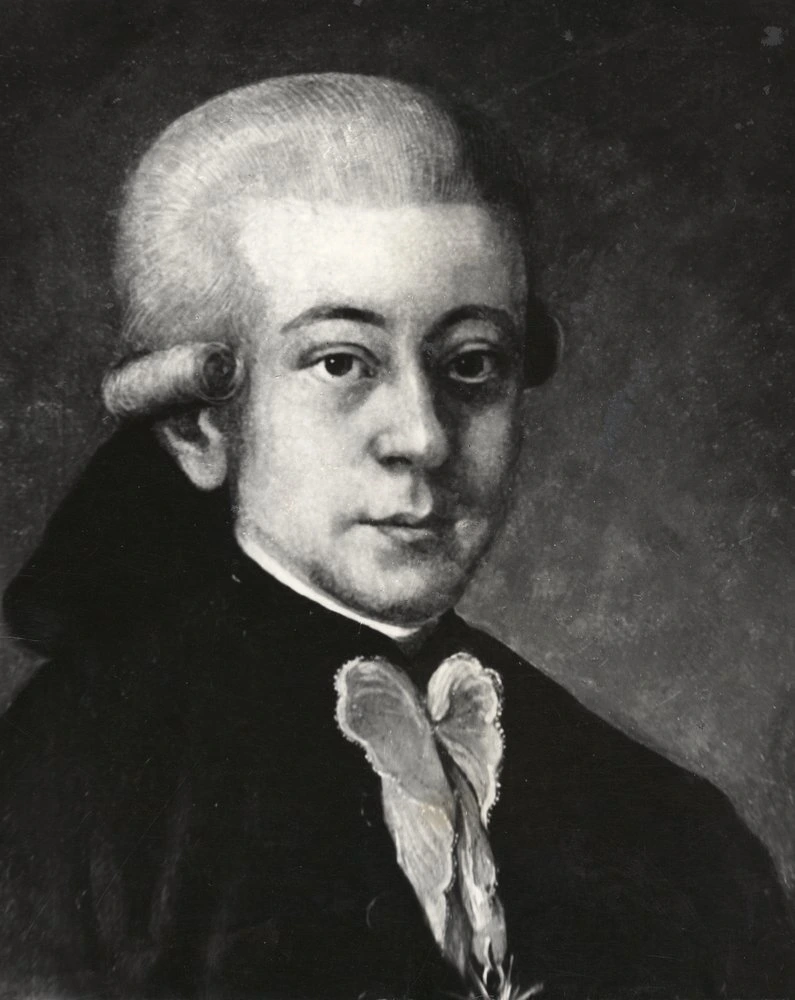
Najpiękniejszy Mozart na fortepian [partytura]

Mozart Wolfgang Amadeus, *27 January 1756 Salzburg, †5 December 1791 Vienna, Austrian composer. Mozart’s life coincided with the period of so-called enlightened absolutism during the reigns of Empress Maria Theresa (1740–80), Joseph II (1780–90), and Leopold II (1790–92). This was a time of groundbreaking state and church reforms and the spread of rationalist and Enlightenment ideas among the lower classes. The development of Masonic lodges in Vienna testifies to this intellectual freedom. Although the social status of musicians was changing, their position within the court hierarchy remained largely modest. Mozart sought to free himself from the constraints of court service, which was one of the reasons for his disagreements with his father. Leopold Mozart considered the foundation of his son’s existence solely to lie in an officially sanctioned connection with the court of the Archbishop in Salzburg, while Mozart, who had displayed musical genius from early childhood and was accustomed to admiration, aspired to become an independent artist. He was associated with the imperial court for five years, but this association did not provide a decent living for his family. Only on his deathbed was he offered the position of Kapellmeister at St. Stephen’s Cathedral.
Leopold brought his son fame throughout Europe, but he also exposed him to illness, an unstable lifestyle, and the hardships of travel. His mother, who had little formal education and played a largely supportive role, helped her husband manage the careers of his talented children: Wolfgang Amadeus and Maria Anna (Nannerl). Mozart was described as a youth who was always pale, with beautiful hair (since he did not wear a wig), short, and very slim. He possessed refined manners, yet within his family he indulged in ribald and even scatological humour. He was a proud man with a strongly developed sense of self-respect. His awareness of his extraordinary creative potential sometimes led to a dismissive attitude toward local musicians, which in turn alienated them. This led to friction with his father, who lectured him on how to curry favour with the community, organise concerts, and seek lucrative positions. During this period of intense creative work, Mozart often lacked full control over his actions, concealing intense tensions with downright frivolous, sometimes absurd, behaviour. His brilliant intuition and the “stream of inspiration” flowing through his mind and heart were, as it were, largely independent of the daily flow of life. However, during periods of depression (such as in Paris in 1778 or in 1789–90), he was unable to complete many compositions. He was a brilliant keyboard virtuoso, played the violin proficiently, and as a child also demonstrated notable singing talent.
Mozart did not display broad scholarly interests, but rather an extraordinary richness of imagination. Although he travelled and explored extensively, he wrote neither about art nor about landscapes. From his letters, one can only conclude that, like his father, he was drawn to the classical order of sculpture and architecture. He spoke with expertise, however, about music, performance practice, and the theatre. His home library included Plato’s Phaedo (adapted by M. Mendelssohn), F. Fénelon’s History of Telemachus, works by Ovid, J. Pezzla, Ch. F. Weisse, S. Gessner, Molière, G. Dyk, H. Moore, and Ch. M. Wieland, as well as pedagogical, historical, and political textbooks, along with travel guides. He read Shakespeare in German translation and knew The Arabian Nights through an Italian version. He joined Freemasonry because he enjoyed the atmosphere of an enlightened society. He even created a project for a new association, entitled “Grotte” (after J. J. Rousseau), which Constanze sent to Härtel in Leipzig in 1800 but which has since been lost.
From childhood, Mozart suffered from many illnesses, mainly upper respiratory infections, episodes of so-called rheumatic fever (e.g., in Munich in 1766), and other infectious diseases; he also fell ill during a trip to Italy in 1771. In 1783, he suffered from an acute viral infection (as evidenced by a newly discovered letter from Constanze to Leopold dated November 1783), and in 1784 and 1788, further serious illnesses are well confirmed. From the beginning of 1791, Mozart felt physically and nervously unwell. At the end of October, he developed lumbar pain and inflammation of the limbs, and, moreover, and at a Masonic lodge meeting on 18 November he is believed to have contracted a streptococcal infection. The diagnosis was acute miliary tuberculosis, described at the time as “rheumatic fever” or “inflammatory fever,” which was believed to have caused a brain abscess. Later medical interpretations pointed to the so-called Schönlein–Henoch syndrome (characterised by urological and neurological failure, partial paralysis, and uraemia). However, the legend of the composer’s poisoning has no factual basis. More recently, some scholars have proposed a diagnosis of so-called phantasmagorical Tourette syndrome, which manifested itself from childhood in characteristic behavioural patterns, movement disorders, and a constantly agitated stream of imagination.
A significant flashpoint in Mozart’s relationship with his father was his emotional life. The affair with Aloysia Weber, and Mozart’s subsequent move into the Weber household, sparked a heated exchange of letters and an a priori negative attitude on the part of Leopold (and Nannerl as well). Hence, many Mozart biographers believe that he chose the wrong wife (Einstein 1945; Hildesheimer 1977). Mozart had genuine affection for Constanze, and his life was inextricably linked to hers. After Mozart’s death, Constanze proved to be a responsible and caring mother to their two sons, repaying debts, organising concerts and tours, establishing publishing ventures, and selling autographs. In 1809, she remarried, marrying the diplomat G. N. Nissen, the author of a biography of Mozart based on documents and letters (see Literature).
Chronicle of life and work
Salzburg 1756–73
1756
27 January – Wolfgang Amadeus Mozart was born in Salzburg, the son of Leopold Mozart and Anna Maria, née Pertl (1720–1778); he was their seventh and last child, and of his siblings, only his sister Maria Anna, called Nannerl, survived
28 January – he was baptised and given the names Joannes Chrysostomus Wolfgangus Theophilus (the form Amadeus later used by Mozart is a medieval Latin variant, popular in Savoy; both forms correspond to the German name Gottlieb)
1761
September – Mozart’s first public performance took place at the University of Salzburg in a theatrical play with music by J. E. Eberlin
his earliest compositions were the Andante K. 1a and Allegro K. 1b, written down by his father in Nannerl’s music book
Concert tours 1762–66
1762
12 January – first tour: Munich. Leopold with Mozart and Nannerl stayed there around three weeks; children played at the court of the Bavarian Elector, Maximilian Joseph III
18 September – second tour: Vienna. The siblings and their father travelled through Passau (20 September, concert), Linz (26 September, concert), Mauthausen (4 October), Ybbs and Stein (5 October)
6 October – arrival in Vienna; two successful performances for Empress Maria Theresa at Schönbrunn Castle; they played in the salons of the aristocracy; Mozart fell ill with scarlet fever
11–24 December – Bratislava (German Pressburg, ship journey), return to Vienna (24 December)
1763
5 January – return to Salzburg via Linz (2 January); Mozart gave a concert at the court of Archbishop S.Ch. von Schrattenbach: he improvised in various styles, accompanied a sight reading, and played the harpsichord with a covered keyboard
9 June – third, three-year concert tour; they (Leopold, Mozart and Nannerl) left Salzburg in their own carriage, with a servant
12 June – Munich. Mozart gave another concert at the court of Maximilian Joseph III
22 June – Augsburg. Mozart gave three concerts; Leopold bought a travel clavichord; they went to Ulm (6 July)
9 July – Ludwigsburg, summer residence of Prince Charles Eugene of Württemberg; Mozart met N. Jommelli and N. Nardini
14 July – Schwetzingen. 18 July, a concert of Nannerl and Mozart for the Count Palatine, Charles Theodore; after 19 July they were in Heidelberg, Mannheim (3 days), Worms
3 August–30 September – concerts in Mainz, Frankfurt, Koblenz, Aachen (Nannerl and Mozart played for Anna Amalia of Prussia), Bonn; they went to Brussels through Liege (2 October), Trident (3 October), Louvain
5 October – Brussels. They spent 6 weeks here, played for Prince Charles of Lorraine; they went to Paris via Mons (15 November), Bonavis (16 November), Gournay (17 November)
18 November – Paris. They lived there for five months, including two weeks in Versailles (since 24 December)
1764
1 January – the siblings played music for Louis XV; they gave private and two public concerts; Mozart met J. Schobert and J.G. Eckard, attracted the attention of Baron F.M. v. Grimm; the Sonatas K. 6–9 were published, dedicated to Princess Victoria (Mozart’s first publication); they left (10 April) for Calais (19 April), then by ship to Dover
23 April – London. They stayed there for 15 months; they played at the court of George III (4 performances); Mozart composed his first symphonies, the motet God is our Refuge K. 20 (as a gift to the British Museum with the Sonatas K. 6–9, published in Paris); he met J.Ch. Bach
1765
24 July – they travelled via Canterbury, Dover–Calais (1 August), Dunkirk to Lille (a month’s stay due to Mozart’s illness), then visited Ghent (4–6 September), Antwerp (7 September, Mozart gave organ concerts), Rotterdam (10 September)
September 11 – the Hague. Two public performances; Mozart composed the Piano Variations K. 25, dedicated the Six Sonatas for violin and piano K. 26–31 (both published in the Hague) and Gallimathias musicum K. 32 to Princess Caroline of Nassau-Weilburg; the children contracted typhus, which caused a two-month break in the journey
1766
26 January–9 May – they visited Amsterdam (concerts), the Hague, Utrecht (18 April, concerts), Antwerp (concert), Brussels (8 May), Valenciennes (9 May)
10 May–9 July – Paris (28 May–1 June Versailles). Mozart surprises with his talent and the versatility of his musical abilities; further tour: Dijon (12? July), Lyon, Geneva (20 August), Lausanne (14 September), Bern (19/20 September), Baden, Zurich (28? September), Winterthur and Schaffhausen (11–16 October)
17–31 October – Donaueschingen. Three musical evenings with Prince J.W. Fürstenberg; they travelled to Munich via Messkirch, Ulm, Günzburg, Dillingen (4/5 November), Biberach, Augsburg (6 November)
8 November – Munich. Mozart improvised on a theme given by the elector
29 November – Mozart returned to Salzburg. He spent nine months learning languages (French, English, Italian), arithmetic and composing; he wrote: the Latin comedy Apollo et Hyacinthus and the first act of the religious singspiel Die Schuldigkeit des ersten Gebots (with M. Haydn – Act 2 and A.C. Adlgasser – Act 3), concertos-parodies (K. 37, 39–41 based on sonatas by, among others, H.F. Raupach, L. Honauer, J. Schobert, G.J. Eckard and C.Ph.E. Bach)
1767
11 September – departure for Vienna, via Vöcklabruck, Lambach, Linz (12 September), Melk, Sankt Pölten (14 September), Purkersdorf
15 September – arrival in Vienna, which was the Mozarts’ main place of residence for over a year
23 October – departure for Brno, then Olomouc (26 October, escaping the smallpox epidemic, which the children fell ill with), return to Brno (24 December)
1768
10 January – return to Vienna; performances at the imperial court; Mozart wrote the opera buffa La finta semplice
October – performance of Bastien and Bastienne at Dr. F.A. Mesmer’s
7 December – Mozart conducted a performance of the Mass in C minor, K. 139, and other works at the Waisenhauskirche during the church’s dedication ceremony
Italian tours 1769–73
1769
5 January – the Mozarts’ return to Salzburg
1 May – La finta semplice was performed at the Archbishop’s Theatre
15 October – Mass in C major “Dominicus” K. 66 is performed at St. Peter’s Church; he composed numerous religious and dance pieces, cassations, and serenades
27 October – Mozart became concertmaster of the court orchestra of Archbishop S.Ch. v. Schrattenbach
December – Leopold’s first Italian journey with Wolfgang (without Nannerl) via Sankt-Johann to Wörgl in Tyrol (14 December), then Schwaz, Innsbruck (concert), Steinach (19 December), Sterzing, Brixen, Bressanone (20 December), Atzwang, Bolzano (21 December), Egna (23 December)
24 December – Rovereto
27 December – departure for Verona. Mozart played the organ in the Church of St. Thomas, improvised at the Accademia filarmonica, and also wrote down a piece composed ex tempore
1770
10 January – Mantua, Bozzolo (19 January), Cremona (20 January)
23 January –ca. 15 March – Milan. Mozart remained under the protection of Prince K.J. Firmian, governor of Lombardy; met G.B. Sammartini and N. Piccini; began work on an opera for Carnival; travelled through Lodi (completes his first String Quartet, K. 80), Piacenza, Parma and Modena (15–23 March)
24 March – Bologna. Mozart gave concerts at the home of Count G.L. Pallavicini, visited B.G. Martini, under whose supervision he wrote several fugues
29–30 March – Florence. Mozart gave two private concerts; he met the singer G. Manzuoli, whom he met in London, and the English violinist and composer Th. Linley; travelled via Siena, Orvieto, and Viterba (7–10 April)
11 April – Rome. Mozart wrote down from memory G. Allegri’s Miserere performed in the Sistine Chapel; probably wrote symphonies K. 81 and 97; departure via Marino (8 May), Sessa (11 May), Capua (12 May)
14 May – Naples. The stay lasted about a month; Mozart composed extensively, attended operas (including N. Jommelli’s Armida); returned to Rome via Caserta and Campodimonte (June 18–19)
25–26 June – Rome. Mozart received the insignia of the papal order: the Knight’s Order of the Golden Spur; he had an audience with Pope Clement XIV; he travelled to Bologna via Cività Castellana, Terni, Spoleto, Foligno, Loreto (16 July), Ancona, Senigallia, Pesaro, Rimini, Forli, Imola (19 July)
20 July – Bologna. Mozart reunited with Martini and studied the style of a cappella polyphony; after submitting Quaerite primum (K. 86), he received membership of the Accademia filarmonica in Bologna
10 August–1 October – stay in the vicinity of Bologna; departure for Milan via Parma (14 October), Piacenza (16 October)
18 October – Milan. Mozart wrote the opera Mitridate
26 December – premiere of Mitridate at the Teatro Regio Ducal in Milan; the opera was performed 22 times
1771
14 January – arrival in Turin, from where they returned to Milan (31 January); departure for Venice via Canonica, Brescia, Verona (Mozart received membership of the Accademia filarmonica), Vicenza, Padua
4–11 February – Venice. Concert with J.L. Hagenauer’s friends; return to Padua (12 March), from where, via Vicenza (14 March), Verona (16 March), Rovereto, Brixen, and Innsbruck, return to Salzburg.
28 March – Salzburg. Religious works (the oratorio La Betulia liberata) and symphonies were written
13 August – second Italian journey, along the route from 1769: via Rovereto, Ala, Verona (18 August), Brescia (20 August), Canonica, going to Milan in connection with the serenade commissioned for the wedding celebrations of Archduke Ferdinand, Governor General of Lombardy, with Maria Beatrice d’Este
21 August – Milan. Mozart composed and gave concerts; he tried in vain to obtain employment in the service of the Archduke;
17 October – premiere of the serenade Ascanio in Alba in Teatro Regio Ducal
15 December – return to Salzburg
1772
14 March – enthronement of Archbishop Hieronymus Colloredo (1732–1812); Mozart composed the occasional serenade Il sogno di Scipione (date of performance uncertain)
9 July – Mozart became court concertmaster – he composed 8 symphonies, 4 divertimentos, religious works, probably (not in 1765) 3 concertos-parodies of J.Ch. Bach’s sonatas
24 October – third Italian trip: Milan, in connection with a commission for the Teatro Regio Ducal
26 December – premiere of Lucio Silla at the Teatro Regio Ducal; Mozart wrote Exsultate, jubilate for V. Rauzzini
Salzburg 1773–81
1773
after 13 March – return to Salzburg (the same route as in 1769 and 1771); he composed symphonies, divertimentos, religious works (Missa in honorem Sanctissimae Trinitatis K. 167)
– the Mozart family moved from Getreidegasse to Hannibalplatz
16 July – arrival in Vienna; performance of the Mass K. 66 in the Jesuit court church under the direction of Leopold; Mozart became acquainted with the Quartets (op. 9, 17, 20) by J. Haydn; composed Six Quartets K. 168–173 and the Quartet K. 174 based on Haydn’s patterns, the Violin Concerto K. 207, the Divertimento K. 205, and completed the Serenade K. 185
24 December – return to Salzburg; symphonies and Piano Concerto K. 175 were written (a new finale was added in 1782)
1774
– he composed, among others, Symphony in C major K. 200, Concertone K. 190 for violin and orchestra, Concerto for bassoon K. 191, Serenade K. 203, 2 masses (K. 192 and 194), Dixit Dominus and Magnificat K. 193 for the Salzburg Cathedral
6 December – a trip with his father to Munich
1775
13 January – the premiere of the opera buffa La finta giardiniera at the Salvatortheater; Leopold conducted religious music at court; both performed at academies and attended masked balls; Mozart took part in a piano tournament with I. von Beecke
– Mozart composes: the offertory Misericordias Domini K. 222, the first piano sonatas (K. 279–283), the piano sonata K. 284, Sonata for bassoon and cello K. 292 for Baron T. von Dürnitz (published before 1800 by J.J. Hummel in Berlin)
23 April – performance of the serenade Il rè pastore (probably in a concert or semi-stage version) in the archbishop’s palace in connection with the visit of Archduke Maximilian Franz
– in addition to occasional works (Serenade K. 204 for university ceremonies), violin concertos K. 211, 216, 218, 219 were written (mainly with the concertmaster A. Brunettini in mind)
1776
– concertos for piano or harpsichord were composed, including in C major K. 246 for Countess Antonina Lützow, in E-flat major K. 271, as well as Divertimento K. 247 and 287, Septet-divertimento K. 251 (probably for Nannerl’s name day), Serenades K. 239, 286, 250 (for E. Haffner’s wedding), Mass K. 262 and 3 missae breves K. 257–259, church sonatas, litanies
Paris tour 1777–79
1777
23 September – departure for Paris; Mozart was accompanied by his mother (Archbishop Colloredo did not grant Leopold leave); they travelled via Waging, Stein, Frabertsham, Wasserburg
24 September – Munich. Mozart unsuccessfully applied for a position with the Elector
11 October – Augsburg. Concerts, including at the canonry of the Holy Cross; meeting with cousin Maria Anna Tekla, called Bäsle
26 October – visit to Hohen-Altheim; longer stay in Mannheim. Mozart met Ch. Cannabich, I. Holzbauer, and the flautist J.B. Wendling
– Mozart wrote the flute quartets K. 285 and 285a, the flute concertos K. 313–315, played music, gave lessons; had an affair with Aloysia Weber, a singer, sister of his future wife, Constanze
1778
14 March – departure from Mannheim to Paris via Clermont (19 March)
23 March – Paris. Mozart was received more coldly than a few years before
– edition of 6 sonatas for violin and piano K. 301–306 and Piano Sonata in A minor K. 310
18 June – a performance of the “Paris” Symphony in D major, K. 297, as part of the Concert Spirituel; at the request of the director of the Concert Spirituel, Le Gross, he wrote 8 pieces (K. 297a) to I. Holzbauer’s Miserere and the Sinfonia concertante K. Anh. 9 for friendly musicians from Mannheim: A. Wendling, F. Ramm, G. Punto and G.W. Ritter (the piece has not been performed, discovered in the 19th century)
– the ballet music Les petits riens was commissioned for J.G. Noverre, performed with N. Piccini’s opera
3 July – his mother, Anna Maria Mozart, died and was buried in Paris
– F.M. von Grimm, Mozart’s protector, was pessimistic about his Parisian prospects (letter to Leopold of 13 July 1778)
8 September – performance of one of Mozart’s symphonies; renewal of acquaintance with J.Ch. Bach; Mozart rejected the offer of a position as organist at Versailles
26 September – departure from Paris; he stopped in Strasbourg (14 October–3 November), where he gave 3 concerts
6 November–9 December – Mannheim. Further route: Heidelberg, Crailsheim, Dinkelbühl, Wallerstein, Nördlingen, Kaisheim Monastery (13–24 December), Neuberg, Ingolstadt
December – Munich. 25 December, he presented a collection of sonatas K. 301–306, published in Paris, dedicated to Elizabeth Augusta, the elector’s wife; rejected by Alojza Weber, he experienced disappointment in love
1779
13 (?) January – arrival in Salzburg; he took up the position of organist at the archbishop’s court; he played the organ in the cathedral and the court chapel, taught choristers; he composed extensively: church pieces, symphonies, concertos, divertimentos, including: Divertimento in D major K. 334, 2 double concertos: for 2 pianos K. 365 and Sinfonia concertante for violin and viola K. 364, Mass K. 317
– he began work on a new version of the music for T. Ph. Gebler’s play Thamos and the singspiel Zaide
1780
summer – commissioned by the Munich court, he began working on the opera Idomeneo with an Italian libretto by G. Varesca, chaplain to the Archbishop of Salzburg
5 November – departure for Munich, where he continued work on the opera and composed the Mass K. 337 and Vesperae solennes de confessore K.339
Vienna 1781–91
1781
29 January – premiere of Idomeneo, rè di Creta in Munich; Mozart composed the Oboe Quartet K. 370 (completed in Vienna), the Serenade K. 361, and the piano sonatas K. 330, 331 and 332; he visited Augsburg, returned to Munich, from where he went to Vienna (12 March)
16 March – Vienna. Archbishop Colloredo arrived for the enthronement of Joseph II; Mozart performed at a soirée for the emperor; Mozart rebelled against the archbishop’s treatment of musicians as equal to kitchen servants.
9 May – Archbishop Colloredo dismissed Mozart from service
– Mozart stayed in Vienna, rented a room from M.C. Weber, widow of the musician F.F. Weber, mother of Aloysia and Constanze; he became a piano teacher; for his first student J. von Aurnhammer, he wrote the Sonata in D major for two pianos K. 448 and dedicated to her 6 sonatas for violin and piano K. 296, 376–380 (Artaria edition 1781); he gave many concerts, including with Baron G. van Swieten, thanks to whom he became acquainted with the works of J.S. Bach and G.F. Händel
December – at the request of Emperor Joseph II, a musical tournament was held at the court between Mozart and Muzio Clementi
1782
16 July – premiere of The Abduction from the Seraglio at the Burgtheater, Mozart’s great compositional success
4 August – wedding of Mozart with Constanze née Weber (1762–1842) in St. Stephen’s Cathedral
– The String Quartet K. 387 was written, the first of six dedicated to Haydn
1783
17 June – Mozart’s firstborn son, Raimund Leopold, was born (he lived only 2 months, †19 August)
July–October – Mozart and his wife stay with his father in Salzburg; Leopold changes his negative attitude towards Constanze; Mozart works on the Mass in C minor, K. 427
26 October – performance of the Mass in C minor at St. Peter’s Church in Salzburg with the participation of Constanze (solo soprano)
– Mozart began writing the opera buffa L’oca del Cairo to a libretto by G. Varesco (unfinished)
27 October – departure for Vienna via Vöcklabruck, Lambach, Ebelsberg; a month-long stay in Linz, where the Symphony in C major (Linz Symphony) K. 425 was written
– Mozart began work on the opera buffa Lo sposo deluso, to a libretto by L. da Ponte (unfinished)
1784
February – Mozart compiled a catalogue of his works: Verzeichnüss aller meiner Werke
21 November – the birth of their son, Carl Thomas
14 December – Mozart joined the Viennese Masonic Lodge “Zur Wohltätigkeit” – six piano concertos were written: K. 449–451, 453, 456 and 459
1785
– he worked on operas buffa: Der Schauspieldirektor and Le nozze di Figaro; composed three piano concertos: in D minor K. 466, C major K. 467 and C minor K. 491
December – after the liquidation of the lodge “Zur Wohltätigkeit,” Mozart joined the lodge “Zur gekrönten Hoffnung” – he composed songs and cantatas for the Masonic lodge
1786
7 February – premiere of Der Schauspieldirektor in the Orangery in Schönbrunn, on the occasion of the visit of the Governor General of the Netherlands, Prince Albert of Saxe-Teschen
1 May – premiere of The Marriage of Figaro at the Burgtheater; the opera was well received
October – Mozart’s third son, Johann Thomas Leopold, was born (he lived 1 month, †17 November)
5 December – he performed Piano Concerto in C major K. 503
December – he received an invitation to Prague in connection with the performance of The Marriage of Figaro by P. Bondini’s troupe
1787
11 January – arrival in Prague. The Marriage of Figaro was performed with great success; the Prague Symphony, K. 504, was performed; Mozart gave two concerts; Mozart signed a contract with Bondini for an opera for the following season (he chose the theme for Don Juan with da Ponte)
12 February (?) – return to Vienna
April – he interviewed seventeen-year-old L. van Beethoven, who wanted to become his student
28 May – his father, Leopold Mozart, died
1 October – travelled to Prague for the premiere of Don Giovanni (29 October); Mozart conducted several performances; lived in Bertramka, in the house of his friends, Josefa and F.X. Dušek; composed the concertante aria Bella mia fiamma K. 528 for Josefa
16 November (?) – return to Vienna; received the position of imperial court composer (Kammermusikus); Mozart’s duties included writing music for balls (minuets, counterdances, German dances)
– performance of the cantata Davide penitente K. 46 at the Tonkünstler Sozietät
27 December – birth of his daughter, Theresii (†29 June 1788)
1788
7 May – Viennese premiere of Don Giovanni
– Mozart had financial difficulties and took out loans from J.M. Puchberg; he fulfilled a commission from G. van Swieten to rearrange G.F. Handel’s Acis and Galatea; Mozart created new works: three greatest symphonies: in G minor, E-flat major and C major, piano trios: C major K. 564, E major K. 542
1789
6 April – Mozart accompanied his student, Prince C. Lichnowski, on a journey to Berlin; they travelled via Prague (10 April)
12–18 April – Dresden. Mozart played the Piano Concerto in D major, K. 537, at the court of Elector Frederick Augustus; he listened to a mass by G.G. Naumann and works by J.W. Hässler, with whom he competed in playing the organ in the court church (April 15) and in playing the piano for the Russian ambassador; he returned via Meissen, Oschatz, and Wurzen.
20 April – Leipzig. In the presence of J.F. Doles, a student of J.S. Bach, he improvised on the organ at St. Thomas’s; departure for Potsdam (23–25? April)
8 May – return to Leipzig. He gave a concert, playing, among others, the Piano Concerto K. 456, which was received with enthusiasm; he listened to a concert by J.N. Hummel
19–28 May – Berlin. With Frederick William II in mind, he composed the “Prussian” Quartets (K. 575, 589, 590) and piano sonatas for the princess
31 May–2 June – he stayed in Prague
4 June – return to Vienna; troubles multiplied in Mozart’s home; Constanze was undergoing treatment in Baden; Mozart asked Puchberg for further loans
November – Mozart’s daughter, Anna, died a few days after her birth
December – at the Tonkünstler Sozietät performance of the Clarinet Quintet in A major K. 581, written for A. Stadler
1790
26 January – premiere of Così fan tutte at the Burgtheater; the opera was cancelled after the fourth performance due to mourning for the death of Joseph II; Mozart accepted further commissions from Baron van Swieten for arrangements
23 September – he travelled with his brother-in-law, F. de Paula Hofer, to Frankfurt for the coronation of Leopold II; they travelled via Eferding, Regensburg, Nuremberg, Würzburg, and Aschaffenburg
28 September–15 October – Frankfurt. He performed two piano concertos: in F major, K. 459, and in D major, K. 537; he was successful, but without any significant financial gain.
16 October – he gave concerts in Mainz
23–25 October – stay in Mannheim (performance of The Marriage of Figaro), from where he travelled to Munich via Brucksal, Cannstadt, Göppingen, Ulm, Günzburg, Augsburg (28? October)
29 October–7 November – Munich. He performed, among others, for the King of Naples, Ferdinand IV.
10 November – return to Vienna; moved with his family to a new apartment in the city centre
December – he met with J. Haydn before his trip to England; he also received an invitation to stay in England, but he decided not to go
1791
4 March – participated in a concert by clarinettist J. Bähr (playing Piano Concerto in B flat major, K. 595)
April – Mozart’s works were performed at concerts of the Tonkünstler Sozietät – he unsuccessfully applied for the position of organist at St. Stephen’s Church; Mozart’s deteriorating financial situation, poor health, and Constanze’s need for treatment in Baden led to financial disaster; Mozart composed the motet Ave verum corpus K. 618, commissioned by A. Stolli of Baden
26 July – Franz Xaver Wolfgang was born, Mozart’s sixth child and the second to live to adulthood; Mozart worked with E. Schikaneder on the opera The Magic Flute; he received a commission for a Requiem from Count F. Walsegg zu Stuppach and a commission for the opera La clemenza di Tito for the coronation ceremonies of Leopold II as King of Bohemia
25 August (?) – left with Constanze and F.X. Süssmayr for Prague
6 September – premiere of La clemenza di Tito conducted by the composer; performance of the Mass K. 317 (henceforth known as the Coronation Mass) conducted by A. Salieri
15 September – return to Vienna
30 September – premiere of the opera The Magic Flute at the Theater auf der Wien; the cast includes E. Schikaneder as Papageno and Josefa Hofer as the Queen of the Night
18 November – Mozart took part in the lodge meeting for the last time; the performance of the Little Masonic Cantata K. 623, written for the occasion, which, along with the Clarinet Concerto K. 622, is one of Mozart’s last compositions
– Mozart was seriously ill; he was treated by physicians Thomas F. Closset and Mathias v. Sallaba, and nursed by Constanze and her sister Maria Sophia
3 December – improvement in Mozart’s health
4 December – at Mozart’s request, the friends sang a fragment of the Requiem
5 December – Mozart died
7 December – a funeral mass at St. Stephen’s Cathedral; at the cemetery, the burial in a common grave was reportedly attended by A. Salieri, F. Süssmayr, G. van Swieten, and two unnamed musicians; contrary to legend, there was neither a storm nor a snowstorm that day.
Mozart’s oeuvre can be divided into four periods. The first two correspond to his artistic travels and his association with the archbishop’s court in Salzburg: 1762–74 (a period of assimilation of musical means), 1775–80 (the development of textures across various musical genres). The next two are associated with Mozart’s artistic activity in Vienna: 1781–88 (a phase of particular creative vitality and popularity), 1789–91 (the emergence of features of a new style).
1762–74. This is a period of compositional experimentation within various forms and instrumental combinations, initially using material from other composers; Mozart composed parodies and original works: concertos, sonatas, symphonies, religious music, and stage music (notably for the opera Lucio Silla). The first period ends with Mozart’s stylistic adherence to the trends of the “storm and stress” (Sturm und Drang) period (marked by a deepening of expression, the development of dynamic means, and an increased use of minor keys).
1775–80. This period is characterised by the development and enrichment of Mozart’s oeuvre; alongside chamber music, concertos, symphonies, and other pieces, he composed piano music, masses (mainly of the missa brevis type), and the operas La finta giardiniera, Il re pastore, and Idomeneo, rè di Creta.
1781–88. This period represents the fully mature Classical style, also employing contrapuntal techniques, abounding in forms with balanced proportions and individual solutions, particularly in stage music (The Abduction from the Seraglio, The Marriage of Figaro, Don Giovanni), string quartet, church music (including Mass in C minor), Masonic music, and symphonic music (with Mozart’s creative explosion occurring in 1788). It is also a period of great success and popularity for Mozart (The Abduction from the Seraglio was performed in various German theatres, The Marriage of Figaro was revived 26 times). From 1788, however, the decline of Mozart’s popularity as a pianist and composer began.
1789–91. The final period of Mozart’s oeuvre is characterised by a greater restraint of means, a toning down of contrasts in instrumental music (as heard in the string and clarinet quintets), and a touch of irony (Ein musikalischer Spass, Eine kleine Nachtmusik). In the genre of stage music, Mozart breaks new ground, proposing a new approach to opera seria (La clemenza di Tito) and setting the course for German Romantic opera in (The Magic Flute). The Requiem symbolises the boundary between reality and art, life and death, a boundary Mozart crossed at the age of thirty-five.
Symphonies. In the years c. 1750–60, the symphony emerged as a new form of orchestral music; fulfilling a variety of functions and reflecting diverse traditions, it evolved in several musical centres of Europe (Salzburg, Vienna, Mannheim, Paris, London). The symphony appeared very early in Mozart’s oeuvre, and by 1781 he had composed as many as 35 symphonies, while by 1791 only six further works were added. In Mozart’s early work, it is sometimes difficult to separate the operatic overture-symphony from the autonomous concert symphony; moreover, until 1782 (Haffner Symphony, K. 385), the process of reworking serenades into symphonies, or vice versa, continued. The last overture-symphony is the overture to Il re pastore from 1775, while the last concert symphony to be used as an overture (to the opera La villanella rapita by F. Bianchi in 1785) was the Symphony in G major (K. 318) from 1779. The first operatic overture not adapted by Mozart into a symphony was the overture to Idomeneo.
Certain features of Mozart’s symphonic style appeared already in his early symphonies, notably in the treatment of instruments. Thus, in the Symphonies in G major (K. 318) and B-flat major (K. 319) from 1779, the bass line is expanded into independent parts for the cellos, double basses, and bassoons. Furthermore, Mozart’s attention to the inner string parts is clearly visible, especially to the violas, which interact with the violins (Symphony in D major, K. 84), the oboes and horns (Symphony in D major, K. 133), and the flutes (Symphony in A major, K. 134) through tremolos, double chords, and divisi writing. In his scoring for wind instruments, Mozart preferred combinations of two oboes, two bassoons, and two horns (with four horns employed in the symphonies in F major, K. 130, E-flat major, K. 132, and G major, K. 318). Later, he incorporated flutes, trumpets, and timpani (with the notable exception of the Symphony in G minor, K. 550), and finally clarinets. Mozart’s treatment of wind instruments shows a clear stylistic evolution: initially, they are largely confined to doubling the strings or reinforcing the harmony in the tutti; subsequently, they are contrasted with the strings in the manner of a concerto grosso or a solo concerto; and ultimately, they are entrusted with the presentation of important thematic material in his late symphonies (for example, the Linz Symphony of 1783, the Prague Symphony of 1786), as well as – and especially – in his piano concertos and operas. This development contributed to the emergence of the fully autonomous symphony, which became, according to E. T. A. Hoffmann, “the highest genre of instrumental music” within the tradition of the Viennese Classicists.
In the first London symphonies (K. 16, K. 19, Anh. 223), Mozart builds on the models of the sinfonia concertante of J. C. Bach and K. F. Abel and draws on the Salzburg tradition (L. Mozart, A. C. Adlgasser, J. E. Eberlin, E. Seidl, and M. Haydn). These works are three-movement symphonies with a binary disposition of movements and rondo finales. In the Symphony in D major (K. 19), Mozart introduces a minor dominant in the second theme of the Allegro, a practice characteristic of Salzburg composers; in the Symphony in B-flat major (K. 22), the influence of the Mannheim school is visible – a grand crescendo and the return of the main theme both in the middle tutti and at the end of the Allegro. The second group consists of symphonies composed in Vienna in 1767–68 (K. 43, K. 45, K. 48). In these works, Mozart adopted elements of the Viennese style: the inclusion of a minuet with trio, a more fully developed sonata form, and the use of thematic contrast as a structural principle.
Between 1771 and 1774, Mozart wrote seventeen symphonies in a mixed Viennese, Mannheim, and Italian style. The allegro developments are brief, and the recapitulations are generally complete, although the main theme sometimes appears only after the second theme in the final movement (as in K. 134), a procedure also found in the works of M. Haydn; the sonata form often approaches a monothematic design (with the second theme derived from the first musical idea); finales are frequently dance-like, though occasionally cast in sonata form rather than rondo (for example, the bourrée finale of K. 134 and the gigue finale of K. 162). A new stylistic phase is initiated by two symphonies from 1773: the Symphony in G minor (K. 183) and the Symphony in E-flat major (K. 184). The three movements of the Symphony in G minor (with the exception of the Minuet) are in sonata form, with particularly extended outer movements in the minor mode, while the Symphony in E-flat major is distinguished by the dramatic character of the first movement, the rhythmic vitality of the finale, and the intensity of expression in the Andante. Like the Italian overtures, it is performed without interruption; in 1780, Mozart adapted it as an overture to Thamos. Both works are treated in musicological literature as manifestations of pre-Romantic tendencies associated with the “Storm and Stress” period. In other symphonies from 1773–74, the composer employed three- or four-movement cycles including a Minuet (e.g. K. 201); in these works, he consolidated a fully articulated sonata form, with a reprise of the exposition material and a concise development. In the Symphony in C major (K. 200), some scholars have identified Haydn’s influence in the first movement (Wyzewa and Saint-Foix, 1912) and in the Minuet (Zaslaw, 1989), as well as in the finale – where Hocquard (1958) detected the Monostatos motif from The Magic Flute; originality of thematic material was not an absolute requirement at that time. The most dramatic symphonic movement in Mozart’s works from this period is the finale of the Symphony in A major (K. 201), which has a distinctly hunting character (signalled by horn calls and repeated notes), while in the Symphony in D major (K. 202), Mozart returns to the galant style.
After 1775, Mozart wrote fewer symphonies. Several were derived from serenades (K. 204, K. 250), while others consist of symphonic movements (K. 121 and K. 102) intended as finales for projected symphonic adaptations of the overture to La finta giardiniera or the overture to Il re pastore. During this time, he also wrote the three-movement Symphony in D major (“Paris” K. 297); in addition to oboes, Mozart used two clarinets. According to Mozart himself, it was admired, particularly for a passage in the first movement and for the finale, which opens with a piano violin part instead of the tutti unison customary in French symphonies. For this symphony, Mozart composed two alternative versions of the slow movement (one in 6/8 and one in 3/4).
After returning to Salzburg, Mozart’s symphonies increasingly reflect elements of the French overture. In the three-movement Symphony in G major (K. 318), the recapitulation is effectively replaced by the Andante, which introduces the second theme, while the main theme reappears only in the coda, a procedure reminiscent of earlier arrangements. This creates the formal pattern A B C (Andante) B¹ A¹, a kind of mirror structure, and is also found, among other works, in the Piano Sonata in D major (K. 311). In the Symphony in B-flat major (K. 319), Mozart introduces new, contrasting thematic material at the beginning of the development. The Minuet and Trio were added later, probably for performance in Vienna. Mozart employs distinctly “theatrical” effects in the Symphony in C major (K. 338), in which the fanfare motifs are reminiscent of those later used in Così fan tutte and La clemenza di Tito; in the symphonic context, however, they are subjected to systematic thematic development, and the finale constitutes Mozart’s last gigue, featuring a concertante role for the oboes.
The group of six Viennese symphonies opens with the second version of the Haffner Symphony in D major (1783), arranged from a serenade composed in 1782. The Symphony in C major, “Linz”, with its mastery of form, exemplary orchestration, and the dense sonority of trumpets and timpani in the Andante, is firmly rooted in the Classical Viennese style. The Symphony in D major (“Prague”, K. 504) (with an introduction but without a Minuet) demonstrates a highly developed contrapuntal style, a refined sense of harmonic nuance, and a classical integration of thematic material (the first theme comprising four periods). In the Andante, Mozart makes allusions to the duet of Susanna and Cherubino from Act II of The Marriage of Figaro. The last three symphonies, written between June and August 1788, demonstrate an extraordinary concentration of creative energy. The Symphony in E-flat major (K. 543), scored without oboes, begins with an introduction featuring dotted rhythms and chromaticism characteristic of the French style; it includes two clarinets in the Trio of the Minuet and a monothematic finale that combines elements of a simple contredanse with intensive thematic development. The monothematicism here is not an imitation of Haydn, but rather a fully developed principle of Mozart’s own style. In the Symphony in G minor (K. 550), often described as “Romantic”, the lyrical piano opening theme disrupts established conventions of symphonic openings, whether according to French models (the coup d’archet), or through a forceful tutti theme. The tonal instability of the finale, the chromaticism at the opening of the development in the first movement, the march-like slow movement with imitative writing (after models by Handel), and the Minuet with three-bar phrases and a contrapuntal countermelody in the central section are regarded as highly original solutions. This symphony inspired other composers; Haydn quoted the slow movement in The Seasons (aria no. 38), while Schubert used the Minuet as a model for his Fifth Symphony. Mozart’s last symphonic work is the Symphony in C major (K. 551), known as the “Jupiter” Symphony, with trumpets and timpani in the outer movements, and strings alone (con sordino) in the Andante and Minuet. The chorale-like motif (derived from the opening of the hymn Lucis creator), presented in the fugal finale, recurs in the works of many composers, including Mozart himself, notably in the Symphony K. 16, the Credo from the Missa brevis K. 192, and the Sanctus from the Mass K. 257. This finale, in particular, legitimised performances of the symphony in ecclesiastical settings. The Symphony in C major thus represents the culmination of Mozart’s symphonic achievement, a synthesis of forms, techniques, and compositional principles.
Other works for orchestral ensemble primarily comprise freer forms of so-called “open-air” music, including serenades, divertimentos, cassations, and notturni, as well as marches, quodlibets (Gallimathias K. 32 and Ein musikalischer Spass K. 522), and dance and ballet music. The scoring of divertimento works is highly varied, with instrumentation often subject to change, and it is sometimes difficult to define the boundary between chamber and orchestral music. This ambiguity is evidenced by the existence of multiple versions of certain works (for example, the Divertimento K. 113) and by differing performance practices (the Septet-divertimento K. 251 was probably performed with orchestral forces in 1777). In the Divertimento in D major (K. 131), Mozart employed horns, and in the Serenade in D major from 1779 (K. 320), he made distinctive use of the post horn. In the Notturno in D major (K. 286), there are four ensembles, each composed of two horns, two violins, viola, and bass. The form of the divertimentos, serenades, and related genres is cyclical, containing between three and eight movements (for example, K. 100 and K. 250 (Haffner) from 1776): an Andante introduction, thematic material from which may reappear before the coda, a fast movement, variations, a minuet with trio, a slow (often concertante) movement, a second minuet with trio, and a finale. Minuets and slow movements are sometimes repeated (K. 287, K. 334); marches are introduced (K. 63, K. 99, K. 251); folk-derived melodies appear (K. 287); and rondos occur both with “rural” episodes (K. 239) and with the use of contrapuntal techniques (the finale of the Serenade K. 320) as well as concertato technique (notably concertante violin parts in the Serenades in D major: K. 185 from 1773, K. 203 and K. 204 from 1774, and K. 250 from 1776).
Mozart wrote concertos for various instruments, including piano, violin, and wind instruments. He composed the largest number of piano concertos – 23 in total, including 17 concertos and two standalone rondos written in Vienna, where he also composed the horn concertos and the Clarinet Concerto. All his violin concertos, as well as the Bassoon Concerto written for Thaddäus von Dürnitz, were composed in Salzburg, while his flute concertos were inspired by the Dutch flautist Ferdinand Dejean in Mannheim (1777?). Mozart composed his piano concertos primarily for his own performance, and those for other instruments largely for professional colleagues and friends; for Anton Stadler he wrote the Clarinet Concerto in A major (K. 622), for Joseph Leutgeb the horn concertos (K. 412+514/386b, K. 417, K. 447, K. 495), as well as the Horn Quintet K. 407. In later horn concertos (for example K. 447), Mozart avoided very high notes (b³, c⁴ in notated pitch), which Leutgeb was no longer able to play. The Concerto for flute and harp, K. 299, featuring a flute part largely in the lower register, was composed in Paris (1778?) for the Duc de Guînes and his daughter.
In his concert works, Mozart demonstrated exceptional melodic inventiveness and a highly refined integration of the orchestra with the soloist’s cantilena-like yet virtuoso part, both in dialogue with the orchestra and in accompanimental roles. In Mozart’s instrumental music, the connection with vocal idioms, particularly the rhythmic vitality of opera buffa, is sometimes emphasised; in his piano concertos, however, there is also a clear shaping of recitative-like vocal passages in solo piano interludes and cadenzas, especially in the slow movements of the concertos K. 271, K. 414, K. 451, K. 466, K. 467, K. 537, and K. 595, and in the finale movements of the concertos K. 415 and K. 450. This effect is due to the strong improvisatory element in the piano part, which is evident in the relatively sketch-like notation. The instrumentation of the concertos includes, in addition to the string body, two oboes, two horns, flutes (one or two, often alternating with oboes), two bassoons (for example in K. 413), and occasionally trumpets and timpani (K. 415). Mozart introduced clarinets in place of oboes in the concertos in E-flat major (K. 482) and A major (K. 488), and in combination with oboes in C minor (K. 491). In the Romance from the Horn Concerto (K. 447), clarinets and bassoons replace oboes and horns. In the concertos, the wind instruments are progressively emancipated (K. 450), so that at times the strings recede into the background (particularly in K. 482 and K. 491, from 1785–86), a process that becomes fully apparent only later in the Symphony in D major (Prague). In the piano concertos from the Viennese period, the evolution of orchestral texture is more clearly traceable than in the symphonies.
Mozart began composing concertos by arranging sonatas by other composers (K. 37, K. 39–41) in 1767, and again in 1772 (K. 107, Nos. 1–3), a process that involved adding four orchestral ritornellos and deriving connective material from the borrowed thematic substance. His first fully original piano concerto is K. 175 from 1773, distinguished by a more elaborate finale than in his earlier works. Among the compositions from this period, the Concertone for two violins and orchestra (K. 190, with prominent obbligato parts for oboes and cellos) and the Bassoon Concerto (K. 191) are particularly notable. In the Concertone, Mozart draws on the concertante style of J. C. Bach and, following his model, introduces a minuet-rondo in the finale, a procedure he later recalls in the Violin Concerto K. 219 and the Piano Concerto K. 413. Already in the violin concertos of 1775, Mozart demonstrates a confident command of form, although in the early concertos in B-flat major (K. 207) and D major (K. 211) there is as yet no complete balance between the virtuosic and thematic elements of the violin part. The Violin Concerto in D major (K. 211) reveals features of late Baroque figuration in the solo part, and in the central section displays a style of heightened emotional expressiveness; the Violin Concerto K. 216 opens with a theme from Il re pastore, while an expressive cantilena appears in the Adagio. Folk-dance elements, such as the gigue and gavotte, occur in the finale of the Violin Concerto K. 218, and an “alla turca” episode appears in the final rondo-minuet of the Violin Concerto K. 219.
The piano concertos of 1776 reveal a further stage of stylistic evolution. The Allegro of K. 246 features a clearly differentiated second lyrical theme for the first time, and the Concerto in E-flat major (K. 271) presents a fully developed dialogue between soloist and orchestra. Mozart innovatively introduces the piano part as early as the second bar of the exposition of the orchestral ritornello that concludes the first movement. Frequent solo passages, combined with changes of tempo, the interpolation of a Menuetto cantabile in the finale, and the inclusion of cadenzas after each movement, divide the cycle into a series of articulated sections. Graceful dialogues between soloist and orchestra also appear in the Concerto for two pianos (K. 365) and in the Sinfonia concertante K. 364 for violin and viola.
The concertos from Mozart’s Viennese period should be regarded as his most significant achievements in instrumental music. In these works, sonata principles dominate the entire concerto cycle. The manner in which themes are presented reveals a conception of form analogous to drama. Each concerto possesses a distinct formal design, and the variety and complexity of the motivic material are remarkable. The wealth of ideas derived from the same thematic substance constitutes an individual hallmark of Mozart’s compositional genius. The return of expositional material in the recapitulation fulfils a different structural and expressive function in each work (for example, the reprise of the opening theme in the first movement of the Concerto in D minor, K. 466). The dialogue – and at times competition – between soloist and orchestra is never formulaic in Mozart’s concertos; the thematic material of the orchestral exposition is not simply repeated in the solo exposition, and in the Concerto in D minor (K. 466) the piano even introduces entirely new thematic material. In the concertos from 1782–83, Mozart occasionally alludes to earlier solutions; features of the French concerto tradition, with its ceremonial march rhythms, brilliant orchestration, and elements reminiscent of the French variation potpourri, are evident in the Concerto in C major (K. 415).
The Concerto in A major (K. 414) is among the most refined in character, with well-balanced proportions between bravura passagework and the melodic beauty of its themes; in the Andante, Mozart quotes an overture by J. C. Bach (La calamità dei cuori, published in 1770), and the finale is a sonata-rondo with variations on the principal theme. In the Concerto K. 450 from 1784, the piano part is characterised by a freely unfolding structure and a capricious, imaginative dialogue with the orchestra. In the Concerto in D major (K. 451), conceived on a symphonic scale, Mozart reinforces formal cohesion by reducing the abundance of thematic ideas that had characterised earlier concertos. Mozart introduces a wide range of forms and techniques into the concerto cycle: variation procedures (mostly double variations) in the finales of K. 453 and K. 503, and in the slow movement of K. 456; the systematic development of thematic material in the sonata-rondo (K. 467) and even within the reprise of an Allegro (K. 622); fugato passages (for example, in the finale of K. 459, where the orchestra is set in contrapuntal opposition to the brilliant piano part); and finally “hunting” finales (K. 456, K. 595, and the Horn Concerto K. 495). The most overtly Romantic of the piano concertos is the Concerto in D minor, K. 466, not only because of its dramatic key and turbulent first movement, but also owing to the Romanza, a rondo-form movement containing a stormy episode in G minor. The Concerto K. 595 displays the restraint characteristic of Mozart’s late style; here the composer moves away from symphonic confrontation and sharply contrasted themes, favouring instead subtle colouristic nuance, modal inflection (minor-mode turns within the development), the treatment of middle sections as zones of reconciliation, and the integration of the concerto cycle as a whole, a tendency likewise evident in the Clarinet Concerto, K. 622.
Chamber and piano music. Mozart wrote for a wide range of chamber ensembles, including wind ensembles, mixed combinations of wind and string instruments, strings with piano, and string ensembles alone. A prominent feature of his chamber output is the wind ensemble of the Harmonie type, consisting of two horns, two bassoons, and one or two pairs of higher wind instruments. Mozart composed such works in Salzburg (seven divertimentos – for sextets and larger ensembles), Milan (Divertimento K. 186), and Vienna. Initially, Mozart wrote works organised into cycles of three to five movements, in which the bassoon gradually relinquishes its purely bass function and acquires greater melodic independence, following the model of the tenor voice. In addition to the minuet, Mozart incorporated other dance and variation forms, including a contredanse (the finale of K. 213), a polonaise (the Andante of K. 252), and variation technique (the first movement of the Divertimento K. 253). The works written in Vienna include the Serenade in E-flat major (K. 375), the Sextet for two clarinets (later revised as an octet with two oboes); the Serenade in C minor (K. 388), later arranged as the String Quintet K. 406; and the Serenade in B-flat major (K. 361a), scored for thirteen instruments, in seven movements, with an introduction, two canonic minuets, and variations, often regarded as one of the finest works ever written for wind ensemble. Mozart also composed works in the Italian tradition for ensembles of homogeneous instrumentation, including trios for basset horns (Anh. 229), the Adagio (K. 411) for two clarinets and three basset horns, the Sonata (K. 292) for two bassoons (or bassoon and cello), and twelve duos for horns (K. 487), distinguished by an extended tonal range. In addition to the flute quartets (K. 285, K. 285a, Anh. 171), Mozart wrote the Oboe Quartet K. 370 for Friedrich Ramm, notable for the expressive intensity of its Adagio. Among the quintets – K. 407 for horn and strings and the Clarinet Quintet K. 581 (published by André in 1802) – the Quintet for piano and four wind instruments (K. 452) occupies a special position. Following a performance at the Burgtheater, Mozart wrote to his father (10 April 1784): “It is the best thing I have written in my life.” The Trio in E-flat major (K. 498, known as the Kegelstatt Trio) was composed in 1786 with specific performers in mind: piano – Franziska Jacquin, viola – Mozart, and clarinet – Anton Stadler. In the final year of his life, Mozart composed works for mechanical organ, as well as the Adagio and Rondo K. 617 for glass harmonica, flute, oboe, viola, and cello.
Leaving aside the cyclical works from Mozart’s childhood (K. 6–15, K. 26–31), the more mature cyclical compositions include the sonatas for violin and piano K. 301–306, intended for amateur performers and published in Paris in 1778 as Op. 1, Nos. 1–6 (two-movement works, with the exception of K. 306, which is in three movements). The Sonata in E minor (K. 304) is one of only two works in this key in Mozart’s entire oeuvre (the other being the song K. 517). In the sonata-allegro movements of K. 304 and K. 306, the first theme does not reappear in the recapitulation, but returns only in the coda. In the subsequent cycle of sonatas (three-movement works, K. 296, K. 376–380), published by Artaria in 1781 as Op. 2, Nos. 1–6, Mozart employs variation movements in the central position, sometimes concluding with a siciliana, and finales in the form of a rondo-minuet (for example, K. 377), a procedure also adopted in the finales of the sonatas K. 481 from 1785 and K. 547 from 1788. In these later sonatas, the intensification of thematic development is particularly striking; in the Sonata K. 454, the Largo functions as an introduction, while in the Sonata K. 526 from 1787, the Andante, with its exceptional expressive depth, and the gavotte-like finale are especially noteworthy.
In the piano trios from 1788, the slow movements introduce an early Romantic, often described as Schubertian, atmosphere (K. 542, K. 548), anticipated already in an earlier trio, the Divertimento K. 254 from 1776, and in the finale of the Trio K. 496 (a sombre minor-mode variation in the cello part). Of the intended cycle of three piano quartets, only the three-movement Quartet in G minor (K. 478) initially appeared, published by Hoffmeister in 1785; the publisher subsequently cancelled the contract for further works on account of its exceptional technical and expressive demands (complex texture and bold use of dissonance). Only one further piano quartet followed, the three-movement Quartet K. 493, published by Artaria in 1787.
Mozart expressed himself most fully in his sonata cycles for string instruments, which include 35 works, comprising 23 quartets and six quintets. The influence of G. B. Sammartini is evident in his first quartet, K. 80 (1770); the cycle of six quartets K. 155–160 also shows Italianate characteristics (three-movement form, with a developed sonata-allegro in K. 159); and the cycle of four-movement quartets (K. 168–173, 1773) reflects Haydn’s influence (Op. 17 and 20) and the contrapuntal principles of J. J. Fux. This is particularly evident in the theme with variations in the first movement of K. 170, the fugal finale of K. 173, and the slow introduction in K. 171. Both early quartet cycles are arranged in tonal order: the first in fourths (D, G, C, F, B-flat), the second in thirds (with one exception: F, A, C, E-flat, B-flat, d). Mozart returned to string music after nearly a decade; inspired by Haydn’s Op. 33 (published 1781), he composed a cycle of six quartets, considered his most mature, published in 1785 as Op. 10 and dedicated to Haydn. Notable quartets in this cycle include: the Quartet in D minor (K. 421), dramatic in character; B-flat major (K. 458, Jagd-Quartett), named for the hunting atmosphere of the first movement; A major (K. 464), characterised by imitative thematic writing; and the Quartet in C major (K. 465, Dissonant), notable for its bold harmonic introduction. In addition, Mozart composed the D major Quartet (Hoffmeister, 1786) at the publisher’s request, and three further Prussian Quartets (K. 575, K. 589, K. 590). His quintets demonstrate similar innovation, particularly the D major Quintet (K. 593, 1790) and the E-flat major Quintet (K. 614, 1791). Their unique formal arrangements – Larghetto-Allegro, Adagio, Allegretto, Allegro in K. 593, and the virtuoso fugue in K. 614 – combined with masterful textural writing, secure their preeminence in the genre. For keyboard instruments, Mozart wrote 18 sonatas, 17 cycles of variations, and approximately 65 other works, including two fantasias (D minor, K. 397; C minor, K. 475) and a sketch for the Fantasy in C minor, K. 396. In a letter to his father dated 7 June 1783, Mozart instructed his sister to play with a soft, calm hand, to perform parallel sixths and octaves without excessive speed, and to observe rigorous left-hand rhythm and expressive rubato in the right hand. He emphasised emotional, expressive playing rather than purely mechanical execution, reflecting the qualities of the pianoforte, which he had discovered in 1777 under J. A. Stein in Augsburg.
In the sonatas, Mozart pursues a model of exceptional textural clarity. A sense of sonic “space” is perceived between the ornamental cantilena and right-hand figuration, on the one hand, and the accompanimental texture, on the other. The transparency of the harmonic language renders even the slightest change perceptible—in contrast to Haydn, who relied more heavily on modulation to diversify musical progression. Nevertheless, Mozart also employed the “tragic” key of A minor in the Sonata K. 310, often regarded as one of his keyboard masterpieces, as well as the expressive key of C minor, and bold chromaticism and diminished harmonies in the G minor second movement of the Sonata in B-flat major K. 333. Mozart absorbed stylistic elements from several contemporaries: the three-movement sonata design from J. Eckard, the use of minor keys from J. Schobert, the formal discipline from M. Clementi, and the “dreamlike” expressive character of slow movements from M. Haydn. Themes in sonata form are clearly articulated, sometimes with two thematic ideas presented in the tonic (F major, K. 332), or as a so-called “apparent recapitulation” in the subdominant (C major, K. 545). In certain sonatas, the principal theme does not return in the recapitulation, but appears only in the coda, a procedure associated with Mannheim practice (K. 311); Mozart employed a similar strategy in his violin-and-piano sonatas and in the Symphony K. 318. Variation form also occupies a prominent place in the sonatas, both in finales (K. 311) and in the first movement of the Sonata in A major (K. 331), which reflects contemporary fascination with exoticism (rondo alla turca). The earliest sonatas (K. 279–284) were written in Munich in 1775; they reveal the influence of J. C. Bach, from whom Mozart adopted the second, lyrical theme, and of Haydn, though the Sonata K. 284, with its rondeau en polonaise as the middle movement and final set of twelve variations, stands largely apart from these models. The Sonata K. 309 from 1777 opens with a striking forte–piano contrast, which returns in the development and recapitulation; similarly, in the Sonata K. 310, Mozart exploits the dynamic potential of the pianoforte. Polyphonic elements, in turn, permeate the five sonatas composed in Vienna (K. 570, Allegro K. 533+494).
Operas. Mozart’s oeuvre encompasses a wide range of operatic and stage genres. By the age of eleven, he was already composing for the stage, and in the final months of his life he produced two operatic masterpieces: the Singspiel-like The Magic Flute and the opera seria La clemenza di Tito (The Clemency of Titus). He began with smaller-scale stage works, such as the Latin interlude Apollo et Hyacinthus, and later composed the allegorical festa teatrale Ascanio in Alba (with ballet), the azione teatrale (Il sogno di Scipione, also described as a dramatic serenade), as well as incidental music for the play Thamos, König in Ägypten. Mozart adapted opera seria from Metastasio’s dramaturgical model in Mitridate and La clemenza di Tito, combining the Italian tradition with heightened individual characterisation and the musical language of mature Classicism. He further engaged with the older tradition of dramma per musica in Lucio Silla, and with its French-influenced variant in Idomeneo, which incorporates ballets, choruses, and dramatic recitative in place of purely bravura display. Mozart asserted his individuality most decisively in the domains of opera buffa, dramma giocoso, and Singspiel, although his early comic operas – La finta semplice and La finta giardiniera (later adapted as the Singspiel Die verstellte Gärtnerin, long known in this version until the publication of the original score in Nagels Musik-Archiv), as well as the unfinished L’oca del Cairo and Lo sposo deluso – remain closely aligned with contemporary Italian models. The Marriage of Figaro, by contrast, represents a hybrid genre, unique in both libretto and musical conception, and has been described as a “dramma di mezzo carattere” (C. Floros, 1979), or alternatively as a form of dramma giocoso, though distinct in convention from Don Giovanni. Even in Così fan tutte, the theatrical mechanisms of opera buffa are deployed in a manner that reveals highly individual genre characteristics. Mozart also synthesised multiple traditions within the Singspiel, e.g. in Die Entführung aus dem Serail (The Abduction from the Seraglio) and The Magic Flute.
Mozart adapted musical form to his chosen dramatic conception. The number of acts ranged from one to four. The most significant late operas (Don Giovanni, The Magic Flute, La clemenza di Tito, Così fan tutte) are in two acts, while The Marriage of Figaro adopts the unusual four-act structure. Opera buffa is characterised by satire and sentimental comedy infused with lyricism, while Singspiel combines elements of opera buffa, opera seria, and spoken dialogue. Opera seria, by contrast, excludes buffa and Singspiel elements, remaining a “pure” genre, albeit one that incorporates extended ensembles and a shortened da capo aria, as in Mitridate. The interpenetration of different literary and musical conventions gives rise to dramatic hybrids. For example, in The Abduction from the Seraglio, the juxtaposition of heroic-sentimental and comic elements (the contrast between Constanze’s bravura arias and Pasha Selim’s spoken role) may appear stylistically disparate. The opera concludes in a vaudeville-like manner (a strophic song with choral refrain and a Janissary chorus), which stands in marked contrast to the elaborate vocal writing of the principal characters, set against a richly coloured orchestral texture. In The Marriage of Figaro, the confrontation of two social spheres – the aristocracy and the common people – together with the comic exposure of moral “disorder” and the libertine customs of the upper classes, becomes a driving force of the dramatic action. Don Giovanni lacks the same degree of dramatic integration found in Figaro, yet the opera achieves unity through the overwhelming force and demonic nature of its central figure. In The Magic Flute, the coexistence of the worlds of Pamina and Tamino, the supernatural realm (Sarastro and the Queen of the Night), and the representatives of popular comedy (Papageno and Papagena) does not, in itself, ensure librettistic coherence. This textual heterogeneity posed a significant challenge for Mozart; his achievement lies in creating a musical language capable of unifying these disparate dramatic spheres.
Initially, Mozart drew the plots of his stage works from mythological subjects (Apollo et Hyacinthus, Ascanio in Alba). In his musical dramas and opera seria, he turned to historical and heroic themes of antiquity: the tyrant Sulla (after Plutarch), Scipio’s dream (after Cicero), Mithridates’ struggle against Rome (bearing only limited relation to the historical figure), as well as Idomeneo and La clemenza di Tito. Alongside these appear Italian themes (Il re pastore after T. Tasso’s Aminta), French literary sources (Bastien und Bastienne after Rousseau, The Marriage of Figaro after Beaumarchais), the fusion of multiple literary traditions (Don Giovanni), improvisatory elements in the spirit of commedia dell’arte, derived from Goldoni (La finta semplice), and adherence to the principles of 18th-century comedy (Così fan tutte, Der Schauspieldirektor). Mozart also engaged with fashionable exotic subjects (Zaide, Die Entführung aus dem Serail) and fairy-tale elements (Thamos, The Magic Flute), through which he anticipates the realm of German operatic fantasy characteristic of Romanticism. Mozart composed the majority of his operas to Italian librettos (e.g. by G. Varesco and L. da Ponte). Nevertheless, writing from Vienna, he declared to his father: “I am a supporter of German opera. […] Every nation has its opera – so why should the Germans not have one?” (letter of 5 February 1783). He expressed the belief that Italian opera was approaching exhaustion and criticised contemporary French singing practice. In his early opera seria, Mozart largely adhered to the canons of late Baroque opera, including fixed character types and static arias devoted to a single affect, and employed castrato roles (Mitridate, Idomeneo, Ascanio in Alba, Il re pastore, and later La clemenza di Tito). At the same time, he already introduced individualised psychological expression, evident, for example, in Ilia’s melancholy and Elettra’s jealousy in Idomeneo. In his subsequent works, Mozart sought to shape characters dynamically and to develop dramatic situations with continuity, through the large-scale use of simultaneous ensembles. In doing so, he decisively broke with Metastasian convention, abandoning the predominance of isolated solo arias and the mechanical alternation of duets and trios in favour of a more integrated, dramatically driven musical discourse.
Mozart possessed an exceptionally acute sense of theatrical effectiveness, as evidenced by his comments in letters from the period of composing Idomeneo and Die Entführung aus dem Serail, in which he criticised inconsistencies in librettos and aria texts. Writing from Vienna, he stated: “Those who treat poetry with great pedantry always lose their music. […] In opera – especially opera buffa – poetry should be the obedient daughter of music” (13 October 1781). The text constitutes the dramatic foundation, but music generates meaning and is at times sufficient in itself to convey a dramatic situation or emotional state. In Mozart’s works, musical construction never undermines dramatic logic. Already the catacombs scene in Act I of Lucio Silla, written by the sixteen-year-old composer, reveals his talent for intensifying dramatic situations through harmonic tension and orchestral colour, anticipating the Commendatore scene in Don Giovanni. Mozart’s operas are remarkable for their ability to integrate tonal organisation with the semantic content of the libretto without violating the syntactic conventions of musical form. For example, in sextet No. 19 of The Marriage of Figaro, the recapitulation in sonata form functions dramatically and tonally as a reconciliation of the characters’ positions (J. Mianowski, 2000). In the following scene (No. 20), in which Susanna writes a letter dictated by the Countess, the “condensed” reprise assumes the form of a collective reading of the written text. Elettra’s psychological disorientation (No. 4 in Idomeneo) causes the recapitulation to conclude in C minor rather than D minor, thereby subverting formal expectations. Mozart explains the modulatory shift from F major to A major at the conclusion of Osmin’s aria in Die Entführung aus dem Serail as necessary to express an uncontrolled outburst of rage through extraordinary musical means (letter to his father, 26 September 1781). The tonal architecture of each opera is unique, although certain affective–tonal categories emerge as stable expressive paradigms. Specific keys acquire semantic associations, signifying thematic domains, characters, emotional states, moods, and ethical values. The association of E-flat major with the humanistic ideals of wisdom, truth, and spiritual love in The Magic Flute subsequently permeates German Romantic opera. Characteristic key relationships in Mozart often intensify dramatic tension. An example is the interaction between the Neapolitan chord and the tonic, described by Charles Rosen as “harmonic pathopoia”: the presence of E-flat major within D major in Idomeneo and Don Giovanni (the sextet in Act II) encapsulates the central idea of the dramma giocoso, articulated through E-flat major disrupted by D major. Changes of mode, particularly as signifiers of psychological crisis, play a crucial role in Don Giovanni, where the juxtaposition of D major and D minor symbolises the opposition between life and death. The conflict between social classes in The Marriage of Figaro is likewise articulated through a bipartite tonal system: D major, E-flat major, and B-flat major are associated with the aristocracy, while F major and G major are reserved for commoners. A similar hierarchy appears in Don Giovanni, where D major and B-flat major are assigned to the nobility, and G major and F major to Leporello, Zerlina, and Masetto. Figaro’s parodic elevation to the status of an aristocratic lover takes place in the “noble” key of E-flat major (No. 26), while Marcellina, having aligned herself with the common people, sings in the “plebeian” key of G major (No. 24).
Characterisation is also achieved through the differentiation of melodic, harmonic, and rhythmic devices. Comic characters are often portrayed through the repetition of identical motifs, limited pitch ranges, uniform timbral colouring, and the fragmentation of text into syllables. Serious characters, by contrast, are defined by fully developed melodic lines (as in Mitridate) and elaborate, technically demanding fioriture (as in Lucio Silla). Coloratura is employed not merely as a vehicle for virtuoso display; in The Magic Flute, it functions as a marker of the Queen of the Night’s supernatural and fantastical nature. The range of aria types and vocal genres is exceptionally rich, extending from simple strophic song (Papageno, No. 2: Der Vogelfänger bin ich ja), through binary arias (the Queen of the Night’s aria No. 4), to expanded ABAB structures (Don Giovanni’s serenade, No. 17), as well as two-part variation forms (Batti, batti, No. 13 from Don Giovanni). Leporello’s catalogue aria (No. 4) unfolds in two contrasting movements: an Allegro, resembling sonata form, followed by an Andante con moto with rondo-like characteristics. The rondo principle also appears in the celebrated “champagne” aria from Don Giovanni (No. 12). Within traditional aria models – such as the three-part ABA form or the aria dal segno with abbreviated reprise, often adapted to sonata-form logic – Mozart introduces structural innovations. In Die Entführung aus dem Serail, for example, he adds a coda (Blonde’s aria No. 8), intensifies thematic development (Constanze’s aria No. 6), or replaces the development section with entirely new thematic material (Belmonte’s aria No. 17). A distinctive variant of sonata form appears in Constanze’s concert aria (No. 11), which is accompanied, in the manner of a concerto grosso, by the full orchestra and a concertino group consisting of flute, oboe, violin, and cello. The Queen of the Night’s D-minor aria in Act II of The Magic Flute is exceptional in both form and expression: its sections are deliberately discontinuous, lacking conventional thematic connections. An “unreal,” detached coloratura emerges in the middle section in F major and dominates the final section.
The density of ensembles increases markedly in Mozart’s later operatic output. In The Marriage of Figaro, lighter solo forms are introduced, including three cavatinas and six duettini; Don Giovanni contains a trio, a quartet, and two sextets (the latter functioning as an additional concluding complex to the opera); The Magic Flute makes prominent use of quintets; while in Così fan tutte Mozart employs five duets and a duettino, five trios and a terzettino, one quartet, two quintets, and two sextets. In the Act I finale of La clemenza di Tito, Mozart deliberately abandons the characteristic accelerando of opera buffa, proposing instead a reverse kinetic trajectory, progressing from Allegro to Andante. In ensembles, the musical structure is unified by a common rhythmic impulse and tonal framework; at the same time, the contrasting musical profiles of individual characters are simultaneously preserved and interwoven. The saturation of dramatic action with ensembles lends Mozart’s operas an extraordinary sense of mobility and fluidity, which, combined with the characteristic tempo relations of opera buffa, generates a distinctive dramatic pulsation, which extends into Mozart’s instrumental music.
Mozart’s integration of operatic form is achieved primarily through the expressive differentiation of characters, the recollection and transformation of their musical motives throughout the dramatic action, and the projection of the opera’s central dramatic idea already in the overture (for example, the fragment symbolising the Commendatore in Don Giovanni). Further integrative strategies include the linking of overture material with the opening scene of the opera (e.g. the connection with Belmonte’s aria in The Abduction from the Seraglio), the recurrence of overture-related thematic material at key points of the drama (Act I: Osmin; Act II: Pedrillo; Act III: the duet of Belmonte and Constanze), and finally the architectural role of extended finales and introductions. These devices appear within individual acts, yet Mozart carefully regulates their cumulative effect, ensuring a sense of formal closure only at the conclusion of the entire work. In this respect, he moves away from the chain finales characteristic of Italian opera buffa, instead approaching a cyclical conception of large-scale form. The Act II finale of The Marriage of Figaro, consisting of eight internally differentiated sections, may be interpreted as a three-part cycle (J. M. Chomiński, 1974), culminating in a sonata-form movement. A particularly distinctive case is presented by Don Giovanni. At the conclusion of Act I, three orchestral ensembles perform simultaneously: a German dance representing the peasantry (3/8), a contredanse associated with the bourgeoisie (2/4), and an aristocratic minuet (3/4). This polymetric of musical types constitutes a synthesis of dramatic play. The finale of Act II, by contrast, incorporates quotations from contemporary operas by V. Martín y Soler, G. Sarti, and Mozart himself (Figaro’s aria Non più andrai). Functioning as a quodlibet, this scene serves as a self-reflexive summation of Mozart’s operatic output and of late-18th-century operatic practice as a whole.
The instrumentation of Mozart’s operas is closely aligned with dramatic requirements. In Mitridate, the composer employs four horns; in Idomeneo, three bassoons; in The Marriage of Figaro, two clarinets, to which he later adds basset horns and trombones. To evoke exotic settings, Mozart expands the percussion section (The Abduction from the Seraglio) and introduces the mandolin (Don Giovanni, the serenade). Following the conventions of dramma pastorale, Mozart makes use of echo effects, conceived as a concertante dialogue between voice and instrument, notably in Chorus no. 1 and Apollo’s aria no. 3 in Apollo et Hyacinthus, as well as in Rosina’s aria no. 9 (with echoing oboe figures) in La finta semplice. In The Magic Flute, Mozart employs instrumental symbolism: the bells as an attribute of Papageno, and the flute as an attribute of Tamino, functioning as recurring symbolic markers and, in a broader sense, as leitmotifs of the opera as a whole. Instrumentation thus becomes an integral component of the opera’s ideological and symbolic framework, contributing to the representation of a fantastic and idealised world in which human perfection is envisaged as attainable through wisdom and moral enlightenment.
Religious works. Mozart composed sixteen complete Masses, two of which remain unfinished (the Mass in C minor and the Requiem); in addition, he wrote individual Mass movements, including two Kyries (K. 33 and K. 341). Mozart’s first known complete Mass is the Mass in C minor, K. 139, with fugued conclusions to the Gloria and Credo. The Dominicus-Messe served as the setting for his first Mass, celebrated by C. Hagenauer, a friend of Mozart’s. Most of the remaining Masses are typical missa brevis settings. During the reign of Archbishop Colloredo, a rationalist and supporter of church reform, Mozart was required to compose Masses not exceeding approximately 45 minutes, consisting of Kyrie, Gloria, Credo, sonata all’epistola, Offertory or motet, Sanctus, and Agnus Dei. A more ambitious work is the Missa “Sanctissimae Trinitatis” K. 167 (scored with four trumpets and intended for a festive occasion), while the Masses K. 192 and K. 194 are concise, without instrumental interludes or textual repetition. In the Credo of K. 192, a four-note motif appears, which re-emerges in the finale of the “Jupiter” Symphony, as well as in the Masses in C major K. 257 (Credo) and K. 259 (in the organ part). Among the works from 1775–77, the longest, with fugues in both the Gloria and Credo, is Mass K. 262, while Mass K. 220 exemplifies a setting in which a theme from the Kyrie returns in the “Dona nobis pacem.” Of the final Salzburg Masses, the most famous is the Mass in C major K. 317, known as the “Coronation” Mass. Its departure from the constraints of the missa brevis is evident in the thematic expansiveness and in the extended Agnus Dei, conceived as an ornamented soprano aria. In Vienna under Joseph II, also a supporter of church-music reform, Mozart received no Mass commissions. The Mass in C minor K. 427, begun in Vienna and continued in Salzburg in 1783 (lacking an Agnus Dei and with an incomplete Credo), is stylistically heterogeneous.
The most outstanding work is the Requiem. Mozart wrote the Introitus and Kyrie, the latter featuring a monumental double fugue (the instrumentation was completed by F. X. Süssmayr and F. J. Freystädler), then sketched six sections of the Lacrimosa (only eight bars were fully written out) and two movements of the Offertorium: Domine Jesu Christe and Hostias et preces. Süssmayr, who undertook to complete the Requiem (after an initial attempt by J. Eybler), supplied the missing sections and completed much of the orchestration. He also introduced certain additions of his own, including trombones in the Tuba mirum (the principal melody is by Mozart), a brief ornamented coda in the fugal Hosanna, and denser harmonic writing. There are no autograph traces of Mozart’s hand in the Sanctus, Benedictus, and Agnus Dei, although the stylistic level of these movements has led some scholars to posit the presence of authentic material. The Communion returns to the music of the Introitus and the fugue from the Kyrie, in accordance with Viennese concertante Mass practice. According to a sketch discovered by Plath (1963), Mozart intended the Dies irae sequence to conclude with a fugal Amen (instead of the plagal cadence in Süssmayr’s version). The multiplicity of commentaries and reconstructions concerning individual sections of the Requiem resulted in three principal editions: F. Beyer (1971), R. Maunder (1983), and H. C. Robbins Landon (1989). Mozart drew on models by M. Haydn, F. Gassmann, and F.-J. Gossec. The quotation of the tonus peregrinus in the verse “Te decet hymnus” of the Introitus was a convention associated with G. Reutter the Younger; it also appears in M. Haydn’s Requiem and in Mozart’s Maurerische Trauermusik, whose form closely resembles that of a Mass introit. The double fugue alludes to Bach and Handel, as well as to Haydn (in the string quartets). Mozart employs canon in the Recordare and Confutatis, as well as at the opening of the Introitus. As in his Masonic music, Mozart shows a predilection for the basset horn, especially in conjunction with the bass line. In the Dies irae, whose opening recalls the Queen of the Night’s second aria from The Magic Flute, Mozart deploys a wide tonal spectrum, reaffirming D minor as his key of dramatic struggle, while in the Requiem it signifies a suspension between earthly existence and the spiritual realm.
Other religious works date primarily from Mozart’s Salzburg period and his travels. In both Regina coeli (K. 108 and K. 127), the composer exploits the soprano voice, and in the former also the orchestral writing. The first Vespers, K. 193 from 1774, contain only one psalm, Dixit Dominus, and the Magnificat. The later Vespers, K. 321 and K. 339 from 1779–80, display more clearly profiled thematic material, containing the complete cycle of five psalms and the Magnificat. They were intended for cathedral use (the Benedictine Vespers at St Peter’s included only four psalms). Among Mozart’s most important sacred works are the Vesperae solennes de confessore of 1780, K. 339, characterised by extensive fugal writing, from Laudate pueri to Laudate Dominum (the latter a soprano aria with choral passages and an obbligato or ad libitum bassoon part). There are also four extant litanies, including processional, responsorial, Marian, and saints’ litanies. Two of them (K. 109 from 1771 and K. 195 from 1774) are settings of the Litany of Loreto, based on Leopold Mozart’s Marian litanies in F major. These works take the form of multi-movement cantatas. Two litanies of the Holy Sacrament, K. 125 from 1772 and K. 243 from 1776, are likewise modelled on Leopold Mozart’s Litany in C major. Mozart also composed numerous other sacred works, including motets (e.g. Exsultate, jubilate K. 165, written in 1773 for the castrato V. Rauzzini) and Ave verum corpus for choir, strings, and organ, composed for Corpus Christi in Baden in 1791 and widely regarded as a masterpiece. Seventeen church sonatas for two violins and bass (performed between the Epistle and the Gospel) were associated with Mozart’s official duties at the Salzburg archiepiscopal court.
Mozart’s cantatas include the Grabmusik K. 42 from 1767, as well as works written for the Masonic lodge: Dir, Seele des Weltalls K. 429, Die Maurerfreude K. 471, and two cantatas (K. 619 and K. 623) from 1791. In Laut verkünde unsre Freude (K. 623), published posthumously, echoes of The Magic Flute are discernible, notably in the opening march-like chorus and in the delicately scored tenor aria. A separate category is formed by Mozart’s oratorio Die Schuldigkeit des ersten Gebots from 1767 (in one act), often described as a religious Singspiel, though it does not yet foreshadow the composer’s mature dramatic genius. La Betulia liberata, a setting of Metastasio’s text, features more elaborate aria writing; the work opens with a stormy overture in D minor, scored for four horns and two trumpets. The third oratorio, Davidde penitente, from 1785, was assembled from the unfinished Mass in C minor (K. 427), with the addition of two newly composed arias.
Other vocal-instrumental works include approximately fifty arias and about thirty songs. The concert arias, intended for professional singers, friends of Mozart, and aristocratic music lovers, reflect the tastes of the period; Mozart adapted his virtuosic writing to the technical abilities of the performers. He began with arias in the late Neapolitan opera seria style, da capo or two-part arias, set primarily to texts by Metastasio (mostly from Demofoonte), Calzabigi, G. de Gamerra, and others. These were most often written for female soprano or castrato voices, and after 1780, for example, Bella mia fiamma K. 528 for Josephine Dušek, Mia speranza adorata K. 416, and Ah, se in ciel K. 538 for Aloysia Weber-Lange. A separate group consists of arias for opera buffa by other composers, performed in Salzburg, and for Mozart’s own operas: Don Giovanni (K. 540a and 540c), The Marriage of Figaro (K. 577), Così fan tutte (K. 584), and K. 490, written for the concert performance of Idomeneo in 1786 at the palace of J.A. Auesperg. Mozart also wrote independent arias, for example for Nancy Storace, a scene con rondo with obbligato piano (K. 505), as well as bass arias: Per questa bella mano K. 612 for F. Gerl, the first Sarastro in The Magic Flute, with obbligato double bass, and a comic bass aria for F. Baumann, Ich möchte wohl der Kaiser sein K. 539. Mozart’s songs are generally simple and stanzaic, sometimes with a coda, as in Lied der Freiheit K. 506, and were revised in 1785–87, e.g., Lied beim Auszug K. 552. These include Masonic songs (An die Freude K. 53, O heiliges Band K. 148, Lied zur Gesellenreise K. 468), religious hymns (O Gottes Lamm K. 343, Als aus Ägypten), German songs with mandolin or piano accompaniment (Zufriedenheit K. 349, Komm, liebe Zither K. 351), and French ariettas (Oiseaux, si tous les ans K. 307, Dans un bois solitaire K. 308). In Sehnsucht nach dem Frühlinge K. 596, Mozart reused a theme from the finale of the Piano Concerto in B-flat major (K. 595), while in Traumbild K. 530, he quotes the aria “Bei Männern” from The Magic Flute. Among Mozart’s best-known songs is Das Veilchen K. 476, set to a text by Goethe, with the text of Das arme Veilchen added by Mozart and recited against piano chords. Equally notable is the melancholy-suffused Abendempfindung an Laura K. 523, which anticipates a new style. Among songs for vocal ensembles, six nocturnes for three voices and three bassethorns or two clarinets and a bassethorn (K. 436–39, 346, 549) are prominent. Mozart also composed approximately a dozen pieces for vocal ensembles and many canons (religious and secular), including rondos for social singing.
Sources and Research Status. Approximately 1,200 letters from the Mozart family (1755–91) have survived, along with around 400 letters from Constanze Mozart and Mozart’s sister after 1791. These letters provide the primary basis for dating, authenticating, and tracing the origins of many works, as well as insight into the performance practice of the period and Mozart’s personal character. In 1799, Mozart’s musical estate was sold: approximately 300 autographs to André and 40 autographs to Breitkopf & Härtel (B&H). The Verzeichnüss supplements the list of compositions, especially lost works. Additional sources include preserved archival documents, catalogues of court and monastic libraries (e.g., the Lambach catalogue), publishing house catalogues (notably early 19th-century B&H copies), album entries, travel diaries, and libretti. Until about 1780, most works circulated primarily in manuscript copies; thereafter, a number were published during Mozart’s lifetime, with roughly 130 works issued in Paris, Amsterdam, The Hague, London, Vienna, Prague, Spittal, and Mainz. Publications included: piano reductions of the operas The Abduction from the Seraglio and Don Giovanni; three symphonies (Paris, K. 297; B-flat major, K. 319; Haffner, K. 385); six piano concertos (D major, K. 175 and K. 382; F major, K. 413; A major, K. 414; C major, K. 415; G major, K. 453; B-flat major, K. 595); a cycle of six quartets published by Artaria in 1785; various chamber and piano works; and songs. In 1806, B&H issued a 17-volume edition of Mozart’s works, encompassing Don Giovanni, the masses K. 257 and K. 317, the Requiem, 12 string quartets, 20 concertos, arias, songs, and keyboard and chamber music, forming the basis for modern scholarly editions.
Gradually, Mozart established his reputation in concert halls through performances of his piano concertos and symphonies, particularly the last three, which the Romantics regarded as the culmination of 18th-century symphonic art, as well as his chamber music. From the 1790s, his most important operas began to be performed widely beyond Austria and Germany. Poland was at the forefront of these foreign premieres, with performances in Warsaw of The Abduction from the Seraglio (1783), Don Giovanni (1789), and The Marriage of Figaro (1792); in Lviv, The Magic Flute (1792) and The Marriage of Figaro (1794) were presented, demonstrating the international reach of his stage works.
Among the earliest biographies of Mozart are F. Schlichtegroll (1794), based on the memoirs of Nannerl and J.A. Schachtner; F.X. Němeček (1798); G.N. Nissen (1828), drawing on Mozart’s correspondence; and V. and M. Novello (1829), who consulted Constanze and Nannerl (published 1955 by N. Medici and R. Hughes). Later scholarship benefited from new research, notably O. Jahn’s monograph (1856; revised by H. Abert, 1919–21). The Köchel Verzeichnis (1862) inspired the publication of Mozart’s complete works: Wolfgang Amadeus Mozart’s Werke. Kritisch durchgesehene Gesamtausgabe (B&H). Major studies include T. de Wyzewa and G. Saint-Foix (1912) and L. Schiedermair’s study of the letters (1914). Historical research on Mozart’s family, travels, circle, and iconography intensified after 1945. Source studies continued with the 3rd edition of the Köchel catalogue (A. Einstein, 1937; suppl. 1947) and the 6th edition (F. Giegling, A. Weinmann, G. Sievers, 1964). The complete edition of Mozart’s letters (7 vols., 1962–75) was edited by W.A. Bauer and O.E. Deutsch. The Mozart-Handbuch (O. Schneider and A. Algatzy, 1962) catalogued c. 4,000 items, later supplemented by R. Angermüller and O. Schneider. From 1955, Bärenreiter began the Neue Ausgabe sämtlicher Werke, reaching 120 of 130 planned volumes by 1991. Periodicals supporting Mozart scholarship include Mitteilungen Mozarteum (Salzburg, 1918–21; resumed 1952), Mozart-Jahrbuch (from 1951, continuing earlier volumes), and Acta Mozartiana (Augsburg, since 1954). Autograph analysis (W. Plath) and paper studies (A. Tyson) continue to refine chronology and authenticity. Commemorative anniversaries (1956, 1991) prompted numerous stylocritical, genre, and reception studies, further solidifying Mozart’s enduring scholarly and public presence.
Mozart absorbed and transformed existing musical traditions from an early age, mastering the forms and genres cultivated in various European centres. He achieved a remarkable synthesis of music and text, creating works of enduring expressive and structural balance. While some contemporaries criticised his style as overly elaborate, others recognised his genius: Haydn praised the “Haydn” quartets (K. 458, 464, 465), and Leopold Mozart declared in a letter to Nannerl: “Before God and as an honest man, I tell you that my son is the greatest composer I know.” Later admirers, including Goethe, were struck by Mozart’s resources and innovation, noting in Italienische Reise (1816) that The Abduction from the Seraglio overturned conventional notions of simplicity and restraint.
Mozartological literature emphasises the extraordinary ease, immediacy, and intensity of Mozart’s creative process. Despite this, his music consistently exhibits balance, clarity, and formal symmetry, making him a paradigmatic figure of classical aesthetics. His works embody the highest values of simplicity, naturalness, and expressive truth, echoing principles articulated by Gluck in Alceste. Many Romantics, although preoccupied with the concept of the “music of the future,” admired Mozart, including Chopin. Szymanowski appreciated affinities between Chopin’s and Mozart’s approach, particularly in the transformation of musical material into a perfect work of art, transcending labels such as “classical” and “romantic.” Szymanowski observed: “It is music of a strange, southern-like lightness, immersed in the transparent depths of absolute, formal perfection, […] chiseled in a hard, rust-proof metal. Mozart’s creative process took place, as it were, beyond the sphere of immediate inner experience. Following the example of Benvenuto Cellini […] Mozart, holding his work in his hand before eyes smiling with creative joy, modeled it meticulously and critically, giving it its final, unmistakable shape […] always equally perfect.” Szymanowski also considered Mozart’s music “balanced and almost cold at times” in comparison with the expressive depth typical of German Romanticism, which characterised Beethoven’s work. However, this assessment is tempered by Mozart’s more emotionally charged compositions, including the depiction of the unreal and fantastical in The Magic Flute, the fragments of the Mass in C minor (K. 427: Kyrie and Et incarnatus), and the Requiem. Despite the vast changes in musical awareness and the distance between contemporary styles and Mozart’s idiom, his oeuvre is extremely highly valued today. It is widely regarded as a perfect unification of artistic norms with the extraordinary talent of the composer, preserving its central place in the Western musical canon.
Editions
Wolfgang Amadeus Mozarts Werke. Kritisch durchgesehene Gesamtausgabe (MozA), ed. J. Brahms, F. Espagne, O. Goldschmidt, J. Joachim, L. v. Köchel, G. Nottebohm, C. Reinecke, J. Rietz, E. Rudorff, Ph. Spitta, P. Graf v. Waldersee, V. Wilder, E Wüllner, Leipzig 1876–1905, 24 series, 36 volumes, separately issued revision supplement, 1877–89, reprint, 40 volumes, Ann Arbor (Michigan) 1951–56, revision supplement ed. B.E. Wilson, 1956; Wolfgang Amadeus Mozart. Neue Ausgabe sämtlicher Werke (NMozA), ed. E.F. Schmidt, W. Path, W. Rehm, Internationale Stiftung Mozarteum Salzburg, Kassel 1955–.
Literature:
Special publications, compendiums
C. v. Wurzbach Mozart-Buch, Vienna 1869; Tagung der Internationalen Stiftung Mozarteum, Salzburg 2–5 August 1931, Leipzig 1932; A. Hutchings A Companion to Mozart’s Piano Concertos, London 1948, 2nd ed. 1950, reprint 1989; Mozart-Aspekte, ed. P. Schaller, H. Kühner, Olten 1956; The Mozart Companion, ed. H.C.R. Landon, D. Mitchell, London 1956, 2nd e. 1965, French ed.: Initiation à Mozart, Paris 1959 (contains, among others: F. Blume Mozart’s Style and Influence, K. Geiringer The Church Music, J.P. Larsen The Symphonies, O.E. Deutsch Mozart’s Portraits); Bericht über die Internationale Mozart-Konferenz 1956, Prague 1958; Kongressbericht Wien Mozart-Jahr 1956, ed. E. Schenk, Graz 1958; Les influences étrangères dans l’oeuvre de Wolfgang Amadeus Mozart, materials from an international colloquium in Paris 10–13 October 1956, ed. A. Verchaly, Paris 1958; The Creative World of Mozart, ed. P.H. Lang, New York 1963; A Mozart Festival-Conference, organised by J.F. Kennedy Centre for the Performing Arts, ed. J. La Rue, Washington 1974; Wolfgang Amadeus Mozart, ed. G. Croll, Darmstadt 1977; Mozart und Italien, materials from a colloquium in Rome 1974, ed. F. Lippmann, Cologna 1978; V. Lübbes Mozart Lexikon, Bergisch Gladbach 1983; Wege zu Mozart Don Giovanni Symposion, ed. H. Zeman et al., Vienna 1987; A. Autexier Mozart Chronologie, l’oeuvre, dictionnaire, Paris 1987; Bericht über die Tagung des Zentralinstitutes für Mozart-Forschung 1987 in Salzburg, Mozart-Jahrbuch 1987/88; Mozart Compendium, ed. H.C.R. Landon, London 1990, French ed. Dictionnaire Mozart, Paris 1990, German ed. Munich 1991; Mozart und Olmütz, ed. J. Fiala, J. Krejová, Olomouc 1991 (in Czech and German); Itinéraires Mozartiens en Bourgogne, colloquium in Dijon 11–12 April 1991, ed. F. Claudon, Dijon 1992; Bericht über den Internationalen Mozart-Kongress Salzburg 1991, 2 volumes, ed. R. Angermüller, D. Berke, U. Hofmann, W. Rehm, Mozart-Jahrbuch 1991; Internationaler Musikwissenschaftlicher Kongress zum Mozart-Jahr 1991, ed. I. Fuchs, Baden 1993; Rok Mozartowski, materiały z ogólnopolskiej sesji naukowej 2– 3 III 1991, ed. Z. Brodniewicz, J. Kempiński, J. Tatarska, Poznań 1993; Mozart znany i nieznany, materiały z sesji Akademii Muzycznej w Łodzi 5 XII 1991 ed. L. Cieślak, Łódź 1999; The Cambridge Companion to Mozart, ed. S.P. Keefe, Cambridge 2003.
Periodicals, special issues
“Mitteilungen für die Mozart-Gemeinde in Berlin”, Berlin 1895, 1900–1912, 1925; “Mozarteum Mitteilungen,” ed. R. Lewicki, Salzburg 1918–19, 1920–21; “Mozart-Jahrbuch” (Mozart-Jahrbuch), ed. H. Abert, Munich 1923–29; “Neues Mozart Jahrbuch. Im Auftrag des Zentralinstituts für Mozartforschung am Mozarteum Salzburg, hrsg.”, ed. E. Valentin, Regensburg 1941–43; “Mozart Jahrbuch des Zentralinstituts für Mozartforschung der Internationalen Stiftung Mozarteum Salzburg”, Kassel, Basel Salzburg, Bärenreiter und Salzburg Zentralinstitut 1955–2003; “Mitteilungen der Internationalen Stiftung Mozarteum,” 1952–; “Acta Mozartiana. Mitteilungen der deutschen Mozart-Gesellschaft,” 1954–; “L’Avant-Scène Opéra,” 10 issues dedicated to Mozart: Czarodziejski flet, No. 1 (1975) and 101 (1987), Così fan tutte, No. 16/17 (1978) and 131/132 (1990), Wesele Figara, No. 21 (1979), Don Giovanni, No. 24 (1979), Uprowadzenie z seraju, No. 59 (1984) and 172 (1996), Idomeneo, No. 89 (1986), La clemenza di Tito, No. 99 (1987); “Piano Quarterly” 1976 No. 95 (dedicated to Mozart); Mozart und Italien. Rzym 1974, “Analecta Musicologica” XVIII, 1978; Der junge Mozart / Le jeune Mozart, ed. J. Willimann, “Schweizer Jb für Musikwissenschaft” XII, 1992; “Mozart Jahrbuch der Akademie für Mozart-forschung der Internationalen Stiftung Mozarteum Salzburg”, Kassel, Basel, Bärenreiter 2003/04 (2005), 2005 (2006), 2006 (2008), 2007/08 (2011), 2009/10 (2012), 2011 (2012). Bericht über das Mozart – Symposion zum Gedenken an Wolfgang Plath (1930–1995), Augsburg 16 bis 17 Juni 2000, ed. M. Dankwardt, Kassel, Basel, Bärenreiter 2003.
Bibliographies, thematic catalogues, letters, documents, iconography
H. de Curzon Essai de bibliographie mozartienne, Paris 1906; O. Keller Wolfgang Amadeus Mozart. Bibliographie und Ikonographie, Berlin 1927; W.E. Böhme Mozart in der schönen Literatur, Greifswald 1932 (bibliography); O. Schneider, A. Algatzy Mozart-Handbuch. Chronik – Werk – Bibliographie, Vienna 1962; A.H. King Mozart in Retrospect. Studies in Criticism and Bibliography, London 1955, 3rd revised ed. 1970, reprint 1976; B. Paumgartner Mozart Mit einem Nachwort und Ergänzungen zu Anmerkungen, Bibliographie und WerK.erzeichnis, ed. G. Croll, Zurich 1993; R. Angermüller, D. Schneider Mozart–Bibliographie, do 1970, Mozart-Jahrbuch 1975, 1970–75 (and supplemented until 1970) Mozart-Jahrbuch 1978, 1976–80 (and supplemented until 1975) Mozart-Jahrbuch 1982, R. Angermüller, J. Senigl Mozart-Bibliographie 1986–91, Mozart-Jahrbuch 1992; P. Kirwan Mozart Bibliographies: Independent and Hidden Bibliographies and Reference Works on the Life and Work of Wolfgang Amadeus Mozart, 2nd enlarged edition, Reference Reviews, Harlow Vol. 20, No. 7, 2006.
Catalog der Bücherei der „Internationalen Stiftung: Mozarteum” in Salzburg, Salzburg, Selbstverlag ca. 1890; L.R. v. Köchel Chronologisch-thematisches Verzeichnis sämtlicher Tonwerke Wolfgang Amadeus Mozarts, Leipzig 1862, ed. P. v. Waldersee 2nd ed. 1905, A. Einstein 3rd ed. 1937, with supplement 1947, reprint 4th ed. 1958, 5th ed. 1963, new ed. F. Giegling, A. Weinmann, G. Sievers 61964, reprint 7th ed. 1965, comments, corrections, additions: B.E. Wilson, “Notes” XXI, 1963/64, A.H. King, “Die Musikforschung” XVIII, 1965, P.W. v. Reijen, Mozart-Jahrbuch 1971/72, moreover, reprint of the 3rd ed. 1980; O.E. Deutsch, C.B. Oldman Mozart-Drucke. Eine bibliographische Ergänzung zu Köchels WerK.erzeichnis, “Mozart-Jahrbuch des Zentralinstituts für Mozart-Forschung” XIV, 1931/32.
J.A. André Thematisches Verzeichnis derjenigen Originalhandschriften von Wolfgang Amadeus Mozart, Offenbach 1841; Wolfgang Amadeus Mozart Verzeichnüss aller meiner Werke. Faksimile der Handschrift mit dem Beiheft Mozarts WerK.erzeichnis 1784–1791, ed. O.E. Deutsch, Vienna 1938, English ed. 1956, Wiesbaden 1956; Wolfgang Amadeus Mozart Verzeichnis aller meiner Werke und Leopold Mozart Verzeichnis der Jugendwerke Wolfgang Amadeus Mozarts, ed. E. Müller v. Asow, Vienna 1943, 2 1956; Wolfgang Amadeus Mozart Verzeichnis von Erst- und Frühdrucken bis etwa 1800, ed. K. Schlager, Kassel 1978.
Mozarts Briefe, ed. L. Nohl, Salzburg 1865, 2nd ed. 1877; Mozart Lettres, transl. and ed. H. de Curzon, Paris 1888, 5th ed. 1928, facsimile ed. 1983, 1986; Mozarts Briefe, ed. A. Leitzman, Leipzig 1910, 3rd ed. 1924; Die Briefe Wolfgang Amadeus Mozarts und seiner Familie, 4 volumes, ed. L. Schiedermair, Munich 1914; The Letters of Wolfgang Amadeus Mozart and his Family, 3 volumes, transl. and ed. E. Anderson, London 1938, revised A.H. King and M. Carolan, 1966; Gesamtausgabe der Briefe und Aufzeichnungen der Familie Mozart, 5 volumes (including 3 volumes of facsimile), ed. E. Müller v. Asow, Berlin 1942; I. Voser-Hoesli Wolfgang Amadeus Mozarts Briefe. Stilkritische Untersuchung, Lucerne 1948; Mozart Briefe und Aufzeichnungen, Gesamtausgabe, 7 volumes (vol. 7 – indexes, ed. J.H. Eibl), ed. W.A. Bauer, O.E. Deutsch, Kassel 1962–75, supplements: G. Croll, Mozart-Jahrbuch 1967, R. Angermüller, D. Schneider, Mozart-Jahrbuch 1968/70, French transl. and ed. G. Geffroy, 5 volumes, Paris 1986–92; Mozarts Bäsle Briefe, ed. J.H. Eibl, W. Senn, Kassel 1978; Wolfgang Amadeus Mozart. Listy, transl. and commentary I. Dembowski, Warsaw 1991, new ed. Wolfgang Amadeusz Mozart. Wybór listów, scientific editor Ireneusz Dembowski, PWN, Warsaw 2019; R. Spaethling Mozart’s Letters, Mozart’s Life. Selected Letters, W.W. Norton & Company 2005; Agnieszka Nowok Mozart i jego „Listy”, listy i „ich” Mozart, 9 October 2013 MEAKULTURA, https://meakultura.pl/artykul/mozart-i-jego-listy-listy-i-ich-mozart685/.
L. da Ponte Memorie…, New York 1823–27, English ed. London 1927, reprint 1967, Polish ed. Pamiętniki, transl. J. Popiel, Kraków 1977, 2nd ed. 1987; M. Kelly Reminiscences of Michael Kelly, London 1826, new ed. R. Fiske, London 1975; K. Prieger Urtheile bedeutender Dichter, Philosophen und Musiker über Mozart, Wiesbaden 1885–86; A. Leitzmann Wolfgang Amadeus Mozart. Berichte der Zeitgenossen und Briefe, Leipzig 1926; A Mozart Pilgrimage: Being the Travel Diaries of Vincent and Mary Novello in the Year 1829, ed. N. Medici di Marignano and R. Hughes, London 1955, reprint 1975; A. Greither Wolfgang Amadeus Mozart. Seine Leidengeschichte aus Briefen und Dokumenten zusammengestellt, Heidelberg 1958; O.E. Deutsch Mozart. Die Dokumente seines Lebens gesammelt und erläutert, Kassel 1961, supplement 1978, English ed. London 1965, 2nd ed. 1966; H.C. Fischer, L. Besch Das Leben Mozarts. Eine Dokumentation, Vienna 1968; R. Angermüller Wolfgang Amadeus Mozarts musikalische Umwelt in Paris (1778). Eine Dokumentation, Munich 1982; C. Eisen Contributions to A New Mozart Documentary Biography, “Journal of the American Musicological Society” XXXIX, 1986; K.E. Herrmann Mozart – Die Zauberflöte. Salzburg, Brüssel-Spuren und Dokumente, Salzburg 1992 (exhibition catalogue); E.-E. Schmitt Moje życie z Mozartem, transl. J.M. Kłoczowski, Wydawnictwo Znak 2013.
Mozart-Ikonographie, ed. L. Schiedermair, Munich 1914; R. Tenschert Wolfgang Amadeus Mozart 1756–1791. Sein Leben in Bildern, Leipzig 1935; R. Bory La vie et l’oeuvre de Wolfgang Amadeus Mozart par l’image, Geneva 1948; G. Rech Wolfgang Amadeus Mozart. Ein Lebensweg in Bildern, Munich 1955; R. Petzold Wolfgang Amadeus Mozart, sein Leben in Bildern, Leipzig 2nd ed. 1956; E. Valentin Mozart. Eine Bildbiographie, Munich 1959, also English ed.
Source research, the problem of authenticity
G. Nottebohm Mozartiana, Leipzig 1880, reprint 1972; L. Schiedermair Wolfgang Amadeus Mozarts Handschrift in zeitlich geordneten Nachbildungen, Bückeburg 1919; C.B. Oldman J.A. André on Mozart’s Manuscripts, “Music and Letters” V, 1924 and Mozart and Modem Research, “Proceedings of the Royal Musical Association” LVIII, 1931/32; G. Saint-Foix Les éditions françaises de Mozart (1765–1801), in: Mélanges de musicologie offerts à L. La Laurencie, Paris 1933; F. Brukner Die Zauberflöte. Unbekannte Handschriften und seltene Drucke aus der Frühzeit der Oper, Vienna 1934; H.G. Farmer, H. Smith New Mozartiana…, Glasgow 1935, reprint 1976; E.F. Schmid Ein Schwäbisches Mozart-Buch, Stuttgart 1948; A.H. King A Cenzus of Mozart Musical Autographs in England, “The Musical Quarterly” XXXVIII, 1952; O.E. Deutsch Mozarts Verleger, Mozart-Jahrbuch 1955; E. Hess Über einige zweifelhafte Werke Mozarts, Mozart-Jahrbuch 1956; H. Moldenhauer Übersicht der Musikmanuskripte Wolfgang Amadeus Mozarts in den Vereinigten Staaten von Amerika, Mozart-Jahrbuch 1956; L. Nowak Die Wiener Mozart-Autographen, “Österreichische Musik-Zaitung” XI, 1956; A. Weinmann Wiener MusiK.erleger und Musikalienhändler von Mozarts Zeit bis gegen 1860, Vienna 1956; H. Klein Unbekannte Mozartiana von 1766–67, Mozart-Jahrbuch 1957; K.E Müller Leopold Mozart WerK.erzeichnis für Wolfgang Amadeus Mozart (1768), ein Beitrag zur Mozart Forschung, Salzburg 1958; H. Federhofer Probleme der Echtheitsbestimmung der kleineren kirchenmusikalischen Werke Wolfgang Amadeus Mozarts, Mozart-Jahrbuch 1958 and 1960/61; E. and P Badura-Skoda Zur Echtheit von Mozarts Sarti-Variationen K.460 and W. Plath Das Skizzenblatt K. 467a, Mozart-Jahrbuch 1959; W. Plath Beiträge zur Mozart-Autographie. I. Die Handschrift Leopold Mozarts, Mozart-Jahrbuch 1960/61, II. Schriftchronologie 1770–1780, Mozart-Jahrbuch 1976/77; A. Holschneider Neue Mozartiana in Italien, “Die Musikforschung” XV, 1962; K.-H. Köhler Die Erwerbung der Mozart – Autographe der Berliner Staatsbibliothek. Ein Beitrag zur Geschichte des Nachlasses, Mozart-Jahrbuch 1962/63; W. Plath Miscellanea Mozartiana I and W. Rehm Miscellanea Mozartiana II, commemorative book of O.E. Deutsch, ed. W. Gerstenberg, J. La Rue, W. Rehm, Kassel 1963; A.A. Abert Methoden der Mozartforschung, Mozart-Jahrbuch 1964; W. Rehm Ergebnisse der „Neuen Mozart-Ausgabe”, Zwischenbilanz 1965, Mozart-Jahrbuch 1964; W. Plath Aus der Werkstatt der neuen Mozart-Ausgabe, “Acta Mozartiana” XII, 1965; R. Münster Die verstellte Gärtnerin. Neue Quellen zur […] Wolfgang Amadeus Mozarts La finta giardiniera, “Die Musikforschung” XVIII, 1965; R. Federhofer-Königs Mozartiana im Musikaliennachlass von Ferdinand Bischoff, Mozart-Jahrbuch 1965–66; G. Gruber Das Autograph der „Zauberflöte” and K.-H. Köhler Mozarts Kompositionsweise. Beobachtungen am Figaro-Autograph, Mozart-Jahrbuch 1967; D. Kolbin Autographe Mozarts und seiner Familie in der USSR, Mozart-Jahrbuch 1968–70; M.H. Schmid Die Musiksammlung der Erzabtei St Peter in Salzburg. Catalogue, part 1: Leopold und Wolfgang Mozart, J. und M. Haydn, “Schriftenreihe der Internationalen Stiftung Mozarteum” III–IV, Salzburg 1970; F. Beyer Mozarts Komposition zum Requiem. Zur Frage der Ergänzung, “Acta Mozartiana” XVIII, 1971; K. Pfannhauser Epilegomena Mozartiana, W. Plath Leopold Mozarts Notenbuch für Wolfgang (1762). Eine Fälschung, W. Senn Der Catalogus Musicalis des Salzburger Doms (1788), N. Zaslaw A Rediscovered Mozart Autograph at Cornell University and W. Plath et al. Zur Echtheitsfrage bei Mozart, Mozart-Jahrbuch 1971/72 (with a discussion); D.N. Leeson, D. Whitwell Mozart’s „Spurious” Wind Octets, “Music and Letters” LIII, 1972; L. Nowak Wer hat die Instrumentalstimme in der Kyrie-Fuge des Requiems von Wolfgang Amadeus Mozart geschrieben?, Mozart-Jahrbuch 1973/74; J. La Rue Mozart Authentication by Activity Analysis, Mozart-Jahrbuch 1978/79; H.G. Klein Wolfgang Amadeus Mozart Autographe und Abschriften. Katalog der Musikabteilung der Staatsbibliothek Preussischer Kulturbesitz, Berlin 1982; O.E. Deutsch Neue Mozart-Ausgabe, Verzeichnis der verschollenen Mozart-Autographe der ehemaligen Preussischen Staatsbibliothek Berlin, in: Bericht über die Mitarbeitertagung in Kassel 29– 30 Mai 1981, Kassel 1984; A.H. King A Mozart Legacy. Aspects of the British Library Collections, London 1984; W. Rehm Hundert Bände „Neue MozartAusgabe”, “Mitteilungen der Internationalen Stiftung Mozarteum” XXXII, 1984; W. Rehm Stand und Planung der „Neuen Mozart-Ausgabe” im Zeichen der Krakauer Quellen, in: Ars jocundissima, commemorative book of K. Dorfmüller, ed. H. Leuchtmann, R. Münster, Tutzing 1984; R.D. Levin Mozarts Bläserkonzertante K. Anh. 9/297B und ihre Rekonstruktion im 19. und 20. Jahrhundert, Mozart-Jahrbuch 1985/86; G. Haberkamp Die Erstdrucke der Werke von Wolfgang Amadeus Mozart, “Musikbibliographische Arbeiten” X, Tutzing 1986; G. Rech Das Salzburger Mozart-Buch, Salzburg 1986; A. Tyson Mozart Studies of the Autograph Scores, Cambridge (Massachusetts) 1987; R.D. Levin Who Wrote the Mozart Four-wind Concertante, New York 1988; C. Eisen Problems of Authenticity among Mozart’s Early Symphonies, “Music and Letters” LXX, 1989; A. Tyson Mozart’s D Major Horn Concerto. Questions of Date and of Authenticity, in: Studies in Musical Sources and Style, commemorative book of J. La Rue, ed. E.H. Roesner, E.K. Wolf, Madison 1989; J. Arthur, C. Schachter „Das Veilchen”. A Commentary on the Autograph and an Analysis of the Music, “The Musical Times” CXXX, 1989; T. Volek, I. Bittner The Mozartiana of Czech and Moravian Archives, Prague 1992; U. Konrad Mozarts Schaffensweise. Studien zu den Werkautographen, Skizzen und Entwürfen, 1992; M.H. Schmid Mozart-Studien I–XXVIII, Hollitzer Verlag 1992–2021.
Biographies, biographical contributions
F. Schlichtegroll Mozarts Leben, Graz 1794, reprint 1974; F. Němeček Leben des k.k. Capeilmeisters W.G. M…, Prague 1798, 21808, English ed. London 1956, 2-language ed. (French and German), Saint-Etienne 1976; I.F. Arnold Mozarts Geist, seine kurze Biographie und ästhetische Darstellung, Erfurt 1803; I.F. Arnold Galerie der berühmtesten Tonkünstler des 18. und 19. Jahrhunderts (…) Wolfgang Amadeus Mozart und J. Haydn. Versuch einer Parallele, Erfurt 1810, 21816; P. Lichtenthal Cenni biografici intomo al celebre maestro Wolfgang Amadeus Mozart, Milan 1816; G.N. Nissen Biographie Wolfgang Amadeus Mozarts nach Originalbriefen, Leipzig 1828, supplement 1829, 21849, French transl. A. Sowiński 1869, reprint 1964, 1972; A.D. Ulibiszew Nouvelle biographie de Mozart, 3 volumes, Moscow 1843, Russian ed. 21890–92; E. Holmes The Life of Mozart, London 1845, 21878, reprint 1932; O. Jahn Wolfgang Amadeus Mozart, 4 volumes, Leipzig 1856–59, 21867, 31889–91 and 41905–07 ed. H. Deiters, English ed. London 1882, new ed. H. Abert, Leipzig 1919– 21, 3 1955–66 ed. E. Kaps; L. Nohl Mozart, Leipzig 1863, 2nd ed. entitled Mozarts Leben 1877, 31906; C.F. Pohl Mozart and Haydn in London, Vienna 1867, reprint New York 1970; A.J. Hammerle Mozart und einige Zeitgenossen, Salzburg 1877; M.A. Dawydova Mozart żizń imuzykalnaja dejatielnost’, St. Petersburg 1891; R. Procházka Mozart in Prag, Prague 1891, 21899, extended ed. Mozart in Böhmen, ed. P. Nettl, Prague 1938; K. Storck Mozart Sein Leben und Schaffen, Stuttgart 1908; T. de Wyzewa, G. Saint-Foix Wolfgang Amadeus Mozart. Sa vie musicale et son oeuvre, 2 volumes, Paris 1912– 14, reprint 1979; A. Schurig Wolfgang Amadeus Mozart, Vienna 1914; J.S.J. Kreitmeier Wolfgang Amadeus Mozart. Eine Charakterzeichnung des grossen Meisters nach literarischen Quellen, Düsseldorf 1919; L. Schiedermair Mozart, sein Leben und seine Werke, Munich 1922, extended ed. 1948; B. Paumgartner Mozart, Berlin 1927, extended ed. 61967; M. Davenport Mozart, New York 1932; R. Haas Wolfgang Amadeus Mozart, Postdam 1933, 21950; E.F. Schmid Wolfgang Amadeus Mozart, Lübeck 1934, 3rd extended ed. 1955; E. Blom Mozart, London 1935, 31975; A. Boschot Mozart, Paris 1935, 21949; W.J. Turner Mozart. The Man and his Works, London 1938, 31966; A. Einstein Mozart. His Charakter, his Work, New York 1945, 1962, German ed. Stockholm 1947, revised Zurich 1953, new ed. Frankfurt am Main 1968, numerous translations, including Polish A. Rieger Mozart. Człowiek i dzieło, Kraków 1975, 2nd ed. 1983; I. Hoesli Wolfgang Amadeus Mozart. Briefstil eines Musikgenies, Zurich 1948; A. Kolb Mozart, Berno 1948, Polish transl. M.L. Kalinowski, Warsaw 1990; P. Nettl Goethe und Mozart, Esslingen 1949; R. Tenschert Wolfgang Amadeus Mozart, Salzburg 1951, English transl. 1952; M. Fehr, L. Caflisch Der junge Mozart in Zürich…, Zurich 1952; M. Kenyon Mozart in Salzburg, London 1952; S. Jarociński Mozart, Kraków 1954, 61988; A.H. King Mozart in Retrospect, London 1955, revised 1970, reprint 1976; A. Ostoja Mozart e l’Italia, Bologna 1955; E. Schenk Wolfgang Amadeus Mozart. Eine Biographie, Vienna 1955, revised Munich 1975, English ed. 1960; F. Hadamowsky, L. Nowak Mozart. Werk und Zeit, Vienna 1956; G. Barblan, A. della Corte Mozart in Italia, Milan 1956; P. Nettl Mozart and Masonry, New York 1957, reprint 1970; Les influences étrangères dans l’oeuvre de Wolfgang Amadeus Mozart, ed. A. Verchaly, Paris 1958; J. and B. Massin Wolfgang Amadeus Mozart. Biographie, histoire de l’oeuvre, Paris 1959, 21971; C. Haldane Mozart, London 1960; N. Slonimsky The Weather at Mozart’s Funeral, “The Musical Quarterly” XLVI, 1960; K. Stromenger Mozart, Warsaw 1962; H.W. Hamann Mozarts Schülerkreis, Mozart-Jahrbuch 1962/63, supplement C. Bär “Acta Mozartiana” XI, 1964; L. Wegele Die Mozart Neue Forschungen zur Ahnengeschichte Wolfgang Amadeus Mozarts, “Acta Mozartiana” XI, 1964; L. Schrade Wolfgang Amadeus Mozart, Berno 1964; C. Bär Mozart Krankheit-Tod-Begräbnis, Kassel 1966, revised Salzburg 1972; S. Sadie Mozart, London 1966; L.E. Staehelin Die Reise der Familie Mozart durch die Schweiz, Berno 1968; F. Henneberg Wolfgang Amadeus Mozart, Leipzig 1970, 21976; M. Lovey The Life and Death of Mozart, London 1971; A. Layer Die Augsburger Künstlerfamilie Mozart, Augsburg 1971; H. Schuler Die Vorfahren Wolfgang Mozarts, Essen 1972; A. Hutchings Mozart. The Man, the Musician, London 1976; J.H. Eibl Süssmayr und Constanze, Mozart-Jahrbuch 1976/77; W. Hildesheimer Mozart, Frankfurt am Main 1977, English ed. 1979, French ed. Paris 1979, 31990; J.H. Eibl Wolfgang Amadeus Mozart. Chronik eines Lebens, Kassel 1977; R. Würtz Das Mannheimer Mozart-Buch, Wilhelmshaven 1977; K. Thomson The Masonic Thread in Mozart, London 1977; F. Langegger Mozart Vater und Sohn. Eine psychologische Untersuchung, Zurich 1978; I. Keys Mozart. His Life in his Music, London 1980; H.C.R. Landon Mozart and the Masons…, London 1982; P. Kivy Mozart and Monotheism, “Journal of Musicology” II, 1983; P.J. Davies Mozart’s Illness and Death, “Journal of the Royal Society of Medicine” LXXVI, 1983; A. Nowicki Mozart a demonologia Alberta, Warsaw 1986; V. Tornius Wolfgang Amade. Powieść o Mozarcie, PWM, Warsaw 1986; H.C.R. Landon 1791. Mozart’s Last Year, London 1988, French ed.: La dernière année de Mozart, Paris 1988; P.J. Davies Mozart in Person, his Character and his Health, Westport (Connecticut) 1989; H.C. Robbins Landon 1791 La dernière année de Mozart, Paris 1990, review I. Poniatowska “Muzyka” 1991 No. 4; M. Feldman Mozart and his Elders, Mozart-Jahrbuch 1991; N. Elias Mozart. Sociología de un genio, Barcelona 1991, polish transl. B. Baran Mozart. portret geniusza, Warsaw 2006; G. Knepler Wolfgang Amadeus Mozart. Annäherungen, Berlin 1991; W. Stafford The Mozart myths: a critical reassessment, Stanford Calif, Stanford University Press 1991; N. Elias, M. Schröder Mozart Zur Soziologie eines Genies, Frankfurt am Main 1991, French transl. J. Etoré and B. Lortholary, Paris 1991, English ed.: Portrait of a Genius, transl. E. Jephcott, Berkeley 1993; F. Henneberg Wolfgang Amadeus Mozart. Monographie, Reinbek 1992; W. Lipp Wolfgang Amadeus Mozart. Genie und Musik, Würzburg 1992; W. Abegg Wolfgang Amadeus Mozart Von der Unsterblichkeit des Genies, Cologne 1992; H. Schuler Mozart und die Freimaurerei. Daten, Fakten, Biographien, Wilhelmshaven 1992; I. and P. Zaluski Mozart’s Europe. The Early Journeys, Lewes 1993; R.K. Blakely Wolfgang Amadeus Mozart, San Diego 1993; M. Szmidt Mozart a zespół Tourette’a, “Puls” V, 1994, bulletin of the District Medical Chamber in Warsaw; M. Solomon Mozart. A Life, New York Harper Collins Publishers 1995; G. Wagner Brat Mozart, wolnomularstwo w osiemnastowiecznym Wiedniu…, transl. J. Korpanty, Uraeus 2001; M. Becker S. Schickhaus, Wolfgang Amadeusz Mozart, illustrated biography, transl. M. Jatowska, J. Kumaniecka-Szymańska, S. Ratajczyk, Muza, Warsaw 2006; D. Boettger Mozart, transl. M. Dutkiewicz, Wydawnictwo “Świat książki” 2006; N. Elias Mozart. Portret geniusza, Wydawnictwo W.A.B., 2006; S. Sadie, Mozart: the early years 1756–1781, Oxford University Press 2006; Ch. Jacq Mozart, Brat ognia, Ulubieniec Izydy, Świat książki 2008; O. Keller Wolfgang Amadeus Mozart. Biographie, Severus Verlag 2014; S. P. Keefe Mozart in Vienna. The final Decade, Cambridge University Press 2017; D. Gwizdalanka Mozart (“Małe monografie”) PWM, Kraków 2022.
Work, style, particular genres
A. Heuss Das dämonische Element in Mozarts Werken, “Zeitschrift der Internationalen Musikgesellschaft” VII, 1905/06; Mozart als achtjähriger Komponist. Ein Notenbuch Wolfgangs, ed. G. Schünemann, Leipzig 1909; R. Lach Mozart als Theoretiker, Vienna 1918; F. Torrefranca Le origini dello stile Mozartiano, “Rivista Musicale Italiana” XXVIII, 1921, XXXIII, 1926, XXXIV, 1927, XXXVI, 1929; W. Lüthy Mozart und die Tonartencharakteristik, Strasbourg 1931, Baden-Baden 21974; O.E. Deutsch Mozart und die Wiener Logen. Zur Geschichte seiner Freimaurer-Kompositionen, Vienna 1932; C. Thieme Der Klangstil des Mozart Orchesters, Leipzig 1936; A.H. King Mozart’s Tonality and The Consistency of Mozart’s Use of Keys, “The Monthly Musical Record” LXVI, LXVII, 1936, 1937; G. Kinsky Mozart Instrumente, “Acta Musicologica” XII, 1940; A. Einstein Mozart’s Choise of Keys, “The Musical Quarterly” XXVII, 1941; A.H. Kinh Mozart’s Counterpoint. Its Growth and Significance, “Music and Letters” XXVI, 1945; R. Steglich Das Auszierungswesen in der Musik Wolfgang Amadeus Mozarts, Mozart-Jahrbuch 1955; H. Engel Mozarts Instrumentation, Mozart-Jahrbuch 1956; H. Federhofer Zur Einheit von Stimmführung und Harmonik in Instrumentalwerken Mozarts, Mozart-Jahrbuch 1956; E. Hertzmann Mozart’s Creative Process, “The Musical Quarterly” XLIII, 1957; W. Siegmund-Schultze Mozarts Melodik und Stil, Leipzig 1957; J.V. Hocquard La pensée de Mozart, Paris 1958, 31982; H. Engel Haydn, Mozart und die Klassik, Mozart-Jahrbuch 1959; W. Mohr Zum Wort-Ton Verhältnis bei Mozart, “Die Musikforschung” XIII, 1960; G. Massenkeil Untersuchungen zum Problem der Symmetrie in der Instrumentalmusik Wolfgang Amadeus Mozarts, Wiesbaden 1962; K. Hammer Wolfgang Amadeus Mozart, Eine theologische Deutung, ein Beitrag zur theologischen Anthropologie, Zurich 1964; G. Rech Das Salzburger Mozart Buch, Salzburg 1964, 21986; G. Rech Mozart Results of Present-day Research on his Works, “Universitas” VII, 1965; K. Kirkendale Fuge und Fugato in der Kammermusik des Rokoko und der Klassik, Tutzing 1966, extended English ed. 1979; H. Beck Harmonischmelodische Modelle bei Mozart and I. Kecskeméti Barockelemente in den langsamen Instrumentalsätzen Mozarts, Mozart-Jahrbuch 1967; M. Flothuis Mozarts Bearbeitung eigener und fremder Werke, “Mitteilungen der Internationalen Stiftung Mozarteum” II, 1969; G. Chicherin Mozart. Issledowatielskij etiud, Leningrad 1970, Polish transl. G. Wiśniewski Mozart. Etiuda badawcza, Poznań 1996; Ch. Rosen The Classical Style. Haydn, Mozart, Beethoven, London 1971, new ed. 1976, German ed. Munich 1983, French ed. Paris 1978; H. Federhofer Mozart als Schüler und Lehrer in der Musiktheorie, Mozart-Jahrbuch 1971/72; K.J. Marx Zur Einheit der zyklischen Form bei Mozart, Stuttgart 1971; J.M. Chomiński, K. Wilkowska-Chomińska Indywidualny wkład Mozarta do rozwoju symfonii and Opera Mozarta, in: Formy muzyczne, vol. 2, Kraków 1987 and vol. 4, Kraków 1978; M.H. Schmid Mozart und die Salzburger Tradition, Tutzing 1976; C. Floros Mozart Studien, Wiesbaden 1979; E. Neumann Ornamentation and Improvisation in Mozart, Princeton 1986; A. Chodkowski Teoria formy sonatowej F. Galeazziego i jej zastosowanie do analizy dzieł Haydna i Mozarta, “Muzyka” 1991 No. 4; P. Petit Mozart o la música instantánea, Madrid 1992; J. Mianowski La funzione drammatica della tonalità negli ensembles lirici di Mozart e Rossini, in: Momenti di storia musicale fra Italia e Polonia, materials from a conference dedicated to G. Rossini in Bologna 1993, Polish version in: Twórczość G. Rossiniego, ed. M. Jabłoński, Poznań 1993; I. Poniatowska Mozart – Chopin, “Mozart in the World” 2006; N. Zaslav The non-canonic status of Mozart’s canons, Eighteenth Century Music, Vol. 3., 1. March 2006; I. Poniatowska Mozart między katolicyzmem a masonerią, in: Mozart i współcześni. Muzyka w Europie środkowej w XVIII wieku, ed. R. Golianek, B. Stróżyńska, Akademia Muzyczna, Łódź 2007; I. Poniatowska, Od Mozarta do Chopina – o ekspozycji formy sonatowej myśli kilka, “Res facta nova” 10 (19), PTPN 2008; extended ed. in German.: Mozart – Hummel – Chopin. Zur Tradition der Sonatenform, in: Etüden und Paraphrasen zur musikalischen Analyse, Festschrift für Hartmut Kinzler zum 65. Geburstag, ed. S. Hanheide, D. Helms, Electronic Publishing, Osnabrück 2014; Ch. Rosen Styl klasyczny: Haydn, Mozart, Beethoven, transl. R. Augustyn, Narodowy Instytut Fryderyka Chopina, PWM Warsaw–Kraków 2014; B. v. Baer, Mozart 1756–1791, Haydn 1732–1809, Beethoven 1770–1827. Musik in the classical World. Genre, Culture, History, Taylor & Francis 2019.
A. Lorenz Wolfgang Amadeus Mozart als Klavierkomponist, Wrocław 1866; D. Schultz Mozarts Jugendsinfonien, Leipzig 1900; H. Schenker Mozart Sonate a-Moll and Mozart Sonate C-dur, “Der Tonwille” II, IV, 1922, 1923; H. Schenker Mozart Sinfonie g-moll, «Das Meisterwerk in der Musik» II, Munich 1926; T.F. Dunhill Mozart’s String Quartets, London 1927, 21948; A.E.F. Dickinson A Study of Mozart’s Last Three Symphonies, London 1927, 21940; G. Saint-Foix Les symphonies de Mozart, Paris 1932, English ed. 1947; F. Brunner Das Klavierklangideal Mozarts und die Klaviere seiner Zeit, Augsburg 1933; C.M. Girdlestone Mozart et ses concertos pour piano, Paris 1939, 31978, extended English ed. 1948; H. Engel Über Mozarts Jugendsinfonien, Mozart-Jahrbuch 1951; G. Hausswald Mozarts Serenaden, Leipzig 1951, 2nd revised ed. Wilhelmshaven 1975; H. Dennerlein Der unbekannte Mozart. Die Welt seiner Klavierwerke, Leipzig 1951; H. Engel Der Tanz in Mozarts Kompositionen, Mozart-Jahrbuch 1952; H. Dennerlein Zu Problematik von Mozarts Kirchensonaten, Mozart-Jahrbuch 1953; W. Fischer Mozarts Weg von der begleiteten Klaviersonate zur Kammermusik mit Klavier, Mozart-Jahrbuch 1956; S. Łobaczewska Mozarts Sonate F-dur K. 533 als Problem des klassischen Stils and J. Kratochvíl Betrachtungen über die Urfassung des Konzerts für Klarinette und des Quintetts für Klarinette und Streicher von Wolfgang Amadeus Mozart, in: Bericht über die Internationale Mozart-Konferenz 1956, Prague 1958; W. Wolff Mozarts Three Last Symphonies, Madras 1956; E.J. Simon Sonata into Concerto, “Acta Musicologica” XXXI, 1959; A.E. Cherbuliez Bemerkungen zu den „Haydn” Streichquartetten Mozarts und Haydns „Russischen” Streichquartetten, Mozart-Jahrbuch 1959; K. Marguerre Mozarts Klaviertrios, Mozart-Jahrbuch 1960/61; K. v. Fischer Mozarts Klaviervariationen. Zur Editions- und Aufführungspraxis, in H. Albrecht’s commemorative book, ed. W. Brennecke, M. Haase, Kassel 1962; A.A. Abert Stilistischer Befund und Quellenlage. Zu Mozarts Lambacher Sinfonie K. Anh. 221=45a, in H. Engel’s commemorative book, ed. H. Heussner, Kassel 1964; H. Tischler A Structural Analysis of Mozart’s Piano Concertos, New York 1966; L. Finscher Mozarts Mailänder Streichquartette, “Die Musikforschung” XIX, 1966; M. Mila Le Sinfonie di Mozart, Turin 1967; A.H. King Mozart Chamber Music, London 1968, new ed. 1986, French ed. Arles 1988; I. Kecskeméti Opernelemente in den Klavierkonzerten Mozarts and K. Marguerre Die beiden Sonaten-Reihen für Klavier und Geige, Mozart-Jahrbuch 1968–70; W. Hümmeke Versuch einer strukturwissenschaftlichen Darstellung der ersten und vierten Sätze der zehn letzten Streichquartette von Wolfgang Amadeus Mozart, Monaster 1970; R.J. Tobin Mozart and the Sonata Form, New York 1971; D. Forman Mozart’s Concerto Form. The First Movements of the Piano Concertos, London 1971; R. Rosenberg Die Klaviersonaten Mozarts. Gestalt und Stilanalyse, Hofheim 1972; P.R. Bryan The Horn in the Works of Mozart and Haydn, Haydn Jb IX, 1975; R. Münster Mozart bearbeitet Cannabich, in W. Senn’s commemorative book, ed. E. Fässler, E. Egg, Munich 1975; A. Tyson New Light on Mozart’s „Prussian Quartets” and S. Wallenberg The Jupiter Theme. New Light on its Creation, “The Musical Times” CXVI, 1975; L. Della Croce Le 45 sinfonie di Mozart, Turin 1977; M. Danckwardt Die langsame Einleitung. Ihre Herkunft und ihr Bau bei Haydn und Mozart, Tutzing 1977; C. Floros Mozarts letzte Sinfonien, in: Mozart Klassik für die Gegenwart, Oldenburg 1978; U. Toeplitz Die Holzbläser in der Musik Mozarts und ihr Verhältnis zur Tonartenwahl, Baden-Baden 1978; Ph. Radcliffe Mozart Piano Concertos, London 1978; J. Ruile-Dronke Ritornell und Solo in Mozarts Klavier-Konzerten, Tutzing 1978; A.H. King Mozart Wind and String Concertos, London 1979, 2 1986; C.H. Mahling Bemerkungen zum Violonkonzert D-dur K. 271i and C. Wolff Zur Chronologie der Klavierkonzertkadenzen Mozarts, Mozart-Jahrbuch 1978/79; R. Strohm Merkmale italienischer Versvertonung in Mozarts Klavierkonzerten, “Annales Musicologiques” 1978, No. 18; R. Dearling The Music of Wolfgang Amadeus Mozart. The Symphonies, London 1982; E. Smith Mozart. Serenades, Divertimenti and Dances, London 1982; D. Forman Mozart’s Concerto Form. The First Movements of the Piano Concertos, New York 1983; S. Sadie Mozart. Symphonies, London 1983; E.A. Ballin Das Wort-TonVerhältnis in den Klavierbegleiteten Liedern Mozarts, Kassel 1984; H. Ferguson Mozart’s Keyboard Concertos. Tutti Notations and Performance Models, Mozart-Jahrbuch 1984/85; C. Eisen The Symphonies of Leopold Mozart. Their Chronology, Style and Importance for the Study of Mozarts Earliest Symphonies, Mozart-Jahrbuch 1987/88; N. Zaslaw Mozarts Symphonies. Context, Performance, Practice, Reception, Oxford 1989; Ph.G. Downs Classical Music. The Era of Haydn, Mozart and Beethoven, New York 1992; E. Müller-Arp Die langsame Einleitung bei Haydn, Mozart und Beethoven, Hamburg 1992; M.R. Mercado The Evolution of Mozart’s Pianistic Style, Carbondale 1992; S. Rampe Mozarts Claviermusik. Klangwelt und Aufführungspraxis, Kassel 1995; S. Rampe Mozarts Claviermusik. Klangwelt und Aufführungspraxis, Ein Handbuch, Kassel 1995, review I. Poniatowska “Muzyka” 2001 No. 1; M.A. Heinzel Die Violinsonaten Wolfgang Amadeus Mozarts, Freiburg im Breisgau 1996 (dissertation); J. Irving Mozart’s Piano Sonatas. Contexts, Sources, Style, Cambridge 1997, review I. Poniatowska “Muzyka” 2001 No. 1; M. Hohenegger Die Struktur des Ritornells in Mozarts Rondo-Sätzen für Klavier. Vergleiche mit F. Couperin, J. P. Rameau, C.P.E. Bach, J. Haydn, M. Clementi und L. van Beethoven, in: Bericht über den Internationalen Mozart-Kongress 1991, Kassel 1992; J. Boń Analiza techniki wariacyjnej W.A. Mozarta na podstawie wariacji fortepianowych, Wydawnictwo Polihymnia, Lublin 2006; O. Noh Wolfgang Amadeus Mozart Piano Sonata in F major K. 533/494 in the Arrangement by Edward Grieg. A Critical Examination of the Musical Text in the Context of the Primary Sources, MA thesis, University of Saskatchewan, Saskastoon, 2009; H.Ch. Kitano Improvisation in Mozart’s Keyboard Music. A Performer’s Approach to his “Eingänge” and Cadenzas, dissertation Indiana University, 2018; D. Mirka Hypermetric Manipulations in Haydn and Mozart Chamber Music for strings 1787–1791, Oxford Studies in Music Theory, publ. Oxford University Press 2021.
A.D. Ulibiszew Mozarts Opern. Kritische Erläuterungen, Leipzig 1848; Ch. Gounod Le „Don Juan” de Mozart, Paris 1890, English ed. London 1895, reprint 1970; E.J. Dent Mozart’s Operas, London 1913, 31955, French ed. Paris 1958; A. Lert Mozart auf dem Theater, Berlin 1918; E. Blom The Literary Ancestry of Figaro, “The Musical Quarterly” XIII, 1927; R. Dumesnil Le „Don Juan” de Mozart, Paris 1927; P. Nettl Mozart und die königliche Kunst. Die freimaurerische Grundlage der „Zauberflöte”, Berlin 1932, extended ed. 1956; G. Horst Das Klangsymbol des Todes im dramatischen Werk Mozarts, Wolfenbüttel 1937; P.J. Jouve Le Don Juan de Mozart, Freiburg 1942, English ed. 1957; L. Conrad Mozarts Dramaturgie der Oper, Würzburg 1943; E. Wellesz Don Giovanni and the dramma giocoso, “The Music Review” IV, 1943; A.H. King The Melodie Sources and Affinities of „Die Zauberflöte”, “The Musical Quarterly” XXXVI, 1950; S. Levarie Mozart’s „Le nozze di Figaro”, Chicago 1952, reprint 1977; R. Tenschert Die g-moll Tonart bei Mozart, Mozart-Jahrbuch 1952; H. Engel Die Finali der Mozartschen Opern, Mozart-Jahrbuch 1954; A. Greither Die sieben grossen Opern Mozarts. Versuche über das Verhältnis der Texte zur Musik, Heidelberg 1956, new ed 1970; A. Orel Mozarts Beitrag zum deutschen Sprechtheater. Die Musik zu Geblers „Thamos”, “Acta Mozartiana” IV, 1957; K. Musioł Mała kantata wolnomularska Wolfganga Amadeusa Mozarta K. 623 w wydaniu śląskim, «Prace Biblioteki Śląskiej» No. 4, Katowice 1959; T Volek Über den Ursprung von Mozarts Oper „La clemenza di Tito”, Mozart-Jahrbuch 1959; B. Szabolcsi Mozart et la comédie populaire, “Studia Musicologica Academiae Scientiarum Hungaricae” I, 1961; S. Kunze Mozarts Schauspieldirektor and F.-H. Neumann Zur Vorgeschichte der Zaide, Mozart-Jahrbuch 1962/63; A. Livermore The Origins of Don Juan, “Music and Letters” XLIV, 1963; B. Brophy Mozart the Dramatist, a new View of Mozart, his Operas and his Age, London 1964, new ed. 1988; A. Rosenberg Die Zauberflöte. Geschichte und Deutung, Munich 1964; M. Chusid The Significance of D Minor in Mozart’s Dramatic Music, Mozart-Jahrbuch 1965/66; D.J. Keahey Così fan tutte. Parody or Irony, in P.A. Pisk’s commemorative book, ed. J. Głowacki, Austin 1966; A.A. Abert Beiträge zur Motivik von Mozarts Spätopem, Mozart-Jahrbuch 1967; F. Giegling Zu den Rezitativen von Mozarts Oper „Titus”, Mozart-Jahrbuch 1967; D. Heartz The Genesis of Mozart’s Idomeneo, Mozart-Jahrbuch 1967, reprint “The Musical Quarterly” LV, 1969; R.B. Moberly Three Mozart Operas, London 1967; A.A. Abert „La finta giardiniera” und „Zaide” als Quellen für spätere Opern Mozarts, in K. Vötterl’s commemorative book, ed. R. Baum, W. Rehm, Kassel 1968; J. Chailley „La flûte enchantée”, opéra maçonnique, Paris 1968, revised 1975, new ed. 1983, English transl. 1972, 1992; L.F. Tagliavini Q. Gasparini and Mozart, in: New Looks at Italian Opera, D.J. Grout’s commemorative book, ed. W.W Austin, Ithaca 1968; S. Döhring Die Arienformen in Mozarts Opern, H. Federhofer Die Harmonik als dramatischer Ausdrucksfaktor in Mozarts Meisteropern, F. Giegling Metastasios Oper „La clemenza di Tito” in der Bearbeitung durch Mazzola, K.-H. Köhler Figaro Miscellen. Einige dramaturgische Mitteilungen zur Quellensituation and Ch.-H. Mahling Typus und Modell in Opern Mozarts, Mozart-Jahrbuch 1968–70; A.A. Abert Die Opern Mozarts, Wolfenbüttel 1970, English version in New Oxford History of Music, vol. 7, 1973; H.H. Eggebrecht Versuch über die Wiener Klassik. Die Tanzszene in Mozarts „Don Giovanni”, Wiesbaden 1972; J. Liebner Mozart on the Stage, London 1972; S. Kunze Don Giovanni vor Mozart. Die Tradition der Don Giovanni-Opern im italienischen Buffo-Theater des 18. Jahrhunderts, Munich 1972; H. Lühning Zur Entstehungsgeschichte von Mozarts „Titus”, “Die Musikforschung” XXVII, 1974; R.B. Moberly The Influence of French Classical Drama on Mozart’s „La clemenza di Tito”, “Music and Letters” LV, 1974; G. Gruber Bedeutung und Spontaneität in Mozarts „Zauberflöte”, in W. Senn’s commemorative book, ed. E. Fässler, E. Egg, Munich 1975; D. Koenigsberger A New Metaphor for Mozart’s Magic Flute, “European Studies Review” V, 1975; A.A. Abert Mozart’s „Don Giovanni”, London 1976; C. Gianturco Le opere del giovane Mozart, Pisa 1976, new ed. 1978; W. Ruf Die Rezeption von „Le nozze di Figaro” bei den Zeitgenossen, Wiesbaden 1977; W. Mann The Operas of Mozart, London 1977; F. Noske The Signifier and the Signified. Studies in the Operas of Mozart and Verdi, Hague 1977; K. Thomson The Masonic Thread in Mozart, London 1977; R. Angermüller Mozart und Metastasio, “Mitteilungen der Internationalen Stiftung Mozarteum” XXVI, 1978; Ch. Osborne The Complete Operas of Mozart. A Critical Guide, London 1978; D. Heartz Mozart and his Italian Contemporaries. La clemenza di Tito, Mozart-Jahrbuch 1978/79; W.J. Allanbrook Rhythmic Gesture in Mozart Le Nozze di Figaro and Don Giovanni, Chicago 1983; J. Eckelmeyer Structure as a Hermeneutic Guide to the Magic Flute, “The Musical Quarterly” LXXII, 1986; T. Bauman Die Entführung aus dem Serail, Cambridge 1987; A. Steptoe The Mozart Da Ponte Operas. The Cultural and Musical Background, Oxford 1988; C. Eisen Salzburg 1750–1803, in: The Classical Era, ed. N. Zaslaw, vol. 5: Man and Music, ed. S. Sadie, London 1989; S. Münch Rozpustnik ukarany. Romantyczne dzieje „Don Giovanniego” Mozarta, “Pamiętnik Teatralny” 1990, books 3–4; Mozart Kammermayer E. Schikaneder und seine Zeit. Ein Spiegelbild zu Mozarts Zauberflöte, Grafenau 1992; The Librettos of Mozarts Operas, 7 volumes, ed. E. Warburton, New York 1992; N. Till Mozart and the Enlightenment. Truth, Virtue and Beauty in Mozart’s Operas, New York 1993; P. Gallarati La forza delle parole. Mozart drammaturgo, Turin 1993; F. Noske Dentro l’opera. Struttura e figure nei drammi musicali di Mozart e Verdi, Venice 1993; Ch.C. Russell The Don Juan Legend before Mozart, Ann Arbor 1993; J. Mianowski Teatr Mozartowski, galeria postaci kobiecych, «Zeszyty Naukowe Akademii Muzycznej w Poznaniu» No. 3,1993; J. Mianowski Syndrom arii koncertowych Mozarta, «Zeszyty Naukowe Akademii Muzycznej we Wrocławiu» No. 63, 1994; J. Gribensky Les premières éditions françaises de la Flûte enchantée, H. Vanhulst Une traduction française inachevée de die Zauberflöte (B-Br Fétis 2817) and C. de Nys La spiritualité maçonnique dans l’oeuvre de Mozart, in: D’un opéra à l’autre, J. Mongrédien’s commemorative book, ed. J. Gribensky, M.C. Nussat, H. Schneider, Paris 1996; J. Mianowski Semantyka tonacji w niemieckich dziełach operowych XVIII i XIX w., Toruń 2000; J. Skorek-Münch Młodzieńcze opery Mozarta, “Zeszyty Naukowe” KUL 49, 2006 No. 4 (196); P. Barz Mozart, Książę i Papageno, transl. J. Janicka, Vizja Press&It, Warsaw 2006; J. M. May The Rise of the Tenor Voice in the late Eighteenth Century: Mozart opera and Concert Arias, dissertation University of Connecticut-Storrs 2014; S. Barańczak Stanisław Barańczak słucha arcydzieł, selection of texts by R. Krynicki (including Mozart’s Don Giovanni and Wesele Figara), Wydawnictwo a5, Kraków 2016.
W. Pole The Story of Mozart’s Requiem, London 1879; E. Lewicki Über Mozarts grosse c-Moll Messe und die Endgestaltung ihrer Ergänzung, Mozart-Jahrbuch I, 1923; K.A. Rosenthal Mozart’s Sacramental Litanies and their Forerunners, “The Musical Quarterly” XXVII, 1941; K.A. Rosenthal The Salzburg Church Music of Mozart and his Predecessors, Mozart-Jahrbuch XVIII, 1942; K. Pfannhauser Zu Mozarts Kirchenwerken von 1768, Mozart-Jahrbuch 1954; G. Reichert Mozarts „Credo Messen” und ihre Vorläufer, Mozart-Jahrbuch 1955; K. Pfannhauser Mozarts Kirchenmusikalische Studien im Spiegel seiner Zeit und Nachwelt, “Kirchenmusikalisches Jahrbuch” XLIII, 1959; E. Hess Zur Ergänzung des Requiems von Mozart durch F.X. Süssmayr, Mozart-Jahrbuch 1959; A. Ballin Der Dichter von Mozarts Freimaurerlied „O heiliges Band” und das erste erhaltene deutsche Freimaurerliederbuch, Tutzing I960; F. Blume Requiem but no Peace, “The Musical Quarterly” XLVII, 1961; I. Kecskeméti Beiträge zur Geschichte von Mozarts Requiem, “Studia Musicologica” I, 1961; K. Marguerre Mozart und Süssmayr, Mozart-Jahrbuch 1962/63; K. Pfannhauser Mozarts Krönungsmesse, “Mitteilungen der Internationalen Stiftung Mozarteum” II, 1963; R. Münster Mozarts „Tantum ergo” K. 142 und K. 197, “Acta Mozartiana” X, 1963, XII, 1965; O.E. Deutsch Zur Geschichte von Mozarts Requiem, “Österreichische Musik-Zaitung” XIX, 1964; L. Nowak Das Requiem von Wolfgang Amadeus Mozart, “Österreichische Musik-Zaitung” XX, 1965; R. Federhofer-Königs Mozarts Lauretanische Litaneien K. 109 (74e) and 195 (186b), Mozart-Jahrbuch 1967; A. Dunning Mozarts Kanons, W. Senn Das wiedergefundene Autograph der Sakramentallitanei in D von Leopold Mozart, C.A. Rosenthal Der Einfluss der Salzburger Kirchenmusik auf Mozarts kirchenmusikalische Kompositionen and A. Planyarski Mozarts Arie mit obligatem Kontrabass, Mozart-Jahrbuch 1971/72; L. Nowak Wer hat die Instrumentalstimmen in der Kyrie-Fuge des Requiems von Wolfgang Amadeus Mozart geschrieben? Ein vorläufiger Bericht, Mozart-Jahrbuch 1973/74; B.C. MacIntyre The Viennese Concerted Mass of the Early Classic Period, “Studies in Musicology 89”, Ann Arbor 1984; K.G. Fellerer Die Kirchenmusik Wolfgang Amadeus Mozarts, Laaber 1985; R. Maunder Mozart’s Requiem. On Preparing a New Edition, Oxford 1988; H. Schutzeichel Mozarts Kirchenmusik, Freiburg im Breisgau 1992.
Performance practice, reception
W. Fischer Selbstzeugnisse Mozarts für die Aufführungsweise seiner Werke, Mozart-Jahrbuch 1955; E. and P. Badura-Skoda Mozart-Interpretation, Vienna 1957, also Leipzig 1957, English ed. London 1962, French ed. Paris 1974; T. Livanova Mozart i russkaja muzykalnaja kultura, Moscow 1956, also in: Kongressbericht Wien Mozart-Jahr 1956, ed. E. Schenk, Graz 1958; H. Feicht Die Kenntnis Mozarts in Polen, E.J. Luin Mozarts Opern in Skandinavien and F. Lesure L’oeuvre de Mozart en France de 1793 à 1810, in: Kongressbericht Wien Mozart-Jahr 1956, ed. E. Schenk, Graz 1958; H. Feicht Znajomość Mozarta w Polsce, “Muzyka” 1957 No. 21; E. Valentin Die goldene Spur. Mozart in der Dichtung H. Hesses, A. Orel’s commemorative book, ed. H. Federhofer, Vienna 1960; F. Rotschild Performance in the Times of Mozart and Beethoven. The Lost Tradition in Music, part 2, London 1961; C. Bär Zum Begriff „des Basso” in Mozarts Serenaden, Mozart-Jahrbuch 1960/61; C. Bitter Wandlungen in den Inszenierungsformen des „Don Giovanni” von 1787 bis 1928, Regensburg 1961; Z. Śliwiński Ein Beitrag zum Thema. Ausführung der Vorschläge in Wolfgang Amadeus Mozarts Klavierwerken, Mozart-Jahrbuch 1965/66; Ch.-H. Mahling Mozart und die Orchesterpraxis seiner Zeit, Mozart-Jahrbuch 1967; S. Babitz Modern Errors in Mozart Performance, Mozart-Jahrbuch 1967 and Some Errors in Mozart Performance, Mozart-Jahrbuch 1968/70; F. German Mickiewicz i Mozart, Katowice 1971; N. Zaslaw Mozart’s Tempo Conventions, in the congress book of the International Musicological Society, Copenhagen 1972; W. Ruf Die Rezeption von „Le nozze di Figaro” bei den Zeitgenossen, Wiesbaden 1977; J. Bilińska Opery Mozarta na scenach polskich w latach 1783–1830, “Muzyka” 1977 No. 1, version in “Ruch Muzyczny” 1991 No. 1 and as Die Rezeption Mozarts Opernschaffen in Polen von 1783–1830, Mozart-Jahrbuch 1992; H. Schneider Probleme der Mozart-Rezeption in Frankreich der ersten Hälfte des 19. Jahrhunderts, R. Angermüller „Les Mystères d’Isis” und „Don Juan” (1805, 1834) auf der Bühne der Pariser Oper and G. Gruber Die Mozart-Forschung im 19. Jahrhundert, Mozart-Jahrbuch 1980–83; J. Mongrédien „Les mystères d’Isis” (1801) and Reflections on Mozart from the Parisian Press at the Beginning of the Nineteenth Century, in B.S. Brook’s commemorative book, ed. A. Atlas, New York 1985; G. Gruber Mozart und die Nachwelt, Salzburg 1985; U. Toeplitz Über die Tempi in Mozarts Instrumentalmusik and H.J. Kreutzer Proteus Mozart. Die Opern Mozarts in der Auffassung des 19. Jahrhunderts, Mozart-Jahrbuch 1986; R. Angermüller, O. Biba Pro Amadeus contra. Wiener Musikleben zur Zeit Mozarts und Salieris, Munich 1988; J.-P Marty The Tempo Indications of Mozart, New Haven 1988; H.C.R. Landon Mozart. The Golden Years 1781–1791, London 1989, French ed. Paris 1989; H.-J. Imela, B. Roland Slevgot und Mozart. Werke von Max Slevgot zu den Opern „Don Giovanni” und „Die Zauberflöte”, Mainz 1991; B. Cannone La réception des opéras de Mozart dans la presse parisienne, Paris 1991; 1st Mozart Festival in Warsaw, 15 June–26 July 1991, Warsaw Chamber Opera (programme with all Mozart’s operas and arrangements, including A. Spóz Z tradycji mozartowskiej w Warszawie; supplemented in subsequent programmes until 1997), Polish and English versions; H.C.R. Landon Mozart and Vienna, London 1992; C. V. Gleich Mozart, Takt und Tempo. Neue Anregungen zum Musizieren, Munich 1993; Mozart Rezeption in Mittel- und Osteuropa, ed. H. Loos, E. Möller «Mitteilungen der Internationalen Arbeitsgemeinschaft an der Technischen Universität Chemnitz» I, Chemnitz 1997, (including M. Tomaszewski Mozarts Don Juan in Polen); Z okna na którym piętrze ta aria Mozarta, in: S. Barańczak, Chirurgiczna precyzja, Elegie i piosenki z lat 1995–1997, Wydawnictwo a 5, Kraków 1998 K. Czapla Mozart Reaktywacja. Recepcja libretta „Czarodziejskiego fletu” w literaturze niemieckojęzycznej lat 1791–1830, Atut Oficyna Wydawnicza 2014; J.L. Jorge, Bèla Bartók’s performing Edition of Mozart’s Fantasy in C minor K. 475: Towards Understanding Bartók’s Sources, Notation and Performing Style, D.L.A. Diss. 2022.
K. – Chronologisch-thematisches Verzeichnis sämtlicher Tonwerke Wolfgang Amadeus Mozart, ed. L. v. Köchel, Leipzig 1862; ed. F. Giegling, A. Weinmann, G. Sievers, Wiesbaden 61964, the number given in the second box after the slash refers to the numbering of the work in that edition; ; Anh. – Anhang
MozA – Wolfgang Amadeus Mozarts Werke. Kritisch durchgesehene Gesamtausgabe, see editions
NMozA – Wolfgang Amadeus Mozart. Neue Ausgabe sämtlicher Werke, see editions; the Roman numeral indicates the series, the Arabic numeral after the slash – volume
Instrumental
for orchestra:
symphonies:
(the list includes a few symphonies with no certain authorship: K. 75, 76, 81, 84, 95, 96, 97, Anh. 214, Anh. 216, Anh. C11.03)
Symphony in E-flat major K. 16, for 2 oboes, 2 horns, string quintet, 1764, ed. MozA VIII/1 No. 1, NMozA IV, 11/1
Symphony in D major K. 19, for 2 oboes, 2 horns, string quintet, 1765, ed. MozA VIII/1 No. 4, NMozA IV, 11/1
Symphony in F major Anh. 223/19a, for 2 oboes, 2 horns, string quintet, 1765, ed. NMozA IV, 11/1
Symphony in B-flat major K. 22, for 2 oboes, 2 horns, string quintet, 1765, ed. MozA VIII/ No. 5, NMozA IV, 11/1
Symphony in G major Anh. 221/45a, for 2 oboes, 2 horns, string quintet, 1766, ed. NMozA IV, 11/1 (revised ed. 1767)
Symphony in F major K. 43, for 2 oboes (flutes), 2 horns, string quintet, 1767, ed. MozA VIII/1 No. 6, NMozA IV, 11/1
Symphony in D major K. 45/51=46a, for 2 oboes, 2 horns, 2 trumpets, timpani, string quintet, 1768, ed. MozA VIII/1 No. 45, NMozA IV, 11/1
Symphony in D major K. 48, for 2 oboes (flutes), 2 horns, string quintet, 1768, ed. MozA VIII/ No. 8, NMozA IV, 11/1
Symphony in G major K. 73, for 2 oboes (flutes), 2 horns, 2 trumpets, timpani, string quintet, 1769/70, ed. MozA VIII/1 No. 9, NMozA IV, 11/1
Symphony in G major K. 74, for 2 oboes, 2 horns, string quintet, [1770], ed. MozA VIII/1 No. 10 IV, 11/2
Symphony in G major K. 110/75b, for 2 oboes (flutes), 2 bassoons, 2 horns, string quintet, 1771, ed. MozA VIII/1 No. 12 IV, 11/2
Symphony in D major (only the finale Presto) K. 120/11a, for 2 flutes, 2 oboes, 2 horns, string quintet, [1771], ed. NMozA IV, 11/2
Symphony in F major K. 112, for 2 oboes, 2 horns, string quintet, 1771, ed. MozA VIII/1 No. 13, NMozA IV, 11/2
Symphony in A major K. 114, for 2 flutes (oboes), 2 horns, string quintet, 1771, ed. MozA VIII/1 No. 14, NMozA IV, 11/2
Symphony in G major K. 124, for 2 oboes, 2 horns, string quintet, 1772, ed. MozA VIII/1 No. 15, NMozA IV, 11/2
Symphony in G major K. 128, for 2 oboes, 2 horns, string quintet, 1772, ed. MozA VIII/1 No. 16, NMozA IV, 11/3
Symphony in G major K. 129, for 2 oboes, 2 horns, string quintet, 1772, ed. MozA VIII/1 No. 17, NMozA IV, 11/3
Symphony in F major K. 130, for 2 flutes, 4 horns, string quintet, 1772, ed. MozA VIII/1 No. 18, NMozA IV, 11/3
Symphony in E-flat major K. 132, for 2 oboes, 4 horns, string quintet, 1772, ed. MozA VIII/1 No. 19, NMozA IV, 11/3
Symphony in D major K. 133, for (flute), 2 oboes, 2 horns, 2 trumpets, string quintet, 1772, ed. MozA VIII/1 No. 20, NMozA IV, 11/3
Symphony in A major K. 134, for 2 flutes, 2 horns, string quintet, 1772, ed. MozA VIII/1 No. 21, NMozA IV, 11/3
Symphony in D major K. 161(=126)+163/141a, for 2 flutes, 2 oboes, 2 horns, 2 trumpets, timpani, string quintet, 1772–74, ed. MozA XXIV No. 10 (only K.163), NMozA IV, 11/3
Symphony in E-flat major K. 184/166a, 161a, for 2 flutes, 2 oboes, 2 bassoons, 2 horns, 2 trumpets, string quintet, [1773], ed. MozA VIII/2 No. 26, NMozA IV, 11/4
Symphony in G major K. 199/162a, 161b, for 2 flutes, 2 horns, string quintet, [1773], ed. MozA VIII/2 No. 27, NMozA IV, 11/4
Symphony in G major K. 162, for 2 oboes, 2 horns, 2 trumpets, string quintet, [1773], ed. MozA VIII/2 No. 22, NMozA IV, 11/4
Symphony in D major K. 181/162b, for 2 oboes, 2 horns, 2 trumpets, string quintet, [1773], ed. MozA VIII/2 No. 23, NMozA IV, 11/4
Symphony in B-flat major K. 182/166c, 173dA for 2 oboes (flutes), 2 horns, string quintet, 1773, ed. MozA VIII/2 No. 24, NMozA IV, 11/4
Symphony in G minor K. 183/173dB, for 2 oboes, 2 bassoons, 2 horns, string quintet, [1773], ed. MozA VIII/2 No. 25, NMozA IV, 11/4
Symphony in A major K. 201/186a, for 2 oboes, 2 horns, string quintet, 1774, ed. MozA VIII/2 No. 29, NMozA IV, 11/5
Symphony in D major K. 202/186b, for 2 oboes, 2 horns, 2 trumpets, string quintet, 1774, ed. MozA VIII/2 No. 30, NMozA IV, 11/5
Symphony in G major K. 200/173e, 189k, for 2 oboes, 2 horns, 2 trumpets, timpani, string quintet, 1774, ed. MozA VIII/2 No. 28, NMozA IV, 11/4
Symphony in D major K. 121/207a, for 2 oboes, 2 horns, string quintet, 1774/75, ed. MozA X, NMozA IV, 11/5
Symphony in D major K. 204/213a, for 2 oboes, 2 bassoons, 2 horns, 2 trumpets, string quintet, 1775, ed. NMozA IV, 12/3
Symphony in G major K. 102/213a, for 2 oboes (flutes), 2 horns, 2 trumpets, string quintet), 1776, ed. NMozA IV, 11/5
Symphony in D major K. 250/248b, for 2 oboes (flutes), 2 bassoons, 2 horns, 2 trumpets, timpani, string quartet, 1776, ed. NMozA IV, 12/4
Symphony in D major (Parisian) K. 2977/300a, for 2 flutes, 2 oboes, 2 clarinets, 2 bassoons, 2 horns, 2 trumpets, timpani, string quintet, 1778, ed. MozA VIII/2 No. 31, NMozA IV, 11/5; there are two Andantes to this symphony: 6/8 and 3/4
Symphony in G major K. 318, for 2 flutes, 2 oboes, 2 bassoons, 4 horns (2 trumpets), string quintet, 1779, ed. MozA VIII/2 No. 32, NMozA IV, 11/6
Symphony in B-flat major K. 319, for 2 oboes, 2 bassoons, 2 horns, string quintet, 1779, ed. MozA VIII/2 No. 33, NMozA IV, 11/6; Menuetto-trio added in 1784/85; published in Vienna in 1785 as Op. 7 No. 2
Symphony in G major K. 338, for 2 oboes, 2 bassoons, 2 horns, 2 trumpets, timpani, string quintet, 1780, ed. MozA VIII/2 No. 34, NMozA IV, 11/6
Symphony in D major (Haffner) K. 385, for 2 oboes, 2 bassoons, 2 horns, string quintet, 1782, ed. MozA VIII/3 No. 35, NMozA IV, 11/6; 2nd version – added 2 flutes, 2 clarinets, 2 trumpets, timpani, composed as a serenade “in honorem” for Z. Haffner in Salzburg; added minuet – lost; flute and clarinet added in 1783; published in Vienna in 1785 as Op. 7 No. 1
Symphony in G major (Linz) K. 425, for 2 oboes, 2 bassoons, 2 horns, 2 trumpets, timpani, string quintet, 1783, ed. MozA VIII/3 No. 36, NMozA IV, 11/8
Symphony in G major K. 444/425a, for 2 oboes, 2 horns, string quintet, 1783 (?), ed. MozA VIII/3 No. 37 = prelude to M. Haydn’s symphony (L. Perger 16)
Symphony in D major (Prague) K. 504, for 2 flutes, 2 oboes, 2 bassoons, 2 horns, 2 trumpets, timpani, string quintet, 1786, ed. MozA VIII/3 No. 38, NMozA IV, 11/8, Presto was probably composed first, as a new finale for Paris Symphony K. 297
Symphony in E-flat major K. 543, for flute, 2 clarinets, 2 bassoons, 2 horns, 2 trumpets, timpani, string quintet, 1788, ed. MozA VIII/3 No. 39, NMozA IV, 11/9
Symphony in G minor K. 550, for flute, 2 oboes (2 clarinets), 2 bassoons, 2 horns, string quintet, 1788, ed. MozA VIII/3 No. 40, NMozA IV, 11/9
Symphony in G major (Jupiter) K. 551, for flute, 2 oboes, 2 bassoons, 2 horns, 2 trumpets, timpani, string quintet, 1788, ed. MozA VIII/3 No. 41, NMozA IV, 11/9
concertos:
for clavichord (arrangements):
Concerto in F major K. 37 (based on sonatas: part1 – Op. 1 No. 5 H.F. Raupach, part 2 – author of the original unknown, part 3 – Op. 2 No. 3 L. Honauer), for 2 oboes, 2 horns, string instruments, 1767, ed. MozA XVI/1 No. 1, NMozA X, 28/2
Concerto in B-flat major K. 39 (based on sonatas: part 1 and 3 – Op. 1 No. 1 H.F. Raupach, part 2 – Op. 17 No. 2 J. Schobert), for 2 oboes, 2 horns, string instruments, 1767, ed. MozA XVI/1 No. 2, NMozA X, 28/2
Concerto in D major K. 40 (based on sonatas: part 1 – Op. 2 No. 1 L. Honauer, part 2 – Op. 1 No. 4 G. Eckard, part 3 – Wq 117 C.Ph.E. Bacha), for 2 oboes, 2 horns, string instruments, 1767, ed. MozA XVI/1 No. 3, NMozA X, 28/2
Concerto in G major K. 4 (based on sonatas: part 1 and 3 – Op. 1 No. 1 L. Honauer, part 2 – Op. 1 No. 1 H.F. Raupach), for 2 oboes, 2 horns, string instruments, 1767, ed. MozA XVI/1 No. 4, NMozA X, 28/2
Concerto in D major K. 107 (based on sonatas: Op. 5 No. 2, 3, 4 J.Ch. Bach), 1 for 2 violins, bass, 1772 or 1776/77 (?), ed. NMozA X, 28/2
Concerto in G major K. 107 (based on sonatas: Op. 5 No. 2, 3, 4 J.Ch. Bach), 2 for 2 violins, bass, 1772, ed. NMozA X, 28/2
Concerto in E-flat major K. 107 (based on sonatas: Op. 5 No. 2, 3, 4 J.Ch. Bach), 3 for 2 violins, bass, 1772, ed. NMozA X, 28/2
for piano:
Concerto in D major K. 175, for piano; orchestra: 2 oboes (bassoon ad libitum), 2 horns, 2 trumpets, timpani, string instruments, 1773, ed. MozA XVI/1 No. 5, NMozA V, 15/1; in 1782 the finale was replaced with Rondo in D major K. 382
Concerto in B-flat major K. 238, for piano; orchestra: 2 oboes (flute ad libitum), (bassoon ad libitum), 2 horns, string instruments, 1776, ed. MozA XVI/1 No. 6, NMozA V, 15/1
Concerto in F major (Lodron) K. 242, for 2 pianos; orchestra: 2 oboes (bassoon ad libitum), 2 horns, string instruments, 1776, ed. MozA XVI/1 No. 7, NMozA V, 15/1
Concerto in G major (Lützow) K. 246, for piano; orchestra: 2 oboes (bassoon ad libitum), 2 horns, string instruments, 1776, ed. MozA XVI/1 No. 8, NMozA V, 15/2
Concerto in E-flat major (Jeunehomme) K. 271, for piano; orchestra: 2 oboes (bassoon ad libitum), 2 horns, string instruments, 1777, ed. MozA XVI/2 No. 9, NMozA V, 15/2
Concerto in E-flat major K. 365/316a, for 2 pianos; orchestra: 2 oboes, 2 bassoons, 2 horns, string instruments, 1779, ed. MozA XVI/2 No. 10, NMozA V, 15/2
Concerto in A major K. 414/386a, 385p, for piano; orchestra: 2 oboes, (bassoon ad libitum), 2 horns, string instruments, 1782(?). ed. MozA XVI/2 No. 12, NMozA V, 15/3
Concerto in F major K. 413/387a, for piano; orchestra: 2 oboes, 2 bassoons, 2 horns, string instruments, 1782/83 (?), ed. MozA XVI/2 No. 11, NMozA V, 15/3
Concerto in G major K. 415/387b, for piano; orchestra: 2 oboes, 2 bassoons, 2 horns, 2 trumpets, timpani, string instruments, 1782/83(?), ed. MozA XVI/2 No. 13, NMozA V, 15/3
Concerto in E-flat major K. 449, for piano; orchestra: 2 oboes, (bassoon ad libitum), 2 horns, string instruments, 1784, ed. MozA XVI/2 No. 14, NMozA V, 15/4
Concerto in B-flat major K. 450, for piano; orchestra: flute, 2 oboes, 2 bassoons, 2 horns, string instruments, 1784, ed. MozA XVI/2 No. 15, NMozA V, 15/4
Concerto in D major K. 451, for piano; orchestra: flute, 2 oboes, 2 bassoons, 2 horns, 2 trumpets, timpani, string instruments, 1784, ed. MozA XVI/2 No. 16, NMozA V, 15/4
Concerto in G major K. 453, for piano; orchestra: flute, 2 oboes, 2 bassoons, 2 horns, string instruments, 1784, ed. MozA XVI/3 No. 17, NMozA V, 15/5
Concerto in B-flat major K. 456, for piano; orchestra: flute, 2 oboes, 2 bassoons, 2 horns, string instruments, 1784, ed. MozA XVI/3 No. 18, NMozA V, 15/5
Concerto in F major K. 459, for piano; orchestra: flute, 2 oboes, 2 bassoons, 2 horns (2 trumpets, timpani), string instruments, ed. MozA 1784 XVI/3 No. 19, NMozA V, 15/5
Concerto in D minor K. 466, for piano; orchestra: flute, 2 oboes, 2 bassoons, 2 horns, 2 trumpets, timpani, string instruments, 1785, ed. MozA XVI/3 No. 20, NMozA V, 15/6
Concerto in G major K. 467, for piano; orchestra: flute, 2 oboes, 2 bassoons, 2 horns, 2 trumpets, timpani, string instruments, 1785, ed. MozA XVI/3 No. 21, NMozA V, 15/6
Concerto in E-flat major K. 482, for piano; orchestra: flute, 2 clarinets, 2 bassoons, 2 horns, 2 trumpets, timpani, string instruments, 1785, ed. MozA XVI/4 No. 22, NMozA V, 15/6
Concerto in A major K. 488, for piano; orchestra: flute, 2 clarinets, 2 bassoons, 2 horns, string instruments, 1786, ed. MozA XVI/4 No. 23, NMozA V, 15/7
Concerto in C minor K. 491, for piano; orchestra: flute, 2 oboes, 2 clarinets, 2 bassoons, 2 horns, 2 trumpets, timpani, string instruments, 1786, ed. MozA XVI/4 No. 24, NMozA V, 15/7
Concerto in G major K. 503, for piano; orchestra: flute, 2 oboes, 2 bassoons, 2 horns, 2 trumpets, timpani, string instruments, 1786, ed. MozA XVI/4 No. 25, NMozA V, 15/7
Concerto in D major (Coronation) K. 537, for piano; orchestra: flute, 2 oboes, 2 bassoons, 2 horns, 2 trumpets, (timpani ad libitum), string instruments, 1788, ed. MozA XVI/4 No. 26, NMozA V, 15/8
Concerto in B-flat major K. 595, for piano; orchestra: flute, 2 oboes, 2 bassoons, 2 horns, string instruments, 1791, ed. MozA XVI/4 No. 27, NMozA V, 15/8
Rondo in D major (substitutive finale for K. 175) K. 382, for piano; orchestra: flute, 2 oboes, (bassoon ad libitum), 2 horns, 2 trumpets, timpani, string instruments, 1782 (?), ed. MozA XVI/4 No. 28, NMozA V, 15/1
Rondo in A major (1st version of substitutive finale for K. 414) K. 386, for piano; orchestra: 2 oboes, (bassoon ad libitum), 2 horns, string instruments (cello obbligato), 1782, ed. NMozA V, 15/8
for violin:
Concerto in B-flat major No. 1 K. 207, for violin; orchestra: 2 oboes, (bassoon ad libitum), 2 horns, string instruments, 1773, ed. MozA XII/1, NMozA V, 14/1
Concerto in D major No. 2 K. 211, for violin; orchestra: 2 oboes, (bassoon ad libitum), 2 horns, string instruments, 1775, ed. MozA XII/1, NMozA V, 14/1
Concerto in G major No. 3 K. 216, for violin; orchestra: 2 oboes (2 flutes), (bassoon ad libitum), 2 horns, string instruments, 1775, ed. MozA XII/1, NMozA V, 14/1
Concerto in D major No. 4 K. 218, for violin; orchestra: 2 oboes, (bassoon ad libitum), 2 horns, string instruments, 1775, ed. MozA XII/1, NMozA V, 14/1
Concerto in A major No. 5 K. 219, for violin; orchestra: 2 oboes, (bassoon ad libitum), 2 horns, string instruments, 1775, ed. MozA XII/1, NMozA V, 14/1
Adagio in E major K. 261, for violin; orchestra: 2 flutes, (bassoon ad libitum), 2 horns, string instruments, 1776, ed. MozA XII/1 No. 6, NMozA V, 14/1
Rondo (Allegro) in B-flat major K. 269/261a, for violin; orchestra: 2 oboes, (bassoon ad libitum), 2 horns, string instruments, 1775–77 (?), ed. MozA XII/1 No. 7, NMozA V, 14/1
Rondo (Allegretto grazioso) in G major K. 373, for violin; orchestra: 2 oboes, (bassoon ad libitum), 2 horns, string instruments, 1781, ed. MozA XII/1 No. 8, NMozA V, 14/1
Concertone in G major K. 190/166b/186E, for 2 violins, oboe, cello; orchestra: 2 oboes, (bassoon ad libitum), 2 horns, 2 trumpets, string instruments, 1774, ed. MozA XII/1 No. 9, NMozA V, 14/2
Concertante Symphony in E-flat major K. 364/320d, for violin and viola; orchestra: 2 oboes, (bassoon ad libitum), 2 horns, string instruments, 1779 (?), ed. MozA XII/1 No. 10, NMozA V, 14/2
for wind instruments:
Concerto in G major No. 1 K. 313/285c for flute; orchestra: 2 oboes (2 flutes), (bassoon ad libitum), 2 horns, string instruments, 1778, ed. MozA (?) XII/2 No. 13, NMozA V, 14/3
Concerto in D major No. 2 K. 314/285d (transcription of the Concerto in G major for oboe, K. 271k), for flute; orchestra: 2 oboes, (bassoon ad libitum), 2 horns, string instruments, 1778 (?), ed. MozA XII/2 No. 14, NMozA V, 14/3
Concerto in G major K. 299/297c, for flute, harp; orchestra: 2 oboes, (bassoon ad libitum), 2 horns, string instruments, 1778, ed. MozA XII/2 No. 12, NMozA V, 14/6
Concerto in G major K. 271k (=314), for oboe; orchestra: 2 oboes, (bassoon ad libitum), 2 horns, string instruments, 1777, ed. NMozA V, 14/3
Concerto in A major K. 622, for clarinet; orchestra: 2 flutes, 2 bassoons, 2 horns, string instruments, 1791, ed. MozA XII/2 No. 20, NMozA V, 14/4
Concerto in B-flat major K. 191/186e, for bassoon; orchestra: 2 oboes, (bassoon ad libitum), 2 horns, string instruments, 1774, ed. MozA XII/2 No. 11, NMozA V, 14/3
Concerto in D major No. 1 K. 412+514/386b, for horn; orchestra: 2 oboes, 2 bassoons, string instruments, 1791 (?), ed. MozA XII/2 No. 16, NMozA V, 14/5
Concerto in E-flat major No. 2 K. 417 for horn; orchestra: 2 oboes, (bassoon ad libitum), 2 horns, string instruments, 1783, ed. MozA XII/2 No. 17, NMozA V, 14/5
Concerto in E-flat major No. 3 K. 447, for horn; orchestra: 2 clarinets, 2 bassoons, string instruments, 1787 (?), ed. MozA XII/2 No. 18, NMozA V, 14/5
Concerto in E-flat major No. 4 K. 495, for horn; orchestra: 2 oboes, (bassoon ad libitum), 2 horns, string instruments, 1786, ed. MozA XII/2 No. 19, NMozA V, 14/5
Andante in G major K. 315/285e, for flute; orchestra: 2 oboes, (bassoon ad libitum), 2 horns, string instruments, 1778 (?), ed. MozA XII/2 No. 15, NMozA V, 14/3
divertimentos, serenades, marches:
Gallimathias musicum K. 32, for harpsichord, 2 oboes, 2 horns, 2 bassoons, string instruments, 1766, ed. MozA XXIX No. 12, NMozA IV, 12/1
March in D major K. 62, for 2 oboes, 2 horns, 2 trumpets, string instruments, 1769, ed. NMozA IV, 12/1
Serenade in D major K. 100/62a, for 2 oboes (flutes), 2 horns, 2 trumpets, string instruments 1769, ed. MozA IX/1 No. 3, NMozA IV, 12/1
Cassation in G major K. 63, for 2 oboes, 2 horns, string instruments, 1769, ed. MozA IX/1, NMozA IV, 12/1
Cassation in B-flat major K. 99/63a, for 2 oboes, 2 horns, string instruments, 1769, ed. MozA IX/1 No. 2, NMozA IV, 12/1
Divertimento in E-flat major K. 113, for 2 clarinets, 2 horns (or 2 oboes, 2 clarinets?, 2 corni, 2 bassoons, 2 horns), 2 violins, viola, bass (string bass or cello and double bass), 1771, ed. MozA IX/2 No. 15, NMozA IV, 12/2
3 divertimentos: in D major, in B-flat major, in F major, K. 136–138/125a–c, for 2 violins, viola, bass (cello?), 1772, ed. MozA XIV No. 24–26, NMozA IV, 12/6
Divertimento in D major K. 131, flute, oboe, bassoon, 4 horns, 2 violins, viola, bass (string bass or cello and double bass), 1772, ed. MozA IX/2 No. 16, NMozA IV, 12/2
Divertimento in D major K. 205/173a, 167A, for 2 horns, bassoon, violin, viola, bass (solo), 1773 (?), ed. MozA IX/2 No. 21, NMozA VII, 18
March in D major K. 290/173b, 167AB, for 2 horns, violin, viola, bass, 1772 (?), ed. MozA X No. 7, NMozA VII, 18
Serenade in D major K. 185/167a, for 2 oboes (flutes), 2 horns, 2 trumpets, violin solo, string instruments, 1773, ed. MozA IX/1 No. 5, NMozA IV 12/2
March in D major K. 189/167b, for 2 flutes, 2 horns, 2 trumpets, 2 violins, bass, 1773, ed. MozA X No. 1, NMozA IV12/2
Serenade in D major K. 203/189b, for 2 oboes (flutes), bassoon, 2 horns, 2 trumpets, violin solo, string instruments, 1774, ed. MozA IX/1 No. 6, NMozA IV 12/3
March in D major K. 237/189c (traditionally related to Serenade in D major K. 203), for 2 oboes, 2 bassoons, 2 horns, 2 trumpets, 2 violins, bass, 1774, ed. MozA X No. 4, NMozA IV, 12/3
Serenade in D major K. 204/213a, for 2 oboes (flutes), bassoon, 2 horns, 2 trumpets, violin solo, string instruments, 1774, ed. MozA IX/1 No. 7, NMozA IV, 12/3
March in D major K. 215/213b, for 2 oboes, 2 horns, 2 trumpets, string instruments, 1775, ed. MozA X No. 3, NMozA IV, 13/2
March in G major K. 214, for 2 oboes, 2 horns, 2 trumpets, string instruments, 1775, ed. MozA X No. 2, NMozA IV, 13/2
Serenata notturna K. 239, for 2 violins, viola, string bass (solo), string instruments, timpani, 1776, ed. MozA IX/1 No. 8, NMozA IV, 12/3
Divertimento in F major K. 247, for 2 horns, 2 violins, viola, bass (solo), 1776, ed. MozA IX/2 No. 24, NMozA VII, 18
March in F major K. 248, for 2 horns, 2 violins, viola, bass (solo), 1776, ed. MozA X No. 5, NMozA VII, 18
Serenade in D major (Haffner) K. 250/248b, for 2 oboes (flutes), 2 bassoons, 2 horns, 2 trumpets, violin solo, string instruments, 1776, ed. MozA IX/1 No. 9, NMozA IV, 12/4
March in D major K. 249, for 2 oboes, 2 bassoons, 2 horns, 2 trumpets, string instruments, 1776, ed. MozA X No. 6, NMozA IV, 12/4
Divertimento in D major K. 251, for oboe, 2 horns, 2 violins, viola, bass (solo),1776, ed. MozA IX/2 No. 25, NMozA VII, 18
Notturno in D major K. 286/269a, for 4 ensembles: 2 horns, 2 violins, viola, bass, 1776/77, ed. MozA IX/1 No. 10, NMozA IV, 12/5
Divertimento in B-flat major K. 287/271b, 271H, for 2 horns, 2 violins, viola, bass, 1777, ed. MozA IX/2 No. 29, NMozA VII, 18
Serenade in D major (Post horn) K. 320, for 2 flutes (piccolo), 2 oboes, 2 bassoons, 2 horns, post horn, 2 trumpets, timpani, string instruments, 1779, ed. MozA IX/1 No. 11, NMozA IV, 12/5
Two Marches in D major K. 335/320a, for 2 oboes, 2 horns, 2 trumpets, string instruments, 1779, ed. MozA X No. 8, NMozA IV, 13/2 (2nd ed. – 2 flutes added)
Divertimento in D major K. 334/320b, for 2 horns, 2 violins, viola, bass (solo), 1779–80, ed. MozA IX/2 No. 31, NMozA VII, 18
March in D major K. 445/320c, for 2 horns, 2 violins, bass, 1780, ed. MozA X No. 21, NMozA VII, 18
March in G major K. 408/1, 383e/1, 383e, for 2 oboes, 2 horns, 2 trumpets, string instruments, 1782 (?), ed. MozA X No. 9, NMozA IV, 13/2
March in G major K. 408/3, 383e/3, 383F, for 2 flutes, 2 bassoons, 2 horns, 2 trumpets, timpani, string instruments, 1782 (?), ed. MozA X No. 9, NMozA IV, 13/2
Minuet in G major K. 409/383f, for 2 flutes, 2 oboes, 2 bassoons, 2 horns, 2 trumpets, timpani, string instruments, 1782 (?), ed. MozA X No. 11, NMozA IV, 11/10
March in D major K. 408/2, 385a (together with a lost minuet and the 4th movement of Haffner Symphony (K. 385) it formed a serenade for Haffner from 1782), for 2 oboes, 2 bassoons, 2 horns, 2 trumpets, timpani, string instruments, 1782 (?), ed. MozA X No. 9, NMozA IV, 13/2
Maurerische Trauermusik K. 477/479a, for 2 oboes, clarinet, 3 basset horns, string bassoon, 2 horns, string instruments, 1785, ed. MozA X No. 12, NMozA IV, 11/10
Ein musikalischer Spass K. 522, for 2 horns, 2 violins, viola, bass (solo), 1787, ed. MozA X No. 13, NMozA VII, 18
Eine kleine Nachtmusik K. 525, for 2 violins, viola, cello, string bass (solo), 1787 XIII, NMozA No. 9 IV, 12/6
Adagio and Fugue in C minor K. 546 (originally a fugue for piano for four hands from 1783), for string orchestra, 1788, ed. MozA XIV No. 27, NMozA IV, 11/10
dance, ballet music:
7 minuets K. 65a/61b, for 2 violins, bass, 1769, ed. MozA XXIV No. 13, NMozA IV, 13/1/1
19 minuets K. 103/61d, for 2 oboes (flutes), 2 horns (trumpets), 2 violins, bass, 1772, NMozA IV, 13/1/1
6 minuets K. 104/61e, for flute piccolo, 2 oboes, 2 horns (trumpets), 2 violins, bass, 1770, NMozA IV, 13/1/1
2 minuets K. 61g, for 2 flutes, string instruments, 1770, NMozA IV, 13/1/1
Contredanse in B-flat major K. 123/73g, for 2 oboes, 2 horns, 2 violins, bass, 1770, ed. MozA XI No. 14, NMozA IV, 13/1/1
Minuet in E-flat major K. 122/73t, for 2 oboes, 2 horns, 2 violins, bass, 1770, ed. MozA XXIV No. 13a, NMozA IV, 13/1/1
ballet music for Ascanio in Alba Anh. 207/Anh. C27.06, for piano, 1771 (?), NMozA IX, 27/2
6 minuets K. 164/130a, for flute, 2 oboes, 2 horns (trumpets), 2 violins, bass, 1772, ed. MozA XXIV No. 14a, 57, NMozA IV, 13/1/1
16 minuets K. 176, for 2 oboes (flutes), bassoon, 2 horns (trumpets), 2 violins, bass, 1773, NMozA IV, 13/1/1
4 Contredanses (No. 1, 4 – gavotte) K. 101/250a, for 2 oboes (flutes), bassoon, 2 horns, 2 violins, bass, 1776 (?), ed. MozA IX No. 4, NMozA IV, 13/1/1
4 Contredanses K. 267/271c, for 2 oboes (flutes), bassoon, 2 horns, 2 violins, bass, 1777, ed. MozA XI No. 15, NMozA IV, 13/1/1
Lespetits riens, ballet music Anh. 10/299b, for 2 flutes, 2 oboes, 2 clarinets, 2 bassoons, 2 horns, 2 trumpets, timpani, string instruments, 1778, ed. MozA XXIV No. 10a, NMozA II, 6/2
Gavotte in B-flat major K. 300, na2 oboes, 2 bassoons, 2 horns, string instruments, 1778 (?), NMozA II, 6/2
3 minuets K. 363, for 2 oboes, 2 bassoons, 2 horns, 2 trumpets, timpani, 2 violins, bass, 1783 (?), ed. MozA XXIV No. 14, NMozA IV, 13/1/2
ballet music for Idomeneo K. 367, for 2 flutes, 2 oboes, 2 clarinets, 2 bassoons, 2 horns, 2 trumpets, timpani, string instruments, 1781, ed. MozA V No. 14, NMozA II, 6/2
music for a pantomime K. 446/416d, for string instruments, 1783, ed. MozA XXIV No. 18, NMozA II, 6/2
6 minuets K. 461/448a, for 2 oboes (flutes), 2 bassoons, 2 horns, 2 violins, bass, 1784, ed. MozA XI No. 16, NMozA IV, 13/1/2
6 Contredanses K. 462/448b, for 2 oboes, 2 horns, 2 violins, bass, 1783 (?), ed. MozA XI No. 17, NMozA IV, 13/1/2
2 minuets K. 463/448c, for 2 oboes, bassoon, 2 horns, 2 violins, bass, 1783 (?), ed. MozA XI No. 18, NMozA IV, 13/1
6 German dances K. 509, for flute piccolo, 2 flutes, 2 oboes, 2 clarinets, 2 bassoons, 2 horns, 2 trumpets, timpani, 2 violins, bass, 1787, ed. MozA XI No. 6, NMozA IV, 13/1/2
Contredanse in D major K. 534, for flute piccolo, 2 oboes, 2 horns, drum, 2 violins, bass, 1788, ed. MozA XXIV No. 27, NMozA IV, 13/1/2
Contredanse in G major (La bataille) K. 535, for flute piccolo, 2 clarinets, bassoon, trumpet, drum, 2 violins, bass, 1788, ed. MozA XI No. 20, NMozA IV, 13/1/2
6 German dances K. 536, for flute piccolo, 2 flutes, 2 oboes (clarinets), 2 bassoons, 2 horns (trumpets), timpani, 2 violins, bass, 1788, ed. MozA XI No. 7, NMozA IV, 13/1/2
6 German dances K. 567, for flute piccolo, 2 flutes, 2 oboes (clarinets), 2 bassoons, 2 horns, 2 trumpets, timpani, 2 violins, bass, 1788, ed. MozA XI No. 8, NMozA IV, 13/1/2
12 minuets K. 568, for 2 flutes (flutes piccolo), 2 oboes (clarinets), 2 bassoons, 2 horns, 2 trumpets, timpani, 2 violins, bass, 1788, ed. MozA XI No. 1, NMozA IV, 13/1/2
6 German dances K. 571, for 2 flutes (flutes piccolo), 2 oboes (clarinets), 2 bassoons, 2 horns (trumpets), timpani, percussion, 2 violins, bass, 1789, ed. MozA XI No. 9, NMozA IV, 13/1/2
12 minuets K. 585, for 2 flutes (flutes piccolo), 2 oboes (clarinets), 2 bassoons, 2 horns, 2 trumpets, timpani, 2 violins, bass, 1789, ed. MozA XI No. 2, NMozA IV, 13/1/2
12 German dances K. 586, for flute piccolo, 2 flutes, 2 oboes (clarinets), 2 bassoons, 2 horns, 2 trumpets, timpani, percussion, 2 violins, bass, 1789, ed. MozA XI No. 10, NMozA IV, 13/1/2
Contredanse in G major (Der Sieg vom Helden Coburg) K. 587, for flute, oboe, bassoon, trumpet, 2 violins, bass, 1789, ed. MozA XI No. 21, NMozA IV, 13/1/2
3 contredanses K. 106/588a, for 2 oboes, 2 bassoons, 2 horns, 2 violins, bass, 1790 (?), ed. MozA XXIV No. 15
6 minuets K. 599, for 2 flutes (flutes piccolo), 2 oboes (clarinets), 2 bassoons, 2 horns, 2 trumpets, timpani, 2 violins, bass, 1791, ed. MozA XI No. 3, NMozA IV, 13/1/2
6 German dances K. 600, for flute piccolo, 2 flutes, 2 oboes (clarinets), 2 bassoons, 2 horns, 2 trumpets, timpani, 2 violins, bass, 1791, ed. MozA XI No. 11, NMozA IV, 13/1/2
4 minuets K. 601, for 2 flutes (flute piccolo), hurdy-gurdy, 2 oboes (clarinets), 2 bassoons, 2 horns, 2 trumpets, 2 violins, bass, 1791, ed. MozA XI No. 4, NMozA IV, 13/1/2
4 German dances K. 602, for 2 flutes (flute piccolo), 2 oboes (clarinets), 2 bassoons, 2 horns, 2 trumpets, timpani, hurdy-gurdy, 2 violins, bass, 1791, ed. MozA XI No. 12, NMozA IV, 13/1/2
2 Contredanses K. 603, for flute piccolo, 2 oboes, 2 bassoons, 2 horns, 2 trumpets, timpani, 2 violins, bass, 1791, ed. MozA XI No. 22, NMozA IV, 13/1/2
2 minuets K. 604, for 2 flutes, 2 clarinets, 2 bassoons, 2 trumpets, timpani, 2 violins, bass, 1791, ed. MozA XI No. 5, NMozA IV, 13/1/2
3 German dances K. 605, 2 flutes (flutes piccolo), 2 oboes, 2 bassoons, 2 horns (trumpets), 2 post horns, timpani, 5 bells, 2 violins, bass, 1791, ed. MozA XI No. 13, NMozA IV, 13/1/2
Contredanse in E-flat major K. 607/605a, for flute, oboe, bassoon, 2 horns, 2 violins, bass, 1791, ed. MozA XXIX No. 17, NMozA IV, 13/1/2
6 German dances K. 606, for 2 violins, bass, 1791, ed. MozA XXIX No. 16, NMozA IV, 13/1/2
5 contredanses K. 609, for flute, drum, 2 violins, bass, probably 1787–88, ed. MozA XI No. 23, NMozA IV, 13/1/2
Contredanse in G major K. 610, 2 flutes, 2 horns, 2 violins, bass, 1783 (?), ed. MozA XI No. 24, NMozA IV, 13/1/2
German dance in G major K. 611(identical with K. 602 No. 3), for 2 flutes, 2 oboes, 2 bassoons, 2 trumpets, timpani, hurdy-gurdy, 2 violins, bass, 1791, ed. MozA XI No. 12, NMozA IV, 13/1/2
for a wind ensemble:
Divertimento in B-flat major K. 186/159b, for 2 oboes, 2 clarinets, 2 English horns, 2 horns, 2 bassoons, 1773, ed. MozA IX/2 No. 18, NMozA VII, 17/1
Divertimento in E-flat major K. 166/159d, for 2 oboes, 2 clarinets, 2 English horns, 2 horns, 2 bassoons, 1773, ed. MozA IX/2 No. 17, NMozA VII, 17/1
Divertimento in G major K. 188/240b, for 2 flutes, 3 trumpets in C, 2 trumpets in D, 4 timpani, 1773 (?), ed. MozA IX/2 No. 20, NMozA VII, 17/1
Sonata in B-flat major K. 292/196c, for 2 bassoons? (bassoon, cello), 1775, ed. MozA X No. 14, NMozA VIII, 21
Divertimento in F major K. 213, for 2 oboes, 2 horns, 2 bassoons, 1775, ed. MozA IX/2 No. 22, NMozA VII, 17/1
Divertimento in B-flat major K. 240, for 2 oboes, 2 horns, 2 bassoons, 1776, ed. MozA IX/2 No. 23, NMozA VII, 17/1
Divertimento in E-flat major K. 252/240a, for 2 oboes, 2 horns, 2 bassoons, 1776, ed. MozA IX/2 No. 26, NMozA VII, 17/1
Divertimento in F major K. 253, for 2 oboes, 2 horns, 2 bassoons, 1776, ed. MozA IX/2 No. 27, NMozA VII, 17/1
Divertimento in B-flat major K. 270, for 2 oboes, 2 horns, 2 bassoons, 1777, ed. MozA IX/2 No. 28, NMozA VII, 17/1
Serenade in B-flat major (Gran partita) K. 361a/370a, for 2 oboes, 2 clarinets, 2 basset horns, 2 horns in F, 2 horns in B, 2 bassoons, string bass, probably 1781–82, ed. MozA IX/1 No. 12, NMozA VII, 17/2
Serenade in E-flat major K. 375, 1st version: for 2 clarinets, 2 horns, 2 bassoons, 1781, ed. NMozA VII, 17/2; 2nd version for 2 oboes, 2 clarinets, 2 horns, 2 bassoons, 1782, ed. MozA IX/1 No. 13
Serenade (Parthia) in C minor K. 388/384a, for 2 oboes, 2 clarinets, 2 horns, 2 bassoons, 1782, ed. MozA IX/1 No. 14, NMozA VIII, 17/2
Adagio in F major K. 410/440d, 484d, for 2 basset horns, bassoon, probably 1782, ed. MozA X No. 15, NMozA VIII, 21
Adagio in B-flat major K. 411/440a, 484a, for 2 clarinets, 3 basset horns, probably 1782–83, ed. MozA X No. 16 VII, NMozA 17/2
25 pieces in B-flat major (except the last one) divided into 5 divertimenti Anh. 229/439b, for 3 basset horns 1781–1782 or 1785, ed. MozA XXIV No. 62, NMozA VIII, 21
12 duos K. 487/496a, for 2 horns (?), 1786, ed. MozA XV No. 3, NMozA VIII, 21
church sonatas:
Sonata in E-flat major K. 67/41h, for 2 violins, bass, organ, 1772 (?), ed. MozA XXIII No. 1, NMozA VI, 16
Sonata in B-flat major K. 68/41i, for 2 violins, bass, organ, 1772 (?), ed. MozA XXIII No. 2, NMozA VI, 16
Sonata in D major K. 69/41k, for 2 violins, bass, organ, 1772 (?), ed. MozA XXIII No. 3, NMozA VI, 16
Sonata K. 144/124a, for 2 violins, bass, organ, 1774, ed. MozA XXIII No. 4, NMozA VI, 16
Sonata in F major K. 145/124b, for 2 violins, bass, organ, 1774, ed. MozA XXIII No. 5, NMozA VI, 16
Sonata in B-flat major K. 212, for 2 violins, bass, organ, 1775, ed. MozA XXIII No. 6, NMozA VI, 16
Sonata in G major K. 241, for 2 violins, bass, organ, 1776, ed. NMozA VI, 16
Sonata in F major K. 224/241a, for 2 violins, bass, organ, 1780, ed. MozA XXIII No. 7, NMozA VI, 16
Sonata in A major K. 225/24Ib, for 2 violins, bass, organ, 1780, ed. MozA XXIII No. 8, NMozA VI, 16
Sonata in F major K. 244, for 2 violins, bass, organ (solo), 1776, ed. MozA XXIII No. 9, NMozA VI, 16
Sonata in D major K. 245, for 2 violins, bass, organ (solo), 1776, ed. MozA XXIII No. 10, NMozA VI, 16
Sonata in G major K. 263, for 2 trumpets, 2 violins, bass, organ (solo), 1776 (?), ed. NMozA VI, 16
Sonata in G major K. 274/271d, for 2 violins, bass, organ, 1777, ed. MozA XXIII No. 11, NMozA VI, 16
Sonata in G major K. 278/271e, for 2 oboes, 2 trumpets, timpani, 2 violins, cello, bass, organ, 1777, ed. MozA XXIII No. 12, NMozA VI, 16
Sonata in G major K. 329/317a, for 2 oboes, 2 horns, 2 trumpets, timpani, 2 violins, cello, bass, organ (solo), 1779 (?), ed. MozA XXIII No. 14, ed. MozA VI, 16
Sonata in G major K. 328/317c, for 2 violins, bass, organ (solo), 1779 (?), ed. MozA XXIII No. 13, NMozA VI, 16
Sonata in G major 336/336d, for 2 violins, bass, organ (solo), 1780, ed. MozA XXIII No. 15, NMozA VI, 16
chamber
Quintet in E-flat major K. 407/386c, for horn, violin, 2 violas, cello, 1782, ed. MozA XIII No. 3, NMozA VIII, 19/2
Quintet in E-flat major K. 452, for piano, oboe, clarinet, horn, bassoon, 1784, ed. MozA XVII/1, NMozA VIII, 27/1
Quintet in A major K. 581, for clarinet, 2 violins, viola, cello, 1789, ed. MozA XIII No. 6, NMozA VIII, 19/2
Quartet in D major K. 285, for flute, violin, viola, cello, 1777, ed. MozA XIV No. 28, NMozA VIII, 20/2
Quartet in G major K. 285a, for flute, violin, viola, cello, 1777/1778, ed. NMozA VIII, 20/2
Quartet in F major K. 370/368b, for oboe, violin, viola, cello, 1781, ed. MozA XIV No. 30, NMozA VIII, 20/2
Quartet in G major Anh. 171/285b, for flute, violin, viola, cello, 1781/82, ed. NMozA VIII, 20/2
Quartet in A major K. 298, for flute, violin, viola, cello, 1786 or 1787 (probably), ed. MozA XIV No. 29, NMozA VIII, 20/2
Trio in E-flat major K. 498, for piano, clarinet, viola 1786, ed. MozA XII/2 No. 7, NMozA VIII, 22/2
for string instruments:
Quintet in B-flat major K. 174, 1773, ed. MozA XIII No. 1, NMozA VIII, 19/1
Quintet in G major K. 515, 1787, ed. MozA XIII No. 4, NMozA VIII, 19/1
Quintet in G minor K. 516, 1787, ed. MozA XIII No. 5, NMozA VIII, 19/1
Quintet in C minor K. 406/516b (arrangement of Serenade in C minor K. 388), probably 1788, ed. MozA XIII No. 2, NMozA VIII, 19/1
Quintet in D major K. 593, 1790, ed. MozA XIII No. 7, NMozA VIII, 19/1
Quintet in E-flat major K. 614, 1791, ed. MozA XIII No. 8, NMozA VIII, 19/1
Quartet in G major K. 80/73l, 1770, ed. MozA XIV No. 1, NMozA VIII, 20/1/1
Quartet in D major K. 155/134a, probably 1772, ed. MozA XIV No. 2, NMozA VIII, 20/1/1
Quartet in G major K. 156/134b, probably 1772, ed. MozA XIV No. 3, NMozA VIII, 20/1/1
Quartet in G major K. 157, probably 1772/73, ed. MozA XIV No. 4, NMozA VIII, 20/1/1
Quartet in F major K. 158, probably 1772/73, ed. MozA XIV No. 5, NMozA VIII, 20/1/1
Quartet in B-flat major K. 159, probably 1773, ed. MozA XIV No. 6, NMozA VIII, 20/1/1
Quartet in E-flat major K. 160/159a, probably 1773, ed. MozA XIV No. 7, NMozA VIII, 20/1/1
Quartet in F major K. 168, 1773, ed. MozA XIV No. 8, NMozA VIII, 20/1/1
Minuet in F major (without a trio) K. 168a, 1775 (?), ed. NMozA VIII, 20/1/1
Quartet in A major K. 169, 1773, ed. MozA XIV No. 9, NMozA VIII, 20/1/1
Quartet in G major K. 170, 1773, ed. MozA XIV No. 10, NMozA VIII, 20/1/1
Quartet in E-flat major K. 171, 1773, ed. MozA XIV No. 11, NMozA VIII, 20/1/1
Quartet in B-flat major K. 172, 1773 (?), ed. MozA XIV No. 12, NMozA VIII, 20/1/1
Quartet in D minor K. 173, 1773, ed. MozA XIV No. 13, NMozA VIII, 20/1/1
Quartet in G major K. 387, 1782, ed. MozA XIV No. 14, NMozA VIII, 20/1/2
Quartet in D minor K. 421/417b, 1783 (?), ed. MozA XIV No. 15, NMozA VIII, 20/1/2
Quartet in E-flat major K. 428/421b, 1783 (?), ed. MozA XIV No. 16, NMozA VIII, 20/1/2
Quartet in B-flat major (Jagd) K. 458, 1784, ed. MozA XIV No. 17, NMozA VIII, 20/1/2
Quartet in A major K. 464, 1785, ed. MozA XIV No. 18, NMozA VIII, 20/1/2
Quartet in G major ‘Dissonance’ K. 465, 1785, ed. MozA XIV No. 19, NMozA VIII, 20/1/2
Quartet in D major ‘Hoffmeister’ K. 499, 1786, ed. MozA XIV No. 20, NMozA VIII, 20/1/3
Quartet in D major (Prussian) K. 575, 1789, ed. MozA XIV No. 21, NMozA VIII, 20/1/3
Quartet in B-flat major (Prussian) K. 589, 1790, ed. MozA XIV No. 22, NMozA VIII, 20/1/3
Quartet in F major (Prussian) K. 590, ed. MozA 1790, XIV No. 23, NMozA VIII, 20/1/3
Trio in B-flat major K. 266/271f, for 2 violins and bass, probably 1777, ed. MozA XXIV No. 23, NMozA VIII, 21
Sonata in G major K. 46d, for violin and bass, 1768, ed. NMozA VIII, 21
Sonata in F major K. 46e, for violin and bass, 1768, ed. NMozA VIII, 21
Trio in E-flat major K. 563, for violin, viola and cello, 1788, ed. MozA XV No. 4, NMozA VIII, 21
Duo in G major K. 423, for violin and viola, 1783 (?), ed. MozA XV No. 1, NMozA VIII, 21
Duo in B-flat major K. 424, for violin and viola, 1783 (?), ed. MozA XV No. 2, NMozA VIII, 21
for string instruments and piano:
Quartet in G minor K. 478, 1785, ed. MozA XVII No. 2, NMozA VIII, 22/1
Quartet in E-flat major K. 493, 1786, ed. MozA XVII No. 3, NMozA VIII, 22/1
Divertimento (trio) in B-flat major K. 254, 1776, ed. MozA XVII No. 4, NMozA VIII, 22/2
Trio in G major K. 496, 1786, ed. MozA XVII No. 6, NMozA VIII, 22/2
Trio in B-flat major K. 502, 1786, ed. MozA XVII No. 8, NMozA VIII, 22/2
Trio in E major K. 542, 1788, ed. MozA XVII No. 9, NMozA VIII, 22/2
Trio in G major K. 548, 1788, ed. MozA XVII No. 10, NMozA VIII, 22/2
Trio in G major K. 564, 1788, ed. MozA XVII No. 11, NMozA VIII, 22/2
6 sonatas for harpsichord, violin (or flute) and cello ad libitum K. 10–15, 1764, ed. MozA XVIII No. 5–10, NMozA VIII, 22/2
for violin and piano:
Sonata in G major K. 6, 1762–64, ed. MozA XVIII/1 No. 1, NMozA VIII, 23/1
Sonata in D major K. 7, 1763–64, ed. MozA XVIII/1 No. 2, NMozA VIII, 23/1
Sonata in B-flat major K. 8, 1763–64, ed. MozA XVIII/1 No. 3, NMozA VIII, 23/1
Sonata in G major K. 9, 1763–64, ed. MozA XVIII/1 No. 4, NMozA VIII, 23/1
Sonata in E-flat major K. 26, 1766, ed. MozA XVIII/1 No. 11, NMozA VIII, 23/1
Sonata in G major K. 27, 1766, ed. MozA XVIII/1 No. 12, NMozA VIII, 23/1
Sonata in G major K. 28, 1766, ed. MozA XVIII/1 No. 13, NMozA VIII, 23/1
Sonata in D major K. 29, 1766, ed. MozA XVIII/1 No. 14, NMozA VIII, 23/1
Sonata in F major K. 30, 1766, ed. MozA XVIII/1 No. 15, NMozA VIII, 23/1
Sonata in B-flat major K. 31, 1766, ed. MozA XVIII/1 No. 16, NMozA VIII, 23/1
Sonata in G major K. 301/293a, 1778, ed. MozA XVIII/2 No. 25, NMozA VIII, 23/1
Sonata in E-flat major K. 302/293b, 1778, ed. MozA XVIII/2 No. 26, NMozA VIII, 23/1
Sonata in G major K. 303/293c, 1778, ed. MozA XVIII/2 No. 27, NMozA VIII, 23/1
Sonata in A major K. 305/293d, 1778, ed. MozA XVIII/2 No. 29, NMozA VIII, 23/1
Sonata in C major K. 296, 1778, ed. MozA XVIII/2 No. 24, NMozA VIII, 23/1
Sonata in E minor K. 304/300c, 1778, ed. MozA XVIII/2 No. 28, NMozA VIII, 23/1
Sonata in D major K. 306/300l, 1778, ed. MozA XVIII/2 No. 30, NMozA VIII, 23/1
Sonata in B-flat major K. 378/317d, probably 1779–80 lub 1781, ed. MozA XVIII/2 No. 34, NMozA VIII, 23/1
Sonata in G major K. 379/373a, probably 1781, ed. MozA XVIII/2 No. 35, NMozA VIII, 23/2
Sonata in F major K. 376/374d, 1781, ed. MozA XVIII/2 No. 32, NMozA VIII, 23/2
Sonata in F major K. 377/374e, 1781, ed. MozA XVIII/2 No. 33, NMozA VIII, 23/2
Sonata in E-flat major K. 380/374f 1781, ed. MozA XVIII/2 No. 36, NMozA VIII, 23/2
12 variations in G major on the French song La bergère Célimène K. 359/374f, 1781, ed. MozA XVIII/2 No. 44 VIII, 23/2
Six Variations in G minor on the French song Hélas! j’ai perdu mon amant K. 360/374b, probably 1781, ed. MozA XVIII/2 No. 45, NMozA VIII, 23/2
Sonata in B-flat major K. 454, 1784, ed. MozA XVIII/2 No. 40, NMozA VIII, 23/2
Sonata in E-flat major K. 481, 1785, ed. MozA XVIII/2 No. 41, NMozA VIII, 23/2
Sonata in A major K. 526, 1787, ed. MozA XVIII/2 No. 42, NMozA VIII, 23/2
Sonata in F major K. 547, 1788, ed. MozA XVIII/2 No. 43, NMozA VIII, 23/2
for piano solo:
Sonata in G major K. 279/189d, 1775, ed. MozA XX No. 1, NMozA IX, 25/1
Sonata in F major K. 280/189e, 1775, ed. MozA XX No. 2, NMozA IX, 25/1
Sonata in B-flat major K. 281/189f, 1775, ed. MozA XX No. 3, NMozA IX, 25/1
Sonata in E-flat major K. 282/189g, 1775, ed. MozA XX No. 4, NMozA IX, 25/1
Sonata in G major K. 283/189h, 1775, ed. MozA XX No. 5, NMozA IX, 25/1
Sonata in D major K. 284/205b, 1775, ed. MozA XX No. 6, NMozA IX, 25/1
Sonata in G major K. 309/284b, 1777, ed. MozA XX No. 7, NMozA IX, 25/1
Sonata in D major K. 311/284c, 1777, ed. MozA XX No. 9, NMozA IX, 25/1
Sonata in A minor K. 310/300d, 1778, ed. MozA XX No. 8, NMozA IX, 25/1
Sonata in G major K. 330/300h, 1783 (?), ed. MozA XX No. 10, NMozA IX, 25/2
Sonata in A major K. 331/300i, 1783 (?), ed. MozA XX No. 11, NMozA IX, 25/2
Sonata in F major K. 332/300k, 1783 (?), ed. MozA XX No. 12, NMozA IX, 25/2
Sonata in B-flat major K. 333/315c, 1783 (?), ed. MozA XX No. 13, NMozA IX, 25/2
Sonata in C minor K. 457, 1784, ed. MozA XX No. 14, NMozA IX, 25/2
Sonata in F major K. 533+494, 1786 (1788), ed. MozA XXII No. 8, NMozA IX, 25/2
Sonata in C major K. 545, 1788, ed. MozA XX No. 15, NMozA IX, 25/2
Sonata in B-flat major K. 570, 1789, ed. MozA XX No. 16, NMozA IX, 25/2
Sonata in D major K. 576, 1789, ed. MozA XX No. 17, NMozA IX, 25/2
Eight Variations in G major on Laat ons Juichen by C.E. Graaf, Anh. 208/24, 1766, ed. MozA XXI No. 1, NMozA IX, 26
Seven Variations in D major on Willem von Nassau K. 25, 1766, ed. MozA XXI No. 2, NMozA IX, 26
Six Variations in G major on Mio caro adone from La fiera di Venezia by Salieri K. 180/173c, ed. MozA XXI No. 4, NMozA IX, 26
Twelve Variations in G major on the minuet from the finale of the Concerto for oboe No. 1 J.C. Fischer K. 179/189a, 1774, ed. MozA XXI No. 3, NMozA IX, 26
Twelve Variations in E-flat major on Je suis Lindor from music by A.L. Baudrona for The Barber of Seville by P.A. Beaumarchais K. 354/299a, 1778, ed. MozA XXI No. 9, NMozA IX, 26
Twelve Variations in G major on a French song Ah vous dirai-je maman, K. 265/300e, 1781–82, ed. MozA XXI No. 6, NMozA IX, 26
Twelve Variations in E-flat major on La belle Françoise K. 353/300f, 1781–82, ed. MozA XXI No. 8, NMozA IX, 26
Nine Variations in G major on Lison dormait from Julie by N. Dezède K. 264/315d, 1778, ed. MozA XXI No. 5, NMozA IX, 26
Eight Variations in F major on Dieu d’amour from Les mariages samnites by A.E.M. Grétry K. 352/374c, 1781, ed. MozA XXI No. 7, NMozA IX, 26
Six Variations in F major on Salve tu, Domine from I filosofi immaginari by Paisiello K. 398/416e, 1783, ed. MozA XXI No. 10, NMozA IX, 26
Eight Variations in A major (autograph contains only two variations) on Corne un agnello from Fra i due litiganti by Sarti K. 460/454a, 1784 (?), ed. MozA XXI No. 12
Ten Variations in G major on Les hommes pieusement / Unser dum mer Pöbel meint from La rencontre imprévue by Gluck K. 455, 1784, ed. MozA XXI No. 11, NMozA IX, 26
Twelve Variations in B-flat major on an anonymous allegretto (by Mozart?) K. 500, 1786, ed. MozA XXI No. 13, NMozA IX, 26
Five Variations in F major K. 54/547a, 547b, 1788, ed. NMozA IX, 26
Nine Variations in D major on a minuet from Cello Sonata Op. 4 No. 6 J.R. Duport, K. 573, 1789, ed. MozA XXI No. 14, NMozA IX, 26
Eight Variations in F major on Ein Weib ist das herrlichste Ding by B. Schack or F. Gerl, from the play Der dumme Gärtner by Schikaneder K. 613, 1791, ed. MozA XXI No. 15, NMozA IX, 26
Andante in G major K. 1a, 1761, ed. NMozA IX, 27/1
Allegro in G major K. 1b, 1761, ed. NMozA IX, 27/1
Allegro in F major K. 1c, 1761, ed. NMozA IX, 27/1
Minuet in F major K. 1d, 1761, ed. NMozA IX, 27/1
Minuet in G major K. 1/1e, 1761/62, ed. MozA XXII/1 No. 1, NMozA IX, 27/1
Minuet in G major K. 1f, 1761/62, ed. NMozA IX, 27/1
Minuet in F major K. 2, 1762, ed. MozA XXII No. 2, NMozA IX, 27/1
Allegro in B-flat major K. 3, 1762, ed. MozA XXII No. 12, NMozA IX, 27/1
Minuet in F major K. 4, 1762, ed. MozA XXII No. 3, NMozA IX, 27/1
Minuet in F major K. 5, 1762, ed. MozA XXII No. 4, NMozA IX, 27/1
Allegro in G major K. 9a/5a, 1763, ed. NMozA IX, 27/1
a piece with no title in F major K. 33B, 1766, ed. NMozA IX, 27/2
Minuet in G major K. 61gII, 1770 ed. NMozA IX, 27/2
Minuet in D major K. 94/73h, 1769, ed. MozA XXII No. 5, NMozA IX, 27/2
Prelude in G major K. 284a, 1777, ed. MozA XXIV No. 24, NMozA IX, 27/2
Eight Minuets K. 315a/315g, 1773, ed. NMozA IX, 27/2
Prelude and Fugue in G major K. 394/383a, 1782, ed. MozA XX No. 18, NMozA IX, 27/2
March in G major K. 408/383e, 1782 (?), ed. NMozA IX, 27/2
Fantasia in C minor K. 396/385e, 1782 (?), ed. MozA XX No. 19, NMozA IX, 27/2; part of the sonata for violin and piano – 27 bars, completed for piano by M. Stadler – 72 bars
Fantasia in D minor K. 397/385g, 1782 (?), ed. MozA XX No. 20, NMozA IX, 27/2
Suita in G major K. 399/385i, probably 1782, ed. MozA XXII No. 10, NMozA IX, 27/2
Kleiner Trauermarsch, Marche funèbre del Signor Maestro Contrapunto K. 453a, 1784, ed. NMozA IX, 27/2
Fantasia in C minor K. 475, ed. MozA 1785 XX No. 21, NMozA IX, 25/2
Rondo in D major K. 485, 1786, ed. MozA XXII No. 7, NMozA IX, 27/2
6 German dances K. 509 (arrangement of an orchestra version K. 509), 1787, ed. NMozA IX, 27/2
Rondo in A minor K. 511, 1787, ed. MozA XXII No. 9, NMozA IX, 27/2
Adagio in B minor K. 540, 1788, ed. MozA XXII No. 16, NMozA IX, 27/2
Eine kleine Gigue in G major K. 574, 1789, ed. MozA XXII No. 7, NMozA IX, 27/2
Minuet in D major K. 355/576b, 1789–91 (?), ed. MozA XXII No. 6, NMozA IX, 27/2
Andantino in E-flat major (theme from Gluck – for variation) K. 236/588b, 1790 (?), ed. MozA XXII No. 15
for piano for 4 hands:
Sonata in G major K. 19d, 1765, ed. NMozA IX, 24/2
Sonata in D major K. 381/123a, 1772, ed. MozA XIX No. 3, NMozA IX, 24/2
Sonata in B-flat major K. 358/186c, 1773–74, ed. MozA XIX No. 2, NMozA IX, 24/2
Sonata in F major K. 497, 1786, ed. MozA XIX No. 4, NMozA IX, 24/2
Sonata in G major K. 521, 1787, ed. MozA XIX No. 5, NMozA IX, 24/2
Andante with 5 variations in G major K. 501, 1786, ed. MozA XIX No. 6, NMozA IX, 24/2
for 2 pianos:
Fuga c-moll K. 426, 1783, ed. MozA XIX No. 7, NMozA IX, 24/1; in 1788 arranged for quartet or string orchestra K. 546)
Sonata in D major K. 448/375a, 1781, ed. MozA XIX No. 8, NMozA IX, 24/1
for mechanical organ or glass harmonica:
Adagio and allegro in F minor for organ K. 594, 1790, ed. MozA XXIV No. 27, NMozA IX, 27/2
Fantasia in F major for organ K. 608, 1791, ed. MozA X No. 19, NMozA IX, 27/2
Andante in F major for organ K. 616, 1791, ed. MozA X No. 29, NMozA IX, 27/2
Adagio in C minor and Rondo in G major for harmonica, flute, oboe, viola, cello K. 617, 1791, ed. MozA X No. 18, NMozA VIII, 22/1
Adagio in G major for harmonica K. 356/617a, 1791, ed. MozA X No. 17, NMozA IX, 27/2
Vocal
canons:
(the incipits of added or additional texts not originating from Mozart are in parantheses)
canon a 4, in A major K. 89aI/73i, 1772, ed. MozA XXIV No. 53, NMozA III, 10
Kyrie a 5 con diversi canoni in G major, sketch K. 89/73k, 1772, ed. NMozA III, 10
4 Rätselkanons K. 89aII/73r, 1772, ed. NMozA III, 10; 1. Sit trium series una a 3, in F major, 2. Ter temis canite, vocibus a 9, in G major, 3. Clama ne cesses a 2 (tertia pars si placet), in G major, 4. Ter voce ciemus / Voce ter insonuit a 6, B-flat major
14 etudes in canon, sketches, Anh. 109d/73x, 1772
Cantemus Domino a 3, sketches Anh. A33, 1772
canon a 8, in A minor, sketches, 1774 (?)
canon a 3, in C minor (Sie ist dahin) K. 229/382a, 1782 (?), ed. MozA VII/2 No. 42, NMozA III, 10
canon a 2, in C minor (Selig, selig) K. 230/382b, 1782 (?), ed. MozA VII/2 No. 43, NMozA III, 10
Leck mich im Arsch a 6, in B-flat major (Lass froh uns sein) K. 231/382c, 1782 (?), ed. MozA VII/2 No. 44, NMozA III, 10
Leck mir den Arsch fein recht schön sauber a 3, in B-flat major (Nichts labt mich mehr als Wein) K. 233/382d 1782 (?) VII/2 No. 46 III, 10
Bei der Hitz’ im Sommer ess ich a 3, in G major (Essen, trinken) K. 234/382e, 1782 (?), ed. MozA VII/2 No. 47, NMozA III, 10
canon a 6, in D major (Wo der perlende Wein lub Lass uns ziehn) K. 347/382f, 1782 (?), ed. MozA VII/2 No. 48, NMozA III, 10
V’amo di core a 12, in G major K. 348/382g, 1782 (?), ed. MozA VII/2, NMozA No. 49 III, 10
canon a 3, in F major (Heiterkeit und leichtes Blut) K. 507, 1786, ed. MozA VII/2 No. 50, NMozA III, 10
canon a 3, in F major (Auf das Wohl aller Freunde) K. 508, 1786, ed. MozA VII/2 No. 51, NMozA III, 10
canon a 3, in G major, 3 sketches K. 508A, 1786, ed. NMozA III, 10
2 canons: 1. canone a tre soprani in F major, 2. canon a 3, in F major K. 508a/1–2, 1786
6 canons a 2, in F major K. 508a/3–8, 1786
8 canons a 2, in F major, 1786
canon a 4, in F major, 1786 (?), ed. NMozA III, 10
Lieber Freistädtler, lieber Gaulimauli a 4, in G major K. 232/509a, 1787, ed. MozA VII/2 No. 45, NMozA III, 10
canon a 4, in F major K. 228/515b, 1787, ed. MozA VII/2 No. 41, NMozA III, 10
Alleluja a 4, in G major, sketches K. 553, 1788, ed. MozA VII/2 No. 52, NMozA III, 10
Ave Maria a 4, in F major K. 554, 1788, ed. MozA VII/2 No. 53, NMozA III, 10
Lacrimoso son’io a 4, in A minor (Ach zum Jammer) K. 555, 1788, ed. MozA VII/2 No. 54, NMozA III, 10
G’rechtelt’s enk a 4, in G major (Alles Fleisch) K. 556, 1788, ed. MozA VII/2 No. 55, NMozA III, 10
Nascoso è il mio sol a 4, in F minor, sketches K. 557, 1788, ed. MozA VII/2 No. 56, NMozA III, 10
Gehn wir im Prater a 4, in B-flat major (Alles is eitel hier), sketches K. 558, 1788, ed. MozA VII/2 No. 57, NMozA III, 10
Difficile lectu mihi mars a 3, in F major (Nimm, ist’s gleich warm), sketches, K. 559, 1788, ed. MozA VII/2 No. 58, NMozA III, 10
O du eselhafter Peierl a 4, in F major K. 560a/559a, 1785–87, ed. MozA VII/2 No. 59, NMozA III, 10
O du eselhafter Martin (including Gähnst du Fauler du schon wieder) a 4, in G major K. 560b, 1788
Bona nox! bist a rechta Ox a 4, in A major (Gute Nacht), sketch K. 561, 1788, ed. MozA VII/2 No. 60, NMozA III, 10
Caro bell’idol mio a 3, in A major (Ach süsses teures Leben) K. 562, 1788, ed. MozA VII/2 No. 61, NMozA III, 10
canon a 4, in B-flat major K. 562a, ed. NMozA III, 10
canon a 4 (canone a due violini, viola e basso), in G major Anh. 191, ed. MozA XXIV No. 51, NMozA III, 10
a capella choir:
Psalm 46 “God is our Refuge,” SATB K. 20, 1765, ed. MozA III/1 No. 6, NMozA III, 9
Quaeriteprimum in D major, SATB K. 86/73v, 1770, ed. MozA III/1 No. 9, NMozA I, 3
Vocal-instrumental
arias, scenes
Va, dal furor portata, aria, text: P. Metastasio (Ezio), K. 21/19c, for tenor, 2 oboes, 2 bassoons, 2 horns, string instruments, 1765, ed. MozA VI/1 No. 1, NMozA II, 7/1
Conservati fedele, aria, text: P. Metastasio (Artaserse), K. 23, for soprano, string instruments, 1765, ed. MozA VI/1 No. 2 and XXIV No. 54, NMozA II, 7/1
Or che il dover (…) Tali e cotanti sono, recitative and aria K. 36/33i, for tenor, 2 oboes, 2 bassoons, 2 horns, 2 trumpets, timpani, string instruments, 1766, ed. MozA VI/1 No. 3, NMozA II, 7/1
A Berenice (…) Sol nascente, recitative and aria K. 70/61e, for soprano, 2 oboes, 2 horns, string instruments, 1766 (?), ed. MozA VI/1 No. 4, NMozA II, 7/1
Ah più tremar non voglio, aria, text: P. Metastasio (Demofoonte), K. 71, for tenor, 2 oboes, 2 horns, string instruments, probably 1770, ed. MozA XXIV No. 39, NMozA II, 7/4
Per pietà, bell’idol mio, aria, text: P. Metastasio (Artaserse), K. 78/73b, for soprano, 2 oboes, 2 horns, string instruments, 1766, ed. MozA VI/1 No. 6, NMozA II, 7/1
Cara, se le mie pene, aria for soprano, 2 horns, violin, viola, bass, 1769, ed. NMozA II, 7/1
Fra cento affanni, aria, text: P Metastasio (Artaserse), K. 88/73c, for soprano, 2 oboes, 2 horns, 2 trumpets, string instruments, 1770, ed. MozA VI/1 No. 9, NMozA II, 7/1
O temerario Arbace (…) Per quelpaterno amplesso, text: P. Metastasio (Artaserse), K. 77/73d, for soprano, 2 oboes, 2 bassoons, 2 horns, string instruments, 1766, ed. MozA VI/1 No. 7, NMozA II, 7/1
Misero me (…) Miseropargoletto, recitative and aria, text: P Metastasio (Demofoonte), K. 77/73e, for soprano, 2 oboes, 2 bassoons, 2 horns, string instruments, 1770, ed. MozA VI/1 No. 5, NMozA II, 7/1
Se ardire, e speranza, aria, text: P. Metastasio (Demofoonte), K. 82/73o, for soprano, 2 flutes, 2 horns, string instruments, 1770, ed. MozA XXIV No. 48a, NMozA II, 7/1
Se tutti i mali miei, aria, text: P. Metastasio (Demofoonte), K. 83/73p, for soprano, 2 oboes, 2 horns, string instruments, 1770, ed. MozA VI/1 No. 8, NMozA II, 7/1
Non curo l’affetto, aria, text: P. Metastasio (Demofoonte), K. 74b, for soprano, 2 oboes, 2 horns, string instruments, 1771, ed. NMozA II, 7/1
Si mostra la sorte, aria K. 209, for tenor, 2 flutes, 2 horns, string instruments, 1775, ed. MozA VI/1 No. 11, NMozA II, 7/1
Con ossequio, con rispetto, aria for L’astratto by N. Piccini, K. 210, for tenor, 2 oboes, 2 horns, string instruments, 1775, ed. MozA VI/1 No. 12, NMozA II, 7/1
Voi avete un cor fedele, aria, text: C. Goldoni (Le nozze di Dorina), K. 217, for soprano, 2 oboes, 2 horns, string instruments, 1775, ed. MozA VI/1 No. 13, NMozA II, 7/1
Clarice cara mia sposa, aria for L’astratto by N. Piccini, K. 256, for tenor, 2 oboes, 2 horns, string instruments, 1776, ed. MozA VI/1 No. 15, NMozA II, 7/2
Ombra felice (…) Io ti lascio, recitative and aria to the text from Arsace by M. Mortellari, K. 255, for alto, 2 oboes, 2 horns, string instruments, 1776, ed. MozA VI/1 No. 14, NMozA II, 7/2
Ah, lo previdi (…) Ah, t’invola agl’occhi miei, recitative and aria, text: V.A. Cigna-Santi (Andromeda), K. 272, for soprano, 2 oboes, 2 horns, string instruments, 1777, ed. MozA VI/1 No. 16, NMozA II, 7/2
Alcandro, lo confesso (…) Non sò d’onde viene K. 294, for soprano, 2 flutes, 2 clarinets, 2 bassoons, 2 horns, string instruments, 1778, ed. MozA VI/1 No. 17, NMozA II, 7/2
Se al labbro mio non credi, aria for Artaserse J.A. Hassego, K. 295, for tenor, 2 flutes, 2 oboes, 2 bassoons, 2 horns, string instruments, 1778, ed. MozA VI/1 No. 18, NMozA II, 7/2
Basta, vincesti (…) Ah, non lasciarmi, recitative and aria, text: P. Metastasio (Didone abbandonata), K. 486a/295a, for soprano, 2 flutes, 2 bassoons, 2 horns, string instruments, 1778, ed. MozA XXIV No. 61, NMozA II, 7/2
Popolidi Tessaglia (…) Io non chiedo, recitative and aria, text: R. de Calzabigi (Alcesta), K. 316/300b, for soprano, oboe, bassoon, 2 horns, string instruments, 1779, ed. MozA VI/1 No. 19, NMozA II, 7/2
Ma che vi fece (…) Sperai vicino, recitative and aria, text: P Metastasio (Demofoonte), K. 368, for soprano, 2 flutes, 2 bassoons, 2 horns, string instruments, 1779/80, ed. MozA VI/1 No. 20, NMozA II, 7/2
Misera, dove son! (…) Ah! non son io, recitative and aria, text: P. Metastasio (Ezio), K. 369, for soprano, 2 flutes, 2 horns, string instruments, 1781, ed. MozA VI/1 No. 21, NMozA II, 7/2
A questo seno (…) Or che il cielo, recitative and aria, text: G. de Gamerra (Sismano nel Mogol), K. 374, for soprano, 2 oboes, 2 horns, string instruments, 1781, ed. MozA VI/1 No. 22, NMozA II, 7/2
Der Liebe himmlisches Gefühl, aria K. 119/382h, for soprano, piano reduction (2 oboes, 2 horns, string instruments), 1782 (?), ed. MozA XXIV No. 40, NMozA II, 7/3
Nehmt meinen Dank, aria K. 383, for soprano, flute, oboe, bassoon, string instruments, 1782, ed. MozA VI/1 No. 23, NMozA II, 7/3
Mia speranza adorata (…) Ah, non sai, qual pena, scene and rondo, text: G. Sertor (Zemira), K. 416, for soprano, 2 oboes, 2 bassoons, 2 horns, string instruments, 1783, ed. MozA VI/2 No. 24, NMozA II, 7/3
Ah, spiegarti, oh Dio, aria K. 178/417e, for soprano, piano reduction, 1783 (?), ed. MozA XXIV No. 41, NMozA II, 7/3
Vorrei spiegarti, oh Dio, aria for Il curioso indiscreto by P. Anfossi, K. 418, for soprano, 2 oboes, 2 bassoons, 2 horns, string instruments, 1783, ed. MozA VI/2 No. 25, NMozA II, 7/3
No, che non sei capace, aria K. 419, for soprano, 2 oboes, 2 horns, 2 trumpets, timpani, string instruments, 1783, ed. MozA VI/2 No. 26, NMozA II, 7/3
Per pietà, non ricercate, aria for Il curioso indiscreto by P. Anfossi, K. 420, for tenor, 2 clarinets, 2 bassoons, 2 horns, string instruments, 1783, ed. MozA VI/2 No. 27, NMozA II, 7/3
Così dunque tradisci (…) Aspri rimorsi atroci, recitative and aria, text: P. Metastasio (Temistocle), K. 432/421a, for bass, 2 flutes, 2 oboes, 2 bassoons, 2 horns, string instruments, 1783 (?), ed. MozA VI/2 No. 29, NMozA II, 7/3
Misero! O sogno! (…) Aura, che intomo spiri, recitative and aria, K. 431/425b, for tenor, 2 flutes, 2 bassoons, 2 horns, string instruments, 1783 (?), ed. MozA VI/2 No. 28, NMozA II, 7/3
Non più, tutto ascoltai (…) Non temer, amato bene, scene and rondo, K. 490, for soprano, 2 clarinets, 2 bassoons, 2 horns, violin solo, string instruments, 1786, ed. MozA V/13 dod. 13, NMozA II, 5/11
Ch’io mi scordi di te (…) Non temer amato bene, scene and rondo, K. 505, for soprano, 2 clarinets, 2 bassoons, 2 horns, piano, string instruments, 1786, ed. MozA VI/2 No. 34, NMozA II, 7/3
Alcandro, lo confesso (…) Non sò, d’onde viene, recitative and aria, text: P. Metastasio (Olimpiade), K. 512, for bass, flute, 2 oboes, 2 bassoons, 2 horns, string instruments, 1787, ed. MozA VI/2 No. 35, NMozA II, 7/4
Mentre ti lascio, aria, text: Sant’Angioli-Morbilli (La disfatta di Dario), K. 513, for bass, flute, 2 clarinets, 2 bassoons, 2 horns, string instruments, 1787, ed. MozA VI/2 No. 36, NMozA II, 7/4
Bella mia fiamma (…) Resta, o cara, scene, text: D.M. Sarcone (Cerere placata), K. 528, for soprano, flute, 2 oboes, 2 bassoons, 2 horns, string instruments, 1787, ed. MozA VI/2 No. 37, NMozA II, 7/4
Ah, se in ciel, benigne stelle, aria, text: P. Metastasio (L’eroe cinese), K. 538, for soprano, 2 oboes, 2 bassoons, 2 horns, string instruments, 1788, ed. MozA VI/2 No. 38, NMozA II, 7/4
Ich möchte wohl der Kaiser sein, text: J.W.L. Gleim, K. 539, for bass, flute piccolo, 2 oboes, 2 bassoons, 2 horns, cymbals, large drum, string instruments, 1788, ed. MozA VI/2 No. 39, NMozA II, 7/4
Dalia sua pace, aria, K. 540a, for tenor, flute, 2 oboes, 2 bassoons, 2 horns, string instruments, 1788, ed. MozA V/18, NMozA II, 5/17
In quali eccessi (…) Mi tradi, recitative and aria, text: L. da Ponte, K. 540c, for soprano, flute, 2 clarinets, bassoon, 2 horns, string instruments, 1788, ed. MozA V/18, NMozA II, 5/17
Un bacio di mano (text attributed to L. da Ponte), arietta for Legelosie fortunate by P. Anfossi K. 541, for bass, flute, 2 oboes, 2 bassoons, 2 horns, string instruments, 1788, ed. MozA VI/2 No. 40, NMozA II, 7/4
Al desio, di chi t’adora, aria for The Marriage of Figaro (text attributed to L. da Ponte), K. 577, for soprano, 2 basset horns, 2 bassoons, 2 horns, string instruments, 1789, ed. MozA V/17 suppl. 3, NMozA II, 5/16
Alma grande e nobil core, aria for I due baroni by D. Cimarosa K. 578, for soprano, 2 oboes, 2 bassoons, 2 horns, string instruments, 1789, ed. MozA VI/2 No. 42, NMozA II, 7/4
Un moto di gioia (text attributed to L. da Ponte), aria to The Marriage of Figaro K. 579, for soprano, flute, oboe, bassoon, 2 horns, string instruments, 1789, ed. MozA V/17 suppl. 2 and VII/1 No. 36, NMozA II, 5/16
Chi sà, qual sia (text attributed to L. da Ponte), aria for Il burbero di buon cuore by V. Martín y Soler K. 582, for soprano, 2 clarinets, 2 bassoons, w horns, string instruments, 1789, ed. MozA VI/2 No. 43, NMozA II, 7/4
Vado, ma dove (text attributed to L. da Ponte), aria K. 583, for soprano, 2 clarinets, 2 bassoons, 2 horns, string instruments, 1789, ed. MozA VI/2 No. 44, NMozA II, 7/4
Rivolgete a lui lo sguardo (text attributed to L. da Ponte), aria for Così fan tutte K. 584, for bass, 2 oboes, 2 bassoons, 2 trumpets, timpani, string instruments, 1789, ed. NMozA VI/2 No. 45
Per questa bella mano, aria K. 612, for bass, flute, 2 oboes, 2 bassoons, 2 horns, string bass solo, string instruments, 1791, ed. MozAVI/2 No. 46, NMozA II, 7/4
Io ti lascio, aria Anh. 245/621a, for bass, string instruments, 1788 (?), ed. NMozA II, 7/4
ensembles, duets
Dite almeno in che mancai to La villanella rapita by F. Bianchi K. 479, for soprano, tenor, 2 basses, 2 oboes, 2 clarinets, 2 bassoons, 2 horns, string instruments, 1785, ed. MozA VI/2 No. 32, NMozA II, 7/3
Mandina amabile, text: G. Bertati, K. 480, for soprano, tenor, bass, 2 flutes, 2 oboes, 2 clarinets, 2 bassoons, 2 horns, string instruments, 1785, ed. MozA VI/2 No. 33, NMozA II, 7/3
Spiegarti nonposs’io for the concert version of Idomenea, K. 489, for soprano, tenor, 2 oboes, 2 bassoons, 2 horns, string instruments, 1786, ed. MozA V/13 dod. 7, NMozA II, 5/11
Per queste due manine K. 540b, for soprano, bass, 2 flutes, 2 oboes, 2 bassoons, 2 trumpets, string instruments, 1788, ed. MozA V/18, NMozA II, 5/17
Ecco quel fiero istante, notturno, words P. Metastasio, K. 436, for 2 sopranos, bass, 3 basset horns, 1787 (?), ed. MozA VI/2 No. 30, NMozA III, 9
Mi lagnerò tacendo (Dir Einsamkeit, nur klagen), notturno, words P. Metastasio (Siroe), K. 437, for 2 sopranos, bass, 2 clarinets, basset horns, 1787 (?), ed. MozA VI/2 No. 31, NMozA III, 9
Se lontan, ben mio, notturno, words P. Metastasio, K. 438, for 2 sopranos, bass, 2 clarinets, basset horns, 1787 (?), MozA XXIV No. 46, NMozA III, 9
Duepupille amabili, notturno, K. 439, for 2 sopranos, bass, 3 basset horns, 1787 (?), ed. NMozA III, 9
Luci care, luci belle, notturno, K. 346/439a, for 2 sopranos, bass, 3 basset horns, 1787 (?), ed. NMozA III, 9
Liebes Mandel, wo ist’s Bandel K. 441, for soprano, tenor, bass, string instruments, 1786 (?), ed. MozA VII/1 No. 17, NMozA III, 9
Più non si trovano, canzonetta, words P. Metastasio (Olimpiade), K. 549, for 2 sopranos, bass, 3 basset horns, 1788, ed. MozA VI/2 No. 41, NMozA III, 9
songs with piano:
An die Freude (Freude, Königin der Weisen) K. 53/47e, words J.P Uz, 1768, ed. MozA VII/1 No. 2, NMozA III, 8
Wie unglücklich bin ich nit with harpsichord, K. 147/125g, 1772 or 1775–76 or 1784 (?), ed. MozA VII/1 No. 5, NMozA III, 8
Lobgesang auf die feierliche Johannisloge (O heiliges Band) with a chorale refrain, K. 148/125h, words L.F. Lenz, 1772 or 1775–76 or 1784 (?), ed. MozA VII/1 No. 4, NMozA III, 8
Oiseaux, si tous les ans, arietta, K. 307/284d, words A. Ferrand, 1777/78, ed. MozA VII/1 No. 9, NMozA III, 8
Dans un bois solitaire, arietta, K. 308/295b, words A. Houdart de la Motte, 1777/78, ed. MozA VII/1 No. 10, NMozA III, 8
Die Zufriedenheit (Was frag’ich viel) K. 349/367a, words J.M. Miller, 1780–81 (?), ed. MozA VII/1 No. 11a, NMozA III, 8; 1. version accompanied with mandoline; 2. version accompanied with piano
Komm, liebe Zither K. 351/367b, 1780–81 (?), ed. MozA VII/1 No. 13, NMozA III, 8
Verdankt sei es dem Glanz der Grossen K. 392/340a, words J.T. Hermes, 1781 or 1782 or 1780 (?), ed. MozA VII/1 No. 16, NMozA III, 8
An die Einsamkeit (Sei du mein Trost) K. 391/340b, words J.T. Hermes, 1781 or 1782 or 1780 (?), ed. MozA VII/1 No. 15, NMozA III, 8
An die Hoffnung (Ich würd’ auf meinem Pfad) K. 390/340c, words J.T. Hermes, 1781 or 1782 or 1780 (?), ed. MozA VII/1 No. 14, NMozA III, 8
Lied zur Gesellenreise (Die ihr einem neuen Grad) K. 468, words J.F. v. Ratschky, 1785, ed. MozA VII/1 No. 18, NMozA III, 8
Der Zauberer (Ihr Mädchen, flieht Damöten ja!) K. 472, words Ch.F. Weisse, 1785, ed. MozA VII/1 No. 19, NMozA III, 8
Die Zufriedenheit (Wie sanft, wie ruhig) K. 473, words Ch.F. Weisse, 1785, ed. MozA VII/1 No. 20, NMozA III, 8
Die betrogene Welt (Der reiche Tor) K. 474, words Ch.F. Weisse, 1785, ed. MozA VII/1 No. 21, NMozA III, 8
Das Veilchen (Ein Veilchen auf der Wiese stand) K. 476, words J.W Goethe, 1785, ed. MozA VII/1 No. 22, NMozA III, 8
Lied der Freiheit (Wer unter eines Mädchens Hand) K. 506, words J.A. Blumenauer, 1785 (?), ed. MozA VII/1 No. 25, NMozA III, 8
Die Alte (Zu meiner Zeit) K. 517, words F. v. Hagedorn, 1787, ed. MozA VII/1 No. 26, NMozA III, 8
Die Verschweigung (Sobald Damötas Chloen sieht) K. 518, words Ch.F. Weisse, 1787, ed. MozA VII/1 No. 27, NMozA III, 8
Das Lied der Trennung (Die Engel Gottes weinen) K. 519, words K.E.K. Schmidt, 1787, ed. MozA VII/1 No. 28, NMozA III, 8
Erzeugt von heisser Phantasie (Als Luise die Briefe ihres ungetreuen Liebhabers verbrannte) K. 520, words G. v. Baumberg, 1787, ed. MozA VII/1 No. 29, NMozA III, 8
Abendempfindung an Laura (Abend ist’s) K. 523, words J.H. Campe (?), 1787, ed. MozA VII/1 No. 30, NMozA III, 8
An Chloe (Wenn die Lieb) K. 524, words J.G. Jacobi, 1787, ed. MozA VII/1 No. 31, NMozA III, 8
Des kleinen Friedrichs Geburtstag (Es war einmal ihr Leutchen) K. 529, words J.E.F. Schall, 1787, ed. MozA VII/1 No. 32, NMozA III, 8
Das Traumbild (Wo bist du, Bild) K. 530, words L.H.Ch. Hölty, 1787, ed. MozA VII/1 No. 3, NMozA III, 8
Die kleine Spinnerin (Was spinnst du) K. 531, words D. Jäger (1st verse anonymous), 1787, ed. MozA VII/1 No. 3, NMozA III, 8
Lied beim Auszug in das Feld (Dem hohen Kaiser-Worte treu) K. 552, 1788, ed. NMozA III, 8
Sehnsucht nach dem Frühlinge (Komm, lieber Mai) K. 596, words Ch.A. Overbeck, 1791, ed. MozA VII/1 No. 3, NMozA III, 8
Im Frühlingsanfang (Erwacht zum neuen Leben) K. 597, words Ch.Ch. Sturm, 1791, ed. MozA VII/1 No. 38, NMozA III, 8
Das Kinderspiel (Wir Kinder, wir schmecken) K. 598, words Ch.A. Overbeck, 1791, ed. MozA VII/1 m3 III, 8
oratorios, cantatas
Die Schuldigkeit des ersten Gebots, religious drama, act 1 Mozart, act 2 M. Haydn, act 3 A.C. Adlgasser K. 35, words J.A. Weiser, for 3 sopranos, 2 tenors, 2 oboes (flutes), 2 bassoons, 2 horns, trombone, string instruments, 1767, Salzburg 12 March 1767, ed. MozA V No. 1, NMozA I, 4/1
Grabmusik, cantata, K. 42/35a, for soprano, bass, choir, (2 oboes), 2 horns, string instruments, 1767 (?), Salzburg 7 April 1767, ed. MozA IV No. 1, NMozA I, 4/4
La Betulia liberata, oratorio, K.118/74a, words E. Metastasio, for 3 sopranos, alto, tenor, bass, choir, oboe (flute), 2 bassoons, 4 horns, 2 trumpets, string instruments, 1771, ed. MozA IV No. 4, NMozA I, 4/2
Dir, Seele des Weltalls, cantata, K. 429/468a, words L.L. Haschka for tenor, choir, flute, 2 oboes, clarinet, 2 horns, bassoon, string instruments, 1785–1791 (?), ed. MozA XXIV No. 36 a-b, NMozA I, 4/4
Davidde penitente, oratorio (music from Mass in C minor K. 427, without arias No. 6 and 8), K. 469, words attributed to L. da Ponte, for soprano, tenor, choir, 2 flutes, 2 oboes, clarinet, 2 bassoons, 2 horns, 3 trombones, string instruments, 1785, Vienna 13 March 1785, ed. MozA IV No. 5, NMozA I, 4/3
Die Maurerfreude, cantata, K. 471, words F. Petran for tenor, choir, 2 oboes, clarinet, 2 horns, string instruments, 1785, Vienna 24 April 1785, ed. MozA IV No. 2, NMozA I, 4/4
Die ihr des unermesslichen Weltalls Schöpfer ehrt, cantata, K. 619, words F.H. Ziegenhagen for soprano, piano, 1791, ed. MozA VII/1 No. 40, NMozA I, 4/4
Laut verkünde unsre Freude, cantata, K. 623, words K.L. Giesecke (actually J.G. Metzler) for 2 tenors, bass, flute, 2 oboes, 2 horns, string instruments, 1791, Vienna 18 November 1791, ed. MozA IV No. 3, NMozA I, 4/4
Religious
masses, parts of masses:
Kyrie in F major K. 33, for choir, string instruments, 1766, ed. MozA III/1 No. 1
Missa solemnis in C minor (Waisenhausmesse) K. 139/47a, SATB, choir, 2 oboes, 4 trumpets, 3 trombones, timpani, string instruments, organ, 1768 (?), ed. MozA III/1 No. 4, NMozA I, 1/1/1
Missa brevis in G major K. 49/47d, SATB, choir, (3 trumpets), string instruments, organ, 1768, ed. MozA I/1 No. 1, NMozA I, 1/1/1
Missa brevis in D minor K. 65/61a, SATB, choir, string instruments, organ, 1769, ed. MozA I/1 No. 2, NMozA I, 1/1/1
Mass in G major (Dominicus-Messe) K. 66, SATB, choir, 2 oboes, 2 horns, 2 (+2) trumpets, (3 trombones), timpani, string instruments, organ, 1769, ed. MozA I/1 No. 3, NMozA I, 1/1/1
Missa brevis in G major K. 140/235d, Anh. C1.12, SATB, choir, 2 violins, bass, 1773 (?), ed. NMozA I, 1/1/1
Mass in G major (“in honorem Sanctissimae Trinitatis”) K. 167, for choir, 2 oboes, 4 trumpets, (3 trombones), timpani, 2 violins, bass, organ, 1773, ed. MozA I/1 No. 5, NMozA I, 1/1/2
Missa brevis in F major K. 192/186f, SATB, choir, 2 trumpets, (3 trombones), 2 violins, bass, organ, 1774, ed. MozA I/1 No. 6, NMozA I, 1/1/2
Missa brevis in D major K. 194/186h, SATB, choir, (3 trumpets), 2 violins, bass, organ 1774 I/1No.7 I, 1/1/2
Missa brevis in G major (Spatzenmesse) 220/196b, SATB, choir, 2 trumpets, (3 trombones), timpani, 2 violins, bass, organ, 1775–76, ed. MozA I/1 No. 8, NMozA I, 1/1/2
Missa longa in G major K. 262/246a, SATB, choir, 2 oboes, 2 horns, 2 trumpets, (3 trombones, timpani), 2 violins, bass, organ, 1775, ed. MozA I/2 No. 12, NMozA I, 1/1/2
Missa in G major „Credo” K. 257, SATB, choir, 2 oboes, 2 trumpets, (3 trombones), timpani, 2 violins, bass, organ, 1776, ed. MozA I/1 No. 9, NMozA I, 1/1/3
Missa brevis in G major (Spaur or Piccolominimesse) K. 258, SATB, choir, 2 oboes, 2 trumpets, timpani, 2 violins, bass, organ, 1775, ed. MozA I/2 No. 10, NMozA I, 1/1/3
Missa brevis in G major (Orgelsolo Messe) K. 259, SATB, choir, 2 oboes, 2 trumpets, timpani, 2 violins, bass, organ, 1775 or 1776, ed. MozA I/2 No. 11, NMozA I, 1/1/3
Missa brevis in B-flat major K. 275/272b, SATB, choir, 2 violins, bass, organ, 1777, ed. MozA I/2 No. 13, NMozA I, 1/1/4
Mass in G major „Coronation” K. 317, SATB, choir, 2 oboes, 2 horns, 2 trumpets, 3 trombones, timpani, 2 violins, bass, organ, 1779, ed. MozA I/2 No. 14, NMozA I, 1/1/4
Missa solemnis in G major K. 557, SATB, choir, 2 oboes, 2 bassoons, 2 trumpets, 3 trombones, timpani, 2 violins, bass, organ, 1780, ed. MozA I/2 No. 15, NMozA I, 1/1/4
Kyrie in D minor K. 341/368a, SATB, 2 flutes, 2 oboes, 2 clarinets, 2 bassoons, 4 horns, 2 trumpets, timpani, string instruments, organ, 1780–81 (?), ed. MozA III/1 No. 5
Mass in C minor, incomplete (lack of: Agnus Dei, only one “Credo in unum Deum”, „Incarnatus est” in Credo; Sanctus and Benedictus compared not based on autographs but different sources), K. 427/417a for 2 soprano, tenor, bass, double choir, flute, 2 oboes, 2 bassoons, horns, 2 trumpets, 3 trombones, timpani, string instruments, organ, 1782, 1783, ed. MozA XXIV No. 29, NMozA I, 1/1/5
Requiem in D minor, incomplete, K. 626, SATB, choir, 2 basset horns, 2 bassoons, 2 trumpets, 3 trombones, timpani, string instruments, organ, 1791, ed. MozA XXIV No. 1, NMozA I, 1/2/1–2
litanies, vespers, psalms:
Litaniae Lauretanae in B-flat major de B.M.V. K. 109/74e, SATB, choir, (3 trombones), 2 violins, bass, organ, 1771, ed. MozA II No. 1, NMozA I, 2/1
Litaniae de venerabili altaris sacramento in B-flat major K. 125, SATB, choir, 2 oboes (flutes), 2 horns, 2 trumpets, (3 trombones), string instruments, organ, 1772, ed. MozA II No. 2, NMozA I, 2/1
Litaniae Lauretanae in D major K. 195/186d, SATB, choir, 2 oboes, 2 horns, (3 trombones), string instruments, organ, 1774, ed. MozA II No. 3, NMozA I, 2/1
Dixit Dominus and Magnificat in G major K. 193/186g, SATB, choir, 2 trumpets, 3 trombones, timpani, 2 violins, bass, organ, 1774, ed. MozA II No. 5, NMozA I, 2/2
Litaniae de venerabili altaris sacramento in E-flat major K. 243, SATB, choir, 2 oboes (flutes), 2 trombones, 2 horns, 3 trumpets, string instruments, organ, 1776, ed. MozA II No. 4, NMozA I, 2/1
Vesperae de dominica in G major K. 321, SATB, choir, (bassoon), 2 trumpets, (3 trombones), timpani, 2 violins, bass, organ, 1779, ed. MozA II No. 6, NMozA I, 2/2
Vesperae solennes de confessore in G major K. 339, SATB, choir, (bassoon), 2 trumpets, (3 trombones), timpani, 2 violins, bass, organ,1780, ed. MozA II No. 7, NMozA I, 2/2
Scande coeli limina in G major, offertory, K. 34 for soprano, choir, 2 trumpets, timpani, 2 violins, bass, organ, 1767, ed. MozA III/2 No. 17, NMozA I, 3
Veni Sancte Spiritus in G major K. 47, SATB, choir, 2 oboes, 2 horns, 2 trumpets, timpani, string instruments, organ, 1768, ed. MozA III/1 No. 7, NMozA I, 3
Benedictus sit Deus in G major, offertory, K. 117/66a for soprano, choir, 2 flutes, 2 horns, 2 trumpets, timpani, string instruments, organ, 1768 (?), ed. MozA III/2 No. 20, NMozA I, 3
Te Deum in G major K. 141/66b, SATB, choir, 4 trumpets, (timpani), 2 violins, bass, organ, probably 1769, ed. MozA III/1 No. 13, NMozA I, 3
Miserere in A minor K. 85/73s for alto, tenor, bass, organ (b.c.), 1770, ed. MozA III/1 No. 8, NMozA I, 3
Regina coeli in G major K. 108/74d for soprano, choir, 2 oboes (flutes), 2 horns, 2 trumpets, timpani, string instruments, organ, 1771, ed. MozA III/1 No. 10, NMozA I, 3
Inter natos mulierum in G major, offertory, K. 72/74f for choir, 2 violins, bass, organ, 1771 or 1770 (?), ed. MozA III/2 No. 18, NMozA I, 3
Regina coeli in B-flat major K. 127 for soprano, choir, 2 oboes (flutes), 2 horns, string instruments, organ, 1772, ed. MozA III/1 No. 11, NMozA I, 3
Ergo interest in G major, motet, K. 143/73a for soprano, string instruments, organ, 1773, ed. MozA III/1 No. 21, NMozA I, 3
Exsultate, jubilate in F major, motet, K. 165/158a for soprano, 2 oboes, 2 horns, string instruments, organ, 1773, ed. MozA III/2 No. 22, NMozA I, 3
Sub tuum praesidium in F major, offertory, 198/158b, Anh. C3.08 for soprano+soprano (choir), string instruments, organ, 1774 (?), ed. MozA III/2 No. 24, NMozA I, 3
Misericordias Domini in D minor, offertory, K. 222/205a, for choir, 2 violins, (viola), bass, organ, 1775, ed. MozA III/2 No. 25, NMozA I, 3
Venite populi in D major, offertory, K. 260/248a, for double choir, 2 violins ad libitum, bass, organ, 1776, ed. MozA III/2 No. 26, NMozA I, 3
Alma Dei creatoris in F major, offertory, K.277/272a, for soprano, alto, tenor, choir, 2 violins, bass, organ, 1777, ed. MozA III/2 No. 28, NMozA I, 3
Sancta Maria, Mater Dei in F major, gradual, K. 273, for choir, string instruments, organ, 1777, ed. MozA III/2 No. 27, NMozA I, 3
Kommet her, ihr frechen Sünder in B-flat major, aria, K. 146/317b, for soprano, string instruments, organ, 1779 (?), ed. MozA VI/1 No. 10, NMozA I, 4/4
Regina coeli in G major K. 276/312b, SATB, choir, 2 oboes, 2 trumpets, timpani, 2 violins, bass, organ, 1779 (?), ed. MozA III/1 No. 12, NMozA I, 3
O Gottes Lamm in F major, Als aus Ägypten in G major K. 343/336c, for soprano, bass, 1787 (?), ed. MozA III/1 No. 16, NMozA III, 8
Ave verum corpus in D major, motet, K. 618, for choir, string instruments, organ, 1791, ed. MozA III/2 No. 31, NMozA I, 3
Scenic
operas:
Apollo et Hyacinthus seu Hyacinthi Metamorphosis, interlude with a prologue, K. 38, Latin text R. Widl, premiere Salzburg 13 May 1767, ed. MozA V No. 2, NMozA II, 5/1
Bastien und Bastienne, singspiel, 1-act, K. 50/46b, libretto F.W. Weiskern, J. Müller, J.A. Schachtner after Devin du village; J.J. Rousseau and Les amours de Bastien et Bastienne M.-J.B. and Ch.S. Favart and H. de Guerville, premiere Vienna 1768, ed. MozA V No. 3, NMozA II, 5/3
La finta semplice, opera buffa, 3-act, K. 51/46a, libretto C. Goldoni, adaptation M. Coltellini, premiere Salzburg 1 May 1769 (?), ed. MozA V No. 4, NMozA II, 5/2
Mitridate, rè di Ponto, opera seria, 3-act, K. 87/74a, libretto V.A. Cigna-Santi after J.B. Racine and G. Parini, premiere Milan 26 December 1770, Teatro Regio Ducal, ed. MozA V No. 5, NMozA II, 5/4
Ascanio in Alba, serenata / festa teatrale, 2-act, K. 111, libretto G. Parini, premiere Milan 17 October 1771, Teatro Regio Ducal, ed. MozA V No. 6, NMozA II, 5/5
Il sogno di Scipione, serenata drammatica / azione teatrale, 1-act, K. 126, libretto P. Metastasio after Cicerone, premiere Salzburg 1772 (?), ed. MozA V No. 7, NMozA II, 5/6
Lucio Silla, dramma per musica, 3-act, K. 135, libretto G. de Gamerra, premiere Milan 26 December 1772, Teatro Regio Ducal, ed. MozA V No. 8, NMozA II, 5/7
La finta giardiniera, opera buffa, 3-act, K. 196, libretto G. Petrosellini, premiere Munich 13 January 1775, Salvatortheater, ed. MozA V No. 9, NMozA II, 5/8; also as singspiel Die verstellte Gärtnerin, Augsburg 1 (?) May 1780
Il rè pastore, dramma per musica / serenata, cantata, 2-act, K. 208, libretto P. Metastasio after Aminta by T. Tass, adaptation G. Varesco, premiere Salzburg 23 April 1775, ed. MozA V No. 10, NMozA II, 5/9
Thamos, König in Ägypten, 5-act play with music, K. 345/336a, libretto T.Ph. v. Gebler, premiere Salzburg 3 January 1776 (fragment performed in Vienna 4 April 1774, Kärtnerthortheater; new version performed in Salzburg 1779/80), ed. MozA V No. 12, NMozA II, 6/1
Zaide, singspiel, 2-act, fragment, K. 314/336b, libretto J.A. Schachtner after Das Serail by F.J. Sebastiani, prapremiera Frankfurt am Main 27 January 1866, ed. MozA V No. 11, NMozA II, 5/10
Idomeneo, rè di Creta, dramma per musica, 3-act K. 366, libretto G. Varesco after l’Idomenée by A. Danchet, premiere Munich 29 January 1781, Residenz-Theater, ed. MozA V No. 13, NMozA II, 5/11
Die Entführung aus dem Serail, singspiel, 3-act, K. 384, libretto J.G. Stephanie the Younger after Belmonte und Constanze by Ch.F. Bretzner, premiere Vienna 16 July 1782, Burgtheater, ed. MozA V No. 15, NMozA II, 5/12
L’oca del Cairo, opera buffa / dramma giocoso, 2-act, fragment, K. 422, libretto G. Varesco; concert performance: Frankfurt am Main 1860, stage performance: Paris 6 June 1867, ed. MozA XXIV No. 37, NMozA II, 5/13
Lo sposo deluso, ossia La rivalità di tre donne per un solo amante, opera buffa, 2-act, fragment (Mozart started to work on libretto in 1783), K. 430/424a, libretto L. da Ponte, ed. MozA XXIV No. 38, NMozA II, 5/14
Der Schauspieldirektor, singspiel, 1-act, K. 486, libretto J.G. Stephanie the Younger, premiere Vienna 7 February 1786, Schönbrunn, ed. MozA V No. 16, NMozA II, 5/15
Le nozze di Figaro, opera buffa, 4-act, K. 492, libretto L. da Ponte after P.A. Beaumarchais, premiere Vienna 1 May 1786, Burgtheater, ed. MozA V No. 17, NMozA II, 5/16
Il dissoluto punito, ossia Il Don Giovanni, dramma giocoso / opera buffa, 2-act, K. 527, libretto L. da Ponte, premiere Prague 29 October 1787, Národní divadlo, ed. MozA V No. 18, NMozA II, 5/17
Così fan tutte, ossia La scuola degli amanti, opera buffa, 2-act, K. 588, libretto L. da Ponte, premiere Vienna 26 January 1790, Burgtheater, ed. MozAV No. 19, NMozA II, 5/18
Die Zauberflöte, singspiel, 2-act, K. 620, libretto E. Schikaneder, premiere Vienna 30 November 1791, Theater auf der Wieden, ed. MozA V No. 20, NMozA II, 5/19
La clemenza di Tito, opera seria, 2-act, K. 621, libretto C. Mazzola after P. Metastasio, premiere Prague 6 September 1791, Národní divadlo, ed. MozA V No. 21, NMozA II, 5/20