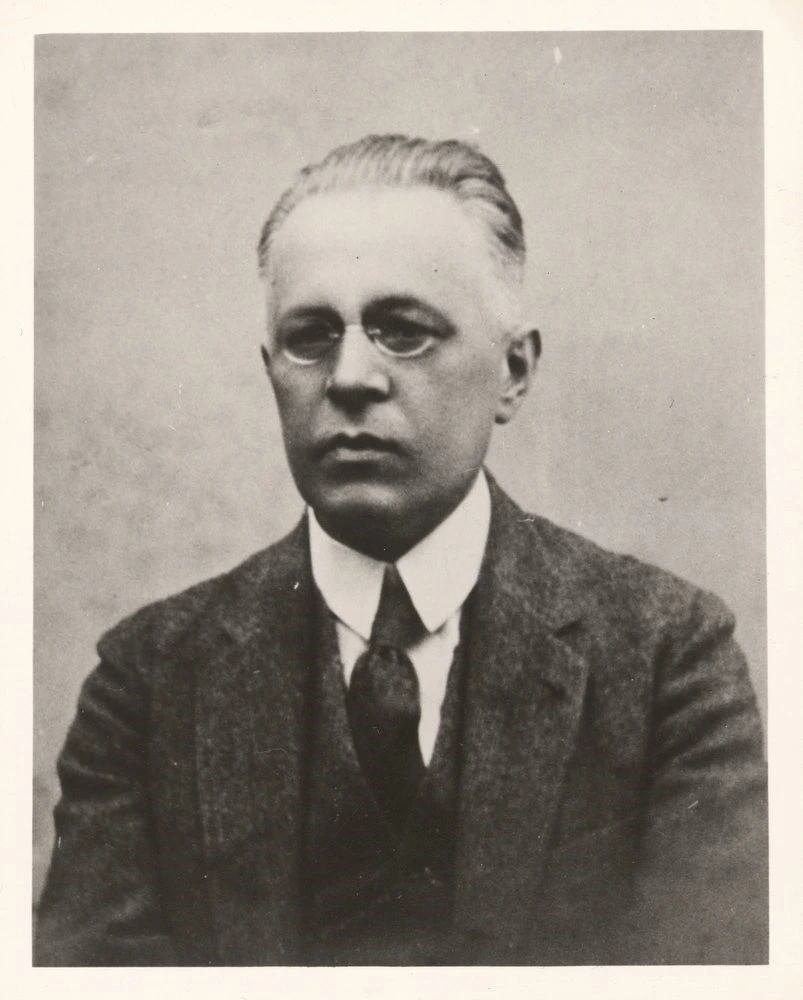
Melcer-Szczawiński Henryk, (the second part of the surname added as a result of Melcer’s adoption by Jakobina Grzybowska née Szczawińska, in order to obtain a basis for using a Polish-sounding surname, according to the birth book 1902/900 of the St. Barbara parish in Warsaw), *25 July 1869 Marcelin near Warsaw (currently Warsaw-Tarchomin; date and place of birth were established by Zuzanna Stromenger, Melcer-Szczawiński’s granddaughter, on the basis of the baptism book 1869/91 of the St. James parish in Warsaw-Tarchomin), †28 April 1928 Warsaw, Polish composer, pianist, teacher and conductor. He began learning the piano with his grandmother, J. Klemczyńska-Melcerowa, and his father, Karol Melcer, a violinist and director of the Musical Society in Kalisz, with whom he performed there for the first time in public on 25 September 1877. After graduating from the classical gymnasium in Kalisz with a gold medal, he began studying mathematics at the University of Warsaw in 1887, which he continued in Vienna in 1892. In 1888–91, he studied at the Institute of Music in Warsaw with R. Strobl (piano, diploma in 1891) and Z. Noskowski (composition); according to some sources, he was also a student of A. Michałowski. In 1889–92, he gave concerts as a soloist and accompanist in many Polish cities, and he went on a concert tour of Russia in 1890 with the American singer Ludwika N. Nicholson. He performed for the first time with “his own concert” in Warsaw on 27 March 1892, gaining a flattering opinion from, among others, J. Kleczyński. In 1892–94, he was a student of T. Leszetycki in Vienna. He travelled with concerts to Berlin, Kiev, Kraków, Lviv and Paris since January 1895. At the 2nd An. Rubinstein Competition for composers and pianists in Berlin, decided on 22 August 1895, Melcer-Szczawiński won the only prize provided for in the rules of the composition competition, for Piano Concerto No. 1 (presented as Concertstück), Piano Trio and two pieces from Trois morceaux caractéristiques Op. 5, and 3rd prize in the piano competition; there he met A. Scriabin and F. Busoni. In 1895/96, Melcer-Szczawiński was a professor of the piano class at the Helsinki Conservatory, at the same time giving concerts in Russia, Berlin and Lviv. He achieved huge success in Lviv on 27 and 28 January 1896, he taught piano at the local conservatory in the years 1896–99, among others, to six-year-old M. Horszowski. He won the competition for the position of director of the Galician Musical Society and the conservatory on 22 September 1899, but wanting to avoid conflicts with the Lviv composers’ community, he resigned and left Lviv. On 9 July 1898, he won 1st prize at the I.J. Paderewski composition competition in Leipzig for his Piano Concerto No. 2 (ex aequo with E. Młynarski’s Violin Concerto No. 1 Op. 11), and in 1904 2nd prize at the composition competition announced by the Warsaw Philharmonic for his opera Maria. Around 1900, he began composing a stage piece Protesilas and Laodamia, and was still working on it at the beginning of 1916. He headed the Music Society in Łódź in 1899–1902. He organised and trained an amateur choir and orchestra, with which he performed Haydn’s The Seasons, among others. In 1901, he performed many times in Poland (Warsaw, Kraków), and also abroad (Berlin, Leipzig, Dresden, Vienna, Budapest). HHHe was again in Lviv in 1902–03, this time as a teacher and director of the H. Ottawowa music school, and from 1907 – the M. Szczycińska and S. Kasparek school. He made his debut as a conductor at the Lviv Philharmonic in October 1902. Later, he was a professor of the higher piano course at the Vienna Conservatory from October 1903. He gave many concerts in Vienna (on 19 November 1903, he presented his Variations sur un thème de St. Moniuszko “Le cosaque” at the Kleiner Musikvereinsaal), also in Kraków, Prague (1906) and Geneva (1907), commuting every month to Łódź and Lviv, where he had many students. The period in Vienna, despite a complicated family situation and overload of work, brought him much satisfaction (friendship with E. Mandyczewski) and an improvement in his difficult financial situation. He settled in Warsaw in the autumn of 1907; from 2 October 1908, he was the artistic director of the Warsaw Philharmonic, where a month later, he appeared as a conductor. In an attempt to raise the level of the declining orchestra, he engaged G. Fitelberg for twelve concerts and initiated significant changes in the repertoire policy, promoted the work of Karłowicz and symphonic music by composers less known in Poland, e.g. Schumann, Bruckner and Elgar. In March 1909, he resigned as director but remained in the Philharmonic as director of chamber and oratorio music evenings. In the summer of 1910 (also 1912, with M. Szulc), he directed symphonic concerts in the Swiss Valley Park in Warsaw. In 1909–11[12?], he was, on the initiative of G. Fitelberg, director of the Warsaw Philharmonic choir, with whom he performed Franck’s Les Béatitudes in 1910, Mozart’s Requiem and Beethoven’s Symphony No. 9 in 1911, and in 1912 he conducted the first performance of F. Nowowiejski’s Quo vadis. Every year, he performed at chamber music evenings at the Philharmonic and at symphony concerts for young people organised by the M. Sobolewska singing school. He began working at the L. Marczewski Music High School in Warsaw on 1 February 1912, and continued to commute to Lviv and Łódź (until 1919). In the years before World War I, once again having no permanent job, he focused on piano, reaching the peak of his technical and musical skills; he inspired admiration with extensive programs of Chopin recitals (e.g. in Warsaw on 29 November 1912 and 4 November 1913); he also played in St. Petersburg (1913), Berlin, Kiev and the Crimea; in 1913, he performed for the first time in Poznań. He was the artistic director of the opera in Warsaw from October 1915 to 1 March 1916. He resigned due to a conflict over repertoire, as he was opposed to staging German operas in Warsaw occupied by German troops. He was bid farewell with regret at a composers’ concert at the Grand Theatre on 10 March 1916. In 1916, in the Hermann and Grossman Chamber Hall in Warsaw, he performed all of Beethoven’s sonatas, discussing their form at the same time; the combination of a concert with a lecture was a novelty in the musical life of Warsaw. From 1917, he devoted much time to the Polish Artistic Club. He was its first and long-standing president and a tireless organiser of concerts, especially of contemporary music. Finally, in 1917, he took over the piano class at the conservatory after A. Michałowski, and in January 1922 – the position of director after E. Młynarski as well as the composition class after R. Statkowski in 1925. At the university, he introduced new curricula, changed the scope of examinations, organised a school choir and orchestra, revived the school’s concert activity and the work of opera classes, set high artistic demands on students and teachers, and tried to gain K. Szymanowski. As a member of the committee of the Warsaw Music Society, he collaborated on editions of works by Moniuszko and Karłowicz. He was the president of the Union of Polish Musicians from 1921, a member of the qualification committee of the Polish section of the International Society for Contemporary Music from 1922, and later the president of the newly established Association for the Promotion of Symphonic Music in 1922–25. The 30th anniversary of his artistic work was celebrated on 16 December 1925 at the Warsaw Philharmonic (repeated in Łódź). In December 1926, he resigned from the position of director of the conservatory in protest against what he considered to be an unjustified – in his opinion – violation of the autonomy of the school by ordering its inspection by the ministry; he remained a professor of the piano class. In 1927, he was a juror at the 1st International F. Chopin Piano Competition. Due to his developing heart disease, he gave concerts and conducted less and less often. Melcer-Szczawiński’s last concert as a composer was conducted by K. Wiłkomirski at the Warsaw Philharmonic on 22 January 1928. Melcer-Szczawiński died suddenly during a lesson at the conservatory. He left two daughters: Wanda (married Sztekkerowa, primo voto Rutkowska, † 4 April 1972) and Maria (married Stromengerowa, † 3 April 1959).
Melcer was an outstanding pianist; he distinguished himself with an excellent finger and octave technique, “fabulous” musicality and memory, softness of touch (in his youth, he was accused of a hard sound and a certain coldness of interpretation, he was criticised for loud playing and not always controlled temperament), finesse and impeccable purity of playing and “crystal-sounding pianissimos,” which is why he was counted among the heirs of An. Rubinstein, alongside J. Śliwiński and J. Hofman; his pianism was appreciated by F. Busoni and E. Petri. He willingly performed full piano cycles. He had a huge solo repertoire from Bach to Wagner (transcriptions), Franck, Reger (who was particularly close to him), Debussy, Ravel, Honegger, Poulenc, and Prokofiev. He promoted contemporary music, especially Polish music, including I.J. Paderewski (19 May 1895 premiere of Polish Fantasy), K. Szymanowski (he performed his Sonata No. 2 Op. 21 many times), M. Karłowicz, G. Fitelberg, H. Opieński, F. Brzeziński, E. Pankiewicz. In chamber ensembles, he performed with such soloists as B. Huberman (Lviv 1903), M. Reger (Vienna 1905, for 2 pianos), F. Ondřićek (Vienna 1906), S. Barcewicz, Wacław, Paweł and Eli Kochański, and G. Piatigorski (Warsaw 1921). His repertoire included almost all piano concertos from the Classical and Romantic periods, as well as Reger’s Piano Concerto in F minor. He gave several hundred concerts, performing in many countries, and in Poland also in small centres. As a conductor, he was considered a good accompanist. He had significant pedagogical achievements; his piano students included H. Ottawowa, R. Benzefowa, W. Neumarkowa, N. Dunicu (in Vienna), A. Wieniawski, A. Taube, S. Raube, M. Trombini-Kazuro, S. Śledziński, T. Sygietyński, and M. Kondracki (1926–27), while in the field of composition Melcer-Szczawiński provided friendly consultations to A. Tansman. Melcer-Szczawiński’s piano and pedagogical career curbed his compositional activity. He wrote his most important pieces before 1907 and presented them until the last years of his life at many compositional concerts. He freely used late Romantic means of compositional technique, contributing to the flourishing of Neo-Romanticism in Poland at the turn of the century. His instrumental music showed romantic tendencies towards a three-theme sonata allegro (Trio) and monothematicism (Sonata, Piano Concerto No. 1). Elements of Polish folklore, artistically processed, provided significant expressive enrichment, which distinguished his works against the background of the so-called “homeliness” prevalent in Polish music at that time. In his vocal works, Melcer-Szczawiński strove to recompose the form and departed, although not always consistently, from the traditional, melodious melody in favour of declamatory, expressive recitative and deepening the expressive uniformity of words and music (Songs to Dehmel’s words). His lyricism stands out favourably against the background of the template songs of many Polish composers from the early 20th century. Melcer-Szczawiński’s stage works are characterised by expressive monologues of the voices of the characters (e.g. the famous monologue of Laodamia expressing the apotheosis of death) and the emphasis on the role of the orchestra, the main factor of dramatic tension, and expanded tonality. Melcer-Szczawiński’s style is characterised by graceful, transparent instrumentation (a beautiful arrangement of Dąbrowski’s Mazurka in 4/4 metre in the Polish March), a fondness for soft, saturated, but also strong sounds, a sense of sound colour, inventiveness in the use of variational-virtuoso means of transforming the theme (paraphrase) and the multitude and artfulness of polyphonic means (the quadruple canon in the 3rd act of Maria, the integrating role of polyphony in instrumental forms, e.g. in Piano Concerto No. 2). Melcer-Szczawiński’s piano works were promoted by J. Lalewicz, J. Wertheim, S. Palmgren and I. Friedman, and vocal literature by W. Brzeziński, H. Zboińska-Ruszkowska, and S. Korwin-Szymanowska. Melcer-Szczawiński’s music, not yet studied, deserves a proper place in the contemporary concert repertoire.
Literature: Interim [K. Kelles-Kraus] Symfonia c-moll Henryka Melcera w Dolinie Szwajcarskiej, “Echo Muzyczne, Teatralne i Artystyczne” 1900 No. 874; A. Sygietyński „Maria”, opera w 3-ch aktach Henryka Melcera, “Goniec Wieczorny” (Warsaw) from 17 February 1904 No. 86, 95 and 99; A. Chybiński “Gazeta Lwowska” from 21 July 1906 No. 165 [review of Piano Concertos No. 1 and No. 2 and of Variations of a Theme of “Kozak”]; H. Opieński Henryk Melcer. Z powodu koncertu kompozytorskiego d. 19 lutego b.r. w Warszawie, “Przegląd Muzyczny” 1925 No. 6; F. Szopski Henryk Melcer. Z okazji jubileuszu 30-lecia działalności artystycznej and H. Melcer Garść wspomnień. Na marginesie 30-lecia działalności artystycznej, “Muzyka” 1926 No. 1; S. Niewiadomski Henryk Melcer [obituary], “Muzyka” 1928 No. 4–5; H. Opieński Henryka Melcera Wspomnienie pośmiertne, “Przegląd Muzyczny” 1928 No. 5; B. Chmara-Żaczkiewicz Transkrypcje fortepianowe Melcera w świetle transkrypcji Liszta, in: Muzyka fortepianowa, vol. 2, «Prace Specjalne Akademii Muzycznej w Gdańsku» No. 12, ed. M. Podhajski, Gdańsk 1977; W. Melcer Henryk Melcer – mój ojciec, ed. E. Batura, Z. Stromenger, E. Sztekker, Warsaw 1994; M. Gmys Dysonanse i harmonie. Muzyka Młodej Polski wobec innych sztuk, Poznań 2012.
Compositions
Instrumental:
for orchestra:
4 nastrojowe obrazy w formie symfonii, in C minor, 1. Marzenia dziecięce, 2. Intermezzo with a Fugue, 3. Porywy młodzieńcze, 4. Rozczarowanie, ca. 1898, premiere Warsaw 27 June 1900, Winderstein Orchestra, conductor Henryk Melcer-Szczawiński
Polish March in B-flat major for wind orchestra, August–September 1920, premiere Warsaw 12 September 1920, conductor E. Młynarski, score in: Zbiór marszów, series 3, march no. 8, Warsaw 1923 edition Ministry of Military Affairs
for piano and orchestra:
Piano Concerto No. 1 in E minor 1894, premiere Lviv 27 January 1896, piano Henryk Melcer-Szczawiński, Orchestra of Count Skarbek’s Theatre, score and two pianos reduction published in Vienna 1904 Doblinger
Piano Concerto No. 2 in C minor 1897, premiere Lviv 1898, piano Henryk Melcer-Szczawiński, theatre orchestra, two pianos reduction arranged by Henryk Melcer-Szczawiński, published in Kiev 1913 Idzikowski
Canon for piano, violin and cello, 1890, premiere Warsaw before 28 June 1890 (a performance by students of the Institute of Music)
Piano Trio in G minor Op. 2, ca. 1894, Polish premiere Warsaw 10 January 1896, piano Henryk Melcer-Szczawiński, violin S. Barcewicz, cello A. Cink, published in Berlin 1903 Ries & Erler
Sonata in G major for piano and violin, 1907, part 3 created ca. 1900, premiere Lviv 3 December 1907, violin W. Kochański, piano H. Melcer-Szczawiński, published in Kraków 1909 Piwarski i Ska
for piano:
Canons 1890, Warsaw 23 June 1890, piano Henryk Melcer-Szczawiński (a performance by students of the Institute of Music)
Fugue for four voices in C-sharp minor 1890–95(?), “Muzyka” 1926 supplement to No. 1
Trois morceaux caractéristiques Op. 5: 1. Andante con moto, 2. Menuet, 3. Vivo [scherzo], in B-flat major, 1895, performer in (the abbreviation does not mean the premiere, it refers to the earliest information known from source materials) Lviv 26 June 1897, piano Henryk Melcer-Szczawiński, published in Lviv 1897 Jakubowski i Zadurowicz
Morceau fantastique “Phantasiestück” 1895, premiere Warsaw 23 March 1896, piano Henryk Melcer-Szczawiński, published in Kraków ca. 1907 Piwarski i Ska
Etude Op. 8, ca. 1896, Lviv “Nowości Artystyczne” 1898 supplement to No. 13, published in Warsaw before 1904 Gebethner i Wolff
Variations sur un thème de St. Moniuszko „Le cosaque”, ca. 1900, premiere Warsaw 23 October 1903, piano H. Melcer-Szczawiński, published in Vienna 1904 Doblinger
Trois pensées musicales: 1. Prélude, 2. Quasi-Mazurka, 3. Nocturne, ca. 1904–05, premiere Kraków 5 March 1909, piano Henryk Melcer-Szczawiński “Nowości Muzyczne” 1907 No. 1, 2, 5, published in Warsaw ca. 1910 Gebethner i Wolff
Valse à la Chopin, ca. 1905–08, published in Warsaw ca. 1909–13 Gebethner i Wolff
Variations on a Folk Theme, ca. 1909–11, premiere Warsaw October 1912(?), November 1913(?), published in Warsaw 1925 Gebethner i Wolff
Vocal and vocal-instrumental:
„Kaliszowi”, song for a 4-voice unaccompanied male choir, words by M. Konopnicka, 21 September 1908, performed in Kalisz 1908, in: Kalendarz na Szkołę Rzemiosł na rok 1909, Kalisz 1908, photographic reproduction: “Muzyka” 1970 No. 3
Ty czekaj mnie, song for a 4-voice unaccompanied male choir, lost
Canzona for voice and piano, words by J. Moszyńska for 2 female voices and piano, 1890, “Echo Muzyczne Teatralne i Artystyczne” 1890 supplement to No. 369, published in Warsaw ca. 1903 Gebethner i Wolff
Three Songs for voices and piano: 1. Pieśń tęsknoty, words by M. Konopnicka, 2. Siostry, words by J. Jedlicz-Kapuścieński, 3. Opłyń mnie ciemny lesie, words by K. Przerwa-Tetmajer (there was also a version for voice and orchestra, orchestral score not found), ca. 1902–03, performed in Warsaw 24 October 1903, singer K. Pietraszewska, piano Henryk Melcer-Szczawiński, Kraków ca. 1909 Piwarski i Ska (in 3 books)
Fünf Gesänge zu den R. Dehmels Gedichten… (Five Songs to Poetry by R. Dehmel) for voice and piano, Polish translation: S. Rossołowski (1–4) and P. Maszyński (5), 1. Stimme im Dunkeln (Głos w mroku), 2. Das Grosse Karussel (Wielki Karuzel), 3. Menschenthorheit (Rusałka), 4. Mondnacht (Noc księżycowa), 5. Im Traum (W śnie; there was also a version for voice and orchestra, orchestral score not found), ca. 1904–08, premiere Warsaw 14 December 1908, singer M. Lange-Wysocka, piano Henryk Melcer-Szczawiński, published in Kraków ca. 1910 Piwarski i Ska
Pani Twardowska, ballad for tenor, mixed choir and orchestra, 1895, published in Lviv 1897
Maria, opera in 3 acts, libretto Stefan Szczawiński after A. Malczewski, 1893–1902, premiere Warsaw 16 February 1904, soloists, choir and orchestra of the Teatr Wielki, conductor V. Podesti, dir. W. Floryański, for edition see: editions
Protesilas i Laodamia, opera, 3 fragments, not finished, operas [theatre music?] after the drama by S. Wyspiański: 1. Laodamia’s aria („Na zawsze dla mnie szczęście zagasło…”), 2. Aojdes’s monologue, 3. choral scene, ca. 1900–16, premiere Warsaw 10 March 1916, soloists, choir and orchestra of the Teatr Wielki, conductor Henryk Melcer-Szczawiński
Arrangements for piano:
Maria–Prząśniczka fragments from the opera, ca. 1903–04, performances Warsaw ca. 1904, Warsaw December 1907, “Nowości Muzyczne” 1904 No. 2, published in Kraków ca. 1907 Piwarski i Ska
Chór masek („Ach na tym świecie…”), after 16 March 1904, performed in Warsaw March 1904, “Nowości Muzyczne” 1904 No. 3
songs of S. Moniuszko:
Pieśń wieczorna, ca. 1897–99, premiere Warsaw 23 October 1900, published in Warsaw 1901 Warsaw Music Society, 1913, 1925–31
Prząśniczka, ca. 1897–99, premiere Warsaw 23 October 1900, published in Warsaw 1901 Warsaw Music Society, 1925–31
Znasz-li ten kraj, ca. 1897–99, premiere Warsaw 23 October 1900, published in Warsaw 1901 Warsaw Music Society, 1913, 1925–31
Dumka for piano, ca. 1897–99, performed in Warsaw ca. 1900, published in Warsaw 1925 Gebethner i Wolff
Dumka, paraphrase for violin and piano, ca. 1900, published in Warsaw 1929 Polish Music Publishing Society
Groźna dziewczyna, paraphrase for piano, 1903, performed Warsaw ca. 1908, autograph at the Warsaw Music Society Library, sign. R 806
Wiosna, ca. 1904, performed Warsaw 27 November 1908, Kiev 1913 Idzikowski
Stary kapral, paraphrase for piano, ca. 1904, performed Warsaw ca. 1908, Warsaw 1925 Gebethner i Wolff
Lulajże Jezuniu, Christmas carol for voice and piano, ca. 1920–23, facsimile ed. of an autograph “Pani” Warsaw 1924 No. 12
Editions:
Piano Conerto No. 1, piano reduction, Kraków 1954
Pani Twardowska, piano reduction, ed. S. Kisielewski, Kraków 1956
Pieśń tęsknoty from Three Songs for 4-voice mixed choir and piano, ed. T. Maklakiewicz, in: T. Maklakiewicz Polska liryka wokalna, Warsaw 1963 Centralna Poradnia Artystyczna Ruchu Amatorskiego
Three Songs and Five Songs to poetry by R. Dehmel, new transl. by T. Chrzanowski, in: Pieśni wybrane, ed. W. Poźniak, Kraków 1964
Sonata in G major for piano and violin, Kraków 1966, 1971
Trois pensées musicales, No. 2 Quasi-Mazurka in: Mazurki kompozytorów polskich na fortepian, vol. 2, ed. E. Wąsowska, Warsaw 1995 Polish National Library, No. 3 Nocturne, Kraków 1950
arrangements of songs by S. Moniuszko – Prząśniczka for piano, Kraków 1949, 1986, Wiosna for piano, Kraków 1950, Groźna dziewczyna, paraphrase for piano, Warsaw 1951 Czytelnik, Dumka, paraphrase for violin and piano, Kraków 1952