
Offenbachiana. Wiązanka melodii z operetek J. Offenbacha wg A. Conradiego [partytura]

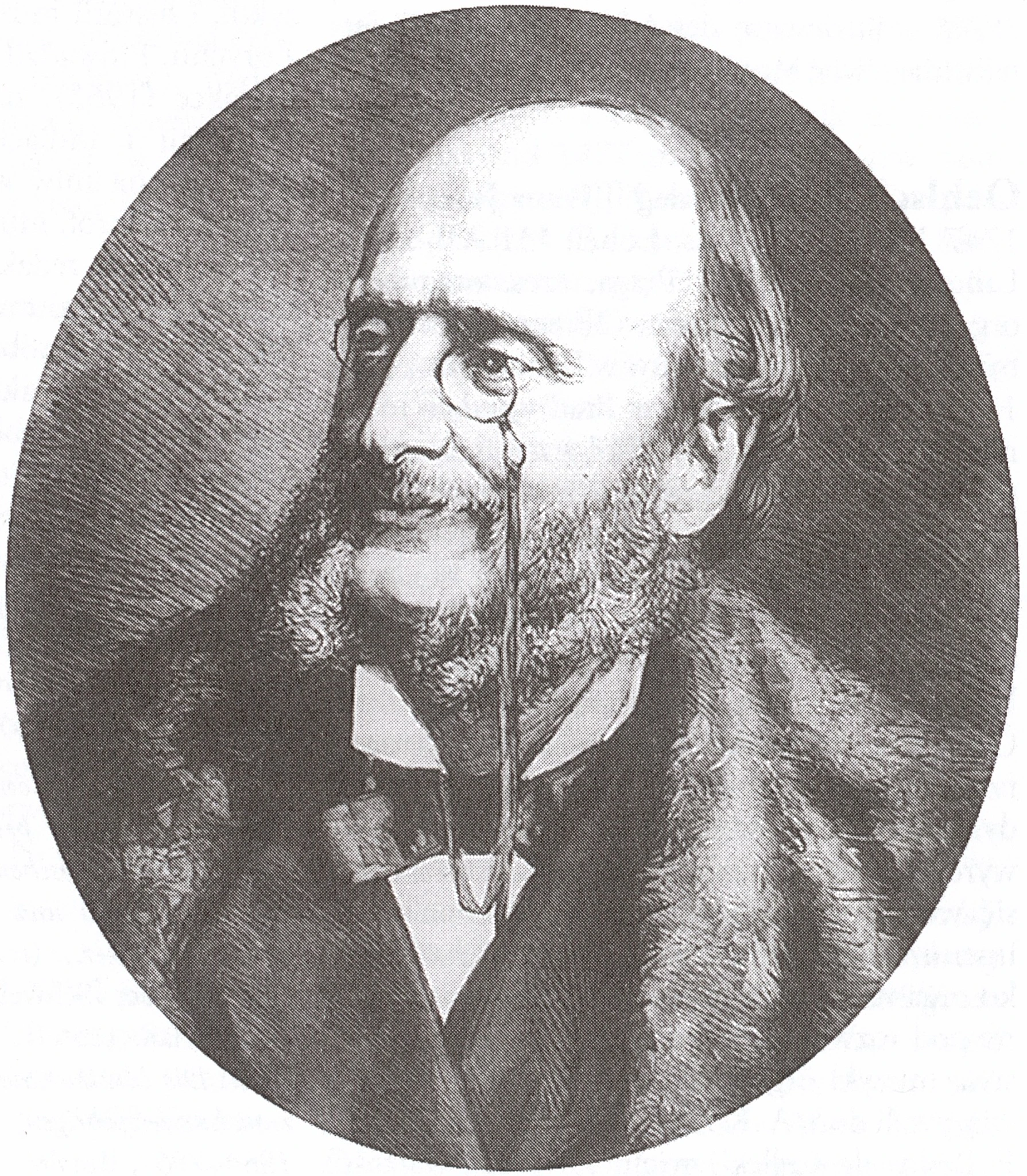
Offenbach Jacques, Jacob, *20 June 1819 Cologne, †5 October 1880 Paris, French composer of German origin. He came from the Jewish Eberst family, originally from Offenbach am Main, whose name later became his surname. His father, Isaac Juda Eberst, a bookbinder by profession, worked as a violin, flute and guitar teacher in Deutz am Main and as a cantor in the synagogue in Cologne, where he settled permanently in 1816; he was Jacob’s first music teacher, teaching him to play the violin. From 1828, Offenbach took cello lessons, initially with J. Alexander, and later with B. Breuer. In 1833, he left for Paris and was accepted into the cello class at the conservatoire, even though the institution’s statutes prohibited the admission of foreigners. In 1834 he left the conservatoire to study privately with L. Norblin, concertmaster of the Opéra de Paris, and took up a position as a cellist in the orchestra of the Opéra-Comique. In 1835, he took composition lessons from F. Halévy. Offenbach soon became known as a composer of dance music, mainly waltzes performed at balls and concerts by garden orchestras, as well as a virtuoso cellist in Parisian salons, often in a duet with F. von Flotow; he also occasionally gave public concerts from time to time, among others with An. Rubinstein (Paris, 1841) and F. Liszt (Cologne, 1843). In 1844, after converting to Catholicism, he married the Spanish Herminia d’Alcain, with whom he had five children. In the same year, thanks to J. Mitchell, the lessee of the French theatre in London, he went on a concert tour of England, performing at the royal court in Windsor, among other venues.
Offenbach’s first attempts at dramatic music were unsuccessful; the operetta L’Alcôve was staged at the composer’s expense. During the revolution of 1848, Offenbach settled in Cologne, where he performed in public and composed folk-patriotic songs. In 1849, he staged a German version of L’Alcôve entitled Marielle. Between 1850 and 1855, he was the bandmaster at the Théâtre-Français in Paris, for which he also composed orchestral interludes and songs. In 1853 the comic opera Pépito, dedicated to the wife of E. Perrin, director of the Opéra-Comique, met with limited success; by contrast, the playful Oyayaie ou La reine des îles, staged at the Folies-Nouvelles, was well received.
Shortly before the opening of the World Exhibition in 1855, Offenbach rented a small theatre on the Champs-Élysées near the Palais de l’Industrie. The licence granted by the censorship office allowed the new theatre, named Bouffes-Parisiens, to stage plays with music, limited to two characters on stage. The inaugural programme on 5 July 1855, consisting of three one-act plays, was a huge success (approx. 400 performances of Les deux Aveugles). For the winter season, the theatre moved to the Théâtre des Jeunes Elèves in the Passage Choiseul, which became the permanent home of the Bouffes-Parisiens from 1856 onwards. For many years, the theatre operated successfully, staging Offenbach’s operettas and works by other composers, including A. Adam, L. Delibes, J.L. Duprat, and adaptations of works by Mozart and Rossini. Subsequent productions were characterised by rich, dazzling stage designs, beautiful costumes, impressive stage effects, and light-hearted humour, making Offenbach’s theatre one of the curiosities of Paris. As his reputation grew, the Bouffes-Parisiens company was invited on tours, including to England. However, Offenbach’s extravagance led to financial difficulties, and he was at times forced to flee abroad to escape his creditors (Brussels, Bad Ems).
Many writers collaborated with Offenbach, mostly tabloid journalists (including Ch. de Morny), but the composer valued seasoned librettists most highly: L. Halévy, H. Meilhac and H. Crémieux. Initially, he composed one-act operas with two characters. nitially, he composed one-act operas with two characters. Starting with the two-act operetta Orphée aux enfers (1858), which received with enthusiastic acclaim by audiences and with mixed reactions from critics (e.g. J. Janin’s negative opinion), he also began to write works that completely filled the performance time, such as Geneviève de Brabant, Le Pont des soupirs, Le Roman comique, but he generally staged them at other venues, such as the Théâtre des Variétés (La belle Hélène, Barbe-Bleue, La Grande-Duchesse de Gérolstein) or the Opéra-Comique (Barkouf, Robinson Crusoé). In 1860, Offenbach obtained French citizenship, and in 1861 he was decorated with the the National Order of the Legion of Honour. He then resigned from his position as director of the Bouffes-Parisiens, which allowed him to make longer trips to Bad Ems and Vienna, where his operettas were hugely successful. It was there that, in 1863, he met his greatest rival, J. Strauss Jr. In the same year, he composed a three-act romantic opera, Les Fées du Rhin, staged at the Hofoper in Vienna under the title Die Rheinnixen, which, however, did not gain popularity. The operetta La Belle Hélène was much more successful in 1864, followed by La vie Parisienne.
The Franco-Prussian War of 1870, during which Offenbach was perceived by the French as German and by the Germans as French, abruptly interrupted his career. The composer left with his family for Spain, then Italy and Austria. In 1871, he returned to Paris but was unable to regain his lost position. The Théâtre de la Gaîté, which he had been managing since 1873, went bankrupt the following year due to poor decisions, both artistic (operettas were replaced by banal, albeit spectacular, féeries), personal (collaboration with V. Sardou as a librettist) and economic (huge production costs). Offenbach’s financial situation improved only after his 1876 tour of America (including New York and Philadelphia). His subsequent works staged in France met with little success, and it was not until 1879 that he scored another hit with the premiere of the operetta La Fille du tambour-major. Despite these failures and increasingly serious health problems, Offenbach did not give up his creative work and even undertook to compose a work more ambitious than all his previous ones – the opera Les contes d’Hoffmann, which he did not manage to complete (the orchestration was carried out in accordance with the composer’s wishes, contained in his will, E. Guiraud); the premiere took place at the Opéra-Comique four months after Jacques Offenbach’s death.
Offenbach is considered the co-creator (alongside Hervé) of modern French operetta. Initially, he intended to revive the opéra comique genre by giving it a lighter, more entertaining literary, musical, and theatrical form. In the early years of the Bouffes-Parisiens, Offenbach generally wrote one-act pieces in the form of comic sketches set to music. Later, the comedy of Offenbach’s operettas, which he also referred to as bouffonnerie, opéra bouffe or vaudeville (this multitude of terms, sometimes synonymous, makes it difficult to classify his stage works precisely), always had an expository purpose, consisting in mocking the political and social relations prevailing during the reign of Napoleon III. Everything that was pompous, false, absurd and megalomaniacal became the subject of criticism, especially corrupt authorities, court life, the social conventions of Parisian salons, and provincial snobbery; Operas in the style of Meyerbeer or the young Wagner, linguistic customs, sayings and dialects, as well as certain mythological themes (Orpheus in Hell, Helen of Troy) and fairy tales (Bluebeard) were also mocked The targets of his satire included everything marked by pomposity, falseness, absurdity, and megalomania – above all, corrupt authority, court life, the social conventions of Parisian salons, and provincial narrow-mindedness.; operas in the style of Meyerbeer or the young Wagner, linguistic customs, sayings and dialects, as well as certain mythological themes (Orphée aux enfers, La belle Hélène) and fairy tales (Barbe-bleue) were also mocked. The action was typically set in a salon or courtly milieu, but a novelty in this type of theatre was the introduction of characters from lower social class, for example beggars and vagrants from the Parisian populace. Until 1870, however, Offenbach encountered neither censorship nor signs of hostility from state authorities. On the contrary, many of them were regulars at his theatre, and some, such as Count Ch. de Morny (Napoleon III’s half-brother and Minister of the Interior), were even his collaborators. Offenbach’s works were characterised by subtle, allusive humour, but parody and grotesque prevailed. The composer often introduced bizarre and shocking ideas, even scenes of an orgiastic nature, teetering on the edge of good taste. He liked to use texts containing wordplay in the form of funny titles and names (e.g. Oyayaie…, Vert-Vert, Fé-Hi-Han, Ke-Ki-Ka-Ko, the military Piff, Paff, Puff, etc.), and even asemantic ‘gibberish’ pretending to be Chinese (Ba-ta-clan).
Offenbach possessed a rich melodic imagination and a good knowledge of the art of instrumentation, but he employed banal compositional techniques. The music composed for operettas, most often in the form of chansons, couplets and fashionable dances (waltz, galop, cancan, quadrille), marches and parodies of ‘serious’ opera forms, was characterised by a cheerful mood, and thanks to its melodiousness and typical harmonic means, it quickly gained popularity. Offenbach emphasised musical movement, electrifying rhythm and dizzying, sometimes stunning tempo, especially in the finales. He treated dances not only as genre scenes or social realities, but also as a means of drama; for example, the waltz in La belle Hélène served to build the dramatic climax of the entire work, while also being a sign of widespread demoralisation and life in a state of intoxication. Offenbach also tried his hand at opera, which was only crowned with success in Les contes d’Hoffmann. This five-act work, composed in the opéra comique convention (with spoken texts), is based on then-popular stories by the author E.T.A. Hoffmann, with the author himself incorporated into the dramatis personae. The individual stories were reshaped as episodes from his life and combined to form the content of the five acts, entitled: Prologue – Olympia – Antonia – Giulietta – Epilogue. The famous Barcarolle and the music for Hoffmann’s songs in Act 2 were transferred here from Offenbach’s earlier opera Die Rheinnixen. Other “numbers” taken from Offenbach’s oeuvre were also added to the score published in 1907, e.g. the septet for Act 2, and recitatives accompanied by the orchestra were introduced in place of spoken dialogue. Compared to the style of operettas, the music of Les contes d’Hoffmann is characterised by greater dramatic expressiveness, especially in the demonic and fantastical scenes (chromaticism, sharp dissonances, emphasis on the colouristic qualities of individual instruments, frequent tremolos) reminiscent of the German Romantic opera of Weber and Marschner.
After many years of international popularity, during which Offenbach’s works fulfilled the expectations of a bourgeois audience and played a historical role in the reception of music and musical institutions, his output was later overshadowed by other representatives of the French (Ch. Lecocq, R. Planquette) an Vienesse operetta (J. Strauss Jr., F. von Suppé, I. Kálmán). Since the 1920s, several operettas (Le mariage aux lanternes, Orphée aux enfers, La belle Hélène, Barbe-bleue, La vie Parisienne, La Grande-Duchesse de Gérolstein, Périchole and Les brigands) have been part of the regular repertoire of operetta theatres, where they are usually staged with newer versions of the libretto.
Literature:
Biographies, catalogues, manuscripts, letters – R. L. Folstein and S. Willis A Bibliography on Jacques Offenbach, “Current Musicology” 1971 No. 12; Th. Schipperges Bibliotheca Offenbachiana. Jacques Offenbach (1819–1880), eine systematisch-chronologische Bibliographie, Cologne 1980; R. Didion Musikautographen von Jacques Offenbach, Berlin 1989; J.-C. Yon Offenbach Catalogue, Paris 1996; U. Mattusch Jacques Offenbach. Notenmanuskripte und Notendrucke, Cologne 1999; J.-C. Yon M. Offenbach. Nous ecrit: Lettres du compositeur au Figaro et autres propos, Paris 2019.
Mentions, comments – J. Brindejont-Offenbach Offenbach, mon grand-père, Paris 1940; P.W. Jacob Jacques Offenbach in Selbstzeugnissen und Bilddokumenten, Reinbek k. Hamburga 1969, 2nd ed. 1980; G. Knepler Karl Kraus liest Offenbach. Erinnerungen, Kommentare, Dokumentationen, Frankfurt am Main 1979.
Biographies and monographs – A. Martinet Offenbach, sa vie et son oeuvre, Paris 1887, 2nd ed. 1892; P. Bekker Jacques Offenbach, «Die Musik», ed. R. Strauss, XXXI/XXXII, Berlin 1909; E. Rieger Offenbach und seine Wiener Schule, «Theater und Kultur» IV, Vienna 1920; M. Teneo, Th. Baker Jacques Offenbach: His Centenary, “The Musical Quarterlyˮ VI/1 (1920); Jacques Offenbach. Beiträge zu seinem Leben und seinen Werken, ed. K. Soldan, Berlin 1924; R. Brancour Offenbach, «Les Musiciens Célèbres» XLIII, Paris 1929; L. Schneider Offenbach, Berlin 1930; S. Kracauer Jacques Offenbach und das Paris seiner Zeit, Amsterdam 1937, 2nd ed. titled Pariser Leben. Jacques Offenbach und seine Zeit, Munich 1962, 3rd ed. Frankfurt am Main 1976, French edition entitled Jacques Offenbach ou le secret du Second Empire with an introduction by D. Halevy, translation by L. Astruc, Paris 1937, reprint 1994, English edition entitled Orpheus in Paris. Offenbach and the Paris of his Time, translation by G. David, E. Mosbacher, London, New York 1938, 2nd ed. New York 2002, Polish ed. Jacques Offenbach i Paris jego czasów, transl. A. Sąpoliński, Warsaw 1992; A. Moss, E. Marvel Cancan and Barcarole. The Life and Times of Jacques Offenbach, New York 1954; A. Decaux Offenbach, roi du Second Empire, Paris 1958, 3rd ed. 1975, German ed. Offenbach. König des Zweiten Kaiserreichs, Munich 1960; I. I. Sollertinskij Offenbach, Moscow 1962; O. Schneidereit Jacques Offenbach, Leipzig 1966, 2nd ed. 1970; D. Rissin Offenbach, ou Le rire en musique, Paris 1980; P. Gammond Offenbach. His Life and Times, Tunbridge Wells 1980, 2nd ed. 1981; J. Harding Jacques Offenbach, London 1980; A. Faris Jacques Offenbach, London 1980; R. Pourvoyeur Offenbach – Idillio e Parodia, Madrid 1980; A. Lamb Offenbach in One Act, “Musical Timeˮ CXXI No. 1562 (X 1980), pp. 615-617; H. MacDonald Hoffmann’s Melancholy Tale, “Musical Timeˮ CXXI No. 1652 (X 1980); C. Dufresne Jacques Offenbach, ou La gaîté parisienne, Paris 1992; H. Hadlock Return of the repressed: The Prima donna from Hoffmann’s “Tales” to Offenbach’s “Les contes,” “Cambridge Opera Journalˮ VI/3 (1994); R. Pourvoyeur Offenbach, Paris 1994; Jacques Offenbach “Les Contes d’Hoffmann” dossier de presse parisienne (1881), ed. A. Jacobshagen, Bietigheim 1995; G. Wehmeyer Höllegalopp und Götterdämmerung. Lachkultur bei Jacques Offenbach und Richard Wagner, Cologna 1997; A.Ch. Brade Kundry und Stella. Offenbach contra Wagner, Bielefeld 1997; J. Kaufmann Isaac Offenbach und sein Sohn Jacques, «Conditio Judaica», Tübingen 1998; Offenbach und die Schauplätze seines Musiktheaters, ed. R. Franke, Laaber 1999; H. Reil Siegfried Kracauers Jacques Offenbach: Biographie, Geschichte, Zeitgeschichte, New York 1999, Frankfurt am Main 2003; P. Hawig Jacques Offenbach: Facetten zu Leben und Werk, Bergheim 1999; L. Kydryński Offenbach, Warsaw 1999; Th. Schipperges Jacques Offenbach und musikalische Analyse. Zum “Galop infernal aus Orphée aux enfers,” “International Journal of Musicologyˮ VIII (1999); J. C. Yon La carrière posthume d’un musicien ou Offenbach aux enfers, “Histoire, Économie et Sociétéˮ, XXII/2, 2003; J. C. Yon Jacques Offenbach, Paris 2000, reprint 2010; Jacques Offenbach und das Théâtre des Bouffes-Parisiens 1855, materials from the symposium in Bad Ems, 2005, entitled “Jacques-Offenbach-Studien.” Band 1, eds. P. Ackermann, R.-O. Schwarz, J. Stern, Fernwald (Hesse) 2005; R.-O. Schwarz Vaudeville und Operette. Jacques Offenbachs Werke für das Théâtre du Palais-Royal, “Jacques-Offenbach-Studienˮ vol. 2, Fernwald 2007; P. Hawig Einladung nach Gerolstein. Untersuchungen und Deutungen zum Werk Jacques Offenbachs, “Jacques-Offenbach-Studienˮ vol. 3, Fernwald 2008; R. Pourvoyeur Jacques Offenbach: Essays zur Rehabilitierung eines Komponisten, “Jacques-Offenbach-Studienˮ vol. 5, Fernwald 2009; N. d’Estienne d’Orves Jacques Offenbach, Arles, Paris 2010; Jacques Offenbach oder der Verlust des Authentischen, ed. P. Ackermann, “Jacques-Offenbach-Studienˮ vol. 4, Fernwald 2010; L. Sanelick Jacques Offenbach and the Making of Modern Culture, Cambridge 2017; J.-Ph. Biojout Jacques Offenbach, Paris 2018; R.-O. Schwarz Jacques Offenbach. Ein Europäisches Porträt, Cologna, Weimar, Vienna 2018; P. Hawig, A. S. Riemer Musiktheater als Gesellschaftssatire. Die Offenbachiaden und ihr Kontext, Fernwald 2018; A. Henseler Jacques Offenbach, Los Angeles 2019; Der “andere” Offenbach. Bericht über das internationale Symposium anlässlich des 200. Geburtstages von Jacques Offenbach in der Hochschule für Musik und Darstellende Kunst Frankfurt am Main am 18. und 19. Oktober 2018, eds. A. Grün, A.S. Riemer and R.-O. Schwarz, Cologna 2019; A. Flores: Jacques Offenbach und sein Werk bei Siegfried Kracauer und darüber hinaus, Münster 2021.
Compositions
Stage:
operettas and comic operas:
L’Alcôve, 1 act, libretto Ph. Pittaud de Forges, A. de Leuven, E.-G. Roche, staged in Paris, 24 April 1847, published under the title Marielle, Cologne 1849
Le Trésor à Mathurin, 1 act, libretto L. Battu, concert performance in Paris, 7 May 1853, 2nd version titled Le Mariage aux lanternes, libretto J. Dubois (M. Carré), L. Battu, staged in Paris, 10 October 1857, under the title Małżeństwo przy latarniach Warsaw 20 March 1859
Pépito, 1 act, libretto J. Moinaux, L. Battu, staged in Paris, 28 October 1853
Entrez, messieurs, mesdames, prologue, 1 act, libretto F.-J. Méry, J. Servières (L. Halévy), staged in Paris, 5 July 1855
Une Nuit blanche, 1 act, libretto E. Plouvier, staged in Paris, 5 July 1855
Les deux aveugles, 1 act, libretto J. Moinaux, staged in Paris, 5 July 1855
Oyayaie ou La reine des îles, 1 act, libretto J. Moinaux, staged in Paris, 7 August 1855
Le Violoneux (Martin der Geiger or Die Zaubergeige), Breton Legends, 1 act, libretto E. Mestépès, E. Chevalet, staged in Paris, 31 August 1855
Ba-ta-clan, 1 act, libretto L. Halévy, staged in Paris, 29 December 1855
Trafalgar sur un volcan, 1 act, libretto J. Méry, staged on 29 December 1855
Tromb-al-ca-zar ou Les criminels dramatiques, 1 act, libretto Ch.D. Dupeuty, E. Bourget, staged in Paris, 3 April 1856
La Rose de Saint-Flour, 1 act, libretto M. Carré, staged in Paris, 12 June 1856
Le 66, 1 act, libretto A. Pittaud de Forges, staged in Paris, 31 July 1856
Financier et le savetier, 1 act, libretto H. Meilhac, staged in Paris, 23 September 1856
Croquefer ou Le dernier des paladins, 1 act, libretto L.-A. Jaime, E. Tréfeu, staged in Paris, 12 February 1857
Vent du soir ou l’horrible festin, 1 act, libretto Ph. Gille, staged in Paris, 16 May 1857
Mesdames de la Halle, 1 act, libretto A. Lapointe, staged in Paris, 3 March 1858
La Chatte métamorphosée en femme, 1 act, libretto E. Scribe, Mélesville (Anne-Honoré-Joseph Duveyrier), staged in Paris, 19 April 1858
Orphée aux enfers, 2 acts, libretto H. Crémieux, L. Halévy, staged in Paris 21 October 1858, Warsaw, 19 February 1862; 2nd version, 4 acts, staged in Paris, 7 February 1874
Un mari à la porte, 1 act, libretto A. Ch. Delacour (P.-A. Lartigue), L. Morand, Paris, 22 July 1859
Geneviève de Brabant, 2 acts, libretto A. Jaime, E. Tréfeu, staged in Paris, 19 November 1859; 2nd version, 3 acts, libretto E. Tréfeu and H. Crémieux, staged in Paris, 26 December 1867
Le Carnaval des revues, 1 act, libretto E. Grangé, Ph. Gille, L. Halévy, staged in Paris, 10 February 1860
Barkouf, 3 acts, libretto E. Scribe, H. Boisseaux, staged in Paris, 24 December 1860
La Chanson de Fortunio, 1 act, libretto H.-J. Crémieux, L. Halévy, staged in Paris, 5 January 1861
Le Pont des soupirs, 2 acts, libretto H. Crémieux, L. Halévy, staged in Paris, 23 March 1861; 2nd version, 4 acts, staged in Paris, 8 May 1868
Monsieur Choufleuri restera chez lui le…, 1 act, libretto M. de Saint Rémy (Ch., Duc de Morny), E. de l’Epine, H. Crémieux and L. Halévy, staged in Paris, 14 September 1861
Apothicaire et perruquier, 1 act, libretto É. Frébault, staged in Paris, 17 October 1861
Le Roman comique, 3 acts, libretto H. Crémieux, L. Halévy, staged in Paris, 10 December 1861
Monsieur et Madame Denis, 1 act, libretto M. Laurencin (P-A. Chapelle), M. Delaporte, staged in Paris, 11 January 1862
Les Bavards, 2 acts, libretto Ch. Nuitter after Los habladores by M. de Cervantes, staged in Paris 20 February 1863, under the title Bävard et bavarde Bad Ems, 11 June 1862
Lieschen et Fritzchen. Conversation alsacienne, 1 act, libretto P. Boisselot, staged in Bad Ems, 12 July 1863
Il signor Fagotto, 1 act, libretto Ch. Nuitter, E. Tréfeu, staged in Paris, 18 January 1864
Les Géorgiennes, 3 acts, libretto J. Moinaux, staged in Paris, 16 March 1864
Jeanne qui pleure et Jean qui rit, 1 act, libretto Ch. Nuitter, E. Tréfeu, staged in Bad Ems, 19 July 1864, under the title Jagusia płacze, śmieje się Jaś Krakow, 25 March 1871
La belle Hélène, 3 acts, libretto H. Meilhac, L. Halévy, staged in Paris, 17 December 1864, Warsaw, 24 June 1869
Les Bergers (L’Idylie, Le Trumeau, La Bergerie réaliste), three 1-act operas, libretto H. Crémieux, Ph. Gille, staged in Paris 11 December 1865
Barbe-Bleue, 3 acts, libretto M. Meilhac, L. Halévy, staged in Paris, 5 February 1866, under the title Rycerz Sinobrody Warsaw, 28 June 1870
La Vie parisienne, 5 acts, then 4 acts, libretto H. Meilhac, L. Halévy, staged in Paris 31 October 1866, under the title Życie paryskie Warsaw, 2 September 1871
La Grande-Duchesse de Gérolstein, 3 acts, libretto H. Meilhac, L. Halévy, staged in Paris, 12 April 1867, Krakow, 11 April 1874
Robinson Crusoé, 3 acts, libretto E. Cormon, H. Crémieux after D. Defoe, staged in Paris, 23 November 1867
Le Château à Toto, 3 acts, libretto H. Meilhac, L. Halévy, Paris, 6 May 1868
L’Ile de Tulipatan, 1 act, libretto Ch. Chivot, A. Duru, staged in Paris, 30 September 1868
La Périchole, 2 acts, libretto H. Meilhac, L. Halévy after La carrosse du Saint Sacrement by P. Mérimée, staged in Paris 6 October 1868; 2nd version, 3 acts, staged in Paris, 25 April 1874, Warsaw, 18 November 1874
Vert-Vert, 3 acts, libretto H. Meilhac, Ch. Nuitter after A. de Leuven and P. Pittaud de Forges, staged in Paris, 10 March 1869
La Princesse de Trébizonde, 2 acts, libretto Ch. Nuitter, E. Tréfeu, staged in Baden-Baden, 31 July 1869; 2nd version, 3 acts, staged in Paris, 7 December 1869
Les Brigands, 3 acts, libretto H. Meilhac, L. Halévy, staged in Paris, 10 December 1869, under the title Rozbójnicy Warsaw, 23 August 1873
Le Roi Carotte, 4 acts, libretto V. Sardou after E.T.A. Hoffmann, staged in Paris, 15 January 1872
Fantasio, 3 acts, libretto P. de Musset after A. de Musseta, staged in Paris, 18 January 1872
Fleurette oder Näherin und Trompeter, 1 act, libretto J. Kopp, F. Zell (C. Walzel) after Ph. Pittaud de Forges and M. Laurencin (P.-A. Chapelle), staged in Vienna, 8 March 1872
Der schwarze Korsar (Le Corsaire noir), 3 acts, composer of the libretto, R. Genée, staged in Vienna, 21 September 1872
Pomme d’api, 1 act. libretto L. Halévy, W. Busnach, staged in Paris, 4 September 1873
La jolie parfumeuse, 3 acts, libretto H. Crémieux, E. Blum, staged in Paris, 29 November 1873
Bagatelle, 1 act, libretto H. Crémieux and E. Blum, staged in Paris, 21 May 1874
Madame l’Archiduc, 3 acts, libretto H. Meilhac, L. Halévy, A. Millaud, staged in Paris, 31 October 1874
Whittington, 3 acts, libretto Ch. Nuitter, E. Tréfeu, staged in London, 26 December 1874
Les Hannetons, 3 acts, libretto E. Grangé, A. Millaud, staged in Paris, 22 April 1875
La Boulangère a des écus, 3 acts, libretto H. Meilhac, L. Halévy, staged in Paris, 19 October 1875
Le Voyage dans la lune, 4 acts, libretto E. Leterrier, A. Vanloo, A. Mortier, staged in Paris, 26 October 1875
La Créole, 3 acts, libretto A. Millaud, H. Meilhac, staged in Paris, 3 November 1875
La Boîte au lait, 4 acts, libretto E. Grangé, J. Noriac, staged in Paris, 3 November 1876
Le Docteur Ox, 3 acts, libretto A. Mortier and Ph. Gille after J. Verne, staged in Paris, 26 January 1877
La Foire Saint-Laurent, 3 acts, libretto H. Crémieux, A. de Saint-Albin, staged in Paris, 10 February 1877
Maître Péronilla, 3 acts, libretto Ch. Nuitter, P. Ferrier and composer, staged in Paris, 13 March 1878
Madame Favart, 3 acts, libretto H. Chivot, A. Duru, staged in Paris, 28 December 1878
La Marocaine, 3 acts, libretto P. Ferrier, L. Halévy, staged in Paris, 13 January 1879
La Fille du tambour-major, 3 acts, libretto H. Chivot, A. Duru, staged in Paris, 13 December 1879
Belle Lurette, 3 acts, completed by L. Delibes, libretto E. Blum, E. Blau, R. Toché, staged in Paris, 30 October 1880
operas:
Die Rheinnixen (Les Fées du Rhin), 3 acts, libretto A. von Wolzogen after Ch. Nuitter and E. Tréfeu, staged in Vienna, 8 February 1864
Les Contes d’Hoffmann, completed by E. Guiraud, 5 acts (prologue, 3 acts, epilogue), libretto based on a play by J. Barbier and M. Carré, based on texts by E.T.A. Hoffmann, staged in Paris, 10 February 1881
overtures and music for plays
ballets and pantomimes:
Arlequin barbier, 1 act, after G. Rossini, libretto Placet, staged in Paris, 5 July 1855 (under the pseudonym Lang)
Pierrot clown, 1 act, libretto Jackson, staged in Paris, 30 July 1855 (under the pseudonym Lang)
Polichinelle dans le monde, 1 act, libretto W. Busnach, staged in Paris, 19 September 1855
Les Bergers de Watteau, 1 act, libretto Mathieu, Placet, staged in Paris, 24 June 1856 (under the pseudonym Lang)
Le Papillon, 2 acts, libretto: M. Taglioni, J.-H. Vernoy de Saint-Georges, staged in Paris, 26 November 1869
Vocal and vocal-instrumental:
Six Fables de Lafontaine, a series of musical parodies for voice and piano, Paris 1942, among others Le Renard et le cor beau, Le Loup et l’agneau
Le Langage des fleurs, 6 songs for voice and piano, text by E. Plouvier, Paris 1846
Espoir en Dieu, for soprano, mixed choir and orchestra, composed in 1851?
Les Voix mystérieuses, 6 romances for voice and piano, text by A. Barthet, A. de Musset, J. Barbier, Th. Gautier, C. Poncy, Paris 1852
Lieder und Gesänge, 4 songs for voice and piano, Cologne 1853
Le Carnaval des Revues – Quatuor d’après ‘Les Huguenots’ de Meyerbeer, for male voices and orchestra, composed in 1860
other solo songs with piano accompaniment, including 30 with text in French and 9 with text in German
4 songs for solo tenor and male choir to German texts
2 duets for tenor and bass to French texts
Instrumental:
Divertimento über Schweizerlieder for cello, 2 violins, viola and double bass, Paris 1833
6 waltzes for piano, published between 1836–38: Brunes et blondes, Fleurs d’hiver, Les Amazones, Les jeunes filles, Les trois Grâces, Rébecca
Chants du soir for cello and piano, with F. von Flotow, a collection of 6 short pieces, Paris 1839
Harmonies des bois, Op. 76, for cello and piano
Introduction et valse mélancolique, Op. 14, for cello and piano, Paris 1839
Rêveries for cello and piano, with F. von Flotow, a collection of 6 short pieces, Paris 1839
Les Roses du Bengale, 6 waltzes for piano, published in 1840
Introduction, Prière et Boléro, Op. 22, for cello with orchestral accompaniment, Paris 1840
Deux âmes au ciel, Op. 25, for cello and piano, Paris 1843
Ouverture for a large orchestra, composed in 1843
Hommage à Rossini for cello with orchestral accompaniment, Paris 1843
Musette, Air de ballet du 17ème siècle, Op. 24, for cello with orchestral accompaniment, Paris 1843
Adagio et scherzo for 4 cellos, Paris 1845
Chants du crepuscule, Op. 29, for cello and piano, a collection of 6 short pieces, Paris 1846
Las campanillas for cello and bells, Paris 1847
Concerto militaire for cello with orchestral accompaniment, first performance Paris 24 October 1848
La Course en traîneau, etude for cello and piano, Paris 1849
Rêverie au bord de la mer for cello and piano, Paris 1849
fantasy on themes from the opera Robert le diable by G. Meyerbeer for 7 cellos, Paris ca. 1850
Concertino for cello with orchestral accompaniment, Paris 1851
La Prière de Moïse, for violins, cellos, piano and organ, composed in 1853
Décameron dramatique, a collection of 10 dances for piano performed during intermissions, published in 1854, including Rachel – grande valse, Emilie – polka mazurka, Clarisse – varsoviana
Souvenir des Bouffes-Parisiens for orchestra, composed in 1855?
Polka des Mirlitons for 3 mirlitons, cornet and orchestra (composed in 1857?)
Le Carneval des Revues – Marche du sacre d’après ‘Le Prophète’ de Meyerbeer for orchestra, composed in 1860
Le Carnaval des Revues – Symphonie de l’avenir (Marche des fiancées), for orchestra with narrator, composed in 1860
Le Carnaval des Revues – Polka des timbres, for orchestra, composed in 1860
Le Papillon, ballet suite, composed in 1860
3 grands duos concertants, Op. 43, for 2 cellos
Souvenir d’Aix-les-Bains, for orchestra, composed in 1873
American Eagle Waltz, composed in 1876
fantasias on themes from operas by Donizetti, Bellini, Rossini, Boieldieu, Mozart and others for solo cello
Works:
educational:
Ecole du violoncelle Op. 19–21 and 34 for 2 cellos, Paris 1839–46
Cours méthodique de duos Op. 49–54 for 2 cellos, Paris 1847
20 petites études Op. 77 for cello and double bass, Paris 1855
12 études Op. 78 for cello and double bass, Paris 1855
other:
Histoire d’une valse, Paris ca. 1872
Offenbach en Amérique. Notes d’un musicien en voyage, ed. A. Wolff, Paris 1877, reprint London 2018, with a foreword P. Brevignon, Montreuil 2018; German ed. Offenbach in Amerika. Reisennotizen eines Musikers, translation and arrangement R. Scharnke, Berlin 1957; American edition titled Orpheus in America. Offenbach’s Diary of his Journey to the New World, translation by L. Mac Clintock, New York 1969
Editions:
Offenbach Edition Keck OEK – Kritische und praktische Ausgabe Jean Christophe Keck, Boosey and Hawkes – Bote and Bock, Berlin 2001