
Włoszka w Algierze. Uwertura [partytura]

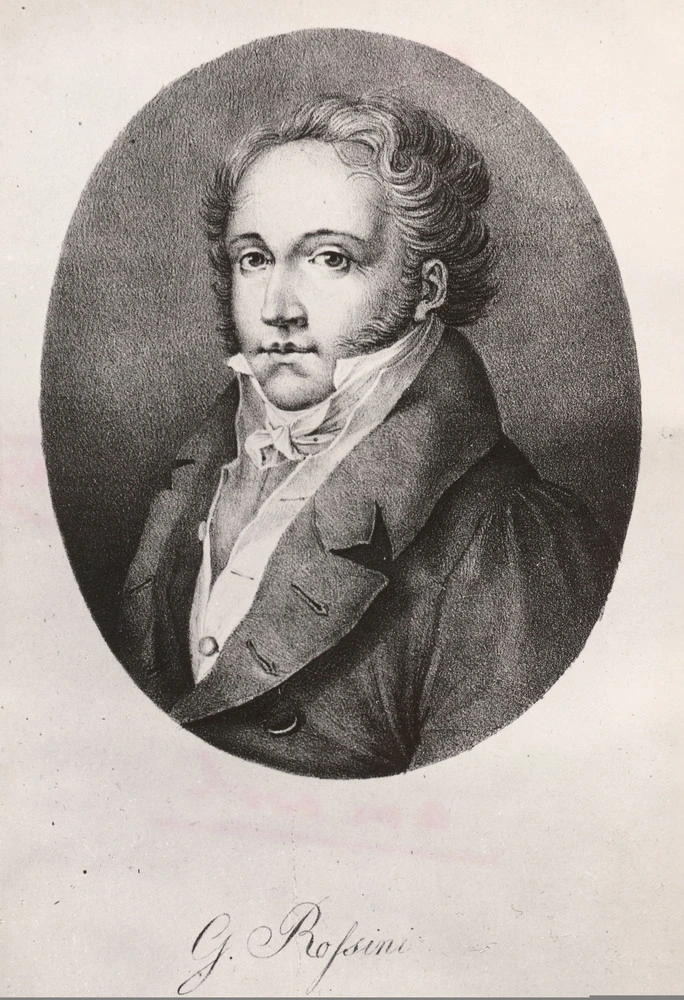
Rossini Gioachino (or Gioacchino) Antonio, *29 February 1792, in Pesaro (part of the Papal States until 1860), †13 November 1868 in Paris, Italian composer. Son of Giuseppe Rossini, trumpeter, and horn player from Lugo near Ravenna, and singer Anna Guidarini. After moving to Bologna in 1804, he studied with Father A. Tesei (harmony, accompaniment, score reading) and M. Babini (singing). At that time, he performed soprano solo parts in sacred works and in operas, and made his first attempts at composition (six sonate a quattro for 2 violins, cello, and double bass). Between 1806 and 1810, he studied at the Liceo Musicale in Bologna (singing, cello, piano, and composition with S. Mattei), acquiring a solid knowledge of counterpoint technique. In June 1806, as an outstanding singer, he became a member of the Accademia Filarmonica in Bologna. In 1810, he began working with the Teatro San Moisè in Venice, where he made his debut on 3 November as the author of the comic opera La cambiale di matrimonio, and in 1812 he strengthened his position with the premiere of La scala di seta and began working with La Scala in Milan. After the triumphant premiere of the comic opera La pietra de paragone (1812), Rossini became a favorite of the Milanese audience. The series of early successes was concluded by two Venetian premieres in 1813: Tancredi (soon to be staged in almost all opera houses in Europe) and L’italiana in Algeri.
The year 1815 marks a turning point in Rossini’s artistic life. Until then, he had worked mainly in Venice (seven premieres) and Milan (three premieres), with occasional appearances in Rome, Bologna, and Ferrara. On 17 May, at the invitation of impresario D. Barbaja, he left for Naples, where he took up the position of artistic director of the San Carlo and Del Fondo theaters; the seven-year contract also included composing two operas a year. The premiere of Elisabetta, regina d’Inghilterra, staged for the inauguration of the season, was received with enthusiasm. Rossini composed extremely quickly, completing the Teatro Argentina’s commission for an opera based on P. Beaumarchais’ play Il barbiere di Siviglia in 25 days. The premiere of this opera (1816) did not meet the audience’s expectations. Rossini’s work was booed, but over time it began to gain approval. A similar evolution in reception took place in London and Paris. Otello (premiered in 1816 in Naples) was well received, gaining enormous popularity throughout Europe, and the role of Desdemona became part of the standard repertoire of the most outstanding sopranos of the era. The first staging in Rome of Rossini’s last Italian opera buffa, La Cenerentola (Cinderella, 1817), was received coolly. Gradually, however, the opera gained popularity and in the following years was performed on almost all European opera stages. One of the greatest successes in Rossini’s entire artistic career was the premiere of the semiseria opera La gazza ladra (The Thieving Magpie, 1817), which marked a breakthrough in the composer’s approach to the form and dramatic qualities of opera. The abandonment of certain operatic conventions and harmonic innovations astonished conservative audiences and drew harsh criticism after the premiere of his next opera (Armida) at the Teatro di San Carlo in Naples in November 1817. However, Mosè in Egitto, staged there four months later, was well received also in France, England, and Germany. In the following years, the Italian public’s sympathy fluctuated constantly. Operas that Rossini composed according to traditional formulas (Ricciardo e Zoraide) or assembled from fragments of his earlier works (Eduardo e Cristina, Bianca e Falliero) won greater acclaim than his more ambitious works, refined both artistically and dramatically (Ermione, La donna del lago, Maometto II). In 1819, Rossini met the young G. Meyerbeer in Venice, whom he later helped in his Parisian career. He also formed a close friendship with N. Paganini, who conducted the premiere of Matilde di Shabran, and with F. Hérold, who was visiting Naples and suggested to Rossini that he move to London. Starting in 1820, Rossini slowed down his pace of work, composing only one opera a year. Aware of his creative abilities, he felt particularly painfully the need for artistic compromises, on which commissions for his subsequent works depended. That is when a turning point in Rossini’s career arrived. His contract with Barbaja was about to expire. Rossini gave a benefit concert, and in February 1822 he staged Zelmira, the last opera he composed for the theaters in Naples.
On 7 March 1822, Rossini left Naples with the singer Isabella Colbran; ten days later, they were married in Castenaso near Bologna, where Colbran’s estate was located. At the turn of March and April, the couple arrived in Vienna to continue their collaboration with D. Barbaja, then director of the Kartnertortheater. On 13 April, a festival of Rossini’s operas began there, during which six of his works were performed with great success. He became a favorite of the Viennese public and a valued salon guest; after long efforts, he made the acquaintance of Beethoven. At the end of 1822, at the invitation of Prince Metternich, he went to Verona, where he composed four cantatas to celebrate the Congress of the Holy Alliance. Rossini ended his Italian period with Maometto II, which was unfavorably received in Venice, and with the premiere of Semiramide (1823), which was only accepted after the composer made significant cuts. For a long time, this opera was one of Rossini’s most frequently performed works and secured his position as the most outstanding opera composer of the time.
On 20 October 1823, Rossini left for London. Within six months of 1824, eight of Rossini’s operas were staged in London, including four premieres, and (on 9 June), the cantata Il pianto delle muse in morte di Lord Byron was performed with the composer as soloist (tenor). In July, Rossini left London and arrived in Paris, where he was appointed director of the Théâtre Italien. His first major success in Paris came in 1826 with the premiere of another adaptation of Maometto secondo, staged at the Paris Opera under the title Le Siège de Corinthe. In recognition of his achievements, Charles X relieved Rossini of his duties as director of the Théâtre Italien, leaving him his previous salary and appointing him royal composer. As a result, Rossini took up the position of artistic advisor to the Paris Opera. Rossini spent the summer of 1828 at the country estate of Parisian banker A.M. Aguado, with whom he had formed a close friendship; the comic opera Le Comte Ory, composed at that time, quickly gained popularity. In 1829, Rossini signed a contract for further collaboration with the Paris Opera. The eagerly awaited premiere of his new opera, William Tell (1829), left the audience feeling disappointed and weary, but was highly praised by experts (after the premiere, Rossini made numerous cuts and corrections to the score). In recognition of his work, the composer was awarded the Cross of a Knight of the Legion of Honor. On 13 August, Rossini left Paris for health reasons. He spent the autumn in Castenaso and the winter at his home in Bologna. The events of the July Revolution of 1830 prompted Rossini to return to Paris, where, due to the change of government, he had to assert his rights to a life annuity in court. In 1831, he travelled to Madrid, where he accepted a commission from prelate M. Varela for a Stabat Mater. He entrusted the composition of some parts of the work to R.G. Tadolini, choirmaster at the Théâtre Italien. In 1841, this led to a conflict with the publisher over copyright. Ultimately, Rossini recomposed the parts removed by Tadolini and changed publishers. In December 1831, he met Chopin in Paris, who was an enthusiast of his music. In the summer of 1832, during his stay at the Savoyard spa resort of Aix-les-Bains, Rossini became acquainted with Olympia Pélissier, who would later become his second wife. At that time, he did not hold any official position and did not compose operas; he lived off his previously accumulated capital. After a long break from creative work, in 1835 he published a collection of short vocal pieces accompanied by piano entitled Soirées musicales. In the same year, he travelled to Frankfurt, where he met F. Hiller and F. Mendelssohn, with whom he shared a deep admiration for the music of J.S. Bach.
After separating from his wife Izabela in September 1837, he left with Olimpia for Milan. There, he began an intense social life, organizing concerts known as “musical Fridays” in his apartment. In the spring of 1839, after the death of his father, he suffered a nervous breakdown. He recovered during his stay in Naples, under the care of D. Barbai. In 1842, he suffered another prolonged health crisis. He celebrated overcoming the crisis with a triptych entitled Trois Chœurs religieux. A few months after the death of I. Colbran (October 1844), Rossini legalized his relationship with Olympia Pélissier. On 26 April 1855, the composer left his homeland forever and returned to Paris. From 1859, he organized musical evenings at his home, to which he invited representatives of the cultural world. He promoted, among others, the works of G. Verdi and A. Boito. In the winter of 1860, Rossini met Wagner. At the beginning of 1862, S. Moniuszko sought Rossini’s help in staging of Halka in Paris (a few years earlier, Rossini had issued a positive opinion on Halka based on a piano reduction that had been sent to him). In the last years of his life, Rossini undertook the task of composing several more times. For the unveiling of the Cherubini monument in Florence in 1861, he composed Le chant des Titans. In 1863 he created his most personal work, Petite messe solennelle, and in 1868 he wrote his last piece, La Corona d’Italia.
Rossini died in 1868 in Passy (a commune incorporated into Paris in 1860) and was buried in the Père Lachaise Cemetery in Paris. In 1887, on the initiative of the Italian government, his remains were transferred to Florence, where they were laid to rest in the Basilica of Santa Croce. In accordance with the composer’s will, his estate was inherited by the municipality of Pesaro, with the intention of establishing a music high school in the city after providing lifelong financial security for Olympia Pélissier, the composer’s widow, and supporting his closest relatives. In 1940, this institution was transformed into the Conservatorio Statale di Musica “Gioachino Rossini”. The composer also allocated funds for two annual scholarships awarded to French composers and lyricists.
After the composer’s death, recognition of his oeuvre faded, apart from a few opere buffe works that remained in the repertoire. The revival of Rossini’s opere serie took place in the 1960s and 1970s. At that time, stylistic studies of his music and work on a critical edition of the composer’s entire legacy also began. As a result, many operas were restored to the repertoire, even those that had previously been considered lost, such as Il viaggio a Reims (first staged in Pesaro in 1984). The Rossini Foundation, established thanks to the remaining funds from the composer’s estate, has been operating in Pesaro since 1940. The tasks of this non-profit organization include supporting the activities of the Conservatory, initiating research on Rossini’s work, editing, and popularizing his achievements, publishing correspondence, iconography, and other types of documentation related to the composer’s life and work, as well as cooperating with the Pesaro Opera Festival based on scores that are successively subjected to critical editing. The periodical “Bollettino del Centro Rossiniano di Studi,” initiated by A. Bonaccorsi in 1955, is also published regularly. It became a scholarly publication from 1970 onward. For many years, The Center for Italian Opera Studies at the University of Chicago has also provided research and publishing support for Rossini’s work. The leading figures behind many artistic and scientific initiatives aimed at popularizing Rossini’s work included musicologist Prof. Philip Gossett (1941–2017) and conductors Vittorio Gui (1885–1975) and Alberto Zedda (1928–2017).
Rossini was the most outstanding Italian composer of the first half of the 19th century. Throughout his life, he had great admiration and adoration for the works of J.S. Bach, as well as the Viennese classics (which is why Mattei gave him the nickname “Il Tedeschino” [the German boy] when he was still at school). Rossini, however, initially developed his own operatic style based on models adopted from Neapolitan composers: D. Cimarosa and D. Paisiello. In the early period of his career, he brought the opera buffa genre to the heights of perfection; later, he sought to combine Italian and French opera traditions. Il barbiere di Siviglia, L’italiana in Algeri, and La Cenerentola remain in the repertoire to this day, with the first of these operas being one of the most frequently performed. The exceptional popularity of Rossini’s operas is due to their irresistible comedy, accurate musical characterization of the figures, lively rhythm, charm and brilliance of the embellished melodic lines, bravura of the parlando style, as well as the composer’s unfailing inventiveness in constructing ensemble scenes.
Rossini also cultivated the opera seria genre, which, in terms of quantity, prevails over opera buffa. In this genre, which reached its peak in Zelmira and Semiramide, he developed tendencies characteristic of Italian opera (exuberant ornamentation). In his early operas (e.g., Tancredi), he often disregarded psychological truth and the expressive requirements of the stage situation, recognizing – in accordance with the aesthetic norms of Italian opera at the time – the superiority of musical qualities over dramatic elements. He developed the bel canto tradition and took vocal virtuosity to the limits of its performance possibilities.
For a long time, Rossini did not attach any importance to the literary and dramatic value of librettos. He uncritically accepted texts imposed by his native impresarios, often based on cliché plots, with stereotypical characters and a happy ending. He even tolerated glaring contradictions between the plots of the librettos and historical truth. Many of his 39 operas did not stand the test of time precisely because of their nonsense and flawed dramatic structure. The composer’s lack of critical thinking was largely forced upon him by the rush with which he was forced to work, composing up to three operas a year in the early stages of his brilliant career.
Rossini sometimes gave the solo parts the form of a traditional da capo aria, but more often he used the form of a two-part cavatina, contrasting in terms of agogic and metro-rhythmic aspects, which eventually evolved into the sequence of cantabile and cabaletta, a structure also used in ensemble numbers. The cavatina was usually preceded by a recitativo accompagnato with a “jagged” melodic line and a rhapsodic character (emphatic phrases, exclamations expressing the emotions or tragic experiences of the protagonist). The slow cantabile had a strophic structure; in contrast to the cantilena-like ornamental stanzas, one of the sections was sometimes set in a recitative style. In the cabaletta, on the other hand, normally set in a fast tempo, he made extensive use of the principle of repetition, including ostinato, accelerando and crescendo effects.
Rossini was one of the foremost experts on the human voice, both in technical and aesthetic terms (he appreciated the sensual beauty of vocal music). He often composed with specific performers in mind; in his showpiece arias, he considered their requirements and technical capabilities, and because he collaborated with outstanding singers (I. Colbran, L. Cinti-Damoreau, G. Righetti-Giorgi, A. Nozzari, M. García, A. Nourrit, A. Benedetti, F. Galli), the main roles in his operas demand top-level vocal skills. They are cast not only, as was customary, by soprano voices (e.g., the roles of Desdemona, Armida, Semiramide, Zelmira) and tenor voices (the roles of Otello, Rinaldo), but also by mezzo-sopranos (Rosina, Isabella), altos (Angelina), baritones (William Tell) and even, which is a novelty, basses (Moses, Mohammed). On the other hand, the excess of embellishments and virtuoso figures led to the monotony of many vocal “numbers,” especially solo ones, which was often the result of the creative process becoming routine. For a relatively long time, Rossini adhered to the principle of performers adding improvised ornamentation, he even permitted singers to include in his operas their favorite arias by other composers (e.g., in the singing lesson scene in Il barbiere di Siviglia). He introduced fragments of previously composed operas into his new works, repeatedly using the same overtures and even finales. Over time, however, Rossini became increasingly aware of the need to modernize the traditional opera seria model. In doing so, he tended to blur the differences between the seria and buffa genres (opera semiseria, dramma giocoso).
From around 1815 onwards, Rossini sought to achieve greater sublimity of expression than before, aiming to evoke the ideals of Gluck. In the opera Mosé in Egitto, one of the most outstanding in his oeuvre (both in its original and revised versions) and in La donna del lago, this involved, among other things, making greater use of the orchestra’s capabilities, expanding the parts of the choir (the choir became an active character in the drama, accompanying even some arias, including Moses’ Prayer) and abandoning secco recitatives. Rossini may have been inspired by the ideas of S. Mayr, who at that time was attempting to transplant certain features of French opera into Italian opera in his works written for the San Carlo theater, among others. For both composers, however, this process was gradual and only to the extent that the conservative Italian public was willing to accept it. One of the subsequent innovations was the careful development of vocal ornamentation (rejecting improvisation, e.g., in Desdemona’s song about the willow tree), and, in the most dramatic moments, the abandonment of virtuoso displays in favor of expressive recitative accompagnato (e.g., in the final scene of Act III of Otello, which is one of Rossini’s most valuable works). Such measures also allowed for greater musical coherence within the entire act.
Rossini’s opera overtures, which the composer usually gave the form of a sonata allegro, preceded by a slow introduction, without development, have gained lasting popularity. The individual character of the overtures to La scala di seta, L’italiana in Algeri, Il barbiere di Siviglia, La gazza ladra, Semiramide, and William Tell is the result of both Rossini’s inventiveness in finding captivating themes and his use of striking orchestral effects. From the beginning of his career, the composer appreciated the coloristic qualities of wind instruments, entrusting them with prominent solo parts (e.g., the horn solo in La cambiale di matrimonio, the horn anglais in Tancredi, the piccolo in Semiramide, the trumpets in William Tell). Particularly valuable ideas in terms of instrumentation include, for example, a cello quintet with single parts, solo tremolo on the snare drum, a horn choir separated from the orchestra, a wind orchestra on stage, and especially Rossini’s famous crescendo. This consists not only in an increase in sound intensity, but above all in the use of orchestral technique, textural and even agogic means, which result in an effect of increasing volume (e.g. the allegro in the overture to La gazza ladra). The composer also used the crescendo effect in some arias, e.g. in Don Basilio’s famous aria about a rumor in Il barbiere di Siviglia. Starting with La gazza ladra, motifs and themes from the overtures recur throughout the opera, and over time Rossini developed the overture into a kind of symphonic fresco, outlining the most important themes and images of the work with sound. In his later operas, Rossini’s approach to the form and role of the overture became more flexible. For example, in Mosé in Egitto, the composer completely abandoned the instrumental introduction, in Ermione he introduced a choir to the overture, and the overture to William Tell has a free form consisting of four parts contrasting in tempo, sound quality, and mood.
Rossini’s operas stand out from other Italian music of the time in terms of the harmonic devices used, the boldness of the modulations, and the use of unusual techniques, such as variously harmonized melodic ostinatos, e.g. in Armida, where it becomes an expression of the heroine’s emotions, or in the Chorus of Darkness from Act II of Mosé. Rossini was also inclined to abandon stereotypical solutions in the structure of an opera if it resulted from the course of the dramatic action, e.g. in the opera Armida, the traditional aria di bravura is replaced in the last act by a chorus of demons. Around 1819, Rossini’s operas also showed the influence of Romantic aesthetics, most clearly in La donna del lago based on W. Scott (emphasizing themes drawn from folklore and the mysterious beauty of nature).
Le Comte Ory, Rossini’s penultimate opera, is an attempt to enrich opera buffa with the achievements of French opéra comique and some of Rossini’s experiences from opera seria. The elements of these three currents, so contrasting with one another as, for example, a typically Italian coloratura aria, a convivial song recalling a medieval ballad, a Mozartian-style vocal trio, and a parody of an a cappella prayer, were united by Rossini into an exceptionally coherent whole. The orchestra, treated in many passages in a symphonic manner, plays a significant role in this, becoming not merely an accompaniment for the soloists but an essential expressive medium (particularly in the storm scene). Rossini encapsulated the sum of his operatic experience in William Tell, in which the ensemble scenes are extensively developed. Among the most valuable fragments of this opera are: Mathilde’s Romance from Act II, the love duet between Mathilde and Arnold, anticipating the most famous romantic opera duets, and the following trio, which is of groundbreaking importance for the course of the action (culminating in Tell’s recitative episode). Rossini reached the heights of artistry and dramatic power in the famous oath-taking scene in the finale of Act II, in which three choirs with different musical characteristics represent the delegates of the three cantons: Unterwalden, Schwyz, and Uri.
In William Tell, Rossini highlighted local color for the first time, drawing on rhythms and melodies from Swiss folk music and adding everyday scene motifs (such as the hunters’ chorus, the wedding procession, and traditional festive songs and dances). The reason why Rossini stopped composing stage works after the premiere of William Tell, at a time when he was enjoying fame as the most outstanding opera composer in Europe, is one of the greatest mysteries in the history of music. It is believed that Rossini’s decision was influenced by his aversion to new trends in opera, especially the grand opéra style presented by G. Meyerbeer, who in the 1830s became the composer most supported by the director of the Paris Opera and enthusiastically received by the audience of the time.
Two works from Rossini’s sacred repertoire have survived to this day: Stabat Mater and Petite messe solennelle. The style of the former, like that of opera, has been the subject of much controversy regarding its appropriateness in a sacred work. In Stabat Mater, the emphasis lies on melody and lyrical expression (grace, delicacy, a mood of serene contemplation), in some of the work’s ten movements (especially the later ones) however, the expression is deepened and even dramatized by references to the tradition of sacred music and masterful textural and sonorous writing , e.g. in the Eia Mater part composed for solo bass and an a cappella choir, in Quando corpus morietur for an a cappella quartet of soloist, in Inflammatus et accentus for soprano with choir, and in the final double fugue. Rossini’s mastery of counterpoint is also evident in the Petite messe solennelle, in which the composer draws on three traditions of sacred music: Neo-Palestrinian (e.g., the imitated motet in Christe eleison), Bachian (e.g. Baroque rhetorical figures and the double fugue at the end of Gloria) and Beethovenian (e.g. in Crucifixus). Rossini assimilates the achievements of his predecessors, synthesizing them with his own musical language.
The Sins of Old Age occupy a prominent position in Rossini’s oeuvre – miniatures in the spirit of French salon music, with vocal, chamber, and piano-only instrumentation. The composer intended these works for the “musical Saturdays” he organized in his own salon. Rossini did not want to publish them, so they remained hidden until the 1950s, when the Istituto di Studi Rossiniani in Pesaro began publishing them. A common feature of these miniatures is their parodic, intent, at times gently humorous, as suggested by the often witty or even eccentric titles of individual pieces and entire albums (e.g., Fausse couche de polka mazurka, Prélude convulsif, Bolero Tartare, Mon Prélude hygiénique de Matin, Étude asthmatique, L’huile de Ricin). The irony is aimed at romantic sentimentalims and the fashion for programmatic and illustrative compositions. Some works also have a polemical undertone, e.g., Petit Caprice (style Offenbach) – a response in the rhythm of the cancan to the parody of William Tell in the operetta La Belle Hélène. Musically, the Sins of Old Age are characterized by a compact structure and sparing use of pianistic techniques, drawing more on the brillant style than on the works of Liszt or Brahms. Compared with the average salon music of the period, Rossini achieved a highly refined artistic level through inventive motivic writing, advanced harmony, a wide dynamic range (from pppp to fff), and subtle articulatory nuances. Péchés de vieillesse – over 200 pieces arranged in nine albums (plus several miscellaneous albums) – are proof of Rossini’s unwavering inventiveness and compositional mastery, and at the same time an example of his emotional distance from art and reality, and in many cases also self-irony.
Rossini’s work, although uneven in terms of artistic value, forms a bridge between the achievements of the Neapolitan school and the operas of Verdi and other representatives of the grand opéra style. Initially, on the basis of affirming traditional Italian opera models, Rossini brought the opera buffa genre to its peak (Il barbiere di Siviglia was considered the crowning achievement of this artistic convention), but later he sought to reform opera, on the one hand enriching its musical means of expression, and on the other hand, by enhancing its dramatic qualities and opposing the excesses rooted in Italian opera. With his Mosè in Egitto, La donna del lago, and above all William Tell, Rossini joined the romantic opera movement on a par with C.M. Weber.
Literature:
Special publications – special issue of “Rassegna musicale,” XXIV/3, 1954; “Bollettino del Centro Rossiniano di Studi”, a cura della Fondazione Pesaro, 1955–; Gioachino Rossini – Tutti i libretti d’opera, ed. P. Mioli, introduction by P. Fabbri, Rome 1997; E. Rescigno, Dizionario rossiniano, Milan 2002; D. P. Gallo, Gioachino Rossini: A Research and Information Guide, New York, London 2002, 2nd ed. 2015.
Contemporary testimonies, correspondence, manuscripts, and documents –
G. Righetti-Giorgi Cenni di una donna giá cantante sopra il maestro Rossini, Bologna 1823 and E. Michotte Souvenirs personnels. La visite de R. Wagner à Rossini (Paris 1860). Détails inédits et commentaires, Paris 1906, repr. in: L. Rognoni Rossini, Parma 1956, 3rd ed. 1977; G. Carpani Le rossiniane ossia Lettere musico-teatrali, Padua 1824; H. Berton De la musique méchanique et de la musique philosophique, Paris 1826; G. Pacini Le mie memorie artistiche, Florence 1865; F. Hiller Plaudereien mit Rossini (1856), in: Aus dem Tonleben unserer Zeit, vol. 2, Leipzig 1868; F. Mordani Della vita privata di Gioachino Rossini. Memorie inedite, Imola 1871; G.L. Duprez Souvenirs d’un chanteur, Paris 1880; R. Wagner Eine Erinnerung an Rossini, in: «Gesammelte Schriften und Dichtungen» vol. 8, Leipzig 1883; G. Mazzatinti Lettere inedite di Gioachino Rossini, Imola 1890, titled. Lettere inedite e rare di Gioachino Rossini, 2nd ed. 1892; Lettere di G. Rossini, eds. G. Mazzatinti, F. and G. Manis, Milan 1902, reprint London 2019; A. Allmayer Undici lettere di Gioachino Rossini pubblicate per la prima volta, Siena 1892; G. Radiciotti Aneddoti rossiniani autentici, Rome 1929; Ph. Gosset Le fonti autografe delle opere teatrali di Rossini, “Nuova Rivista Musicale Italiana” II, 1968; Hommage an Rossini. Katalog zur Ausstellung. Gioachino Rossini in den Zeichnungen seiner Zeit. Lithographien, Stahl- und Holzstiche, Fotos, Karikaturen und Ansichtskarten aus der Sammlung Reto Müller, ed. R. Műller, Catalogue of the exhibition organized by the German Rossini Society, Leipzig 1999.
Biographies, monographs, analytical studies – Stendhal (H. Beyle’s pseudonym) Vie de Rossini, Paris 1824, 2nd ed. revised by H. Prunières, Paris 1929; reprint 2018; A. Azevedo Gioachino Rossini. Sa vie et ses oeuvres, Paris 1864; A. Aulagnier Gioachino Rossini. Sa vie et ses oeuvres, Paris 1864; A. Pougin Rossini. Notes, impressions, souvenirs, commentaires, Paris 1871; A. Zanolini Biografia di Gioachino Rossini Bologna 1875; H. de Curzon Rossini, Paris 1920; G. Radiciotti Gioachino Rossini. Vita documentata, opere ed influenza su l’arte, 3 vols., Tivoli 1927–29; G.H.J. Derwent Rossini and some Forgotten Nightingales, London 1934; F. Toye Rossini: A Study in Tragi-Comedy, New York 1934, reprint 1947, 2007, 2018; H. Faller Die Gesangkoloratur in Rossinis Opern und ihre Ausführung, Berlin 1935; A. Capri Rossini e l’estetica della vocalità, “Rivista Musicale Italiana” XLVI, 1942; G. Roncaglia Rossini l’olimpico, Milan 1946, 2nd ed. 1953; L. Rognoni Rossini, Parma 1956, 3rd ed. Turin 1977; R. Bacchelli Rossini e esperienze rossiniane, Milan 1959; H. Weinstock Rossini. A Biography, New York 1968, reprint 1987; L. Rognoni Gioachino Rossini, Turin 1968, 2nd ed. 1981; W. Sandelewski Rossini, Krakow 1968, 2nd ed. 1980; G. Stefani La „Petite messe solennelle” di Rossini nella critica d’epoca, “Bollettino del Centro rossiniano di studi” 1968 nos. 4–6; Gioachino Rossini, ed. A. Bonaccorsi, Florence 1968; F. d’Amico L’opera teatrale di Gioachino Rossini, Rome 1968; Ph. Gossett, The operas of Rossini: problems of textual criticism in nineteenth century, Princeton (New Jersey) 1970; H. Kantner Rossinis Beziehung zu historischen Stilen, “Bollettino del Centro rossiniano di studi” 1972 no. 3; A. Caswell Vocal Embellishment in Rossini’s Paris Operas: French Style or Italian?, “Bollettino del centro rossiniano di studi”, 1975, nos. 1–2; P. Rattalino Problemi di esecuzione della „Petite messe solennelle”, “Chigiana” XXXIV, 1977; M. Garner The Mass from Rossini to Dvořák, in: Major and Minor, London 1980; F. Vitoux Gioacchino Rossini, Paris 1982; N. Till Rossini. His Life and Times, London 1983; J. Johnson, A lost Rossini opera recovered: “Il viaggio a Reims”, “Bollettino del Centro rossiniano di studi”, 1983, nos. 1–3; A. Basso Rossini e la musica sacra, “Bolletino del Centro rossiniano di studi” 1984, nos. 1–3; Ch. Osborne Rossini, London 1986; 2nd ed. titled. Rossini: His Life and Works, Oxford 2007; D. Pistone L’opéra italien au XIXe siècle de Rossini à Puccini, Paris 1986; P. Mioli, Invito all’ascolto di Rossini, Milan, 1986; F. Toye Rossini, the Man and His Music, Mineola, New York 1987; S. L. Balthazar Rossini and the Development of the Mid Century Lyric Form, “Journal of the American Musicological Society”, XLI, 1988; A. Baricco Il genio in fuga. Due saggi sul teatro musicale di Gioachino Rossini, Geneva 1988; Gioachino Rossini, ed. A. Salvioni, Bergamo 1991; F. d’Amico Il teatro di Gioachino Rossini, Bologna 1992; A. Kendall Gioacchino Rossini: The Reluctant Hero, London 1992; A. Gerhard Die Verstädterung der Oper. Rossini, Meyerbeer, Verdi und die Modernität der Pariser „Grand Opera,” Stuttgart 1992; Rossini. 1792–1992, ed. M. Bucarelli, Milan 1992; I. Poniatowska Idiom salonowej muzyki romantycznej w twórczości fortepianowej Gioachina Rossiniego, in: Histora i interpretacja muzyki, Krakow 1993; Gioachino Rossini, 1792–1992, il testo e la scena, proceedings of the international conference in Pesaro 1992, ed. P. Fabbri, Pesaro 1994; Ch. Osborne The bel canto. Operas of Rossini, Donizetti, and Bellini, Portland 1994; Twórczość Gioachina Rossiniego w dwusetną rocznicę urodzin, ed. M. Jabłoński, Poznań 1993; D. Mountfield Rossini, New York 1995; M. Grempler Rossini e la patria. Studien zu Leben und Werk Gioachino Rossinis vor dem Hintergrund des Risorgimento, Kassel 1996; Convegno italo-tedesco “Mozart, Paisiello, Rossini e l’opera buffa” (Rom 1993), proceedings of a conference, ed. M. Engelhardt, Laaber 1998; P. Fabbri Rossini nelle raccolte Piancastelli di Forlì, Lucca 2001; The Cambridge Companion to Rossini, ed. E. Senici, Cambridge 2004; G. Servadio Rossini, London, New York 2003, in Italian titled Gioachino Rossini. Una vita, Palermo 2004; B. Walton Rossini in Restoration Paris. The Sound of Modern Life, Cambridge 2011; W. Roberts Rossini and post-Napoleonic Europe, Rochester, New York 2015; A. Jacobshagen Gioachino Rossini und seine Zeit, Laaber 2015; A. Zedda A life with Rossini, trans. Ch. Jernigan, Basel 2017; Gioachino Rossini, 1868-2018: la musica e il mondo, proceedings of a conference in Pesaro 2017, eds. I. Narici et al., Pesaro 2018; Gioachino in Bologna, eds. J. Bentini, P. Mioli, Bologna 2018; P. Fabbri Rossini: l’artista, l’uomo, il mito, Turin 2018, Rossini. Künstler, Mensch und Mythos, translation from German by M. Köhler, Leipzig 2019; Il Tedeschino – Rossini und der deutschsprachige Raum – Tagungsband, ed. R. Műller, Leipzig 2021; A. Primerano Rossini. Lo stravagante, Arezzo 2020; A. Chegai Rossini, Milan 2022.
La cambiale di matrimonio (The Bill of Marriage), G. Rossi after C. Federici’s play, farsa comica, 1-act, premiered in Venice, 3 November 1810, Polish premiere in Warsaw, 8 December 1862, piano reduction, Milan 1847
L’equivoco stravagante (The Curious Misunderstanding), dramma giocoso, 2-act, libretto by G. Gaspard, premiered in Bologna, 26 October 1811, piano reduction, Milan 1851
Demetrio e Polibio (Demetrius and Polybius), dramma serio, 2-act, libretto by V. Viganò Mombelli after P. Metastasia, premiered in Rome, 18 May 1812, piano reduction, Milan 1825/26
L’inganno felice (The Fortunate Deception), farsa, 1-act, libretto by G. Foppa after G. Palomba, premiered in Venice, 8 January 1812, Polish premiere in Warsaw, 11 February 1820, piano reduction, Leipzig, 1819, score: Rome 1827
Ciro in Babilonia ossia La caduta di Baltassarre (Cyrus in Babylon, or The Downfall of Belshazzar), drama con cori, 2-act, libretto by F. Aventi, premiered in Ferrara, 14 March 1812, piano reduction, Milan 1852
La scala di seta (The Silken Ladder), farsa comica, 1-act, libretto by G. Foppa after L’échelle de soie F.A.E. de Planard, premiered in Venice, 9 May 1812, piano reduction, Milan 1852
La pietra del paragone (The Touchstone), melodramma giocoso, 2-act, libretto by L. Romanelli, premiered in Milan, 26 September 1812, Polish premiere in Warsaw, 9 March 1866, piano reduction, Milan 1846
L’occasione fa il ladro (Opportunity Makes a Thief, or The Exchanged Suitcase), burletta per musica, 1-act, libretto by L. Prividali after Le prétendu par hazard ou L’occasion fait le larron E. Scribe, premiered in Venice, 24 November 1812, piano reduction, Milan 1853
Il signor Bruschino ossia Il figlio per azzardo (Signor Bruschino, or The Accidental Son), farsa giocosa, 1-act, libretto by G. Foppa after Le fils par hazard A. de Chazet and E.-T. Maurice Ourry, premiered in Venice, 27 January 1813, Polish premiere in Warsaw, 26 July 1862, piano reduction, Milan 1854
Tancredi, melodramma eroico, 2-act, libretto by G. Rossi and L. Lechi after Voltaire, premiered in Venice, 6 February 1813, Polish premiere in Warsaw, 21 June 1818, piano reduction, Leipzig 1817
L’Italiana in Algeri (The Italian Girl in Algiers), dramma giocoso, 2-act, libretto by A. Anelli, premiered in Venice, 22 May 1813, Polish premiere in Warsaw 23 April 1819, piano reduction, Mainz 1818
Aureliano in Palmira, dramma serio, 2-act, libretto by F. Romani after G. Sertor’s libretto for Zenobia in Palmira, premiered in Milan, 26 December 1813, piano reduction, Milan 1855
Il Turco in Italia, dramma buffo, 2-act, libretto by F. Romani after C. Mazzola’s libretto, premiered in Milan, 14 August 1814, Polish premiere in Warsaw, 17 March 1824, piano reduction, Leipzig 1821
Sigismondo, dramma, 2-act, libretto by G. Foppa, premiered in Venice, 26 December 1814, piano reduction, Milan 1826
Elisabetta, regina d’Inghilterra, dramma, 2-act, libretto by G. Schmidt after C. Federici, premiered in Naples, 4 October 1815, Polish premiere in Lviv October 1823 (only act I), piano reduction, Leipzig 1819/20
Torvaldo e Dorliska, dramma semiserio, 2-act, libretto by C. Sterbini, premiered in Rome, 26 December 1815, Polish premiere in Lviv, July 1830, piano reduction, Milan 1855
Almaviva ossia L’inutile precauzione (Almaviva or The Unnecessary Precaution), later titled Il barbiere di Siviglia (The Barber of Seville), commedia, 2-act, libretto by C. Sterbini after P. Beaumarchais and G. Petrosellini’s play, premiered in Rome, 20 February 1816, Polish premiere in Warsaw, 29 October 1825, piano reduction, Leipzig 1820, Paris 1820, score: Rome 1827
La Gazzetta ossia Il matrimonio (The Newspaper, or The marriage contest), opera buffa, 2-act, libretto by G. Palomba, A.L. Tottola after Il matrimonio per concorso by C. Goldoni, premiered in Naples, 26 September 1816, piano reduction, Milan 1854
Otello ossia Il moro di Venezia (Othello, or The Moor of Venice), dramma, 3-act, libretto by F. Berio di Salsa after Shakespeare, premiered in Naples, 4 December 1816, Polish premiere in Warsaw, 14 June 1828, piano reduction, Leipzig 1819/20
La cenerentola ossia La bontà in trionfo (Cinderella, or Goodness Triumphant), dramma giocoso, 2-act, libretto by G. Ferretti after Cendrillon by C. Perraulta and libretti by C.-G. Etienne and F. Fioroni, premiered in Rome, 25 January 1817, Polish premiere in Krakow, 4 August 1822; Lviv, 29 August 1824; Warsaw, 29 August 1829, piano reduction, Paris 1822/23
La gazza ladra (The Thieving Magpie), melodramma, 2-act, libretto by G. Gherardini after La pie voleuse by J.M.T. Baudouin D’Aubigny and L.-C. Caigniez, premiered in Milan, 31 May 1817, Polish premiere in Krakow, 13 January 1824, piano reduction, Bonn 1819/20
Armida, dramma, 3-act, libretto by G. Schmidt after Gerusalemme liberata by T. Tasso, premiered in Naples, 11 November 1817, Polish premiere in Lviv, 23 March 1826; Warsaw, 25 August 1833, piano reduction, Paris 1823/24
Adelaide di Borgogna, dramma, 2-act, libretto by G. Schmidt, premiered in Rome, 27 December 1817, piano reduction, Milan 1858
Mosè in Egitto, azione tragico-sacra, 3-act, libretto by A.L. Tottola after L’Osiride by F. Ringhieri, premiered in Naples, 5 March 1818, Polish premiere in Krakow, 28 December 1859; Warsaw, 5 November 1866; Poznań, 15 December 1889, piano reduction, Paris 1822, score: Rome 1825; 2nd version titled Moïse et Pharaon ou Le passage de la Mer Rouge (Moses and Pharaoh, or The Crossing of the Red Sea), opera, 4-act, libretto by L. Balocchi, E. de Jouy after libretto Mosè in Egitto, Paris, 26 March 1827, piano reduction, Paris 1827, score: Paris 1827
Ricciardo e Zoraide, dramma, 2-act, libretto by F. Berio di Salsa after Il Ricciardetto by N. Forteguerri, premiered in Naples, 3 December 1818, Polish premiere in Krakow, June 1823, piano reduction, Mainz 1821/22, score: Rome 1829
Ermione, azione tragica, 2-act, libretto by A.L. Tottola after Andrómaque by J. Racine, premiered in Naples, 27 March 1819, Polish premiere in Katowice, 28 February 2003, piano reduction Milan 1858
Eduardo e Cristina, dramma, 2- act, libretto by G. Schmidt, A.L. Tottola, G. Bevilacqua-Aldobrandini, premiered in Venice 24 April 1819, piano reduction, Paris 1826/27
La donna del lago (The Lady of the Lake), melodramma, 2-act, libretto by A.L. Tottola after The Lady of the Lake by W. Scott, premiered in Naples, 24 September 1819, Polish premiere in Lviv, 12 February 1826, piano reduction, Paris 1822/23
Bianca e Falliero ossia II Consiglio dei Tre (Bianca and Falliero, or The Counsel of Three), melodramma, 2-act, libretto by F. Romani after Les vénitiens ou Blanche et Montcassin by A. V. Arnhault, premiered in Milan, 26 December 1819, piano reduction Milan 1828
Maometto II, dramma, 2-act, libretto by C. della Valle after his play Anna Erizo, premiered in Naples, 3 December 1820, piano reduction, Vienna 1823; 2nd version titled Le siège de Corinthe (The Siege of Corinth), tragédie lyrique, 3-act, libretto by L. Balocchi, A. Soumet after Maometto II, premiered in Paris, 9 October 1826, piano reduction Paris 1826, score: Paris 1827
Matilde di Shabran ossia Bellezza e cuordi ferro (Matilde of Shabran, or Beauty and Ironheart), melodramma giocoso, 2-act, libretto by G. Ferretti after libretto of F.-B. Hoffmann to Euphrosine by Méhul and play Mathilde J.M. Boutet de Bonvel, premiered in Rome, 24 February 1821, piano reduction Vienna 1822, score: Rome 1833
Zelmira, dramma, 2-act, libretto by A.L. Tottola after Dormont de Belloy, premiered in Naples, 16 February 1822, Polish premiere in Lviv, 22 February 1823, piano reduction, Vienna 1822
Semiramide, melodramma tragico, 2-act, libretto by G. Rossi after Voltaire, premiered in Venice, 3 February 1823, Polish premiere in Warsaw, 4 December 1829, piano reduction, Vienna 1823, score: Rome 1826
Il viaggio a Reims ossia L’albergo del Giglio d’oro (The Journey to Reims, or The Hotel of the Golden Fleur-de-lis), dramma giocoso, 1-act, libretto by L. Balocchi after Corinne ou L’Italie G. de Staël, premiered in Paris, 19 June 1825, Polish premiere in Warsaw, 6 April 2003
Adina o Il califfo di Bagdad, farsa, 1-act, libretto by G. Bevilacqua-Aldobrandini, premiered in Lisbon, 22 June 1826, piano reduction, Milan 1859
Le Comte Ory (Count Ory), opera comique, 2-act, libretto by E. Scribe, C.-G. Delestre-Poirson, premiered in Paris 20 August 1828, Polish premiere in Warsaw, 27 March 1830, piano reduction, Paris 1828, score: Paris 1828
Guillaume Tell, opera, 4-act, libretto by E. de Jouy, H.-L.-F. Bis after F. Schiller, premiered in Paris, 3 August 1829, Polish premiere in Warsaw, 9 June 1855, piano reduction, Paris 1829, score: Paris 1829
cantatas:
Il pianto d’armonia sulla morte di Orfeo for tenor, choir, and orchestra; performed in Bologna in 1808
La morte di Didone, for soprano, choir, and orchestra, ca. 1811, performed in Venice in 1818, published in Milan in 1820/21
Dalle quete e pallid’ombre for soprano, bass, and piano, 1812
Egle ed Irene for soprano, alto, and piano, 1814, published in Milan in 1820
Aurora for alto, tenor, bass, and piano, 1815
Le nozze di Teti e di Peleo, performed in Naples 1816
Partenope e Igea. Omaggio umilitato a Sua Maestri…, performed in Naples 1819
Cantata da eseguirsi la sera del dì 9 maggio 1819…, in honor of Emperor Francis I, performed in Naples in 1819
La riconoscenza for 4 solo voices, choir, and orchestra, performed in Naples in 1821, published in Milan in 1826
La Santa Alleanza, Il vero omaggio, L’augurio felice, Il bardo for solo voices, choir, and orchestra, performed in Verona in 182 [year incomplete]
Omaggio pastorale for 3 voices and orchestra, for the unveiling of the A. Canova monument, performed in Treviso in 1823
Il pianto delle muse in morte di lord Byron for tenor, choir, and orchestra, 1824, published in London in 1824
Cantata per il battesimo del figlio del banchiere Aguado for 6 solo voices and piano, 1827, published in Paris in 1827
Giovanna d’Arco for soprano and piano, 1832
Cantata in onore del Sommo Pontefice Pio Nono for 4 solo voices, choir, and orchestra, 1846
Les chants des Titans for 4 bass voices and orchestra, text by E. Pacini, performed and published in Paris in 1861
Hymns:
Inno dell’Indipendenza, text by G.B. Giusti, 1815
for 1–4 voices with piano accompaniment:
cavatinas, arias, ariettas, nocturnes, barcaroles, canzonettas, etc., including Soirées musicales, comprising 8 arias and 4 duets to texts by P. Metastasio and C. Pepoli, 1830–35, published in Paris in 1835
La Danza. The “Tarantella Napoletana” for 1 voice with piano, 1830–35, published in Krakow 1957
sacred:
5 masses, including Messa di Gloria for solo voices, choir, and orchestra, 1820, Petite messe solennelle, 1st version for 4 solo voices, choir, reed organ, and 2 pianos, performed in Paris 1864, published in Paris 1869, 2nd version for 4 solo voices, choir and orchestra, performed and published in Paris 1869
Stabat Mater for 2 sopranos, tenor, bass, choir, and orchestra, 1st version performed in Madrid 1833, 2nd version performed in Paris 1841
Trois choeurs religieux for women’s choir and piano: La Foi, text by P. Goubaux, L’Espérance, text by H. Lucas, La Charité, text by Colet, performed and published in Paris 1844
Instrumental:
2 symphonies in D and E-flat, 1808–09
military marches, such as: La Corona d’Italia 1868, published in Rome in 1878
6 sonatas for 2 violins, cello, and double bass, 1804, published in Milan in 1826/27
variations, such as: A major, for violin and piano, 1845
scherzos and waltzes for piano
collections of works titled Péchés de vieillesse: 1. Album italiano, 2. Album français, 3. Morceaux réservés, 4. Quatre hors d’oeuvres et médiants, 5. Album pour les enfants adolescents, 6. Album pour les enfants dégourdis, 7. Album de chaumière, 8. Album de château, 9. Album pour piano, violon, violoncelle, harmonium et cor, 10. Miscellanée pour piano, 11. Miscellanée de musique vocale, 12. Quelques riens pour album, 13. Musique anodine, 14. Altri péchés de vieillesse.
Newest editions:
Edizione critica delle opere di Gioachino Rossini, a series published in Pesaro and Milan by the Rossini Foundation in collaboration with the Ricordi publishing house; edited by a committee chaired by Ph. Gossett (1971–2005) and I. Narici (2006–). In addition to the musical material – the full score and piano reduction – each volume contains historical and critical commentary. By 2022 the edition had encompassed 28 of the 39 operas, 6 cantata works, the youthful symphonies, 6 sonatas for string quartet, 2 versions of the Petite messe solennelle, and 3 albums of Péchés de vieillesse.
Oeuvres de Gioachino Rossini = Works of Gioachino Rossini = Opere di Gioachino Rossini, a series published by Bärenreiter in Kassel and The Center for Italian Opera Studies at the University of Chicago, 2007–2011; an urtext edition compared with later versions and editions, considering the needs of concert and stage performance. It comprises 10 volumes that were not issued in the Italian critical edition – series editor: Ph. Gossett.