
[Afisz opery „Hans Heiling”]

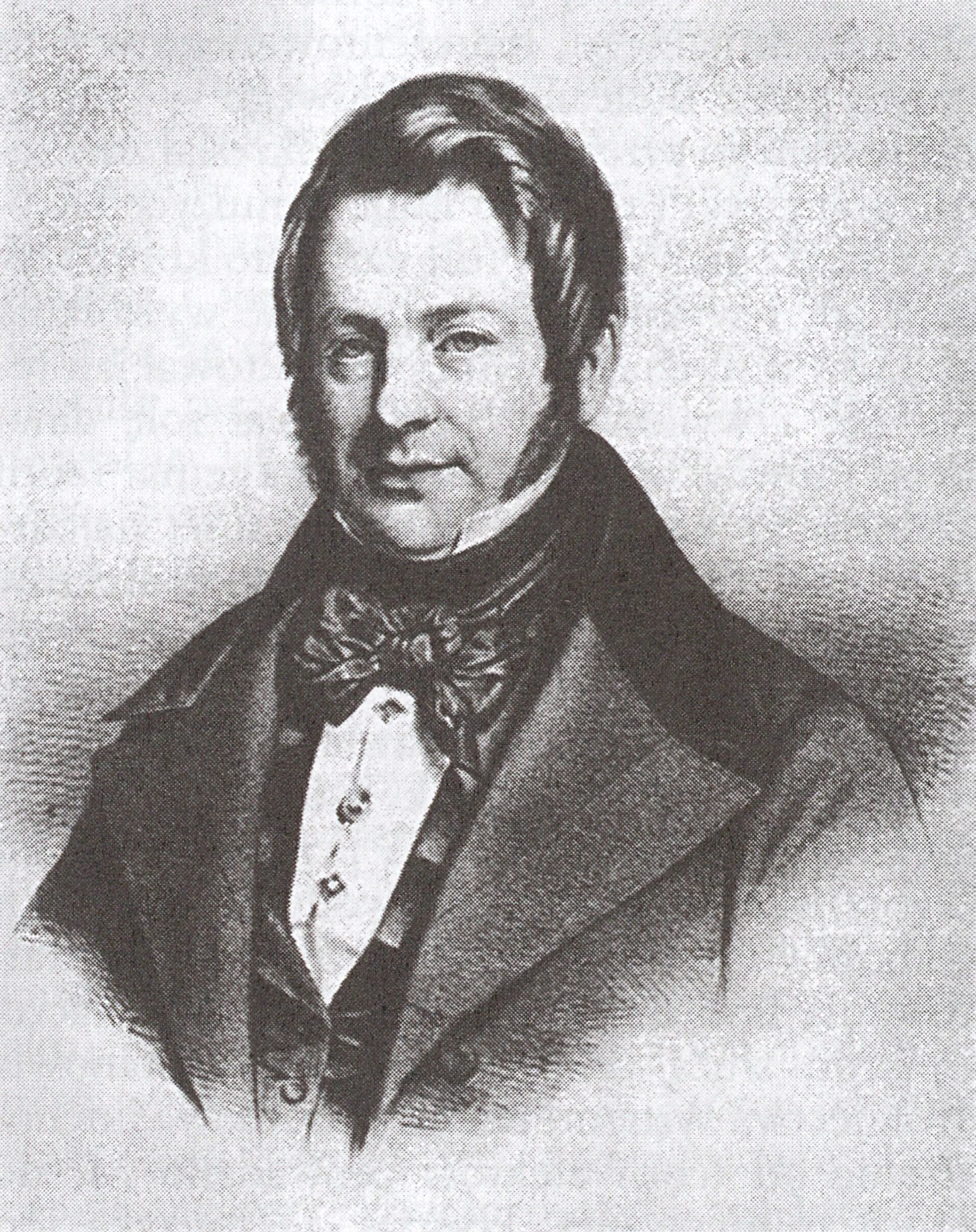
Marschner Heinrich August, *16 August 1795 Zittau, †14 December 1861 Hanover, German composer. He came from a family of Czech immigrants who were craftsmen. His parents initially wanted him to become a lawyer. Marschner’s musical talent became apparent during his time in the school choir. In 1811, having already composed several songs and the ballet Die stolze Bäuerin, Marschner began studying composition with K. Hering, music director at the seminary in Zittau. After graduating from secondary school in 1813, he began studying law in Leipzig; at the same time, he became interested in the theoretical writings of J.P. Kirnberger and D.G. Türk, as well as the compositions of V. Righini and Beethoven, and decided to devote himself to music. In 1815, he met Beethoven in person in Vienna. In 1816, he was employed in Pressburg (Bratislava) by Count Zichy as a teacher, pianist, and composer, as well as Kapellmeister to Prince Krasatkowitz. In 1817, he married Emilia von Cerva (†1818), and later, he married the pianist Franziska Jaeggi. In 1825, he was widowed again. In Pressburg, Marschner composed an overture based on Hungarian melodies and numerous stage works, including the opera Heinrich IV und d’Aubigné. This work was staged at the German Opera in Dresden, which was directed by Weber at that time. In 1821, Marschner moved to Dresden, where he completed several commissions for music for plays, and while staying in the circle centered around L. Tieck and F. Kind, he was introduced to the notion of creating a German national opera. In this spirit he composed a singspiel to Kind’s libretto Der Holzdieb. In Dresden, Marschner gained the support of the court minister Count D. von Einsiedel and in 1824 he took over the position of director of the Italian Opera from F. Morlacchi, however, he was unable to obtain the post of director of the German Opera, which had become vacant after Weber’s death (1826). After his third marriage to the outstanding singer M. Wohlbrück, he went to Berlin, where he met F. Mendelssohn; he then visited Wrocław, Gdańsk, Königsberg, Düsseldorf, and Aachen. In 1827, he was hired as a Kapellmeister at the Stadttheater in Leipzig; his productions of the operas Der Vampyr and Der Templer und die Jüdin brought him fame and recognition. From 1830 to 1859, he was the Kapellmeister of the Hoftheater in Hanover. It was there that his best opera, Hans Heiling, was staged, which – alongside numerous songs, choral works, and chamber music – cemented Marschner’s position as the leading German composer of the 1830s, as evidenced by his being awarded an honorary doctorate from the University of Leipzig in 1834. By participating in music festivals in Rostock, Lüneburg (1843) and Lübeck (1847), he also became famous as a conductor. Over the years, Marschner’s strong advocacy for the cultivation of German music (Mozart, Weber) and Gluck, and his opposition to foreign influences, especially Italian music, which was preferred at the court in Hanover, put him at odds with highly regarded composers of the time, such as G. Spontini (who was active in Berlin at the time) and G. Meyerbeer. The works composed in the 1840s and 1850s did not bring Marschner success, and his efforts in 1861 to stage Sangeskönig Hiarne in Paris – despite Rossini’s positive opinion – came to nothing. In the last years of his life, Marschner was almost forgotten, overshadowed by Wagner’s growing fame. At the turn of the 19th and 20th centuries, thanks to the efforts of H. Pfitzner, Marschner’s works briefly returned to the opera, but today they appear only occasionally.
Marschner cultivated various musical genres, but he went down in music history primarily as an outstanding representative of German Romantic opera and thanks to certain types of solo songs, although his piano and choral works were also popular in the 19th century. Marschner’s songs are less ambitious than the vocal lyricism of Schubert or Schumann. Only his ballads go beyond the simplicity of popular songs and are placed alongside those of C. Loewe. However, while Loewe emphasized the epic element in this type of song, Marschner composed ballads of a dramatic nature.
In his early stage works, Marschner eagerly drew on the tradition of German singspiel, but from 1818 onwards, following in the footsteps of E.T.A. Hoffmann, he adopted the idea of creating an opera in which music would be an inevitable consequence of dramatic poetry, and the composer’s goal would be to integrate all theatrical elements. Marschner collaborated with talented and respected librettists such as F. Kind, W.A. Wohlbrück (related to Marschner), E. Devrient, who drew their ideas from then-fashionable English novelistic literature (Byron, Scott) or from German works (writers of the Sturm und Drang movement and early Romanticism). They liked to draw on themes from the world of folk fantasy, stories woven from uncanny, ghostly, and mysterious events, marked by horror and suggesting the intervention of supernatural forces in human life. They did not shy away from depicting drastic, gruesome, or brutal scenes. In several operas, Marschner took up the theme of a character with a split personality, an incarnate demon (Der Vampyr, Der Templer und die Jüdin, Hans Heiling), drawing partly on Mozart’s Don Giovanni, as well as on the ideas of German Romantics such as E.T.A. Hoffmann (Die Elixiere des Teufels) and L. Tieck.
As a result, a new type of operatic role, a demonic and seductive one, developed in his works. It was intended for singers with a dark voice (bass or dramatic baritone), but also capable of performing delicate phrases. Likely under the influence of the aforementioned writers, Marschner also tended to include comic scenes in his operas, often infused with folk elements, placed directly alongside scenes of horror and the uncanny. They served to sharpen contrasts and as means of characterization. In terms of architecture, Marschner’s works are number operas with elaborate introductions, ensemble scenes, and finales. However, individual “numbers” often deviate from traditional formal patterns towards recomposed structures resulting from the needs of the dramatic text and the stage situation (e.g., Malwina’s aria from Act I, Ruthven and Aubry’s dialogue from Act II of the Der Vampyr opera). This phenomenon intensifies in Marschner’s subsequent operas, reaching its peak in his last opera, Sangeskönig Hiarne (1857–58). For this reason, music historians consider Marschner’s work to be a bridge between Weber’s operas and Wagner’s early works (The Flying Dutchman, Lohengrin, Tannhäuser). The prologue to the opera Hans Heiling is a clear foreshadowing of Wagner’s musical drama. Associations may be evoked both by the setting (a fairy-tale-like, legendary underground kingdom) and by the suspenseful dialogue, which excludes more elaborate forms with a regular and musically rounded structure, as well as by the symphonic treatment of the orchestral part.
Marschner treated traditional forms of opera singing (including the da capo aria) with a certain flexibility, i.e. bending them to the needs of the stage situation, e.g. in Heiling’s aria from Act I, the rest of the action takes place during the reprise and coda. In some particularly dramatic scenes, Marschner abandoned traditional opera singing in favor of melodrama, i.e., the recitation of text against an orchestral background. Melodrama also facilitated the transfer of symphonic transformation techniques to opera, which increased the effectiveness of orchestral accompaniment as a means of dramatic expression, especially in scenes with a dark and mysterious mood, e.g., in Act II of the opera Hans Heiling, Gertrude expresses her concern for her daughter’s fate by alternately speaking, humming, and singing. The atmosphere of this scene, set on a stormy, dark night, is emphasized by excellent orchestration, highlighting the clarinets, horns, and bassoons in the lower registers, and muted violas and cellos. Scenes of horror and demonic characters also prompted Marschner to expand his harmonic language (chromatic passages and figurations, accumulation of dissonant chords, shortened modulation processes) and to make frequent use of tremolos and dynamic contrasts. Marschner was undoubtedly the most outstanding representative of melodrama in the first half of the 19th century after Weber. In the second half of the century, E. Humperdinck returned to this technique, and at the beginning of the 20th century, M. Schillings and A. Schönberg also employed it.
Literature: Marschnererinnerungen, ed. G. Fischer, Hanover 1918 (includes Marschner’s writings and autobiography); Aus Eduard Devrient’s Nachlaß: Briefe von Heinrich Marschner an Eduard Devrient, Berlin 1879, repr. as e-book Berlin 2015.
W. Neumann Heinrich Marschner, Kassel 1854; H. Borges Heinrich Marschners Oper „Hiarne”, “Neue Zeitschrift für Musik” LXXIX, 1883; E. Danzig Heinrich Marschnerin seinen minderbekannten Opern und Liedern, Leipzig 1890; P. Spitta Marschners „Hans Heiling”, “Vierteljahrsschrift für Musikwissenschaft” VIII, 1892; M. E. Wittmann Heinrich Marschner, Leipzig 1897; G. Münzer Heinrich Marschner, Berlin 1901, repr. London 2017, 2022; L. Hirschberg Heinrich Marschners Balladen, “Die Musik” XI, 1911/12 and Marschners Chöre, “Neue Musikzeitung” XXXIII, 1912; H. Gaartz Die Opern Heinrich Marschners, Leipzig 1912, repr. Whitefish (Montana) 2010, London 2017; H. Pfitzner Marschners „Vampyr”, “Neue Musikzeitung” XLV, 1924; G. Hausswald Heinrich Marschner. Ein Meister der deutschen Oper, Dresden 1938; G. Abraham Marschner and Wagner, in: Slavonic and Romantic Music, London 1968; V. Köhler Rezitativ, Szene und Melodram in Heinrich Marschners Opern, Bonn 1970; A. Dean PalmerHeinrich August Marschner, 1795-1861, his life and stage works, Ann Arbor (Michigan) 1980; T. Lippert Die Klavierlieder Heinrich Marschners, «Neue musikgeschichtliche Forschungen» XV, Wiesbaden 1989; B. Weber Heinrich Marschner, königlicher Hofkapellmeister in Hannover, Hanover 1995; T. Gerrit Waidelich Von der „Lucretia” zum „Vampyr”, neue Quellen zur Marschner, Tutzing 1996; D. Hughes ‘Wie die Hans Heilings’: Weber, Marschner, and Thomas Mann’s „Doktor Faustus”, “Cambridge Opera Journal” X no. 2 (1998), pp. 179-204; Heinrich August Marschner. Bericht űber das Zittauer Marschner-Symposium, ed. M. Th. Vogt, Leipzig 1998; S. Meyer Marschner’s Villains, Monomania, and the Fantasy of Deviance, “Cambridge Opera Journal” XII no. 2 (2000), pp. 109–134; G. Katzenberger “Unser Hof ist ein sehr starker Gott ….” Hannovers Oper um 1850 im Spannungsfeld zwischen Künstlern, König und Hofbeamten, mit zahlreichen unveröffentlichten Dokumenten und Briefen von Heinrich Marschner und anderen, Hanover 2008; M. T. Fahrholz „Ein unglückselig Doppelwesen.” Heinrich August Marschners “Hans Heiling” in der Debatte zur deutschen Oper, “Studia Musicologica” LII (Budapest 2011) nos. 1–4, proceedings from the Opera and Nation conference, pp. 323–339; M. T. Fahrholz Heinrich August Marschners “Der Templer und die Jüdin”: Eine Studie zum konzeptionellen Entwurf der romantischen Oper, Kassel 2017, e-book 2018.
Stage:
operas:
La clemenza di Tito, 1816, libretto P. Metastasio
Saidar und Zulima, romantische Oper, 3-act, libretto A.G. Hornbostel, Alberti, premiered in Bratislava 26 November 1818
Heinrich IV und d’Aubigné, 3-act, libretto A.G. Hornbostel, Alberti, premiered in Dresden 19 July 1820
Der Kyffhäuserberg, singspiel, 1-act, libretto A. von Kotzebue, premiered in Zittau 2 January 1822
Der Holzdieb, singspiel, 1-act, libretto F. Kind, premiered in Dresden 22 February 1825
Lukretia, 2-act, libretto A. Eckschlager, premiered in Gdańsk 17 January 1827
Der Vampyr, romantische Oper, 2-act, libretto W.A. Wohlbrück after Lord Ruthven by Byron, new version H. Pfitzner, premiered in Leipzig 29 March 1828
Der Templer und die Jüdin, romantische Oper, 3-act, libretto W.A. Wohlbrück after Ivanhoe by W. Scott, premiered in Leipzig 22 December 1829
Des Falkners Braut, komische Oper, 3-act, libretto W.A. Wohlbrück after K. Spindier, premiered in Leipzig 10 March 1832
Hans Heiling, romantische Oper, 3-act with a prologue, libretto E. Devrient, premiered in Berlin 24 May 1833
Das Schloss am Ätna, romantische Oper, 3-act, libretto E.A.F. Klingemann, premiered in Leipzig 29 January 1836
Der Bäbu, komische Oper, 3-act, libretto W.A. Wohlbrück, premiered in Hanover 19 February 1838
Kaiser Adolph von Nassau, romantische Oper, 4-act, libretto H. Rau, premiered in Dresden 5 January 1845
Austin, romantische Oper, 4-act, libretto Marianna Marschner, W.A. Wohlbrück, premiered in Hanover 25 January 1852
Sangeskönig Hiarne oder Das Tyringsschwert, romantische Oper, 4-act, libretto W. Grote, premiered in Frankfurt am Main 13 September 1863
music for the theater:
Prinz Friedrich von Homburg, author of the play: H. von Kleist, premiered in Dresden 6 December 1821
Ali Baba oder die 40 Räuber, author of the play: T. Hell, premiered in Dresden 22 July 1823
Schön Ella, author of the play: F. Kind, premiered in Dresden 1823
Alexander und Darius, 1828 or 1829–30, author of the play: F. von Uechtritz
Festspiel (to mark the wedding of George of Hanover, heir to the throne), author of the play: Waterford, Perglass, premiered in Hanover 20 February 1843
Der Zauberspiegel, author of the play: Perglass, premiered in Hanover after 1850
Natur und Kunst, author of the play: Perglass, premiered in Hanover 1 September 1852
Waldmüllers Margaret, author of the play: J. von Rodenberg, premiered in Hanover 13 November 1855
Der Goldschmied von Ulm, author of the play: S.H. Mosenthal, premiered in Dresden January 1856
Die stolze Bäuerin, premiered in Zittau 1810
Vocal-instrumental:
songs (published in Leipzig, unless indicated otherwise):
for voice and piano, approx. 300 in 70 volumes, including:
Die Kindesmörderin Op. 3, text by F. Schiller, Prague n.d.
Der Sänger Op. 7, text by F. Gleichen
Lyra, ein Liederkranz Op. 8, text by T. Körner, T. Held, R. Voss, J. Brachmann
3 Lieder Op. 12, text by F. Kind
6 Wanderlieder Op. 35, text by W. Marsano
3 Lieder Op. 54, text by W. Gerhard
Ernst und Scherz Op. 63, text by W. Müller
6 Gesänge Op. 68, text by W. Müller
3 ariette italiane Op. 70, Hamburg n.d.
3 ariette italiane e tedesche Op. 72, Berlin n.d.
Osterliedereines Musikanten im schlesischen Gebirge Op. 86, text by A.H. Hoffmann von Fallersleben, Elberfeld n.d.
Bilder des Orients Op. 90 iss. 1–2, Op. 140 iss. 3–4, text by H. Stieglitz, Berlin n.d.
6 Lieder Op. 92, text by F. Halm, Hanover n.d.
6 Gesänge Op. 94, Hanover n.d.
Lieder Op. 96, text by A. Glasbrenner, Berlin n.d.
Israelitische Gesänge Op. 100, text by G. Byron, Berlin n.d.
5 Lieder Op. 101, text by R. Reinick, Hanover n.d.
4 Lieder Op. 102, text by R. Reinick
Lieder Op. 103, text by F. Freiligrath after R. Burns, Mainz n.d.
Frühlingsliebe Op. 106, text by F. Rückert, Hanover n.d.
Robert Burns Lieder Op. 107
Frühlingsliebe Op. 113, text by F. Rückert, Hanover n.d.
6 Lieder Op. 114, text by R. Reinick, Stuttgart n.d.
Junge Lieder Op. 118, text by W. Müller
Geschiedene Liebe Op. 119, text by W. Müller, Karlsruhe n.d.
2 Vigilien Op. 120
3 Gedichte Op. 123, text by W. Müller, Dresden n.d.
Caledon Op. 125, text by N. Motherwell, trans. H.J. Heinze, Hanover n.d.
Junge Lieder Op. 126, text by W. Müller, Hanover n.d.
Lieder Op. 127, text by O. von Cornberg, W. Müller, Carlopago, Hanover n.d.
Junge Lieder Op. 129, text by W. Müller, Dresden n.d.
Lieder Op. 132, text by K. Brentano
6 Lieder Op. 133, text by E. Geibel, Dresden n.d.
6 Gedichte Op. 134, text by E. Geibel
Gedichte Op. 136, text by E. Geibel, A. Teilkampf, Hanover n.d.
6 songs Op. 137, in: Täglichsbeck’s Orpheon, Stuttgart n.d.
Der Gefangene Op. 141, text after W. Żukowski
3 Gedichte Op. 143, text by J.N. Vogl, Hanover n.d.
4 Juniuslieder Op. 146, text by E. Geibel, Offenbach n.d.
4 Lieder Op. 150, text by F. Halm
6 Liebeslieder Op. 155 and 6 Lieder Op. 162, text by A.H. Hoffmann von Fallersleben, Offenbach n.d.
4 Gesänge und Balladen Op. 160
Friedrich Bodenstedts Lieder Op. 163, Berlin n.d.
Marie vom Oberlande Op. 164, text by J. von Rodenberg
2 Frühlingslieder Op. 165, text by M. Hartmann, Offenbach n.d.
Der fahrende Schüler Op. 168, text by J. von Rodenberg, Hamburg n.d.
Orientalischer Liedschatz Op. 169, text by F. Bodenstedt, Hamburg n.d.
Melodien zu C. O. Stemaus Liedern Op. 170, Hanover n.d.
6 Lieder Op. 173, text by J. von Rodenberg, Offenbach n.d.
3 Lieder Op. 177, text by E. Geibel
Der Schmetterling Op. 178, text by E. Geibel, Vienna n.d.
Ein Liederheft vom Rhein Op. 186, text by K. Siebei
Lieder und Gesänge aus dem Roman „Familie Schaller” Op. 187, text by A. Glaser, Hanover n.d.
6 Lieder Op. 189, text by K. Siebei
3 komische Gesänge Op. 190
15 songs without Op., among them: Mailied, text by Goethe, Mainz ca. 1834–38
Walisische Melodien, text by J. von Rodenberg: Ein Herbst in Wales, Hanover 1858
3 Duetten Op. 145, for two sopranos with piano accompaniment
3 Duetten Op. 154, for soprano and baritone with piano accompaniment, Hamburg n.d.
4 Duettinen Op. 157, for soprano and alto with piano accompaniment
Epiphaniefest Op. 166, for tenor, baritone, and bass with piano accompaniment ad libitum, text by Goethe
5 Gesänge Op. 188, for three female voices with piano accompaniment
Madelon! (Bauemlied) Op. 161, for tenor, choir, and piano, text by W.A. Wohlbrück
Notturno Op. 187, for tenor, male choir, and piano, published as no. 4 in: Lieder und Gesänge aus dem Roman „Familie Schaller”, text by A. Glaser, Hanover n.d.
Das Burgfräulein Op. 171, for alto and orchestra, text by J. von Rodenberg, Hamburg n.d.
Klänge aus Osten Op. 109, for solo voices, choir, and orchestra
more than 80 a cappella choral pieces, especially for male choir, including:
Trinklieder Op. 93, text by C. Herlossohn
Unpolitische Lieder Op. 108, text by A.H. Hoffmann von Fallersleben
Humoresken, komische Lieder im Volkston Op. 112, text by F. Rückert
Liebe, Wein und Krieg, 6 heitere Gesänge Op. 172
6 Lieder Op. 175, text by J. von Rodenberg
3 Gesänge Op. 183
Instrumental:
orchestral:
Ouvertüre über ungarische Nationalweisen, performed in Stuhlweissenburg 1818
Grande Ouverture solennelle (on God Save the King) Op. 78, Leipzig n.d.
chamber:
Piano Trio in A minor Op. 29
Piano Quartet in B-flat major Op. 36, Leipzig n.d.
3 scherzi Op. 50, for piano, violin, and cello, Halberstadt n.d.
Piano Trio in G minor Op. 111
Piano Trio in F minor Op. 121
Piano Trio in D major Op. 135
Piano Trio in D minor Op. 138
Duo Op. 147 for piano and violin, Offenbach n.d.
Piano Trio in C minor Op. 148
Piano Quartet in G major Op. 158, Offenbach n.d.
3 Impromptus Op. 159, for piano and violin, Offenbach n.d.
Piano Trio in F major Op. 167, Leipzig n.d.
Duo in A minor Op. 174 for piano and violin
Duo in B minor Op. 193 for piano and violin, Leipzig n.d.
for piano (published in Leipzig, unless indicated otherwise):
Sonata in F major Op. 6, Op. 9 for piano, Prague n.d.
Sonata in G minor Op. 24 for piano
Sonata in E-flat major Op. 38 for piano
Sonata in A-flat major Op. 39 for piano
Sonata quasi Fantasia in E minor Op. 40
miniatures, m. in.:
Le papillon Op. 18 for piano
Esquisses caractéristiques Op. 49 for piano
La belle prude Op. 57 for piano
Capriccio scherzando Op. 59 for piano
3 pièces faciles et agréables Op. 77 for piano
3 amusements Op. 88 for piano, Hamburg n.d.
Charakterstücke Opp. 105 and 181 for piano
Denkst du daran? Op. 149 for piano, Magdeburg n.d.
Impromptu Op. 22 for piano
Impromptu Op. 23 for piano
Grande polonaise brillante Op. 25 for piano
3 sonatinas Op. 33 for piano
3 fantasias, 3 variation sets, 14 rondos, 3 dances for piano
works for piano four hands
for guitar:
Variationen Op. 2, Prague n.d.
12 Bagatelles Op. 4, Leipzig n.d.