
Elegia [partytura + wiolonczela]

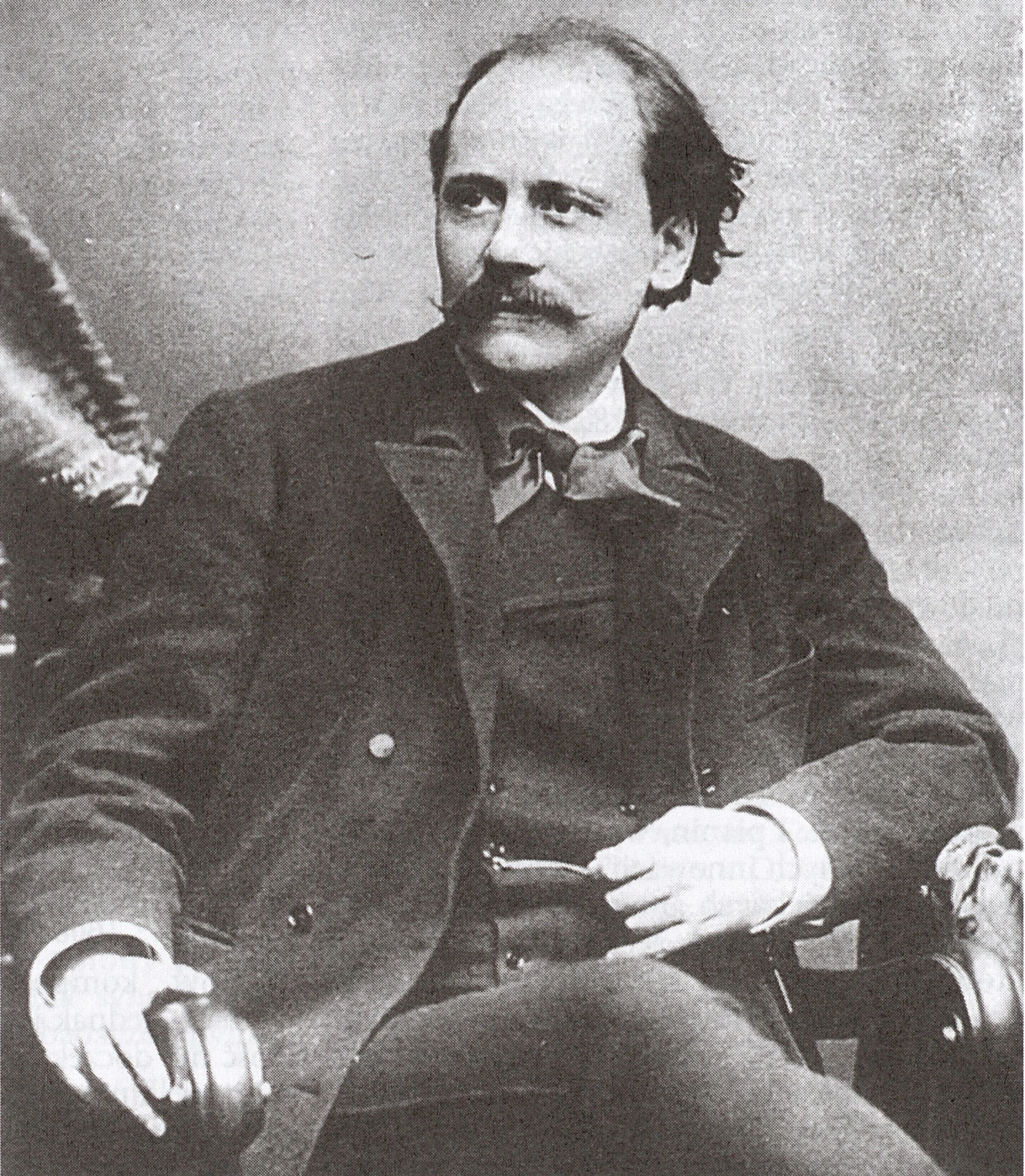
Massenet Jules, *12th May 1842 Montaud (near St Etienne), †13th August 1912 Paris, French composer. His father was an industrialist, and his mother a pianist and the first music teacher of her talented son. In 1853, Massenet was admitted to the Paris Conservatoire to the piano class of A. Laurent, which he completed with the top prize. He then began organ studies with F. Benoist and composition studies with A. Thomas. Due to financial difficulties, he occasionally worked as a percussionist in the orchestra of the Théâtre Lyrique and the Paris Opera, which provided him with experience in orchestration and stage practice. In 1863 he received the Prix de Rome for his cantata David Rizzio. During his stay in Rome (1863–66) he befriended Liszt, whose aesthetic had a significant influence on him. His time in Italy resulted in three religious dramas: Marie-Magdeleine, Eve, and La Vierge, as well as orchestral works (including the suites Pompéia and Scènes napolitaines, connected to Massenet’s travels across the Italian Peninsula) and a cycle of salon pieces for piano four hands titled Scènes de bal. After returning to Paris, Massenet published two song cycles and made his debut at the Opéra-Comique with the opera La grand’tante. In 1870, the promising career of Massenet was interrupted for some time by the Franco-Prussian War and subsequently by the events of the Paris Commune. In 1872, another opera by Massenet, Don César de Bazan, with a libretto based on V. Hugo’s Ruy Blas, was staged at the Opéra-Comique. The previews of his religious dramas composed in Italy (1873, 1875 and 1880) cemented Massenet’s reputation as a composer. In 1878 he became a member of the Académie des Beaux-Arts and a professor of counterpoint, fugue, and composition at the Paris Conservatoire. Over more than 18 years of teaching, many later eminent composers passed through his class, among them G. Charpentier, P. Vidal, G. Enescu, C. Koechlin, A. Bruneau, H. Pierné, F. Schmitt, H. Rabaud, and R. Hahn. Massenet gained international fame in 1881 with Hérodiade, an opera based on the biblical story of Salome, staged at the Théâtre de la Monnaie in Brussels, and from 1884 also in an Italian version at the Théâtre Italien in Paris. The preview of Massenet’s most famous opera, Manon, based on the novel by A.F. Prévost, met with great interest that same year, with the outstanding soprano M. Heilbronn performing the lead role. Premieres of Massenet’s subsequent works took place every 2 or 3 years, a sign of a creative productivity already uncommon at that time. After another opera, Le Cid, staged at the Paris Opera, came Esclarmonde at the Opéra-Comique, a production intended to celebrate the 1889 Paris Exposition. It featured S. Sanderson, an American singer who later performed the leading roles in many other works by Massenet. In 1892, the preview of the lyric drama Werther, based on Goethe’s The Sorrows of Young Werther, took place in Vienna – a work that had interested Massenet already ten years earlier. In 1893 he orchestrated and prepared Léo Delibes’s opera Kassya for performance. In 1894 Thaïs was staged, a lyrical comedy that is a musical adaptation of a novel by A. France. From this opera comes the violin intermezzo Méditation, which remains particularly popular to this day. The success of Manon encouraged the composer to write a work continuing the story of the Chevalier Des Grieux, titled Le portrait de Manon, while the successes of the Italian verists inspired him to compose the opera Sapho, based on A. Daudet’s autobiographical novel. The opera Cendrillon (Cinderella), based on the famous fairy tale by C. Perrault, also achieved considerable success; it was performed in 1899 in Paris as well as in Brussels, Geneva, and Milan that same year. An important event in Massenet’s life was his being decorated as an Officer of the Legion of Honour. Beginning in 1902, Massenet worked on commissions that came to him primarily from the opera house in Monte Carlo.
Massenet is one of those composers whose successes and popularity during their lifetime have neither been fully reflected in today’s assessment of their work, nor – except for a few pieces – in the contemporary musical repertoire. In the 1880s and 1890s, he was considered the most outstanding opera composer in France, a reputation that was only challenged by C. Debussy with his opera Pelléas et Mélisande. Massenet focused almost all his creative activity on the opera genre. Within it, he developed the type of lyric opera pioneered by Ch. Gounod, whose creators abandoned the spectacular effects and large casts characteristic of works presented at the Paris Opera (e.g. G. Meyerbeer, G. Rossini or D. Auber), focusing instead on the emotional life and inner drama of the stage characters. The action of many of Massenet’s operas revolves around a female character (Hérodiade, Manon, Thaïs, Charlotte, Fanny, Thérèse, Cinderella, etc.), which reflects the trend in opera at the turn of the 19th and 20th centuries (female figures such as the femme fatale, the courtesan, the fighter or the frivolous woman – cf. the operatic works of Bizet, Puccini, R. Strauss, Shostakovich, Prokofiev, Berg) and in Massenet’s case manifests itself in the graceful, gentle, though at times somewhat banal, sound of his music. The value of Massenet’s operas often lies in their attractive roles, which present singers with challenges not only vocally but also theatrically. Foremost among them is the masterfully crafted psychologically nuanced role of Manon – a woman torn within, driven by dramatically conflicting desires, and possessing a destructive influence. Of Massenet’s entire oeuvre, only Manon has remained part of the modern opera canon.
Massenet’s favourite literary theme was the confrontation between the religious and the worldly, between mystical and erotic – or even licentious – love (Hérodiade, Manon, Thaïs), which today may raise questions regarding artistic taste, and which is further marked by sentimentality and exaggeration.
Massenet’s musical language strongly references the style of the previous generation of French composers, namely A. Thomas and Ch. Gounod, and also shows certain affinities with the music of G. Bizet. It is based on a melodicism of the espressivo dolce type, deeply rooted in emotion and in vocal music. Starting with Hérodiade, Massenet modifies the earlier symmetry of melody and its simple diatonic formulas towards a declamatory style – freer in shape, with a relaxed syntax, resembling agitated speech, allowing himself, in climactic moments, even a naturalistic reflection of it, though generally remaining within the rhapsodic recitativo accompagnato. Repetition of musical phrases and thematic development – analogous to Wagner’s compositions – belong primarily to the orchestra, from which Massenet often singles out solo instruments that either double the vocal line or engage in dialogue with it (violin, flute, cello), which, along with flexible agogics (characteristic slowdowns or rhythmic expansions in cadences), heightens lyricism and even a tender expressiveness. In his use of chromaticism and dissonant harmonic sonorities, Massenet exhibited remarkable restraint, especially considering the post-Wagnerian era in which he was composing. That conservatism, which over time earned him quite a few opponents, was compensated by an excellent, as befits a French composer, sense of the orchestra’s timbral possibilities. In addition to the orchestra’s traditional instruments, he also occasionally used – either to create a specific mood or to characterise the era in which the action takes place – unusual or historical instruments (most often on stage), such as the lute, viola d’amore, glass flute (Cendrillon), and harp (Thérèse). Massenet achieved excellent effects in pastiches of music from bygone eras (e.g., old French dances in Manon, fragments from Chérubin and Le jongleur de Notre-Dame); in this respect, he can be compared to R. Strauss (Ariadne auf Naxos) or Tchaikovsky (The Queen of Spades). Among the stage works composed after 1902, the most prominent are: Le jongleur de Notre-Dame – a quasi-medieval mystery set in a monastery (with no female role); Thérèse, whose action takes place during the French Revolution (featuring a pastiche of a minuet played on a harp placed on stage); and Don Quichotte, composed with F. Chaliapin in mind.
The numerous (over 200) songs that Massenet composed throughout his life enjoyed popularity in Parisian salons. He often grouped vocal miniatures into cycles with a common literary theme (e.g., Poème d’avril, Poème d’octobre, Poème des fleurs), just as he did with orchestral and piano miniatures, which he usually titled Scènes with an additional descriptor emphasising their character or local colour (the most highly regarded being Scènes alsatiennes and Scènes hongroises). According to Massenet, music was primarily meant to please, to move the listener, and to adorn everyday life; even today, it is often referred to an example of typically French charm and elegance.
Literature: J. Massenet. Catalogue des oeuvres, Mortagne-au-Perche 2006; H. Olúon, M. Dibbern Massenet: Catalogue Général des Oeuvres, Beckenham (Kent GB) 2016; J. Massenet Mes souvenirs (1848–1912), Paris 1912, English translation by H. V. Barnett titled My Recollections, Boston 1919, reprint 2008, 2018, London 2022; new critical edition Mes souvenirs et autres ecrits, ed. J. Ch. Branger, Paris 2017; A. Massenet Massenet en toutes lettres, Paris 2001, Massenet et ses pairs, de Castillon à Humperdinck: correspondances inédites, ed. S. Douche, J. Ch. Branger, Paris 2003; J. Kleczyński Jules Massenet, “Echo Muzyczne i Teatralne” 1884 no. 20; E. de Solenière Massenet. Étude critique et documentaire, Paris 1897; L. Schneider Massenet. L’homme, le musicien, Paris 1908, 2nd ed. 1926; H. T. Finck Massenet and his Operas, London 1910; O. Séré Massenet, Paris 1911; A. Soubies Massenet, Paris 1912; A. Pougin Massenet, Paris 1914; C.M. Widor Notice sur la vie et les travaux de Massenet, Paris 1915; C. Debussy Massenet, in: Monsieur Croche Antidilettante, Paris 1921, Polish edition Monsieur Croche, translated by A. Porębowiczowa, Krakow 1961; J. Loisel “Manon” de Massenet, Paris 1922; R. Brancour Massenet, Paris 1922; C. Bouvet Massenet, Paris 1929; J. d’Udine L’art du lied et le mélos de Massenet, Paris 1931; M. Delmas Massenet, sa vie, ses oeuvres, Paris 1932; A. Bruneau Massenet, Paris 1935, reprint 2022; R. Augenot “Esclarmonde” ou Une forme divine de l’expression musicale au théâtre, Brussels 1939; N. Boyer Trois musiciens français: Gounod, Massenet, Debussy, Paris 1946; J. Bruyr Massenet, Geneva 1948; C. Smith The Operas of Massenet, “Opera” VI, 1955; J. Bruyr Massenet, musicien de la belle époque, Lyon 1964; A. Coquis Jules Massenet: L’homme et son œuvre, Paris 1965, reprint 2019; E. Bouilhol Massenet, son rôle dans l’évolution du théâtre musical, St Etienne 1969; J.A. Kriemlow Żyzń Massenet, Moscow 1969; J. Harding Massenet, London 1970; D. Irvine Massenet – A Chronicle of His Life and Times, Seattle 1974, 2nd edition Portland (Oregon) 1994; G. L. Marschall Massenet et la fixation de la forme mélodique française, Paris 1978, Saarbrücken 1988, reprint 1995; P. Bessand-Massenet Massenet, Paris 1979; O.T. Salzer The Massenet Compendium, New York 1984; P. Gillis ‘Thaïs’ dans tous ses états. Genèse et remaniements, “L’Avant-Scène Opéra”, CIX (1988), pp. 66–74; A. Fauser ‘Esclarmonde’, un opéra wagnérien ?, “L’Avant-Scène Opéra”, CXLVIII (1992), pp. 68–73; M. Modugno Invito all’ascolto di Jules Massenet, Mediolan 1994; B. Olivier Jules Massenet – Itinèraire pour un théâtre musical, Paris 1999; J.-Ch. Branger Manon, de Jules Massenet ou le crépuscule de l’opéra comique, Metz 2000; C. Rowden Jules Massenet, ‘Thaïs’ – dossier de presse parisienne (1894), Berlin, Heilbronn 2000; A. Fauser Jules Massenet, ‘Esclarmonde’ – dossier de presse parisienne (1889), Weinsberg 2001; M.-Y. Wei Littérature et musique. ‘Manon Lescaut’ de l’abbé Prevost sur la scène de l’opéra: Massenet et Puccini, Paris 2002; Le livre d’opéra au temps de Massenet, materials from the 2001 international colloquium in Saint-Étienne, ed. A. Ramaut, J.-Ch. Branger, Saint-Étienne 2002; C. Rowden Republican morality and catholic tradition in the opera: Massenet’s ‘Herodiade’ and ‘Thais’, ‹‹Studien zur französischen Oper des 19. Jahrhunderts›› vol. 6, Heilbronn 2004; Figures de l’Antiquité dans l’opéra français des ‘Troyens’ de Berlioz à ‘Œdipe’ d’Enesco, materials from the colloquium held as part of the 9th Massenet Festival in Saint-Étienne, 2007, ed. J. Ch. Branger, Saint-Étienne 2008; Ch. Ghristi, M. Auclair La belle époque de Massenet, Montreuil 2011; J. Bonnaure Massenet, Arles 2011; R. Viagrande “Les tribulations d’un auteur”. Jules Massenet, una vita per il teatro musicale, Monza 2012; J.Ch. Branger, M. Heine Ernest Van Dyck et Jules Massenet: Un interprète au service d’un compositeur, Paris 2014; S. Schmidl Jules Massenet: Sein Leben, sein Werk, seine Zeit, Mainz 2014; Massenet aujourd’hui, héritage et postérité, materials from the 2012 international colloquium in Saint-Étienne, ed. J.-Ch. Branger, V. Giroud, Saint-Étienne 2014; Massenet et l’Opéra-Comique, materials from the seminar at the University of Saint-Étienne 2012, ed. J. Ch. Branger, A. Terrier, Saint-Étienne 2015; Massenet and the Mediterranean world, materials from the 2012 conference in Lucca, Bologna 2015; M. Dibbern Massenet and His Letters. A New Biography, Hillsdale (New York) 2015; A. Fauser «L’orchestre dans les sons brave l’honnêteté…»: Le rôle de l’élément érotique dans l’œuvre de Massenet, “Transposition. Musique et sciences et sexualité” IX, 2021, journals.openedition.org.
All published in Paris; for unpublished works, the date of creation/composition is given.
Stage works:
operas
La grand’tante, opéra comique in one act, libretto J. Adénis, C. Granvallet, preview Paris 3rd April 1867
Don César de Bazan, opéra comique in four acts, 2 versions, libretto A. d’Ennery, P.P. Dumanoir, J. Chantepie after Ruy Blas by V. Hugo, preview Paris 30th November 1872
Les erinnyes, tragédie antique in two acts, libretto C. Leconte de Lisle, preview Paris 6th January 1873, 2nd version 15th May 1876
Bérangère et Anatole, in one act, libretto H. Meilhac, P. Poirson, preview Paris February 1876
Narcisse, idylle antique, composed 1877, libretto P. Collin
Le roi de Lahore (Act 3 after La coupe du roi de Thulé), in five acts, 3 versions, libretto L. Gallet, preview Paris 27th April 1877
Hérodiade, in three acts, libretto P. Milliet, H. Grémont (real name G. Hartmann) after G. Flaubert, preview Brussels 19th December 1881
Manon, opéra comique in five acts, libretto H. Meilhac, P. Gille after A.F. Prévost, preview Paris 19 January 1884, Polish premiere Warsaw 7th April 1888
Le Cid, in four acts, libretto A. d’Ennery, E. Blau, L. Gallet after P. Corneille, preview Paris 30th November 1885
Biblis, pagan scene, libretto G. Boyer after Ovid’s Metamorphoses, preview Paris1886
Esclarmonde, opéra romanesque in four acts, libretto A. Blau, L. de Gramont, preview Paris 14th May 1889
Le mage, in five acts, 2 versions, libretto J. Richepin, preview Paris 16th March 1891
Werther, drame lyrique in four acts, libretto E. Blau, P. Milliet, G. Hartmann after Goethe, preview Vienna 16th February 1892, Polish premiere Warsaw 18th November 1901
Thaïs, comédie lyrique in three acts, libretto L. Gallet after A. France, preview Paris 16th March 1894, Polish premiere Warsaw 2nd March 1909
Le portrait de Manon, opéra comique in one act, libretto G. Boyer, preview Paris 8th May 1894
La navarraise, épisode lyrique in two acts, libretto J. Claretie, H. Cain, preview London 20th June 1894, Polish premiere Lviv 1896
Sapho, pièce lyrique in five acts, two versions, libretto H. Cain, A. Bernède after A. Daudet, preview Paris 27th November 1897
Cendrillon, conte de fées in four acts, libretto H. Cain after Ch. Perrault, preview Paris 24th May 1899
Grisélidis, conte lyrique in three acts, libretto A. Silvestre, E. Morand, preview Paris 20th November 1901
Chérubin, comédie chantée in three acts, libretto F. de Croisset, H. Cain, preview Monte Carlo 14th February 1905
Ariane, in five acts, libretto C. Mendès, preview Paris 31st October 1906
Thérèse, drame musical in two acts, libretto J. Claretie, preview Monte Carlo 7th February 1907
Bacchus, in four acts, libretto C. Mendès, preview Paris 5th May 1909
Don Quichotte, comédie-héroïque in five acts, libretto H. Cain after Le chevalier de la longue figure by J. Le Lorrain, preview Monte Carlo 19th February 1910, Polish premiere Krakow 1962
Roma, opéra tragique in five acts, libretto H. Cain after Rome vaincue by A. Parodi, preview Monte Carlo 17th February 1912
Panurge, haulte farce musicale in three acts, libretto M. Boukay, G. Spitzmüller after F. Rabelais, preview Paris 25th April 1913
Cléopâtre, in four acts, libretto L. Payen (real name A. Liénard), preview Monte Carlo 23th February 1914
Amadis, opéra légendaire in four acts with prologue, libretto J. Claretie, preview Monte Carlo 1st April 1922
L’adorable bel’-boul’, operetta in one act, lost, libretto L. Gallet, preview Paris 17th April 1874
sacred dramas:
Marie-Magdeleine, drame sacré in 3 acts, libretto L. Gallet, preview Paris 11th April 1873
Eve, mystère in three acts, libretto L. Gallet, preview Paris 18th March 1875
La Vierge, légende sacrée in four acts, libretto C. Grandmougin, preview Paris 22nd May 1880
La terre promise, oratorio in three acts, biblical text, preview Paris 15th March 1900
Le jongleur de Notre-Dame, mystère in three acts, libretto M. Léna, preview Monte Carlo 18th March 1902, Polish premiere Warsaw 1922
ballets:
Le carillon, légende mimée et dansée in one act, libretto E. van Dyck, C. de Roddaz, preview Vienna 21st February 1892
Cigale, divertissement in two acts, libretto H. Cain, preview Paris 4th February 1904
Espada, ballet in one act, libretto R. Maugars (real name. H. de Rothschild), libretto baron Monte Carlo, preview Paris 13th February 1908
theatre music:
Un drame sous Philippe II (only the Sarabande espagnole has been preserved), playwright: G. de Porto-Riche, preview Paris 14th April 1875
La vie de Bohème, playwright: T. Barrière, H. Murger, preview Paris 1876
L’Hetman, playwright: P. Déroulède, preview Paris 2nd February 1877
Notre-Dame de Paris, playwright: V. Hugo, preview Paris 4th April 1879
Michel Strogoff, playwright: J. Verne, A. d’Ennery, preview Paris 17th November 1880
Nana-Sahib, playwright: J. Richepin, preview Paris 20th December 1883
Théodora, playwright: V. Sardou, preview Paris 26th December 1884
Le crocodile, playwright: V. Sardou, preview Paris 21st December 1886
Phèdre, playwright: J.B. Racine, preview Paris 8th December 1900
Le grillon du foyer, playwright: L. de Francmesnil after C. Dickens, preview Paris 1st October 1904
Le manteau du roi, playwright: J. Aicard, preview Paris 22nd October 1907
Perce-Neige et les sept gnomes, playwright: J. Dortzal after Brothers Grimm, preview Paris 2nd February 1909
Jérusalem, playwright: J. Rivollet, preview Monte Carlo 17th January 1914
vocal-instrumental works:
songs for solo voice in cycles:
Poème d’avril, text by A. Silvestre, before 1873, 8 pieces
3 mélodies, text by C. Distel, ca. 1868
4 mélodies, text by T. Gautier, J. Ruelle, P. Ronsard, 1868
Poème du souvenir, text by A. Silvestre, 1868, 6 pieces
Poème pastoral, text by F. and A. Silvestre, 1872, 6 pieces
Poème d’octobre, text by P. Collin, 1876, 6 pieces
Poème d’amour, text by P. Robiquet, 1880, 6 pieces
Poème d’hiver, text by A. Silvestre, 1882, 5 pieces
Poème d’un soir, text by G. Vanor, 1895, 3 pieces
Quelques chansons mauves, text by A. Lebey, 1902, 3 pieces
3 poèmes chastes, text by G. Boyer, P. le Moyne, J. de Villeurs, 1903
over 150 individual solo songs to texts by French poets, including V. Hugo: Nouvelle chanson sur un vieil air, composed 1869, Guitare, 1886, Etre aimé, 1893, C’est l’amour, 1908, Soleil couchant, 1912; A. de Musset: Souvenir de Venise, 1874; G. Prevost: Aubade, 1877; G. de Maupassant: Je cours après le bonheur, 1892; C. Mendès: L’heure volée, 1902; A. France: Ames obscures, 1912; A. Silvestre: Anniversaire, 1880, Madrigal, 1882, Sonnet païen, 1882, Il pleuvait, 1882, Un adieu, 1882, Noël païen, 1886, Pensée d’automne, 1888, Pensée de printemps, 1893, Dors, Magda, 1905; J. Normand: Les oiselets, 1877, Souhait, 1880, Pitchounette, 1897, Vieilles lettres, 1898, Première danse, 1899; G. Boyer: Si tu veux, Mignonne, 1876, Les enfants, 1882, Royauté, 1889 (?), Le petit Jésus, 1899, En chantant, 1906; A. Alexandre: Amour béni, 1899, Mousmé, 1901, Extase printanière, 1902, La mélodie des baisers, 1906
10 songs to texts by various authors, published posthumously in the collection Expressions lyriques (1913)
around 25 songs for 2, 3 or 4 solo voices and piano, including.: Poème des fleurs for 2 sopranos and alto, text B. Allievo, translated by A. Gasqui, 1908, Rêvons, c’est l’heure for soprano and tenor, text by P. Verlaine, 1872
Requiem for 4–8 voices, cello, double bass and organ, composed ca. 1863
Alleluia for 4 voices, composed 1866
Ave maris stella, motet for 2 voices, cello and piano or organ, 1886
Souvenez-vous, Vierge Marie for soprano, choir and orchestra, text G. Boyer, 1887
Pie Jesu for solo voice and cello ad libitum, 1893
O salutaris for soprano, choir ad libitum, organ, and harp, 1894
Panis angelicus for solo voice, choir, and organ, 1910
3 secular cantatas
2 fantasias for choir and orchestra
Instrumental:
orchestral:
Ouverture de concert Op. 1, 1863
Pompéia, suite, composed 1864
Suite no.1 Op. 13, 1865
Suite no.2 Scènes hongroises, 1871
Suite no.3 Scènes dramatiques, 1873
Phèdre, ouverture, 1873
Suite no.4 Scènes pittoresques, 1874
Lamento, 1875
Sarabande du XVIe siècle, 1875
Suite no.5 Scènes napolitaines, 1876 (?)
Suite no.6 Scènes de féerie, 1879
Suite no.7 Scènes alsaciennes, 1881
Parade militaire, 1887
Marche argienne, ca. 1890
Visions, symphonic poem, 1890
Fantasia for cello and orchestra, 1897
Brumaire, ouverture, 1899
Les grands violons du roy, ca. 1900
Les Rosati, 1902
Piano concerto, 1903
chamber music:
2 pièces for cello and piano, 1866
Introduction et variations for flute, oboe, clarinet, bassoon, horn, 2 violins, viola, cello and double bass, ca. 1872
piano works:
3 pièces Op. 11 for piano four hands, 1863 (?)
Scènes de bal Op. 17 for piano four hands, 1865
10 pièces de genre Op. 10 for piano, 1866
Improvisations for piano, 1866
Le roman d’Arlequin for piano, 1870
Les erinnyes for piano, 1877
La noce du village for piano, ca. 1890
Toccata for piano, 1892
Nocturne for piano, 1895
2 impromptus for piano, 1896
Année passée for piano four hands, 1897, 12 pieces
Un momento musicale for piano, 1897
Valse folle for piano, 1898
Valse très lente for piano, 1901
Musique pour bercer les petits enfants for piano, 1902
Carillon for piano, 1903 2 pièces for piano, 1907