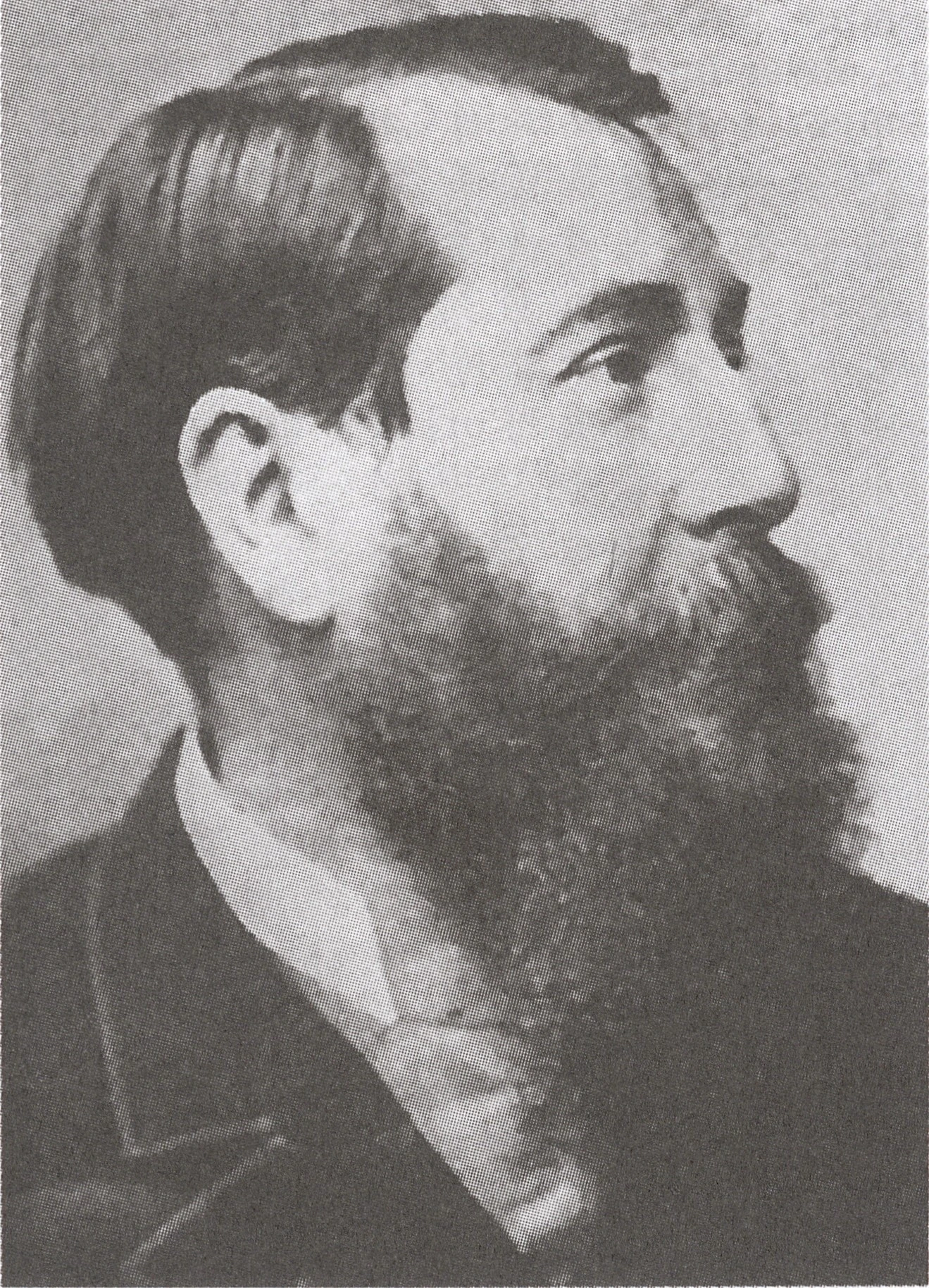
Delibes Clément Philibert Léo, *21 February 1836 Saint-Germain-du-Val (Sarthe), †16 January 1891 Paris, French composer. He was born into a family with strong musical traditions on his mother’s side. After his father’s death, Delibes moved with his mother to Paris (1848), where he began studies at the conservatory under F. Le Couppey (piano), F. Bazin (harmony), F. Benoist (organ), and A. Adam (composition). Gifted with a fine voice, he sang from childhood in opera and church choirs (e.g. at Ste-Madeleine in Paris). In 1853 he became a répétiteur at the Théâtre Lyrique and organist at the church of St-Pierre-de-Chaillot; in 1862–71 he played at St-Jean-St-François, while simultaneously (1865–72) beginning work at the opera as accompanist and later second chorus conductor (alongside V. Massé). He also occasionally wrote criticism, which appeared in Le Gaulois Hebdomadaire under the pseudonym Elois Delbès. In 1856 Delibes made his debut at the Théâtre de Folies Nouvelles with a one-act operetta Deux sous de charbon ou Le suicide de Bigomeau (lost). From then on, he devoted himself almost entirely to stage music, writing numerous operas, operettas, and ballets. A decisive moment in the development of his ballet output came with a commission from E. Perrin, director of the Paris Opera, which involved composing the second and third acts of the ballet La source (with L. Minkus). He was awarded the Legion of Honour (1877) for the ballet Sylvia, based on T. Tasso’s Aminta. In 1881 Delibes became professor of composition at the Paris Conservatoire, and in 1884 a member of the Institut de France.
The core of Delibes’s output consists of stage works – operas and ballets. In his operas he drew on the tradition of French opéra comique, while introducing his own unusual genre labels such as opérette bouffe, folie, or asphyxie lyrique. He developed a distinctive style characterized by rich melodic invention, skillful characterization of figures, and strong musical drama, even when working with weak librettos. Delibes often used musical parody, incorporating motifs from well-known composers: for example, in Les musiciens de l’orchestre he parodies Auber, and in Le bœuf Apis – Rossini. His operettas and opéras-bouffes enjoyed success with audiences, but his real fame, not only in France, came with the comic opera Le roi l’a dit, based on V. Hugo. His most outstanding operatic work is Lakmé; despite the sentimentality of the libretto, it has remained in the repertoire to this day, undoubtedly thanks to its music, which effectively highlights the exotic aspect of the plot. Particularly famous is the so-called Bell Song, a popular coloratura showpiece still performed independently. In his final opera Kassya, completed and orchestrated by Massenet, Delibes made use of elements of musical idiom (trepak, dumka); similarly, in the ballet Coppélia he introduced variations based on themes from Moniuszko’s Paris collection Echos de Pologne. Speech rhythms can also be found in Act I of the ballet Sylvia (libretto after E.T.A. Hoffmann), whose action is set in 19th-century Galicia. A fragment of this ballet, the Swanilda’s Waltz remains popular in the modern repertoire. From La source onward, Delibes’s ballet output, though less extensive than his operas, reflects the full scope of his creative and even reformist abilities. It demonstrates not only his mastery of refined harmony, rhythm, and orchestration, but also his strong sense of musical drama. Delibes treated ballet music not as traditional 19th-century divertissement subordinate to choreography, but as an independent wordless drama. A prominent place in this genre is still held by Coppélia. The largest vocal-instrumental work by Delibes is the cantata Alger, written for the occasion of Napoleon III’s return from Algeria. Among his ca. 20 songs, the Spanish song Les filles de Cadiz remains particularly popular to this day. His piano output is of marginal importance, consisting of works written during his early career as a répétiteur at the opera.
Literature: E. Guiraud Léo Delibes, Paris 1892; J. Loisel „Lakmé” de Léo Delibes, Paris 1924; H. de Curzon Léo Delibes, Paris 1927; F. Noske La mélodie française, Paris 1954, revised English ed. French Songfrom Berlioz to Duparc, New York 1970; A. Coquis Léo Delibes, Paris 1957; A. Coquis Léo Delibes, Paris 1958; D. Blaize La 1500e de „Lakmé”, “Musica” 1961, iss. 84; I. Davidson Balety Delibesa, “Sowietskaja Muzyka” XXV, 1961; R. Tatry Comment „Léo”… est deveneu Delibes, “Musica-disques” CVI, 1963; W. Studwell Chaikovskii, Delibes, Stravinskii. Four Essays on Three Masters, Chicago 1977; M.V. Boston An Essay on the Life and Works of Léo Delibes, thesis at the University of Iowa, 1981; W. Studwell Adolphe Adam and Léo Delibes. A Guide to Research, New York 1987.
Vocal–instrumental:
Alger, cantata, Paris 1865
La mort d’Orphée, dramatic scene for tenor, choir, and orchestra, Paris 1878
Messe brève for 2 voices, organ, and string quartet
O Salutaris for 3 voices and organ
Ave maris stella, Agnus Dei, Ave verum, Ave Maria
choral songs with instrumental accompaniment, solo songs to texts by V. Hugo, A. Silvestre (Myrto), E. Augier, and A. Musset (including the famous Les filles de Cadiz for soprano, 1874)
a small number of piano arrangements of dances (musette, Scottish dance, polkas, quadrilles, mazurkas, etc.)
Stage:
operas, operettas:
Deux sous de charbon ou Le suicide de Bigorneau, also known as Double garde ou Un malade qui se porte bien, asphyxie lyrique, 1-act (lost), libretto J. Moineaux, premiere Paris 9 February 1856
Deux vieilles gardes, bouffonnerie musicale, 1-act, libretto de Villeneuve, P. Lemonnier, premiere Paris 8 August 1856
Six demoiselles à marier, folie, 1-act, libretto E. Jaime, A. Choler, premiere Paris 12 November 1856
Maitre Griffard, also known as Les deux procureurs, opéra comique, 1-act, libretto Mestépès, premiere Paris 3 October 1856
L’omelette à la Follembuche, opérette, 1-act, libretto M. Michel, E. Labiche, premiere Paris 8 June 1859
Monsieur de Bonne-Étoile, opéra comique, 1-act, libretto P. Gille, premiere Paris 6 January 1860
Les musiciens de l’orchestre, opérette bouffe (with J. Offenbach, J. Erlanger, and A. Hignard), 2-act, libretto de Forges, A. Bourdois, premiere Paris 25 January 1861
Les eaux d’Ems, comedy, 1-act, libretto H. Crémieux, L. Halévy, premiere Ems summer 1861
Mon ami Pierrot, also known as L’enfance de Pierrot, opérette, 1-act, libretto Lockroy, premiere Ems June 1862
Le jardinier et son seigneur, also known as Le livre, opéra comique, 1-act, libretto M. Carré, T. Barrière, premiere Paris 1 May 1863
La tradition, fantaisie-prologue (lost), libretto H. Derville, premiere Paris 5 January 1864
Le serpent à plumes, farce, 1-act, libretto P. Gille, Cham, premiere Paris 16 December 1864
Le bœuf Apis, opéra bouffe, 2-act (lost), libretto P. Gille, Furpille, premiere Paris 25 April 1865
Malbrough s’en va-t-en guerre, opéra bouffe, 4-act (acts 1–3 by G. Bizet, E. Jonas, and Legouix), libretto P. Siraudin, Williams, W. Busnach, premiere Paris 13 December 1867
L’écossais de Chatou, opérette, 1-act, libretto P. Gille, A. Jaime, premiere Paris 16 January 1869
La cour du roi Pétaud, opéra bouffe, 3-act, libretto P. Gille, A. Jaime, premiere Paris 24 April 1869
Le roi l’a dit, opéra comique, 3-act, libretto E. Gondinet, premiere Paris 24 May 1873
Jean de Nivelle, drame lyrique, 3-act, libretto E. Gondinet, P. Gille, premiere Paris 8 March 1880
Lakmé, opéra, 3-act, libretto E. Gondinet, P. Gille, premiere Paris 14 April 1883, Polish premiere Warsaw 1896
Kassya, drame lyrique, 5-act (acts 2–5 orchestrated by J. Massenet), libretto P. Gille, H. Meilhac, premiere Paris 24 March 1893
Le roi s’amuse, incidental music to V. Hugo’s drama, premiere Paris 22 November 1882
ballets:
La source (staged in Vienna as Naila, die Quellenfee or Die Quelle), 3 acts, 4 scenes (acts 1 and 4 by L. Minkus), libretto C. Nuitter, Saint-Léon, premiere Paris 12 November 1866
Coppélia ou La fille aux yeux d’émail, 2 acts, 3 scenes, libretto C. Nuitter, Saint-Léon after E.T.A. Hoffmann, premiere Paris 2 May 1870, Polish premiere Warsaw 1882
Sylvia ou la nymphe de Diane, 3 acts, 5 scenes, libretto J. Barbier, S. Reynach after T. Tasso, premiere Paris 14 June 1876
Valse ou Le pas de fleurs, divertissement to Le corsaire by A. Adam, premiere Paris 21 October 1867