
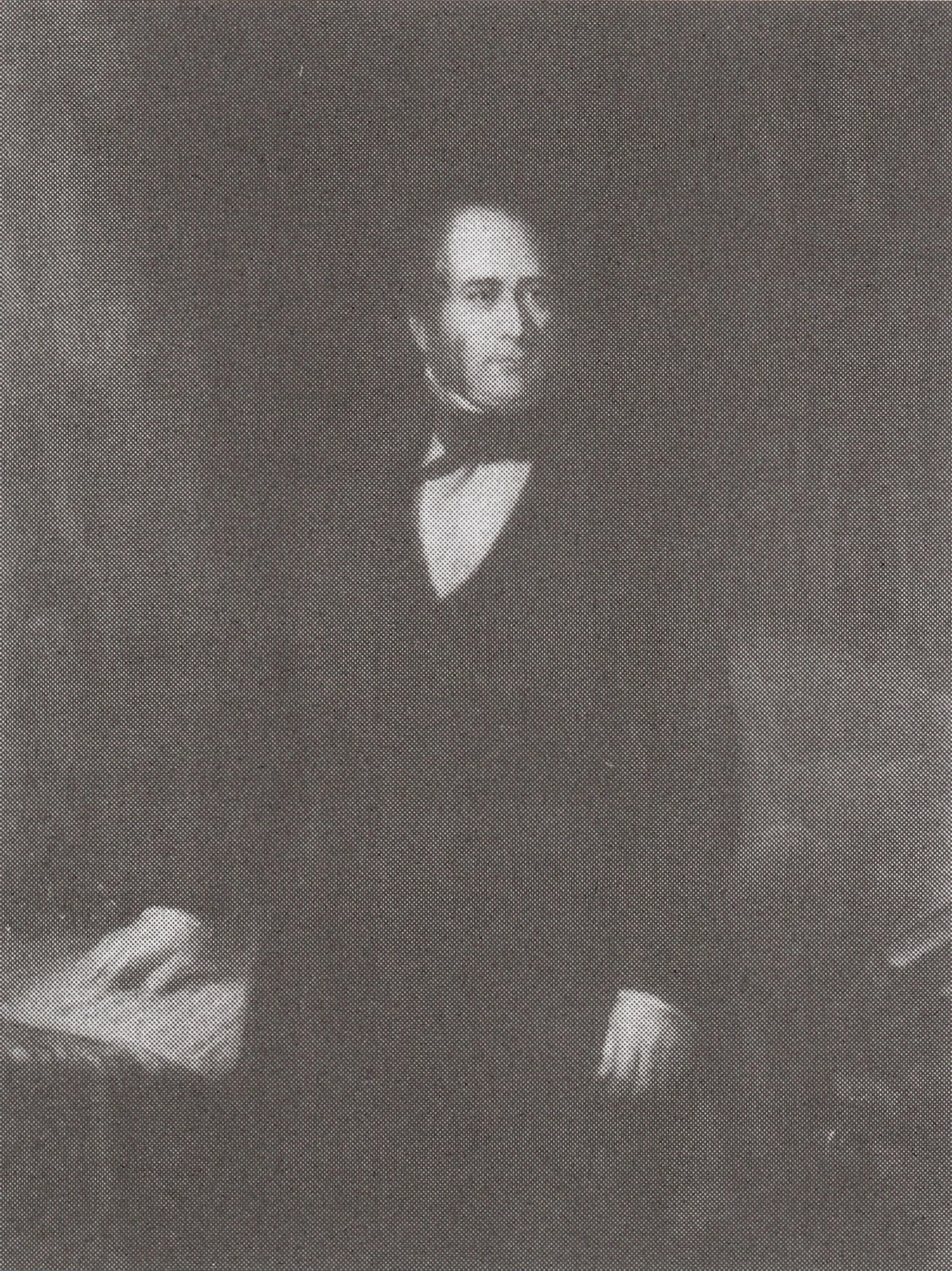
Wesley, Samuel

Wesley Samuel Sebastian, *14 August 1810 London, †19 April 1876 Gloucester, English composer and organist, the illegitimate son of Samuel Wesley and Sarah Suter. He was educated by his father. From 1820, he was a chorister at the Chapel Royal. From 1826 to 1832, he worked as an organist in churches in London; his first songs, piano and organ works date from this period. He became organist at Hereford Cathedral in 1832; he composed the anthem The Wilderness and the Solitary Place for the opening ceremony of the rebuilt church. In 1834, he conducted the Three Choirs Festival; he moved to Exeter in 1835, taking up the post of organist at the cathedral in 1842. After six years of turbulent association with the cathedral authorities, he accepted the position of organist of the parish church in Leeds. Alongside his musical activities, he was involved in teaching and journalism; he published A Morning and Evening Service in E major in 1845, and defended the rights of church musicians, criticizing the Anglican clergy in the preface to the service and in pamphlets from 1849 and 1854. In 1848, he applied for a lectureship at Oxford University but was rejected (as he had been in Edinburgh in 1841, 1844, and 1845, and in Cambridge in 1856). Subsequent conflicts with the church authorities forced him to change his position –he became an organist at Winchester Cathedral in 1849. He was appointed professor at the Royal Academy of Music in London in 1850. He was organist at Gloucester Cathedral from 1865 until the end of his life. He led the Three Choirs Festival again in 1865, 1868, 1871, and 1874. He completed The European Psalmist in 1872, a collection of psalms and church melodies he had been working on since his time in Winchester. The following year, he received a small pension (£100 a year) and curtailed his musical activities. He played the organ for the last time at Christmas 1875, four months before his death. He died after a long illness of glomerulonephritis.
The most interesting part of Wesley’s oeuvre are his anthems, which combine European early music patterns with an early Romantic style (for example, in Cast Me Not Away, a hymn composed while recovering from a complicated leg fracture while fishing on the River Rye, the counterpoint in the style of J.S. Bach corresponds with 19th-century harmony). These pieces are characterised by a dissonant sound, dense chromaticism, and the free selection and combination of texts from various sources. Smaller anthems, such as Wash Me Throughly, have a homophonic texture, following the example of W.A. Mozart’s Ave verum corpus. More elaborate ones, such as The Wilderness and the Solitary Place (nominated for the Gresham Prize Medal and rejected for its daring harmony and overly secular nature), combine elements of Baroque polyphony with the melodic and vocal technique characteristic of early Romanticism. Published in 1853, the collection of 12 anthems is considered one of the most important pieces of 19th-century Anglican church music. In turn, A Morning and Evening Service – a composition considered by historians to be a model for the musical setting of Anglican church services – is noteworthy for its attention to brevity of text and the unprecedented independence of the organ part.
Literature: Jan Wesley: Kazania, transl. of an English ed. from 1787, Warsaw 1926; Letters of Samuel Wesley to Mr. Jacobs, ed. E. Wesley, London 1875, 2nd ed. 1878, facsimile ed. entitled The Wesley Bach Letters, introduction P. Williams, London 1988; The Letters of Samuel Wesley. Professional and Social Correspondence: 1797–1837, ed. P. Olleson, Oxford 2001; Journal of the Rev. Charles Wesley, M.A., ed. T. Jackson, London 1849, reprint 1977; G.J. Stevenson Memorials of the Wesley Family, London 1876, reprint New York 2010; L. Tyerman The Life and Times of John Wesley, New York 1872; J.K. Pyne Wesleyana, in: The Musical Times, vol. 40, No. 676, 1899; R. Green The Works of John and Charles Wesley. A Bibliography, London 1896, 2nd ed. 1906; J.S. Bumpus The Church Compositions of Samuel Sebastian Wesley, in: Musical News, vol. 39, 1910; Letters of John Wesley, ed. J. Telford, London 1931; M. Lelièvre Jan Wesley. Jego życie i dzieło, transl. from French, Warsaw 1931; J.T. Lightwood Samuel Wesley, London 1937, reprint New York 1972; E. Roudey The Musical Wesleys, London 1968, reprint Westport 1976; H. Ambrose The Anglican Anthems and Roman Catholic Motets of Samuel Wesley, Boston 1969; N.F. Adams The Musical Sources for John Wesley’s Tune Book, Ann Arbor 1974; P.P. Chappell Dr. Samuel Sebastian Wesley, Great Wakering 1977; P. Horton The Music of Samuel Sebastian Wesley, Oxford 1983; A Collection of Hymns for the Use of the People Called Methodists, The Works of John Wesley, ed. F. Hildebrandt, O.A. Beckerledge, vol. 7, Oxford 1983; R.W. Brown Chares Wesley, Hymnwriter, Bristol 1993; C.R. Young Music of the Heart: John and Charles Wesley on Music and Musicians, Carol Stream 1995; P. Horton The Unknown Wesley: the Early Instrumental and Secular Vocal Music od Samuel Sebastian Wesley, in: Nineteenth Century British Music Studies, vol. 1, ed. B. Zon, Aldershot 1999; P. Olleson Samuel Wesley and the Music Profession, in: Music and Culture, 1785–1914, commemorative book of C. Ehrlich, ed. C. Bashford and L. Langley, Oxford 2000; M. Kassler, P.J. Olleson Samuel Wesley: a Sourcebook, Aldershot 2001; P.J. Olleson Samuel Wesley: the Man and his Music, Aldershot 2003; P. Horton Samuel Sebastian Wesley. A Life, Oxford 2004 (contains a thematic catalogue); Charles Wesley: Life, Literature and Legacy, ed. K.G. Newport, T.A. Campbell, Peterborough, 2007; Music and the Wesleys, ed. N. Temperley and S. Banfield, Farnham 2010; P.J. Olleson Samuel Wesley and the Development of Organ Pedals in England, in: Music and Performance Culture in Nineteenth-Century Britain, ed. B. Zon, Aldershot 2012; W. Markowski Jan i Karol Wesleyowie – ojcowie metodyzmu, in: Gdański Rocznik Ewangelicki, vol. 7, 2013.
Compositions
Vocal and vocal-instrumental:
secular:
a cappella:
When Fierce Conflicting Passions, glee, 1838
Arising From the Deep, song, 1874
songs for voice and piano, including:
There Be None of Beauty’s Daughters, London 1835
religious:
Abraham’s Offering for baritone and orchestra, 1834
A Morning and Evening Service, in E major for 8 voices, 8-voice choir and organ, with a preface by S.S. Wesley, London 1845
I Have Been Young and Now am Old for baritone and orchestra, ca. 1848
Short Full Service in E for choir and organ, 1868
ca. 40 anthems, including:
The Wilderness and the Solitary Place, 1832
12 Anthems for 1–5 voices, 4–8-voice choir and organ, 1853 (includes Cast Me Not Away and Wash Me Throughly)
All Go to One Place, 1862
Lord of All Power and Might, London 1873
Let Us Now Praise Famous Men, 1874
songs for voice and piano, including:
O Lord Jesu Christ and Almighty God, Give Us Grace, both 1848
Scenic:
music for ballet or opera, 1825
The Dilosk Gatherer, libretto by E. Fitzball, commemorative music, London 1832
Instrumental:
Symphony in C major (1 part), 1834
Variations on God Save the King for organ, 1829
Concertante for 12 wind instruments, composed for Gloucester Festival, 1835
Air with Variations for piano, dedicated to J.B. Cramer, 1832
Introduction and Fugue in C-sharp minor for organ, London 1836, 2nd ed. 1869
March and Rondo for piano, 1843
Jeux d’esprit. Quadrilles a la Herz for piano, 1847
Andante cantabile in G major for organ, London 1864
Holsworthy Church Bells. Air with Variations for organ, 1873/74, London 1877
Publications:
The European Psalmist, 1872
Works (published in London):
A Selection of Psalm Tunes (preface to the collection of psalms for organ), London 1842
A Few Words on Cathedral Music, London 1849
Reply to the Inquiries of the Cathedral Music, London 1854
Editions:
Samuel Sebastian Wesley. Anthems, «Musica Britannica» LVII, LXIII, LXXXIX, ed. P. Horton, 1990, 1993, 2009