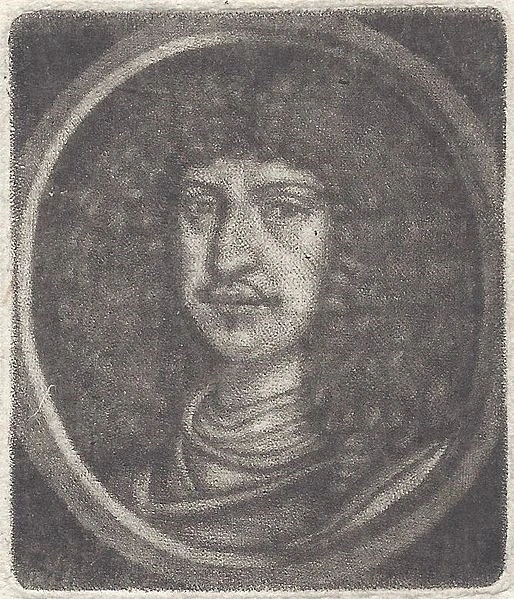
Wagenseil Georg Christoph, *29 January 1715 Vienna, †1 March 1777 Vienna, Austrian composer, organist, harpsichordist and teacher. He was the son of a merchant, Rudolf Matthias Wagenseil (1678–1740) and Anna Maria, née Mans (1685–1746), daughter of a craftsman employed at the Habsburg court in Vienna. He initially studied law for a short time and learned to play keyboard instruments (piano, organ) with J.A. Weger, organist at St. Michael’s Church in Vienna; at the same time, he sang in the boys’ choir of Wilhelmina Amalia, widow of Emperor Joseph I. Between 1735 and 1738, he studied counterpoint and composition under G. Muffat, J.J. Fux and M. Palotta. From 1739 until the end of his life, he was a composer, and from 1749 also a harpsichordist at the imperial court in Vienna. In addition, between 1741 and 1750, he was organist to Elisabeth Christine, widow of Emperor Charles VI, and piano teacher to the imperial family. Widely known and respected as a composer and virtuoso, he rarely left Vienna. In 1745, he travelled to Venice for the premiere of Ariodante, and in 1759–60, on the occasion of the premiere of Demetrio, he went on a longer stay in Milan, where he made contact with J.Ch. Bach. In 1766, due to progressive illness (paralysis), he gave up concert activity and devoted himself to creative and pedagogical work. Referring to the didactic principles of J.J. Fux, he developed his own methods of teaching keyboard instruments; his students included F.X. Dušek, L. Hofmann, J.B. Schenk, J.A. Štěpán and the brothers F. and A. Teyber.
Wagenseil occupies an important place in the history of 18th-century European musical culture. He is considered one of the most outstanding Viennese composers of the early classical period; his work reflects all the stylistic trends characteristic of the transitional stage between the Baroque and Classical periods. He was also widely regarded as an outstanding harpsichordist and teacher.
In the early period of his compositional career (until around 1745), Wagenseil wrote mainly religious music – a cappella masses (e.g. Missa a 4 voci da capella senz’organo) and concertos, most often (in various combinations) for solo voices, mixed choir, string ensemble and organ, trombone, bassoon and cornet (solo or doubled) and occasionally two or four trumpets and timpani. In this genre, he drew on Palestrina’s polyphony and Fux’s counterpoint style, and in his instrumentation, he also continued older traditions (e.g. he introduced cornetto). More recent features show typical forms of the late Baroque cantata mass (e.g. Missa solenne Immaculatae conceptions), with extensive use of various polyphonic techniques and rich contrapuntal means, including canon, fugato, double, triple and quadruple fugues (Missa “Panem quotidiam” from 1739) and elements of the galant style.
Wagenseil’s opera works also combine traditional formal and stylistic elements with newer ones. His stage works are mostly occasional compositions; they constitute the most important part of Wagenseil’s output from 1745 to 1755. The early ones still show the influence of Neapolitan opera, while in the later ones, recitativo secco is replaced by expressive recitativo accompagnato, and arias da capo by small-scale arias in the galant style, sometimes with a folk flavour; the composer also significantly expanded the ensemble scenes and introduced extensive, elaborately constructed choral passages. The creation of a coherent whole from these elements is considered an outstanding achievement of Wagenseil, and the pasticcio Euridice, staged at the court theatre in 1750 and displaying these stylistic features, is regarded as an important step towards the transformations that led directly to the opera reform of C.W. Gluck.
Wagenseil’s work after 1755 is dominated by orchestral music. His symphonies, which are considered the most important part of his oeuvre, were published in numerous editions and brought him fame throughout Europe. The sound of the symphonies is based, as in an opera orchestra, on a typical string ensemble with transverse flutes, oboe, horns, bassoon, trumpet (often doubled) and timpani, sometimes enriched with other instruments, such as the English horn or hunting horn. Wagenseil liked to introduce doubling of the violin parts by transverse flutes and oboes. The frequent use of a trio instrumentation and the use of concert instruments combined with the harpsichord testify to the influence of the trio sonata, concerto grosso and divertimento. The earliest symphonies were overtures to operas, which eventually became independent; later symphonic works are extensive, 3- or, less frequently, 4-part concert pieces influenced by the late Baroque Italian sinfonia and elements of the Rococo style. Wagenseil made an enormous contribution to the development of the early classical sonata form. He was one of the first to introduce two themes, which were not yet strongly contrasted. The repetition of the same theme immediately after each other in both modes, the use of striking dynamic changes, developed thematic work contributing to the expansion of transformation fragments (e.g. in the Symphony in G minor, Op. 8) and the conclusion in the form of a full reprise are important features of Wagenseil’s style. In the slow movements, the composer departed from the Baroque tradition, giving them a more refined character. The final movements are usually minuets or rondos.
Other of Wagenseil’s instrumental works, mainly for harpsichord, display similar characteristics. The composer emphasised figurative ornamentation and embellishment, especially in the solo parts of his concertos. These elements also appear in the slow movements, alongside extensively developed cantilena passages. The modest accompaniment, often limited under the influence of divertimento to two violins and a bass instrument, became a model for J. Haydn. Numerous embellishments and melodically elaborate cantilenas are also typical of solo parts in chamber music. In addition to works intended for various instrument combinations and based mainly on the models of Viennese suites, serenades and divertimentos, a relatively large number of string trios and other genres with a trio texture play an important role, in which – alongside elements of the Baroque sonata da chiesa – elements of the galant style appear.
Compositions for keyboard instruments (mainly for harpsichord or clavichord, sometimes also organ or interchangeably piano, and even harp) are multi-part suites composed of small pieces, including dance pieces, as well as small sonatas often called divertimentos, with characteristic repetitions of phrases in varying modes, and more extensively developed, two-theme compositions with full reprises, most often in three parts, usually with a minuet as the final part (as in Haydn’s early sonatas) or the middle part. Due to their form and subtle Rococo character, they are considered an important link leading directly to the classical sonata form. W.A. Mozart took up the lightness and serenade-like character of Wagenseil’s piano sonatas. The harmonic simplicity and modest technical means (including improvisational ornamentation and figurations typical of solo instrumental music, resulting from the properties of the instrument) suggest that these works, which are a kind of salon composition (e.g. divertimenti Op. 1–4 from 1753–63, dedicated to Wagenseil’s pupils – Archduchess Maria Anna, Maria Christina, Maria Elisabeth and Maria Amalia) were intended for less skilled musicians. Some of them (including the so-called lesson cycles, preserved in London prints) served as exercises for learning to play a given instrument.
Literature: H. Michelitsch Das Klavierwerk von G. Ch. Wagenseil Thematischer Katalog, Vienna 1966; H. Scholz-Michelitsch Das Orchesterund Kammermusikwerk von G.Ch. Wagenseil Thematischer Katalog, Vienna 1972.
C. von Wurzbach Biographisches Lexikon des Kaisertums Österreich, vol. 52, Vienna 1885; R. Sondheimer Die formale Entwicklung der vorklassischen Sinfonie, “Archiv für Musikwissenschaft” IV, 1922; W. Vetter G.Ch. Wagenseil, ein Vorläufer Ch.W Glucks, “Zeitschrift für Musikwissenschaft” VIII, 1925/26; W. Vetter Der Opemkomponist G. Ch. Wagenseil und sein Verhältnis zu Mozart und Gluck, commemorative book of H. Abert, ed. F. Blume, Halle 1928; W. Vetter Zur Entwicklungsgeschichte der opera seria um 1750 in Wien, “Zeitschrift für Musikwissenschaft” XIV, 1931/32; R. Philipp Die Messenkompositionen der Wiener Vorklassiker G.M. Monn und G.Ch. Wagenseil, dissertation of the Vienna University 1938; W. Vetter Der deutsche Charakter der italienischen Oper G.Ch. Wagenseils, commemorative book of K.G. Fellerer, ed. H. Hüschen, Regensburg 1962, Cologne 2nd ed. 1973; W. Vetter Italienische Opemkomponisten um G. Ch. Wagenseil. Ein stilkundlicher Versuch, commemorative book of F. Blume, ed. A.A. Abert and W. Pfannkuch, Kassel 1963; L.A. Wagenseil Beiträge zur Geschichte der Familie Wagenseil, Berlin 1965; H. Scholz-Michelitsch G.Ch. Wagenseil, Vienna 1980; W. Reich Wagenseil in Dresden, “Die Musikforschung” XLVII, 1994; A.P Brown The Trumpet Overture and Sinfonia in Vienna (1715–1822) and Ch. White The Early Classical Violin Concerto in Austria, in: Music in Eighteenth-century Austria, ed. D. Wyn Jones, Cambridge 1996; D. Wyn Jones First among Equals. Haydn and His Fellow Composers, in: The Cambridge Companion to Haydn, ed. C. Clark, Cambridge 2005; M. Eybl Zur Konjunktur des Wiener Klavierkonzerts um 1760: Wagenseil am Musikalienmarkt, “Österreichische Musikzeitschrift” 62 (2007) No. 10; M. Eybl From Court to Public: The Uses of Keyboard Concertos in Austria (1750–1770), “Ad Parnassum” 6 (2008) No. 11; A. Badley Georg Christoph Wagenseil, in: The symphonic repertoire, vol. 1: The eighteenthcentury symphony, ed. M.S. Morrow, B. Churgin, Bloomington 2012; J. Irving The Viennese Symphony 1750 to 1827, in: The Cambridge Companion to the Symphony, ed. J. Horton, Cambridge 2013; L. Kačic Schuldramen und Oratorien bei den Preßburger Jesuiten im 18. Jahrhundert, “Musicologica brunensia”, 2014 No. 1; J. Spáčilová Odraz hudebních kontaktů olomouckých biskupů 18. století v kroměřížské hudební sbírce, “Musicologica Olomucensia” 22 (2015).
Compositions:
(manuscripts of almost all vocal and vocal-instrumental compositions are in Österreichische Nationalbibliothek in Vienna, and of instrumental compositions in numerous European libraries, among others in the Wrocław University Library and the Benedictine Monastery Library in Krzeszów)
Instrumental:
for orchestra:
(published in the author’s prints and anthologies, mainly from ca. 1755–62)
ca. 100 symphonies, including:
Six symphonys in four parts… Op. 2, London 1756
Six simphonies à quatre parties obligées… Op. 3, Paris ca. 1760
Six symphonies à quatre parties obligées… Op. 8, Paris no year
Simphonie apiu stromenti obligati in G major, Paris ca. 1765
Simpionia [sic] a piu stromenti obligati in E major, Paris no year
ca. 130 concertos for solo instruments accompanied by ensembles of varying instrumentation:
over 100 for harpsichord/organ, including:
Deux concerto choisis (in A major, in G major) for harpsichord, Paris no year
Deux concerto choisis Op. 7 (in G major, in D major) for harpsichord, Paris 1761
Six Concertos for harpsichord/organ, London ca. 1761
Six Concertos for organ/harpsichord, London ca. 1765
Deux concerto (in F major, in G major) for harpsichord, Paris no year
Quatro concerti for harpsichord, Paris no year
Quatre concerto choisis Op. 4, for harpsichord, Paris no year
Deux concerto for harpsichord, Paris no year
Concerto (in F major) for harpsichord, Paris no year
Concert choisie in E-flat major for harpsichord, the Hague no year
***
Deux concerto for harpsichord/harp, Paris no year
7 concertos for two harpsichords
Concerto in C major for flute
Concerto in D major for flute
Concerto in G major for flute
Concerto in D major for violin/flute
Concerto in C major for two violins
Concerto in E-flat major for two violins
Concerto in A major for cello, Paris 1752
Concerto in C major for cello, Paris 1763
Concerto in E-flat major for bassoon
Concerto in E-flat major for trombone
arrangement of several concertos for two and four harpsichords
chamber:
7 divertimenti for wind instruments
Partia in C for 2 oboes, 2 English horns, 2 horns and 2 bassoons
Sextet in A major for 4 violins, viola and cello
3 string quintets
4 string quartets
Suite de pièces for 3 cellos and double bass
Tre quartetti concertanti Op. 10, for harpsichord/piano, 2 violins and a bass instrument, Paris ca. 1780
Sonata in G major for flute, violin, cello and basso continuo
over 40 string trios (including trio sonatas and partitas), including:
Partita a 3 for 2 violins and a bass instrument, Paris no year
Six sonates en trio Op. 1, for 2 violins and a bass instrument, Paris no year
Six sonatas Op. 3, for 2 violins and cello/harpsichord, London ca. 1760
II Divertimenti Op. 5, for harpsichord, violin and a bass instrument, Vienna 1770
Sonata in B-flat major for clarinet, violin and a bass instrument
trio for 2 flutes and basso continuo
***
Six Sonatas Op. 1, for harpsichord and violin, London 1760 (?)
Six Sonatas Op. 2, for harpsichord and violin, London 1761
for keyboard instruments:
over 80 divertimenti, partitas, sonatas, sonatinas, published in numerous collective editions, mainly from 1750–80, and in the author’s prints, including:
Suavis artificiose elaboratus concentus musicus, Bamberg 1740
VI Divertimenti Op. 1, Vienna 1753
VI Divertimenti Op. 2, Vienna 1755
VI Divertimenti Op. 3, Vienna 1761
VI Divertimenti Op. 4, Vienna 1763
Divertissement musical contenant 6 sonates, Nuremberg 1756
Tre divertimenti, Vienna 1761
***
preludes, fugues, versets, including Praeambula octo tonorum, 97 Versetten aus verschiedenen Tönen (…) samt einer Fuge
3 divertimentos for 2 pianos
pedagogical, includig:
Sonatines or easy lessons for harpsichord, London no year
Six lessons for harpsichord, London no year
A favorite lesson (in G minor) for harpsichord/piano, London no year
A lesson (in F major) for harpsichord/piano, London no year
Vocal and vocal-instrumental:
Gioas, re di Giuda, oratorio, text P. Metastasio, 1755
La redenzione, oratorio, text P. Metastasio, 1755
Il roveto di Mosè, oratorio, text G. Pizzi, 1756
8 cantatas, including:
I lamenti d’Orfeo, text C.G. Pasquini, performed in Vienna 1740
La gelosia, text P. Metastasio
ca. 30 Italian arias, including Tu segnasti il morir mio bella, published in “L’Echo ou journal de musique,” Liège 1764
religious:
ca. 20 masses, including:
Missa spei 1736
Missa a 5 v. 1738
Missa “Panem quotidiam” for 4 voices, 1739
Missa Sancti Antonii 1741
Missa “Gratias agimus tibi” for 4 voices, choir, 2 violins, double bass and organ, 1742
Missa solenne Immaculatae Conceptionis for 4 voices and instruments, 1743
Missa a 4 voci da capella senz’organo
Missa 4 vocum c. organo
Missa “Obscura” for choir, 2 violins and organ
Requiem for 4 voices
ca. 90 liturgical pieces, including.:
over 20 offertories, including Miserere nello stile alla capella for choir, 1764
9 Marian antiphons
sequences, including Stabat Mater for choir, string instruments, wind instruments and organ, 1742
hymns
canticles, including Magnificat for choir, string instruments, wind instruments, timpani and basso continuo, 1737
14 religious songs with Latin or German texts
Scenic:
Ariodante, dramma per musica in 3 acts, libretto A. Salvi after L. Ariosto, staged in Venice 1745
La clemenza di Tito, dramma per musica in 3 acts, libretto P. Metastasio, staged in Vienna 1746
Demetrio, dramma per musica in 3 acts, libretto P. Metastasio, staged in Florence 1746
Alessandro nell’Indie, 3-akt. opera, libretto P. Metastasio, staged in Vienna 1748
Il Siroe, dramma per musica in 3 acts, libretto P. Metastasio, staged in Vienna 1748
L’Olimpiade, opera in 3 acts, libretto P. Metastasio, staged in Vienna 1749
Antigono, dramma per musica in 3 acts, libretto P. Metastasio, staged in Vienna 1750
Vincislao, dramma per musica in 3 acts, libretto A. Zeno, staged in Vienna 1750
Le cacciatrici amanti, festa teatrale in 2 acts, libretto G. Durazzo, staged in Laxenburg 1755
Prometeo assoluto, serenata, libretto G.A. Migliavacca, staged in 1762
5 pasticci (with J.A. Hass, B. Galuppi, N. Jommelli and others), including Andromeda, Euridice and Armida placata, all staged in Vienna 1750
Work:
Rudimenta panduristae oder Geig-fundamenta, worinnen die kürzeste Unterweisung für einen Scholaren (…) dargethan wird, Augsburg 1751 (uncertain authorship)
Editions:
4 divertimentos for harpsichord, ed. F. Blume, «Nagels Musik-Archiv» XXXVI, Hanover 1929
Concerto in C major for harpsichord, ed. W. Upmeyer, Berlin 1936
Sonata a tre in B-flat major Op. 1 No. 3, for 2 violins and basso continuo, ed. E. Schenk, Vienna 1953
divertimento, in: Musik aus alter Zeit. Meisterwerke für Klavier, vol. 3, ed. W. Georgii, Cologne 1954
2 symphonies in D major, ed. K. Horwitz and K. Riedel, in: Wiener Instrumentalmusik vor und um 1750, «Denkmäler der Tonkunst in Österreich» XV/2, Vienna 1908, reprint Graz 1959
cello concertos in A major and in C major, ed. F. Racek and E. Mainardi, «Diletto Musicale» Nos 61 and 121, Vienna 1960 and 1963
Concerto in E-flat major for trombone, piano reduction, ed. K. Janetzky, Heidelberg 1963, score ed. P. Bryan, Vienna 1979, also P. Angerer, Crans-Montana 1990
Concerto in A major for harpsichord, ed. H. Bemmann and H. Ruf, Wolfenbüttel 1964
Concerto in G major for flute, ed. H. Kölbel, Zurich 1967
Symphony in D major, ed. G. Kehr, «Concertino» No. 167, Mainz 1969
Symphony in G minor, ed. A.A. Copland, Mainz 1972
Missa “Gratias agimus tibi,” ed. W. Fürlinger, «Süddeutsche Kirchenmusik des Barock» III, Altötting ca. 1973
concertos in B-flat major and in F major for harpsichord, ed. G.M. Schmeiser, «Musik alter Meister» XLII, Graz 1975
Symphony in F major and in E major, ed. B. Paumgartner, «Diletto Musicale» Nos 365 and 387, Vienna 1975
6 divertimenti Op. 1 and 6 divertimenti Op. 2, for harpsichord/piano, ed. H. Scholz-Michelitsch, «Diletto Musicale» Nos 535 and 558 as well as 1213 and 1214, Vienna 1975, 1996
Sonata in B-flat major for clarinet, violin and basso continuo, ed. R. Scholz, «Diletto Musicale» No. 560, Vienna 1977
Concerto in E-flat major for harpsichord, ed. A.A. Copland, Vienna 1979
symphonies: in D major, in A major, in C major and in A major, ed. B. Paumgartner, «Diletto Musicale» Nos 367, 339, 340, 366, Vienna 1978, 1979, 1979, 1981
6 sonatas for 2 cellos and double bass (including Suite de pièces), ed. R. Scholz, «Diletto Musicale» Nos 791–796, Vienna 1981
15 symphonies, ed. J. Kucaba, «The Symphony 1720–1840» series B, III, New York 1981
Ariodante and Euridice, facsimile, introduction E. Weimar, «Italian Opera 1640–1770» LXXIII and LXXV, New York 1981 and 1983
Magnificat, ed. M. Banner, New York 1989
concertos in B-flat major and in G major for harpsichord/organ, ed. R. Scholz, «Diletto Musicale» Nos 585 and 1110, Vienna 1995
7 divertimenti for wind instruments and Sextet in A major, ed. R.N. Freeman, «Diletto Musicale» No. 1199, Vienna 1998
Mass in G major for choir a cappella, facsimile, in: Three Masses from Vienna, ed. Jen-yen Chen, «Recent Researches in the Music of the Classical Era» LXXI, Middleton (Wisconsin) 2004
Tre divertimenti per cimbalo. Wie Mozart Klavier spielen lernte. Mit didaktischem Anhang “Fondamento per il clavicembalo,” ed. H. Scholz-Michelitsch, «Diletto Musicale» No. 1384, Vienna 2005
Suites de Pièces for 2 clarinets, 2 horns, 2 bassoons and piano, ed. A. Hofer, Bologna 2011