
VARIATIONS brillantes Pour Le Pianoforte sur le Rondeau favori: „Je vends des Scapulaires” de Ludovic de HEROLD et HALEVY dédiées à Mademoiselle Emma Horsford par Fréd. Chopin.

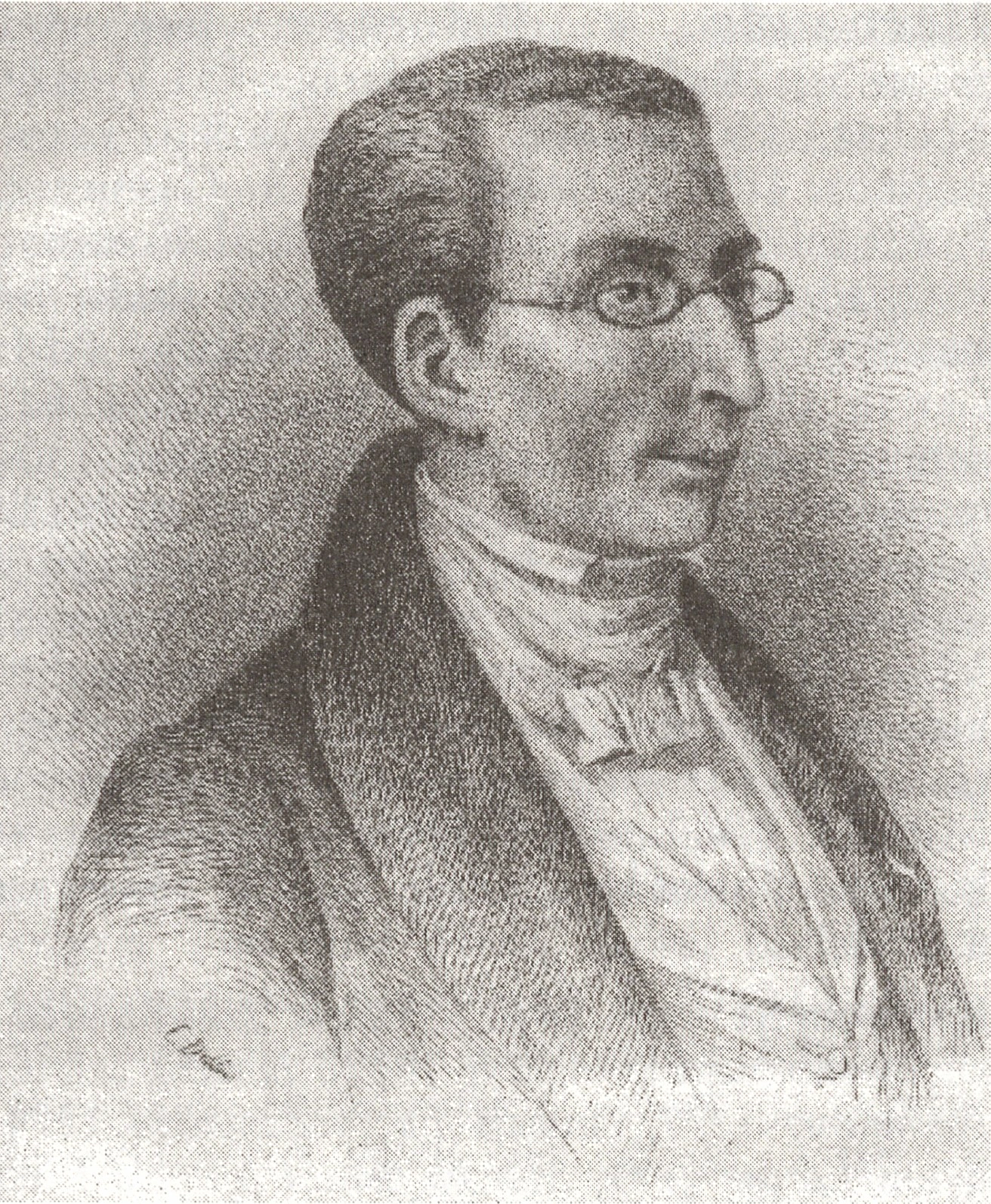
Hérold Louis Joseph Ferdinand 28 January 1791 Paris, †19 January 1833 Paris, French composer and pianist. He was initially educated by his father, François Joseph Hérold, and L. Adam, his godfather. In 1802, he joined L. Adam’s piano class at the Paris Conservatoire; in 1810, he was awarded the Premier Prix for a performance of his own sonata. He also studied violin in R. Kreutzer’s class and harmony with Ch.S. Catel, and from 1811 he studied composition with E. Méhul, who had a decisive influence on his musical style. Hérold’s compositional debut took place on 6 April 1812 at the Théâtre Italien where he played his Piano concerto in E major. In August 1812, he won the Grand Prix de Rome for his cantata La duchesse de la Vallière. He spent less than a year in Rome before moving to Naples for health reasons in the autumn of 1813, where he met G. Paisiello and N.A. Zingarelli. He took up the position of music teacher at the court of Joachim Murat, then King of Naples. In addition to several instrumental works (two symphonies, three string quartets), he wrote his first opera La gioventù di Enrico Quinto based on a text adapted from a comedy by A. Duval. The premiere of the opera, which was received with enthusiasm, took place on 5 January 1815 at the Teatro del Fondo, with M. García in the title role. Towards the end of February 1815, Hérold left for Rome and then Venice, from where he had to flee secretly for political reasons, and after a few weeks he made his way on foot to Vienna, where he stayed for three months with Prince Metternich. During this time, he met many Viennese artists, including A. Salieri, whom he had always admired, and J.N. Hummel; he had the opportunity to see Mozart’s Marriage of Figaro, Don Giovanni, and The Magic Flute. Shortly after returning to Paris, he took up the position of maestro al cembalo at the Théâtre Italien and also performed his three piano concertos in public. In 1816, F.A. Boieldieu invited him to collaborate on the composition of the opera Charles de France…, an occasional work performed at the Opéra-Comique as part of the wedding celebrations following the marriage of Prince de Berry to Princess Maria Carolina of Naples. This event cemented Hérold’s position as an opera composer. Two further successes in this field were Les rosières, very favourably reviewed by Méhul, and La clochette…, based on motifs from the fairytale of Aladdin and the magic lamp; the latter enjoyed 100 performances within its first year. In the following years, Hérold was unlucky in finding suitable librettos, and as a result, his subsequent operas: Le premier venu, ou Six lieues de chemin (1818), Les troqueurs (1819), L’auteur mort et vivant (1820) were taken off the bill after only a few performances, while L’amour platonique was withdrawn by the composer himself after the dress rehearsal. In 1821, the royal supervisory board sent him to Italy to recruit new singers for the Théâtre Italien. Hérold succeeded in bringing Giuditta Pasta (soprano) and Filippo Galli (bass) to Paris. He also brought back from Florence the score of G. Rossini’s opera Moses in Egypt, subsequently preparing its production by adding several numbers himself; only illness prevented him from conducting the premiere on 19 October 1822. In 1823, Hérold presented his opera Le muletier, which was very well received. That same year, he also tested his skills at the Paris Opera, where his one-act opera Lasthénie was staged. To commemorate the victory of the Duke of Angoulême in Spain, Hérold wrote the opera Vendôme en Espagne in 1823 together with D. Auber, and the following year, for King Louis XVIII’s name day, he composed the music for Le roi René ou La Provence au XVe siècle. Hérold’s great artistic triumph came with the premiere of his opera Marie in 1826; over the next decade, the work was performed around 4,000 times. In 1826, he took up the position of chef du chant at the Opera and spent the next few years writing music for ballets. In 1831, A.H.J. Mélesville offered him a libretto entitled Le Corsaire; the premiere of Hérold’s opera based on this text, entitled Zampa ou La fiancée de marbre, took place in 1831 at the Opéra-Comique. Soon after, Zampa…, Hérold’s most popular work to this day, entered the repertoires of opera houses abroad: Brussels (1832); Vienna, London, Naples (1833); Turin, Warsaw, Moscow (1834); Milan (1835). It continued to be performed for many years at the Opéra-Comique. Hérold cemented his position in the history of French opera with another masterful work, Le pré aux clercs (approx. 1,200 performances in the 19th century), which he did not live to see on stage. He died of tuberculosis five weeks after the premiere. The unfinished score of his last opera, Ludovic, was completed by Halévy and performed in 1833 – after the composer’s death – by the Opéra-Comique ensemble.
Hérold’s activity as a pianist initially shaped the character of his compositional output, which encompasses a variety of piano music genres: concertos, variations, rondos, caprices, fantasias, and more. It was only when the composer encountered Rossini’s art that he devoted himself to stage music. Hérold was highly esteemed as a pianist, renowned for a style marked by panache, brilliance, and elegance. In the sonatas from op. 3, he approached the style of Boieldieu, rooted in the Mozartian tradition (simple melodic lines, lively rhythms). In contrast, his Piano Sonata, op. 9 exhibits a distinctly Beethovenian character, with stronger contrasts, an expanded expressive range, and a more individualised harmonic development. In his caprices, fantasies, and variations, generally based on themes taken from operas, Hérold yielded to the tastes of the contemporary audience, which manifested itself, among other things, in a penchant for sound painting. Hérold’s most outstanding creative achievements belong to the genre of opéra comique, although for many years he intended to create grand opéra; these plans resulted only in the one-act Lasthénie and Vendôme en Espagne (written jointly with Auber), as Hérold’s criticism of the literary and dramatic value of the libretto led him to reject almost all the proposed texts. On the other hand, the comic operas that dominate Hérold’s oeuvre deviate from the norm; they contain different content: fantastical, social, historical, sentimental, and in their expression, they are both tragic and satirical, as well as comic. In his best operas of this genre, Hérold freed himself from Rossini’s influence, despite his admiration for the creator of Il barbiere di Siviglia. Hérold’s dramatic flair came to the fore for the first time in Marie (Marie’s monologue, the duet from Act II, the opera’s finale), balancing the somewhat tearful sentimentality of some scenes. The plot and the main character of Zampa… are reminiscent of Mozart’s Don Giovanni in many ways, except that Zampa is a pirate, and the stone figure represents a girl, one of those deceived by the title character. Against the backdrop of Hérold’s earlier operas, this work stands out for its genuinely Romantic colouring, rich melodic and harmonic invention, impeccable orchestration, and a tendency to expand expressive means to serve musical characterisation. The role of Zampa, written with the renowned tenor J.B. Chollet (the original performer of the title role) in mind, requires a wide vocal range with a baritonal timbre and considerable dramatic capabilities. The spirited overture to Zampa is Hérold’s most frequently performed work. In Le pré aux clercs, the composer developed a historical plot centred around the figure of Marguerite de Valois, wife of Henry IV. For this reason, the opera is often associated with Meyerbeer’s Les Huguenots (1836). Stylistically, too, Le pré aux clercs, despite its cheerful ending, shares many features with grand opéra – elaborate ensemble and choral parts with a high dramatic charge, e.g. the quartet L’heure nous appelle (with scordatura of the lowest strings of the violas and cellos) and expressive declamation in the solo parts. Hérold also contributed to the development of romantic French ballet. In his ballet music, he sought to eliminate borrowed melodies and to achieve a more complete interaction between music and dramatic action than had been the case previously.
Literature: H. Berlioz De la partition de “Zampa”, “Journal de débats” 27 September 1835; A. Adam E.H. Méhul, L.J.F. Hérold. Biographien, Kassel 1855; B.J.B. Jouvin Hérold. Sa vie et ses oeuvres, Paris 1868; A. Pougin La jeunesse d’Hérold, “Revue et Gazette Musicale”, XLVII, 1880 (several excerpts); M. Berthelot Ferdinand Hérold, Paris 1882; A. Pougin Hérold, Paris 1906; F. Hérold (junior) Souvenirs inédits, “Bulletin français de la Société Internationale de Musique”, VII, 1910; I. Guest The Romantic Ballet in Paris, London 1966, Polish edition Balet romantyczny w Paryżu, translated by A. Kreczmar, Warsaw 1978; G. Abraham The Age of Beethoven, London 1982, Oxford 1988; Hérold en Italie, ed. A. Dratwicki, introduction J. Gribenski, ed. Centre de musique romantique française, Venice 2009; H. Audéon Louis-Joseph-Ferdinand Hérold (1791–1833) et le piano, «Musique, images, instruments» XI (Paris 2009) pp. 204–225; H. Audéon Le séjour de Ferdinand Hérold en Italie (Rome et Naples, 1812–1815) et ses envois de musique à l’Institut, «Romantisme» CLIII (2011), pp. 43–58; F.-Y. Bril, H. Audéon Ferdinand Hérold (1791–1833), Weinsberg 2012; D. Colas A popular and sophisticated comedy. Louis-Ferdinand Hérold: ‘Le Pré aux clercs’. ed. Centre de musique romantique française, Venice 2016; G. Condé The Music of ‘Le Pre aux clercs’, in: Louis-Ferdinand Hérold: ‘Le Pré aux clercs’, CD ed. Centre de musique romantique française, Venice 2016; R. Lock Hérold’s Le pré aux clercs (1832), a Missing Link between Rossini and Offenbach, Done to Perfection, review of the CD Le pré aux clercs (produced at Centre de musique romantique française in 2016) on operatoday.com, May 2021; R.I. Letellier, N.L. Fuller Louis-Ferdinand Hérold and the romantic Opéra-Comique, Newcastle upon Tyne 2025, e-book 2025.
Stage:
operas:
La gioventù di Enrico Quinto, libretto F. Hérold after A. Duval, Italian translation by Landrini, staged in Naples 1815
Charles de France ou Amour et gloire, with F.A. Boieldieu, libretto E.G.M. Théaulon de Lambert, F.V.A. d’Artois, de Raneé, staged in Paris 1816
Les rosières, libretto E.G.M. Théaulon de Lambert, staged in Paris 1817
La clochette ou Le diable page, libretto E.G.M. Théaulon de Lambert, staged in Paris 1817, Lviv 22 February 1822 under the title Dzwonek czyli diabełek pazikiem
Le premier venu ou Six lieues de chemin, libretto J.B.C. Vial, F.A.E. de Planard, staged in Paris 1818
Les troqueurs, libretto F.V. A. and L.C.A. d’Artois after La Fontaine in an adaptation by J. Vadé, staged in Paris 1819, Warsaw 15 December 1820 under the title Handel na żony
L’amour platonique, libretto A. Rousseau, 1819
L’auteur mort et vivant, libretto F.A.E. Planard, staged in Paris 1820
Le muletier, libretto P. de Kock after Boccacio in an adaptation by La Fontaine, staged in Paris 1823
Lasthénie, libretto de Chaillou, staged in Paris 1823
Vendôme en Espagne, with F. Auber, libretto A.J. Simonis d’Empis, E. Mennechet, staged in Paris 1823
Le roi René ou La Provence au XVe siècle, libretto C. A. Sevrin, Belle, staged in Paris 1824
Le lapin blanc, libretto A.H.I. Mélesville, P.F.A. Carmouche, staged in Paris 1825
Marie, libretto F.A.E. Planard, staged in Paris 1826, Kraków 23 April 1835 under the title Maria czyli skryta miłość
L’illusion, libretto J.H. Vernoy de Saint-Georges, C. Ménissier, staged in Paris 1829
Emmeline, libretto F.A.E. Planard, staged in Paris 1829
L’auberge d’Auray, with M. Carafa de Colobrano, libretto Moreau, d’Epagny, staged in Paris 1830
Zampa ou La fiancée de marbre, libretto A.H.I. Mélesville, staged in Paris 1831, Warsaw 9 March 1834 under the title Zampa czyli narzeczona z marmuru
La marquise de Brinvilliers, with F. Auber, D.-A. Batton, H.-M. Berton, F. Blangini, F.A. Boieldieu, M. Carafa de Colobrano, L. Cherubini, F. Paër, libretto E. Scribe, F.H.J. Castil-Blaze, staged in Paris 1831
La médecine sans médecin, libretto E. Scribe, J.F.A. Bayard, staged in Paris 1832
Le pré aux clercs, libretto F.A.E. Planard after P. Mérimée, staged in Paris 1832, Warsaw 17 August 1875 under the title Pojedynek
Ludovic, completed by F. Halévy, libretto J.H. Vernoy de Saint-Georges, staged in Paris 1833
ballets:
Astolphe et Joconde ou Les coureurs d’aventures, libretto J.-L. Aumer, staged in Paris 1827
La somnambule ou L’arrivée d’un nouveau seigneur, libretto E. Scribe, J.-L. Aumer, staged in Paris 1827
Lydie, libretto J.-L. Aumer, staged in Paris 1828
La fille mal gardée, libretto J.B. d’Auberval, J.-L. Aumer, staged in Paris 1828
La belle au bois dormant, libretto E. Scribe, J.-L. Aumer, staged in Paris 1829
La noce de village, ballet-tableau, staged in Paris 1830
Instrumental:
orchestral:
2 symphonies — C major 1814, D major 1814
4 piano concertos — E major op. 25, 1812, E-flat major op. 26, 1812, A major 1813, E minor 1813
chamber:
Aria with variations for bassoon, 2 violins, viola, double bass, 2 clarinets, 2 horns
Caprice op. 8, for piano and string quartet, 1817
Trio concertante for two bassoons and horn
Duo for piano and horn (viola or cello), 1810
solo:
2 violin sonatas, 1811
3 piano sonatas, 1811
7 piano sonatas op. 1, 3, 5, 9
numerous sets of piano variations, fantasias on operatic themes, rondos, caprices for piano
Vocal-instrumental:
numerous songs and romances
cantata La duchesse de la Vallière 1812, published ca. 1890
Hymne aux morts de juillet, text by V. Hugo, 1831