
Lebrun, Franziska (EN)

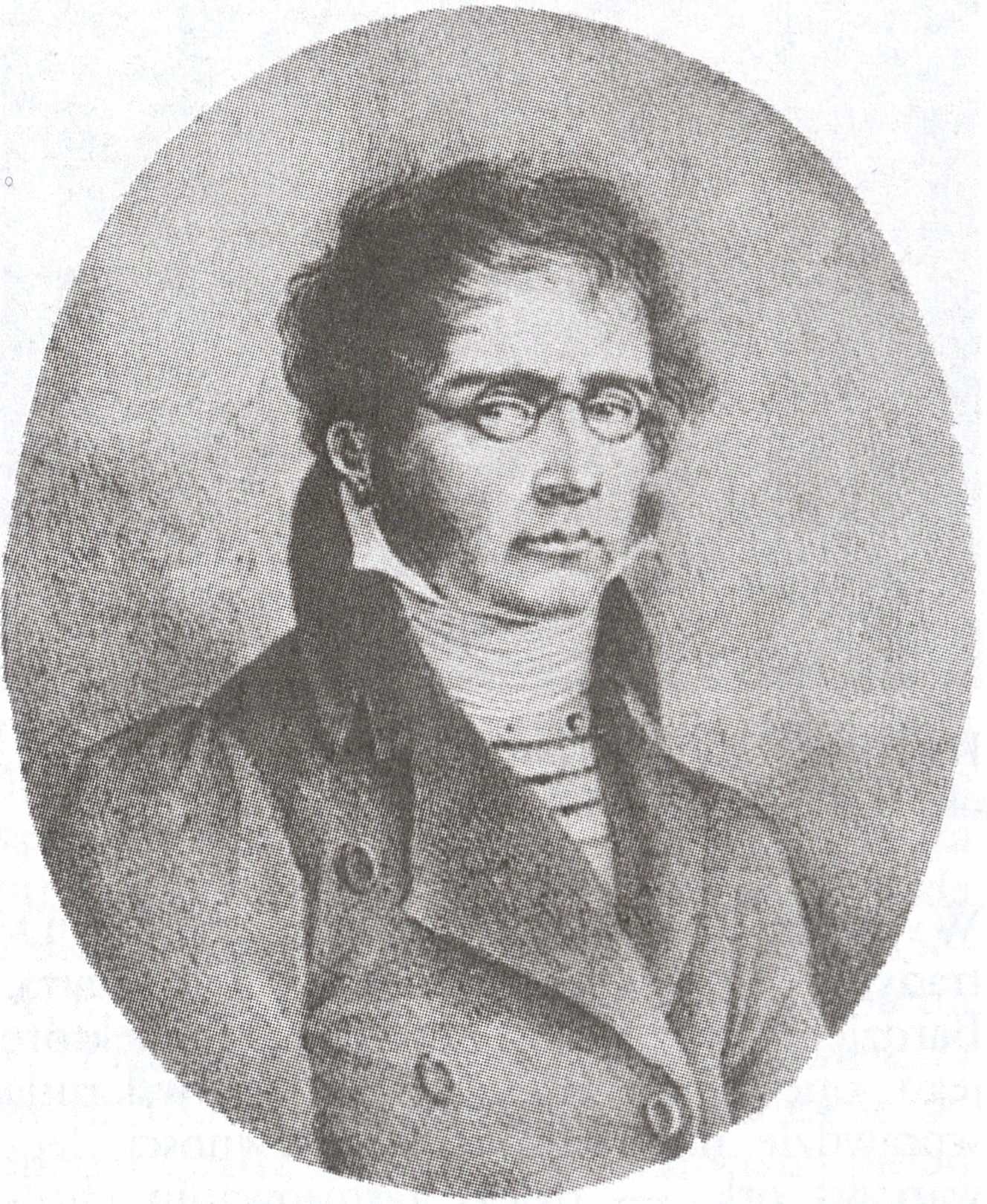
Danzi Franz Ignaz, *15 June 1763 Schwetzingen near Heidelberg, †13 April 1826 Karlsruhe, German composer, conductor, and cellist of Italian origin. He was the son of Innocenz Danzi (ca. 1730–1798), a cellist in the orchestra of Elector Karl Theodor in Mannheim, the brother of Johann Baptist Danzi, a violinist in the same orchestra, and Franziska Danzi-Lebrun (1756–1791), a composer and soprano singer. He began his musical education (cello, piano, and singing) with his father; around 1775–80 he studied composition under G. J. Vogler (known as Abbé). In 1778 he became a cellist in the court orchestra in Mannheim. That same year, the orchestra was moved to Munich; Danzi remained in Mannheim until 1781 as a répétiteur at the court theatre, where his first opera Azakia was staged in 1780. In 1783 he moved to Munich to take his father’s place in the court orchestra; between 1791 and 1796 he traveled to Hamburg, Leipzig, Prague, Venice, and Florence. In 1798 he returned to Munich as vice-Kapellmeister of the court orchestra; he was also active in the court theatre and church, for which he composed numerous sacred works. From 1807 to 1812 he served as conductor (succeeding J. R. Zumsteeg, who died in 1802) and director of the conservatory in Stuttgart. There he strengthened his friendship with Weber, whom he had met in Munich, and whose operas he consistently promoted. He also collaborated with and was a friend of Louis Spohr. In the final years of his life, he worked in Karlsruhe as Kapellmeister at the court theatre.
In his instrumental works, Danzi continued the traditions of the Mannheim school and Mozart. Some of his operas are more advanced stylistically: while the vocal parts reflect the Italian tradition of lyric singing, the orchestral layer – through the use of chromaticism, unusual instrumental registers, and frequent emphasis on the timbral qualities of wind instruments (especially horn and clarinet) – influenced the development of early Romantic opera, particularly in the works of Weber.
Literature: thematic catalogue of symphonic and chamber works, ed. A. Sandberger, «Denkmäler der Tonkunst in Bayern» VII/2, 1906 and XVI/2, 1915; F. Walter Geschichte des Theaters und der Musik am kurpfälzischen Hofe, Leipzig 1898, repr. 1968; M. Zenger Geschichte der Münchener Oper, Munich 1923; F. Waldrich Die Konzertanten Sinfonie der Mannheimer, Ludwigshafen 1931; U. Sirker Die Entwicklung des Blaserquintetts in der ersten Hälfte des 19. Jahrhundert, «Kölner Beiträge zur Musikforschung» L, Regensburg 1968.
Sinfonia concertante in E-flat major for flute, oboe, horn, bassoon, and orchestra, 1785
Symphony in D minor, 1800
Symphony in C major, 1804
Abraham auf Moria, oratorio, 1808
Symphony in B-flat major, 1818
Symphony in D minor, 1818
Concertante for flute, clarinet and orchestra Op. 41
Concertino for cello Op. 46
Concerto concertante for clarinet, bassoon, and orchestra Op. 47, 1819
concert overture
Sinfonia concertante in B-flat major for 2 violins and orchestra
2 piano concertos
Harpsichord concerto
4 flute concertos
5 bassoon concertos
5 cello concertos
more than 100 chamber works, including: 19 string quartets, 2 sextets, 18 quintets, 9 quartets, 9 trios, 45 duets and sonatas for various ensembles, mainly featuring wind instruments
numerous piano sonatas and miniatures for two and four hands
approximately 100 canzonettas and solo songs
numerous vocal trios and quartets
3 masses, numerous psalms, Te Deum, Tantum ergo and other sacred works
several sonatas, An die Freude ode, text F. Schiller
17 operas, including:
Azakia, staged in Mannheim 1780
Die Mitternachtstunde, staged in Munich 1788
Iphigenie in Aulis, libretto A. Zeno, staged in Munich 1807 (lost)
Camilla und Eugen oder Der Gartenschlilssel, staged in Stuttgart 1812
Rübezahl, libretto C. Mazzola, staged in Karlsruhe 1813
Turandot, libretto C. Gozzi, staged in Karlsruhe 1817
L’Abbe de l’Attaignant oder Die Theaterprobe, staged in Karlsruhe 1820
entr’acte music for theatrical plays