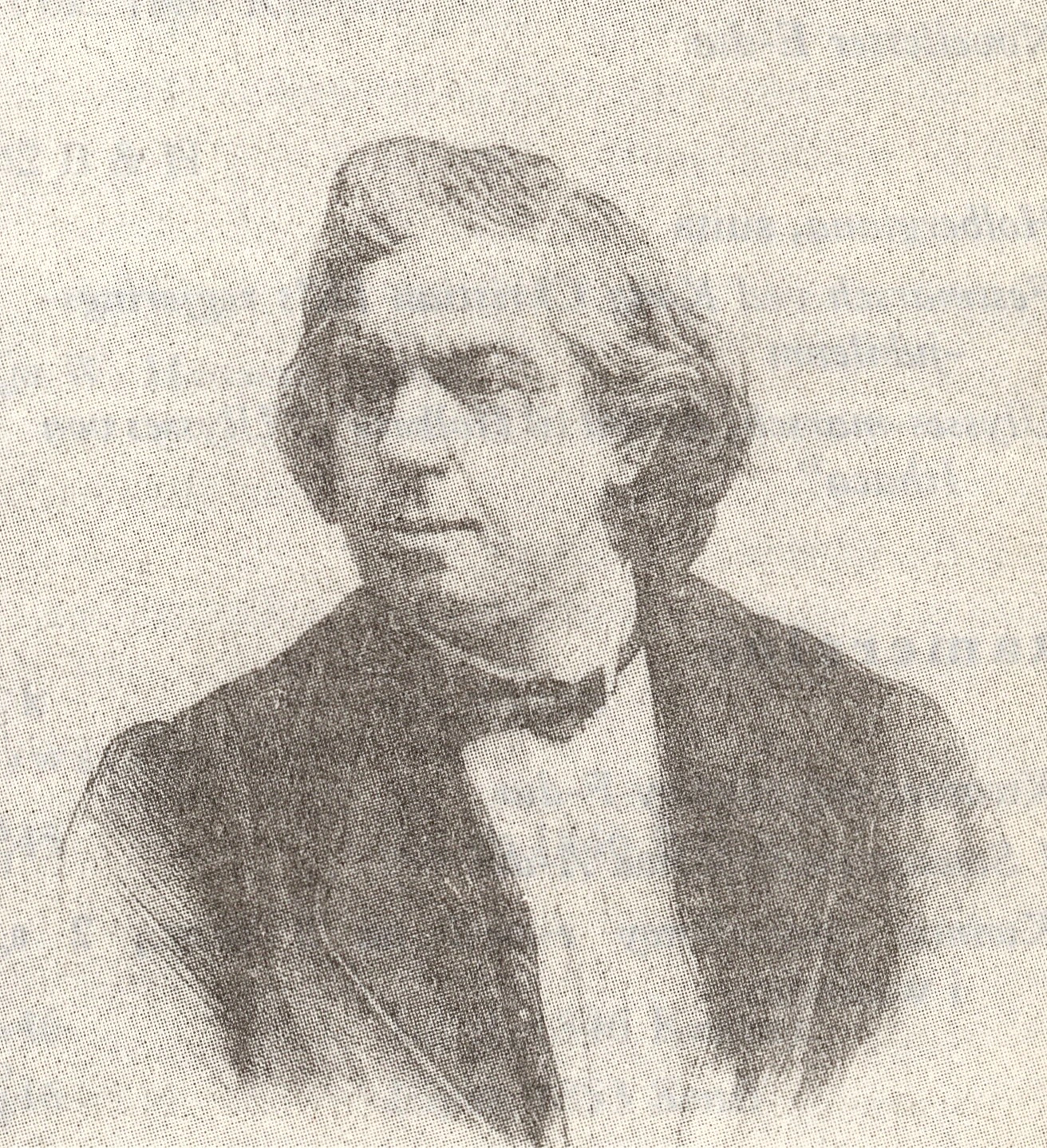
Gade Niels Wilhelm, *22 February 1817 Copenhagen, †21 December 1890 Compenhagen, father of the violinist Axel Wilhelm Gade, Danish composer and conductor. He studied the violin with F.Th. Wexschall and at the violin school attached to the royal chapel in Copenhagen, the organ with Ch.E.F. Weyse, and composition with A.P. Berggreen. In 1833 he made his first public appearance as a violinist, and the following year he was accepted as an apprentice at the royal chapel in Copenhagen. His close contacts with the circle of young writers, actors and musicians were of great importance to his development, enabling Gade to become acquainted with contemporary music and Romantic literature. In the autumn of 1839, he became assistant organist at Copenhagen’s main city church. In 1840, he won first prize for his overture Efterklang af Ossian at a composition competition organised by the local Musikforeningen (Music Society). This was Gade’s first mature work with distinct Romantic features, differing significantly from his earlier compositions. In 1843, the Leipzig Gewandhaus Orchestra, conducted by Mendelssohn, performed his First Symphony. It was met with an enthusiastic reception from the public and critics, including R. Schumann. This marked the beginning of Gade’s European career; in the same year he travelled to Leipzig, where in 1844 he succeeded Mendelssohn as the second conductor of the Gewandhaus concerts and taught at the Akademie für Musik. In March 1844, Gade travelled to Dresden, Prague, Vienna, Rome, Naples and Venice. Following Mendelssohn’s death, he took over his post, but in the spring of 1848, after the outbreak of war between Prussia and Denmark, he returned to Copenhagen. His ties with Leipzig, however, remained unbroken. In 1852, during a trip to Germany, Gade conducted a series of ten concerts in Leipzig; his later works were also premiered there. Between 1850 and 1890, Gade served as conductor of the Musikforeningen in Copenhagen, and also as organist – from 1851 at the Garrison Church, and from 1858 at Holmens Kirke. In 1856 he was awarded the title of professor, and in 1857 he became a member of the Royal Swedish Academy of Music in Stockholm. In 1862, he took up the post of Kapellmeister at the Royal Theatre for a few months. From 1866, he directed the newly established Musikkonservatorium in Copenhagen alongside J.P.E. Hartmann and S.H. Paulli. There he taught composition and music history. In 1879, he was awarded an honorary doctorate by the University of Copenhagen. Gade participated as a conductor and composer in numerous music festivals in Germany, Amsterdam and Birmingham.
Gade was a central figure in Danish musical life in the second half of the 19th century. He was credited with popularising the finest achievements of European music in Denmark. Modelling it on the Leipzig Gewandhaus Orchestra, he organised and trained the Musikforeningen orchestra in Copenhagen, introducing works by Mendelssohn, Schubert, Schumann and Beethoven into its regular repertoire. Gade was also the first to perform J.S. Bach’s St Matthew Passion, as well as works by Berlioz, Liszt and Wagner, in Denmark. He trained many composers and influenced the character of the work of an entire generation of composers in his country. Through his work – as a conductor, teacher and composer – he made Copenhagen the centre of musical life for the whole of Scandinavia.
Gade is one of the most prominent figures of Romanticism in Danish music. His work was strongly influenced by Schubert, Mendelssohn and Schumann; only in Balders drøm and Judith are certain Wagnerian influences discernible. For Gade, the orchestra was his primary means of expression, which is why symphonic works take centre stage in his oeuvre. Gade’s works are characterised by a self-contained, clearly articulated form and transparent instrumentation. Another important area of Gade’s output is songs – some of which are very popular in Denmark – and cantatas. Gade belonged to a generation of Danish composers whose work has a national character. This is particularly evident in his early works (Efterklang af Ossian, Symphony No. 1). In his later works – compared to his contemporaries, and above all to the slightly older Hartmann – he represents a more cosmopolitan direction (particularly in his Leipzig-period works). National characteristics are evident in the connection between music and national literature, Danish folk sagas (Elverskud), and in the drawing upon of native musical folklore. Gade was the first in Danish music to introduce dance rhythms and folk melodies into the themes of symphonic works (Symphony No. 1). The peak of his creative output came in the 1850s. His later works do not introduce any new elements.
Literature: A. Nielsen Fortegnelse over Niels Wilhelm Gade’s Vaerker (“systematic catalogue of works”), “Aarbog for Musik” 1924; K. Atlung Niels Wilhelm Gade’s Vaerker (“systematic catalogue of works – supplement”), “Dansk Musiktidsskrift” 1937; D. Gade Niels Wilhelm Gade. Optegnelser og breve, Copenhagen 1892, German translation Aufzeichnungen und Briefe, Basel 1894 (with catalogue of works), 2nd edition 1912; Minder om Niels Wilhelm Gade (“Memories of Niels Wilhelm Gade”), ed. W. Behrend, Copenhagen 1930; Omkring Niels Wilhelm Gade. Breve fra fader og søn (“around Niels Wilhelm Gade, letters from father and son”), ed. J.W. Gade, Copenhagen 1967; R. Heinriques Niels Wilhelm Gade, Copenhagen 1891; Ch. Kjerulf Niels Wilhelm Gade i Hunredaaret, Copenhagen 1917; W. Behrend Niels Wilhelm Gade, Leipzig 1918; S. Berg Litteratur omkring Niels Wilhelm Gade, 1843–1950 (“literature on Niels Wilhelm Gade”), “Dansk Musiktidsskrift” 1967 Nos. 1–2 (with full bibliography until 1950); F. Mathiassen Unsre kunst heisst poessie. Om Niels Wilhelm Gade’s Ossian-ouverture, “Svensk Tidskrift för Musikforskning” LIII, 1971 No. 1; L. Brix Niels Wilhelm Gade als Klavierkomponist, “Die Musikforschung” XXVI, 1973 No. 1.
autographs in Det Kongelige Bibliotek, Copenhagen
Instrumental:
orchestral:
Symphony No. 1 „Paa Sjølunds fagre sletter” in C minor Op. 5, 1842, performed in Leipzig 1 March 1843, published Leipzig 1844 Kistner, autogr. Det Kongelige Bibliotek, Copenhagen
Symphony No. 2 in E major Op. 10, 1843, performed in Leipzig 1843, published Leipzig 1844 B & H, autogr. Det Kongelige Bibliotek, Copenhagen
Symphony No. 3 in A minor Op. 15, 1847, performed in Leipzig 1847, published Leipzig 1848 B & H, autogr. Det Kongelige Bibliotek, Copenhagen
Symphony No. 4 in B-flat major Op. 20, 1850, performed in Copenhagen, published Leipzig 1851 Kistner, autogr. Det Kongelige Bibliotek, Copenhagen
Symphony No.5 in D minor Op. 25, 1852, performed in Copenhagen, published Leipzig 1853 B & H, autogr. Det Kongelige Bibliotek, Copenhagen
Symphony No. 6 in G minor Op. 32, 1857, performed in Copenhagen, published Leipzig Kistner, autogr. Det Kongelige Bibliotek, Copenhagen
Symphony No. 7 in F major Op. 45, 1865, performed in Copenhagen, published Leipzig B & H, autogr. Det Kongelige Bibliotek, Copenhagen
Symphony No. 8 in B minor Op. 47, 1871, performed in Copenhagen, published Leipzig Kistner, autogr. Det Kongelige Bibliotek, Copenhagen
overtures:
Jugendträume, 1830s, autogr. Det Kongelige Bibliotek, Copenhagen
Socrates to A. Oehlenschläger’s tragedy, 1830s, performed in Copenhagen, burned by Gade after performance in Copenhagen, autogr. Det Kongelige Bibliotek, Copenhagen
Efterklang af Ossian (“reminiscences from Ossian”) Op. 1, A minor, 1840, performed in Copenhagen 19 XI 1841, published Leipzig 1841 B & H, autogr. Det Kongelige Bibliotek, Copenhagen
I højlandene (“in the Highlands”) Op. 7, Scottish overture, 1844, published Leipzig 1844 Kistner, autogr. Det Kongelige Bibliotek, Copenhagen
Overture in C major No. 3 Op. 14, 1846, published Leipzig 1847 B & H, autogr. Det Kongelige Bibliotek, Copenhagen
Nordisk soeterrejse (“northern mountain journey”), 1850, published Copenhagen W. Hansen, autogr. Det Kongelige Bibliotek, Copenhagen
Hamlet Op. 37, C minor, 1861, published Leipzig B & H, autogr. Det Kongelige Bibliotek, Copenhagen
Michel Angelo Op. 39, F major, 1861, published Leipzig 1861 F. Kistner, autogr. Det Kongelige Bibliotek, Copenhagen
Bertrand de Born, autogr. Det Kongelige Bibliotek, Copenhagen
Sørgemarsch ved Kong Frederik den 7des (“Funeral march on the occasion of King Frederick VII’s death”), autogr. Det Kongelige Bibliotek, Copenhagen
Novelletter in F major for string orchestra Op. 53, 1874, published Leipzig B & H, autogr. Det Kongelige Bibliotek, Copenhagen
Capriccio in A minor for violin and orchestra, 1878, piano reduction published, Berlin 1878 Ries-Erler, autogr. Det Kongelige Bibliotek, Copenhagen
En Sommer dag paa landet (“A summer day in the countryside.”) Op. 55, 5 orchestral works, published Leipzig 1879 B & H, Copenhagen W. Hansen, autogr. Det Kongelige Bibliotek, Copenhagen
String concerto in D minor Op. 56, 1880, published Leipzig B & H, autogr. Det Kongelige Bibliotek, Copenhagen
Novelletter in E major Op. 58 for orchestra, 1883, published Leipzig 1886 B & H (reworked in 1886), autogr. Det Kongelige Bibliotek, Copenhagen
Holbergiana Op. 61, suite for orchestra, 1884, published Leipzig 1884 B & H, autogr. Det Kongelige Bibliotek, Copenhagen
Festmarsch ved Kong Christian IX’s regjerings-jubileum for orchestra, 1888, autogr. Det Kongelige Bibliotek, Copenhagen
Ulysses-marsch; forspil til Holberg’s “Ulysses von Ithaca” for orchestra, 1890 (?), autogr. Det Kongelige Bibliotek, Copenhagen
chamber:
String quartet in F major, 1830s, autogr. Det Kongelige Bibliotek, Copenhagen
Violin Sonata No. 1 in A major Op. 6, 1842, published Leipzig B & H, autogr. Det Kongelige Bibliotek, Copenhagen
String Quintet in E minor Op. 8 for 2 violins, 2 violas and cello, 1845, published Leipzig 1846 B & H, autogr. Det Kongelige Bibliotek, Copenhagen
Octet in F major Op. 17 for 4 violins, 2 violas and 2 cellos, 1848, published Leipzig 1849 B & H, autogr. Det Kongelige Bibliotek, Copenhagen
Violin Sonata No. 2 in D minor Op. 21, 1849, published Leipzig 1850 B & H, autogr. Det Kongelige Bibliotek, Copenhagen
5 poems from “Bilder des Orients” by Stieglitz Op. 34 for violin and piano, 1850, published Copenhagen, Leipzig, autogr. Det Kongelige Bibliotek, Copenhagen
String Quintet in F minor for 2 violins, 2 violas and cello, 1851, autogr. Det Kongelige Bibliotek, Copenhagen
Novelletter Op. 29, trio for piano, violin and cello, 1853, published Cologne Schloss, autogr. Det Kongelige Bibliotek, Copenhagen
Trio Op. 42 for piano, violin and cello, 1863, published Leipzig B & H, autogr. Det Kongelige Bibliotek, Copenhagen
String Sextet in E-flat major Op. 44 for 3 violins, 2 violas and 2 cellos, 1863, published Leipzig Kistner, autogr. Det Kongelige Bibliotek, Copenhagen
Fantasiestücke Op. 43 for clarinet and piano, 1864, published Leipzig Kistner, autogr. Det Kongelige Bibliotek, Copenhagen
Violin Sonata No. 3 in B major Op. 59, 1885, published Leipzig B & H, autogr. Det Kongelige Bibliotek, Copenhagen
Volkstänze im nordischen Charakter for violin and piano, 1886, published Leipzig B & H, autogr. Det Kongelige Bibliotek, Copenhagen
Folkedanse Op. 62 for violin and piano, 1888, published Copenhagen ca. 1890 W. Hansen, Leipzig B & H, autogr. Det Kongelige Bibliotek, Copenhagen
String Quartet in D major Op. 63, 1889 (?), published Leipzig 1896 (?) B & H, autogr. Det Kongelige Bibliotek, Copenhagen
piano:
Sonata in E minor Op. 28 for piano, 1840 (reworked 1854), published Copenhagen 1854 C.C. Lose, autogr. Det Kongelige Bibliotek, Copenhagen
Foraarstoner (“spring flowers”) Op. 2a, 3 piano works, 1841, published Copenhagen 1842 C.C. Lose, autogr. Det Kongelige Bibliotek, Copenhagen
Rebus Op. 2b, 3 piano works, 1841, published Copenhagen C.C. Lose, autogr. Det Kongelige Bibliotek, Copenhagen
Nordiske tonebilleder Op. 4, 3 fantasias for piano 4 hands, 1842, performed in Copenhagen 1843 C.C. Lose, autogr. Det Kongelige Bibliotek, Copenhagen
3 karakterstykker Op. 18 for piano 4 hands, 1848 (?), published Copenhagen 1848 Horneman & Erslev, Leipzig 1849 Peters, autograph Det Kongelige Bibliotek, Copenhagen
Akvareller Op. 19 for piano, 1849, published Leipzig 1850 Kistner, Copenhagen Horneman & Erslev, autogr. Det Kongelige Bibliotek, Copenhagen
Albumsblade for piano, 1850, published Copenhagen 1852 C.C. Lose, Leipzig Kahnt, autogr. Det Kongelige Bibliotek, Copenhagen
Arabeske Op. 27 for piano, 1854, published Copenhagen 1854 C.C. Lose, autogr. Det Kongelige Bibliotek, Copenhagen
Folkedanse Op. 31 for piano, 1855, published Copenhagen W. Hansen, Leipzig B &H, autogr. Det Kongelige Bibliotek, Copenhagen
Idyller Op. 34 for piano, 1857, published Copenhagen 1857 Horneman & Erslev, Leipzig Rieter-Biedermann, autogr. Det Kongelige Bibliotek, Copenhagen
Fra skizzebogen for piano, 1857, published Copenhagen Horneman & Erslev, autogr. Det Kongelige Bibliotek, Copenhagen
Børnens Juul (“children’s Christmas”) Op. 36, 6 short piano pieces, 1859, published Copenhagen 1859 Horneman & Erslev, autogr. Det Kongelige Bibliotek, Copenhagen
Fantasistykker Op. 41 for piano, 1862, published Copenhagen 1862 Horneman & Erslev, Leipzig Kahnt, autogr. Det Kongelige Bibliotek, Copenhagen
Nye Akvareller Op. 57 for piano, 1881 (?), published Copenhagen ca. 1881 W. Hansen, Leipzig ca. 1881 Kistner, autogr. Det Kongelige Bibliotek, Copenhagen
organ:
3 Tonstücke Op. 22 for organ, 1851, published Leipzig 1852 B & H, autogr. Det Kongelige Bibliotek, Copenhagen
3 Chorale Preludes for organ, 1852, autogr. Det Kongelige Bibliotek, Copenhagen
Chorale with 7 variations for organ, 1853, autogr. Det Kongelige Bibliotek, Copenhagen
Festligt praeludium over choralen Lover den Herre for organ, 1873, published Copenhagen W. Hansen, Leipzig, autogr. Det Kongelige Bibliotek, Copenhagen
Funeral March for organ, autogr. Det Kongelige Bibliotek, Copenhagen
Vocal and vocal-instrumental:
a cappella:
6 Lieder Op. 11 for 4 male voices a cappella, text by E. Geibel, J. Eichendorff, A. Schnetzler, C.C. Tenner, L. Uhland, 1845, published Leipzig 1846 B & H, autogr. Det Kongelige Bibliotek, Copenhagen
5 Lieder Op. 13 for soprano, alto, tenor and bass a cappella, text by E. Geibel, L. Tieck, 1846, published Leipzig 1846 Kistner, autogr. Det Kongelige Bibliotek, Copenhagen
5 Lieder Op. 26 for 4 male voices a cappella, text by Bechstein, E. Geibel, Roquette, L. Uhland, 1846, published Leipzig 1853 Senff, autogr. Det Kongelige Bibliotek, Copenhagen
Reiterleben Op. 16, 6 songs for 4 male voices a cappella, text by C. Schulters, 1848, published Leipzig 1848 Kistner, autogr. Det Kongelige Bibliotek, Copenhagen
5 Lieder Op. 33 for 4 male voices, published Leipzig before 1859 B & H, autograph Det Kongelige Bibliotek, Copenhagen
5 Lieder Op. 38 for 4 male voices, published Leipzig B & H, autograph Det Kongelige Bibliotek, Copenhagen
for voice(s) and piano:
Neun Lieder im Volkston Op. 9 for 2 sopranos and piano, text by R. Burns, Freiligrath, E. Geibel, W. Goethe, H. Heine, W. Müller, C.C. Tenner, 1841, published Leipzig 1845 B & H, autogr. Det Kongelige Bibliotek, Copenhagen
Seks danske sange for voice(s) and piano, 1837, autogr. Det Kongelige Bibliotek, Copenhagen
Melodier til faedrelandshistoriske digte, 5 songs, text by A.P. Berggreen, 1840, autogr. Det Kongelige Bibliotek, Copenhagen
Seks danske sange, text by Heiberg, B.S. Ingemann, A. Oehlenschläger, 1841, published Copenhagen 1841 C.C. Lose, autogr. Det Kongelige Bibliotek, Copenhagen
Tre digte af Chr. Winther, text by Ch. Winther, 1841, published Copenhagen 1842 W. Hansen, autogr. Det Kongelige Bibliotek, Copenhagen
Tre digte af C. Hauch, text by C. Hauch, 1849, published Copenhagen 1850 C.C. Lose as Op. 21, autogr. Det Kongelige Bibliotek, Copenhagen
Fern digte af Stieglitz Op. 24, text after Stieglitz’s Bilder des Orients, published Copenhagen 1850 W. Hansen, Leipzig Kistner, autogr. Det Kongelige Bibliotek, Copenhagen
Tre digte af H.Ch. Andersen, text by H.Ch. Andersen, 1850, published Copenhagen 1851 Olsen, autogr. Det Kongelige Bibliotek, Copenhagen
Tre danske sange, text by P. Möller, B.S. Ingemann, 1852, published Copenhagen Horneman & Erslev, autogr. Det Kongelige Bibliotek, Copenhagen
Holger Danskes Sange, text by B.S. Ingemann, 1863, published Copenhagen 1863 Horneman & Erslev, autogr. Det Kongelige Bibliotek, Copenhagen
for voices, choir and orchestra:
Die wilden Jäger, text by P. Möller, 1845, autogr. Det Kongelige Bibliotek, Copenhagen
Comala Op. 12, cantata for solo voice, choir and orchestra, text after Ossian, 1846, piano reduction published, Leipzig 1846 B & H, autogr. Det Kongelige Bibliotek, Copenhagen
Foraarsfantasi (“spring fantasy”) Op. 23 for 4 solo voices, piano and orchestra, text by E. Lobedanz, 1852, published Leipzig 1853 B & H, autogr. Det Kongelige Bibliotek, Copenhagen
Elverskud (“the elf-king’s daughter”) Op. 30 for solo voices, choir and orchestra, text by C.F. Molbech, H.Ch. Andersen, G. Siesbye, 1853, published Copenhagen W. Hansen, Leipzig Kistner, autogr. Det Kongelige Bibliotek, Copenhagen
Mindekantate over Fru Anna Nielsen (“memorial cantata for Mrs Anna Nielsen”), text by. H.P. Holst, 1856, autogr. Det Kongelige Bibliotek, Copenhagen
Balders drøm (“Balder’s dream”) for solo voice, choir and orchestra, text by A.C. Hertz, 1857 (reworked 1878), piano reduction published, Copenhagen 1897 Samfundet til Udgivelse af Dansk Musik, autogr. Det Kongelige Bibliotek, Copenhagen
Frühlings-Botschaft Op. 35 for choir and orchestra, text by F. Geibel, 1858, published Leipzig B & H, autogr. Det Kongelige Bibliotek, Copenhagen
Mindekantate over skuespiller Nielsen (“memorial cantata for actor Nielsen”), text by H.P. Holst, 1860, autogr. Det Kongelige Bibliotek, Copenhagen
Die heilige Nacht Op. 40, cantata for solo alto, choir and orchestra, text after A. von Platten, 1861 (?), published Leipzig B & H, autogr. Det Kongelige Bibliotek, Copenhagen
Ved solnedgang (“at sunset”) Op. 46, cantata for choir and orchestra, text by A. Munch, 1863, published Leipzig Kistner, Copenhagen Horneman & Erslev, autogr. Det Kongelige Bibliotek, Copenhagen
Korsfarerne (“the crusaders”) Op. 50, kantata na głosy solowe, chór i orkiestrę, sł. C. Andersen, 1866, published Copenhagen 1866 (?) E. Erslev, Leipzig ok. 1873 B & H, autogr. Det Kongelige Bibliotek, Copenhagen
Kalanus Op. 48, cantata for solo voices, choir and orchestra, text by C. Andersen, 1869, published Leipzig B & H, autogr. Det Kongelige Bibliotek, Copenhagen
Ved Danmarksstøtten (“at the monument to Denmark”), text by F. Paludan-Müller, 1869, published Copenhagen W. Hansen, autogr. Det Kongelige Bibliotek, Copenhagen
Gefion Op. 54, cantata for baritone, choir and orchestra, text by A. Oehlenschläger, 1869, autogr. Det Kongelige Bibliotek, Copenhagen
Festmusik ved den nordiske industriudstillings aabningsfest (“music for the opening party of the Nordic Industrial Exhibition”), text by C. Ploug, 1872, published Copenhagen 1872 Horneman & Erslev, autogr. Det Kongelige Bibliotek, Copenhagen
Zion Op. 49, cantata for baritone, choir and orchestra, text by N. Gade, H.Ch. Andersen, 1874(?), published Leipzig B & H, autogr. Det Kongelige Bibliotek, Copenhagen
Aartidsbilleder (“pictures of the seasons”) Op. 51 for solo voice, female choir and piano four hands, text by C. Andersen, 1871, published Leipzig Kistner, Copenhagen Horneman & Erslev, autogr. Det Kongelige Bibliotek, Copenhagen
Den bjergtagne (“the mountain captive”) Op. 52 cantata for soprano, choir and orchestra texts by C. Hauch based on an old Scandinavian ballad, 1873, autogr. Det Kongelige Bibliotek, Copenhagen
Festmusik i anledning af Universitetets 400 aar jubelfest (“Celebratory music to mark the University’s 400th anniversary), text by Ch. Richardt, 1879, published Copenhagen W. Hansen, autogr. Det Kongelige Bibliotek, Copenhagen
Psyche Op. 60, cantata for solo voices, choir and orchestra, text by H.Ch. Andersen, 1882, published Leipzig B & H, autogr. Det Kongelige Bibliotek, Copenhagen
Festmusik vet det nordiske kunstnermøde (“Celebratory music for the Nordic Artists’ Meeting”), text by H. Drachmann, 1883, autogr. Det Kongelige Bibliotek, Copenhagen
Der Storm Op. 64, cantata for solo voices, choir and orchestra or piano, text based on Goethe’s unfinished poem Mahomeds Gesang, 1889, published Leipzig B & H, autogr. Det Kongelige Bibliotek, Copenhagen
Stage:
Aladdin, stage music, libretto A. Oehlenschläger, 1839
Faedrelandets muser (“muses of the Fatherland”), z J.F. Frölichem, ballet, libretto A. Bournonville, 1840, wyst. Copenhagen 1840
Sankt Hansaften Spil, overture, libretto A. Oehlenschläger, 1841, final scene for solo soprano, choir and orchestra, libretto by A. Oehlenschläger, 1886, piano reduction published, Copenhagen 1916 Samfundet til Udgivelse af Danak Musik
Napoli, with H.S. Paulli and H.C. Lumbye (Gade Act II), ballet, libretto A. Bournonville, 1842, staged in Copenhagen 1842, fragments published I den bloa grotte (“in the blue grotto”) Copenhagen C.C. Lose
Agnete og Havmanden Op. 3, stage music, text by H.Ch. Andersen, 1842, fragments published. Copenhagen C.C. Lose
Siegfried og Brunhilde, opera fragment, 1847
Mariotta, singspiel, libretto C. Borgaard after E. Scribe, 1849, staged in Copenhagen 1850, overture and piano reduction published, Leipzig 1850 B & H, score Copenhagen 1889 (?) W. Hansen
Et folkesagn, with J.P.E. Hartmannem (Act II), ballet, text by A. Bournonville, 1853, staged in Copenhagen 20 March 1854, piano reduction published, Copenhagen 1854 Horneman & Erslev
Judith, opera fragment, 1859