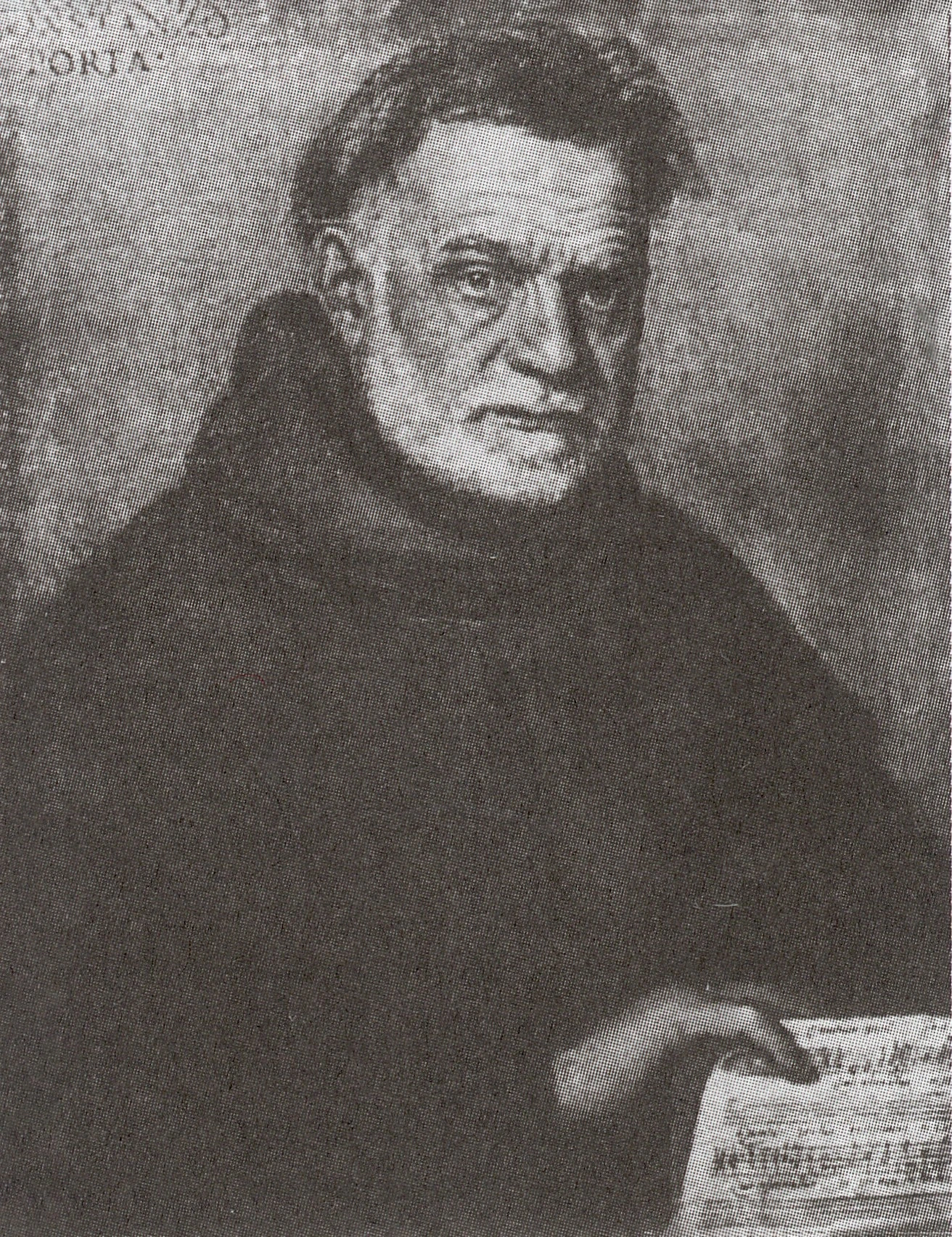
Porta Costanzo, *between April 1528 and March 1529 Cremona, †19 May 1601 Padua, Italian composer, Franciscan. He probably received his education at Franciscan schools in Cremona and Casalmaggiore, where he likely entered his novitiate. From around 1549, he stayed in Venice, studying under A. Willaert; among his pupils, he met G. Zarlino and C. Merulo, with whom he formed a lifelong friendship. From 1552, he worked as maestro di cappella of the Osimo Cathedral (until 1565), at the Basilica of St Anthony in Padua (1565–67), then, in accordance with the wishes of his patron, Cardinal Giulio della Rovere, at the cathedral in Ravenna (until 1574) and at Santa Croce in Loreto (from 1574), and finally again in Ravenna (1580–89) and Padua – at the cathedral (1589–92) and at the Basilica of Saint Anthony (1595–1601). In 1587, he was elected to membership in the Congregazione di Santa Cecilia; he also maintained contacts with the royal families of Urbino, Florence, Ferrara, and Mantua.
Porta’s work was highly regarded by his contemporaries – G. Artusi and L. Zacconi admired his masterful command of the art of counterpoint, evident above all in his use of double and triple counterpoint (in responsories), as well as in his fondness for the canon technique, which he used in motets for 5 and 6 voices, hymns and masses. Porta’s favourite structure was canon in 3 voices, but he also introduced the canon in 4 voices with inversion (Diffusa est gratia for 7 voices in print from 1580), the quadruple canon (Canite tuba for 8 voices, manuscript, Bologna), and even a sophisticated mensural canon (Vidi speciosam for 6 voices, printed in 1580). In motets, especially those for 4 and 5 voices, the imitative technique dominates, becoming less consistent in works for larger ensembles and almost disappearing in favour of free counterpoint and homorhythm in 7- and 8-part works. In polychoral works, the composer introduced numerous sections in triple metre, and the simple, dialogical structure of these compositions often transitions into a complex 8-part in the climactic section. References to chorale in motets are rare, while in other religious works Porta often used the conservative cantus firmus technique. The arrangements of antiphons (cantus firmus in the bass), introits (in the tenor), hymns (in various voices with paraphrasing) and some masses (chant in two Missae mortuorum and in Missa de B.M.V, ostinato in the mass La sol fa re mi) are based on fixed melodies. In the Da pacem (8-part) and Ducalis (13-part) masses, the melodies of the antiphons and prayers for Cosma and Francesco de’ Medici are cantus-firmus works, with the original text unusually written beneath them, which also appears in Agnus Dei II as a trope in all of the voices. Other masses belong to the missa parodia type and are based, among others, on madrigals by G.P. da Palestrina and C. de Rore. A characteristic feature of Porta’s madrigals is the dominance of imitative texture over free polyphony, the density of imitated phrases and numerous repetitions of textual phrases. Both in Porta’s secular and religious works, one can find rather stereotypical illustrative effects and examples of “music for the eye” (e.g. color in the words “ogni color” or “ante luciferum”). The Trattato (…) ossia Lnstruzioni di contrappunto (preserved in manuscript form in Bologna), attributed to Porta, is the work of his pupil T. Graziani, who, however, refers to the teachings of his master.
Literature: A. Garbelotto II Padre Costanzo Porta da Cremona O.F.M. Conv., grande polifonista del Cinquecento: Ricostruzione critica della vita, attività e opera con lettere e documenti di archivio, elenco delle opere ed edizioni, Rome 1955; R. Lunelli Nota complement are sulmusicista Costanzo Porta da Cremona, “Miscellanea francescana” LVI, 1956; L.P. Pruett Parody Technique in the Masses of Costanzo Porta, in: Studies in Musicology, commemorative book of G. Haydon, ed. J.W. Pruett, Chapell Hill (North Carolina), 1969; I. Fenlon Music, Piety and Politics under Cosimo I. The Case of Costanzo Porta, in: Firenze e la Toscana dei Medici nell’Europa del ‘500, ed. N. Pirotta, Florence 1983; L.P. Pruett A Composer’s Second Thoughts: The 1591 revision of the ‘Liber motectorum quatuor vocum’ of Costanzo Porta, “Rassegna veneta di studi musicali” II–III, 1986-87; R. Graciotti La Cappella musical della Cattedrale di Osimo (1548–1714), Rome 1996; H. Schick Musikalische Einheit im Madrigal von Rore bis Monteverdi, «Tübinfwe Beiträge zur Musikwissenschaft» XVIII, Tutzing 1998; Celebrazione del IV centenario della morte di P. Costanzo Porta OFM Conv. (1529-1601), ed. M. Nevilla Massaro, “Il Santo: Rivista francescana di storia, dottrina e arte” XLIV, 1, 2004; R. Tibaldi Stile e struttura nei mottetti di Orazio Vecchi. Con un’appendice su Ave virgo gratiosa di Monte e di Porta, “Polifonie: Storia e teoria della coralità” V, 3, 2005; I. Fenlon Consanzo Porta and the Missa Ducalis, in: Il cantus firmus nella polifonia, red. F. Facchin, G. Cattin, «Quaderni di Polifonie» III, 2005; R. Charteris A neglected Anthology of Sacred Vocal Music Dating from the Sixteenth Century, “Music & Letters” XC, 1, 2009; V. Morucci Cardinals’ Patronage and the Era of Tridentine Reforms: Giulio Feltro della Rovere as Protector of Sacred Music, “Journal of Musicology” XXIX, 3, 2012; Ch. Comparin Mapping the Presence of Paduan Repertoire in European Anthologies in the First Half of the Seventeenth Century, “Musicologica brunensia” LIII, 2, 2018; R. Lüttin ‘Protege Cosum ducem’? Analytische Überlegungen zu Costanzo Portas Missa ducalis, “Die Tonkunst: Magazin für klassische Musik und Musikwissenschaft” XIV, 4, 2020.
Editions:
Costanzo Porta Opera omnia, ed. S. Cisilino, «Corpus Musicum Franciscanum» III, Padua:
vol. 1: Motecta quatuor vocum, liber primus, 1964, 21971
vol. 2: Motecta quinque vocum, liber primus, 1964, 21971
vol. 3: Motecta quinque vocum, liber secundus, 1964, 21971
vol. 4: Motecta sex vocum, liber primus, 1967, 21971
vol. 5: Motecta 4, 5, 6, 7, 8 vocum, liber secundus, 1967, 21971
vol. 6: Motecta sex vocum, liber tertius, 1967, 21971
vol. 7: Litaniae B. Virginis Mariae 8 vocum. Lamentationes 5 vocum. Responsoria 4 vocum, 1968, 21971
vol. 8: Missarum liber primus. Prima pars: Missae quatuor vocum, 1969
vol. 9: Missarum liber primus. Secunda pars: Missae quinque et sex vocum, 1969
vol. 10: Missa Ducalis 13 vocum, Missa Da pacem 8 vocum, Missa Mortuorum 4 vocum, Missa 4 vocum, 1963, 21971
vol. 11: Magnificat octo vocum, 1969
vol. 12: Antiphonae 4 vocum super cantu piano, 1966, 21971
vol. 13: Hymnodia sacra 4 vocum, 1966, 21971
vol. 14: Musica in introitus missarum quae in diebus dominicis celebrantur 5 vocum, 1566, 1969
vol.15: Musica in introitus missarum quae in solemnitatibus omnium sanctorum celebrantur 5 vocum, 1968, 21971
vol.16: Psalmi 8 vocum, part 1, 1969, 21971
vol. 17: Psalmi 8 vocum, part 2, 1969
vol. 18: Musica sacra sparsa in raccolte stamp ate dell’epoca, 1970
vol. 19: Il Primo libro dei madrigali a 4 voci, 1967, 21971
vol. 20: Il primo libro deimadrigali a 5 voci, 1967, 21971
vol. 21: Il secondo libro dei madrigali a 5 voci, 1968, 21971
vol. 22: Il terzo libro dei madrigali a 5 voci, 1968, 21971
vol. 23: Il quarto libro dei madrigali a 5 voci, 1586, 1969
vol. 24: Madrigali sparsi in raccolte e manoscritti dell’epoca, 1970, 21971
vol. 25: 100 antiphonae super cantu piano de comuni sanctorum, Hymni de festis et de comuni 4 paribus vocibus, Magnificat 8 tonorum, Missa 4 vocum parium, 1970, 21971
Compositions:
(manuscripts preserved mainly in Bologna, Ravenna, Modena, and Paris, unless otherwise stated)
sacred:
Missarum liber primus, 12 pieces for 4–6 voices, Venice 1578
mass for 13 voices (Agnus Dei II foe 14 voices)
mass for 8 voices (Agnus Dei II for 9 voices)
mass for 4 voices – preserved in a manuscript, Loreto and Florence
Motectorum (…) liber primus, 30 pieces for 5 voices, including seven in 2 parts, Venice 1555
Liber primus motectorum, 26 pieces for 4 voices, including two in 2 parts, Venice 1559,21591 (expanded edition with 2 additional pieces)
Musica in introitus missarum (…) in diebus dominicis, 44 pieces for 5 voices, Venice 1566, 21588
Musica in introitus missarum (…) in solemnitatibus sanctorum omnium, 40 pieces for 5 voices, Venice 1566, 21588
Musica sex canenda vocibus (contains mainly responsories and antiphons), book 1: 19 pieces, including ten pieces in 2 parts, Venice 1571; book 2 lost; book 3: 24 pieces, including five pieces in 2 parts, Venice 1585
Litaniae deiparae Virginis Mariae for 8 voices, Venice 1575
Liber motectorum, 45 pieces for 4–8 voices, including seven in 2 parts, Venice 1580
Hymnodia sacra, 44 utwory for 4 voices, Venice 1602
Motectorum…,18 pieces for 5 voices, including three in 2 parts, Venice 1605
Psalmodia vespertina (…) cum quattuor canticis, 20 pieces for 8 voices and one for 16 voices, Venice 1605
ca. 40 motets for 4–8 voices
over 170 antiphons for 4 voices
ca. 20 psalms for 5 and 8 voices
Te Deum for 8 voices
8 Magnificats for 8 voices and one for 12 voices
several series of Falsobordoni for 4–6 voices for psalmodia in manuscripts and collective prints from 1563–1623
over 100 compositions (antiphons, hymns, Magnificats) of uncertain authorship
secular:
Il primo libro de madrigali a quattro voci, 16 pieces, including four pieces in 2 parts and one piece in 10 parts, Venice 1555
Il primo libro de madrigali a cinque voci, 15 pieces, including thirteen pieces in 2 parts, Venice 1559; book 2: 25 pieces, including four pieces in 2 parts, Venice 1569; book 3: 15 pieces, including six pieces in 2 parts, one piece in 5 parts and one piece in 3 parts, Venice 1573; book 4: 16 pieces, including four pieces in 2 parts, Venice 1586
approx. 40 madrigals for 3–8 voices in manuscripts and collective prints from 1557–1604, many also preserved in the form of intabulations
instrumental:
Ricercar for 4 voices
Gerometta for 8 voices
Fantasia – preserved in a manuscript