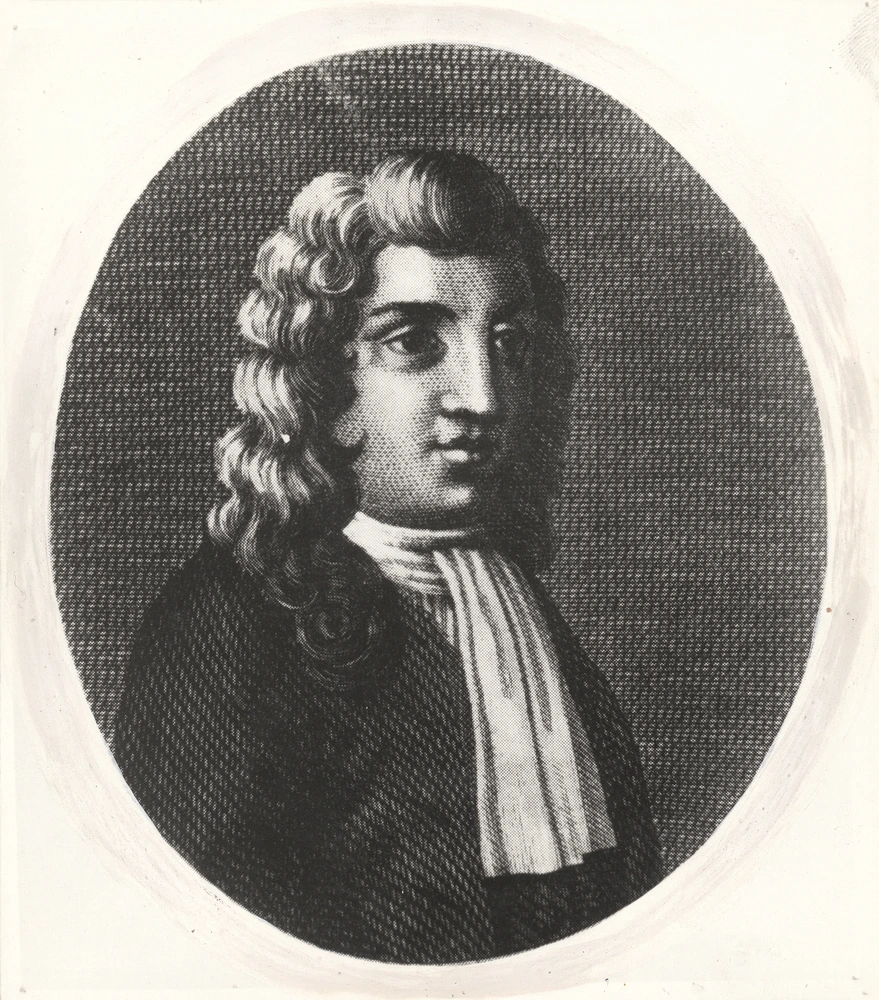
Porpora Antonio, *17 August 1686 Naples, †3 March 1768 Naples, Italian composer and singing teacher. From 1696, he studied for about 10 years at the Conservatorio dei Poveri di Gesù Cristo in Naples (counterpoint and composition, presumably under the guidance of G. Greco). In 1708, he received a commission for his first opera (L’Agrippina), and in 1711 he staged another, Flavio Anicio Olibrio. At that time, he became Kapellmeister at the court of Prince Philip of Hesse-Darmstadt, the general of the Austrian army in Naples, and then maestro di cappella to the Portuguese ambassador in Rome. In 1714, he received a commission from Vienna for the opera Arianna e Teseo (performed in 1714 on the occasion of the birthday of Emperor Charles VI). From 1715 to 1722, Porpora was employed as maestro at the Conservatorio di S. Onofrio in Naples, where he taught singing, playing instruments and composition. He also gave private lessons, including to Farinelli, whose early career he helped to facilitate. He returned to the Viennese stage in 1718 with the opera Temistocle and Bérénice regina d’Egitto, composed with D. Scarlatti and previously staged in Rome. However, Porpora gained recognition only after A. Scarlatti left Naples. In 1719, the opera Faramondo was staged in Naples on the occasion of Empress Elisabeth’s name day, and in 1720, for her birthday celebrations, he composed the serenade Angelica (to a libretto by P. Metastasio, who was just beginning his career in opera) was staged, in which Farinelli, Porpora’s pupil, made his debut. In 1721, Porpora’s fame as a composer grew after the premiere of the opera Eumene at the Teatro Alibert in Rome; the composer remained in the city for the next two years. In 1724, he left for Germany and Austria, and his opera Damiro e Pitia was staged in Munich. After returning to Italy, he continued to compose operas, which were successfully performed in Milan and Venice (Siface), among other places. Until 1733, and again in 1737–38, he taught at the Ospedale degli Incurabili in Venice. In the following years, Porpora’s subsequent operas achieved immense success: Tamerlano, Poro, Annibale, Germanico in Germania and Issipile, as well as Cantata: da recitarsi nel Palazzo Apostolico la notte del SS Natale, the oratorio Sanctus Petrus Urseolus and Mass in A major.
In 1733, Porpora left for London, where he took over as musical director of the Opera of the Nobility, competing with Händel, who was associated with the Royal Academy of Music. That rivalry with lasted about two years. In London, Porpora made his debut with the highly successful opera Arianna in Naxo, later staging four more operas: Enea nel Lazio, Polifemo, Ifigenia in Aulide and Mitridate. In 1736, shortly before the collapse of both opera houses, he left London and went to Venice, where in 1737 he staged two operas (Lucio Papirio and Rosbale) and composed Cario il Calvo for the Teatro Alibert in Rome. In October 1738, he returned to Naples, where he continued to compose operas and assumed the position of conductor at the Conservatorio di S. Maria di Loreto. At the beginning of 1743, he travelled to London for the premiere of Temistocle.
After his return, he began giving singing lessons in Ospedaletto in Venice, where he had many talented female pupils. From 1747 to 1751 he lived in Dresden, where he became the singing teacher of the Saxon princess Maria Antonia Walpurgis. There he met his rival, J.A. Hasse, whose wife, the singer Faustina Bordoni, competed with Porpora’s protégée Regina Mingotti. Both performed in 1747 in Filandro, Porpora’s only opera staged in Dresden at that time. The conflict between the singers spread to both composers, but this did not prevent Porpora from taking up the position of Kapellmeister in the royal-electoral orchestra in 1748, replacing Hasse, who was appointed Oberkapellmeister in 1750. In 1752–53, Porpora lived in Vienna, where he renewed his acquaintance with Metastasio. He gave singing lessons, including to Metastasio’s protégée, the future composer Marianne von Martinez. J. Haydn was his pupil and accompanist at the time.
In 1759, Porpora fell into financial difficulties, having lost his Dresden pension due to the Seven Years War. Thanks to the intervention of Metastasio and Farinelli, he was appointed one of the maestri di cappella at the Conservatorio di S. Maria di Loreto in Naples; in 1760, he also became maestro at the Conservatorio di S. Onofrio. In 1761, he resigned from both positions and spent the last years of his life in Naples, living in poverty.
Among his contemporaries, Porpora was considered one of the most famous opera composers. He was highly regarded in Italy, England, and Austria. Unlike the works of G.B. Pergolesi, however, his operas, like the performances of castrato singers, did not gain approval in France.
Porpora was a representative of the second generation of the Neapolitan school, and his style corresponded to the aesthetics of the turn of the Baroque and early Classicism. At that time, Italian music began to be dominated by homophonic texture in the form of exuberant melodies with heightened expression and simple harmonic accompaniment (usually a string ensemble and basso continuo); Porpora also focused primarily on the cantilena qualities of music and elaborate ornamentation. As an outstanding singing teacher, he was well aware of the capabilities of the human voice, in physiological, technical, expressive terms. Over time, however, singing became more an end in itself than a means of expression, and his style, tailored to the scale of the greatest masters of bel canto (primarily castrati), often served solely to display their vocal abilities. The expectations of the audience at the time were shaped accordingly, as they were more attracted to the virtuosity of the singers than to the artistic value of the work. As a result of this tendency, opera came to be dominated by the da capo aria (AA1BAA1, e.g. in Semiramide, Porpora conceived such a large-scale form for all six principal characters) and singers were given excessive freedom to improvise additional ornaments and other brilliant interludes. However, the elaborate vocal techniques in Porpora’s music often lose their charm due to a lack of inventiveness and errors in the logic of the melody’s development. The lack of dramatic sense in the recitatives may also be found wanting, as well as an arising from the near total elimination or marginalization of ensemble scenes. In contrast, choruses relatively often provide a background to the stage action and at the same time serve as an “interlude” between the solo sections.
Porpora’s rivalry with Händel had a positive impact on the artistic value of his stage works. Porpora’s operas composed in England, starting with Arianna in Naxo exhibit greater attention to compositional detail. The composer differentiated their musical characteristics more clearly, attaching greater importance to recitativo accompagnato and shortened arias, thus enhancing the dramatic qualities of the work (e.g. Arianna’s lament Misera, a che farà from Act 2). He also showed more inventiveness in the instrumental layer, expanding the ensemble with wind instruments (oboes, trumpets, and horns) and even introducing concertante elements into the arias (e.g. the oboe solo in Aci’s aria Lontano dal solo e caro from Act 2 of Polifemo). On the other hand, it was in his London operas that Porpora sought to make the strongest impression through vocal bravura and the intensive use of coloratura. In addition to his operas, Porpora’s best works also include 12 cantatas, Op. 1, with beautifully arranged recitatives and arias.
Porpora enjoyed fame and recognition as an outstanding singing teacher. He trained his most talented pupils outside the constraints of the conservatories, through private lessons (taking control of their upbringing and the entire process of their education), which ensured their faster and more thorough development. His students included the most famous singers of the era: Farinelli, Caffarelli, Porporino (A. Uberti) and R. Mingotti. He also gave several lessons to J.A. Hasse before he decided to study with A. Scarlatti, and to Metastasio. Porpora later maintained professional contacts with his most outstanding pupils, seeking favourable contracts and leading roles for them. Over time, the fame of the singers who worked with him came to surpass his own reputation within the musical sphere.
The sheet music of Porpora’s works has been preserved in an incomplete state; the music of his many operas has been lost, surviving only partially in the form of individual acts or arias. As the Classical style emerged and Enlightenment ideals became widespread, Porpora’s oeuvre, strongly associated with the cult of the castrato and Metastasian poetry, fell into obscurity, sharing the fate of Hasse’s operas and those of many other contemporary opera composers.
Literature:
D. Tumiati Porpora. Dramme di un’anima, Milan 1927; F. Walker A Chronology of the Life and Works of N. Porpora, «Italian Studies» VI, Cambridge 1951; E. Foreman The Porpora Tradition, 1968; F. Degrada Le musiche strumentali di N. Porpora, “Chigiana” XXV, 1968; E. Lavern Sutton The solo vocal works of Nicola Porpora: an annotated thematic catalogue, doctoral dissertation at the University of Minnesota 1974, Ann Arbor 1980; R. Strohm Italienische Opernarien des frühen Settecento (1720–1730), “Analecta Musicologica” XVI, 1976; R. Keable Porpora and the opera of nobility: an introduction to a critical edition of Polifemo Act III, doctoral dissertation at the University of London 1980; W. M. Hienz The choral psams of Nicola Porpora, Ann Arbor 1981; M.F. Robinson How to Demonstrate Virtue. The Case of Porpora’s Two Settings of “Mitridate,” «Studies in Music from the University of Western Ontario» VII, 1982; Geschichte der italienischen Oper, vol. IV, eds. L. Banconi and G. Pestelli, Laaber 1990; X. Cervantes, T. McGeary Handel, Porpora and the ‘Windy Bumm,’ “Early Music” XXIX, book 4 (2001), pp. 607–616; N. Maccavino, C. Toscani, S. Voss et al. Nicola Porpora musicista europeo: le corti, i teatri, i cantanti, i librettisti, proceedings from the international conference in Reggio Calabria 2008, Reggio Calabria 2011; D.J. Dumigan Nicola Porpora’s operas for the ‘opera of the nobility’ : the poetry and the music, doctoral dissertation at the University of Huddersfield (WB), 2014; J. H. Roberts Vinci, Porpora and The Royal Academy of Music, “Il Saggiatore musicale” XXIII book 2 (2016), pp. 243–276; J. Talia Italian Bel Canto in the age of vocal science: the evolution of the art and the science of singing, Samford Valley (Australia) 2019, e-book Brisbane 2019; Operatic Pasticcios in 18th-Century Europe: Contexts, Materials and Aesthetics, ed. B. Over, G. Zur Nieden, Bielefeld 2021, e-book 2021; I. Balmori Le belcanto: qu’en ont fait les enseignants? Une analyse située de pratiques didactiques, entre 1639 et 1950, Rennes 2021.
Stage:
operas:
L’Agrippina, dramma per musica, 3 acts, libretto N. Giuvo, staged in Naples, 4 November 1708
Flavio Anicio Olibrio, dramma per musica, 3 acts, libretto A. Zeno, P. Pariati, staged in Naples, February 1711, 2nd version, staged in Rome February 1722
Basilio re d’Oriente, dramma per musica, 3 acts, libretto B. de Dominici after G.B. Neri, staged in Naples 24 June 1713
Arianna e Teseo, dramma per musica, libretto P. Pariati, staged in Vienna 1 October 1714, 2nd version, 3 acts, libretto D. Lalli after P. Pariati’s Teseo in Creta, staged in Venice, autumn 1727
Berenice regina d’Egitto overo le gare d’amore e di politica, with D. Scarlatti (Porpora composed first part of the 2nd and 3rd act), dramma per musica, 3 acts, libretto A. Salvi, staged in Rome, carnival 1718
Temistocle, dramma per musica, 3 acts, libretto A. Zeno, staged in Vienna, 1 October 1718
Faramondo, dramma per musica, 3 acts, libretto A. Zeno, staged in Naples, 19 November 1719
Eumene, dramma per musica, libretto A. Zeno, staged in Rome, carnival 1721
Adelaide, dramma per musica, 3 acts, libretto A. Salvi, staged in Rome, carnival 1723
Amare per regnare, dramma per musica, 3 acts, staged in Rome,12 December 1723
Semiramide regina dell’Assiria, dramma per musica, 3 acts, libretto after I. Zanelli’s Nino, staged in Naples, 19 May 1724
Damiro e Pitia overo le gare dell’amicizia e dell’amore, dramma per musica 3 acts, libretto D. Lalli, staged in Munich, 12 October 1724
Didone abbandonata, tragedia per musica, 3 acts, libretto P. Metastasio, staged in Reggio Emilia 1725
Siface, dramma per musica 3 acts, libretto P. Metastasio after D. David’s La forza della virttù, staged in Venice 26 December 1725, 2nd version, libretto P. Metastasio, revised by F. Vanstryp, staged in Rome, 7 February 1730
La verità nell’inganno, dramma per musica 3 acts, libretto F. Silvani, staged in Milan, carnival 1726
Meride e Selinunte, dramma per musica, 3 acts, libretto A. Zeno, staged in Venice, carnival 1727
Siroe re di Persia, dramma per musica 3 acts, libretto P. Metastasio, staged in Rome, 11 February 1727
Ezio, dramma per musica 3 acts, libretto P. Metastasio, staged in Venice, 20 November 1728
Semiramide riconosciuta, dramma per musica, 3 acts, libretto P. Metastasio, revised by D. Lalli, staged in Venice, carnival 1729, 2nd version of the libretto by P. Metastasio, revised by D. La Vista, staged in Naples, 20 January 1739
Mitridate, dramma per musica, 3 acts, libretto F. Vanstryp, staged in Rome 7 January 1730
Tamerlano, dramma per musica, 3 acts, libretto A. Piovene, staged in Turin, carnival 1730
Poro, dramma per musica, 3 acts, libretto after P. Metastasio’s Alessandro nell’Indie, staged in Turin, carnival 1731
Annibale, dramma per musica 3 acts, libretto F. Vanstryp, staged in Venice, autumn 1731
Germanico in Germania, dramma per musica, 2 acts, libretto N. Coluzzi, staged in Rome, February 1732
Issipile, dramma per musica, 3 acts, libretto P. Metastasio, staged in Rome, carnival 1733
Arianna in Naxo, melodramma, 3 acts, libretto P.A. Rolli, staged in London, 29 December 1733
Enea net Lazio, melodramma, 3 acts, libretto P.A. Rolli, staged in London, 11 May 1734
Polifemo, melodramma, 3 acts, libretto P.A. Rolli, staged in London, 1 February 1735
Ifigenia in Aulide, melodramma, 3 acts, libretto P.A. Rolli after A. Zeno, staged in London, 3 May 1735
Mitridate, dramma per musica, 3 acts, libretto G. da Gavardo (C. Cibber), staged in London, 24 January 1736
Lucio Papirio, dramma per musica, 3 acts, libretto A. Salvi, revised by D. Lalli (?), staged in Venice, carnival 1737
Rosbale, dramma per musica 3 acts, libretto D. Lalli (?) after C. N. Stampy’s Eumene, staged in Venice, autumn 1737
Carlo il Calvo, dramma per musica 3 acts, libretto after F. Silvani’s Carlo re d’Alemagna, staged in Rome, spring 1738
Il barone di Zampano, commedia, libretto by P. Trinchera, staged in Naples, spring 1739
L’amico fedele, commedia, libretto G. di Pietro, staged in Naples, autumn 1739
Il trionfo di Camilla, libretto S. Stampiglia, staged in Naples, 20 January 1740, 2nd version libretto G. Lorenzi after. S. Stampiglia, staged in Naples, 30 May 1760
Tiridate, dramma per musica, 3 acts, libretto after P. Metastasio’s Zenobia, staged in Naples, 19 December 1740
Il trionfo del valore, commedia per musica, with G. Signorile, A. Palella, and G. Paolo, libretto A. Palomba, staged in Naples, winter 1741
Statira, dramma per musica, 3 acts, libretto F. Silvani, after Il tradimento traditor di se stesso, staged in Venice, carnival 1742
Temistocle, dramma per musica, 3 acts, libretto P. Metastasio, staged in London, 22 February 1743
Filandro, dramma comico-pastorale, 3 acts, libretto V. Cassani’s L’incostanza schernita, staged in Dresden, 18 July 1747
serenatas (azioni teatrali):
Cantata a 4, Rome 1712
Serenata a 3, Naples 1712
Angelica, libretto P. Metastasio, Naples 1720
Gli orti esperidi, libretto P. Metastasio, Naples 1721
Imeneo, libretto S. Stampiglia, Naples 1723, 2nd version staged in Venice 1726
Giasone, libretto S. Stampiglia, Naples 1732
Componimento drammatico: da cantarsi nel giomo del glorioso nome (…) imperatrice regnante Elisabetta Cristina, libretto G. Lemer, Rome 1732
La festa d’Imeneo, libretto P.A. Rolli, London 1736
Intermezzo, Madrid 1739
Le nozze d’Ercole ed Hebe, Naples 1739
pasticcios:
Artaserse, libretto F. Silvani, after A. Lotti’s Il tradimento traditor di se stesso, staged in Rome 1721
Artaserse, with R. Broschi and J.A. Hasse, libretto P.A. Rolli (?) after P. Metastasio, staged in London 1734
Belmira, libretto P.A. Rolli after G. Giusti, staged in London 1734, arranged by Porpora based on the A. Galeazzi’s opera from 1729
Orfeo, with L. Vinci, F. Araia and J.A. Hasse, libretto P.A. Rolli, staged in London 1736
sacred:
Il trionfo della divina giustizia ne’ tormenti e morte di Gesù Cristo, dramma sacro, premiered in Naples 1716
Il martirio di S. Eugenia, tragedia sacra, tekst L.C. Fularco, premiered in Naples 1722
Ermengildo, tragedie cristiane, premiered in Naples 1729
Sacram sumentes lyram, 1731
Cantata: da recitarsi nel Palazzo Apostolico la notte del SS Natale, premiered in Rome 1732
Il martirio di S. Giovanni Nepomuceno, azione sacra, premiered in Naples, 1 June 1711 (?), revised version Brno 1732
Sanctus Petrus Urseolus, oratorio, premiered in Venice 1732
Nos qui salvasti, 1733
David e Bersabea, oratorio, text by P.A. Rolli, premiered in London 1734
Il Gedeone, azione sacra, text by A. Perruzzi (?), premiered in Vienna 1737
Resplendet novo sole nox. Motetto pastorale 1739
Il verbo in carne. Oratorio per nascita del Gesù Cristo, premiered in Rome (?) 1748
Israel ab Aegyptiis liberatus, premiered in Venice 1759
Trattenimento sagro drammatico, tekst A. di Gennaro, premiered in Naples 1768
40 pieces for solo voices, choir and orchestra, including:
3 Beatus vir
Confitebor
3 Dixit Dominus
2 In Te Domine speravi
2 Laetatus sum
3 Lauda Jerusalem
4 Laudate pueri
3 Magnificat
2 Miserere
2 Te Deum
***
Mass in A major for 5 voices and string orchestra
Mass in A minor for 4 voices and basso continuo, 1730
Mass in C major for 4 voices and string orchestra, 1747
Mass in D major for 4 voices and orchestra
Mass in G major for 4 voices and orchestra
mass sections
9 motets
Marian antiphons
lamentations for voice and string orchestra or basso continuo
secular:
135 secular cantatas for voice and basso continuo, including 12 cantatas, Op. 1, to texts by P. Metastasio, dedicated to the Prince of Wales, London 1735:
Dal pover mio core for alto and basso continuo
D’amore il primo dardo for soprano and basso continuo
Destatevi, destatevi, O pastori for alto and basso continuo, for obbligato flute
Già la notte s’avvicina for soprano and basso continuo
Nel mio sonno almen for soprano and basso continuo
Oh Dio che non è vero for alto and basso continuo
Oh se fosse il mio core for alto and basso continuo
Or che una nube ingrata for alto and basso continuo
Queste che miri, O Nice for soprano and basso continuo
Scrivo in te l’amato nome for soprano and basso continuo
Tirsi chiamare a nome for soprano and basso continuo
Veggo la selva e il monte for alto and basso continuo
Instrumental:
Ouverture royale in D major for orchestra, 1763
Cello Concerto in G major with string orchestra and basso continuo
Flute Concerto with string orchestra and basso continuo
6 Sinfonie da camera, Op. 2, for 2 violins, cello and basso continuo, London 1736
6 Sonatas for 2 violins, cello and basso continuo, London 1745
12 sonatas for violin and basso continuo, with G.B. Costanza, Vienna 1754
Sonata F major for cello and basso continuo