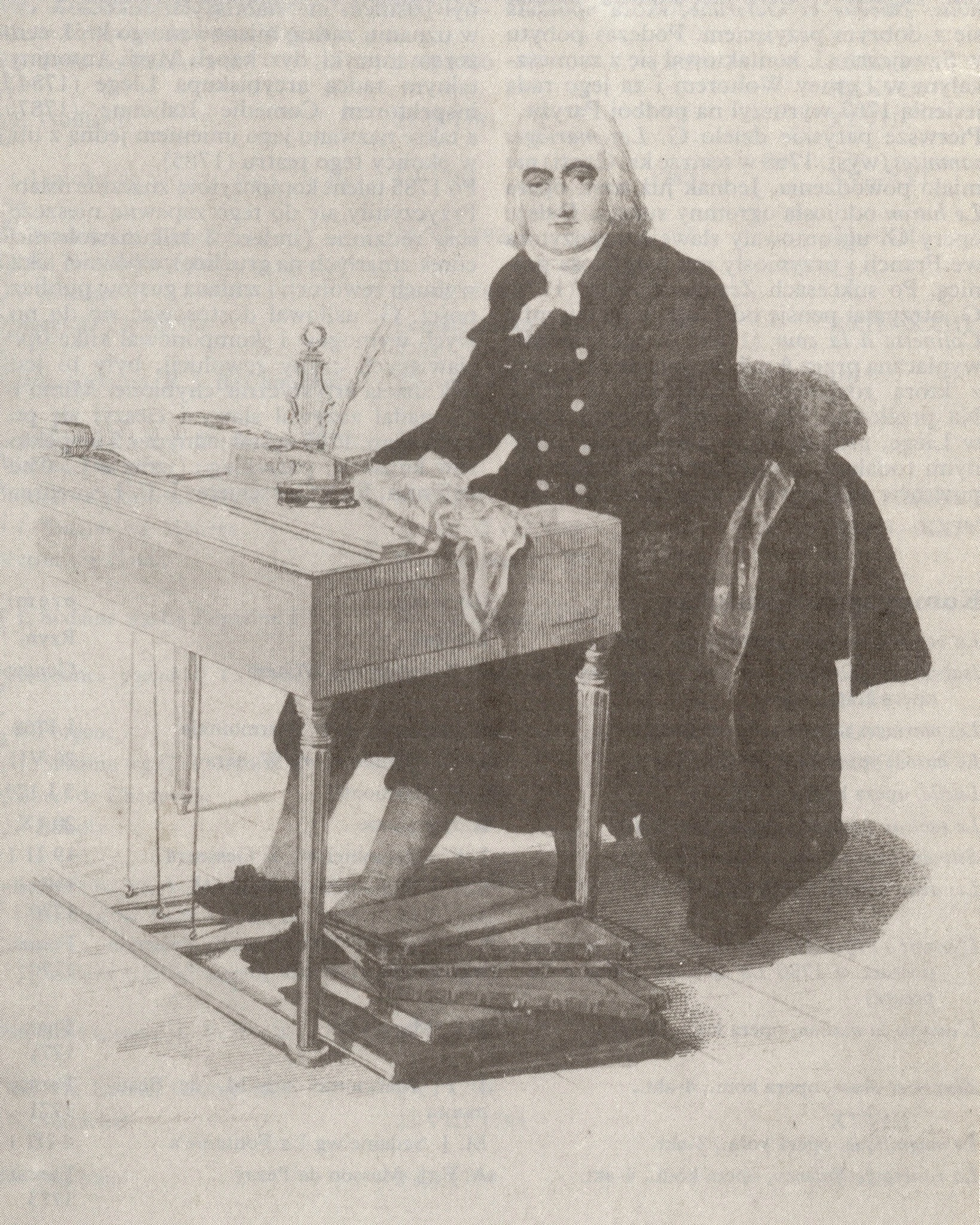
Grétry, André-Ernest-Modeste, *8 February 1741 Liège, †24 September 1813 Montmorency (near Paris), Belgian composer. His father, François-Pascal Grétry (1714–68), and his brother, Jean-Joseph Célestin Grétry (1739–96), were violinists and worked in Liège, including at St-Denis Collegiate Church. At the age of nine, Grétry became a chorister at the collegiate church and remained for a short time under the tutelage of the local maître de chant, G. Wenick, and later his successors. Grétry also studied music with other local artists: F. Leclerc (singing), N. Renekin (harpsichord) and H. Moreau (composition and counterpoint). Even more formative, however, was his exposure to the Italian troupe that performed opera buffa in Liège between 1753 and 1755, presenting works by composers such as G.B. Pergolesi, N. Jommelli, and B. Galuppi. For several years (until his voice changed in 1758), Grétry worked as a singer, performing in music lovers’ salons and churches. He later wrote several works (including six symphonies and Messe solennelle), which attracted the attention of influential people and contributed to him being awarded a scholarship at the Collège Darchis in Rome, a charitable institution for boys from Liège. Grétry set off for Rome in March 1760, travelling on foot in the company of a smuggler; he held the scholarship until February 1765. He did not, however, acquire a thorough command of compositional technique in Rome, since he studied only briefly with G.B. Casali, maestro di cappella at the church of San Giovanni in Laterano. Nevertheless, he wrote several more instrumental compositions (six string quartets, Op. 3) and church music, as well as his first stage work, the intermezzo La vendemmiatrice, which was successfully performed during the 1765 carnival at the Teatro Aliberti. It is possible that he continued to study with Sacchini for several more months. After several lessons with Padre Martini, the composer ended his stay in Italy with a successful examination at the Accademia dei Filarmonici in Bologna. In January 1766, Grétry left for Geneva, where he worked as a singing teacher and composer. At the turn of 1766/67, his opéra comique Isabelle et Gertrude was performed there and met with a favourable reception. During his stay in Switzerland, Grétry was in contact with Voltaire, who was then living in Ferney, and on his advice, he set out for Paris in the autumn of 1767. Grétry’s first Parisian work, Les mariages samnites (staged in 1768 at Prince Conti’s theatre), was not successful. However, his next opera, Le Huron, was a huge success. Grétry’s subsequent operas established his fame in France and brought him renown abroad. After the success of Zémire et Azor (1771), Grétry received a pension from the king, in 1774 he became director of Queen Marie Antoinette’s ensemble, and after the triumph of Colinette à la cour (1782) – also a pension paid by the Académie Royale de Musique, with which he began working in 1775. At the turn of 1782/83, the composer stayed in Liège, where he was received with the honours befitting a compatriot of international renown. After returning to Paris, Grétry enjoyed great success as the author of the opéra-ballet La caravane du Caire (from 1783 to 1829, this work was performed 506 times) and the opéra comique Panurge dans l’île des lanternes to a libretto by the Count of Provence, later King Louis XVIII (1785). Two works considered to be Grétry’s greatest creative achievements, L’épreuve villageoise (1784) and Richard Coeur-de-Lion (1784), were also written at that time. Despite a few artistic slip-ups (such as the reworking of Les mariages samnites in 1776, Matroco in 1777 and Andromaque in 1780), the period up to 1785 was a string of unbroken successes for Grétry; in recognition of his achievements, he was appointed the Royal Censor for Music, secret counsellor to the Archbishop of Liège (1784), inspector of the Comédie Italienne (1787), and a street in the vicinity of the theatre was named after him (1785).
After 1785, the composer’s talent significantly declined. This was probably due to family misfortunes (the death of three teenage daughters from tuberculosis), and later also the outbreak of the revolution and a change in public tastes. Grétry attempted to adapt to the new demands and composed several operas glorifying the deeds of the revolution. Of his late works, two operas were particularly successful: Raoul Barbe-bleue (1789) and Guillaume Tell (1791). In 1795, Grétry became one of the five inspectors of the Paris Conservatoire (along with L. Cherubini, F.J. Gossec, J.F. Lesueur and E.N. Méhul) and one of the three composers who were members of the Institut de France (alongside Gossec and Méhul). However, he did not have many students. In 1802, he received the Cross of the Legion of Honour from Napoleon and a permanent pension to compensate for the losses he had suffered during the revolution. In 1805, he witnessed the unveiling of his bust in front of the Opéra-Comique building. Towards the end of his life, Grétry ceased composing and devoted himself to literary and philosophical works; he continued his Mémoires, begun in 1789, and in 1801 began editing the eight-volume Réflexions and De la vérité, and in 1802 wrote Méthode simple pour apprendre à préluder. A few years before his death, Grétry purchased the Ermitage near Montmorency, the former residence of J.J. Rousseau, where he died. Grétry’s lavish funeral was paid for by the state. In 1828, the composer’s heart was transported to Liège, in accordance with his will.
The second of the composer’s three daughters, Angelique Dorothée Lucie [Lucile] (1772–1790), also composed music. She wrote two operas (orchestrated by her father): Le mariage d’Antonio (1786, libretto by A.L.B. Robineau), which was successfully staged in Paris, and Toinette et Louis (1787, libretto by J. Patrat), as well as the aria Ah, quel plaisir and the vaudeville Dès les premiers jours du printemps.
Grétry was a leading figure in French opéra comique in the second half of the 18th century. He owed this position not so much to the strength of his talent and mastery of the craft of composition as to his extraordinary ability to adapt to the spirit of the age and his excellent sense of the tastes and expectations of music audiences. This is attested to by the numerous honours bestowed upon the composer, as well as the huge number of publications of his works. Most of Grétry’s operas had several editions of their scores in Paris (mainly by Houbaut, Huguet and Frey); piano reductions of entire works, numerous editions of overtures and opera excerpts (both in their original versions and in various transcriptions) appeared primarily in Paris, but also in Berlin, Leipzig, Bonn, Mainz, Hamburg, Offenbach, Vienna, Amsterdam, The Hague, Liège, London, Aberdeen, Dublin, St Petersburg and even Philadelphia. Grétry’s works enjoyed extraordinary popularity not only among French audiences; they were successfully staged in various language versions, including in Vienna, Berlin, Stuttgart and Leipzig (French and German), Mannheim and Esterháza (Italian), St Petersburg (French and German), Moscow and Kuskovo at the court of Count Sheremetev (Russian), in Stockholm and Copenhagen, in Warsaw (French, German and Polish – Dwaj skąpcy, a translation of Les deux avares by J. Baudouin, 1781; Portret mówiący, a translation of Le tableau parlant by J. Baudouin, 1782; Fałszywe pozory, czyli kochanek zazdrosny, a translation of Les fausses apparences, ou L’amant jaloux by L. Pierożyński, 1787), as well as in Krakow (Zemira i Azor, translation by S. Kuszewski, 1781 or 1782). Themes from Grétry’s works have been arranged by various composers, including W.A. Mozart (Acht Variationen für Klavier on the theme of the march from the opera Les mariages samnites, KV 352, 1781) and L. van Beethoven (Acht Variationen für Klavier on the theme of the romance Une fièvre brûlante from the opera Richard Coeur-de-Lion, without op., 1796–97).
Grétry, who composed his stage works to texts by the most distinguished French librettists of the period, possessed a remarkably versatile dramatic talent. His opéras comiques (written for the royal theatres at Fontainebleau and Versailles as well as for the Parisian Comédie-Italienne), alongside his tragédies lyriques and opéras-ballets (intended for the same court theatres and for the Académie Royale de Musique), encompassed an exceptionally broad range of subjects: satirical (Le Huron), pastoral (L’épreuve villageoise, Lucile, La rosière de Salency), fairy-tale (Zémir et Azor), classical antiquity (Le jugement de Midas, Andromaque, Céphale et Procris), historical (Aucassin et Nicolette, Richard Cœur-de-Lion), Oriental (La caravane du Caire), exotic (Elisca, ou L’habitante de Madagascar), derived from boulevard farce (Les deux avares, Le tableau parlant), or responding to contemporary political events (Joseph Barra, La rosière républicaine).
Two distinct phases can be clearly discerned in Grétry’s dramatic oeuvre. The first comprises a series of successes, beginning with Le Huron (1768), through which the composer made a bold and striking entrance into the Parisian artistic scene, and continuing up to Panurge (1785), which continued to be performed in France for another fifty years. In the second phase (1786–1803), none of his works lived up to his previous achievements. His early operas are dominated by arias, with larger ensembles and choruses usually appearing at the end of acts and entire works (Le Huron, Lucile, Silvain, L’ami de la maison). However, already in the early 1770s, there was a tendency to balance the proportions between solo and ensemble parts (Les deux avares, Le magnifique, Les fausses apparences), and in the operas of the 1780s and 1790s, ensembles and choruses gained a clear advantage (Le comte d’Albert, Pierre le Grand, Guillaume Tell, Elisca). The importance of the chorus increased significantly, often taking on the role of a collective character. Among the arias, the three-part ABA form predominates, alongside two-part forms, rondos, cavatinas, strophic chansons, couplets, and occasionally ballads or romances. Among ensembles, the chain form or through-composed form predominates. Any deficiencies in musical training (in harmony and instrumentation) were compensated by the composer’s exceptional melodic and dramatic talent, meticulous musical treatment of the text, and skilful balancing of proportions in the overall structure of the work. In Grétry’s early operas, listeners could clearly perceive Italian melodic influences, although the composer deliberately avoided the excessive ornamental flourish characteristic of bel canto. Modest coloratura and melismas appear rarely in his work, and only in places where they are psychologically justified. In his later works, Grétry combined Italianate melodic style with the meticulous treatment of prosody and reverent attention to the text typical of French musicians; he studied the declamation of eminent actors in order to accurately emulate the musical intonation of the human voice. However, the excessive subordination of music to the text in his operas from the late 1780s and the 1790s led to an artistic impoverishment of these works. In Grétry’s finest operas (Richard Coeur-de-Lion, Zémire et Azor, Le tableau parlant, Les fausses apparences ou L’épreuve villageoise), on the other hand, the melody serves to define the characters, emotions and situations, in a masterful and extremely accurate manner, perfectly reflecting the distinctiveness of the characters and events presented. The composer used various means to achieve this; for example, in Aucassin et Nicolette, an opera based on a medieval legend, he used modal scales. Grétry sometimes used literal quotations, such as the final chorus in Denys le Tyran, which sings the Marseillaise and the Carmaniola.
In keeping with the aesthetics of the time, the human voice comes to the fore in Grétry’s works. The orchestra’s participation in the vocal parts is limited to simple, transparent accompaniment or light decoration of the vocal part by a classical ensemble. Grétry exceptionally introduces other accompanying instruments in order to diversify the timbre, e.g. the mandolin (Florival’s song in Les fausses apparences) or the harp (the Frenchwoman’s aria in La caravane du Caire). The modest instrumentation, which corresponded perfectly with the spirit of operas associated with the aesthetics of the Enlightenment, proved insufficient in the case of works celebrating republican feats and holidays. In this field, Grétry could not compete with the magnificent works of Méhul or Cherubini. However, the orchestral parts in Grétry’s operas play an important role; in addition to overtures, the composer often introduces interludes, ballet and pantomime music. Grétry’s overtures take various forms; alongside the traditional Italian or French sinfonia and rondo, there are also 2- and 1-part forms (there are no overtures in Denys le Tyran and Elisca). Contemporaries valued Grétry’s overtures, among other things, for their attempt to convey local colour. They were often published in a wide variety of arrangements (the overture to Panurge was published 21 times, and that to Caravane du Caire 18 times). Sometimes overtures serve a dramatic function, accompanying the unfolding action on stage; in such cases, they are programmatic in style, as in the overture to Le jugement de Midas, whose outer movements depict the idyllic atmosphere of the Greek countryside, while the middle movement illustrates a thunderstorm. The composer also assigned a dramatic role to the interludes and to instrumental passages within the acts. Ballet and pantomime music found application not only in opera-ballet and tragédie lyrique (which already had a long tradition in French music), but also in opéra comique. In Grétry’s works, marches and more or less elaborate divertissements appear frequently. Particularly popular with Parisian audiences was the spectacular ballet scene at the bazaar from Act II of La caravane du Caire.
Grétry’s historical significance lies in blurring the rigid boundaries between the main genres of 18th-century French opera: tragédie lyrique and opéra comique. In his works, tragedy blends with comedy, seriousness with frivolity and wit, and pathos with naturalness. Moreover, those works in which, contrary to his natural talent for comedy, the composer attempted to bend to the rules of grand opera (Céphale et Procris, Andromaque) were unsuccessful. On the other hand, works that perfectly blended both opera conventions (Colinette à la cour, Panurge czy Richard Coeur-de-Lion). Two of Grétry’s works are particularly significant for the development of opera: Zémire et Azor, with its romantic fairy-tale theme, which influenced 19th-century German opera, and Richard Coeur-de-Lion, in which he used a leitmotif. In this opera, the theme of Blondel’s romance appears nine times in various melodic and rhythmic variations. Grétry was aware of the importance of this device in ensuring the dramatic unity of the work, which he expressed in his writings. Another phenomenon anticipating nineteenth-century opera is the large dramatic structures formed by the blending of solo voices, ensembles, and choruses. The perfect fusion with the spirit of the times, which was the strength of Grétry’s talent, also contributed to his works being forgotten in the 19th and 20th centuries. With the advent of a new era, the characters of sentimental lovers, greedy old men, and cunning soubrettes faded, and the music, so closely tied to the text, lost its appeal. Grétry’s modest output in the field of sacred and instrumental music remains in the shadow of his operatic achievements. Among his literary works, particular value lies in the Mémoires, which contain valuable information about the circumstances and methods of the composer’s work, his musical concepts, and the world around him. In his aesthetic writings (De la vérité, Réflexions), Grétry adheres to the eighteenth-century principle that the purpose of art is to provide pleasure; he also addresses non-musical issues, presenting his views on morality, politics, and related topics.
Literature: H. de Livry Recueil de lettres écrites à Grétry ou à son sujet, Paris 1809; Ch. Piot Quelques lettres de la correspondance de Grétry avec Vitzthumb, “Bulletin de l’Académie Royale de Belgique” No. 40, 1875; S. Bormans Lettres inédites de Grétry, “Bulletin archéologique liégeois” No. 17, 1883; S. de Schrijver Quatorze lettres inédites de Grétry conservées au Musée Grétry à Liège, “Annales de la Société d’Archéologie de Brussel” No. 5, 1891; G. de Froidcourt Quarante-trois lettres inédites de Grétry à Alexandre Rousselin, 1806–1812, Liège 1937; La correspondance générale de Grétry, ed. G. de Froidcourt, Brussels 1962; H. Fierens-Gevaert Maison Grétry. Catalogue illustré, Liège 1913, suppl. Liège 1930; J. Le Breton Notice histoire sur la vie et les ouvrages d’A.-M. Grétry, Paris 1814; A. J. Grétry Grétry en famille ou anecdotes littéraires et musicales relatives à ce célèbre compositeur, Paris 1814; L.V. Flamand-Grétry L’Ermitage de J.J. Rousseau et de Grétry, Paris 1820; E.C. de Gerlache Essai sur Grétry, Liège 1821, Brussels 2nd edition 1844; L.V. Flamand-Grétry Cause célèbre relative à la consécration du coeur de Grétry, Paris 1825; P. Lesueur-Destourets Eloge académique de Grétry, Brussels 1826; F. Van Hulst Grétry, Liège 1842; E.G.J. Grégoir Grétry, célèbre compositeur belge, Brussels 1883; J.G. Rongé, F. Delhasse Grétry, Brussels 1883; M. Brenet Grétry, sa vie et ses oeuvres, Paris 1884; A. Thil-Lorrain Histoire de Grétry, Brussels 1884; H. de Curzon Grétry, Paris 1907; J. Hogge Grétry et son époque, Liège 1918; E. Closson A.-M. Grétry, Turnhout 1920; P. Long des Clavières La jeunesse de Grétry et ses débuts à Paris, Besançon 1921; H. Wichmann Grétry und das musikalische Theater in Frankreich, Halle 1929; J. Bruyr Grétry, Paris 1931; J. Sauvenier A. Grétry, Brussels 1934; M. Degey A.-M. Grétry, Brussels 1939; S. Clercx Grétry, 1741–1813, Brussels 1944; P. L. Marsick A.-M. Grétry, Brussels 1944; G. de Froidcourt Grétry, Rouget de Lisle et “La Marseillaise”, Liège 1945; O.G. Sonneck Footnote to the Bibliographical History of Grétry’s Opéras, commemorative book for D.F. Scheurleer, Hague 1925; E. Closson Les notes marginales de Grétry dans l’„Essai sur la musique” de Laborde, “Revue Belge de Musicologie” II, 1948; A. Van der Linden La première version d’„Elisca” de Grétry, «Bulletin de la classe des beaux-arts” XXXV, Académie royale de Belgique 1953; A. Van der Linden Broutilles au sujet de Grétry, “Revue Belge de Musicologie” No. 12, 1958; L. Jongen A.-E.-M. Grétry, curieux et habile homme, «Bulletin de la classe des beaux-arts» XLII, Académie royale de Belgique 1960; G. de Froidcourt Les domiciles de Grétry à Paris, “La vie wallonne” No. 36, 1962; J. Quitin Les compositions de musique religieuse d’A.-M. Grétry, “Revue Belge de Musicologie” No. 18, 1964; S. Clercx Le rôle de l’Académie Philharmonique de Bologne dans la formation d’A. M. Grétry, “Quadrivium” No. 8, 1967; D. Deane The French Operatic Ouverture from Grétry to Berlioz, “Proceedings of the Royal Musical Association” No. 99, 1972/73; K. Pendle The Opéras Comiques of Grétry and Marmontel, “The Musical Quarterly” No. 62, 1976; K. Pendle “Les philosophes” and “Opéra Comique”. The Case of Grétry’s “Lucile”, “The Music Review” No. 38, 1977; M. Elisabeth, C. Bartlet Politics and the Fate of “Roger et Olivier”. A New Recovered Opera by Grétry, “Journal of the American Musicological Society” No. 37, 1984; D. Charlton Grétry and the Growth of Opera-Comique, Cambridge1986; M.E.C. Bartlet A Musician’s View of the French Baroque after the Advent of Gluck: Grétry’s Les trois âges de l’opéra and its Context, Jean-Baptiste Lully and the Music of the French Baroque: Essays in Honor of James R. Anthony, red. J.H. Heyer et al., Cambridge 1989; M. Brix and Y. Lenoir Grétry juge de lui-même: les dernières pages des “Réflexions d’un solitaire”, “Revue des archéologues et historiens d’art de Louvain” No. 22, 1989; Documents Grétry dans les collections de la Bibliothèque Royale Albert ler, ed. Y. Lenoir, Brussels 1989; P. Vendrix Manuscrits d’opéras et d’opéras-comiques: le cas Grétry, Chantiers révolutionnaires: science, musique, architecture, ed. B. Didier and J. Neefs, Paris 1992; Grétry et l’Europe de l’opéra-comique, Liège 1992; L’opéra-comique en France au XVIIIe siècle, ed P. Vendrix, Liège 1992; J. Solum Concerning the Authenticity of Grétry’s Flute Concerto, “Revue de la Société liégeoise de musicology” 7, 1997; M. Darlow Staging the French Revolution: Cultural Politics and the Paris Opéra, 1789–1794, Oxford/New York 2012; Grétry, un musician international dans l’Europe des Lumières, ed. B. Demoulin, F. Tilkin, Liège 2013; R.J. Arnold Grétry’s Operas and the French Public: From the Old Regime to the Restoration, Surrey/Burlington 2016; R.D. Geoffroy-Schwinden Music, Copyright, and Intellectual Property during the French Revolution: A Newly Discovered Letter from André-Ernest-Modeste Grétry, “Transposition” 7, 2018; D. Charlton Popular Opera in Eighteenth-Century France: Music and Entertainment before the Revolution, Cambridge 2022.
Editions:
Collection complète des oeuvres de Grétry (CCOG), ed. F.A. Gevaert, E. Fétis, A. Wotquenne et al., 49 vols., Leipzig–Brussels 1883–1937 (includes most of Grétry’s stage works)
Serenade from Les fausses apparences, for voice and piano, musical supplement to “Echo Muzyczne, Teatralne i Artystczne” 1894 no. 576;
Chór straży nocnej from Les deux avares, for piano, Warsaw 1875 G. Sennewald
Réflexions d’un solitaire, ed. L. Solvay and E. Closson, 4 vols., Brussels–Paris 1919–22
Mémoires, abridged edition, Paris 1889, Liège 1914, ed. R. Depau, Brussels 1941, 2nd edition 1948
Mémoires, 3 vols., Brussels 1924–25 (reprint of 1797 edition), German translation ed. P. Gülke, Leipzig 1973, Wilhelmshaven 1978
Méthode simple pour apprendre à préluder…, New York 1968 (facsimile of 1801/02 edition)
Compositions:
Instrumental:
Sei quartetti per violini, alto e basso, op. 3, Paris 1773
Vocal-instrumental:
secular:
romances for voice and harpsichord or piano and for voice and piano or harp, published in Parisian journals or as separate prints, including:
Six nouvelles romances for voice and piano or harp, words by A. J. Grétry, Paris n.d.:
Trois romances for voice and piano or harp in: Oeuvres de J.F. Ducis, Paris 1827:
revolution songs:
Ronde pour la plantation de l’arbre de la liberté for voice and orchestra or bc., words by J.F.R. Mahérault, Paris 1799
Couplets du citoyen patriophile dédiés à nos frères de Paris for voice and bc., Paris n.d.
Hymne à l’éternel, arranged for voice and guitar by Bédard, Paris n.d.
Eloge à Bonaparte for 2 voices and piano
sacred:
Antifona for 5 voices (submitted as part of a diploma at the Accademia dei Filarmonici in Bologna)
Confitebor tibi, Domine for 4 voices and orchestra
Dixit Dominus for 4 voices and orchestra
not preserved:
De profundis
Laetatus sum
2 Laudate
Mirabilis
O salutaris hostia
Stage:
La vendemmiatrice, intermezzo, 2 acts, libretto by Labbate, staged in Rome 1765
Isabelle et Gertrude, ou Les sylphes supposés, opéra comique in 1 act, libretto by C.S. Favart after Voltaire, staged in Geneva December 1766
Les mariages samnites, opera in 1 act, libretto P. Légier after J.F. Marmontel, staged in Paris January 1768
Le huron, opéra comique in 2 acts, libretto by J.F. Marmontel after Voltaire, staged in Paris 20 August 1768, Paris 1768, new edition CCOG XIV
Lucile, opéra comique in 1 act, libretto by J.F. Marmontel, staged in Paris 5 January 1769, staged in Paris 1769, new edition CCOG II
Le tableau parlant, opéra comique in one act, libretto by L. Anseaume, staged in Paris 20 September 1769, Paris 1769, new edition CCOG IX
Silvain, opéra comique in 1 act, J. F. Marmontel after S. Gessner, Paris 19 February 1770, Paris 1770, new edition CCOG XXVII
Les deux avares, opéra comique in 2 acts, Ch.G. Fenouillot de Falbaire, staged in Fontainebleau 27 November 1770, Paris 1771, new edition CCOG XX
L’amitié à l’épreuve, opéra comique in 2 acts (in the expanded 1786 version titled La nouvelle amitié à l’épreuve), C.S. Favart and C.H. Fusée de Voisenon after J.F. Marmontel, staged in Fontainebleau 13 November 1770, Paris 1772, new edition CCOG XLII–XLIII
L’ami de la maison, opéra comique in 3 acts, J.F. Marmontel, staged in Fontainebleau 26 October 1771, Paris 1773, new edition CCOG XXXVIII
Zémire et Azor, opéra comique in 4 acts, J.F. Marmontel after M. de Beaumont, staged in Fontainebleau 9 November 1771, Paris 1772, new edition CCOG XIII
Le magnifique, opéra comique in 3 acts, M.J. Sedaine after La Fontaine, Paris 4 March 1773, Paris 1773, new edition CCOG XXXI
La rosière de Salency, opéra comique in 4 acts, A.F.J. Masson de Pézay, staged in Fontainebleau 23 October 1773, Paris 1774 (3-act version), new edition CCOG XXX
Céphale et Procris, ou L’amour conjugal, opéra-ballet in 3 acts, J.F. Marmontel after Ovid, staged in Versailles 30 December 1773, Paris 1775, new edition CCOG III–IV
La fausse magie, opéra comique in 2 acts, J.F. Marmontel, staged 1 February 1775, Paris 1775 (1-act version), new edition CCOG XXV
Les mariages samnites, opéra comique in 3 acts, B.F. de Rosoi after J.F. Marmontel, staged in Paris 12 June 1776, Paris 1776, new edition CCOG XXXV
Amour pour amour, 3 divertissements for the comedy by P.C.N. de La Chaussée, libretto by P. Laujon, staged in Versailles 10 March 1777
Matroco, opéra comique in 5 acts, P. Laujon, staged in Paris 3 November 1777 (Theatre of the Prince of Condé)
Le jugement de Midas, opéra comique in 3 acts, libretto Th. d’Hèle, staged in Paris 28 March 1778 (Theatre of Madame de Montesson), Paris 1779, new edition CCOG XVII
Les trois âges de l’opéra, prologue (with music by J.B. Lully, J.Ph. Rameau and Ch.W. Gluck), libretto A.M.D. Devismes de Saint-Alphonse, Paris 27 April 1778, new edition CCOG XLVI
Les fausses apparences, ou L’amant jaloux, opéra comique in 3 acts, libretto Th. d’Hèle after S. Centlivre, staged in Versailles 20 November 1778, Paris 1779, new edition CCOG XXI
Les événements imprévus, opéra comique in 3 acts, libretto Th. d’Hèle, staged in Versailles 11 November 1779, Paris 1781, new edition CCOG X
Aucassin et Nicolette, ou Les moeurs du bon vieux temps, opéra comique in 4 acts, libretto by M.J. Sedaine based on a fairy tale adapted by J.B. de La Curne de Sainte-Palaye, staged in Versailles 30 December 1779, Paris 1783, new edition CCOG XXXII
Andromaque, opera in 3 acts, libretto by L.G. Pitra after Racine, staged in Paris 6 June 1780, Paris 1781, new edition CCOG XXXVI–XXXVII
Emilie, ou La belle esclave, opéra-ballet in 1 act, libretto N.F. Guillard, staged in Paris 22 February 1781, new edition CCOG XLVII
Colinette à la cour, ou La double épreuve, opera in 3 acts, libretto by J.B. Lourdet de Santerre after C.S. Favart, staged in Paris 1 January 1782, Paris 1782, new edition CCOG XV–XVI
L’embarras des richesses, opera in 3 acts, libretto by J.B. Lourdet de Santerre after L.J.C.S. d’Allainval, staged in Paris 26 November 1782, Paris 1783, new edition CCOG XI–XII
Thalie au nouveau théâtre, prologue, libretto by M.J. Sedaine, staged in Paris 28 June 1783
La caravane du Caire, opéra-ballet in 3 acts, libretto E. Morel de Chédeville, staged in Fontainebleau 30 October 1783, staged in Paris 1784, new edition CCOG XXII–XXIII
Théodore et Paulin, opéra comique in 3 acts (in a 2-act version from 1784 titled L’épreuve villageoise), libretto by Desforges (pseudonym of P.J.B. Choudard), staged in Versailles 5 March 1784, Paris 1784 (2-act version), new edition CCOG VI
Richard Coeur-de-Lion, opéra comique in three acts, libretto by M.J. Sedaine after J.B. de La Curne de Sainte-Palaye, staged in Paris 21 October 1784, Paris 1786, new edition CCOG I
Panurge dans l’île des lanternes, opera in 3 acts, libretto by E. Morel de Chédeville after F. Parfaict, staged in Paris 25 January 1785, staged in Paris 1785, new edition CCOG XIX and XXIII
Amphitryon, opera in 3 acts, libretto by M.J. Sedaine after Molière, staged in Versailles 15 March 1786, new edition CCOG XXIII–XXIV
Les méprises par ressemblance, opéra comique in 3 acts, libretto by J. Patrat after Plautus, staged in Fontainebleau 7 November 1786, staged in Paris 1791, new edition CCOG V
Le comte d’Albert, opéra comique in 2 acts, and La suite de comte d’Albert in one act, libretto by M.J. Sedaine after La Fontaine, staged in Fontainebleau 13 November 1786, Paris 1787, new edition CCOG XXVI
Le prisonnier anglais (or Clarice et Belton, ou Le Prisonnier anglaise), opéra comique in 3 acts, libretto by Desfontaines (pseudonym of F.G. Fouques), Paris 26 December 1787, new edition CCOG XLVIII–XLIX
Le rival confident, opéra comique in two acts, libretto by N.J. Forgeot, staged in Paris 26 June 1788, Paris 1789, new edition CCOG XLV
Raoul Barbe-Bleue, opéra comique in 3 acts, libretto by M.J. Sedaine after C. Perrault, staged in Paris 2 March 1789, Paris 1791, new edition CCOG XVIII
Aspasie, opera in 3 acts, libretto by E. Morel de Chédeville, staged in Paris 17 March 1789
Pierre le Grand, opéra comique in 4 acts, libretto J.N. Bouilly, staged in Paris 13 January 1790, Paris (3-act version), new edition CCOG XL
Guillaume Tell, opéra comique in 3 acts, libretto by M.J. Sedaine after A.M. Lemierre, staged in Paris 9 April 1791, Paris 1794, new edition CCOG XXIV
Cécile et Ermancé, ou Les deux couvents, opéra comique in 3 acts, libretto by C.J. Rouget de Lisie and J.B.D. Desprès, satged in Paris 16 January 1792
Basile, ou A trompeur, trompeur et demi, opéra comique in 1 act, libretto by M.J. Sedaine after Cervantes, staged in Paris 17 October 1792
Le congrès des rois, pasticcio in 3 acts, (together with 11 other composers), libretto by Desmaillot (pseudonym A.F. Eve), staged in Paris 26 February 1794
Joseph Barra, opéra comique in 1 act, libretto by G.D.Th. Levrier Champ-Rion, staged in Paris 5 May 1794
Denys le tyran, maître d’école à Corinthe, opera in 1 act, libretto by P.S. Maréchal, staged in Paris 23 August 1794, new edition CCOG XXVIII
La rosière républicaine, ou La fête de la vertu, opera in 1 act, libretto by P.S. Maréchal, staged in Paris 2 September 1794, new edition CCOG XXIX
Callias, ou Nature et patrie, opéra comique in 1 act, libretto by F.B. Hoffman, staged in Paris 19 September 1794
Lisbeth, opéra comique in 3 acts, libretto by E.G.F. de Favières after J.P.C. de Florian, staged in Paris 10 January 1797, staged in Paris 1798, new edition CCOG XLIV
Anacréon chez Polycrate, opera in 3 acts, libretto by J.H. Guy, staged in Paris 17 January 1797, Paris 1799, new edition CCOG VII–VIII
Le barbier de village, ou Le revenant, opéra comique in 1 act, libretto by A.J. Grétry, staged in Paris 6 May 1797, Paris 1797 (excerpt)
Elisca, ou L’amour maternel (or Elisca, ou L’habitante de Madagascar), opéra comique in 3 acts, libretto by E.G.F. de Favières, staged in Paris 1 January 1799, Paris 1812, new edition CCOG XXXIX
Le casque et les colombes, opéra-ballet in 1 act, libretto by N.F. Guillard, staged in Paris 7 November 1801
Delphis et Mopsa (or Le ménage), opera in 2 acts, libretto by J.H. Guy, staged in Paris 15 February 1803, new edition CCOG XLI
unfinished or known only from references
Le connaisseur, opéra comique in 3 acts, libretto by J.F. Marmontel, 1768
Momus sur la terre, prologue, libretto by C.H. Watelet, staged in 1769 (?) at the Château de la Roche-Guyon
Les filles pourvues, compliment de clôture, libretto by L. Anseaume, staged at the Comédie Italienne in Paris
Pygmalion, opéra comique in 1 act, libretto by B.F. de Rosoi, 1776 (?)
Les statues, opéra comique in 4 acts, libretto by J.F. Marmontel, 1776–78
Electre, opera in 3 acts, libretto by J.C. Thilorier, 1782
Les colonnes d’Alcide, opera in 1 act, libretto by L.G. Pitra, 1782
Oedipe à Colonne, opera in 3 acts, libretto by N.F. Guillard, 1785 (only Act I composed)
Roger et Olivier, opéra comique in 3 acts, libretto by L. d’Ussieux, ca. 1790 (music partly from Les mariages Samnites)
Séraphine, ou Absente et présente, opéra comique in 3 acts, libretto by A.J. Grétry, ca. 1792
Diogène et Alexandre, opera in 3 acts, libretto by P. S. Maréchal, 1794
Zelmar, ou L’asile, opera in 2 acts, libretto by A.J. Grétry, 1801
Prace:
Mémoires, ou Essai sur la musique, vol. 1 Paris 1789, 3 vols. Paris 1797
De la vérité, ce que nous fûmes, ce que nous sommes, ce que nous devrions être, Paris 1801
Méthode simple pour apprendre à préluder en peu de temps, avec toutes les ressources de l’harmonie, Paris 1802
Réflexions d’un solitaire, MS