
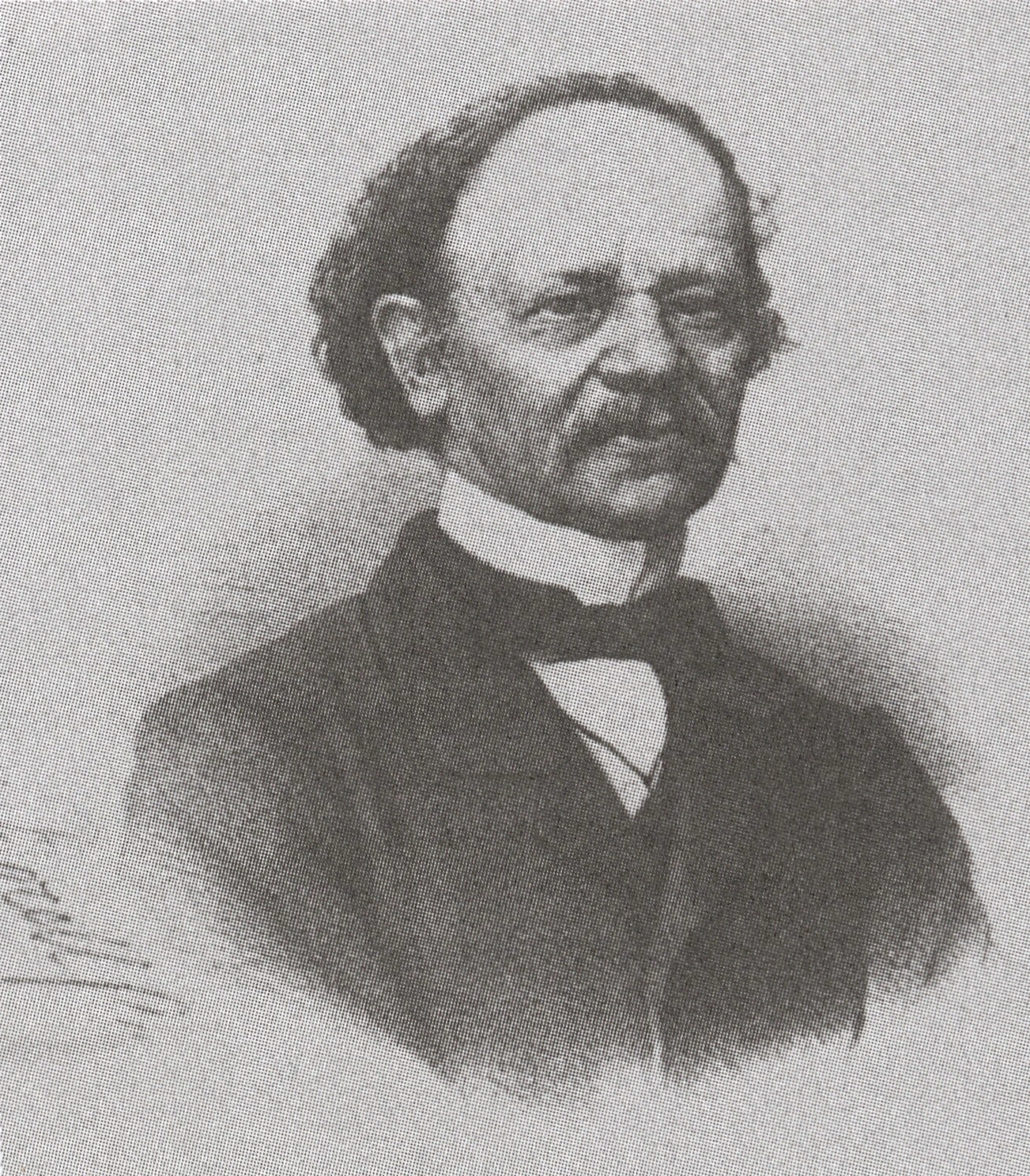
[Dedykacja Stanisława Moniuszki dla Aleksandra Dargomyżskiego]

Dargomyzhsky Alexander Sergeyevich, *14 (2) February 1813 Troitskoye (Tula Governorate), †17 (5) January 1869 Saint Petersburg, Russian composer. He was born into a family distinguished by literary and artistic interests. His father, Sergei Nikolayevich Dargomyzhsky, a graduate of the Institute of Nobility at Moscow University, published poetry and prose translations in his youth. His mother, Maria Borisovna (née Princess Kozlovskaya), was a poet and dramatist. Of Dargomyzhsky’s five siblings, his brother Erast, a violinist who died young, and his sisters Erminia and Lyudmila, both harpists, displayed notable musical talent. Dargomyzhsky spent his early childhood on the family estate of Tverdunovo in the Smolensk region, where he became acquainted with Russian folk song traditions. From 1818 he resided permanently in St. Petersburg. In accordance with his father’s wishes, he pursued a civil service career, rising from clerk (1827) to titular councilor (1843). His general education was provided by private tutors. He began his musical studies in 1819 with L. Wohlgeboren. From 1821 to 1828, he studied piano with A. T. Danilevsky, continuing his training from 1828 to 1831 under F. Schoberlechner. During this period, he also studied violin with P. G. Vorontsov and, as he later recalled in his autobiography, learned the “rules of vocal art” in classes with B. A. Zeibig, a tenor and director of a German opera troupe. In the early 1830s, Dargomyzhsky established a broad performing career in the leading literary and musical salons of St. Petersburg. He performed as a pianist (both soloist and accompanist), a tenor, and as a violinist and violist in string quartets. His earliest piano compositions, including the Valse brillante (published 1831), were written somewhat incidentally to his performing activities. Only after meeting M. Glinka (March–April 1835) did Dargomyzhsky abandon public performance and devote himself fully to composition, undertaking what he described in a letter to N. B. Golitsyn (13 May 1836) as “compositional attempts of all kinds.” He pursued intensive self-education in composition, drawing on Glinka’s notes from his studies with S. Dehn as well as Dehn’s theoretical writings. Although closely associated with Glinka, Dargomyzhsky sought an independent aesthetic direction. During this period, his outlook was strongly influenced by French Romanticism. The works of Victor Hugo were particularly significant and inspired several compositions: Lucrèce Borgia (1837), his first operatic project, later abandoned on Zhukovsky’s advice; Esmeralda (1838–41), a grand Romantic opera based on Hugo’s original libretto; the piano fantasy Le rêve de l’Esmeralda (published 1839), composed independently of the opera and based on the refrain of his earlier song O ma charmante (published 1836) to Hugo’s text; and the song Dieu, qui sourit (1846). Despite the publication of several piano works – including the Variations on a Folk Theme (1836) and Two Mazurkas (1840) – as well as an orchestral performance of the Bolero (1839), Dargomyzhsky was known primarily as a composer of vocal music. The growing popularity of his songs, set to texts by Delvig, Timofeev, Yazykov, and Pushkin and published individually from 1831 onward, prompted the publisher F. Lee to issue a collected edition of 30 romances and songs (five notebooks, 1843–44). Dargomyzhsky’s increasing engagement with Pushkin’s works is further reflected in the cantata Torzhestvo Bakha (performed 1846). In the autumn of 1844, he embarked on a journey to Berlin, Brussels, and Paris (October 1844–March 1845), returning via Vienna, Leipzig, and Warsaw (April 1845). As documented in surviving correspondence and entries in an autograph album, the purpose of this trip was to establish musical contacts and, in particular, to become acquainted with the works and leading representatives of contemporary grand opera, including Meyerbeer, Halévy, Auber, and Donizetti. In Brussels, Dargomyzhsky formed a close friendship with F. J. Fétis, who introduced him to local musical circles. Favourable articles about the composer appeared in L’Éclair and L’Émancipation, and Fétis also recommended him in a letter to M. Schlesinger published in the Parisian Revue et Gazette Musicale (1844, no. 52). In Paris, Dargomyzhsky met Victor Hugo and Hector Berlioz. Upon returning to St. Petersburg, he renewed efforts to stage Esmeralda and began collecting material for Rusalka, on which he worked for eleven years (1845–55). Work was interrupted during a period of depression, from which he was revived by the “brilliant and unexpected success” of a composer’s concert in St. Petersburg (9 April 1853), featuring Pauline Viardot and Maria Kalergis. Following the premiere of Rusalka (1856), Dargomyzhsky resumed organising musical evenings. He established close contacts with members of the “Mighty Handful” and with poets and satirists associated with the journal Iskra. The radical artistic and social views of these circles contributed to a reorientation of his aesthetic outlook. In songs to texts by V. Kurochkin, publisher of Iskra (Stary korporal, Chervyak), and P. Weinberg (Titulyarny sovetnik), composed in the spirit of the “Natural School,” he aligned himself decisively with artistic realism. With the founding of the Russian Musical Society (1859), Dargomyzhsky became one of its leading figures, serving first as a board member and, from 1867, as president of its St. Petersburg branch. In the autumn of 1864, he undertook a second journey abroad, visiting Warsaw, Berlin, Leipzig, Brussels, Paris, and London, and returning to St. Petersburg in May 1865. In 1866 he began work on the chamber opera The Stone Guest, based on Pushkin’s “Little Tragedy.” The innovative character of this work attracted the attention of composers of the “Mighty Handful,” who from the spring of 1868 attended Dargomyzhsky’s weekly musical soirées. At one such gathering (15 November), a rehearsal performance of The Stone Guest was given, with the composer singing the role of Don Juan, Mussorgsky as Leporello, A. Purgold as Laura and Donna Anna, K. Veliaminov as the Monk and the Commander, and N. Purgold at the piano. Progressive heart disease prevented the completion of the opera. In accordance with Dargomyzhsky’s wishes, it was finished and subsequently staged after his death by César Cui and Nikolai Rimsky-Korsakov (1872).
Dargomyzhsky maintained a long-standing friendship with Stanisław Moniuszko. They met in St. Petersburg (1849, 1856) and Warsaw (1864) and remained in correspondence, informing one another about their current works. Notably, Halka and Rusalka reveal a striking thematic affinity, while the song Stary kapral (“The Old Corporal”), composed independently by both composers, sets the same text by Pierre-Jean de Béranger. In Dargomyzhsky, Moniuszko found not only an “elder brother,” as he wrote to A. Iwański (1856), but also an active advocate of his music. Dargomyzhsky frequently included Moniuszko’s compositions – songs and the cantata Nijoła – in the programmes of his musical soirées. He also promoted Moniuszko’s work in print, publishing an article devoted to his music in the newspaper Sankt-Peterburgskie vedomosti.
To situate Dargomyzhsky merely within the Glinka tradition, or to assign him the role of an intermediary between the composer of Ivan Susanin and the members of the “Mighty Handful,” is to diminish the originality of his achievement and to invite misinterpretation. Such assessments were not uncommon among his contemporaries, including Tchaikovsky and Laroche. Even within Balakirev’s circle, which was generally sympathetic toward him, only a limited number of works – such as Paladin, the Eastern Aria (“O, deva rozy”), and The Stone Guest – met with unequivocal approval. A closer examination of Dargomyzhsky’s music reveals less what he shares with Glinka than what distinguishes him from him: a critical and analytical disposition, a pronounced experimental impulse, a preference for dramatic tension and expressive detail, and a striving toward musical realism. Above all, his music is characterised by an exceptional sensitivity to the precise correspondence between word and sound – a principle he ultimately formulated as his artistic credo: “I want the sound to express the word directly; I want truth” (letter to L. Belenitsina, 9 December 1857). Having embraced the primacy of the vocal element, Dargomyzhsky devoted comparatively little attention to instrumental composition. His piano works were largely occasional and consisted mainly of dance forms of a semi-functional character (waltzes, mazurkas, polkas, contredanses, quadrilles). Only in a small number of compositions did he engage with large-scale form and Romantic pianistic texture, notably in works based on folk material, such as the Variations on ‘Vinyat menya v narode’, and on national themes, as in the Fantasia on Themes from Glinka’s Opera “Ivan Susanin”. A more programmatic approach appears in the piano fantasy Le rêve de l’Esmeralda, inspired by the dialogue between Esmeralda and Gringoire in Victor Hugo’s novel Notre-Dame de Paris. He returned to the idea of instrumental dialogue in the scherzo Pylkost’ i khladnokrovie (“Ardour and Composure”), which seeks to portray a conversation – as indicated by its subtitle – “written from nature.” In his orchestral works, Dargomyzhsky drew upon the model of the “Russian scherzo” established by Glinka in Kamarinskaya, intensifying its folkloric orientation and characteristic colour. He incorporated diverse ethnic elements – Russian (Baba-Yaga), Ukrainian (Malorossiysky kazachok), and Karelian (Chukhonskaya fantaziya) – while enriching them with vivid orchestral effects. Dargomyzhsky found his fullest artistic expression in vocal music, in his operas and more than 100 songs. These works clearly trace his creative evolution: from early lyrical pieces in the manner of Glinka (Ya vas lyubil) and Varlamov (Tuczki Niebiesnyje) to mature achievements of musical realism, including the distinctly Gogolian scene-songs Titulyarny sovetnik (“The Titular Councillor”) and Chervyak (“The Worm”), as well as the dramatic songs Stary kapral (“The Old Corporal”) and Paladin. A decisive turning point was Melnik (“The Miller”), to a text by Pushkin – a scene-song combining a comic situation, sharply drawn characters, and an ironic punchline delivered through a piano cadenza. Elements of genre dramatisation had already appeared in earlier works (Slyozy and Nochnoy zefir), but in Melnik, coloured by the intonation of Russian speech and folk song (cf. Po ulitse mostovoy), Dargomyzhsky for the first time drew consciously on expressive devices derived from Russian stage performance practice. These techniques were later employed to heighten comic or dramatic effect. Two- or three-part choral interjections, notated on an additional staff, also serve theatrical purposes. Although these passages have no independent performance function, they contribute significantly to scenic characterization. In Stary kapral, for example, the choral element is realised by the pianist; yet it plays a crucial structural role in completing the dramatic situation. The protagonist’s vocal line, interrupted mid-word by a gunshot, is continued by a “chorus of comrades,” thereby intensifying the realism of the scene. Other instances of choral participation in solo songs draw on folk traditions, such as the ritual procession (Dushechka) and the feast song (Stolnaya pesnya). A comparable dramatisation of lyrical form appears in several vocal duets and trios. These include stylised folk-entertainment scenes (the duet Devitsa i krasavitsa) as well as works approaching operatic dialogue (the trios Skazhi, chto ty tak zadumchiv?). Dargomyzhsky engaged with virtually every major genre and stylistic type of Russian vocal lyric. He drew upon the Gypsy romance (Ne skazhu nikomu), the salon romance (La sincère; Golubye glaza), the so-called “Russian song” (Bez uma; Oy, tikh, tikh), and authentic folk song (Likhoradushka). He cultivated the lyrical monologue (Mne grustno), the elegy (Ona pridyot), the serenade (Odelas’ tumanami S’yera-Nevada), and the ballad – which he sometimes designated as a “fantasy” (Svad’ba). Alongside native stylistic elements, Dargomyzhsky incorporated foreign colouration. These include Spanish influences (Ispansky romans), Polish elements (O, milya deva, a vocal mazurka to the poem Rozmowa by Adam Mickiewicz), and oriental idioms – whether of specific ethnic provenance (Lezginskaya pesnya) or more freely stylized (Vostochny romans; O, deva rozy).
Dargomyzhsky was more a realist than a melodist. While preserving the natural inflection of the vocal line, he frequently adopted a recitative-like style. The piano part is shaped in close accordance with the poetic motivation and psychological subtext of the text. His compositional focus lies primarily in the delineation of a dramatic situation or in the vivid visualisation of an image (as in Vertograd). He relied on comparatively simple means of musical expression and characterisation, occasionally employing stylised or intentionally conventional formulae (Skroy menya, burnaya noch’), sharp contrasts, and emphatic, concise harmonic-rhythmic gestures (notably in Paladin) as well as exotic colour through the use of whole-tone (Vostochny romans).
Dargomyzhsky’s operas, composed at different stages of his career, reflect distinct aesthetic orientations. Esmeralda arose from his fascination with French grand opéra; yet he was drawn less to its decorative spectacle than to the psychological substance of dramatic conflict. Although he later judged the score to be stylistically heterogeneous and “banal, as is often the case with Halévy and Meyerbeer,” he acknowledged that in scenes of heightened tension “a language of power and truth had already emerged,” one he subsequently sought to cultivate in vocal works set to Russian texts (letter to L. Belenitsina, 30 November 1859). In Rusalka, Dargomyzhsky articulated his conception of realistic opera. While retaining certain features of Romantic opera — elements of fantasy and ballet episodes — he concentrated primarily on the psychological drama of the central characters (Natasha and the Miller), enriching their portrayal through the incorporation of folk texts and songs. The integration of folk material, genre scenes (notably the choruses in Acts I and II), and dynamically shaped recitative disrupted the conventions of closed vocal numbers and traditional “number opera.” Arias, ariosos, and recitative passages alike are permeated by speech-derived intonation — a defining feature that reaches full maturity in his final work, the psychological drama The Stone Guest. Dargomyzhsky conceived The Stone Guest independently of Wagner’s operatic theories. He foregrounded the vocal dimension and allowed monologues and dialogues to unfold freely through an advanced recitative technique. Concessions to closed forms occur only in two of Laura’s songs in Act I (Odelas’ tumanom Granada and Ya zdes’, Inesilya) and in the duet of Act II (Veshchak k luchshemu). The orchestra is entirely subordinated to the requirements of vocal declamation and concise dramatic characterization, employing devices such as leitmotivic reference, whole-tone formations, augmented triads, and harmonically flexible procedures. The opera initially provoked bewilderment. Tchaikovsky described it as “a pathetic miscarriage of a bold talent” (Russkie vedomosti, 1873, no. 198). Within Balakirev’s circle, however, Dargomyzhsky’s experiment aroused sustained interest and directly influenced Mussorgsky’s Zhenit’ba (The Marriage) and Rimsky-Korsakov’s Mozart i Salieri. The principles of “musical truth” that Dargomyzhsky developed — particularly in his vocal works, though also in his orchestral compositions — were assimilated by numerous Russian composers. Tchaikovsky’s Suite No. 2 includes a finale explicitly subtitled “in the style of Dargomyzhsky.” His music also attracted attention abroad, prompting transcriptions and arrangements by Liszt (Slavyanskaya tarantella), Adolph Henselt (Ya v derevne), Theodor Kullak (Mne grustno), and Charles-Auguste de Bériot (Dushechka). Yet perhaps no composer grasped the full significance of Dargomyzhsky’s achievement more profoundly than Mussorgsky, who, in dedicating two of his songs (Eryomushka’s Lullaby and S nyaney), hailed him as “the great teacher of musical truth.”
Writings and letters:
O muzykie polskogo kompozitora g. S. Moniuszko, “Sanktpeterburgskie vedomosti,”1861, No. 241; Autobiography (1864), “Nuvellist” 1866 No. 6, “Muzyka i teatr” 1867 No. 9, “Russkaja starina” 1875 Nos 2–7 (ed. W. Stasov), “Artist” 1894 No. 35, 37, 39; Awtobiografija, pisma, vospominanija sovremennikov, ed. N. Findeizen, St. Petersburg 1921, 2nd ed. 1922; Izbrannye pisma, ed. M. Piekielis, Moscow 1952; Pisma Dargomyzskogo Stanislawu Moniuszko, ed. M. Piekielis, “Sovetskaja muzyka” 1963 No. 2.
Literature:
A. Serov “Rusalka”, opera A.S. Dargomyzhskogo, “Muzykalnyj i teatralnyj vestnik” 1856 No. 24, 26, 28, 32–34, 36–39, also in: Izbrannye stat’i, vol. 1, Mocow 1950; C. Cui ‘Kamennyi gost’ Pushkina i Dargomyzhskogo, “Sanktpeterburgskie vedomosti” 1872 No. 55, also in: Izbrannye stat’i, vol. 1, Leningrad 1952; P. Trifonov A. S. Dargomyzhskij po ego avtobiografii, pis’mam i proizvedenijam, “Vestnik Evropy” 1886 vol. 11–12; S. Bazunov A. S. Dargomyzhskij, ego zhizn’ i muzykal’naja dejatel’nost’, St Petersburg, 1894. I. Korzukhin, A. S. Dargomyzhskij, Artist, 1894, nos. 33–34, 36, 38. N. Findeizen, A. S. Dargomyzhskij, Moscow, 1904. G. Timofeev, A. S. Dargomyzhskij, ego sem’ja, ego pervye shagi na kompozitorskom poprishche, “Muzykalnyj sovremennik”, 1917, vols. 7–8. C. Cui, “Rusalka,” opera Dargomyzhskogo, in: Muzykal’no-kriticheskie stat’i, vol. 1, St Petersburg, 1918. A. N. Drozdov, Aleksandr Sergeevich Dargomyzhskij, Moscow, 1929. Z. Ewald, Romansy Dargomyzhskogo, in: Russkij romans, opyt intonatsionnogo analiza, ed. B. Asaf’ev, Moscow, 1930. I. A. Martynov, A. S. Dargomyzhskij, Moscow–Leningrad, 1944. M. Piekelis, Dargomyzhskij i narodnaja pesnja, Moscow, 1951. I. Belza, List S. Moniuszki do A. S. Dargomyzhskogo, “Muzyka”, 1954, nos. 5–6. S. I. Shlifshtein, Dargomyzhskij, 3rd rev. and enl. ed., Moscow, 1960. M. Piekelis, A. S. Dargomyzhskij i ego okruzhenie, 2 vols., Moscow, 1966–73. G. R. Seaman, History of Russian Music, vol. 1: From its Origins to Dargomyzhsky, New York, 1967. G. Maszewski, O nekotorykh chertakh vyrazitel’nosti vokal’nogo pis’ma A. S. Dargomyzhskogo, in: “Voprosy teorii i estetiki muzyki,” vol. 8, ed. J. Kremlev, Leningrad, 1968. R. Allorto, A. S. Dargomyski e la conquista del recitativo melodico, Chigiana, vols. XXVI–XXVII, 1969–70. R. Taruskin, Realism as Preached and Practiced: The Russian Opera Dialogue, “The Musical Quarterly,” vol. LVI, 1970. A. Kandinsky, A. S. Dargomyzhskij, in: Istorija russkoj muzyki, collective work, vol. 1, Moscow, 1972. J. Baker, Dargomyzhsky, Realism and “The Stone Guest,” “The Music Review”, vol. XXXVII, 1976. A. Kandinsky, Russkaja klassika v Bol’shom teatre SSSR, Sovetskaja muzyka, 1977, no. 7 (including Rusalka and Kamennyi gost). F. Monfort, Quelques mots au sujet du personnage de “Don Juan” et de l’opéra “L’hôte de pierre” de Dargomysky, “Bulletin de la Société liégeoise de musicologie,” vol. XXVII, 1979.
R. Taruskin, Opera and Drama in Russia: As Preached and Practiced in the 1860s, Rochester (New York), 1981. M. Piekelis, A. S. Dargomyzhskij i ego okruzhenie, vol. 3, Moscow, 1983. L. M. Tarasov, Dargomyzhskij v Peterburge, Leningrad, 1988. I. A. Medvedeva, Aleksandr Sergeevich Dargomyzhskij (1813–1869), Moscow, 1989. B. Dissinger, Die Opern von Aleksandr Dargomyzskij, Frankfurt am Main, 2001. P. E. Thies Ivezić, Alexander Sergeyevich Dargomyzhsky 1813–1869: A Study of His Solo Vocal Works, Ann Arbor (Michigan), 2005. G. O. Ganzburg, Stikhotvorenie A. S. Pushkina “19 oktjabrja 1827” i traktovka ego smysla v muzyke A. S. Dargomyzhskogo, Kharkov, 2007. N. V. Samokhodkina, Opernyj stil’ A. S. Dargomyzhskogo: Uchebnoe posobie, Rostov-na-Donu, 2010. R. Taruskin, Dargomyzhsky and His “Stone Guest,” in: On Russian Music, Berkeley (California), 2009. E. A. Ruchevskaja, L. V. Sukhova, V. V. Goriachikh, Pushkin v russkoj opere. “Kamennyi gost” Dargomyzhskogo. “Zolotoj petushok” Rimskogo-Korsakova. Sbornik statej, ed. N. I. Kuz’mina, St Petersburg, 2012. A. N. Pugachev, Smolenshchina v zhizni i tvorcheskoj biografii A. S. Dargomyzhskogo, Smolensk, 2013.
Dargomyzhskij, Wagner, Verdi: Velikie sovremenniki. Sbornik statej k 200-letnemu jubileju kompozitorov, ed. T. Z. Skvirskaja, St Petersburg, 2014. A. M. Tsuker, Dramaturgija Pushkina v russkoj opernoj klassike, 2nd ed., Moscow, 2015. V. V. Goriachikh, A. S. Dargomyzhskij. Opery. Simfonicheskoe tvorchestvo: istoriko-analiticheskij ocherk, St Petersburg, 2016. N. Ogarkova, A. S. Dargomyzhskij o “slave,” “iskusstve,” “vdokhnovenii” v pis’makh k L. I. Karmalinoj, “Opera musicologica,” vol. XXXVII, no. 3 (2018), pp. 73–84. K. Zikanov, Satire, Empire and Chromaticism in Dargomyzhsky’s Orchestral Fantasias, “Journal of the Royal Musical Association,” vol. CXLV, no. 2 (2020), pp. 265–316. I. V. Stepanova, Estetika Dargomyzhskogo: tradicionnyj podkhod s netradicionnymi vyvodami, “Muzykal’naja Akademija,” no. 4 (Moscow, 2020). M. Frainier, A Tale of Three Rusalkas: Krasnopol’sky, Pushkin, and Dargomyzhsky, 19th Century Music, vol. XLV, no. 2 (2021), pp. 157–182.
Compositions:
Instrumental:
for orchestra:
Bolero for orchestra, 1839, performed in St Petersburg (Pavlovsk) summer 1839, piano reduction, St Petersburg 1839 Heyde, score, in: Works for Symphony Orchestra, ed. M. Piekielis, Moscow 1967 Muzgiz
Baba-Yaga, or From the Volga to Riga, fantasy for orchestra, 1862, first performed St Petersburg 31 January 1870; published full score and piano reduction for 4 hands, St St Petersburg, Bessel
Little Russian Cossack Dance (Malorossiisky kazachok), fantasy for orchestra, 1864, first performed Brussels 26 December 1864; published full score and piano reduction for 4 hands by P. Tchaikovsky, Moscow 1868, Jurgenson
Chukhon Fantasy (Chukhonskaya fantaziya) for orchestra, 1863–67, first performed St Petersburg 6 March 1869; published full score and piano reduction for 4 hands, St St Petersburg, Bessel
for piano:
Marche, Française (contredans), Valse mélancolique, Valse, Cosaque, for piano, 1823–24; Valse mélancolique published in the series “Soirées musicales. Choix de différents danses”, c. 1839
Valse brillante for piano, c. 1829–30, published in Musical Album, St Petersburg 1831 Richter
Variations sur l’air russe “Vinyat menya v narode” for piano, c. 1835 (?), St Petersburg 1836 L. Sniegiriev
Le rêve de la Esméralda, fantasy for piano, 1838, published in: Collection of Musical Songs, book 2, ed. M. Glinka, 1839
Deux nouvelles mazurkas for piano, c. 1838, published in St Petersburg 1840 Petz
La poste, quadrille français for piano, ca. 1840, published in St Petersburg c. 1840 Ménestrel
Scherzo for piano, c. 1843, published in St Petersburg 1844 Ménestrel
Polka for piano, 1844 (?), published in St Petersburg 1844 Haase
“Snuffbox” Waltz (Tabakerochny waltz) for piano, 1845, published in St Petersburg 1846 Echo Musical
Impetuosity and Self-possession (Pylkost’ i khladnokrovie), scherzo for piano, c. 1846, in the album L’estafette musicale, St Petersburg 1847 E. Lee
Song without Words for piano, c. 1849, published in: Musical Collection in Memory of A. Varlamov, St Petersburg 1851 Bernard
Fantasy on Themes from the Opera “Ivan Susanin” by M.I. Glinka for piano, c. 1852–53, published in St Petersburg c. 1854–55 Stellovsky
Slavic Tarantella for 3 (4) hands (“for playing four hands with those who cannot play at all”), 1864/65, published in St Petersburg 1866 Bernard, arrangement for 2 hands as Tarantella by A. Dargomyzhsky, transcribed and amplified by F. Liszt, Moscow 1880 Jurgenson
arrangements of dances from Esmeralda (Galop, March, Polka-Mazurka, Mazurka) and the song Ty i vy
Vocal:
for unaccompanied choir:
Petersburg Serenades for choir a cappella, c. 1845–50, nos. 1–9 published 1850, complete c. 1852:
Vocal-instrumental:
for voice and piano:
Baju, bajushki baju, lullaby for voice and piano, text M. B. Dargomyzhskaya (?), c. 1830, published in St Petersburg 1843 Lee
Ty khoroshen’kaya for voice and piano, c. 1830, published in St Petersburg 1843 Lee
Privet for voice and piano, text I. Kozlov after Byron, published in St Petersburg 1843 Lee
Golubyye glaza for voice and piano, text V. Tumansky, after 1830, published in St Petersburg 1843 Lee
Tolko uznal ya tebya for voice and piano, text A A. Delvig, c. 1834–35, in: Collection of the Newest Romances, St Petersburg 1836, Sniegiriev
V tyomnu nochku, v chistom pole for voice and piano, text M. B. Dargomyzhskaya, c. 1835, published in St Petersburg 1836/37 Sniegiriev
Moi suzhony, moi ryazheny, ballad for voice and piano, text A. Delvig, c. 1835, St Petersburg 1843, Lee
Lezginskaya pesnya for voice and piano, after 1835, in: Collection of Musical Songs, book 1, ed. M. Glinka, St Petersburg 1839, Davignon
The Wedding, fantasy for voice and piano, text A. Timofeyev, after 1835, St Petersburg 1843, Lee
Kayus’, dyadya, chort poputal for voice and piano, text A. Timofeyev, after 1835, St Petersburg 1843, Lee
O ma charmante for voice and piano, text V. Hugo, 1836, St Petersburg 1836, Davignon
Vladyko dnei moikh, prayer for voice and piano, text A. Pushkin, after 1837, St Petersburg 1843, Lee; 2nd version for 2 voices and piano, 1860, St Petersburg 1860, Bernard; 3rd version for 4 voices and piano, 1860, Moscow 1885, Jurgenson
Baba staraya for voice and piano, text A. Timofeyev, after 1838, St Petersburg 1843, Lee
La sincère, concert waltz for voice and piano, text M. Desbordes-Valmore, 1838–39, in: Collection of Musical Songs, book 3, ed. M. Glinka, 1839
Odelaś tumanami Sierra-Nevada, bolero for voice and piano, text V. Shirkov, c. 1839–40, St Petersburg 1843, Lee
Vlyublen ya, deva-krasota for voice and piano, text N. Yazykov, c. 1840, St Petersburg 1843, Lee
Thou and You (Ty i vy) for voice and piano, text A. Pushkin, c. 1840, St Petersburg 1844, Lee; piano arrangement by Dargomyzhsky, 1854; 2nd version for 2 voices and piano, Moscow 1848, Jurgenson
Ne sprashyvaj, zachem, elegy for voice and piano, text A. Pushkin, c. 1840, St Petersburg 1844, Lee
Nochnoy zefir for voice and piano, text A. Pushkin, c. 1840, St Petersburg 1844, Lee
V krovi gorit ogon zhelaniya for voice and piano, text A. Pushkin, after 1840, St Petersburg 1844, Lee
Shestnadtsat’ let for voice and piano, text A. Delvig, after 1840, St Petersburg 1844, Lee
Yunosha i deva for voice and piano, text A. Pushkin, after 1840, St Petersburg 1844, Lee
Ballad from the Drama “Catherine Howard” for voice and piano, text A. Dumas, after 1840, in: Complete Collection of Romances and Songs, ed. M. Piekelis, Moscow 1947, Muzgiz
O, schastlivitsa ty, roza / Vanne, o rosa fortunata for voice and piano, text M. and E. Burnashev (after Italian), after 1840, published after 1850, Ménestrel
Kak mila eyo golovka for voice and piano, text V. Tumansky, c. 1839–41, St Petersburg 1841, Heyde
Ona pridyot, elegy for voice and piano, text N. Yazykov, St Petersburg 1843, Lee; 2nd version with piano and viola or cello, St Petersburg 1861, Bernard
Ya vas lyubil for voice and piano, text A. Pushkin, c. 1841, St Petersburg 1843, Lee
Vertograd, oriental romance for voice and piano, text A. Pushkin, c. 1840–42, St Petersburg 1843, Lee
Ya umirayu ot schast’ya for voice and piano, after L. Uhland’s Seliger Tod, c. 1840–42, St Petersburg 1843, Lee
V minutu zhizni trudnuyu, prayer for voice and piano, text M. Lermontov, 1840–42, St Petersburg 1844, Lee
Tuchki nebesnye for voice and piano, text M. Lermontov, 1841–42, St Petersburg 1844, Lee
Skroy menya, burnaya noch’ for voice and piano, text A. Delvig, 1842, St Petersburg 1843, Lee
Lileta for voice and piano, text A. Delvig, 1842 (?), St Petersburg 1844, Lee
Ne sudite, lyudi dobrye for voice and piano, text A. Koltsov, 1843 (?), Moscow 1844, Müller
Starina for voice and piano, text A. Timofeyev, c. 1845, St Petersburg c. 1855, Stellovsky
Ty skoro menya pozabudesh’ for voice and piano, text Y. Zhadovskaya, 1846, St Petersburg 1847, Lee
Dieu, qui sourit for voice and piano, text V. Hugo, 1846, published in: Complete Collection of Musical Romances and Songs, ed. M. Piekelis, Moscow 1947, Muzgiz
I skuchno, i grustno for voice and piano, text M. Lermontov, 1847, St Petersburg 1847, Lee
Ya skazala, zachem for voice and piano, text E. Rostopchina, 1847/48, St Petersburg 1849, Bernard
Ne nazyvay yeyo nebesnoy for voice and piano, text N. Pavlov, 1848, in: Musical Album with Caricatures, St Petersburg 1848, Bernard
Mne grustno for voice and piano, text M. Lermontov, 1848 (?), St Petersburg 1849, Bernard; arranged for piano by T. Kullak, St Petersburg 1852, Bernard
Slyshu li golos tvoi for voice and piano, text M. Lermontov, 1848–49, published in “Nuvellist” 1849 no. 10
Ne skazhu nikomu for voice and piano, text A. Koltsov, 1849–50, St Petersburg 1851, Bernard; piano arrangement by A. Dubuque, c. 1870, Bernard
Dushechka devitsa for voice and piano, folk text, 1849–50, St Petersburg 1851, Bernard; piano arrangement by A. Dubuque, c. 1870, Bernard; arrangement for violin and piano by Ch. Bériot, Fantaisie op. 115, Moscow n.d., Jurgenson
Dayte krylya mne for voice and piano, text E. Rostopchin, 1849–50, St Petersburg 1851, Bernard
Au bal for voice and piano, text de Wiers, c. 1850, St Petersburg 1856, Brandus
Zastolnaya pesnya for voice and piano, text A. Delvig, after 1850, St Petersburg 1852, Bernard
Oy, tikh, tikh for voice and piano, text A. Koltsov, after 1850, St Petersburg 1852, Bernard
Ya zateplu svechu for voice and piano, text A. Koltsov, after 1850, St Petersburg c. 1852, Bitner
Kamen tyazholy for voice and piano, text E…, c. St Petersburg 1855, Musée Musical; 2nd version for 2 voices and piano, c. 1860–63, St Petersburg 1863, Bernard
O, milaya deva, Polish romance for voice and piano, text after a Conversation by A. Mickiewicz, after 1850, St Petersburg 1856, Stellovsky, Bernard
Lübila, lyublyu ya, vek budu lyubit’ for voice and piano, after 1850, St Petersburg 1856, Bitner
Moya milaya, moya dushechka for voice and piano, text D. Davydov, after 1850, St Petersburg 1856, Stellovsky
Bez uma, bez razuma for voice and piano, text A. Koltsov, after 1850, St Petersburg 1856, Stellovsky
Jamais for voice and piano, after 1850, St Petersburg 1856, Stellovsky
Likhoradushka, comic song for voice and piano, folk text, 1849–51, St Petersburg 1851, Stellovsky
Melnik for voice and piano, text A. Pushkin, 1850–51, St Petersburg 1851, Stellovsky
Bog pomoch vam for voice and piano, text A. Pushkin, 1850–51, St Petersburg 1851, Stellovsky
Mechty, mechty for voice and piano, text N. Pushkin, 1850–51, St Petersburg 1851, Stellovsky
K druz’yam for voice and piano, text A. Pushkin, 1850–51, St Petersburg 1851, Stellovsky; 2nd version for 2 voices and piano, 1858
Potseluy for voice and piano, text E. Baratynsky, 1850–51, St Petersburg 1851, Stellovsky
Bushuy i volnuysya, glubokoye more for voice and piano, text E. Rostopchin, 1850–51, St Petersburg 1851, Stellovsky
K slave for voice and piano, text P. Obleukhov, 1850–51, St Petersburg 1851, Bernard
Ya vsyo yeshchyo yego lyublyu for voice and piano, text Y. Zhadovskaya, 1851, St Petersburg 1851, Stellovsky; piano arrangement by A. Henselt, St Petersburg 1855, Stellovsky
Kudri for voice and piano, text A. Delvig, 1852, St Petersburg 1852, Bernard
Vostochny romans for voice and piano, text A. Pushkin, 1852, St Petersburg 1852, Bernard
Epitafiya for voice and piano, text A. Delvig, 1852, St Petersburg 1861, Bernard; 2nd version Nad mogiloy for 4 voices and piano, 1860, Moscow 1885, Jurgenson
Ya pomnyu, gluboko, elegy for voice and piano, text D. Davydov, c. 1855, St Petersburg 1856, Bitner
Ispansky romans for voice and piano, text A. Dargomyzhsky (?), c. 1855, St Petersburg 1856, Bitner
U nego li rusy kudri, gypsy song for voice and piano, c. 1855, St Petersburg 1857, Bernard
Chto mne do pesen for voice and piano, c. 1855, St Petersburg 1858, Bernard; 2nd version for 2 voices and piano, 1857
Rusaya golovka for voice and piano, text Y. Polonsky, 1855–57, St Petersburg 1857, Bernard
Kak chasto slushayu for voice and piano, text Y. Zhadovskaya, 1857, St Petersburg 1857, Bernard
Stary kapral, dramatic song for voice and piano, text V. Kurochkin after P. J. de Béranger, 1857/58, St Petersburg 1858, Bernard
Chervyak, comic song for voice and piano, text V. Kurochkin after P. J. de Béranger, 1858, St Petersburg 1858, Bernard
O, deva roza, ya v okovakh, oriental aria for voice and piano, text A. Pushkin, 1858, St Petersburg 1858, Stellovsky; orchestrated by M. Balakirev 1858, manuscript
Rasstalis’ gorde my for voice and piano, text V. Kurochkin, 1859, St Petersburg 1859, Bernard
Chto v imeni tebe moyom for voice and piano, text A. Pushkin, 1859, St Petersburg 1859, Bernard
Mne vsyo ravno for voice and piano, text F. Miller, 1859, St Petersburg 1859, Bernard
Paladin, ballad for voice and piano, text V. Zhukovsky after L. Uhland, 1859, St Petersburg 1859, Bernard
Titulyarny sovetnik for voice and piano, text P. Weinberg, 1859, St Petersburg 1859, Bernard
Mchti menya v tvoi ob’yatiya for voice and piano, text V. Kurochkin, 1859, St Petersburg 1860, Bernard
Pesn’ rybki for voice and piano, text M. Lermontov, 1860, St Petersburg 1861, Bernard
Ty vsya polna ocharovaniya, recitative for voice and piano, text N. Yazykov, 1860, St Petersburg 1861, Bernard
Kolыbel’naya pesnya for voice and piano, text M. Ya., 1860 (?), St Petersburg 1861, Bernard
Charuy menya, charuy for voice and piano, text Y. Zhadovskaya, 1861, St Petersburg 1861, Bernard
Yeshchyo molitva for voice and piano, text Y. Zhadovskaya, 1861, St Petersburg 1861, Bernard
Ty ne ver’, molodets for voice and piano, 1863, in: Complete Collection of Musical Romances and Songs, ed. M. Piekelis, Moscow 1947, Muzgiz
Na razdol’e nebes for voice and piano, text N. Shchebrina, 1865/66, St Petersburg 1866, Bernard
Nozhki for voice and piano, text A. Pushkin, 1865–66, St Petersburg 1866, Bernard
Vy ne sbylis’ for voice and piano, text N. Yazykov, 1865–66, St Petersburg 1866, Bernard
for voices and piano:
Deva i roza, duet, text A. Delvig, c. 1835, Moscow 1843, Jurgenson
Rytzari, duet, text A. Pushkin, 1842, Moscow 1844, Jurgenson
Chto, moy svetik, luna, text P. Vyazemsky, 1840–44, Moscow 1844, Jurgenson
Devitsy-krasavitsy, duet, text A. Pushkin, 1844–45, Moscow 1849, Jurgenson
Nenaglyadnaya ty, 1848–49, Moscow 1849, Jurgenson
Esli vstretchus’ s toboy, duet, text A. Koltsov, 1848–49, Moscow 1849, Jurgenson
Minuvshikh dney ocharovaniya, duet, text A. Delvig, 1850–52, Moscow 1852, Jurgenson
Skazhi, chto tak zadumchiv ty, trio, text V. Zhukovsky, 1851–52, Moscow 1852, Gutheil
Nochevala tuchka zolotaya, trio, text M. Lermontov, c. 1855, Moscow 1856, Gutheil
Schastliv, kto ot khlada let, duet, text V. Zhukovsky, c. 1855, Moscow 1857, Jurgenson
Ne trite glaza, trio, text ?, c. 1856–65, in “Musical Review” 1887 no. 26
Scenic:
Esmeralda, opera in 4 acts, libretto by V. Hugo after the novel Notre-Dame de Paris (adapted for L. Bertin), first performed Moscow 5 December 1847, St Petersburg 29 November 1851; published piano reduction, Moscow 1961, Muzgiz
The Triumph of Bacchus (Torzhestvo Bakha), one-act lyrical opera-ballet, libretto A. Pushkin, 1848, first performed Moscow 11 January 1867; piano reduction, St Petersburg 1867, Bernard; new edition Moscow 1969, “Muzyka”; first version as a cantata for soloists, choir and orchestra, 1843–46, performed Moscow 22 March 1846
Rusalka, opera in 4 acts, libretto by Dargomyzhsky after A. Pushkin, 1845–55, first performed St Petersburg 4 May 1856, Moscow 26 October 1865; piano reduction, St Petersburg 1857–58, Stellovsky; new edition Moscow 1960; full score, Moscow 1949, Muzgiz
The Stone Guest (Kamenny gost’), comic opera in 3 acts, libretto A. Pushkin, 1866–69: first version edited by C. Cui and N. Rimsky-Korsakov, first performed St Petersburg 16 February 1872; piano reduction, St Petersburg 1872, Bessel; full score, Leningrad 1929; second version by N. Rimsky-Korsakov, 1897, 1902, first performed Moscow 19 December 1906; piano reduction, St Petersburg 1906, Bessel
Editions:
Complete Collection of Romances and Songs, 2 vols., ed. M. Piekelis, Moscow 1947
Complete Collection of Vocal Ensembles and Choruses, ed. M. Piekelis, Moscow 1950
Collection of Works for Piano, ed. M. Piekelis, Moscow 1954
Works for Symphony Orchestra, ed. M. Piekelis, Moscow 1967