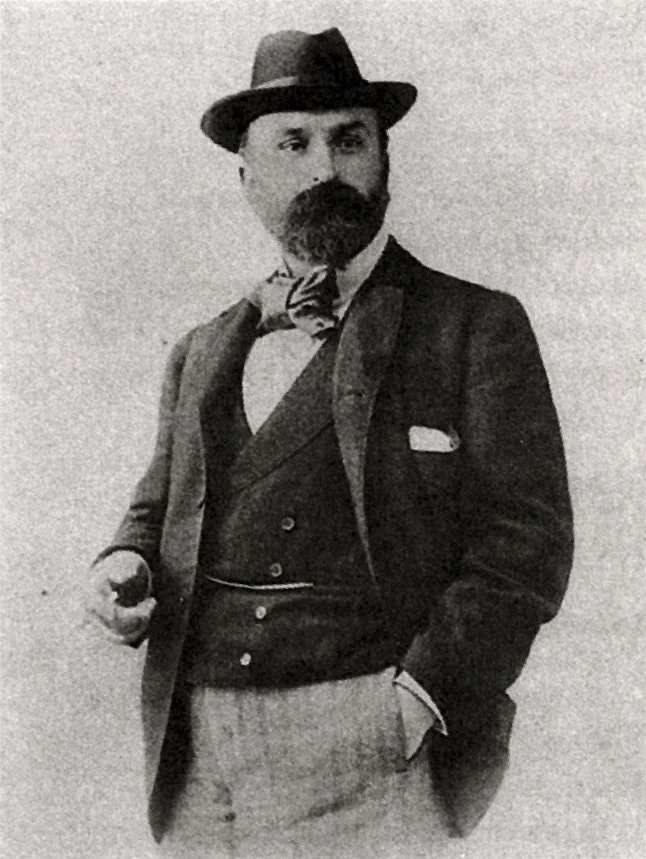
Chausson Ernest Amédée, *20 January 1855 Paris, †10 June 1899 Limay near Mantes, French composer. He was the son of Prosper Chausson, a wealthy building contractor who participated in Haussmann’s reconstruction of Paris. Born into affluence, he received no formal schooling, instead being educated by a private tutor, L. Brethous-Lafargue, who sparked his interest in the arts. Chausson grew up surrounded by adults, which had a significant influence on the development of his personality. At the age of about 15, he began learning to play the piano with C. Coster. At the same time, Brethous-Lafargue introduced him to Parisian salons, including those of Madame Jobert and Madame Saint-Cyr de Rayssac, where he encountered prominent figures in the world of art: H. Fantin-Latour, O. Redon and others, as well as the young V. d’Indy. He also deepened his musical knowledge here, learning about the works of outstanding composers.
A man of many talents, he dabbled in painting, literature and music, remaining undecided about which artistic path to follow. After studying law at the University of Paris due to pressure from his family, he was admitted to the bar in 1877, but never practised as a lawyer. Encouraged by Madame de Rayssac, he finally decided to devote himself to music. In 1877, he composed his first song, Les lilas, followed the next year by further songs and two sonatinas for piano four hands. In October 1879, he became a student of J. Massenet’s instrumentation class at the Paris Conservatoire and soon also a student of C. Franck. In 1881, he unsuccessfully participated in the Grand Prix de Rome, for which he composed the cantata L’Arabe. In June 1881, he dropped out of the Conservatoire, but remained Franck’s student until 1883. He belonged to the so-called La bande à Franck, which included H. Duparc, V. d’Indy, Ch. Bordes, J.G. Ropartz, G. Lekeu and P. de Bréville. From 1879, he travelled several times to Munich and Bayreuth to attend Wagner’s operas, which made a strong impression on him and were of significant importance for the further development of his work. On 20 June 1883, he married pianist Jeanne Escudier; they had five children. Chausson’s home in Paris became a meeting place for the artistic elite of the time, including painters, poets and musicians. The premieres of many composers’ works took place there. In 1886, Chausson became secretary of the Société Nationale de Musique and remained in this position until his death. He was an active promoter of young composers, including Debussy, with whom he shared a close friendship, as he did with Albéniz. Through the latter’s support, Chausson saw Poème, Op. 25, published by Breitkopf in 1898, and his Symphony in B-flat major performed in Paris for the first time outside the Société Nationale de Musique, by the Berlin Philharmonic under A. Nikisch in 1897. Starting in 1882, most of Chausson’s premiere performances took place at concerts organised by the Société Nationale. They were generally met with a lukewarm reception from Parisian critics. The premiere of the Concerto in D major, Op. 21, with E. Ysaÿe in Brussels in 1892 brought Chausson his first great success as a composer. In Paris, the composer did not receive favourable reviews from critics not directly associated with the Société Nationale until 1897, after the performance of Poème, Op. 25, also by Ysaÿe. Chausson travelled extensively throughout France and abroad. He visited Germany, Switzerland and Italy (1891, 1895, 1897), and travelled to Brussels several times in connection with performances of his works. In 1896, he stayed in Barcelona, where on 31 October he conducted his Symphony at one of the concerts devoted to French music. In 1897, he travelled to Prague in connection with the planned staging of his opera Le roi Arthus. He died as a result of an unfortunate fall from his bicycle while on holiday in Limay. His String Quartet in C minor, Op. 35, remained unfinished; he was working on the third movement, a scherzo. This movement was completed by V. d’Indy, based on sketches left by the composer.
Chausson’s work is diverse in terms of genres and forms, and has undergone a clear evolution. It can be divided into three periods. The first, lasting until around the mid-1880s, was a period of formation of the composer’s musical language. During this time, he mainly composed songs, choral and chamber works, and his first orchestral piece (Viviane). His early works, especially the songs, are salon-like in character (Les papillons, Sérénade italienne), characterised by conventional language, simple homophonic texture, symmetrical structure, a certain excess of ornamentation and overuse of major-minor contrasts. Initially, Massenet’s influence is evident, but it quickly gives way to the influence of Franck and Wagner, visible in the densification of the sound, the use of chromaticism and numerous distant modulations, as well as in the instrumentation (Viviane).
The second period, lasting until around the mid-1890s, is characterised by the greatest diversity of forms and genres. Great dramatic works were created during this time. It was a period of intense work on perfecting the craft of composition; Chausson worked on some pieces for many years (the opera Le roi Arthus, Poème de l’amour et de la mer). At this stage, the influences of Franck and Wagner are most evident. From Franck, Chausson adopted the cyclic form and its structural principles – such as thematic transformation and the recurrence of themes from the first movement in later movements of a cycle (e.g., Symphony in B-flat major, Piano Concerto in D major, Le roi Arthus) – as well as orchestration, a preference for sonata form (also employed in later movements of a cycle), and the use of chorale-like passages (Symphony in B-flat major, Hymne védique). He also inherited Franck’s chromaticism and extensive use of appoggiaturas. Wagner’s influence is most evident in orchestral works (Symphony in B-flat major) and opera (Le roi Arthus); this can be seen in the instrumentation and harmony, as well as in the technique of leitmotifs. In Viviane and Le roi Arthus, Chausson drew on the same legendary theme as Wagner in Tristan and Isolde, and he also wrote the libretto himself. While working on Le roi Arthus, Chausson realised that he needed to free himself from Wagner’s influence.
He drew on French tradition – the works of Couperin and Rameau, 18th-century concertos (the arrangement and interplay of instruments in the Concerto in D major), old French dances such as the forlane (Quelques danses, Op. 26) and the Italian ballata (Canzoniere di Dante). He strove for clarity and a more chamber-like quality of sound, aiming to increasingly highlight the expressive potential of timbre.
These characteristics are fully expressed in the third and final period of his work, the shortest but most prolific, cut short by the composer’s sudden death. Chausson’s work from this period already has certain characteristics of impressionism. Debussy’s influence and contact with symbolist poetry played an important role. This stage is marked by a clear dominance of songs and chamber music. His later works are marked by a simplification of musical means, a more transparent texture, and a heightened attention to timbral effects, including contrasts of register also in piano pieces (Quelques danses Op. 26 and Paysage Op. 38. They also demonstrate innovative harmonic approaches, such as the use of ninth and eleventh chords in the Quartet in C minor, and the deployment of pedal points and ostinatos to establish tonal centres.
Chausson possessed remarkable melodic inventiveness, and his melodies are shaped in broad, continuous arches, largely devoid of clearly articulated points of segmentation. In his vocal melodies, the composer adhered to the natural inflections of speech and linguistic cadences. Songs occupy an important place in Chausson’s oeuvre. As regards the relationship between the voice and the instrumental part, his early songs favour the vocal part, with the instrument serving merely as accompaniment (Le colibri), while in his later works the voice and instruments generally become equally important parts. Sometimes the voice is treated in a recitative manner to emphasise the qualities of the text (Les heures, La caravane, Chanson de clown). Chausson’s songs (except for the early ones) are through-composed. The most important of these are the cycles written to Symbolist texts from his later period and Chanson perpetuelle, one of the most beautiful French songs; these works perfectly capture the mood of the text by emphasising its tonal qualities through the specific treatment of the instrumental texture and voice. They are similar to Debussy’s style. Chausson was above all a lyric composer. The dynamic range of his works, especially in the late period, generally shows little contrast, though strong dynamic oppositions appear in some pieces (Soir de fête). Frequent metric changes and irregular rhythms are also characteristic (Symphony in B-flat, String Quartet, Pièce, Op. 39). Typical of Chausson is an overuse of trills, tremolos, and arpeggios, which points to certain technical shortcomings.
Chausson is not a clear precursor of Impressionism, but his musical solutions, especially those from his later period, are ahead of their time. French music historians consider his work to be a link between Franck and Debussy.
Literature: M.D. Calvocoressi A la memoire d’Ernest Chausson, “L’Art Moderne” XXIII, 24 May 1903; “La Revue Musicale” I, 1 December 1925 (special number dedicated to Chausson); H. Oulmont Musique de 1’amour. Ernest Chausson et “la bande à Franck” et H. Duparc ou “de l’invitation au voyage a la vie éternelle”, Paris 1935, reprint 1971; G. Crankshaw The Songs of Chausson, “The Monthly Musical Record” LXXXIII, 1953; J.P. Barricelli, L. Weinstein Ernest Chausson. The Composer’s Life and Works, Norman (Oklahoma) 1955 (includes a list of compositions), reprint Westport, Greenwood 1973; Y. Gerard Lettres de Henri Duparc a Ernest Chausson, “Revue de Musicologie” XXXVIII, 1956; J. Feschotte Chausson et la poésie, “Musica” XLII, 1957; Dix lettres d’Ernest Chausson a Debussy, 1893, 1894, ed. E Lesure, “Revue de Musicologie” XLVIII, 1962; J. Gallois Ernest Chausson, Paris 1967 (includes a list of compositions and discography), Japanese translation Tokyo 1974; F. Lesure Claude Debussy, Ernest Chausson et Henri Lerolle, in: Humanisme actif, commemorative book for J. Cain, Paris 1968; L. Davies César Franck and his Circle, London 1970; R.S. Grover Ernest Chausson. The Man and his Music, Lewisburg 1980; B. Meister Nineteenth-Century French Song. Fauré, Chausson, Duparc and Debussy, Bloomington (Indiana) 1980; J. Chailley D’une nouvelle de Tourgueniev au Poème de Chausson, «Cahiers I. Tourgueniev, P. Viardot et M. Malibran» V, 1981; I. Bretaudeau Aspects du langage d’Ernest Chausson à travers “Serres chauds”, thesis at Lyon-Lumière University, 1982; T. Hirsbrunner Debussy, Maeterlinck, Chausson. Literary and Musical Connections, “Miscellanea Musicologica” XIII, 1984; M. Flothuis Onbekende liederen van Ernest Chausson (“unknown songs by Ernest Chausson”), in: Harmonie en perspectief. Zevenendertig bijdragen van Utrechtse musicologen voor Eduard Reeser (“harmony and perspective 37 articles by musicologists from Utrecht for E. Reeser”), ed. A. Annegarn, L.P. Grijp and P. Op de Coul, Deventer 1988; M. Stockhem Lettres d’Ernest Chausson à Eugène Ysaÿe, “Revue Belge de Musicologie” XLII, 1988; D. Buschinger Ernest Chausson “Le roi Arthus”, in: Opern und Opernfiguren, commemorative book for J. Herz, ed. U. and U. Müller, Anif 1989; J. Gallois Ernest Chausson, Paris 1994; I. Bretaudeau Le langage musical d’Ernest Chausson, PhD thesis at the University of Lyon, Lille 1995; I. Bretaudeau Les mélodies de Chausson, Lyon 1995; B. Meister Nineteenth-century French song : Fauré, Chausson, Duparc, and Debussy, Bloomington (Indiana) 1998; E. Chausson. Écrits inédits: Journaux intimes, roman de jeunesse, correspondance, ed. J. Gallois, Paris 1999; S. Huebner French Opera at the “Fin de siècle”. Wagnerism, Nationalism and Style, Oxford 1999; Ernest Chausson, ed. D. Pistone, I. Bretaudeau, J. Gallois, seria “Ostinato rigore” 14, Paris 2000; F. Le Doussal Maurice Denis et Ernest Chausson: Deux âmes fraternelles éprises d’absolu, “Music in Artˮ XXV Nos. 1–2 (2000), pp. 103–113; G. Schubert Ein Streichquartett nach Beethoven. Zum unvollendeten Streichquartett von Ernest Chausson, “Archiv für Musikwissenschaft“ LXIX No. 2 (2012), pp. 131–141; M.-H. Benoit-Otis, J.-J. Nattiez Ernest Chausson, ‘Le Roi Arthus’ et l’opéra wagnérien en France, Frankfurt am Main 2012; A. Deruchie Ernest Chausson, Symphony in B-flat Major, in: The French Symphony at the Fin de Siècle: Style, Culture, and the Symphonic Tradition, Rochester (New York) 2013; R. Yeoland Camille Mauclair, Ernest Chausson and the “Trois Lieder”, “International Review of the Aesthetics and Sociology of Music” XLVII No. 1 (2016), pp. 109–122; M. Seto Ernest Chausson’s Viviane, “Déwagnérisation,” and the Problem of Descriptive Music, “19th-Century Music” XLI, No. 1 (2017), pp. 48–74; S. Caldwell The Choral Music of Ernest Chausson, “The Choral Journal”, LVIII No. 10 (2018), pp. 28–43; G. Thieblot Ernest Chausson, Paris 2021; E. Kilpatrick French Art Song: History of a New Music, 1870–1914, Rochester (New York) 2022.
Compositions (autographs of Chausson’s works are held in the collections of the Bibliothèque Nationale in Paris or in the collections of the Paris Conservatoire deposited at the Bibliothèque Nationale)
Instrumental:
orchestral:
Viviane, symphonic poem Op. 5, 1882, Paris 31 March 1883; 2nd version 1887, premiere Paris 29 January 1888, published in Paris 1893 by Bornemann
Solitude dans les bois, symphonic poem (work destroyed by the composer) Op. 10, 1886, premiere Paris 12 December 1886
Symphony in B-flat major Op. 20, 1889–90, premiere Paris 18 April 1891, conducted by E. Chausson, published in Paris by Rouart
Poème for violin and orchestra Op. 25, 1896, premiere Nancy 11 December 1896, published in Leipzig 1898 by B & H
Soir de fête, symphonic poem Op. 32, 1898, premiere Paris 13 March 1898
Symphony No. 2, sketches 1899
chamber:
Trio in G minor for piano, violin and cello Op. 3, 1881, premiere Paris 8 April 1882, published in Paris 1919 by Rouart
Andante et allegro for clarinet and piano, 1881
Concerto in D major for piano, violin and string quartet Op. 21, 1889–91, premiere Brussels 4 March 1892, published in Paris 1892 by Rouart
Quartet in A major for piano, violin, viola and cello Op. 30, 1897, premiere Paris 2 April 1898, published in Paris 1898 by Rouart
Concerto for piano, oboe, viola and string quartet, sketches 1897
String Quartet in C minor Op. 35, 1898–99, premiere Paris 27 January 1900, published in Paris 1907 by Durand (completed by V. d’Indy)
Pièce for cello (or viola) and piano Op. 39, 1897, published in Paris 1917 by Rouart
piano:
Sonatina No. 1 in G minor for piano 4 hands, 1878
Sonatina No. 2 in D minor for piano 4 hands, 1879
5 piano fantasias (he printing plates were destroyed at the composer’s request; one of the few surviving copies is held at the Memorial Library of Music, Stanford University, California) Op. 1, 1879–80, published in Paris ca. 1880 by Durand
Piano sonatina in F major, 1880
11 fugues for piano on themes by Bach, Franck, Hasse, Massenet, Saint-Saëns, 1880–81
Marche militaire for piano, 1884
Quelques danses for piano Op. 26, 1896, premiere Paris 3 April 1897, published in Paris 1896 by Rouart: 1. Dédicace, 2. Sarabande, 3. Pavane, 4. Forlane
Paysage for piano Op. 38, 1895, premiere 13 February 1897, published in Paris by Rouart
Vocal and vocal-intrumental:
for a cappella choir:
Chant nuptial for 4-part female choir, Op. 15, text by Leconte de Lisle, 1887–88, premiere 2 February 1901, published by Hamelle
Canzoniere di Dante, ballata for 4-part female choir Op. 29, text by Dante, 1896–97
songs for voice and piano:
Les lilas, text by M. Bouchor, 1877
Le petit sentier, text by M. Bouchor, 1878
Deux mélodies, text by M. Bouchor, 1878, published in Paris 1878 Durand: 1. L’âme des bois, 2. Chanson
L’albatros, text by Ch. Baudelaire, 1879
Le rideau de ma voisine, text by A. de Musset, 1879
Sept mélodies Op. 2, premiere Paris 23 December 1882 (Nos. 1,4,5,7), Paris March 1885 (No. 6); published in Paris 1882? by Hamelle: l. Nanny, text by Leconte de Lisle, 1880, 2. Le charme, text by A. Silvestre, 1879, 3. Les papillons, text by Th. Gautier, 1880, 4. La dernière feuille, text by Th. Gautier, 1880, 5. Sérénade italienne, text by P. Bourget, 1880, 6. Hébé, text by L. Ackermann, 1882, 7. Le colibri, text by Leconte de Lisle, 1882
Nous nous aimerons, text by anonymous, 1882
Le mort maudit, text by J. Richepin, 1884
Quatre mélodies Op. 8, text by M. Bouchor, 1897, published in Paris by Rouart: 1. Nocturne, 1886, 2. Amour d’antan, 1882, 3. Printemps triste, 1883, 4. Nos souvenirs, 1888
Deux duos for 2 voices and piano Op. 11: 1. La nuit, text by Th. de Banville, 1883, premiere 1887, published Paris 1924 by Hamelle, version for 2 voices and orchestra 1897; 2. Le réveil, text by H. Balzac, 1886, published in Paris by Hamelle
Chanson de noces dans le bois for 2 sopranos and piano, text by A. Theuriet, 1885
Quatre mélodies Op. 13, published in Paris Hamelle: 1. Apaisement, text by P. Verlaine, 1885, 2. Sérénade, text by J. Lahor, 1887, 3. L’aveu, text by A. Villiers de l’Isle-Adam, 1887, 4. La cigale, text by Leconte de Lisle, 1887
La caravane (also in a later version for voice and orchestra) Op. 14, text by Th. Gautier, 1887, premiere Paris April 1890, published in Paris by Hamelle
Chansons de Miarka Op. 17, text by J. Richepin, 1888, premiere 18 May 1897, published in Paris by Bornemann: 1. Les morts, 2. La pluie
Serres chaudes Op. 24, text by M. Maeterlinck, premiere Paris 3 April 1897 Rouart: 1. Serre chaude, 1896, 2. Serre d’ennui, 1893, 3. Lassitude, 1893, 4. Fauve las, 1896, 5. Oraison, 1895
Trois Lieder Op. 27, text by C. Mauclair, 1896, premiere 23 January 1897, published in Paris by Rouart: 1. Les heures, 2. Ballade, 3. Les couronnes
Chansons de Shakespeare Op. 28, text by W. Shakespeare, translated by M. Bouchor, Nos. 1–3: published Paris 1910 by Rouart: 1. Chanson de clown, 1890, 2. Chanson d’amour, 1891, 3. Chanson d’Ophélie, 1896, 4. Chant funébre for 4 female voices, 1897, premiere 30 April 1898, published in Paris 1897 by Rouart
Pour un arbre de Noël Op. 33, text by anonymous, 1898
Deux poèmes de Verlaine Op. 34, text by P. Verlaine, 1898: 1. La chanson bien douce, premiere 27 January 1900, published in Paris 1910 by Rouart, 2. Le chevalier malheur, “La Revue Musicale” I, 1925 supplement
Deux mélodies (autograph held at the Memorial Library of Music, Stanford University, California) Op. 36, published in Paris 1910 by Rouart: 1. Cantique à l’épouse, text by A. Jounet, 1896, premiere 20 March 1901; 2. Dans la forêt du charme et de l’enchantement, text by J. Moréas, 1898, premiere 27 January 1900
for voice, choir and orchestra:
La veuve du roi basque, ballade for solo voices, choir and orchestra, text by L. Brethous-Lafargue, 1879
Hylas for solo voices, choir and orchestra, text by Leconte de Lisle, 1879–80 (unorchestrated)
Hymne à la nature for mixed choir and orchestra, text by A. Silvestre, 1881
L’Arabe, cantata for tenor, male choir and orchestra, text by anonymous, 1881, premiere 12 May 1881
Hymne védique for mixed choir and orchestra Op. 9, text by Leconte de Lisle, 1886, premiere Paris 1886, vocal score: published in Paris by Hamelle
Poème de l’amour et de la mer for voice and orchestra Op. 19, text by M. Bouchor, 1882–90: 1. La fleur des eaux, 2. Interlude, 3. La mort de 1’amour, revision of No. 1 1893; premiere Brussels 21 February 1893 (version for voice and piano); Paris April 1893 (version for voice and orchestra) vocal score published in Paris 1896 by Rouart; full score: Paris 1919 Rouart; an excerpt from the final movement was published separately under the title Le temps des lilas
Chanson perpétuelle (autograph held at the Memorial Library of Music, Stanford University, California) for soprano and orchestra as well as soprano, string quartet and piano, Op. 37, text by Ch. Cros, 1898, premiere in Le Havre 29 January 1899, published in Paris by Durand
Stage:
Jeanne d’Arc, lyric scene for solo voices, female chorus and piano, text by anonymous, ca. 1880
Esmeralda for voice and orchestra (incomplete, in 2 versions), text by V. Hugo (Act IV, Scene 1), 1880
Les caprices de Marianne, lyric comedy Op. 4, text after A. de Musset, 1882–84, premiere Paris 18 April 1885 (intermezzo only)
Hélène, lyric drama in 2 acts, Op. 7, text by Leconte de Lisle, 1883–86?, premiere Paris 14 May 1887 (2 scenes), published in Paris 1895? by Rouart (female chorus only)
La tempête, theatre music for flute, violin, harp and celesta, Op. 18, text by W. Shakespeare, translated by M. Bouchor, 1888, premiere Paris December 1888, published in Paris 1905 by Bornemann: 1. Chant d’Ariel, 2. Air de danse, 3. Duo de Junon et Cérès, 4. Danse rustique, 5. Chanson d’Ariel
Les oiseaux, theatre music for flute and harp, text by Aristophanes, 1889
La légende de Sainte Cécilie, theatre music for solo voices, female chorus and small orchestra, Op. 22, text by M. Bouchor, 1891, premiere Paris 25 January 1892, published in Paris 1892 by Bathlot-Joubert (only the vocal score)
Le roi Arthus, lyric drama in 3 acts, Op. 23, text by E. Chausson, 1886–95, premiere Brussels 30 November 1903, published in Paris 1900 by Choudens (only the vocal score)
sacred:
O salutaris for organ or piano, or harp, 1879
2 motets for voice, violin and organ Op. 6, 1883, published in Paris by Hamelle: 1. Deus Abraham, 2. Ave verum
3 motets for 4 mixed voices, cello, harp and organ, Op. 12, 1886, published in Paris 1922 by Rouart: 1. Ave Maria, 2. Tota pulchra es, 3. Ave Maris Stella
3 motets Op. 16, published in Paris 1922 by Rouart
Lauda Sion for voice, organ and harp 1888
Benedictus for 2 sopranos and harp, 1890
Pater Noster for voice and organ, 1891, premiere 1892
Tantum ergo for voice, organ, violin and harp, 1891
Vepres pour le commun des vierges for organ, Op. 31, 1897, premiere 2 March 1901, published in Paris by Mutuelle