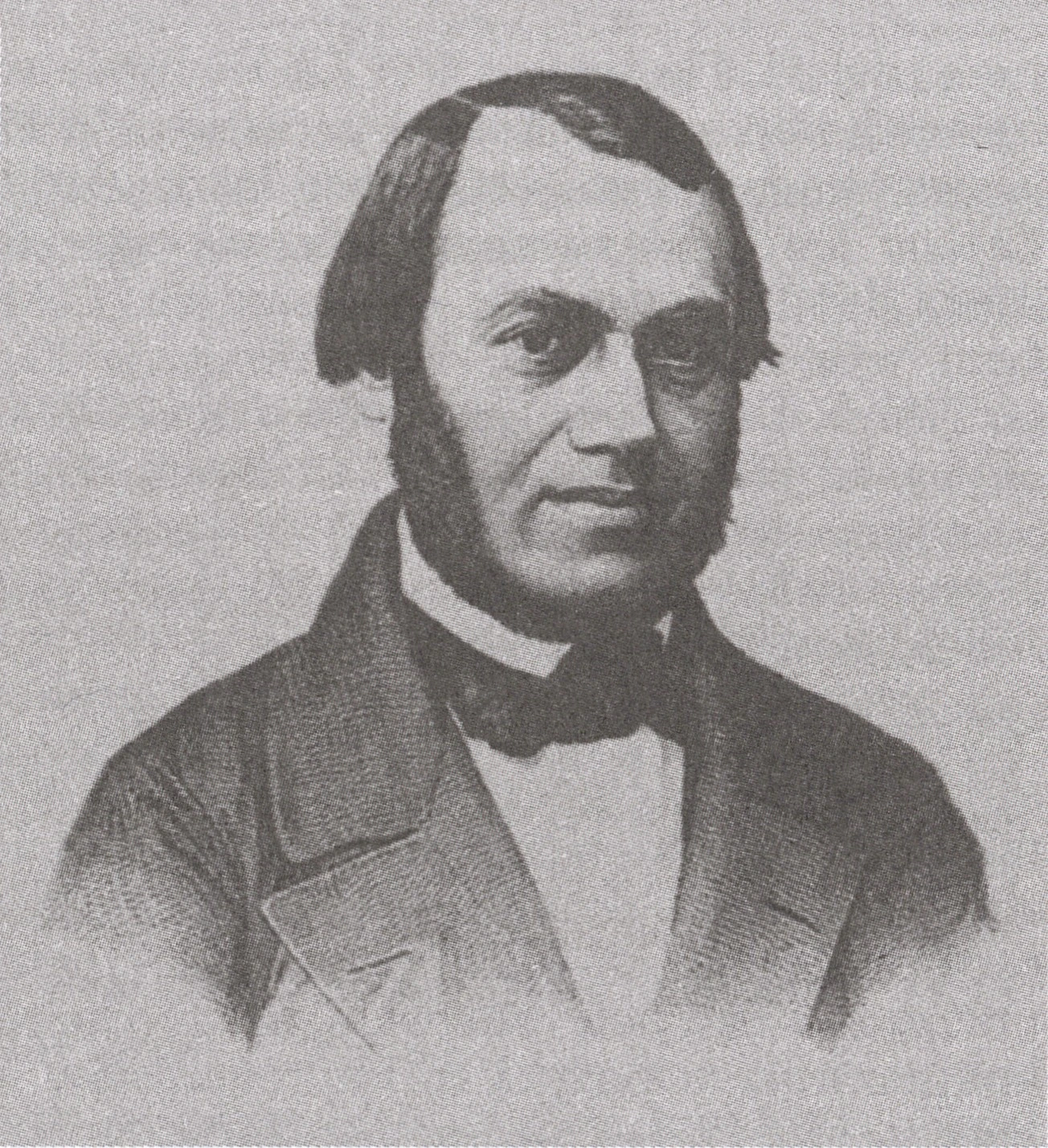
David, Ferdinand, *19 June 1810 Hamburg, †18 July 1873 Klosters (Switzerland), German violinist, composer, and teacher. From 1823 to 1825 he studied in Kassel under L. Spohr (violin) and M. Hauptmann (theory). In 1825, together with his sister Luisa David (1811–1850), a pianist later known as Dulcken, he went on a concert tour through Copenhagen, Leipzig, and Dresden to Berlin, where he formed a lasting friendship with Mendelssohn. From 1826 to 1829 he was a violinist at the Königstadt Theater in Berlin. From 1829 to 1835 he resided on the estate of K. von Liphardt near Dorpat (now Tartu, Estonian SSR) as leader of a string quartet, with which he gave concerts in St. Petersburg and in major Baltic cities. In 1836 he became concertmaster of the Gewandhaus Orchestra in Leipzig, where he soon became one of the leading figures of musical life, giving numerous recitals (including with Mendelssohn) and regularly organizing string quartet evenings. In 1839 and 1841 he undertook concert tours to England, achieving considerable success. With the opening of the Leipzig Conservatory (1843), David took up a teaching position there; his students included J. Joachim, A. Wilhelmj, and J. W. von Wasielewski. In 1845 he gave the first performance of Mendelssohn’s Violin Concerto, dedicated to him. In 1852 he renewed his contract with the Gewandhaus Orchestra and remained its concertmaster until the end of his life. In his final years he was also active as an editor and conductor, while continuing – despite doctor’s orders – to perform as a chamber musician. His last concert in Leipzig, on 16 March 1873, featured works by Mozart, Mendelssohn, and Schubert. The composer died during a mountain excursion in the Alps.
David’s stature as a musician far exceeded the stereotype of a virtuoso; his inclination toward a settled life meant that his performing career, though successful, lacked the brilliance associated with the careers of Vieuxtemps, Ernst, and other great violinists of the time. Contemporaries unanimously emphasized his profound understanding of technical issues, fullness of tone, excellent musical taste, and sense of style; above all, however, he was valued as an orchestral concertmaster and leader of chamber ensembles, thanks to his impeccable intonation, flawless phrasing, and analytical approach to musical form. David also played an important role as a promoter of 17th- and 18th-century violin music; he edited and published many such works in pedagogical collections. His own compositions – apart from the Concertino for trombone, the Suite, Op. 43, and pedagogical works – did not prove to have lasting artistic value.
Literature: J. Eckhardt Ferdinand David und die Familie Mendelssohn-Bartholdy, Leipzig 1888.
Compositions:
Concertino in E-flat major for trombone and orchestra, Op. 4
Intruduction et Variations sur un theme de Franz Schubert for clarinet and orchestra, Op. 8
Concert Op. 10 for violin and orchestra
Concert in D major Op. 14 for violin and orchestra
Concert in A major Op. 17 for violin and orchestra
Concert in E major Op. 23 for violin and orchestra
24 solo songs in collections Op. 26, 27, 39 and 31
String Quartet Op. 32
Mein Aug’erheb’ich, psalm for 2 sopranos and piano, Op. 33
Concert in D minor Op. 35 for violin and orchestra
numerous variations for violin and orchestra on original and borrowed themes
String Sextet in G major op. 38
Suite für Violino allein Op. 43
numerous études, caprices, and miniatures for solo violin and with piano accompaniment
works for cello and piano
works for piano
Hans Wacht, opera, staged in Leipzig 1852
cadenzas for Beethoven’s Violin Concerto
Writings:
Die hohe Schule des Violinspiels, Leipzig n.d.
Vorstudien zur hohen Schule des Violinspiels (contains works by 17th- and 18th-century composers), Leipzig, n.d.
Die Kunst des Violinspiels, Leipzig n.d. (contains works by Kreutzer, Fiorillo, Rode, Gaviniés and Paganini)
Concert-Studien, Leipzig n.d., (contains works by Viotti, Rode and Kreutzer)
Violin-Concerte alterer Meister (contains works by Rode and Kreutzer)
Violin-Concerte neuerer Meister, Leipzig n.d. (contains works by Beethoven, D., Ernst, Lipiński, Mendelssohn, and Paganini)
***
moreover, David arranged a number of works by Bach, Beethoven, Chopin, Händel, Haydn, Mendelssohn, Moscheles, Mozart, Paganini, Schubert, Spohr, Viotti, and others for solo violin, violin with piano, and various chamber ensembles