
Studia orkiestrowe na klarnet; 1 [partytura]

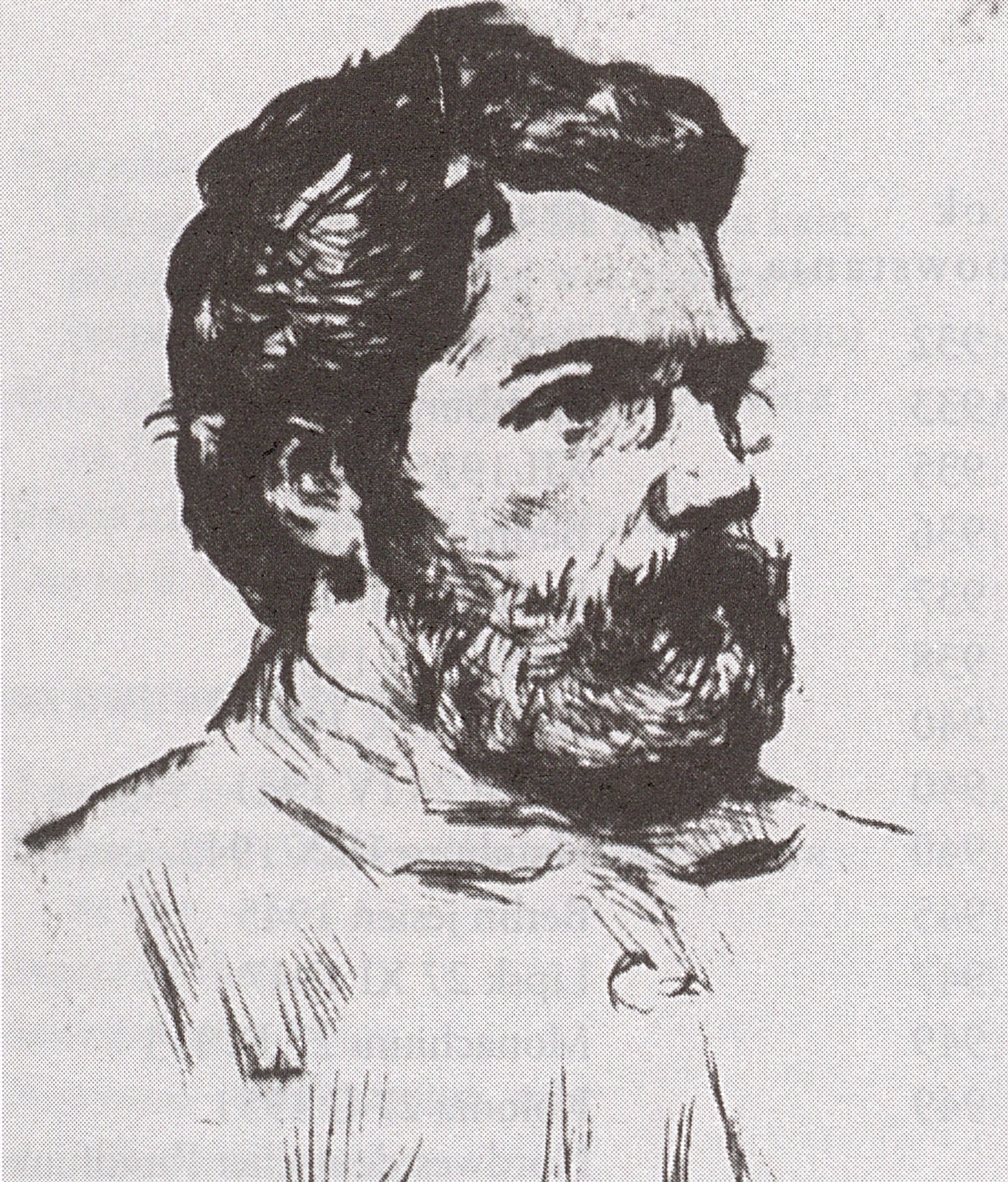
Bizet Georges, actually Alexandre-César-Léopold Bizet, *25 October 1838 Paris, †3 June 1875 Bougival (near Paris), French composer. He grew up in a musical family; his mother played the piano and his father was a singing teacher. Between 1848 and 1857, he studied at the Paris Conservatory under A.F. Marmontel (piano), F. Benoist (organ), P.J.G. Zimmermann, Ch. Gounod, and, from 1853, J.F. Halévy (composition). During his studies, he distinguished himself as a talented pianist, winning second prix in Marmontel’s class in 1851 and first prize in 1852. However, he chose a career as a composer; the manuscripts of his works from his school years, donated to the conservatory library, include symphonic works, preludes, caprices, nocturnes and waltzes for piano, fugues for organ, songs for voice and piano, as well as cantatas and stage works (mostly in fragments). Among these compositions are several award-winning works, including the operetta Le docteur miracle (joint first place with C. Lecocq in a competition announced by J. Offenbach in 1857), the cantata David (Second Prix de Rome in 1856) and the cantata Clovis et Clotilde (Grand Prix de Rome in 1857). As the winner of the Grand Prix, Bizet received a scholarship to study music in Italy, so he spent the years 1858–60 in Rome, where he composed, among other works, the comic opera Don Procopio and the ode Vasco da Gama for chorus and symphony orchestra. From 1861, Bizet lived permanently in Paris, spending the summers in nearby towns, initially in Le Vesinet and later in Bougival. He was compelled to devote much of his time to paid work, including teaching music, preparing piano reductions of operas, and arranging dance music. At the same time, he composed, focusing mainly on operas, which, however, unlike his symphonic works, did not gain popularity among audiences during his lifetime (with the exception of The Pearl Fishers and The Fair Maid of Perth) and were generally harshly judged by critics. In 1869, Bizet married Geneviève Halévy, the daughter of his former composition teacher. In 1870–71, during the war with Prussia, Bizet was drafted into the army and served in the National Guard. The last four years of the composer’s life saw the creation of his most interesting works: Djamileh, L’Arlésienne, and Carmen. Bizet died before seeing the success that Carmen began to enjoy on stages around the world.
The characteristics of Bizet’s work are difficult to determine due to the fact that many of his compositions were never published (e.g., Overture in A major—A minor from around 1855, the cantata Le retour de Virginie from ca. 1855–57), and some compositions have been lost (e.g. the cantata Les noces de Prométhée 1867, the overture La chasse d’Ossian 1861). Bizet entered music history primarily as an opera composer; in fact, his instrumental works and songs do not display any individual style. For example, the piano 6 chants du Rhin are based on Mendelssohn’s instrumental lyricism, while Jeux d’enfants resemble Schumann’s Kinderszenen in their formal structure and finesse. Bizet’s songs, revealing mainly the influence of Gounod (the dominating cantilena), attracted contemporary audiences with their melodiousness, as evidenced by their publication (in collections and separately) by Parisian publishers, including Choudens, Heugel, and Hartmann. The Symphony in C major – a work by a 17-year-old composer – refers to the compositional technique of Haydn and Mozart; in terms of architectonics, it does not deviate from the classical 4-movement scheme of the symphonic cycle; the instrumentation also shows typically classical features. The Symphony’s second movement, however, already displays an expressive melodics characteristic of some of Bizet’s later compositions, at times chromaticised (especially in the solo oboe), while the predominance of a single articulation type—staccato in the first movement—is also noteworthy. The stylistically uneven work Roma – which Bizet called a “symphony” in his letters – was published after the composer’s death with the subtitle “concert suite.” The earliest composed part (1860) of this work, Allegro vivace, takes the form of a scherzo similar in style to the scherzo from the Symphony in C major, while part IV, Allegro vivacissimo, performed in 1869 under the title Carnival in Rome, bears the hallmarks of program music thanks to the dominance of the rhythmic factor (four rhythmically varied themes).
Bizet’s stage works, in which the music was inspired by the literary layer of the work, expressed tendencies typical of 19th-century music. This is evidenced by the composer’s attitude towards folklore, e.g. in the music for Daudet’s L’Arlésienne. From the 27 instrumental and choral interludes performed during the performances, Bizet chose the Prelude, Menuet, Adagietto and Carillon, and, enriching the instrumentation, created an orchestral suite which brought him great success (1872). The Suite No. 2, consisting of Pastorale, Intermezzo, Menuet (not from L’Arlésienne, but from The Fair Maid of Perth) and Farandole, was compiled after the composer’s death by E. Giraud. The setting of the drama in Arles gave Bizet the idea of introducing authentic Provençal folklore, which he encountered during his stay in the south of France on his way to Italy. The Prelude to Suite No. 1 begins with a march theme of folk origin, which is then subjected to variations, mainly consisting of changes in instrumentation. This march also marks the beginning of the fourth movement of Suite No. 2; in the following farandole, strings and the Provençal tambourine emphasise the pulsation of this lively dance. Both folk themes alternate, and in the final section of the piece they counterpoint each other. The content of the drama also inspired Bizet’s inventiveness in his instrumentation. The pastoral character of some passages results from the prominence of the woodwinds, while the atmosphere of the rural surroundings of Arles is evoked, among others, through the use of the Provençal tambourine. Also noteworthy is the intensification of percussion effects using string instruments, e.g. in the central section of Pastorale, as well as the illustration of the sound of a carillon bell in the extreme parts of Carillon through the use of French horns, harps and 2nd violin’s pizzicato. In both suites, Bizet was one of the first to use the alto saxophone in a symphony orchestra.
The influence of folklore on melodics, rhythmic patterns and instrumentation can also be found in Carmen. Bizet associated elements of Romani (Gypsy) and Spanish music with the title character. The so-called fate motif, which recurs throughout the work and accompanies Carmen’s appearance, is built on a sequence of augmented seconds characteristic of the Gypsy scale. Bizet entrusted to this Spanish Romani with both melodies based on authentic folklore (the melody sung at the end of Act 1) with others that are not original but nonetheless linked to Spanish musical tradition (the famous Habanera from Act 1, drawn from Yradier’s 1864 collection Fleurs d’Espagne, in fact a Havana dance derived from the Spanish contradanza) as well as melodies entirely of his own invention (the Seguidilla, modelled on Andalusian folklore). The composer perfectly captured the rhythm characteristic of this music, which he often entrusts to string instruments (e.g. the cello ostinato in the Habanera, the string ostinato in the Seguidilla). Bizet was not exposed to Spanish folklore directly, but he did have the opportunity to become acquainted with the music of that country; he attended performances by dancers from Valencia, listened to Castilian singers performing in Paris at the time, and was also familiar with collections of Spanish songs, which was reflected in the orchestral parts of Carmen. For example, the Intermezzo before Act 4 contains a recurring folk theme from the collection Echos d’Espagnes (published in 1872). The Spanish milieu is also characterised by its typical instruments – in addition to castanets and tambourines, which are part of the cast, there are also imitative effects, such as the sound of guitars (pizzicato harps, violas and cellos at the beginning of Act 2).
Bizet’s other stage works do not contain folk elements. The setting of The Pearl Fishers in exotic Ceylon is not reflected in the music; the lyrical melodics to which the opera owes its success (the still very popular Nadir’s romance Je crois entendre) are decidedly “European.” The “African elements” in Djamileh, on the other hand, are obviously not local folklore, but a conventional exoticism, consisting of the introduction of bolder harmonic solutions and “sensual,” expressive melodic phrases.
Bizet’s opera librettos were generally lacking in dramatic value. Based on an excerpt from Musset’s Namouna, the libretto of Djamileh (a Muslim’s love for a slave girl) is certainly more concise than most of the texts used by Bizet in his operas, but it completely lacks the study of the main character’s psyche contained in Musset’s elaborate verses, which significantly impoverishes the content. In adapting W. Scott’s poetic novel, the authors of the libretto for The Fair Maid of Perth removed the descriptive passages that determine the value of this genre of novel, resulting in a libretto overloaded with intrigue and overly complicated. However, the careful selection of content from Mérimée’s novella, on which the libretto of Carmen is based, while retaining the psychological aspect of the work (changes in the development of Don José’s personality), omitting some characters and introducing others (Micaëla) resulted in a compact text with excellent tension build-up. Excerpts from Mérimée’s work became a pretext for showing the lower classes of society on stage – Romani people, smugglers, female workers, soldiers. This novelty was the main reason for the harsh criticism that Carmen initially encountered; it had to break down the barriers of perception of opera house audiences, accustomed to librettos based on mythological themes, legends, historical events or the world of the so-called upper classes. The introduction of characters whose behaviour was devoid of pathos, the depiction of passions that determine human behaviour, the focus on conflicts between people from the lower classes, the presentation of the truth of life instead of artificial situations – this emergence of the realism in opera, a movement that had already triumphed in literature for over thirty years.
The principles of realism are reflected in the musical characteristics of the characters and in a partial departure from operatic conventions. In the name of what is true (and therefore beautiful according to the principles of realism), the artist was able to allow himself complete creative freedom. The very beginning of the work reveals a departure from the rule that requires an opera to begin with a complete overture. The introduction to Act 1 of Carmen is an open orchestral prelude, which breaks off at the moment of highest tension; it consists of two movements, the first of which is a musical characterisation of the Spanish environment (a march from Act 4 introducing the mood of a bullfight, a toreador’s song), and the second contains the of Carmen’s fate motif. The choruses are also treated in an unusual way; they are not static, but take an active part in the action, reflecting the atmosphere of human gatherings in specific situations (further emphasised by the orchestra), and even perform elements of acting (the workers’ choruses in Act 1, the chorus of smugglers and Romani in Act 2, the chorus cheering in honour of the toreador in Acts 2 and 4, the chorus of merchants divided into voices in Act 4).
Bizet does not limit himself to realistic depictions of crowd behaviour, but also carefully crafts solo passages, which sometimes serve to convey the personality traits of specific characters. For example, the march song with a banal melody and distinctive rhythm sung by Escamillo reflects the energy of the toreador and his shallow personality. By contrast, Don José’s parts, depict the psychological transformations he undergoes, reflecting the realist preoccupation with careful analysis of human character. In Act 1, hisduet with Micaëla (Parle-moi de ma mère), presents simple melodic phrases recalling his mother and home, while in Act 2 he sings the passionate Romance de la fleur, filled with love for Carmen, with a melody that constantly rises (ambitus of a diminished twelfth). The idea of realism, stating that truth is beauty, finds its fullest expression in the title role. Carmen, a morally unrestrained femme fatale, is linked to the most beautiful and captivating moments of the score, conveying both her fiery temperament and the tragic consequences of her passion. This is manifested in the original treatment of musical means (instrumentation, rhythm, the aforementioned fate motif).
Thanks to Carmen, Bizet gained a prominent place in the history of opera music; he is widely regarded as the creator of a new direction, which found its continuation in the so-called verismo opera in the 1890s. However, Bizet’s significance is not limited to broadening and deepening the subject matter of opera. His work has stood the test of time because it contains creative ideas that influenced the development of music in the 20th century: in his work, rhythm gained prominence as an important expressive factor, supported by original instrumentation. It is this feature that distinguishes Bizet’s work from that of other 19th-century composers (including Gounod) and links it to later music, especially that of Ravel, who, like Bizet, drew inspiration from Spanish folklore.
Literature:
Catalogue of works – H. Macdonald The Bizet catalogue, St. Louis (Missouri) 2014, also available on the website https://talus.artsci.wustl.edu/bizet
Documentation, correspondence – E. Galabert Georges Bizet. Souvenir et correspondance, Paris 1877; Portraits et études; Lettres inédites de Georges Bizet, ed. H. Imbert, Paris 1894, e-book 2012; Lettres: impressions de Rome (1857–60), La Commune (1871), pub. L. Ganderax, Paris 1908; Lettres à un ami, 1865–1872: la correspondance secrète de Georges Bizet, ed. E. Galabert, Paris 1909, e-book 2011; Briefe aus Rom 1857–60, pub. W. Klefisch, Hamburg 1949; M. Curtiss Unpublished letters, by Georges Bizet, “Musical Quarterly” XXXVI No. 3 (1950), pp. 375–409; Piśma, pub. G. Filenko, Moscow 1963; Georges Bizet Letters in the Nydahl Collection, pub. L.A. Wright, Stockholm 1988, French edition C. Glayman, Paris 1989; Études de composition sous la direction de Georges Bizet, (Bizet’s correspondence with two students about problems related to learning counterpoint and composition), pub. M. Vittu, Sprimont 2005; Bizet in Italy : letters and journals, 1857-1860, pub. H. Macdonald, Martlesham (Suffolk) 2021.
Monographs – A. Weissmann Bizet. Mit … zahlreichen Notenbeilagen, Berlin 1907, e-book 2010; Ch. Pigot Georges Bizet et son oeuvre, Paris 1886, revised edition 1911; F. Nietzsche Der Fall Wagner, Leipzig 1888; C. Bellaigue Georges Bizet, sa vie et son oeuvre, Paris 1891; H. Gauthier-Villars Bizet, Paris 1911; G.M. Gatti Georges Bizet, Turin 1914; P. Landormy Bizet, Paris 1924, 2nd edition 1951; J.W. Klein Nietzsche and Bizet, “The Musical Quarterly” XI, 1925; J. Tiersot Bizet and Spanish Music, “The Musical Quarterly” XI, 1925; D.Ch. Parker Georges Bizet, his Life and Works, London 1929, reprint Freeport (New York) 1969; R. Laparra Bizet et l’Espagne, Paris 1935; M. Cooper Georges Bizet, London 1938; F. Gerver Bizet, Brussels 1945;W. Dean Georges Bizet, London 1948, expanded edition New York 1962, Chester Springs 1965, 3rd edition 1976, German edition Georges Bizet. Leben und Werk, translation by K. Küster, Munich 1993; P. Stefan Georges Bizet, Zurich 1952, 2nd edition, revised, Hamburg 2016; M.K. Curtiss Bizet and His World, New York 1958, London 1959, reprint 1964, French edition Ghent 1961; F. Robert Georges Bizet, Paris 1965; E. Wielikowicz Georges Bizet, Leningrad 1969; L. A. Wright Bizet Before Carmen, Ann Arbor 1981; M. Cordoze Georges Bizet, Paris 1982; J. Roy Bizet, Paris 1983; Ch. Schwandt Georges Bizet, Hamburg 1991, Zurich 2011, English edition titled Georges Bizet: a Biography, translation by C. Klohr, Lanham (Maryland) 2013; R. Stricker Georges Bizet, Paris 1999, e-book 2020; H. Lacombe Georges Bizet, Paris 2000; Z. Kościów Georges Bizet, Wołomin 2009; Ch. Schwandt Georges Bizet, Mainz 2011 (English edition 2012); G. Thiéblot Georges Bizet, Paris 2012; H. Macdonald Bizet, New York 2014; J. Bastianelli Georges Bizet, Arles 2015.
Study on the works of Bizet – P. Rosenfeld Current Chronicle: Bizet and Modern Music, “The Musical Quarterly” XXV, nr 1 (1939), pp. 97–103; M. Cooper Carmen, London 1947; W. Dean Introduction to the Music of Bizet, London 1950; W. Berkow Carmen G. Bizeta, Moscow 1951, 3rd edition 1970; F. Noske La Mélodie française de Berlioz à Duparc, Amsterdam 1954, English edition 1970; A. Chołowkina Siuity Bizeta iz muzyki k dramie A. Dode “Arlezjanka,” Moscow 1957; H. Shanet Bizet’s Suppressed Symphony, “The Musical Quarterly” XLIV, No. 4 (1958) pp. 461–476; W. Dean Bizet’s Self-Borrowings. “Music & Letters,” XLI (1960), pp. 238–44; J. Gabryś “Carmen” J. Bizeta, Krakow 1961; F. Oeser Bizets “Carmen” in authentischer Gestalt, “Jahrbuch der Komischen Oper,” IV, 1963/64; M. Poupet Les infidélités posthumes des partitions lyriques de Georges Bizet, “Revue de musicologie” LI (1965), pp. 170–200; J.A. Westrup Bizet’s “La jolie filie de Perth,” in: Essays…, commemorative book of E. Wellesz, Oxford 1966; J. Nowinski Sense and Sound in Georges Bizet’s ‘Carmen,’ “French Review” XLIII No. 6 (1970), pp. 891–900; G. Franck Nietzsche and Bizet, „Opera Journal,” IX (1976), s. 19–23; E. Baker The Scene Designs for the First Performances of Bizet’s ‘Carmen,’ “19th-Century Music” XIII No. 3 (1990), pp. 230–242; S. McClary Georges Bizet: Carmen, Cambridge 1992; L.A. Wright Gounod and Bizet. A Study in Musical Paternity, “The Journal of Musicological Research” XIII, 1993; G. H. Leiner To overcome one’s self : Nietzsche, Bizet and Wagner, “Journal of Nietzsche Studies” IX/X (1995, Penn State University) pp. 132–147; J. Parakilas How Spain got a soul, in: The Exotic In Western Music, ed. J. Bellman, Boston 1998; H. Lacombe The Keys to French Opera in the Nineteenth Century, Berkeley 2001, e-book 2013; J.F. Colmeiro Exorcising Exoticism: “Carmen” and the Construction of Oriental Spain, “Comparative Literature,” LIV, No. 2 (2002) pp. 127–144; R. Simonari Bringing ’Carmen’ Back to Spain: Antonio Gades’s Flamenco Dance in Carlos Saura’s Choreofilm, “Dance Research: The Journal of the Society for Dance Research” XXVI No. 2 (2008), pp. 189–203; R.P. Locke Spanish Local Color in Bizet’s Carmen, w: Music, Theatre and Cultural Transfer: Paris 1830–1914, eds. A. Fauser, M. Everist, Chicago 2009; D. Charlton Opera as Poetry: Bizet’s Djamileh and the Ironies of Orientalism, in: Art and Ideology in European Opera: Essays in Honour of Julian Rushton, eds. R. Cowgill, D. Cooper, C. Brown, Martlesham (Suffolk) 2010; M. Christoforidis Georges Bizet’s ‘Carmen’ and Fin-de-Siècle Spanish National Opera, “Studia Musicologica” LII, No. 1 (2011) pp. 419–428; Ph. Reed Carmen. Georges Bizet, Richmond (Virginia) 2013; Georges Bizet: Carmen, eds. J. Kühnel, S. Schmidt, materials from the 2013 symposium in Salzburg, Anif (Salzburg) 2013, (includes, among others: P. Alward Carmen – eine revolutionäre und zugleich populäre Oper, R. Reisinger Genese der Carmen: Umstände, Anlässe und literarische Transposition, C. Ottner Georges Bizet (1838-1875): Carmen. Der Komponist und sein Meisterwerk, T. Hochradner Spanische Musik im Paris der Belle Epoque, E. Schreiner Spaniens Zigeuner: Jahrhunderte der Faszination und Marginalisierung, A. Rieger 1st Carmen eine ,echte’ Femme fatale?, E. Bingel Warum geht Carmen zurück zu Don Jose? Tiefenpsychologische Betrachtungen zu Carmen von George Bizet); W. Fuhrmann Bizet. Carmen, Kassel 2016; M. Christoforidis, E. Kertesz Carmen and the staging of Spain: recasting Bizet’s opera in the belle epoque, New York 2019; N. Furman Georges Bizet’s Carmen, New York 2020, e-book 2020; R. Langham Smith Bizet’s Carmen uncovered, Martlesham (Suffolk), 2021; Carmen abroad: Bizet’s opera on the global stage, eds. R. Langham Smith, C. Rowden, Cambridge 2022.
Compositions
Instrumental:
orchestral:
Symphony in C major 1855, Vienna 1935
Symphony “Roma” 1860–66, 2nd version 1868, revised 1871, Paris 1880
Petite suite d’orchestre 1871, orchestration No. 2, 3, 6, 11, 12 from Jeux d’enfants for piano, Paris 1882 (No. 6 unpublished)
L’Arlésienne, suite for orchestra, Paris 1876? (see stage works)
Patrie, ouverture, Paris 1874
piano:
Nocturne in F major for piano, 1854
6 chants du Rhin for piano, Paris 1865
Variations chromatiques de concert for piano, Paris 1868, F. Weingartner’s orchestration 1939
Nocturne in D major for piano, Paris 1868
Jeux d’enfants, a cycle of 12 pieces for piano four hands, Paris 1872.
Vocal-instrumental:
several dozen songs for voice and piano, including:
Adieux de l’hôtesse arabe for voice and piano, text V. Hugo, Paris 1867
Après d’hiver for voice and piano, text V. Hugo, Paris 1867
Feuilles d’album for voice and piano, Paris 1866: 1. A une fleur, text A. de Musset, 2. Adieux a Suzon, text A. de Musset, 3. Sonnet, text P. de Ronsard, 4. Guitare, text V. Hugo, 5. Rose d’amour, text Ch. Millevoye, 6. Le Grillon, text A. Lamartine
Pastorale for voice and piano, text I.E. Regnard, Paris 1868
Rêve de la bien-aimée for voice and piano, text L. de Courmont, Paris 1868
Ma vie a son secret for voice and piano, text E. Arvers, Paris 1868
Berceuse for voice and piano, text M. Desbordes-Valmore, Paris 1868
La chanson du fou for voice and piano, text V. Hugo, Paris 1868
La coccinelle for voice and piano, text V. Hugo, Paris 1868
Chants des Pyrénées, a collection of folk songs with accompaniment, text M.I. Ruelle, Paris 1867
***
David, kantata, text G. d’Albano, 1856
Clovis et Clotilde, cantata, text A. Burion, 1857
Te Deum for solo voices, chorus and orchestra, 1858
Vasco da Gama, symphonic ode, text L. Delatre, 1859–60, Paris 1880.
Stage:
La maison du docteur, comic opera, 1 act, libretto H. Boitteaux
Le docteur miracle, operetta, 1 act, libretto L. Battu and L. Halévy, 1856 or 1857, world premiere – Paris 9 April 1857, Paris 1962 Éditions Françaises de Musique
Don Procopio, opera buffa, 2 acts, libretto C. Cambiaggio, 1858–59, world premiere Monte Carlo 13 March 1906, setting Ch. Malherbe; original version, Strasburg 6 February 1958; Paris 1905 Choudens
L’amour peintre, comic opera (unfinished, probably destroyed), libretto G. Bizet after Molière, 1860
La Guzla de 1’Emir, comic opera, 1 act (probably destroyed), libretto J. Barbier and M. Carré, 1861–62
Ivan IV, opera, 5 acts (Act 5 – unfinished), libretto A. Leroy and H. Trianon, 1862–63, first performance Castle in the Tübingen 1946, Paris 1951 Choudens
Les pêcheurs de perles (The Pearl Fishers), opera, 3 acts, libretto M. Carré and E. Cormon, 1863, world premiere Paris 29 September 1863, Polish premiere – Warsaw 1904, Paris 1863 Choudens
La jolie fille de Perth (The Fair Maid of Perth), opera, 4 acts, libretto J.H. Vernoy de Saint-Georges and J. Adenis after W. Scott, 1866, world premiere Paris 26 December 1867, Paris 1868 Choudens
Malbrough s’en va-t-en guerre, operetta, 4 acts (with I.-É. Legouix, E. Jonas, Courtois and L. Délibes; lost), libretto P. Siraudin and W. Busnach, 1867, world premiere Paris 15 December 1867
La coupe du roi de Thulé, opera, 3 acts (preserved fragment), libretto L. Gallet and E. Blau, 1868
Noé, opera, 3 acts (begun by J.F. Halévy, completed by Bizet), libretto J.H. Vernoy de Saint-Georges, 1868–69, world premiere Karlsruhe 5 April 1885, piano reduction Paris 1885 Choudens
Clarissa Harlowe, comic opera, 3 acts (preserved fragments), libretto Ph. Gille after Richardson, 1870–71
Grisélidis, comic opera, 3 acts (unfinished and damaged), libretto V. Sardou, 1870–71
Djamileh, comic opera, 1 act, libretto L. Gallet after A. de Musset, 1871, world premiere Paris 22 VI872, piano reduction ed. 1872, score 1892
Sol-si-ré-pif-pan, operetta, 1 act (probably destroyed), libretto W. Busnach, 1872, world premiere Paris 16 November 1872
Don Rodrigue, opera, 5 acts (unfinished), libretto L. Gallet and E. Blau, 1873
Carmen, comic opera (after Bizet’s death, the spoken parts were replaced with recitatives composed by E. Guiraud), 4 acts, libretto H. Meilhac and L. Halévy after P. Mérimée, 1873–74, world premiere Paris 3 March 1875, Polish premiere – Warsaw 5 July 1882, piano reduction ed. 1875, score 1880
L’Arlésienne (The Woman from Arles), music for theatre play, text A. Daudet, 1872, world premiere Paris 1 October 1872, Paris 1872 Choudens
Editions:
Carmen, critical edition by F. Oeser (German translation of the libretto by W. Felsenstein), with recitatives E. Guirauda, Kassel 1964, piano reduction, Kassel 2019
Les pêcheurs de perles, Berlin 1986, ed. H. Macdonald (English translation of the libretto H. Macdonald), score and
piano reduction, Kassel, Londyn, Nowy Jork 2015