
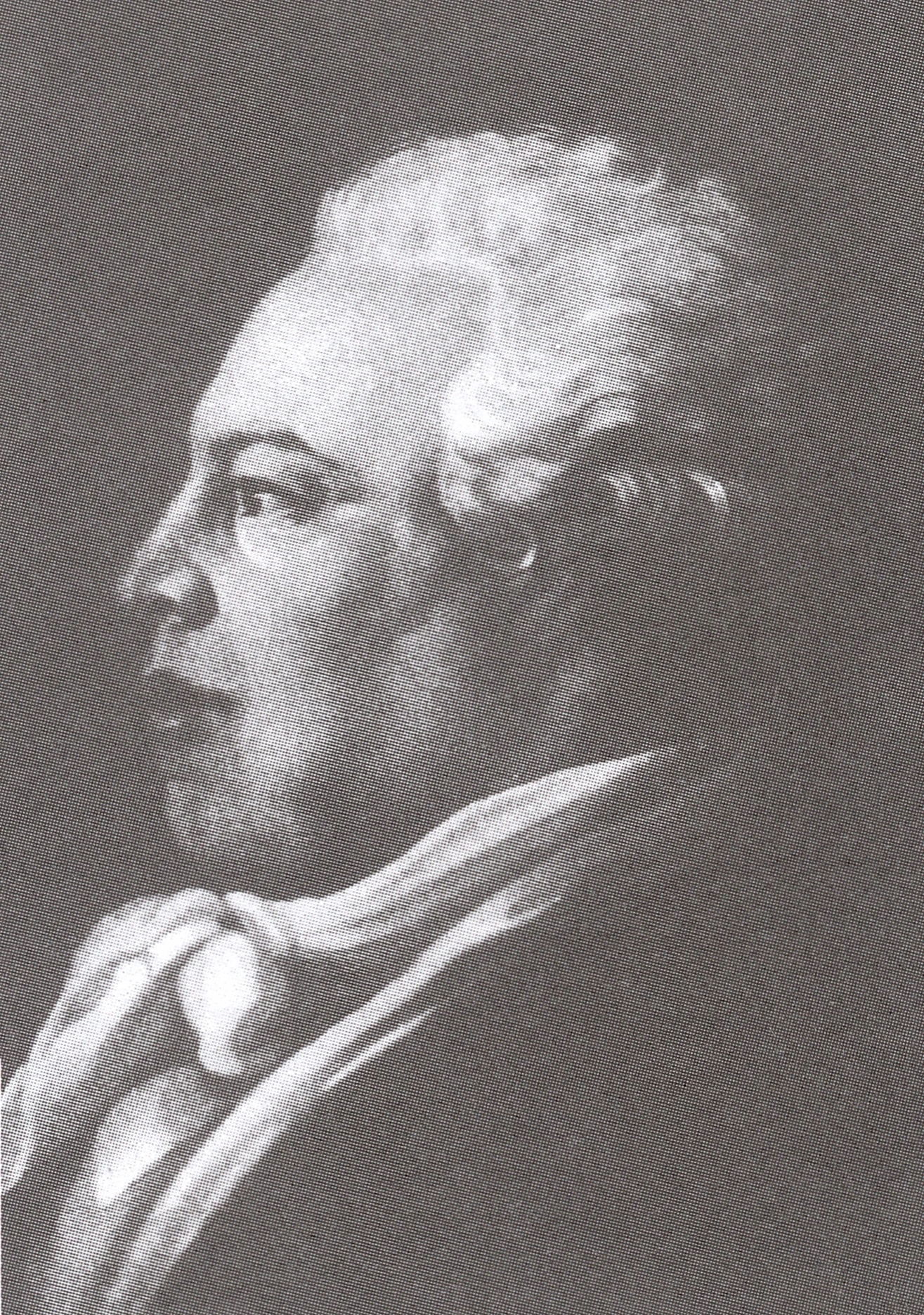
Vranický, Pavel

Vranický, Wranitzky, Wraniczky, Wranizky, Antonin, Anton, *13 June 1761 Neureisch (now Nová Říše, Moravia), †6 August 1820 Vienna, Czech composer and violinist active in Vienna, brother of Pavel. Like Pavel, he studied at the monastery school in Nové Říši (music, among others); then, he completed philosophy studies at the Jesuit seminary in Brno, and he also studied law there. He was taught to play the violin by Pavel Vranický. In the mid-1780s, he came to Vienna, where he studied composition with J. Haydn, W.A. Mozart and J.G. Albrechtsberger, and also perfected his skills as a violinist. In 1790, he became a composer, music teacher and concertmaster at the court of Prince Joseph Franz Maximilian Lobkowitz (in Vienna, Prague, Roudnice nad Labem and other of the prince’s estates in Bohemia), and in 1797, Kapellmeister of the court orchestra. After his brother’s death, he took over the direction of the orchestra of the court theatres in Vienna; he remained in this position until the end of his life. In 1812–16, he also managed the publishing house of the court theatres (Hoftheater–Musik–Verlag), and from 1814, he was also the director of the orchestra of the Theater an der Wien. Vranický was friends with J. Haydn (Vranický’s arrangement of The Creation for string quintet gained the composer’s approval) and Beethoven. His students included I. Schuppanzigh and J. Mayseder.
Vranický’s daughters — Karoline, married to Seidler, and Anna, married to Kraus — were singers; Karoline performed at the Berlin opera, where she created, among other roles, the role of Agatha in the world premiere of C.M. von Weber’s Der Freischütz (1821). His sons, Friedrich and Anton, played in the orchestra of the court theatre in Vienna.
Vranický’s compositions were published in Frankfurt am Main, Offenbach, Paris, Speyer, Augsburg, and Vienna, but most of them remained in manuscripts, preserved mainly in the archives of Prince Lobkowitz in Roudnice (currently in the Národní Muzeum in Prague).
Vranický was a valued violin virtuoso and teacher of playing the instrument; he is considered, alongside Dittersdorf and Schuppanzigh, one of the founders of the Viennese violin school; he wrote the Violin Fondament textbook, which has been reissued many times. He composed mainly instrumental music, his domain being violin pieces. Vranický’s work, especially the symphonies (four-part with a slow introduction), is maintained in the classical style. In the violin concertos, some chamber pieces and others, there are visible signs of the romantic style (show-off virtuosity, use of motifs from Czech folk songs as themes for variations).
Literature: V. Blažek Bohemica v lobkovském zámeckém archivu v Roudnici n. L., Prague 1936; R. Mužíková Složeni lobkovické kapely v roce 1811, “Miscellanea Musicologica” XII, 1960; A. Weinmann Verzeichnis der Musikalien aus dem k.k. Hoftheater-Musik-Verlag, Vienna 1961; C. Schoenbaum Die böhmischen Musiker in der Musikgeschichte Wiens, “Studien zur Musikwissenschaft” XXV, 1962; J. Trojanová Pavel a Antonín Vraničtí. Personální bibliografie, Brno 1975; S. Klíma K biografii A. Vranického (1761–1820), “Hudební věda” XXIII, 1986; R. Hickman The Flowering of the Viennese String Quartet in the Late Eighteenth Century, “The Music Review” L, 1989; O. Mojžíšová Anton Wranitzky, in: Theater in Böhmen, Mähren und Schlesien, ed. A. Jakubcová and M.J. Pernerstorfer, Vienna 2013; R. Steblin Anton Wranitzky (1761–1820). New Biographical Facts from Vienna’s Archives, “Mozart Studien” XXII, 2013; R. Steblin The Court Careers of Paul and Anton Wranitzky in Vienna, in: Beethoven und andere Hofmusiker seiner Generation, book of an international congress in Bonn 2015, ed. B. Lodes et al., Bonn 2018.
Compositions
Instrumental:
for orchestra:
15 symphonies, including:
Symphony in C major “Aphrodite” 1792, preserved in a manuscript
Symphony in D major 1796, preserved in a manuscript
Symphony in C minor, preserved in a manuscript
***
Overtura caratteristica, preserved in a manuscript
Omasis, overture, preserved in a manuscript
serenades, nocturnes, cassations, dances, marshes for orchestra and other instrumental ensembles
concertos:
15 concertos for violin, including Violin Concerto in C major Op. 11, Offenbach 1803
Concerto in D major for 2 violins, preserved in a manuscript
Concerto in D minor for cello, preserved in a manuscript
Concerto in C major for violin and cello, preserved in a manuscript
Concerto in B-flat major for violin and cello, preserved in a manuscript
Concerto in D major for 2 violins and cello, preserved in a manuscript
Concerto in C major for 2 violas, preserved in a manuscript
chamber:
6 sextets for 2 violins, 2 violas and 2 cellos preserved in a manuscript
2 sextets for flute, oboe, violin, 2 violas and cello, preserved in a manuscript
3 quintets Op. 8, for violin, 2 violas and 2 cellos, Offenbach ca. 1802
Grand quintuor Op. 10, for violin, 2 violas and 2 cellos, Vienna 1803
Quintet in D minor for violin, 2 violas and 2 cellos, preserved in a manuscript
Quintet in G major for violin, 2 violas and 2 cellos, preserved in a manuscript
6 quintets for 2 violins, 2 violas and cello, preserved in a manuscript
3 quintets for oboe, violin, viola, cello and a bass instrument, preserved in a manuscript
6 string quartets Op. 1, 2 books, Vienna ca. 1790–91
3 string quartets Op. 2, Vienna ca. 1790
3 string quartets Op. 3, Vienna 1792
3 string quartets Op. 4, Offenbach ca. 1800
3 string quartets Op. 5, Offenbach 1800
3 string quartets Op. 13, Vienna 1806
a few string quartets in manuscripts
3 quartets Op. 17, for flute, violin, viola and cello, Vienna 1797
string trios, including 6 trii concertanti Op. 1, preserved in a manuscript
Trio in C major for 2 oboes and an English horn, preserved in a manuscript
2 sonatas Op. 6, for violin and a bass instrument, Offenbach ca. 1800, also as Op. 36, Paris, no year
20 variations Op. 7, for 2 violins, Vienna 1791
3 violin duos Op. 9, Vienna ca. 1802
3 violin duos Op. 12, Vienna 1804
3 violin duos Op. 20, Offenbach ca. 1809
Variations concertantes No. 6 for violin and guitar, Vienna no year
6 duos Op. 2, for violin and viola, preserved in a manuscript
variations, dances, marshes and other pieces for violin, piano, clarinet solo
Vocal and vocal-instrumental:
8 masses for voices solo, orchestra and organ
motets and other religious pieces
arias, songs, canons for choir or voices solo a cappella or accompanied with instruments
pieces for voice and piano
Educational compositions:
Violin Fondament nebst einer vorhergehenden Anzeige über die Haltung sowohl der Violine, als auch des Bogens, Vienna 1804
arrangement: The Creation by J. Haydn for string quintet, Vienna ca. 1800
Editions:
Symphony in C minor, ed. E. Hennigová-Dubová, in: The Symphony in Hungary. The Symphony in Bohemia, «The Symphony 1720–1840» series B, XII, New York 1984 (contains a thematic catalogue of symphonies)
Violin Concerto in A major, piano reduction ed. J. Feld, Prague 1933
Violin Concerto in B-flat major, piano reduction ed. F. Krejči, «Musica Antiqua Bohemica» XVI, Prague 1954
Violin Concerto in C major, Op. 11, ed. E. Hradecký, Prague 1958, also ed. B. Hagels, Berlin 2015
Violin Concerto in B-flat major, ed. E. Hradecký, Prague 1959
Concerto in C major for 2 violas, ed. P. Günther, Leipzig 1956, also ed. E. Hradecký, Prague 1958
Trio in C major for 2 oboes and an English horn, ed. F. Kneusslin, Basel 1982
3 violin duos Op. 20, ed. W. Hasleder, Magdeburg 2002
Cassation in F major for 5 violas/4 violas and bassoon, ed. S. Ondráček and J. Štěpnička, Winterthur 1995