
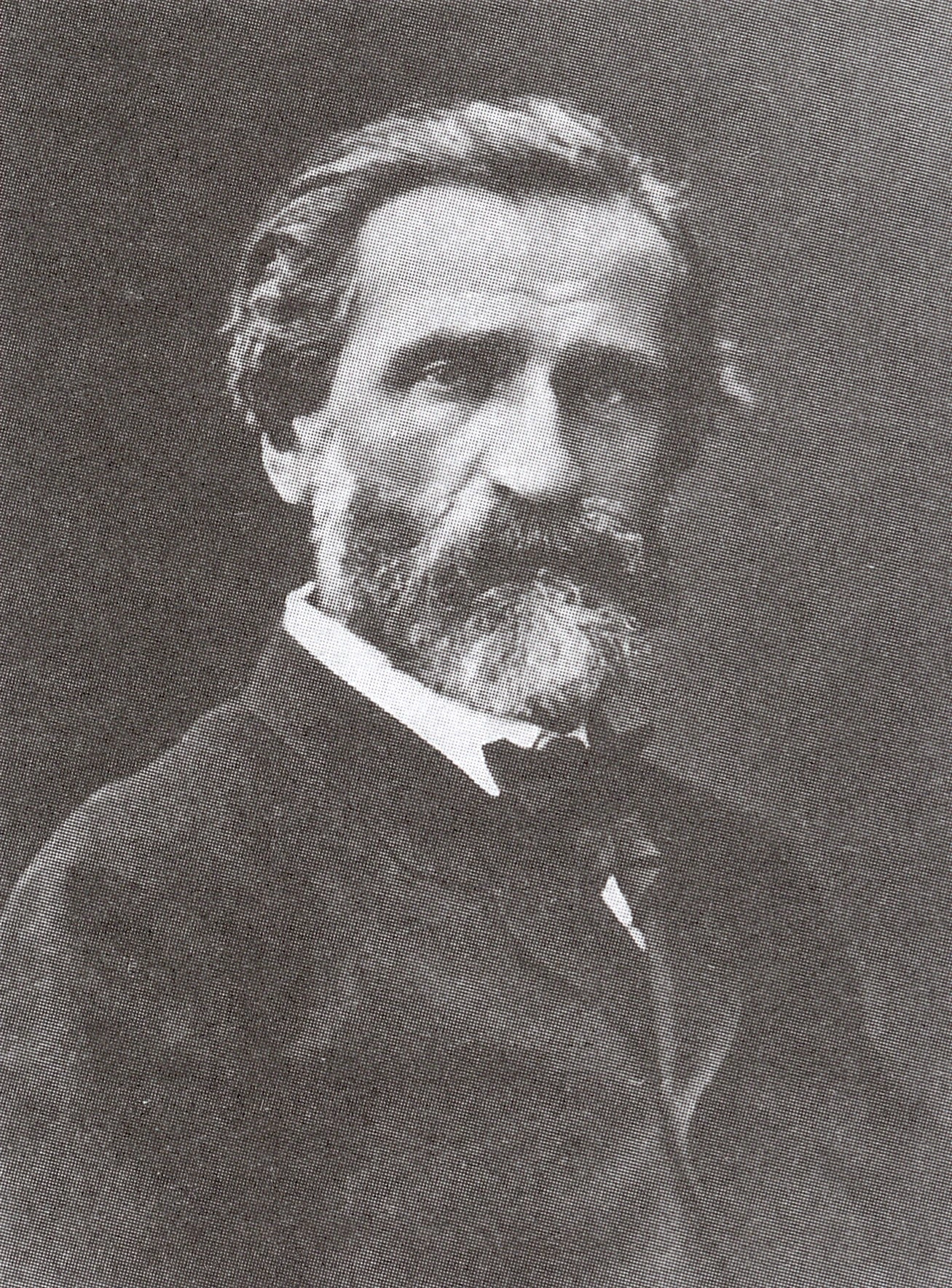
[Szpinet Giuseppe Verdiego]

Verdi Giuseppe Fortunino Francesco, *10 (or 9) October 1813 Le Roncole (near Busseto in the Duchy of Parma), †27 January 1901 Milan, Italian composer. He was the son of a tavern owner Carlo Verdi and Luigia, née Uttini, a spinner. The Verdi family had been engaged in small-scale trade for generations. Verdi began his musical studies playing the spinet, which his father gave him at the age of seven. His first teacher was the local organist P. Baistrocchi, whom the young Verdi began replacing during church services after just three years of learning. Verdi owed the opportunity to continue his education at the Jesuit grammar school in nearby Busseto to A. Barezzi, owner of a wine and groceries wholesaler and president of the local Società Filarmonica, who entrusted his 10-year-old protégé to F. Provesi, maestro di cappella at the local Cathedral of San Bartolomeo. In 1827, Provesi accepted the boy into his music school, where he soon earned a reputation as the most talented student. He practised piano and wind instruments, as well as counterpoint, harmony, and composition. Verdi’s public compositional debut was an overture written in 1828 to Rossini’s The Barber of Seville, occasionally performed in place of the original overture. During this period, Verdi also composed other works – marches, variations, cantatas, and serenades – performed on various occasions in churches and at private concerts. From around 1830, he became a frequent guest at the Barezzi household, where he was invited to play music. He also gave music lessons to Barezzi’s daughter, Margherita, who later became his wife. On 19 February 1830, at Provesi’s initiative, a concert of Verdi’s works was held in Busseto, and during Holy Week, his Le lamentazioni di Geremia (lost) was performed.
Thanks to Barezzi’s efforts and Provesi’s recommendation, Verdi obtained a four-year scholarship from the local charity Monte di Pietà e d’Abbondanza, which Barezzi doubled to enable Verdi to study music in Milan. However, he was unable to enter the local conservatory because, at 18, he was already over the age of admission. From 1831 to 1834, he took private lessons with V. Lavigni who was associated with La Scala and placed particular emphasis on counterpoint and fugue; Verdi also learned composition by transcribing scores and analysing works performed on stage (including Mozart’s Don Giovanni). Introduced to Milan’s musical life through Lavigni’s connections, he took part in several opera performances as maestro al cembalo or choirmaster. In 1834, he conducted Haydn’s Die Schöpfung from the harpsichord, and in 1835, together with P. Massini, prepared a production of Rossini’s opera La cenerentola. In July 1835, Verdi completed his studies with Lavigni and returned to Busseto, where, in a rivalry rife with incidents, he finally won the position of maestro di musica in March 1836, with responsibilities including conducting religious music concerts, teaching piano and organ, and the basics of composition.
On 4 May 1836, Verdi married Margherita Barezzi, with whom he had two children: a daughter, Virginia Maria Luigia (1837–1838), and a son, Icilio Romano Carlo Antonio (1838–1839). In 1838, Verdi’s first composition, a collection of six songs, was published by the G. Canti publishing house in Milan. Desiring to pursue a career as an opera composer, he returned to Milan with his family in February 1839; during this time, he suffered serious setbacks – his children died within a dozen or so months of each other.
Verdi’s first opera, Oberto, was initially accepted by the director of La Scala as an extra-curricular work, intended for special occasions. However, thanks to the recommendation of the then prima donna, G. Strepponi, the opera’s performance was scheduled for the autumn season of 1839. Verdi’s staging of Oberto brought him moderate success, with the work performed 14 times; that same year, Giovanni Ricordi published a piano reduction. The failure of Verdi’s second opera, Un giorno di regno, was likely linked to another tragedy the composer was experiencing at the time – the sudden death of his wife (June 1840), as well as his own serious illness. Verdi was encouraged to write his third work, Nabucco, by B. Merelli, the director of La Scala. The world premiere of the new opera (9 March 1842) was met with tremendous applause from the audience, and the choral scenes, led by the unison “Va pensiero,” soon became exceptionally popular, fulfilling the public’s need for patriotic songs. Thanks to a record number of performances in the first season (56), revivals, and subsequent productions of this opera in other cities, Verdi gained fame and a leading position in the hierarchy of Italian opera composers. The production of his next work, I Lombardi, improved Verdi’s financial situation, and he was finally able to repay the debts he had incurred to launch his career; offers and commissions from other theatres began to pour in. In 1842, he became acquainted with the poet A. Maffei, who collaborated with him several times as a translator and libretto writer, and his wife, Clara, Countess, née Carrara-Spinelli, with whom Verdi later formed a friendship that lasted nearly 50 years. The composer often visited the salon she ran for people with liberal-patriotic views.
Another opera, this time commissioned by the Teatro la Fenice in Venice, initiated a long-standing collaboration between Verdi and librettist F.M. Piavo, who drew the composer’s attention to V. Hugo’s drama Hernani. The opera’s world premiere in Italian, titled Ernani, cemented Verdi’s fame abroad (Vienna, Paris, London). The turbulent demonstrations that accompanied some performances of Nabucco and Ernani led to Verdi becoming associated with the patriotic movement for Italian unification. In the following years, Verdi composed very intensively, averaging one opera every nine months, fulfilling commissions with varying degrees of success from theatres such as La Fenice in Venice, Argentina and Apollo in Rome, di San Carlo in Naples, della Pergola in Florence, and Grande in Trieste. After the premiere of Giovanna d’Arco, he severed his collaboration with Merelli and La Scala, citing a lack of diligence in staging his operas. Another source of conflict was the soprano G. Strepponi, formerly associated with Merelli and now increasingly close to Verdi. In 1845, the composer suffered a serious health crisis, yet continued to compose. With his next work, the opera Attila, performed in Venice, Verdi once again fuelled patriotic sentiments.
After the world premiere of Macbeth (Teatro della Pergola in Florence on 14 March 1847), dedicated to A. Barezzi, the composer, accompanied by his student and assistant E. Muzio, travelled to London, where he completed the opera I masnadieri. Verdi rejected a long-term contract offered by the management of Her Majesty’s Theatre and went to Paris, where he became associated with G. Strepponi. He also collaborated with the management of the Opéra de Paris, proposing a reworked version of I Lombardi. The opera, with a libretto altered for political reasons, in French, with the addition of a ballet and several new numbers, was performed on 26 November 1847, under the title Jérusalem; the work was received without much enthusiasm. In 1848, despite health problems, Verdi became involved in the events of the springtime of nations. He joined the provisional Lombard and Venetian governments, supported the appeal calling on the French government to help Italy regain its independence, composed a hymn to a text by G. Mameli, and an opera with a patriotic message entitled La battaglia di Legnano. Its premiere on 27 January 1849, provided the people of Rome with an opportunity for a powerful demonstration of love for their homeland, which resulted in the establishment of the short-lived Roman Republic on 9 February 1849, under the leadership of G. Mazzini and G. Garibaldi.
After a brief stay in Paris, Verdi moved with Giuseppina Strepponi to Busseto in mid-1849, where he worked on the opera Luisa Miller for the Teatro di San Carlo in Naples. Before the premiere, a sharp financial conflict arose with the opera’s management, leading Verdi to terminate the collaboration. In January 1850, the composer returned to Busseto and then settled permanently with his parents and Giuseppina on his own estate in Sant’Agata. However, the local community did not accept Verdi’s unmarried relationship with Giuseppina, attempting to divide him from Barezzi. Verdi also had to overcome mounting difficulties related to the ban on the performance of Rigoletto, issued by the Austrian censorship for moral, and implicitly political, reasons. To save the work, they resorted to such tactics as changing the title and character descriptions, and deleting questionable passages. Although the opera won great acclaim from the Venetian audience, official reviews were very mixed, ranging from enthusiastic to decidedly negative.
The hostile atmosphere surrounding the residents of the Sant’Agata estate prompted Verdi and Strepponi to travel to Paris, where the composer wrote the opera Il trovatore for Rome’s Teatro Apollo (premiered 19 January 1853), which was subsequently performed in many cities (including Vienna, Paris, London, and St. Petersburg) and was warmly received by audiences. Verdi’s next opera, La traviata, composed in 1853 for the Teatro la Fenice in Venice, achieved success only in its second production (1854), prepared by the Venetian San Benedetto Theatre. By this time, Verdi was back in Paris, where he had travelled to fulfill another commission from the Grand Opéra to enhance the 1854/55 Paris Universal Exhibition. E. Scribe’s proposed libretto for Les vêpres siciliennes, which alluded to the Italian-French conflict of the 13th century, raised many objections, particularly from Verdi himself, who refused to allow historical truth to be distorted in the opera’s setting. The premiere (1855) provided the occasion for another demonstration of Italian patriotism. The controversy surrounding the work meant that, despite a superb cast and a well-received first performance, it did not remain in the repertoire for long. The opera enjoyed greater success in its Italian version, particularly after the unification of Italy, while the French version of Il Trovatore (premiered on 2 January 1857) was more highly regarded in Paris. At the turn of 1856/57, Verdi was already working on Simon Boccanegra for the Teatro la Fenice, but the work’s world premiere (1857) did not receive favourable reviews.
Verdi encountered problems with his opera Un ballo in maschera, composed to a libretto by A. Somma and based on the historical assassination attempt on King Gustav III of Sweden. Initially intended to be titled La vendetta in domino, but plans for its performance at the Teatro di San Carlo in Naples coincided with the failed assassination attempt on Napoleon III in Paris (14 January 1858), prompting the censorship to demand far-reaching changes to the libretto. After a lengthy period of controversy, Verdi managed to amicably resolve another conflict with the management of the Neapolitan opera and withdraw the work from that theatre’s repertoire. The opera was finally performed at the Teatro Apollo in Rome under the changed title Un ballo in maschera, and the setting was changed to the United States. This time, the performance provided an opportunity to spread patriotic slogans; the slogan “Viva Verdi” was raised or printed in leaflets, where the composer’s name was understood as a symbolic abbreviation of the name of the future ruler of Italy (Vittorio Emanuele Re d’Italia).
Between 1858 and 1861, Verdi did not undertake work on new operas. On 29 August 1859, he married G. Strepponi and initiated numerous modernisation projects at Sant’Agata. He did not actively participate in the Franco-Austrian War, in which the Italians, fighting for independence, sided with Napoleon III, but organised financial aid for the army and those injured in the war. He was also active in diplomacy; on 15 September 1859, after the French and Austrians concluded the armistice at Villafranca di Verona, he joined the deputation that presented the King of Piedmont with the results of the plebiscite, which supported the annexation of the Emilia-Romagna region to the Kingdom of Piedmont and Sardinia. He also held talks on this matter with the future Prime Minister of Piedmont, C.B. di Cavour. He was later a member of parliament, which on 17 March 1861, proclaimed the creation of the Kingdom of Italy and Victor Emmanuel II King of Italy. As part of his parliamentary work, he developed a project to reform theatres and music schools.
In mid-1861, Verdi returned to composing, writing La forza del destino for the Mariinsky Theatre in St. Petersburg. Difficulties casting the female lead forced the composer to travel to St. Petersburg twice (stopping en route in Warsaw), and the premiere did not take place until the autumn of 1862. Earlier, while composing Inno delle nazioni, a hymn to peace, freedom and art for the international exhibition in London, Verdi had first collaborated with A. Boito. This work, omitted from the programme of the main festivities due to conductor M. Costa, did not receive its premiere until 24 May 1862, at a charity concert at Her Majesty’s Theatre.
After the premiere of La forza del destino in St. Petersburg, Verdi travelled with his wife to Madrid, where another production of the opera was being prepared, and after a short trip through Andalusia, he visited Paris again. A conflict with the conductor P.-L. Dietsch, who was preparing a revival of Les vêpres siciliennes, prompted the composer to leave the French capital before the premiere, although the performance was now better received than in 1855. Other Parisian ventures also met with success: a production of La Traviata (titled Violetta) at the Théâtre Italien and Rigoletto at the Théâtre Lyrique. However, the performance of Macbeth at the latter institution did not meet expectations, despite the strenuous efforts of its director, L. Carvalho, and Verdi himself, who prepared a new version of the work for the occasion, based on a French text, expanded to include a ballet and with altered orchestration (the premiere on 21 April 1865, coincided with the first production of G. Meyerbeer’s L’Africaine at the Opéra de Paris). In 1865–67, Verdi worked on the opera Don Carlos, commissioned by the Paris Opéra. After the outbreak of the Austro-Prussian War, the composer left Sant’Agata in July 1866 (it was a war zone) and settled with his wife in Genoa, where he maintained friendly relations with the conductor A. Mariani and the soprano T. Stolz. For health reasons, he then went for a cure to Côterets in the Pyrenees, where he completed the composition of the opera. In mid-September 1866, he returned to Paris to participate in preparations for the world premiere, which was, however, postponed to 11 March 1867; despite this, Don Carlos was not performed to a satisfactory standard. Critics, however, praised the work itself, and it confirmed its worth in subsequent productions – in London (June 1867) and Bologna (27 October 1867, under the direction of A. Mariani with T. Stolz as Elizabeth). However, Verdi, as with many of his previous works, prepared a second version of the opera, drastically shortened by the entire first act, the ballroom scene, and the ballet in act 3.
During this time, changes occurred in Verdi’s immediate circle. In 1867, his father (11 March) and A. Barezzi (21 July) died, while at the end of the year, F.M. Piave, Verdi’s librettist and friend, was excluded from active life by a stroke. A. Mariani passed away from the composer’s circle of close friends; the cause of their friendship was T. Stolz (very close to the composer in the last period of his life), and the consequences included the failure of Verdi’s initiative to commemorate the first anniversary of Rossini’s death with a performance of the Requiem, a collaborative work of 12 composers, prepared especially for the occasion (Verdi performed the last movement of Libera me); the mass’s premiere took place in 1988 in Stuttgart. In 1868, the composer adopted his nine-year-old cousin, Maria Filomena Carrara Verdi (the future heir to the Verdi estate).
In 1868, after more than 20 years, Verdi resumed his collaboration with La Scala and agreed to stage Don Carlos (with T. Stolz as Elizabeth) and La forza del destino, a revised version of which he prepared especially for this occasion. The staging of the latter opera in particular was especially meticulous, which was reflected in enthusiastic reviews. The idea for another opera was suggested to Verdi by C. du Locle, director of the Opéra-Comique in Paris, and the French Egyptologist A.E. Mariette, who convinced the then Khedive of Egypt, Ismail Pasha, to stage a work with an Egyptian theme at the newly opened opera house in Cairo. Having obtained permission and substantial funding, he prepared a libretto and presented Verdi with a summary. The composer began the commission for the opera Aida by studying Egyptian culture and history, which later had a significant influence on the libretto and the details of the text and the stage action. Work on Aida lasted only four months; due to the Franco-Prussian War, however, the premiere date was postponed, and it finally took place on 24 December 1871, in Cairo, in the composer’s absence. G. Bottesini conducted the performance. The work was warmly received; the music, set design, and direction were praised. Meanwhile, Verdi was busy preparing for a production of Aida at La Scala, personally involved in preparing the singers and orchestra. The premiere on 8 February 1872, was a triumph for the composer, who was presented with an ivory and gold baton in recognition, and the opera was soon performed at almost all the major opera houses in Europe.
The wait for the premiere of Aida in Naples (31 March 1873), extended by T. Stolz’s illness, was filled by Verdi composing a string quartet, the only one in his entire oeuvre. That same year, impressed by the death of A. Manzoni, he began writing a Requiem, using the already completed Libera me. The work’s ceremonial premiere, conducted by the composer, took place on the first anniversary of the poet’s death, on 22 May 1874, in the Church of San Marco in Milan. On 15 November 1874, Verdi was granted a mandate as a senator of the kingdom. He also received honorary distinctions, including: a gold wreath from the Italian community in Paris and the insignia of Grand Officier de la Legion d’Honneur, presented to him on 14 February 1880 by the President of the French Republic after the premiere of Aida at the Opéra de Paris, as well as the title of Cavaliere di Gran Croce, awarded to him on 11 April 1880 by the King of Italy.
Despite his advanced age, Verdi did not give up composing and conducting. In April 1880, two of his religious works were performed: Pater noster and Ave Maria. At the turn of 1880/81, the composer undertook a radical revision of the opera Simon Boccanegra for La Scala, which from then on became his most important opera house. The idea for this next work came from A. Boito, with whom Giulio Ricordi contacted Verdi for this purpose in early September 1879. Just three days after this meeting, Boito presented Verdi with a draft of the libretto for Othello, based on Shakespeare’s tragedy, and soon afterward, a text in verse, which the composer enthusiastically approved. Work on the music for Othello progressed slowly and was completed on 1 November 1886. During this time, Verdi alternated between Genoa, Sant’Agata, and Montecatini Terme, where he regularly underwent medical treatment. The world premiere of Othello (5 February 1887), prepared by the La Scala company, became a major event in Italian cultural life. The opera was enthusiastically received by both audiences and international critics. Verdi was awarded the Grand Cordone L’Ordine dei Santi Maurizio e Lazzaro and was also made an honorary citizen of Milan; that same year, Othello was performed in Florence and Brescia.
In 1889, Boito encouraged the composer to compose another work, proposing a libretto titled Falstaff, based on Shakespeare’s plays. Verdi had been considering this theme even before he began work on Othello; secretly from journalists and the public, he began work, which now progressed more rapidly than on his previous opera. After completing the score, he continuously assisted in preparations for the world premiere, personally conducting rehearsals at La Scala. The first performance (9 February 1893) was received with acclaim; the aged composer received numerous gestures of adoration from the musical community and representatives of the authorities (an audience and congratulations from King Umberto I, honorary citizenship for Romeu). In 1894, he also graced the premiere of the French version of Othello at the Opéra de Paris (with the addition of a seven-part ballet scene in Act 3) and Falstaff at the Opéra-Comique.
Upon returning to Sant’Agata, he began work on his final work, the cycle Quattro pezzi sacri, to the previously composed Ave Maria and Laudi alla Vergine Maria, two movements, the Te Deum and the Stabat Mater, were added. Work on the piece was interrupted by the death of the composer’s wife, Giuseppina (16 November 1897). Revised versions of the first two movements were written in 1898 after Verdi moved to Milan, where he took up permanent residence at the Grand Hotel. A performance of the three movements (excluding the Ave Maria) by the Société des Concerts du Conservatoire took place on 7 April 1898, in Paris, and the premiere of the entire work also took place in Vienna in 1898. In 1899, the composer initiated and financed the construction of the Casa di Riposo per Musicisti in Milan, designed by Camillo Boito, Arrigo’s brother. This house was intended to serve musicians in their later years, those who were lonely and facing difficult financial circumstances. Verdi spent the last years of his life surrounded by the care of his pupil M. Carrara and her family, as well as T. Stolz, A. Boito, and the Ricordi family. He died of paralysis on 27 January 1901. He was buried in the crypt of the Casa di Riposo, where the remains of G. Strepponi were also transferred.
It took Verdi relatively little time to achieve a leading position in Italian musical life, considering that he was essentially self-taught in the field of stage work. He gained the necessary experience and skills occasionally as an operatic accompanist, choirmaster, and assistant stage manager at La Scala in Milan, and his studies under V. Lavigni instilled in him, above all, an ability to use counterpoint and a respect for musical tradition, beginning with the vocal polyphony of the Renaissance. Upon his debut as a composer, Verdi was familiar with Mozart’s Don Giovanni, as well as the works of the leading representatives of Italian opera: G. Rossini, G. Donizetti, V. Bellini, and S. Mercadante, as well as the achievements of G. Meyerbeer. Verdi independently acquired his knowledge of dramatic theatre; from an early age, he valued the works of Shakespeare, V. Alfieri, and A. Manzoni most highly. Verdi was introduced to the works of Schiller, Goethe, and Byron by his friend A. Maffei, a translator of German and English literature. Three chronological periods can be distinguished in Verdi’s music: 1) 1839–51 – early works; 2) 1853–71 – artistic maturity; 3) 1887–93 – final works (Othello and Falstaff).
Early works
Verdi’s early oeuvre encompasses 17 operas written between 1839 and 1851. Initially, Verdi operated according to the generally accepted procedure, according to which the impetus for a new opera came from the theatre management. They imposed a libretto on the composer (or provided several to choose from), often guided by audience taste, casting capacity, and other factors inherent to the theatre’s operations. Hence, the failures Verdi experienced during this period sometimes stemmed from the weakness of the librettos, which were routinely written without regard for historical and psychological truth. Many of Verdi’s operas, from the outset of his artistic career as an active advocate of the Italian national movement striving to regain an independent state, emphasised liberation themes, providing the audience with an opportunity to express their patriotic feelings and aspirations in the staged productions. This involved presenting dramatic images from the life of a nation (not necessarily Italy), whose experiences and fate were prioritised over those of the individual. Consequently, ensemble scenes featuring the chorus played a significant role in the opera’s construction. This trend, pioneered in Verdi’s work by Nabucco, drew on Rossini’s Moses, which was enjoying great acclaim at the time, and culminated in 1847–48 in Macbeth (the chorus of Scottish refugees, “Patria opressa,” from Act 4) and The Battle of Legnano (the a cappella chorus, “Viva Italia!” from Act 1). The crowds depicted on stage usually speak in unison, expressing their solidarity and potential strength. This likely explains Verdi’s preference for choral singing in unison, for marching rhythms, and for static scenes of an elegiac nature (Va pensiero in Nabucco), hymnic (the crusaders’ chorus in Act 4 of La Lombardi), and sometimes heroic (La patria tradita piangendo in Act 3 of Macbeth). The expressiveness of the verbal text, crucial for the message conveyed, was also often achieved in the choral part through staccato articulation (e.g., the choruses of Fra tante sciagure in La Lombardi, Vendetta del pazzo in Act 1 of Rigoletto).
In characterising the heroes of his early operas, Verdi only slightly departs from the formulaic sentimentalism typical of Bellini and Donizetti. He composed arias in the romanza style (sung, slow-tempo, two-part, with a transition from minor to major in the second movement, with instrumental solo parts, e.g., Macduff’s aria from Act 4 of Macbeth), cabaletta (strong in expression, not very elaborate, usually symmetrical in form, e.g., Abigail’s cabaletta from the second movement of Nabucco), or cavatina (more elaborate, showy, e.g., Elvira’s cavatina from the first movement of Ernani). These still contain many conventional fragments with stereotypical accompaniment, bombastic-showcase bel canto, and melody led in thirds or sixths. The range of emotions experienced by the characters in Verdi’s operas expanded, which contributed to the music’s expressive depth. Characterisation, however, was not so much served by the arias themselves, but by the preceding recitatives and preludes, and above all, by the fragments of scenes between arias. The expression of pathos and sublimity accompanying the portrayal of historical events was generally achieved in a formulaic manner, linked to the frequent use of marching rhythms and the use of the orchestra as a source of massive sound, with the full volume of brass and timpani emphasised (Ernani, The Battle of Legnano). Verdi contrasted such scenes with lyrical vocal genres, such as the romanza or prayer.
In his early period, Verdi prefaced his operas with orchestral introductions, which he referred to as preludes or sinfonias. Concise preludes serve as a brief introduction to the mood of the first scene, while more elaborate sinfonias (6–8 minutes long) usually have the character of a potpourri, arranging the opera’s main themes; much less often, they base their construction on sonata form (Luisa Miller, Stiffelio), sometimes single-themed. Beginning with I due Foscari, Verdi employed orchestral introductions not only for individual acts but also for certain scenes, to establish the mood and foreshadow a specific dramatic situation. They are usually onomatopoeic and illustrative, such as the introduction to the opera Attila and the interlude in Act 1 of Jérusalem, which depict a sunrise, the interlude in Act 3 of the opera Il corsaro, which depicts a storm, or the prelude to Act 2 of Stiffelio, imitating the sounds of nature.
New dramatic devices, first used in I due Foscari (1844), also include leitmotifs (e.g., the theme of the Council of Ten, the theme of Lucrezia). They primarily serve a reminiscent role, contributing to the cohesion of the work. However, they are not identical to the leitmotifs used by Wagner, as they do not initiate developmental work. Verdi began using a different type of recurring theme starting with Luise Miller (1849). These are dramatic musical sentences or phrases repeated with modulation within a single ensemble scene composed of recitatives. They then become a factor intensifying tension and musically unifying the scene. This technique was employed in many of Verdi’s subsequent operas, for example, in Rigoletto, La Traviata, and Otello.
From his earliest operas, Verdi showed a keen eye for ensemble parts, his favourite form being the quartet, with its freely polyphonic texture, juxtaposing vocal expressions that contrast strongly in mood and emotion. This type of ensemble scene includes the quartet from Act 2 of the opera Oberto, the prayer from Act 4 of The Battle of Legnano, the a cappella quartet from Act 2 of Luisa Miller, and, most famously, the quartet from Act 3 of Rigoletto.
Changes in Verdi’s understanding of the essence of a musical drama appeared in Macbeth. The ideas, characters, problems, and conflicts in Shakespeare’s dramas were already particularly inspiring for the composer. The musical setting of Lady Macbeth as a demon of evil, and especially the scene of her sleepwalking, is a breakthrough in Verdi’s portrayal of the character. In this scene, the composer replaced the conventional aria with an expressive monologue, whose vocal line, without losing its melodious quality, became a more direct expression of the heroine’s emotions (irregular, unexpectedly interrupted, even jagged phrases, sung with vocal modulation); the dramatic tension is further underscored by a persistent ostinato in the orchestra (strings con sordino, clarinet, and English horn).
Verdi developed this type of dramatic expression on a somewhat larger scale in Rigoletto, in which he achieved for the first time a balance between music and drama. Even banal strophic songs with guitar accompaniment (La donna e mobile, the ballad Questa o quella) or Gilda’s traditional coloratura aria (Caro nome) serve to characterise the characters or fulfill a significant dramatic function. A remarkable performance, defining the work’s value, is the character of the titular jester, developed with unprecedented attention to psychological truth. His monologue in Act 1, Pari siamo, combines the characteristics of dramatic recitative and lyrical aria. The variations in tempo, the abandonment of symmetry, the broad ambiguity of the vocal line, and the numerous exclamations create the impression of a stream of thoughts, evoked by strong emotion. The declamatory style – turbulent, impulsive, and far from traditional bel canto – characterises all of Rigoletto’s performances. Verdi also used the orchestral ensemble in this opera with greater finesse, which in many moments does not so much support the vocal voice as comment independently on the protagonist’s mental state, his attitude or the dramatic situation (e.g. the mocking instrumental “giggle” in reference to Rigoletto).
Middle period – artistic maturity
Between 1852 and 1871, Verdi’s work rate noticeably slowed down; during this period, he wrote eight operas and thoroughly reworked his opera Stiffelio, which received a new title – Aroldo. These works form two previously outlined trends: a conservative one, based on traditional models (Il Trovatore, Il Vespers Siciliennes, Un ballo in maschera, Aida), and a trend that explored new solutions (La Traviata, Simon Boccanegra, La forza del destino, Don Carlos). Both trends include operas adapted to the requirements of the grand opera genre – commissioned by Parisian theatres, with texts in French (Les vêpres siciliennes and Don Carlos); this also includes, to a limited extent, Aida, intended for the Cairo opera house. In Les vêpres siciliennes, Verdi referred to the traditional “number opera,” according to the model created in the 1930s by G. Meyerbeer (a five-act structure with an extended overture, the use of French alexandrines causing the vocal phrase to be lengthened, instead of the traditional Italian aria – couplet forms culminating in a spectacular coda, e.g. Elena Merci’s aria, jeunes amies from Act 5, and three-part forms with a contrasting and modulating middle section, e.g. Jean Procida’s aria Et toi, Palerme from Act 1). The adopted convention also resulted in a half-hour ballet scene (The Four Seasons in Act 3), not directly related to the opera’s action, and monumental finales of a static-ceremonial nature with the participation of a huge number of performers (one of the most elaborate is the finale of Act 2 of Aida with a triumphal march, fanfares, triple chorus, ballet and a concertato-type group scene at the end).
In other operas, Verdi, at this time, primarily sought to enhance dramatic value. The focus of the work’s structure became not closed “numbers,” but scenes (for example, in Simon Boccanegra, there are almost no traditional numbers, and the work’s 24 scenes – not counting the prologue with the still-traditional aria Fiesca – flow seamlessly into each other). The former two-part aria was replaced by free-form and extended ariosi. In the solo parts, Verdi gradually moved away from the cabaletta typical of Italian opera, first by shortening it to a coda, then by eliminating it entirely. This, however, did not constitute a radical break with operatic convention. Many scenes, even in the composer’s late works, testify to his attachment to tradition. However, Verdi sometimes combined elements of different provenance in a single opera, guided by the needs of the libretto. Thanks to this, his vision of opera gained (especially in Un ballo in maschera) in diversity, in which the composer nevertheless maintained a balance between tragedy and comic episodes, the French elegance typical of opera comique and the melodiousness of Italian opera seria, between fluid action and lyrical dialogues.
Verdi’s frequent interventions into the structure and details of the libretto were intended to smooth out any potential discrepancy between traditional forms and dramatic meaning. The need for closer integration of verbal, dramatic, and musical expression gave rise to Verdi’s concept of parola scenica, by which he meant not the entire verbal text but “the word that paints and makes the situation clear and obvious” (letter to A. Ghislanzoni of 17 August 1870, in: I copialettere di Giuseppe Verdi, 1913, p. 641), that is, those formulations that concern the fundamental development of the action. Verdi demanded from his librettists (S. Cammarano, F.M. Piave, and others) conciseness and accuracy in the formulation of the verbal text. Moreover, already at that time, he indicated the theme or prototype on which they were to be based. He also frequently engaged in resolving staging issues and conducted premiere performances himself. This approach resulted in, among other things, new versions of earlier operas that, in the composer’s opinion, were unsuccessful due to libretto shortcomings (Macbeth, Simon Boccanegra, La forza del destino).
Verdi’s style in the period under discussion gained above all in subtlety with regard to harmonic means. The chromaticism arising from the use of diminished seventh chords, the chord on the lowered second degree, and the lowered sixth degree was employed by Verdi chiefly for dramatic and expressive purposes. In recognizing as equivalent the major and minor modes, as well as third-related key relationships alongside fifth-related ones, Verdi became a quintessential representative of the Romantic era. However, contrary to opinions expressed during his lifetime (F. Filippi, G. Bizet, A. Basevi), Wagner’s influence on his musical language and understanding of the essence of opera was minor. Before 1870, Verdi had no opportunity to experience any of the dramas by the composer of Der Ring des Nibelungen, and Wagner’s theoretical works, though likely familiar to him (in French translation), held little significance for him. This is evidenced, among other things, by the role Verdi assigns to the orchestra – admittedly expanded to a triple-wind ensemble, yet generally supporting the vocal parts and subordinate to them. Verdi often utilises the expressive and coloristic values of individual instruments, but generally does not go beyond associations typical of his era. For example, he associates King Philip’s deep contemplation and suffering (Don Carlos) with the melody of the solo cello, Oscar’s youthful fantasy (Un ballo in maschera) with the register and timbre of the piccolo, Amélie’s sadness and unhappy love with the sound of the English horn (aria Ma dall’arido stelo). Increasingly, however, especially towards the end of the period under discussion, Verdi adapts the composition of the instrumental ensemble to the expressive needs of a given scene. For example, in the dramatic dialogue between two basses – King Philip and the Grand Inquisitor – he reduces the orchestra to low-register instruments (cello and double bass, bassoon, trombone).
The foundations of Verdi’s operatic work remain invariably melody, song, and the human voice. In this respect, he continues the concept of opera established by his predecessors. However, he gradually relegates traditional Italian bel canto to the background or transforms it into a means of expression of considerable dramatic power, as in Violetta’s dance-like, cantilena-like, and daringly spectacular aria Semper libera (La Traviata) or in the final phase of Leonora’s aria from Act 2 of La forza del destino. In his later operas, the rhythm and design of the melody are based more on the rhythm of the spoken text. At the same time, the composer continues to return to the march rhythm in his solo parts, making it a means of characterisation, as in the opera Un ballo in maschera with respect to the character of Renato.
Of the leading female roles, the vast majority were written for sopranos – dramatic (Aida, Amelia, Leonora, Elena in I Vespers des Siciliennes) and lyric (Violetta). During this period, Verdi also began to appreciate the qualities of the mezzo-soprano. Among the male voices, starting with I Vespers des Siciliennes, he gave more important roles to baritones than tenors; he also employed bass voices in leading roles: basso profondo (Fiesco in the opera Simon Boccanegra) and basso cantante (King Philip in Don Carlos).
Verdi’s operas from this period have retained their lasting value and secure place in the repertoire above all because of the characters he created – spiritually multifaceted and therefore psychologically credible. This applies not only to the protagonists but also to secondary figures. In this respect, Verdi’s achievement constitutes a new dimension in Italian opera. The principal characters’ monologues typically merge – without a clear formal boundary – dramatic recitative with cantabile phrasing. This declamatio melodica became his most effective and immediate vehicle of characterisation, at times assuming the form of a reprise based on the traditional AA’BA” scheme (as in Elisabeth’s Tu che le vanità from the final act of Don Carlos), or its expanded double variant, AA’BA” / CC’DA” + coda, although just as often surpassing earlier formal models – for instance, in Aida’s great monologue Ritorna vincitor in Act 1.
Violetta’s characterisation in La Traviata is exceptionally rich and nuanced; the entire dramatic action revolves around her inner experience, which she most often expresses through a dance-like cantilena. The waltz assumes a dual role in the opera: first as actual ballroom dance music (then becoming the musical backdrop to Violetta’s lyrical outpourings), and second as an atmospheric idiom that persists even when the heroine moves from a Parisian salon to the provinces. A recurring figure in several of Verdi’s operas is the authoritarian father, preoccupied with the fate of his children and suffering from a painful lack of communication with them – Giorgio Germont in La Traviata, Guy de Montfort in Les vêpres siciliennes, the title character in Simon Boccanegra, and King Philip in Don Carlos. In every case, Verdi assigned these roles to baritones or basses, achieving a depth and persuasiveness of expression in their monologues that was virtually unknown in earlier Italian opera. He defines the sombre character of Simon Boccanegra in a purely declamatory idiom (the duet with his daughter “Figlio! a tal nome io palpito,” and the monologue “Plebe! Patrizi! Popolo!” that concludes Act 1). Philip’s monologue “Elle ne m’aime pas!” in Act 3 – with its quasi-recitative in the cello and the violin ostinato closely binding the music to the text while remaining within a traditional symmetrical form – is widely regarded as one of the most perfect passages in Verdi’s entire operatic output. Other vividly drawn characters include the young Oscar in Un ballo in maschera, a quicksilver, playful page modelled on Mozart’s Cherubino in Le nozze di Figaro, and Princess Eboli in Don Carlos, whose characterisation deepens dramatically from the vocally exuberant, Spanish-inflected canzone “Au palais des fées” in Act 1 to the emotionally searing monologue “O don fatale, o don crudel” in Act 3. Characters often reveal their true nature in duets, which are generally more tightly bound to the dramatic action. The exchanges between Violetta and Germont, Amelia and Riccardo, Philip and the Inquisitor, and others rank among the most dramatic scenes in the opera, demanding exceptional acting skill from the performers. In many cases, Verdi’s vocal quartets may be understood as double duets, enabling him to represent multiple plot lines unfolding simultaneously.
Last works – mastery
The designation of a third period in Verdi’s output arises not only from the fifteen-year interval between Aida and Otello. In the two Shakespeare-based operas written in collaboration with Arrigo Boito, the now-elderly Verdi achieved a level of mastery comparable not only with his own earlier work but with the very summit of nineteenth-century Italian opera. In Otello, he did not abandon the operatic conception he had developed over decades; rather, he subjected it to further refinement and transformation. The shaping of dramatic tension – its rise through dialogue-driven scenes and its carefully timed release – is extraordinarily controlled. Stage music plays a major role (the drinking song, the chorus, the madrigal in honour of Desdemona, the Willow Song, Desdemona’s prayer – all elements absent from Shakespeare’s original). The orchestra functions more than ever as an expressive agent independent of the vocal line, often carrying clear semantic weight. It underscores what is dramatically decisive, adds nuance, or even discloses unspoken intentions (irony, sarcasm, Iago’s manipulation), revealing the characters’ inner states and acting as musical metaphor – for example, the funeral-march coloration in Otello’s Act 3 monologue, signalling the spiritual death of his love for Desdemona. Verdi deploys a wealth of imaginative instrumental ideas: the darkly coloured group of four bassoons associated with Iago; brass sonorities that underline Otello’s violent outbursts; low strings in varied articulation, or the striking pairing of two harps with double basses in arpeggios (Act 2’s “Ora e per sempre addio”); and, in Desdemona’s scenes, the English horn, flute, and oboe at the opening of Act 4, followed by high-register strings of extraordinary delicacy.
In this opera, greater emphasis than ever before is placed on motivic integration across the entire work. Alongside the “un bacio” theme – symbolising the consummation of love and binding together the opening and closing acts – and the jealousy motif (heard prominently in the Act 2 duet and the prelude to Act 3), this structural role is also assumed by chromatic motifs with a characteristic serpentine contour, presented in numerous variants throughout. Unlike Wagnerian leitmotifs, their extramusical significance is not established from the outset but instead unfolds gradually as Iago – driven by envy – reveals his designs to Otello and slowly poisons his soul with intrigue and slander. Otello also marks a departure in Verdi’s harmonic language – more refined, incisive, at times even foreshadowing Impressionism, not only through intensified chromaticism but through parallel harmonies and telescoped modulations (for instance, in the final stage of Iago’s “dream” narration in Act 2). The title role – that of the heroic yet dangerously impetuous Moor, a great military leader whose arc descends from triumph to murder – is among the most demanding in the operatic repertoire for dramatic tenor (especially in Act 2), requiring extraordinary vocal as well as dramatic power.
Within Verdi’s entire operatic output, Falstaff – his only mature musical comedy aside from the early Un giorno di regno – occupies a singular position. While Verdi did not entirely sever ties with the opera buffa tradition, he set new artistic priorities, emphasising rapid-fire action and situational comedy. Musical convention itself is placed at the service of parody, with styles ranging from Baroque and Classical to Romantic subject to humorous treatment. Targets of parody include the cadenza with its “exaggerated” melismas, trills or “courtly” grace notes on the dominant, diatonic and chromatic scale progressions, standard sequence techniques, classical melodic figuration, and expressive melodic slurs. Verdi also engages in self-parody, recalling some of the most distinctive moments from Otello: for example, Falstaff’s monologue “L’onore! Ladri!” in Act 1 alludes to Iago’s Credo, while Ford’s “È sogno? O realtà” in Act 2 mirrors Otello’s impulsive reactions. The orchestral writing accompanying the singers often functions as a motoric scherzo, with light articulation, colourful instrumentation, and frequent comic surprises. Verdi achieves humour in the ensembles through freely contrapuntal textures – a kind of musical “buzz” – or polychoral arrangements, culminating in a vocal fugue to close the opera. The musical language occasionally anticipates modernist techniques: strongly chromatic chordal sequences (e.g., the midnight-clock scene in Act 3) for dramatic and coloristic effect, simultaneous polymeter (e.g., 4/4 and 12/8 in the Act 2 finale), and refined articulation (Anusia’s invocation of the elves is accompanied by divisi strings in pianissimo, con sordino, staccato, with harmonics). The ironic and satirical tone – dominant throughout the work and closely linked to vocal parlando – is interwoven only sparingly with subtle, remarkably laconic lyricism, particularly in the love story of Anusia and Fenton, which introduces a final touch of Italian bel canto into Verdi’s last opera. In the history of opera, Falstaff serves as a bridge between Mozartian musical comedy, especially The Marriage of Figaro, and the works of twentieth-century composers such as Puccini (Gianni Schicchi), Ravel (L’heure espagnole), Prokofiev (The Love for Three Oranges), Stravinsky (The Rake’s Progress), and Penderecki (Ubu Roi).
Verdi’s non-operatic output includes his only String Quartet, which draws on classical models from Haydn and Beethoven (notably the bravura fugue in the finale) as well as Romantic models (the third movement, in the style of Mendelssohn’s scherzos). It also includes the monumental Requiem, which, due to its length and forces, transcends the confines of liturgical music; like Brahms’s Ein deutsches Requiem or Britten’s War Requiem, it belongs firmly in the concert repertoire. Although Verdi was not a practicing Catholic, his Requiem is a profoundly religious work. The musical language of this seven-movement composition combines principles of early Italian sacred music with Verdi’s own theatrical style, producing a work of remarkable expressive range and gravitas. Movements characterised by prayerful concentration (Kyrie, Hostias, Agnus Dei, Lux aeterna, Libera me) contrast with the dramatic intensity of the Dies irae and the transcendent serenity of the Sanctus, Benedictus, and Hosanna. The work’s strengths include its melodic inventiveness (the Requiem aeternam, the trio Quid sum miser with its solo bassoon, and the Lacrimosa), the evocative power of its sound world (Dies irae), its colourful, sometimes chamber-like orchestration (Agnus Dei), and the brilliantly crafted double fugues for eight-part choir and orchestra (Sanctus and the final Libera me).
Reception
Verdi remains one of the most acclaimed opera composers today. At least half of his works are standard repertoire in opera houses worldwide, while the remainder are staged more sporadically; all have been recorded in some form – LP, CD, DVD, Blu-ray, and, in recent years, in high-definition streaming video. The earliest recordings date back to the early twentieth century. Among his recorded operas, Otello has over 230 recordings, mostly live; La Traviata and Aida each have more than 260; Rigoletto approximately 200; Il trovatore around 150; and Un ballo in maschera and Don Carlos roughly 170 each. Despite the enduring popularity of his operas, critical and scholarly recognition was not always consistent. Some late nineteenth-century Italian authors, such as F. Romani, considered Verdi a lesser composer, inferior to Rossini; others, including A. Basevi, accused him of succumbing to Wagnerian influence beginning with Simon Boccanegra. Among the composer’s supporters in his later years were A. Boito and F. Filippi, who were themselves notable enthusiasts of Wagner’s music.
However, immediately following Verdi’s death, many of his operas from the first period (before Rigoletto) fell into obscurity. A revival of interest in the composer of Nabucco began in the 1920s, when key epistolary and iconographic sources were published in Italy, along with monographs based on them by C. Gatti and M. Mila. Amid a broader wave of anti-Wagnerian reactions, Verdi’s reputation also grew internationally, particularly in England (through the work of F. Bonavia and F. Toye) and Germany. This trend intensified markedly after World War II. In 1959, at the initiative of Mario Medici, the Istituto Nazionale di Studi Verdiani was founded in Parma (directed from 1980 to 2012 by Pierluigi Petrobelli), with the mission of promoting and conducting research on Verdi’s legacy, including through international congresses. In 1970, a group of Verdi scholars – Mary Jane Phillips-Matz, Andrew Porter, and Martin Chusid – founded the American Institute for Verdi Studies, which maintains the Verdi Archive and the periodically published Verdi Forum at New York University. Since 1977, a critical edition of his complete works has been prepared simultaneously in Milan (Casa Ricordi) and Chicago (University of Chicago Press). Verdi’s estate at Sant’Agata near Busseto, which houses his manuscripts, juvenilia, and other documents, has become an important centre of research. Detailed source studies have also addressed historical stagings and contemporary performance practices of his operas. In recent years, there has been growing interest in his early works, and even operas previously regarded as unsuccessful, such as Un giorno di regno and I due Foscari, are now staged. Efforts to popularise Verdi’s oeuvre intensified in 2001, on the centenary of his death, and again in 2013, during the bicentennial celebrations, through numerous stagings, as well as academic, research, and publishing initiatives.
Literature:
Documentation
M. Chusid A Catalog of Verdi’s Operas, «Music Indexes and Bibliographies» V, Hackensack (New Jersey) 1974; M. Chusid, J. Nadas, L. Jensen, D. Day The Verdi Archive at New York University, 2 parts, “Verdi Newsletter” no. 7, 1979 and no. 9/10, 1981/82; S. Casale A Catalogue and Letters from Verdi and G. Strepponi Verdi to the Escudiers, New York University thesis, 1983; L.B. Fairtile The Verdi Archive at New York University. A List of Verdi’s Music, “Verdi Newsletter” no. 17/18, 1989/90; Giuseppe Verdi. Tutti i libretti d’opera, ed. P. Mioli, introduction G. Marchesi, 2 volumes, Rome 1996; catalogues of exhibitions in Teatro alla Scala in Milan: Mostra di autografi musicali di Giuseppe Verdi, Milan 1951; G. Verdi – G. Ricordi. Corrispondenza e immagini, 1881–1890, ed. F. Cella and P. Petrobelli, Milan 1981; L. Torri Saggio di bibliografia verdiana, “Rivista Musicale Italiana” VIII, 1901; C. Vanbianchi Nel 1° centenario di Giuseppe Verdi (1813– 1913). Saggio di bibliografia verdiana, Milab 1913; D. Kämper Das deutsche Verdi-Schrifttum. Hauptlinien der Interpretation, in: Colloquium Verdi-Wagner. Rom 1969, ed. F. Lippmann, “Analecta Musicologica” XI, 1972; C. Hopkinson A Bibliography of the Works of Giuseppe Verdi, 1813– 1901, 2 volumes, New York 1973, 1978; M. Conati Bibliografia verdiana. Aspetti, problemi, criteri per la sistemazione della letteratura verdiana, materials of the international congress in Milan 1972, Parma 1974; E. Surian Lo stato attuale degli studi verdiani. Appunti e bibliografia ragionata (1960–1975), “Rivista Italiana di Musicologia” XII, 1977; M. Conati, C. Luzzi, M.G. Casati, M. Marica, F. Della Seta Bibliografia verdiana, 19 volumes (each volume includes a current bibliography from 1977), «Studi Verdiani» I–, Parma 1982–; G. Harwood Giuseppe Verdi. A Guide to Research, New York 1998; E. Rescigno Dizionario Verdiano, Milan 2001
Iconography
H. Schultz Giuseppe Verdi 1813–1901. Sein Leben in Bildern, Leipzig 1938; C. Gatti Verdi nelle immagini, Milan 1941; H. Kühner Giuseppe Verdi in Selbstzeugnissen und Bilddokumenten, Reinbeck bei Hamburg 1961, 5th ed. 1973; R. Petzoldt Giuseppe Verdi 1813–1901. Sein Leben in Bildern, Leipzig 1961; Verdi. A Documentary Study, ed. W. Weaver, London 1977; Verdi. Album per un maestro, ed. P. Pascoli, Florence 1991; G. Monaldi Saggio d’iconografia verdiana, Bergamo [s.l.]; Giuseppe Verdi: musica, cultura e identità nazionale, ed. M. Pizzo, catalogue of an exhibition in Complesso del Vittoriano, Rome 7 December 2013 – 19 January 2014, part of the celebration of the 200th anniversary of the birth of Giuseppe Verdi, Rome 2013; Verdi, Wagner et l’Opéra de Paris, catalogue of an exhibition in Bibliothèque-musée de l’Opéra 2013–2014; ed. M. Auclair et al., Paris 2013; Verdi a Napoli, Verdi al San Carlo, Il San Carlo nel mondo, Milan 2017.
Correspondences
A. Pascolato Re Lear e Balio in maschera. Lettere di Giuseppe Verdi ad Antonio Somma, Città di Castello 1902; I copialettere di Giuseppe Verdi, ed. G. Cesari and A. Luzio, Milan 1913, reprint Biblioteca Musica Bononiensis V/23, Bologna 1968, English abridged ed. titled Letters of Giuseppe Verdi, ed. C. Osborne, London–New York 1971; G. Morazzoni and G.M. Ciampelli Verdi. Lettere inedite. Le opere verdiane al Teatro alla Scala (1839–1929), Milan 1929; A. Alberti Verdi intimo. Carteggio di Giuseppe Verdi con il conte Opprandino Arrivabene (1861–1886), Verona 1931; R. De Rensis Franco Faccio e Verdi. Carteggio e documenti inediti, Milan 1934; Carteggi verdiani, ed. A. Luzio, vol. 1–2, Rome 1935, vol. 3–4, 1947; C. Bongiovanni Dal carteggio inedito Verdi – Vigna, Rome 1941; C. Graziani (A. Oberdorfer) Giuseppe Verdi. Autobiografia dalle lettere, Verona 1941, 2nd extended ed. by M. Conati, Milan 1951, 3rd ed. 1981, French ed. Paris 1984, 4th revised ed. Milan 2001, 2006; Verdi. The Man in his Letters, ed. F. Werfel, P. Stefan, transl. of letters E. Downes, New York 1942, 2nd ed. 1973; A. di Ascoli Quartetto milanese ottocentesco (letters of Verdi, G. Strepponi, C. Maffei, C. Tenka and others), Rome 1974; M. Conati Le lettere di Giuseppe Verdi e Giuseppina Verdi a Giuseppe Perosio, «Nuova Rassegna di Studi Musicali» I, 1977; La bottega della musica. Verdi e la Fenice, ed. M. Conati, Milan 1983; Carteggio Verdi – Boïto, ed. M. Medici and M. Conati, 2 volumes, Parma 1978, 2nd ed. 2014, English ed. titled The Verdi – Boïto Correspondance, ed. W. Weaver, Chicago 1994; E. Baker Lettere di Giuseppe Verdi a Francesco Maria Piave, 1843–1865, «Studi Verdiani» IV, Parma 1986/87; Verdi’s ‘Otello’ and ‘Simone Boccanegra’ (revised version) in Letters and Documents, ed. H. Busch, 2 volumes, Oxford 1988; Carteggio Verdi – Ricordi 1880–1881, ed. P. Petrobelli et al., Parma 1988; Nuovi inediti verdiani: carteggio di Giuseppe e Giuseppina Verdi con Giuseppe De Amicis: Genova, 1861–1901, ed. L. Sartoris, Genua 1991; Carteggio Verdi – Ricordi 1882–1885, ed. F. Celia et al., Parma 1994; Carteggio Verdi – Ricordi 1886–1888, ed. A. Pompilio 2010; U. Macinante L’epistolario di Verdi. Un’analisi linguistica, Florence 1995; Verdi’s Falstaff in letters and contemporary reviews, ed. and transl. H. Busch, Bloomington 1997; Giuseppe Verdi, vol. 1: Libretti, vol. 2: Lettere 1835–1900, ed. M. Porzio, Milan 2000; Giuseppe Verdi: autobiografia epistolare, ed. A. Oberdorfer, vol. 1 and 2, Naples 2001; Carteggio Verdi – Cammarano 1843–1852, ed. C. M. Mossa, Parma 2001; Carteggio Verdi – Somma, ed. S. Ricciardi, Parma 2003; Carteggio Verdi – Luccardi 1844–1876, ed. L. Genesio, Parma 2008; Giuseppe Verdi: lettere 1843–1900, ed. A. Baldassare, M. von Orelli, Berno 2009; Giuseppe Verdi. Lettere, ed. E. Rescigno, Rome, Milan 2012; Amico carissimo…: Verdi e Fraschini attraverso alcune corrispondenze, ed. D. de Cicco, Lucca 2013; Verdi, de puño y letra, ed. P. Petrobelli, G. Martini, Bilbao 2013; Carteggio Verdi – Morosini, 1842–1901, ed. P. Montorfani, G. Martini, Parma 2013; Verdi: l’uomo nelle sue lettere, ed. F. Werfel, P. Stefan, Rome 2013, 2nd ed. 2018; Carteggio Verdi – Waldmann,1873–1900, ed. M. Beghelli, N. Badolato, Parma 2014; Carteggio Verdi – Ricordi 1892, ed. D. de Cicco, Parma 2016; Carteggio Verdi – Piroli, vol. 1 1869–1876, vol. 2 1877–1890, ed. G. Martini, Parma 2017; Lettere di Giuseppe Verdi a Opprandino Arrivabene, ed. A. Turba, Lucca 2018.
Monographs of life and work
E. Checchi Giuseppe Verdi. Il genio e le opere, Florence 1887; A.G. Barrili Giuseppe Verdi. Vita e opere, Genua 1892; G. Monaldi Verdi. La vita e le opere, Turin 1898, revised 4th ed. 1951; M. Basso Giuseppe Verdi, la sua vita, le sue opere, la sua morte, Milan 1901; E. Checchi Verdi (1813–1901), Florence 1901, extended 2nd ed. 1926; O. Boni Verdi, l’uomo, le opere, l’artista, Parma 1901; P. Levi Verdi, Rome 1901; F.T. Garibaldi Giuseppe Verdi nella vita e nell’arte, Florence 1904; G. Bottoni Giuseppe Verdi a Rimini: Luglio agosto 1857, Rimini 1913; F. Bonavia Verdi, London 1930, reprint 1989; F. Toye Giuseppe Verdi. His Life and Works, London 1931, New York 1983; C. Gatti Verdi, 2 volumes, Milan 1931, revied 3rd ed. 1953, reprint 1981, abridged English ed. titled Verdi. The Man and his Music, London 1955; A. Alberti Verdi intimo, Milan 1931; A. Capri Verdi. Uomo e artista, Milan 1939; D. Hussey Verdi, London 1940, 2nd revised ed. 1962, 5th ed. 1975; U. Zoppi, A. Mariani Giuseppe Verdi e Teresa Stolz, Milan 1947; N. Loeser Verdi, Haarlem 1948; G. Cenzato Itinerari verdiani, Parma 1949, 2nd ed. Milan 1955; A. Oberdorfer Giuseppe Verdi, Milan 1949; G. Pighini La personalità di Giuseppe Verdi, Parma 1951; E. Radius Verdi vivo. La vita e le opere, Milan 1951; M. Mila Giuseppe Verdi, Bari 1958, ed. P. Gelli, Milan 2000, reprint 2012; L. Orsini Giuseppe Verdi, Turin 1958; F. Abbiati Giuseppe Verdi, 4 volumes, Milan 1959; F. Walker The Man Verdi, London 1962, reprint Chicago 2016, Italian ed., Milan 1964; H. Swolkień Verdi, Kraków 1963, 3rd ed. 1983; G. Martin Verdi. His Music, Life and Times, New York 1963, 1992; 2004; C. Osborne The Complete Operas of Verdi, London 1961, 2nd ed.1991; A. Rossi Roncole Verdi, Fidenza 1969; W. Bärwald Giuseppe Verdi. Sein Leben, sein Werk, Stuttgart 1969; G. Marchesi Giuseppe Verdi, Turin 1970; G. Baldini Abitare la battaglia. La storia di Giuseppe Verdi, Milan 1970, reprint 2001; English ed. titled The Story of Giuseppe Verdi, Cambridge 1980; J. Budden The Operas of Verdi, 3 volumes, London 1973, 1978, 1981, revised ed. Oxford 2nd ed. 1992; M. Mila La giovinezza di Verdi (includes a bibliography), Turin 1974, 2nd revised ed. 1978; T. Cavalli Verdi a Roncole, a Busseto, a Sant Agata, Parma 1974; G. Marchesi Verdi e il Conservatorio di Parma (1836–1901), Parma 1976; L. Baldacci Verdi e Solera, in: 40°Maggio Musicale Fiorentino, Florence 1977; P. Hume Verdi. The Man and his Music, New York 1977; G. Tarozzi Il gran vecchio. La vita e le opere di Verdi dal 1863 al 1901, Milan 1978; J. Bourgeois Giuseppe Verdi, Paris 1978; M. Mila L’arte di Verdi, Turin 1980; reprint 2012; M. Conati Interviste e incontri con Verdi, Milan 1980, English transl., R. Stokes, London 1984; C. Casini Verdi, Milan 1981; D. Kimbell Verdi in the Age of Italian Romanticism, Cambridge 1981, 1985; W. Marggraf Giuseppe Verdi. Leben und Werk, Leipzig 1982, Mainz 1986; H. Gal Verdi und die Oper, Frankfurt am Main 1982; R. Castellani Verdi, Turin 1982; J. Budden Verdi, London 1985, 3rd ed. Oxford 2008, German ed. titled Verdi: Leben und Werk, transl. D. Klose, I. Rein, Stuttgart 2000; P. Southwell-Sander Verdi, London 1986, Polish transl. E. Pankiewicz, Kraków 2001; C. Osborne Verdi. A Life in the Theater, New York 1987; L. Jensen Giuseppe Verdi and the Publishers of his Musik from ‘Oberto’ to ‘La traviata’, Ann Arbor 1988; F. Dieckmann Wagner, Verdi. Geschichte einer Unbeziehung, Berlin 1989; M. J. Phillips-Matz Giuseppe Verdi. A Biography, Oxford 1993; G. Marchesi Verdi a Parma, Parma 1997; O. Mula Giuseppe Verdi, Bologna 1999, e-book 2011; W. Berger Verdi with a Vengeance: An Energetic Guide to the Life and Complete Works of the King of Opera, New York, London 2000; F. Fraga Verdi, Barcelona 2000; R. Iovino, S. Verdino Giuseppe Verdi, genovese, Lukka 2000; Ch. Schwandt Giuseppe Verdi. Eine Biographie, Frankfurt am Main 2000; F. Reich Giuseppe Verdi 1813–1901, Zurich 2000; J. Rosselli The Life of Verdi, Cambridge 2000, reprint 2009; V. Beci Verdi. Ein Komponistenleben, Düsseldorf 2000; M. I. Biggi Verdi e La Fenice, Florence 2000; P. Milza Verdi et son temps, Paris 2001; Verdi par Verdi, ed. G. Gefen, Paris 2001; J. Lewsey Who’s Who in Verdi, Farnham (WB) 2001; J.-F. Labie Le cas Verdi, Paris 2001; Verdi-Handbuch, ed. A. Gerhard, U. Schweikert, Kassel 2001, 2nd ed. Heidelberg 2013; A. Caso Giuseppe Verdi La intensa vida de un genio, Barcelona 2001; Giuseppe Verdi und seine Zeit, ed. M. Engelhardt, «Große Komponisten und ihre Zeit» XXII, Laaber 2001; Verdi e la Scala, ed. F. Dégrada, Milan 2001; M. Orcel Verdi. La vie, le melodrame, Paris 2001; M. Conati Giuseppe Verdi. Guida alla vita e alle opere, Piza 2003; P. Milza Verdi Y Su Tiempo, Buenos Aires 2006; A. Tubeuf Verdi: De vive voix, Arles 2010; R. Montemorra Marvin Verdi the student, Verdi the teacher, Parma 2010; G. Wills Verdi’s Shakespeares. Men of the Theater, New York 2011; E. Straub Wagner und Verdi. Zwei Europäer in 19. Jahrhundert, Stuttgart 2012; M. Chusid Verdi’s Il trovatore – The Quintessential Italian Melodrama, Rochester (New York) 2012; J. Campe Verdi, eine Biographie, Darmstadt 2012; Tout Verdi, ed. B. Dermoncourt, Paris 2013; A. Bensoussan Verdi, Paris 2013; S. Rutherford Verdi, Opera, Woman, Cambridge 2013; R. Romano Have Verdi. Giuseppe Verdi, Melchiorre Delfico, Napoli e Pompei, Rome 2013; M. Zicari Verdi in Victorian London, Cambridge 2016; C. A. Ellsmore Verdi’s Exceptional Women. Giuseppina Strepponi and Teresa Stoltz, Oxford 2017; J. Suchet Verdi: The Man Revealed, Berkeley (California) 2018; G. Minkovsky Verdi and His Successors, London 2018; P. Isotta Verdi a Parigi, Venice 2020; R. Montemorra Marvin Cambridge Verdi Encyclopedia, Cambridge 2020; M. Nitti Verdi: diario dell’attività parlamentare, Milan 2022; P. Gallarati Verdi, Milan 2022.
Analytical studies
A. Basevi Studio sull opere di Giuseppe Verdi, Florence 1859, reprint in: «Studi e Testi Verdiani» III, 1978, ed. U. Piovano, Milan 2001; A. Soffredini Le opere di Verdi. Studio critico analitico, Milan 1901; D. Humphreys Verdi. Forze of Destiny, New York 1948; A. Della Corte Le sei più belle opere di Giuseppe Verdi: ‘Rigoletto’, ‘Il trovatore’, ‘La traviata’, ‘Aida’, ‘Otello’, ‘Falstaff’, Milan 1946, 2nd ed. 1957; S. Williams Verdi’s Last Operas, London 1950; C. Gatti Revisioni e rivalutazioni verdiane, Turin 1952; F.I. Travis Verdi’s Orchestration, Zurich 1956; G. Roncaglia Galleria verdiana. Studi e figure, Milan 1959; P. Pinagli Romanticismo di Verdi, Florence 1967; V. Godefroy The Dramatic Genius of Verdi. Studies of Selected Operas, 2 volumes, London 1975, 1977; F. Noske The Signifier and the Signified. Studies in the Operas of Mozart and Verdi, the Hague 1977, Oxford 2nd ed. 1990; Verdi’s ‘Aida’. The History of an Opera in Letters and Documents, ed. and transl. H. Busch, Minneapolis 1978; The Verdi Companion, ed. W. Weaver, M. Chusid, New York 1979; R.L. Parker The Genesis of ‘Aida’, London 1980; P. Ross Studien zum Verhältnis von Libretto und Komposition in den Opern Verdis, dissertation, University of Bern, 1980; P. Weiss Verdi and the Fusion of Genres, “Journal of the American Musicological Society” XXXV, 1982; M. Conati La bottega della musica. Verdi e La Fenice, Milan 1983; Verdi’s ‘Macbeth’. A Sourcebook, ed. D. Rosen, A. Porter, Cambridge–New York 1984; H. Busch Verdi’s ‘Otello’ and ‘Simon Boccanegra’ (revised version) in Letters and Documents, Oxford 1988; G. Martin Aspects of Verdi, New York 1988; E. Lendvai Verdi and Wagner, Budapest 1988, Berkeley 1989; A. Roccatagliati Drammaturgia romantica verdiana. ‘Luisa Miller’ e ‘Rigoletto’, Bari 1989; R. Parker Studies in Early Verdi (1832–1844). New Information and Perspectives on the Milanese Musical Milieu and the Operas from ‘Oberto’ to ‘Ernani’, New York–London 1989; T.G. Kaufman Verdi and his major contemporaries – A Selected Chronology of Performances with Casts, New York 1990; Guide des opéras de Verdi, ed. J. Cabourg, Paris 1990; J. A. Hepokoski, M. Viale Ferrero ‘Otello’ di Giuseppe Verdi, Milan 1990; A.O. Cordell Orchestration of Verdi. A Study of the Growth of Verdi’s Orchestral Technique as Reflected in the Two Versions of ‘Simon Boccanegra’, dissertation Catholic University of America in Washington, Ann Arbor 1991, 1997; M. Engelhardt Verdi und andere. ‘Un giorno di regno’, ‘Ernani’, ‘Attila’, ‘Il corsaro’ in Mehrfachvertonungen, Parma 1992; G. de Van Verdi. Un théâtre en musique, Paris 1992, English ed. Chicago 1998; M. Conati ‘Rigoletto’: un’analisi drammatico-musicale, Venice 1992; D. Rosen, J. Rushton Verdi. ‘Requiem’, Cambridge 1995, 2nd ed. 2010; K.A. Jürgensen The Verdi Ballets, Parma 1995; F. Wedell Annäherung an Verdi. Zur Melodik des jungen Verdi und ihren musiktheoretischen und ästhetischen Voraussetzungen, Kassel 1995; T. Drenger Liebe und Tod in Verdis Musik – Dramatik. Semiotische Studien zu ausgewählten Opern, ‹‹Hamburger Beiträge zur Musikwissenschaft›› 45, Hamburg 1996; Verdi-Theater, ed. U. Bermbach, Stuttgart 1997; e-book 2016; P. Mioli Il teatro di Verdi. La vita, le opere, gli interpreti, Milan 1997; R. Parker Leonora’s Last Act. Essays in Verdian Discourse, Princeton (New Jersey) 1997; T. Klier Der Verdi-Klang. Die Orchesterkonzeption in den Opern von Giuseppe Verdi, Tutzing 1998; G.W. Harwood Giuseppe Verdi. A Guide to Research, New York 1998; 2nd ed. 2021; Verdi and his Operas, ed. S. Sadie, «The New Grove Composers Series», London 1999; C. Gallico Per Verdi e altri scritti, Florence 2000; C. Springer Verdi und die Interpreten seiner Zeit, Vienna 2000; Verdi-Studien, commemorative book of P. Petrobelli, ed. S. Döhring, W. Osthoff, Munich 2000; G. Edwards, R. Edwards Verdi and Puccini Heroines, Lanham (Maryland) 2000; Verdi in Performance, ed. A. Latham, R. Parker, Oxford–New York 2001; G. Bagnoli Le opere di Verdi, Milan 2001; 40 per Verdi, ed. L. Pestalozza, Lukka 2001; G. Mondwurf Giuseppe Verdi und die Ästhetik der Befreiung, Frankfurt am Main 2002; The Cambridge companion to Verdi, ed. S.L. Balthazar, Cambridge 2004, reprint 2012; C. Springer Verdi-Studien, Verdi in Wien; Hanslick versus Verdi; Verdi und Wagne; zur Interpretation der Werke Verdis; Re Lear – Shakespeare bei Verdi, Vienna 2005; R. Parker The New Grove Guide to Verdi and his Operas, Oxford 2007; G. Edwards, R. Edwards The Verdi baritone: studies in the development of dramatic character, Bloomington 2008; G. Pianigiani Giuseppe Verdi: ‘Otello’, Piza 2009; M. Chusid Verdi’s ‘Il trovatore’: the quintessential Italian melodrama, Rochester, New York 2012; E. Rescigno VivaVerdi. Dalla A alla Z Giuseppe Verdi e la sua opera, Milan 2012; G. Martini Giuseppe Verdi: genesi e trame, delle opere, Parma 2013; D. Sanders Experiencing Verdi. A Listener’s Companion, Lanham (Maryland) 2013; R. Illiano Viva V.E.R.D.I.: music from the Risorgimento to the unification of Italy, Turnhout (Belgium) 2013; L. Frassa, M. Niccolai Verdi Reception, Turnhout 2013; V. Lederer Verdi: the operas and choral works, London (Hal Leonard Co.) 2014; Teatr muzyczny Verdiego i Wagnera. Konteksty literatury i kultury, ed. D. Golianek, H. Winiszewska, Poznań 2015; M. Chusid ‘Rigoletto’: Critical Edition Study Score, Chicago 2018; M. K. Brewer The art songs of Giuseppe Verdi: a catalog of texts and a musicological analysis, New York 2019; G. Bietti Ascoltare Verdi, Bari 2021; W.N. Rothstein The musical language of Italian opera, 1813–1859, New York 2023
Special publications, conference materials, collections of articles:
«Studi Verdiani» I–, ed. P. Petrobelli (until 2012), L. Ferrari, Parma 1982– (vol. 30, 2021–2022); «Verdi. Bollettino dell’Istituto di Studi Verdiani» (individual volumes contain articles mainly on one opera, also in English and German), ed. M. Medici (Nos 1–8) and P. Petrobelli (Nos 9–10): vol.1 – Un ballo in maschera (Nos 1–3), 1960, vol. II – La forza del destino (Nos 4–6), 1961–66, vol. III – Rigoletto (Nos 7–9), 1966–82, vol. IV – Ernani. Ieri e oggi, materials from the international convention in Modena 1984 (No. 10), 1987 (English transl. 1989); «Quaderni dell’Istituto di Studi Verdiani», ed. M. Medici (books 1–4), M. Girardi and P. Petrobelli (book 5), F. Cella and D. Daolmi (book 6), R. Iovino and R. Ponte (book 7), F. Piperno, D. Mastrangelo and M. Riva (book 8), G. Martini (book 9): book 1 – Il corsaro, Parma 1963, book 2 – Gerusalemme, Parma 1963, book 3 – Stiffelio, Parma 1968, book 4 – Genesi dell’Aida, Parma 1971, book 5 – Messa per Rossini, Parma–Milan 1988, book 6 – La sensabilità sociale di Giuseppe e Giuseppina Verdi, materials from the convention in 1999 in Milan, Milan 2002, book 7 – Giuseppe Verdi. Le lettere genovesi, Parma 2013, book 8 – Giuseppe Verdi. Dalla musica alla messinscena, Parma 2015, book 9 – Questione di anima. Sessant’anni all’Istituto Nazionale di Studi Verdiani, Parma 2019; Verdi Forum (formerly Verdi Newsletter) – a series of articles, sketches and materials published from 1974 (42 book until 2015) by American Institute for Verdi Studies in New York, ed. R. Montemorra Marvin;
Giuseppe Verdi, ed. F. Abbiati, Milan 1951 (published by Teatro alla Scala); Per il cinquantenario della morte di Giuseppe Verdi, Naples 1951 (published by Teatro di San Carlo); Collana di saggi verdiani nel primo cinquantenario della morte di Giuseppe Verdi, ed. A. Zecchi, Bologna 1952; Colloquium Verdi – Wagner. Rom 1969, ed. F. Lippmann, “Analecta Musicologica” XI, 1972; Atti del Iº…, Atti del IIº and Atti del IIIº congresso internazionale di studi verdiani, materials from congresses in Venice 1966, Verona–Parma–Busseto 1969 and Milan 1972, ed. M. Medici, M. Pavarani, 1969, 1971 and Nuove prospettive della ricerca verdiana, materials from the international convention in Vienna 1983, ed. P. Petrobelli, Parma and Milan 1987; Colloquium “Verdi-Wagner,” materials form the conference in Rome 1969, ed. F. Lippmann, Cologne 1972; Tornando a Stiffelio: popolarità, rifacimenti, messinscena, effettismo e altre “cure” nella drammaturgia del Verdi romantico, materials from the international conference in Venice, ed. G. Morelli, Florence 1987; Analyzing Opera. Verdi and Wagner, materials from the congress in Ithaca 1984, ed. C. Abbate and R. Parker, Berkeley–Los Angeles–London 1989; La realizzazione scenica dello spettacolo verdiano. Atti del congresso internazionale di studi: Parma 1994, ed. P. Petrobelli, F. Della Seta, Parma 1996; Verdi’s Middle Period: 1849–1859. Source Studies, Analysis and Performance Practice, materials from the congress in Belfast 1993, ed. M. Chusid, Chicago–London 1997; VerdiStudien: Pierluigi Petrobelli zum 60. Geburtstag, materials from the conference at the University of Bayreuth 1992, ed. P. Petrobelli et al., Munich 2000; L’opéra en France et en Italie, 1791–1925: une scène privilégiée d’échanges littéraires et musicaux: actes du colloque franco-italien tenu à l’Académie musicale de Villecroze, 16–18 octobre 1997, materials from the international conference, ed. H. Lacombe, Paris 2000; Shakespeare e Verdi, materials from the congress in Parma 1998, ed. G. Silvani and C. Gallico, Parma 2000; Verdi sulle scene italiane, francesi e tedesche, “Drammaturgia” 2001 No. 8, ed. S. Ferrone et al., special issue; Celebrating Verdi, “Opera News” LXV, 2001, special issue, O Verdi addio, materials from the convention at the University of Parma 2001, ed. G. Gori, M. Pieri, Trento 2001; Recordor: memorie classiche e spunti su Giuseppe Verdi, materials from the conference at the University of Geneva 2001, ed. M. Rubino, Geneva 2001; Verdi in Performance, materials from the congress in London 1995, ed. A. Latham, Oxford–New York 2001, 2nd ed. 2006; Verdi, L’Europe et la France, materials from the colloquium in Strasbourg 2001, ed. G. Giannotti, Strasburg 2002; Verdi und die deutsche Literatur, materials from the conference in Venice 1997, ed. D. Goldin Folena, W. Osthoff, Laaber 2002;Verdi 2001, materials from the international convention in Parma–New York–New Haven 2001, vol. 1 and 2 ed. F. Della Seta, Florence 2003; Verdi e la cultura tedesca, la cultura tedesca e Verdi, materials from the international convention in Loveno di Menaggio 2001, ed. P. Petrobelli et al., 2003; La drammaturgia verdiana e le letterature europee, materials from the congress in Rome 2001, Rome 2003; Giuseppe Verdi (1813–1901) nel 100° anniversario della morte, materials from the congress in Merano 2001, Merano 2003; Le parole della musica: i libretti delle opere verdiane, materials from the convention on the 100th anniversary of Verdi’s death at the University of Mainz, ed. D. von Bubnoff, Perugia 2003; Luchino Visconti – Gabriele D’Annunzio – Giuseppe Verdi: Théâtres au cinéma, materials from the congress as part of the Bobigny festival (France), ed. D. Bax, Bobigny 2004; “Sarà un progresso” – tornando a Verdi, materials from the conference as part of the ‘Festival Verdi 2009’ in Parma, Reggio Emilia 2010; Verdi e l’opera italiana nella letteratura e nella cultura europee, materials from the meeting in Modena 2013, ed. G. Bellati, Ravenna 2013; Dalla Bibbia al Nabucco, materials from the convention in Milan 2011, ed. P. Stefani, Brescia 2014; Verdi, la musica e il sacro, materials from the international convention in Roncole Verdi-Busseto, 2013, ed. D. Rizzo, Fidenza 2014; La vera storia ci narra: Verdi narrateur = Verdi narratore, materials from the conferences in Saint-Denis and Paris, 2013, ed. C. Faverzani, Lucca 2014; Verdi & Wagner: Folkwang-Symposium 2013: 14 Beiträge zu ihrem 200. Geburtstag, materials from the international conference at Folkwang Universität der Kűnste in Essen, ed. N. Abels, Frankfurt am Main 2014; Giuseppe Verdi e il Risorgimento, materials from the conference in Rome in 2013, ed. E. Capuzzo, A. Casu, A. Sabatini, Soveria Mannelli 2014; Verdi & Wagner nel cinema e nei media: atti del convegno internazionale nel bicentenario della nascita, materials from the congress at Casa della musica in Parma 2013, ed. S. Miceli, M. Capra, Parma 2014; Fuori dal teatro: modi e percorsi della divulgazione di Verdi, materials from the conference organized by Casa della musica in Parma 2013 on the 200th anniversary of the birth of Verdi and Wagner, ed. A. Carlini, Parma 2015; Verdi on screen, materials from the symposium “Dentro il cristallo arcano”: Verdi à l’écran, at the Universities of Fribourg and Lausanne 2013 on the occasion of the 200th anniversary of Verdi’s birth, ed. D. Vincent, Lausanne 2015; “Poetischer Ausdruck der Seele” die Kunst, Verdi zu singen, materials from the conference in Vienna 2012, ed. I. Schmid-Reiter, Regensburg 2016; Verdi, Wagner, Strauss: tre drammaturgie musicali…, ed. P. Mioli, materials from 2 conferences at the Accademia Filarmonica in Bologna in 2013 and 2014, Bologna 2016; Verdi e le letterature europeematerials from the conference at the Accademia delle scienze di Torino, in Turin and Piedmont 2013, ed. G. Pestelli, Turin 2016; Giuseppe Verdi: dalla musica alla messinscena: in ricordo di Pierluigi Petrobelli, materials from the conference in Rome 2013, Parma 2016;Verdi/Wagner: images croisées: 1813–2013: musique, histoire des idées, littérature et arts, materials from the conference at the Université de Rennes 2 and Opéra de Rennes 2013, ed. J.-F. Candoni, Rennes 2018.
Compositions:
Scenic:
Oberto, conte di San Bonifacio, dramma, in 2 acts, libretto T. Solera after A. Piazz’s Rocester, 1838, premiere Milan 17 November 1839
Un giorno di regno ossia Il finto Stanislao, melodramma giocoso, in 2 acts, libretto F. Romani after A.V. Pineu-Duval’s Le faux Stanislas, 1840, premiere Milan 5 September 1840, Polish premiere Lviv 1850 (German version); Wrocław 1988
Nabucco (Nabucodonosor), dramma lirico, in 4 parts, libretto T. Solera after A. Anicet-Bourgeois and F. Cornu’s Nabuchodonosor and A. Cortesi’s ballet Nabuccodonosor, 1841, premiere Milan 9 March 1842, Polish premiere Warsaw 25 February 1854
I Lombardi alla prima crociata, dramma lirico, in 4 acts, libretto T. Solera after a poem a by T. Grossi, 1842, premiere Milan 11 February 1843, Polish premiere Warsaw 25 March 1848; new version in French titled Jérusalem, opera, in 4 acts, libretto A. Royer and G. Vaëz after T. Solera’s libretto I Lombardi alla prima crociata, 1847, premiere Paris 26 November 1847, Polish premiere Warsaw 15 December 1871
Ernani, dramma lirico, in 4 parts, libretto F.M. Piave after V. Hugo’s Hernani, 1844, premiere Venice 9 March 1844, Polish premiere Warsaw 25 January 1851
I due Foscari, tragedia lirica, in 3 acts, libretto F.M. Piave after G. Byron’s The Two Foscari, 1844, premiere Rome 3 November 1844, Polish premiere Warsaw 24 May 1849
Giovanna d’Arco, dramma lirico, in 3 acts with a prologue, libretto T. Solera after F. Shiller’s drama Die Jungfrau von Orleans, 1845, premiere Milan 15 February 1845, Polish premiere Warsaw 18 December 1872
Alzira, tragedia lirica, in 2 acts with a prologue, libretto S. Cammarano after Wolter’s Alzire ou Les Américains, 1845, premiere Naples 12 August 1845
Attila, dramma lirico, in 3 acts with a prologue, libretto T. Solera and F.M. Piave after L. Werner’s Attila, König der Hunnen, 1846, premiere Venice 17 March 1846, Polish premiere Warsaw 21 August 1852
Macbeth, opera, in 4 acts, libretto F.M. Piave and A. Maffei after W. Shakespeare’s tragedy, 1847, premiere Florence 14 March 1847, Polish premiere Warsaw 1 January 1849; revised version in French by F.M. Piave, French transl. C. Nuitter and A. Beaumont, 1865, premiere Paris 21 April 1865
I masnadieri, melodramma, in 4 parts, libretto A. Maffei after F. Shiller’s tragedy Die Räuber, 1847, premiere London 22 July 1847, Polish premiere Gdańsk 29 June 2005 (concert performance)
Il corsaro, opera, in 3 acts, libretto F.M. Piave after G. Byron’s poem The Corsair, 1848, premiere Triest 25 October 1848
La battaglia di Legnano, tragedia lirica, in 4 acts, libretto S. Cammarano after J. Mery’s La bataille de Toulouse, 1849, premiere Rome 27 January 1849
Luisa Miller, melodramma tragico, in 3 acts, libretto S. Cammarano after F. Schiller’s Kabale und Liebe, 1849, premiere Naples 8 December 1849
Stiffelio, opera, in 3 acts, libretto F.M. Piave after E. Souvestre and E. Bourgeois’s Le pasteur ou L’évangile et le foyer, 1850, premiere Triest 16 November 1850, Polish premiere Warsaw 16 January 1993
Rigoletto, melodramma, in 3 acts, libretto F.M. Piave after V. Hugo’s Le roi s’amuse, 1851, premiere Venice 11 March 1851, Polish premiere Warsaw 8 November 1853
Il trovatore, dramma, in 4 parts, libretto S. Cammarano and L.E. Bardare after A. García Gutiérrez’s El trovador, 1852, premiere Rome 19 January 1853, Polish premiere Warsaw 29 July 1854
La traviata, opera, in 3 acts, libretto F.M. Piave after the play La dame aux camélias by A. Dumas fils, 1853, premiere Venice 6 March 1853, Polish premiere Warsaw 27 April 1856
Les vêpres siciliennes, opera, in 5 acts, libretto E. Scribe and C. Duveyrier after their libretto Le duc d’Albe, 1854, premiere Paris 13 June 1855; version in Italian titled Giovanna di Guzman, libretto E. Scribe and C. Duveyrier, Italian transl. E. Caimi, 1855, premiere Parma 1855, titled I vespri siciliani, premiere Milan 4 November 1867
Simon Boccanegra, opera, in 3 acts with a prologue, libretto F.M. Piave and G. Montanelli after A. García Gutiérrez’s Simón Bocanegra, 1857, premiere Venice 12 March 1857, Polish premiere Warsaw 9 December 1997; revised version, melodramma, in 3 acts with a prologue, libretto F.M. Piave, revised by A. Boito, 1881, premiere Milan 24 March 1881
Aroldo, opera, in 4 acts, libretto F.M. Piave after his libretto Stiffelio, 1857, premiere Rimini 16 August 1857
Un ballo in maschera, melodramma, in 3 acts, libretto A. Somma after E. Scribe’s libretto Gustave III ou Le bal masqué, 1858, premiere Rome 17 February 1859, Polish premiere Warsaw 22 October 1865
La forza del destina, opera, in 4 acts, libretto F.M. Piave after A. Saavedra y Ramfrez Don Alvaro o La fuerza del sino, the last scene of act 3 after F. Schiller’s Wallensteins Lager, Italian transl. A. Maffei, 1862, premiere Petersburg 10 October 1862, Polish premiere Warsaw 28 January 1875; revised version F.M. Piave, revised by A. Ghislanzoni, premiere Milan 27 February 1869
Don Carlos, opera, in 5 acts, libretto J. Méry and C. du Locle after F. Schiller’s dramatic poem, 1866, premiere Paris 11 March 1867, Polish premiere Warsaw 5 April 1872; revised version in Italian titled Don Carlo: in 5 acts with a ballet, libretto C. du Locle and A. Ghislanzoni, Italian transl. A. de Lauzières, 1872, premiere Naples 1872; in 4 acts, libretto C. du Locle and C.-L.-E. Nuitter, Italian transl. A. de Lauzières and A. Zanardini, 1884, premiere Milan 10 January 1884; in 5 acts, libretto C. du Locle and C.-L.-E. Nuitter, Italian transl. A. de Lauzières and A. Zanardini, 1886, premiere Modena 1886
Aida, opera, in 4 acts, libretto A. Ghislanzoni after A. E. Mariette’s script, 1871, premiere Cairo 24 December 1871, Polish premiere Warsaw 23 November 1875
Otello, dramma lirico, in 4 acts, libretto A. Boito after W. Shakespeare’s Othello or the Moor of Venice, 1886, premiere Milan 5 February 1887, Polish premiere Warsaw 3 October 1893
Falstaff, commedia lirica, in 3 acts, libretto A. Boito after W. Shakespeare’s comedy The Merry Wives of Windsor and King Henry IV, 1892, premiere Milan 9 February 1893, Polish premiere Lviv 1930
Re Lear, 2 versions from 1855/56, incomplete, libretto A. Somma after W. Shakespeare’s tragedy King Lear
moreover, numerous opera fragments, performed since the 1840s in, among others, Milan, Venice, Parma, Triest and Paris
Vocal-instrumental:
songs for voice and piano:
Brindisi, words by A. Maffei, 1835 (?)
6 romanze – Non t’accostare all’urna, words by J. Vittorelli, More, Elisa, Io stanco poeta, words by T. Bianchi, Io solitaria stanza, words by J. Vittorelli, Nell’orror di notte oscura, words by C. Angiolini, Perduta ho la pace, words by J.W. von Goethe, transl. L. Balestra, Deh, pietoso, oh Addolorata, words by J.W. von Goethe, transl. L. Balestra, 1838, Milan 1838
L’esule, words by T .Solera, 1839
La seduzione, words by L. Balestra, 1839
Chi i bei di madduce ancora, words by J.W. von Goethe, transl. L. Balestra (?), 1842, “The Music Review” IX, 1948, music supplement
E la vita d’un mar d’affanni, 1844
Era bella ancor più bella, 1844
Il tramonto, words by A. Maffei, 1845
Album di sei romanze – Il tramonto, words by A. Maffei (2nd version of the song from 1845), La zingara, words by S.M. Maggioni, Ad una stella, words by A. Maffei, Lo spazzacamino, words by F. Romani, Il mistero, words by F. Romani, Brindisi, words by A. Maffei (2nd version of the song from 1835), 1845, Milan 1845
Il poveretto, words by S.M. Maggioni, 1847
L’abandonnée, words by M. L. E. (L. Escudier), 1849
Barcarola, words by F.M. Piave, 1850, facsimile ed.: G. Stefani Verdi e Trieste, Triest 1951
Sgombra, o gentil, words by A. Manzoni, 1858
La preghiera del poeta, words by N. Sole, 1858 (?), “Rivista Musicale Italiana” XLV, 1941, music supplement
Il brigidino, words by F. Dall’Ongaro, 1861, facsimile ed. “Scenario” X/2, 1941
Stomello, anonymous words, 1869
Cupo è il sepolcro e mutolo, 1873
other vocal-instrumental:
Notturno (Guarda che bianca luna) for soprano, tenor, bass, obbligato flute and piano, words by J. Vittorelli, 1839, Milan 1839
Innopopolare (Suona la tromba) for 2 tenors, bass and piano, words by G. Mameli, 1848
Inno dette nazioni for voice solo, mixed choir and orchestra, words by A. Boito, 1862
religious:
Qui tollis na tenor, clarinet solo and orchestra, ca. 1830–32
Laudate pueri for 2 tenors and bass, 3-voice male choir and orchestra, ca. 1830–32
Tantum ergo for tenor and orchestra, ca. 1830–32
Mass (Kyrie and Gloria), with F. Provesi, for soprano, alto, tenor and bass, for 4-voice mixed choir and orchestra, 1832–34, performed in Busseto 15 September 1835
Tantum ergo for tenor and orchestra or organ, 1836, performed in Busseto 1 January 1837, Milan 1978
Libera me (fragment of the Messa da Requiem), for soprano, mixed choir and orchestra, 1869, facsimile ed. Parma 1988
Messa da Requiem for soprano, alto, tenor, bass, 4-voice mixed choir and orchestra, 1874, performed in Milan 22 May 1874, piano reduction Milan 1874, 2nd version (with new Liber scriptus), 1875, performed in London 15 May 1875, Warsaw 13 April 1892, piano reduction published in Milan 1875, facsimile of both versions published in Milan 1941, score published in Milan 1877
Ave Maria volgarizzata da Dante for soprano and a string ensemble or piano, to anonymous texts from the 14th c. attributed to Dante, 1880, performed in Milan 18 April 1880
Pater noster volgarizzato da Dante for 2 sopranos, alto, tenor and bass, to anonymous texts from the 14th c. attributed to Dante, 1880, performed in Milan 18 April 1880, published in Milan 1880, version with a piano accompaniment, 1880
Quattro pezzi sacri: 1. Ave Maria for soprano, alto, tenor and bass, 1889, performed in Parma 1895, revised version 1898, 2. Laudi alla Vergine Maria for 2 soprano and 2 altos, text from the 33rd song of (verse 1–21) Dante’s Paradiso, ca. 1898, performed in Paris 7 April 1898, published in Milan 1898, revised version 1898, 3. Te Deum for double mixed choir and orchestra, 1896, performed in Paris 7 April 1898, piano reduction published in Milan 1898, score published in Milan 1898, 4. Stabat Mater for mixed choir and orchestra, 1897, performed in Paris 7 April 1898, piano reduction and score published in Milan 1898, the whole performed in Vienna 1898, piano reduction published in Milan 1898, score published in London 1973
Pietà, Signor for solo voice and piano, words by A. Boito (Italian version of Agnus Dei), 1894, facsimile of an autograph published in: Fata Morgana, [s.l.] 1894.
Instrumental:
Variations in A major on the opera Tebaldo e Isolina by F. Morlacchi, for piano and orchestra, ca. 1837
Sinfonia in C major for orchestra, ca. 1838
Romanza senza parole for piano, 1844, in: Albumblatt für die Prinzessin Teresa Torlonia geb. Colonna, Milan 1865, published also in “La Lettura. Rivista del Corriere della Sera,” December 1932, music supplement
Waltz in F major for piano, ca. 1858, titled Gattopardo, ed. S. Casale, Quincy (Massachusetts) 1986
Miniature in G major for piano, 1858, published in: Albumblatt für F. Florimo, Naples [s.l.]
String Quartet in E minor, 1873, performed in Naples 1 April 1873, published in Milan 1876
Editions:
Critical edition realised by Casa Ricordi together with The University of Chicago Press:
The Works of Giuseppe Verdi, ed. Ph. Gossett (to 2014), R. Izzo (from 2014), R. Parker, A. Rizzuti, R. Montemorra Marvin and others, Chicago and Milan 1983–.
By 2022 the following have been published:
Series 1: Operas
vol. 2 Un giorno di regno, score 2021
vol. 3 Nabucco, score 1988, piano reduction 2007
vol. 4 I lombardi alla prima crociata, score 2020
vol. 5 Ernani, score 1985, piano reduction 1998, critical commentary
vol. 6 I due Foscari, score 2017, piano reduction 2017
vol. 7 Giovanna d’Arco, score 2008, piano reduction 2011
vol. 8 Alzira, score 1994, piano reduction 2002, critical commentary
vol. 9 Attila, score 2012, piano reduction 2015, critical commentary
vol. 10 Macbeth, score 2005, piano reduction 2007, critical commentary
vol. 11 I masnadieri, score 2000, piano reduction 2005, critical commentary
vol. 13 Il corsaro, score 1998, piano reduction 2003, critical commentary
vol. 15 Luisa Miller, score 1992, piano reduction 2004, critical commentary
vol. 16 Stiffelio, score 2003, piano reduction 2006, critical commentary
vol. 17 Rigoletto, score 1983, piano reduction 2000, critical commentary
vol. 18a Il trovatore, score 1994, piano reduction 2002, critical commentary
vol. 18b Le trouvère, score 2017, piano reduction
vol. 19 La traviata, score 1997, piano reduction 2001, critical commentary;
vol. 20 Un ballo in maschera, score 2000
vol. 21 La forza del destino, score 2005
Series 3: sacred music
vol. 1. Messa da Requiem, score 1990, piano reduction 2000
Series 4
Hymns, score 2007, piano reduction 2010
Series 5: chamber music
String Quartet, score 2010, critical commentary