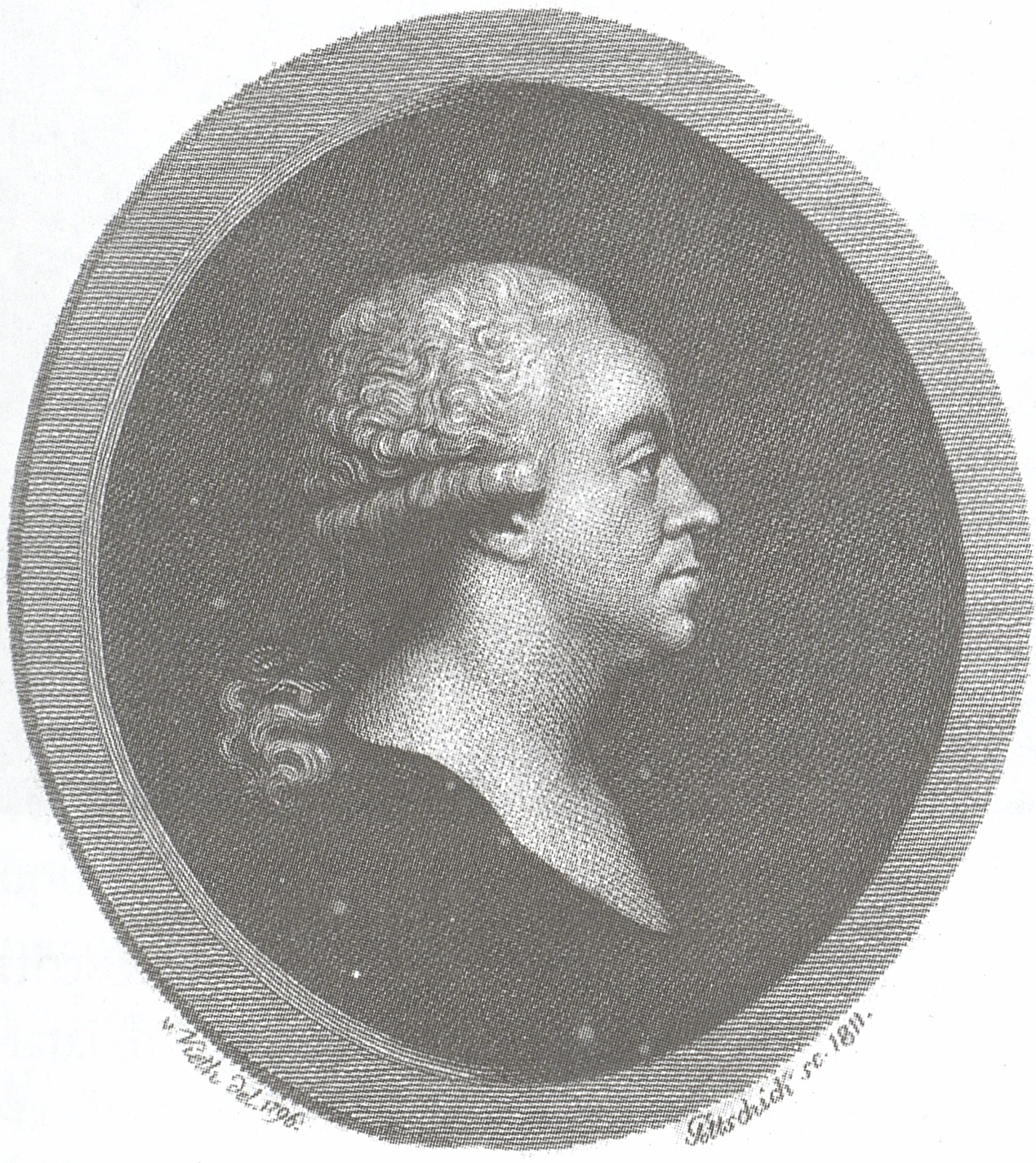
Schuster Joseph, *11 August 1748 Dresden, † 24 July 1812 Dresden, German composer, conductor, harpsichordist. He first studied music with his father, a court musician and singer, and with J.G. Schürer in Dresden. Between 1765 and 1768, thanks to a scholarship from the Elector of Saxony, he travelled with F. Seydelmann and J.G. Naumann to Italy, where he studied with G. Pera in Venice; during his second stay in Italy between 1774 and 1777, he furthered his studies with G.B. Martini in Bologna. From 1772 until the end of his life, he was associated with the court of Frederick Augustus III, Elector of Saxony, who reigned from 1763 to 1827 in Dresden, initially (together with F. Seydelmann) as a composer and conductor of church music, and from 1781 (together with Seydelmann, Schürer and Naumann) he also directed chamber and opera music, and in 1787 he was appointed (together with F. Seydelmann) court kapellmeister. He decided on the composition of the court ensembles and their repertoire (he supported performances of works by J. Haydn, W.A. Mozart, and I. Pleyel), while also teaching music to the elector’s children. Between 1778 and 1781, during his third stay in Italy, he staged highly successful operas in Naples and Venice. He also engaged musicians and singers and compiled sheet music for the Dresden ensemble. Schuster took an active part in the musical life of Dresden, gaining considerable recognition and fame as a composer and an effective organiser of concerts and opera performances. His charming manner, careful upbringing and sociability brought him fame and popularity both at home and abroad; apart from his closest friends, he also enjoyed the recognition and friendship of Frederick Augustus III and maintained contacts with, among others, J.A. Hass and W.A. Mozart.
During Schuster’s lifetime, his works were frequently performed and enjoyed great popularity; his music was considered original, fresh, and free from unthinking adherence to prevailing trends; the influence of his education in Italy on his compositional technique was also emphasised. Throughout his life, he composed all genres of religious music, sometimes considered by his contemporaries to be the best in his oeuvre. As an opera composer, Schuster was particularly valued for his opera buffa (e.g. Lo spirito di contradizione), which was the most numerous genre in his oeuvre. He also composed opera seria (Didone abbandonata), gaining fame and recognition almost equal to that of N. Jommelli, with whom he was regarded as a rival, and additionally composed Singspiele (Der Alchymist). His stage works are characterised by the virtuosity of solo and choral vocal parts combined with sentimental elements, wit and musical humour (e.g. the so-called fugue of laughter in Il pazzo per forza), and variation in overtures. Elements of comedy are combined with early Romantic elements in his operas (Rübenzahl). Cantatas (e.g. the famous Lob der Musik) played an important role in the development of Schuster’s compositional style, as did oratorios, in which he combined subtle solo passages with the full sound of the choir and orchestra. Schuster’s instrumental works deserve special attention, both chamber music (quartets, divertimenti, duets), which show the influence of the Viennese school and enjoyed the interest and recognition of W.A. Mozart, as well as solo harpsichord and piano works. Schuster was interested in promoting the newly emerging hammer action piano. Most of his works are preserved in manuscripts at the Sächsische Landesbibliothek in Dresden.
Literature: obituary, “Allgemeine Musikalische” XIV, 1812; R. Engländer Die Opern J. Schusters (1748–1812), “Zeitschrift für Musikwissenschaft” X, 1927/28; R. Engländer Les sonates de violon de Mozart et les “Duetti” de J. Schuster, “Revue de Musicologie” XX, 1939; R. Engländer Problem kring Mozarts violinsonat and E minor KV 304, “Svenk Tidskrift för Musikforskning” XXXIII, 1951; R. Engländer Die Echtheitsfrage in Mozarts Violinsonaten KV 55–60, “Die Musikforschung” VIII, 1955; R. Engländer Die Dresdner Instrumentalmusik in der Zeit der Wiener Klassik, Uppsala 1956 (includes divertimento/sonata for harpsichord and violin and a thematic catalogue of violin sonatas); R. Engländer Nochmals Mozart und der Dresdner J. Schuster, “Svenk Tidskrift för Musikforskning” XXXIX, 1957; L. Finscher Mozarts “Mailänder” Streichquartette, “Die Musikforschung” XIX, 1966; H.-G. Ottenberg Das Dresdner Singspiel, in: Die italienische Oper in Dresden von J.A. Hasse bis F. Morlacchi, materials from the conference in Dresden 1987, ed. G. Stephan and H. John, Dresden 1988; L. H. Ongley Liturgical Music in Late Eighteenth-century Dresden: Johann Gottlieb Naumann, Joseph Schuster, and Franz Seydelmann, doctoral dissertation, New Heaven 1992; L.H. Ongley The Reconstruction of an 18th-Century Basso Group, “Early Music” XXVII, 1999; G. Poppe Über historisches Gedächtnis in der Kirchenmusik: Zur Bearbeitung zweier Messen von Johann David Heinichen durch Joseph Schuster, “Händel-Jahrbuch” 47, 2001; Joseph Schuster in der Musik des ausgehenden 18. Jahrhunderts, ed. G. Poppe, S. Voss, Dresden 2015.
Compositions
Instrumental:
21 symphonies
numerous concertos for harpsichord/piano, including Concerto in E flat major, 1792/93, Concerto a due cembali 1773
6 string quartets, 1778–91 (4 of them formerly attributed to W.A. Mozart)
Violin Trio ca. 1768
6 sonatas for harpsichord and violin, ca. 1776
6 Divertimenti da camera for harpsichord and violin, ca. 1777
6 pièces à Il clavecins 1790–91
Variazioni per due cembali 1793–94
Recueil de petites pièces pour le clavecin ou fortepiano à quatre mains, Dresden 1799
Divertimenti per il cembalo and Divertimenti per il pianoforte 1794–95
3 pieces for mandolin and other instruments
Vocal-instrumental:
oratorios:
La passione di Gesù Cristo, text by P. Metastasio, performed in Dresden 1778
Ester, performed in Venice 1781
Mosè riconosciuto, text by G.A. Migliavacca, 1786
La Betulia Liberata, text by P. Metastasio, 1796
Gioas re di Giuda, text by P. Metastasio, 1803
in addition, 25 masses, mass parts and other religious works, most of which are lost, with only 14 offertories, 5 Magnificats, 15 Marian antiphons, 2 hymns, 2 litanies, Stabat Mater 1782, and numerous psalms surviving
cantatas and other compositions to secular texts, for various ensembles, most often for solo voice, choir and orchestra, including:
Amor prigioniero, 1769
Lob der Musik, piano reduction, Lepizig 1784
Il ritorno del sole sull’orizzonte, 1808
Gesang zur Feyer des Friedens und der sächsischen Königswürde
Per il felice ritorno di Carlsbad
La sorpresa, La tempesta and Il nome to text by P. Metastasia
numerous arias and songs
Stage:
opere serie:
La Didone abbandonata, libretto by P. Metastasio, staged in Naples 1776
Demofoonte, libretto by P. Metastasio, staged in Forlì 1776
Creso in Media, libretto by G. Pagliuca, staged in Naples 1779
Amore e Psyche, libretto according to M. Coltellini, staged in Naples 1780
opere buffe:
Lo spirito di contradizione, libretto by C. Mazzola, staged in Vienna 1778, German translation titled Doktor Murner, staged in Dresden 1785
Il marito indolente, libretto by C. Mazzola, staged in Dresden 1782
Il pazzo per forza, libretto by C. Mazzola, staged in Dresden 1784
Gli avari in trappola, libretto by C. Mazzola, staged in Dresden 1787
Rübenzahl ossia Il vero amore, libretto by C. Mazzola, staged in Dresden 1789
Il servo padrone ossia L’amore perfecto, libretto by C. Mazzola, staged in Dresden 1793
La fedeltà in amore, libretto by C. Mazzola, staged in Dresden 1773
L’idolo cinese, libretto by G.B. Lorenzi, staged in Dresden 1776
L’amore artigiano, libretto by C. Goldoni, staged in Venice 1776
La schiava liberata, libretto by G. Martinelli, staged in Dresden 1777
Ruggiero e Bradamante, libretto by C. Mazzola, staged in Padua 1779
Il bon ton, libretto by C. Mazzola, staged in Venice 1780 (lost)
La festa delle lanterne, C. Mazzola, staged in Dresden 1790
Osmano bey d’Algeri, libretto by G. Cinti, staged in Dresden 1800
L’amor prigionero, libretto by P. Metastasio, staged in Dresden 1801
Il giorno natalizio, pastiche, libretto by G. Cinti, staged in Dresden 1802
Der Alchymist oder Der Liebesteufel (also entitled Le triomphe de l’amour sur la sorcellerie), libretto by A.G. Meissner according to M.A. Le Granda, staged in Dresden 1778
Die wüste Insel, libretto by A.G. Meissner according to P. Metastasia, staged in Lepizig 1779
Editions:
4 string quartets attributed to W. A. Mozart, published by H. Wollheim, Mainz 1932
Der Alchymist, published by R. Engländer, Kassel 1958, facsimile edition also in «German Opera 1770–1800» V, New York 1985
6 Divertimenti da camera from ca. 1776, published by W. Plath, “Nagels Musik-Archiv” Nr 229, 232 and 233, Kassel 1971–73
Symphony in D major, in: The Symphony in Dresden, published by H.-G. Ottenberg and Z. Pilkovä, «The Symphony 1720–1840» series C, X, New York 1984
Stabat mater, published by M. Leibich, «Musik aus der Dresdner Hofkirche», Beeskow 2004
Il bon ton, 1 and 2, published by H. Vladar, Bonn 2005
Mass No. 13 in A major, published by K. Winkler, Beeskow 2012
Mass No. 6 G major, published by T.J. Martino, New York 2013
Missa in Re Minore: Kyrie eleison, published by R. Divall, Melbourne 2014
Concerto for 2 harpsichords and orchestra in D major, published by J.V. Schmidt, Beeskow 2015, Overture Gli avari in Trappola, ed. T.J. Martino, New York 2016
Overture Il marito indolente, New York 2016
Overture Il servo padrone ossia L’amor Perfetto, New York 2016
Overture Osmano, dey d’Algeri, published by T. J. Martino, New York 2017
Regina caeli in A major, published by R. Brodersen, Dresden 2017