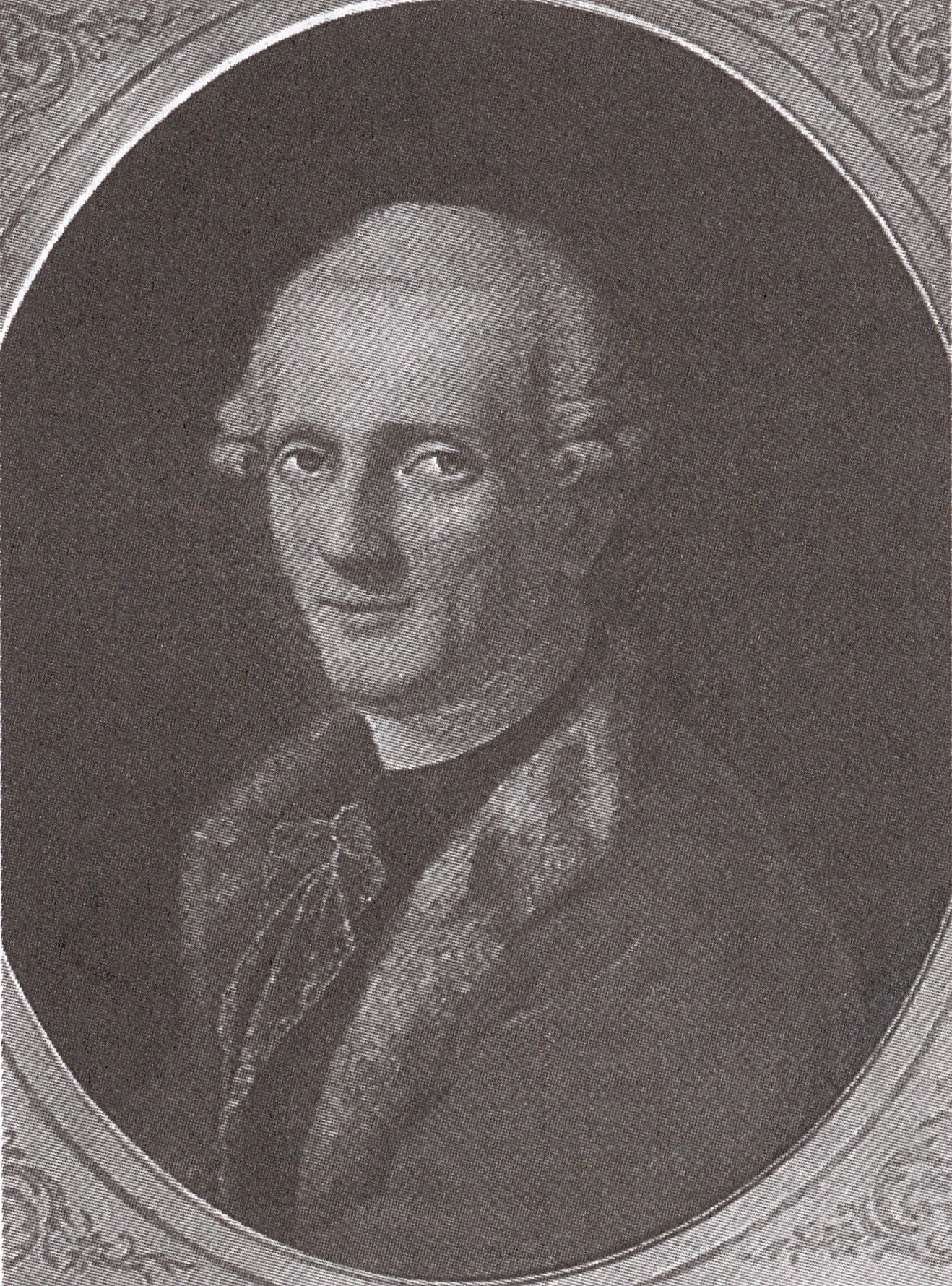
Piccinni, Piccini, Niccolò Vito, *16 January 1728 Bari, †7 May 1800 Passy (near Paris), Italian composer. He was son of a musician. He probably studied with L. Leo and F. Durante at the Conservatorio di S. Onofrio a Capuana in Naples between 1742 and 1754. In 1754, he made his successful debut with the comic opera Le donne dispettose; his subsequent opere buffe and opera seria were also very well received. In 1756, he married his student, the singer Vincenza Sybilla. In 1758, he left for Rome in connection with the staging of Alessandro nelle Indie. In 1758, he left for Rome in connection with the staging of Alessandro nelle Indie. There in 1760, he composed his most outstanding comic opera, La Cecchina, better known as La buona figliuola, to a libretto by C. Goldoni (who based it on S. Richardson’s popular sentimental novel Pamela, 1740). The opera achieved great success in Rome and also gained wide acclaim throughout Europe, even being staged in Beijing. Its premiere in Warsaw took place in 1765, where Piccinni’s stage works were among the most frequently performed Italian operas (1766: L’astrologa, L’Americano, 1775: Il cavaliere per amore and La pescatrice, 1784: Le finte gemelle). Piccinni’s fame as one of the most outstanding Italian opera composers was confirmed by further works, including La buona figliuola maritata, La pescatrice, L’Olimpiade (2nd version). In 1773, P. Anfossy became fashionable in Rome, and Piccinni had to give up the stage. By 1773, P. Anfossi had become the dominant figure on the Roman operatic stage, forcing Piccinni to relinquish his position. He returned to Naples, where he retained a strong position, renewed his cooperation with local theatres, became the second maestro di cappella at the cathedral, directed the royal orchestra and taught singing. During this time, he wrote several operas, including the second version of Alessandro nelle Indie, considered by many to be the best of his opera seria, and I viaggiatori, which was staged with a success comparable to that of La buona figliuola.
Renowned throughout Europe, Piccinni attracted the attention of the artistic and literary circle of Gluck’s opponents in France. At the invitation of the French court, he arrived in Paris in December 1776. He became singing teacher to Queen Marie Antoinette, directed the Italian troupe at the Opera in 1778–79, and taught singing at the Ecole Royale de Musique et Déclamation from 1784. In Paris, he found himself at the centre of the second dispute between supporters and opponents of Italian opera since the querelle des bouffons. He was proclaimed the leader of the ‘anti-Gluck’ faction, which included J.-F. Marmontel (who taught Piccinni French and collaborated with him until the mid-1780s as a librettist and adapter) and J. d’Alembert and P.-L. Ginguené, among others. The so-called dispute between the ‘Gluckists’ and the ‘Piccinnists’ (in which neither composer was directly involved) rivalled and sometimes even surpassed the famous querelle des bouffons in its vehemence.
Piccinni’s first French opera, Roland (1778), was a success despite the composer’s fears. Gluck was also offered the commission to compose Roland, but he refused. In 1779, the director of the Paris Opera commissioned both composers to write a tragedy on the same subject – Iphigénie en Tauride, which fuelled the dispute, dividing the audience into two camps. Gluck’s work (1779) was the first to premiere and was received with ovations. Piccinni’s opera was not staged until 1781; it did not achieve the same success as Gluck’s Iphigénie. The Gluckists ultimately won the dispute. In 1779, Gluck left Paris, and Piccinni’s opponents presented him with another rival in the person of A. Sacchini. Several of Piccinni’s subsequent operas – Atys, Le faux lord, and especially Didon (performed until 1826) – were successful, although Pénélope in 1785 was a failure, and his last works, including Clytemnestre, were never staged. Piccinni, still keeping his distance from French opera controversies, gave a speech at Sacchini’s funeral (1786), and after Gluck’s death (1787), he presented a project to establish annual celebrations in his honour.
After the outbreak of the French Revolution, the composer lost his position at the Ecole Royale and returned to Naples in 1791. He was well received at the court of King Ferdinand IV, but in 1794, due to his daughter’s marriage to the French revolutionary, Piccinni was placed under house arrest for four years. During this time, he composed church music. In 1798, he returned to Paris, received compensation and a salary; a few months before his death, he was appointed by Napoleon as one of the inspectors of the conservatory; he did not take up the duties associated with this position.
Two of Piccinni’s sons, Giuseppe Maria and Lodovico (Luigi), were likewise active in the field of stage music.
Piccinni, one of the leading representatives of the last generation of the Neapolitan school, occupies an important place in the history of Italian and French opera of the 18th century. His opera seria (mostly to librettos by P. Metastasio) represent a high artistic level, but the composer’s talent was most evident in his comic operas. He wrote these works entirely in the buffo style, such as La cantarina, short farces with a clear influence of commedia dell’arte and folk music, as well as opere semiserie in several acts. Piccinni, similarly to Paisiello and Cimarosa, contributed to the deepening of the expression of opera buffa and its transformation into a sentimental-comic bourgeois opera, which developed in the work of 19th-century composers. Piccinni’s great dramatic sense allowed him to achieve a balance between buffo, serio and semiserio elements. His most outstanding dramma giocoso, La buona figliuola, one of the best before Mozart and Rossini, is a model of mature opera buffa, giving rise to a new operatic trend. It includes parti serie, and comic scenes are juxtaposed with serious or lyrical ones (Cecchina’s lament Una povera ragazza). At the same time, the composer did not abandon elements of the commedia dell’arte (the character of the soldier Tagliaferro, characterised by typical buffo devices) and passages with folk colouring.
Piccinni’s French operas show significant differences from his Italian operas. The composer gradually blended elements of the Italian style, tragédie lyrique and opéra comique into a homogeneous whole. He introduced the choir (e.g., in the finale of Act 1 of Atys or in Iphigénie) and ballet, significantly reduced the use of coloratura, and used a French-style overture in Diane et Endymion. In his first tragedy, Roland, although considered one of the finest musical dramas of the period, the combination of Italian and French elements still appears somewhat artificial. In his later works (Atys, Didon) Piccinni achieved a fuller synthesis, a closer integration of text and music, and a more precise treatment of French prosody (despite the remnants of opera seria rhetoric) in his later works, thus satisfying the tastes of the French audience – as reflected in the successes of Roland, and especially Didon. Although his dramatic talent differed from Gluck’s, he created tragedies that were sometimes compared with Gluck’s works, albeit representing a different stylistic trend; according to some researchers, in Didon Piccini completely equalled him. Sacchini, Spontini and Bellini later followed the path laid out by Piccinni rather than Gluck.
In Piccinni’s stage works, compared to other compositions of the time, particular attention is drawn to the instrumental layer and the greater role of the orchestra, especially in French operas. The orchestra gradually becomes more colourful and independent of the vocal line, highlighting both the meaning of the text and the character of each scene. Following the French model, the activity of wind instruments increases, with them being given independent parts (Roland). In recitatives, Piccinni sometimes introduced orchestral interjections to complement the text. The harmonic structure was also enriched (characteristic major-minor relationships). The composition shows a tendency toward integration, both through thematic connections between movements and through the overture’s relation to the subsequent scenes (I viaggiatori), creating larger formal wholes (e.g., Dido’s dream interrupted by the Trojan chorus), smooth connection of the scenes. The composer used a variety of forms of arias and ensemble pieces, including cavatinas, one-part arias with modulation, two-part arias (the second part often motivically related to the first), ABA forms, and rondos. In his earlier opere serie, he used da capo arias, later replaced by dal segno arias, as well as sonata form and arias in several movements (comic arias were generally two-part). The choice of aria form is usually dictated by the course of the action. The elaborate ensembles pieces are particularly noteworthy. Piccinni was one of the first to create extensive, multi-sectional finales, composed of solo and ensemble fragments (Ercole al Termedonte), attaching great importance to their layout in terms of key and tempo. Particularly noteworthy are the rondo finales, which role is to integrate the whole, as in both acts of La buona figliuola.
Piccinni’s style is distinguished by contrasting sections, simple cavatinas with elaborate ensemble pieces, surprising changes in expression, a sense of comic effect, and above all, melodic richness and lyricism – the primary expressive quality of his music – often with a sentimental tone. Melodics of Piccinni’s works is characterised by lyricism and a variety of nuances, serving as the principal means of musical characterisation of both roles and dramatic situations; at times he combined folk-derived motifs with elaborate coloratura. The elegance and lightness of his style, showing affinities with the galant style, was sometimes judged overly superficial.
Literature: Ch. Burney The Present State of Music in France and Italy, London 1771, 2nd edition 1773; J.-F. Marmontel Essai sur les révolutions de la musique en France, Paris 1777; J.-B. de La Borde Essai sur la musique ancienne et moderne, Paris 1780; P.-L. Ginguené Notice sur la vie et les ouvrages de Niccolò Piccinni, Paris 1801, Italian translation Niccolò Piccinni. Vita e opere, eds. P. Moliterni and M. Sajous D’Oria, Bari 1999; J.-F. Marmontel Mémoires d’un père, Paris 1804; G. Desnoiresterres Gluck et Piccinni. 1774–1800, Paris 1872, 2nd edition 1875, reprint Geneva 1971; E. Thoinan Notes bibliographiques sur la guerre musicale des Gluckistes et Piccinnistes, Paris 1878; H. de Curzon Les dernières années de Piccinni à Paris, Paris 1890; A. Cametti Saggio cronologico dette opere teatrali (1754–1794) di Niccolò Piccinni, “Rivista Musicale Italiana” VIII, 1901; H. Abert Piccinni als Buffokomponist, “Jahrbuch der Musikbibliothek Peters” XX, 1913; A. Della Corte Piccinni, Bari 1928; M. Bellucci la Salandra Opere teatrali serie e buffe di Niccolò Piccinni dal 1754 al 1794 and A. Gastoué Niccolò Piccinni et ses opéras à Paris, “Note d’archivio per la storia musicale” XII, 1935 and XIII, 1936; N. Pascazio L’uomo Piccinni e la “Querelle célèbre,” Bari 1951; W.C. Holmes Pamela Transformed, “The Musical Quarterly” XXXVIII, 1952; E. Winternitz A Homage of Piccinni to Gluck, in the commemorative book of K. Geiringer, eds. H.C.R. Landon and R.E. Chapman, London 1970; J. Rushton The Theory and Practice of Piccinnisme, „Proceedings of the Royal Musical Association” XCVIII, 1971/72; J. Rushton “Iphigénie en Tauride.” The Operas of Gluck and Piccinni, “Music and Letters” LIII, 1972; G. Allroggen Piccinni’s “Origille,” “Analecta Musicologica” XV, 1975; P. Moliterni Niccolò Piccinni a Parigi. La “Iphigénie en Tauride” tra querelle e ideologia, “Musica/Realtà” 13, 1984; M. Hunter The Fusion and Juxtaposition of Genres in Opera Buffa 1770–1800. Anelli and Piccinni’s “Griselda,” “Music and Letters” LXVIII, 1986; P. Moliterni Piccinni segreto. Un itinerario tra i nuovissimi, in: La musica a Bari datte cantorie medievali al Conservatorio Piccinni, eds. D. Fabris and M. Renzi, Bari 1992; E. Schmierer Piccinni’s “Iphigénie en Tauride.” “Chant périodique” and Dramatic Structure, “Cambridge Opera Jurnal” 4, 1992; J. Stenzl “Una povera ragazza.” C. Goldoni’s “La buona figliuola” in N. Piccinni’s Vertonung, w: Zwischen Opera buffa und Melodrama, eds. J. Maehder and J. Stenzl, Frankfurt am Main 1994; M. Calella Un italiano a Parigi. Contribute alla biografia di Niccolò Piccinni, “Rivista Italiana di Musicologia” XXX, 1995; A. Żórawska-Witkowska Muzyka na dworze i w teatrze Stanisława Augusta, Warszawa 1995; P. Petrobelli Piccinni au travail avec Marmontel, in the commemorative book of J. Mongrédien, red. J. Gribenski et al., Paris 1996; W. Ensslin Niccolò Piccinni – “Catone in Utica.” Quellenüberlieferung, Aufführungsgeschichte und Analyse, Frankfurt am Main 1996; F. Piperno “La mia cara Cecchina è baronessa.” Livelli stilistici e assetto drammaturgico ne “La buona figliuola” di Goldoni–Piccinni, in: Studien zur italienischen Musikgeschichte XV, ed. F. Lippmann, “Analecta Musicologica” XXX/2, 1998; E. Schmierer Die Tragédies lyriques Niccolò Piccinnis, Laaber 1999; Il tempo di Niccolò Piccinni, eds. C. Gelao, M. Sajous D’Oria et al., Bari 2000; A. Calella Piccinni und die Académie Royale de Musique. Neue Dokumente, “Neues musikwissenschaftliches Jahrbuch” IX, 2000; Piccinni e la Francia, ed. G. Dotoli, Fasano 2001; S. Capone Piccinni e l’opera buffa. Modelli e varianti di un genere alla moda, Foggia 2002; Niccolò Piccinni, musicista europeo, proceedings of an international conference held in Bari, September 28–30, 2000, eds. A. Di Profio and M. Melucci, Bari 2004; E. Pantini, C. Faverzani, M. Marconi Lo sposo burlato: da Piccinni a Dittersdorf. Un’opera buffa in Europa, Lukka 2018; B. Jerold Disinformation in mass media. Gluck, Piccinni and the Journal de Paris, London 2020.
Compositions
Stage:
comic operas:
to librettos by A. Palomba:
Le donne dispettose, staged in Naples 1754
Il curioso del suo proprio danno, libretto after Don Kichot by M. de Cervantes, staged in Naples 1756, revised version titled Il curioso imprudente, with A. Sacchini, staged in Naples 1761
Madama Arrighetta, libretto after C. Goldoni’s Monsieur Petiton, staged in Naples 1758
La scaltra letterata, staged in Naples 1758
L’Origille, staged in Naples 1760
Il cavalier parigino, with A. Sacchini (?), staged in Naples 1762
La donna vana, staged in Naples 1764
to librettos by G.B. Lorenzi:
Le gelosie, staged in Naples 1755
Gelosia per gelosia, staged in Naples 1770
Don Chisciotte, libretto after M. de Cervantes, staged in Naples (?) 1770
La corsara, staged in Naples 1771
Le trame zingaresche, staged in Naples 1772
La serva onorata, libretto after L. Da Ponte’s Le nozze di Figaro, staged in Naples 1792
to librettos by C. Goldoni:
La Cecchina ossia La buona figliuola, libretto after S. Richardson’s Pamela or Virtue Rewarded, staged in Rome 1760
La buona figliuola maritata, staged in Bologna 1761
La bella verità, staged in Bologna 1762
La notte critica, staged in Lisbon 1767
Vittorina, staged in London 1777
to librettos by G. Petrosellini:
Le vicende della sorte, libretto after I portentosi effetti della madre natura C. Goldoni, staged in Rome 1761
Il cavalière per amore, staged in Naples 1762 or Rome 1763
Le contadine bizzarre, staged in Rome or Venice 1763
L’incognita perseguitata, staged in Venice 1764
L’astratto ovvero Il giocator fortunato, staged in Venice 1772
to librettos by P. Mililotti:
I sposi perseguitati, staged in Naples 1769
Il vagabondo fortunato, staged in Naples 1773
L’ignorante astuto, staged in Naples 1775
I viaggiatori, staged in Naples 1775
Enea in Cuma, parody, staged in Naples 1775
Gli uccellatori, libretto after C. Goldoni (?), staged in Naples or Venice 1758
***
Le beffe giovevoli, libretto after C. Goldoni (?), staged in Naples 1760
La furba burlata, with N. Logroscino, libretto P. di Napoli (?) after A. Palomba, staged in Naples 1760, with additions by G. Insanguine, staged in Naples 1762
Lo stravagante, libretto A. Villani (L. Lantino), staged in Naples 1761
L’astuto balordo, libretto G.B. Fagiuoli (?), staged in Naples 1761
L’astrologa, libretto P. Chiari, staged in Venice 1762
Amor senza malizia, staged in Nuremberg 1762
La villeggiatura, libretto after C. Goldoni (?), staged in Bologna 1764 (revised version of Le donne vendicate?)
L’equivoco, libretto A. Villani (L. Lantino), staged in 1764
Il nuovo Orlando, staged in Modena 1764
L’orfana insidiata, with G. Astarita, staged in Naples 1765
La pescatrice ovvero L’erede riconosciuta, staged in Rome 1766
La molinarella ossia Il cavaliere Ergasto, staged in Naples 1766
La francese maligna, staged in Naples 1766 (?) or Rome 1769
La finta baronessa, libretto F. Livigni (?), staged in Naples 1767
La direttrice prudente, staged in Naples 1767
Mazzina, Acetone e Dindimento, staged in Naples (?) 1767 (?)
Li napoletani in America, libretto F. Cerlone, staged in Naples 1768
La locandiera di spirito, staged in Naples 1768
L’innocenza riconosciuta, staged in Senigallia 1769
La finta ciarlatana ossia Il vecchio crédulo, staged in Naples 1769
La donna di spirito, staged in Rome 1770
Il regno della luna, staged in Milan 1770
L’olandese in Italia, libretto N. Tassi (?), staged in Milan 1770
Il finto pazzo per amore, staged in Naples (?) 1770
La donna di bell’umore, staged in Naples 1771
Le quattro nazioni o La vedova scaltra, libretto after C. Goldoni, staged in Rome (?) 1773
Gli amanti mascherati, staged in Naples 1774
La contessina, libretto M. Coltellini after C. Goldoni, staged in Verona 1775
La capricciosa, staged in Rome 1776
Le fat méprisé (Il vago disprezzato), staged in Paris 1779
La Griselda, libretto A. Anelli, staged in Venice 1793
Il servo padrone ossia L’amor perfetto, libretto C. Mazzolà, staged in Venice 1794
intermezzi, including:
La cantarina, staged in Naples 1760 (with L’Origille)
Le avventure di Ridolfo, staged in Bologna 1762
Le donne vendicate, libretto after C. Goldoni, staged in Rome 1763
Gli stravaganti ossia La schiava riconosciuta, staged in Rome 1764
Il parrucchiere, staged in Rome 1764
Il finto astrologo, libretto after C. Goldoni (?), staged in Rome 1765
L’incostante, libretto A. Palomba, staged in Rome 1766
La baronessa di Montecupo, staged in Rome 1766
Lo sposo buriato, staged in Rome 1769
Le finte gemelle, libretto G. Petrosellini, staged in Rome 1771
L’Americano, staged in Rome 1772
La sposa collerica, staged in Rome 1773
opere serie:
to librettos by P. Metastasio:
Zenobia, staged in Naples 1756
Nitteti, staged in Naples 1757
Alessandro nelle Indie, staged in Rome 1758, 2nd version, staged in Naples 1774
Ciro riconosciuto, staged in Naples 1759
Siroe re di Persia, staged in Naples 1759
Il re pastore, staged in Florence 1760
L’Olimpiade, staged in Rome 1761, 2nd version, staged in Rome 1768, revised version, staged in Naples 1774
Demofoonte, staged in Reggio Emilia 1761
Artaserse, staged in Rome 1762
Antigono, staged in Naples 1762, revised version staged in Rome 1771
Demetrio, staged in Naples 1769
Didone abbandonata, staged in Rome 1770
Catone in Utica, staged in Naples or Mannheim 1770
Ipermestra, staged in Naples 1772
***
Caio Mario, libretto G. Roccaforte, staged in Naples 1757 (?)
Tigrane, libretto C. Goldoni after F. Silvani (?), staged in Turin 1761
Il gran Cid, libretto G. Pizzi, staged in Naples 1766
Cesare in Egitto, libretto G.F. Bussani, staged in Milan 1770
Scipione in Cartagena, libretto A. Giusti, staged in Modena 1772
Radamisto, libretto A. Marchi, staged in Naples (?) 1776
Diane et Endymion, libretto and compositional collaboration with J.-F. Espic de Liroux, staged in Paris 1784
Ercole al Termedonte, staged in Naples 1793
I decemviri
tragédies lyriques:
to librettos by J.-F. Marmontel:
Roland, libretto after Ph. Quinault, staged in Paris 1778
Atys, libretto after Ph. Quinault, staged in Paris 1780
Didon, staged in Fontainebleau 1783
Pénélope, staged in Fontainebleau 1785
***
Phaon, drame lyrique, libretto C.-H. Watelet, staged in Choisy 1778
Iphigénie en Tauride, libretto A. du Congé Dubreuil, staged in Paris 1781
Adèle de Ponthieu, libretto J.-P.-A. de Razins de Saint-Marc, staged in Paris 1781
Clytemnestre, libretto L.G. Pitra (?), 1787
opéras comiques:
Le dormeur éveillé, libretto J.-F. Marmontel, staged in Paris 1783
to librettos by G.M. Piccinni:
Le faux lord, staged in Versailles 1783
Lucette, staged in Paris 1784
Le mensonge officieux, staged in Paris 1787.
Vocal and vocal-instrumental:
oratorios, including:
La morte di Abele, text by P. Metastasio, performed in Naples 1758
Gionata, text by C. Sernicola, performed in Naples 1792
cantatas for 3 voices, including:
La pace fra Giunone ed Alcide, performed in Naples 1765
Giove revotato, performed in Naples 1790
Arco di amore, text by D. Piccinni, 1797
***
Mass in G major for 5 voices and orchestra
Mass in D major for 3 voices
Magnificat in C minor for 3 voices
psalms for a cappella voices or with instrumental accompaniment, other religious works
***
6 canzonettas for 2 voices and piano
Hymene e l’Hymen for choir
Il gran re perdona for soprano and orchestra
Solfeggi for soprano and basso continuo
arias, duets, trios, vocal quartets.
Instrumental:
Flute Concerto in D major
3 sonatas for harpsichord
toccata for harpsichord
sonata on 3 themes for harpsichord
Pièce E major for harpsichord
Sinfonia B-flat major for harpsichord or organs
Editions:
facsimile editions
Iphigénie en Tauride, 1781, introduction A. Ford, London 1972
Catone in Utica, ed. H.M. Brown, «Italian Opera 1640–1770» L, New York 1978
La buona figliuola, ed. H.M. Brown, introduction E. Weimer, «Italian Opera 1640–1770» LXXX, New York 1983
Atys, 2nd edition from around 1783, ed. J. Rushton, «French Opera in the 17th and 18th Centuries» LVI, Stuyvesant (New York) 1991
La cantarina, ed. G. Feder, «Concentus Musicus» vol. 8, Laaber 1989
***
La buona figliuola, ed. F.P. Russo, «Concentus Musicus» XVI Kassel 2017
Il regno della luna, ed. L. Mays, in 2 parts, «Recent Researches in the Music of the Classical Era», Middleton (Wisconsin) 2019.