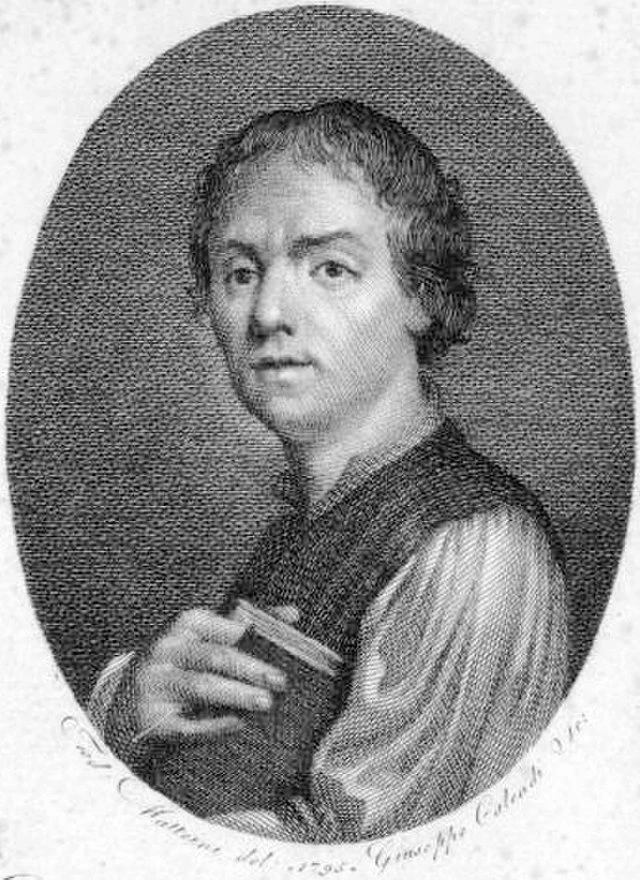
Parabosco Girolamo, Hieronimo, *ca. 1524 Piacenza, †21 April 1557 Venice, Italian organist, composer and man of letters. He was the son of the organist, Vincenzo. Around 1540, he studied with A. Willaert in Venice. In 1546 or slightly earlier, he was a guest of F. Cortecci in Florence, and between 1548 and 1551, he undertook short expeditions to Urbino, Ferrara, Piacenza, Brescia, Padua and Verona. From June 1551 until the end of his life, he was the first organist of the Basilica of S. Marco in Venice; he participated in the activities of the local musical and literary academies, including the one led by D. Venier, which considered the poetic assumptions of P. Bemba. In 1546–52, he wrote eight comedies (including one in verse) and short stories, and in 1547, he published a collection of his poetry entitled Il primo libro di madrigali.
In Parabosco’s madrigals, often written to texts by F. Petrarch, imitative structures definitely predominate; they are also characterised by frequent division of the ensemble into contrasting groups of voices and very good declamation of the text. His ricercars arouse particular interest because Musica nova, a collection edited by A. Willaert, is the first known print intended for instrumental ensembles. One of the ricercars is an imitated piece, and the themes also appear in diminution, inversion and retrograde; in the second, Parabosco introduced the melody of the antiphon Da pacem as a cantus firmus and linked the remaining voices to the cantus firmus or only to each other with numerous imitations.
Literature: F. Caffi Storia della musica sacra nella già Cappella ducale di San Marco in Venezia dal 1318 al 1797, Venezia 1884–1885; G. Bianchini Girolamo Parabosco, scrittore e organista del secolo XVI, Venice 1899; A. Einstein The Italian Madrigal, Princeton 1949; R. Giazotto Harmonici concenti in aere veneto, Rome 1954; F. Bussi Umanità e arte di Girolamo Parabosco, madrigalista, organista e poligrafo, 2 volumes, Piacenza 1961; H.C. Slim The Keyboard Ricercar and Fantasia in Italy, ca. 1500–1550, with Reference to Parallel Forms in European Lute Music of the Same Period, dissertation, Harvard University, 1961; M. Feldman The Academy of Domenico Venier, Music’s Literary Muse in Mid-Cinquecento Venice, “Renaissance Quarterly” XLIV, 1991; G. Tallini Ludovico Dolce, Giovanni Tarcagnota, Girolamo Parabosco. Stanze nella Favola d’Adone, Rome 2012; S. Richter Ein Dichtermusiker, seine Madrigalsammlung und der Liebesdiskurs in Venedig. Girolamo Parabosco (ca. 1524–1557), Wrzburg 2022.
Compositions:
Madrigali…, 20 pieces for 5 voices, including eight in 2 parts, published in Venice 1546 (1 already in anthology from 1544)
5 other madrigals for 3–6 voices, in collective prints from 1541, 1544 and 1546 published in Venice
Instrumental:
2 ricercars for 4 voices in Musica nova…, published in Venice 1540 (B preserved) and in Musicque de joye, Lyon ca. 1550
Benedictas for 2 voices in Il primo libro a due…, published in Venice 1543, 2nd ed. 1553
Editions:
7 madrigals and 3 instrumental pieces in G. Parabosco Composizioni…, ed. F. Bussi, Piacenza 1961
1 madrigal for 5 voices in A. Einstein The Italian Madrigal, vol. 3, Princeton 1949, reprint 1970
3 instrumental pieces in Musica nova, ed. H.C. Slim, «Monuments of Renaissance Music» I, Chicago 1964
2 ricercars in Musicque de joye, ed. S.F. Pogue, «Facsimile Editions» series B: Prints, XXI, Peer 1991, ed. J. Barbier, «Ricercar» I, Tours 1993