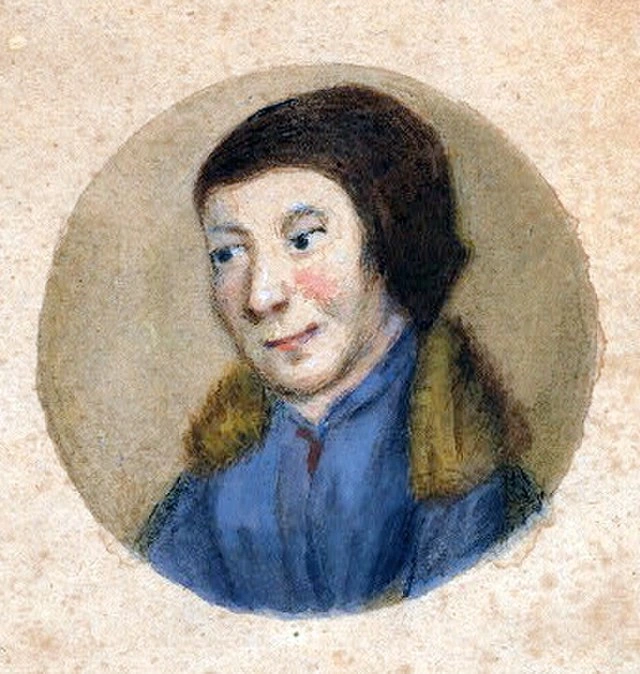
Binchois, de Binche, Binchoys, Bincoys, Bynczoys, de Bins, Wintzois, Vinczois, Gilles, Egidius, *ca. 1400 Mons (Hainaut), †20 October 1460 Soignies, Franco-Flemish composer. His father, Jean de Binche, was an advisor to William IV and Jacqueline de Bavière, who ruled Hainaut in succession. Binchois was raised at the court in Mons. Based on La déploration sur la mort de Binchois, it can be concluded that he was a soldier in his youth, after which he was ordained a priest. He came into contact with French culture and Burgundian music at a relatively early age. Probably at the same time as G. Dufay, he was a chorister at Cambrai Cathedral. In 1424/25, he stayed in Paris in the service of William de la Pole, Earl of Suffolk (later Duke of Norfolk), a great lover of poetry and music, for whom he wrote the chanson Ainsy qu’à la fois (now lost). In the spring of 1425, he returned with his patron to Hainaut, and then presumably went to England. Around 1430, he joined the chapel of Philip the Good, Duke of Burgundy, and in the same year composed the motet Nove cantum melodie on the occasion of the birth of the duke’s son. Binchois was a member of the chapel until at least 1456 and remained at the Burgundian court until his death, rising to the position of second chaplain. In addition, he received generous benefices as canon of the collegiate churches of Saint-Waudru [also known as Saint Waltrude] in Mons, Saint-Vincent in Soignies, and Saint-Pierre de Cassel. Binchois was the most prominent representative of Burgundian music alongside Dufay, highly regarded by his contemporaries, as evidenced by references in Champion des dames by M. Le Franc (1440). This poem includes a now widely known miniature depicting Binchois with a harp next to Dufay with a portative organ, symbolizing Binchois’ predilection for secular music and Dufay’s for religious music. J. Tinctoris also mentioned both composers, together with Dunstable, among the most outstanding musicians of the earlier generation, whereas J. Ockeghem composed a lament in the form of a motet for the poem La déploration sur la mort de Binchois. Binchois’s main area of compositional activity was secular songwriting; in this field, he is considered the leading representative of the chanson form in the first half of the 15th century. He wrote 54 chansons to French texts by poets associated with the Burgundian court and representing the so-called second school of rhetoric; the authors of the texts included Charles d’Orléans (chanson Mon cuer chante), Alain Chartier (rondo Triste plaisir et doleureuse joye), and Christine de Pisan (ballad Deuil angoisseux, rage desmesurée). These songs are predominantly rondeau forms with refrains and ballads with a strophic structrue. They are almost exclusively three-part compositions based on the descant-tenor structure characteristic of the Burgundian school. The highest voice displays the greatest melodic and rhythmic activity, while the tenor and countertenor serve as accompanying voices; they are usually without text and performed instrumentally. In addition, the countertenor fulfils the role of a voice complementing harmonic consonances and often moves in octave, fifth, and fourth leaps, which fundamentally influences the character of this voice’s melodic line. The structure of the pieces is subordinate to the structure of the poetic text and shows a clear division into phrases, emphasized by cadences, often containing dominant-tonic combinations. The imitation technique is widely used in these works (e.g., in the rondo Vostre allée, which displays features of the imitated form, and in the chanson Filles à marier, with elements of canon in unison).
Of Binchois’ sacred works, several Mass sections have survived (6 Kyrie, 7 Et in terra, 5 Patrem, Sanctus, and Agnus) as well as over 30 compositions with Latin texts (4 Magnificats, 26 motets, hymns, and others). In this field, Binchois was significantly inferior to Dufay, contributing little to the process of change that was then evident in all genres of sacred music. Although his mass fragments are sometimes combined in pairs (e.g. Sanctus and Agnus, Gloria and Credo; in one case Kyrie, Gloria and Credo), he did not seek to create a cyclic mass based on the cantus firmus technique and a uniform artistic concept. In sacred compositions by Binchois, we can observe stylistic influences of the chanson, especially in the melodic line of the highest voice and in the treatment of accompanying voices, and in the use of contrafacta from his own secular works (e.g. in the motet Virgo rosa venustatis). The fauxbourdon technique in the specific form and isorhythm – still deeply rooted in the Burgundian environment in the first half of the 15th century – are also widely used here.
Literature: E. Closson L’origine de G. Binchois, “Revue de Musicologie” VIII, 1924; E. Droz, G. Thibault Poètes et musiciens du XVe sitcle, Paris 1924; Ch. van den Borren Guillaume Dufay, son importance dans l’évolution de la musique au XVe siècle, Brussels 1926; J. Marix Histoire de la musique et des musiciens de la cour de Bourgogne sous le règne de Philippe le Bon, Strasbourg 1939; A. Pirro Histoire de la musique de la fin du XIVe siècle à la fin du XVIe siècle, Paris 1940; Ch. van den Borren Études sur le XVe siècle musical, Antwerp 1941; H. Besseler Bourdon und Fauxbourdon, Leipzig 1950; J. Chomiński Historia harmonii i kontrapunktu, vol. 1, Krakow 1958; E. Southern Foreign Music in German Manuscripts of the 15th Century, “Journal of the American Musicological Society” XXI, 1968; L.M. Trowbridge Style Change in the Fifteenth-Century Chanson, “Journal of Musicology” IV, 1985/86; R.D. Reynolds A Gloria-Credo by G. Binchois, “Musica Disciplina” XLII, 1988; C. Dahlhaus Bitonalität oder Oktatonik? Divergierende Vorzeichen in den Chansons von Binchois, in the commemorative book of W. Rehm, ed. D. Berke, H. Heckmann, Kassel 1989; R.T. Semmens Music and Poetry in a Chanson by G. Binchois, w: Beyond the Moon, in the commemorative book of L. Dittmera, ed. B. Gillingham, P. Merkley, Ottawa 1990; D. Fallows Embellishment and Urtext in the Fifteenth-Century Song Repertoires and Ch. Berger Hexachord und Modus. Drei Rondeaux von G. Binchois “Basler Jahrbuch für historische Musikpraxis” XIV, XVI, 1990, 1992; H. Ryschawy Zur Metrik in den Rondeaux von G. Binchois, in the commemorative book of U. Siegele, ed. R. Faber, A. Förster and others, Kassel 1991; D. Slavin Some Distinctive Features of Songs by Binchois, “Journal of Musicology” X, 1992.
Collected chansons: Musikalische Denkmäler II, ed. W. Rehm, Mainz 1957; single compositions: J.F.R. and C. Stainer Dufay and his Contemporaries, London 1898; «Denkmäler der Tonkunst in Österreich» VII, XI, XXVII, XXXI, XLI, LXXVI
Polyphonia sacra…, ed. Ch. van den Borren, Burnham 1932
G. Binchois Sechzehn weltliche Lieder zu 3 Stimmen, ed. W. Gurlitt, “Das Chorwerk” XXI, 1933
Les musiciens de la cour de Bourgogne au XVe siècle…, ed. J. Marix, Paris 1938
A 15th-Century Repertory from the Codex Reina (Paris, Bibl. Nat., Nouv. Acq. Fr. 6771), ed. N.E. Wilkins, «Corpus Mensurabilis Musicae» XXXVII, Antwerp 1966