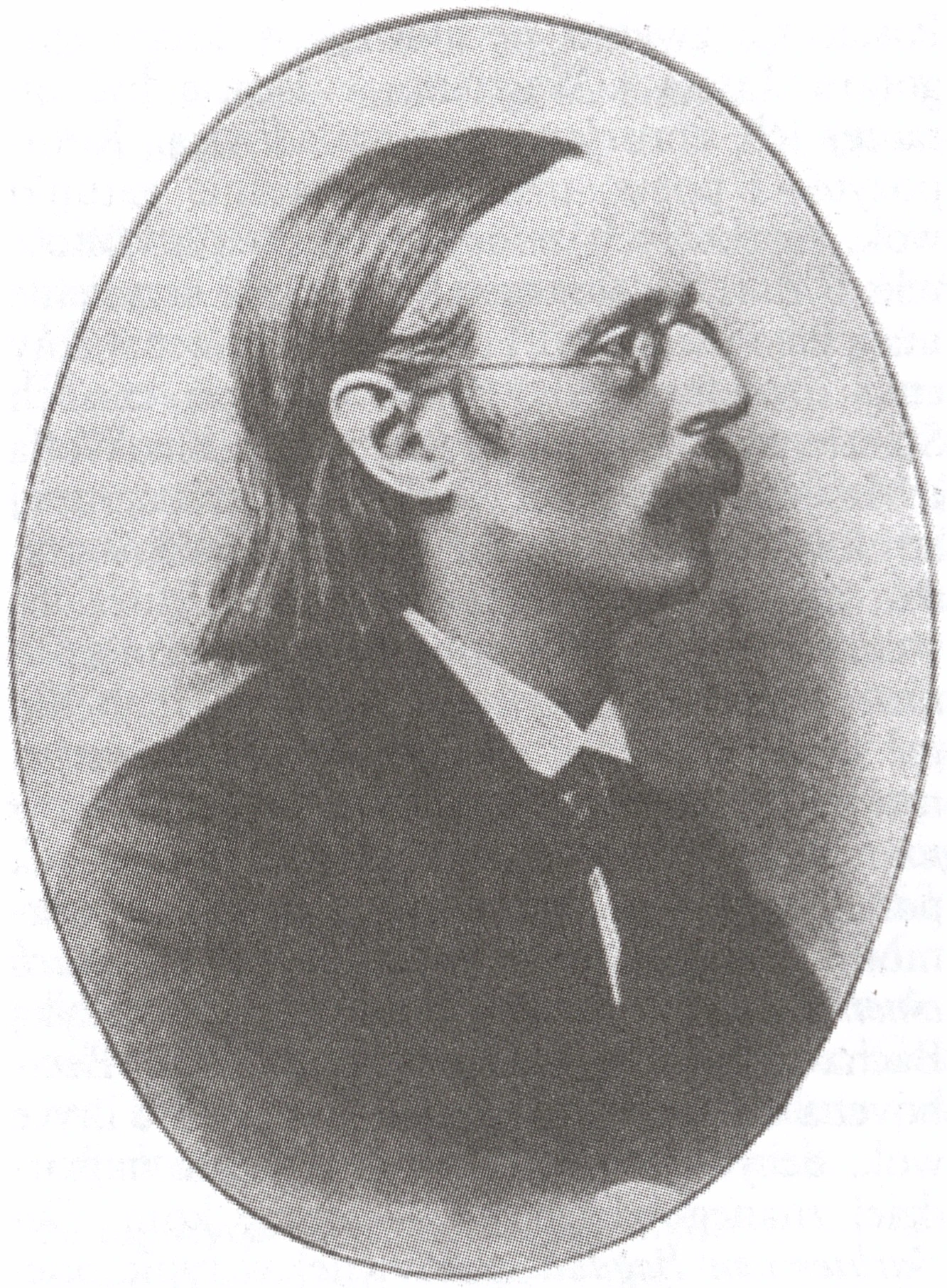
Cornelius Carl August Peter, *24 December 1824 Mainz, †26 October 1874 Mainz, German composer, poet, and music critic. He came from a family of actors and performed himself, including in 1843 at the court theater in Wiesbaden. At the same time, he studied music under J. Panny and H. Esser in Mainz, where in 1840 he became a violinist in the theater orchestra. In 1843 he moved to Berlin, where – living from 1844 to 1852 under the care of his uncle, the painter Peter Joseph Cornelius – he studied composition under S. Dehn. That is also where he became acquainted with A. von Humboldt, B. von Arnim, and J. von Eichendorff, and formed a friendship with P. Heyse. In 1851 he published music reviews in Berlin journals (“Echo,” “Modespiegel”), which brought him considerable recognition; later he also contributed to “Neue Zeitschrift für Musik.” From 1852 to 1858 he lived in Weimar among musicians associated with Liszt, becoming one of his ardent supporters. Through Liszt, he encountered Wagner for the first time, as well as Brahms, Schumann, and Berlioz. In Weimar, he also composed the opera Der Barbier von Bagdad; its Weimar premiere, conducted by Liszt in 1858, failed due to intrigues, after which Cornelius moved to Vienna, earning a living by teaching music. There he formed friendships K. Tausig, among others, and became fascinated by Wagner’s ideology. In 1865 Wagner invited him to Munich, where Cornelius took up the post of teacher of theory and harmony, as well as rhetoric with metrics and poetics, at the newly founded Königliche Hochschule; he remained in these positions until his death.
Cornelius is usually placed among the circle of Liszt and Wagner epigones; in fact, he was more an enthusiast than a follower. As a composer and poet, he recognized exclusively vocal genres, in which he achieved a strong integration of musical text and words. His solo and choral songs are of greatest importance, representing a significant stage in the development of German vocal lyricism after Schumann and before the emergence of Wolf and Mahler. His solo songs, often using his own high-quality texts, display considerable melodic invention (popular Weihnachtslieder), or a tendency to reduce melisma in favor of recitative and subtle harmonic accompaniment (Ein Ton from Trauer und Trost). In his choral works, Cornelius employed archaic techniques, including modal harmonies, cantus firmus techniques (Versuch einer Messe…), and instrumental inspiration from Bach (Drei Psalmlieder), as well as influences from Beethoven and Schubert. The structures characteristic of his vocal lyricism also shape his best-known work, the comic opera Der Barbier von Bagdad, which is related in type to operas by Lortzing and Flotow, and partly to later operas such as Der Cid and Gunlöd.
Literature: Unbekannte Briefe von Peter Cornelius, ed. G. Wagner, “Mitteilungen der Arbeitsgemeinschaft fiir mittelrheinische Musikgeschichte” 1975 nos. 30 and next; Unbekannte Opernbesprechungen von Peter Cornelius, ed. H. Schneider, “Mitteilungen den Arbeitsgemeinschaft fiir mittelrheinische Musikgeschichte” 1976 nos. 32 and next; H. Kretzschmar Peter Cornelius, Leipzig 1880; A. Sandberger Leben und Werke des Dichterkomponisten Peter Cornelius, Leipzig 1887; M. Hasse Der Dichtermusiker Peter Cornelius, Leipzig 1922–23; C.M. Cornelius Peter Cornelius. Der Wort- und Tondichter, Regensburg 1925; B. Glauert Spuren eines bewegten Lebens. Verschollenes und Unverdffentliches von Peter Cornelius, Mainz 1974; P.W Jacob Der beschwerliche Weg des Peter Cornelius zu Liszt und Wagner, Mainz 1974.
Instrumental:
Entre-Acte for orchestra, 1843
2 string quartets, 1842
3 sonatas for violin and piano, 1840, 1844, 1846
works for the piano
Vocal (texts by the composer, unless otherwise indicated):
for male choir a cappella:
Vier Lieder, text by L. Uhland, 1842
Requiem aeternam, text by the composer, 1852
Trauerchöre Op. 9, texts by various poets, 1869
Drei Männerchöre Op. 12, text by J. von Eichendorff and the composer, 1873
Reiterlied Op. 17, for 2 male choirs, text by the composer, 1873
for mixed choir a cappella, including:
Versuch einer Messe über den Cantus firmus in der dorischen Tonart, text by the composer, 1852
Beethoven-Lied Op. 10, text by the composer, 1870
Drei Chorgesänge Op. 11, text by H. Heine and F. Rückert, 1871
Drei Psalmlieder Op. 13, text by the composer, 1872
Trost in Tränen Op. 14, text by J.W. Goethe, 1872
Liebe. Ein Zyklus von drei Chorliedern, text by Angelus Silesius, 1872
Vier Italienische Chorlieder Op. 20, texts after Italian poets, 1872
Requiem, text by Ch. Hebbel, text by the composer, 1872
So weich und warm, text by P. Heyse, 1874
Sechs Lieder, text by P. Heyse, 1848
Sechs Lieder Op.1, text by the composer, 1854
Neun geistliche Lieder Op. 2, text by the composer, 1854–55
Drei Lieder Op. 4, text by the composer, 1854
Trauer und Trost Op. 3, text by the composer, 1854
Drei rheinische Lieder, text by the composer, 1856
Brautlieder, text by the composer, 1856–58
Weihnachtslieder Op. 8, text by the composer, 1856, 2nd ed. 1870
Drei Sonette, text by G.A. Bürger, 1859
Sechs Lieder Op. 5, text by various poets, 1856–62
An Berta Op. 15, text by the composer, 1865
numerous duets, including cycles:
Drei zweistimmige Lieder Op. 6, text by Ch. Hebbel and W. von Tegernsee, 1862
Duette Op. 16, text by various poets, 1867
Vocal-instrumental:
Cum sanctis tuis for 4 choirs and 4 organs, 1848
Stabat Mater for solo voices, choir, and orchestra, 1849
Mass for soprano, alto and piano, 1849
Domine salvum fac regem for tenor, choir and orchestra, 1852
Stage:
operas:
Der Barbier von Bagdad, libretto by the composer, staged in Weimar 1858
Der Cid 1860–62, libretto by the composer, staged in Weimar 1865
Gunlöd 1866–74, libretto by the composer, unfinished, in a version completed by K. Hofbauer and E. Lassen staged in Weimar 1891, revised based on Cornelius’s sketches by W. von Baußnern, 1906.
Editions:
Peter Cornelius. Gesamtausgabe, 5 vols., eds. M. Hasse and W. von Baußnern, Leipzig 1905–06 (vols. 1–2 — songs, vols. 3–5 — operas), repr. Farnborough 1971
Peter Cornelius. Literarische Werke, 4 vols., eds. C.M. Cornelius, E. Istel and A. Stern, Leipzig 1904–05 (vol. 3 includes Cornelius’s autobiography)
Ausgewählte Schriften und Briefen, ed. P. Egert, Berlin 1938.