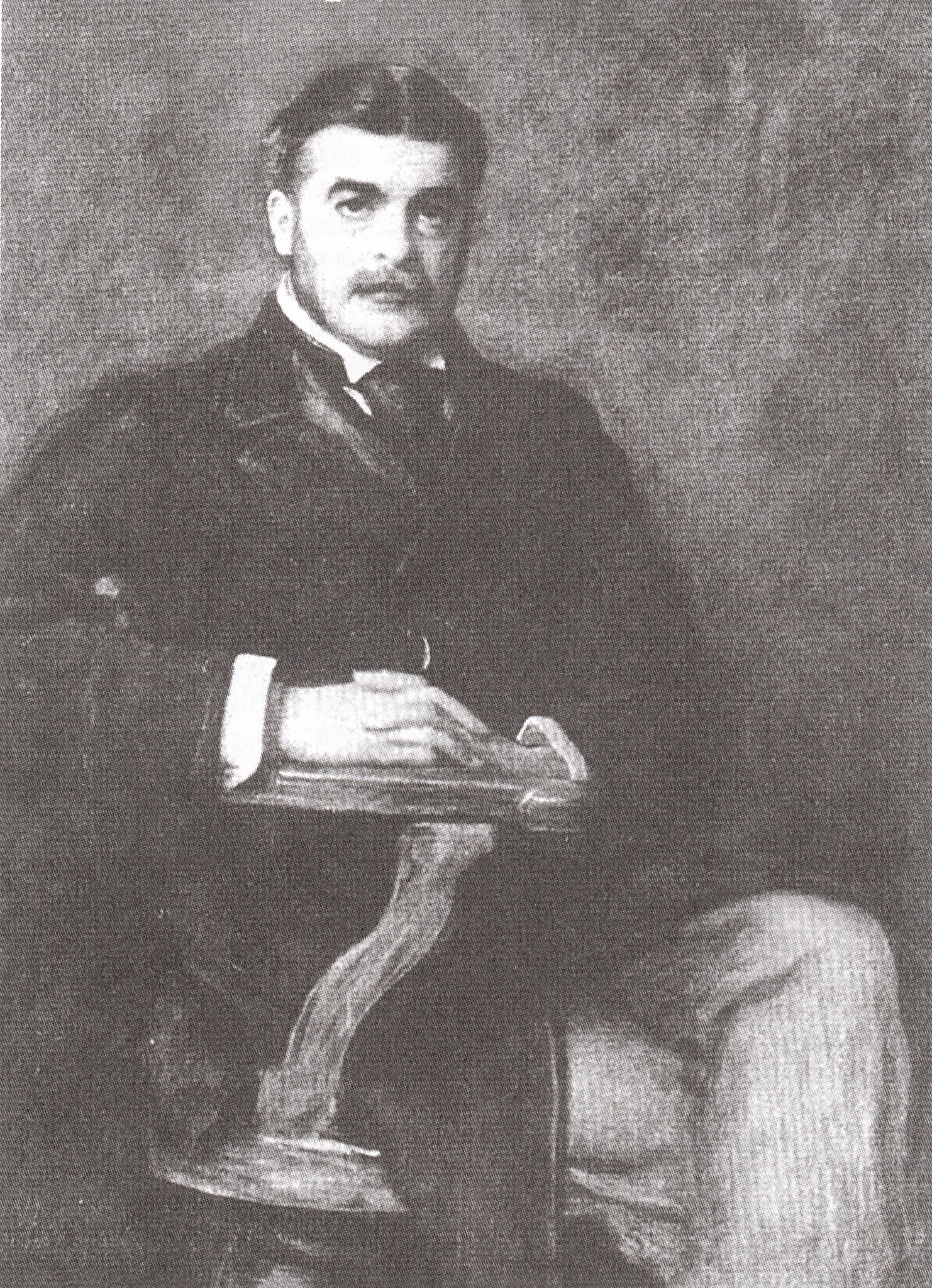
Sullivan Sir Arthur Seymour, *13 May 1842 Lambeth (London), †22 November 1900 London, English composer and conductor. In 1854–57, he sang in the choir Chapel Royal and in 1856, he obtained a scholarship to study at the Royal Academy of Music in London, where he was a student of S. Bennett, A. Leavy and J. Goss. In 1858–61, he studied at the conservatory in Leipzig under J. Rietz (composition), M. Hauptmann (counterpoint) and I. Moscheles and L. Plaidy (piano). He achieved his first success as a composer in Leipzig (1861, performance of music for The Tempest by Shakespeare).
After returning to London (1862), he worked as an organist, initially at St. Michael’s Church and in 1867–72 at St. Peter’s Church; during this time, he wrote many church works, including Te Deum for soprano, choir and orchestra (1872), commemorating the recovery of Albert Edward, Prince of Wales. He was also appointed organist of the Royal Opera House, Covent Garden. His ballet L’Ile Enchantée premiered there in 1864, which brought him recognition and opened the way to the presentation of other compositions. In 1867, Sullivan’s one-act farce Cox and Box, to a libretto by F. C. Burnand, had its public premiere. In the same year, the composer presented his first full-length operetta, The Contrabandista (libretto by F. C. Burnand). In 1869, the oratorio The Prodigal Son was presented at the Worcester Choral Festival. In subsequent years, he wrote further vocal and instrumental works, as well as stage operettas, including The Merchant of Venice (1871) and The Merry Wives of Windsor (1874). In 1875, he received an invitation from the young impresario R. D’Oyly Carte to write an operetta to W.S. Gilbert’s libretto Trial by Jury. In collaboration with Gilbert, he wrote further operettas, including The Sorcerer (1877), H.M.S. Pinafore (1878), The Pirates of Penzance (1879), Patience (1881), Iolanthe (1882), Princess Ida (1884), The Mikado (1885), Ruddigore (1887), The Yeomen of the Guard (1888), and The Gondoliers (1889). During this time, Sullivan also composed cantatas and oratorios, including The Martyr of Antioch (1880, adapted into an opera in 1898) and The Golden Legend (1886), as well as incidental music, including for Shakespeare’s Henry VIII and Macbeth. He was also active in other fields: in 1875–77, he directed the Glasgow Choral and Orchestral Union; in 1876–81, he ran the National Training School for Music in Kensington, London; from 1878 to 1879, he was director of the Covent Garden promenade concerts; from 1880, director of the Leeds Triennial Musical Festival; and from 1885 to 1887, conductor of the Philharmonic Society. For the inauguration of the Royal English Opera House in London, founded by R. D’Oyly Carte, he composed the opera seria Ivanhoe to a libretto by J. Sturgis. The premiere took place in 1891. After a year, the English Opera House was sold to another owner, and contacts between Sullivan, Gilbert and Carte loosened. In later years, Sullivan wrote three more operettas to Gilbert’s librettos: Utopia Limited (1893), The Chieftain (1894 – a reworking of The Smuggler) and The Grand Duke (1896). However, they failed to gain the public’s acceptance, as did The Beauty Stone (1898, libretto by A. W. Pinero and J. C. Carr), composed in 1894. A happier fate befell Sullivan’s last stage work, The Rose of Persia, written to a libretto by B. Hood. The artist’s last years were the stage for several more successes. These were brought about by the ballet Victoria and Merrie England (1897), composed to celebrate Queen Victoria’s Diamond Jubilee, the setting of R. Kipling’s poem The Absent-Minded Beggar (1899), and Te Deum laudamus (1900), commemorating the defeat of the Boers in the war against the British Empire. This work was first performed after the author’s death (1902).
Sullivan was already recognised during his lifetime as the most outstanding British composer of the Victorian era. For his services to the British crown, he was honoured with prestigious awards and decorations: in 1876, he received an honorary doctorate from the University of Cambridge, and in 1879 – from Oxford; in 1878, he was made a Knight of the Legion of Honour, and in 1883, Queen Victoria awarded him a knighthood.
In wide circles, the composer was associated mainly with his operetta works. The greatest success was achieved by the operetta Mikado (1885), based on an exotic plot, which quickly made its way around European stages (staged in Warsaw in 1887 and in Lviv in 1888). Sullivan’s operettas are influenced by Viennese and Parisian models of this genre. They are distinguished by the presence of effective solo parts with an interesting rhythmic face, demonstrating independence in relation to the verbal text, and a significant share of temperamental choral parts. Sullivan mastered the craft of composition well, freely using conventional harmony and instrumentation, as well as elements of polyphony. Using the chamber sound of an orchestra of about 30 people (only in vocal-instrumental and orchestral works did he use the line-up of a large symphony orchestra), he achieved suggestive colour effects of illustrative significance (the use of bass clarinet, English horn, bells). Some of these effects served parodic purposes, like the quotations (and pseudo-quotations) from the works of J.S. Bach, G.F. Handel and others present in Sullivan’s operettas. Here, Sullivan skilfully made use of his tendency towards eclecticism, which was already characteristic of his early works, including the Cello Concerto, close to the models of German Romantic music of the first half of the 19th century, and later also religious works, in which he reached for the models of H. Purcell, J.S. Bach, G.F. Haendel, F. Schubert, and F. Mendelssohn; an example of Sullivan’s eclecticism is the seven-part The Festival Te Deum (1872), in which subsequent links are developed in various stylistic conventions; Sullivan combines the traditions of baroque music of various provenance with elements of 19th-century opera and operetta; the work’s fugue-like climaxes are a testament to Sullivan’s mastery of compositional technique.
Literature: H.S. Wyndham Arthur Sullivan, London 1903; B.W. Findon Sir Arthur Sullivan. His Life and Music, London 1904, entitled Sir Arthur Sullivan and his Operas, 2nd ed. 1908; H.M. Walbrook Gilbert and Sullivan Opera, London 1922; H.S. Wyndham Arthur Seymour Sullivan, London 1926; A.H. Godwin Gilbert and Sullivan, London 1926, reprint Port Washington (New York) 1969; H. Sullivan, N. Flower Sir Arthur Sullivan. His Life, Letters and Diaries, London 1927, 2nd ed. 1950; Th. F. Dunhill Sullivan’s Comic Operas. A Critical Appreciation, London 1928; G. Hughes The Music of Arthur Sullivan, London 1960; P.M. Young Sir Arthur Sullivan, London 1971; R. Allen, G.R. D’Luhy Sir Arthur Sullivan. Composer and Personage, New York 1975; J. Wolfton Sir Arthur Sullivan, New York 1976; A. Jacobs Arthur Sullivan. A Victorian Musician, Oxford University Press 1984; M. Saremba Arthur Sullivan. Ein Komponistenlebem im viktorianischem England, Wilhelmshaven 1993; M. Ainger Gilbert and Sullivan/ A Dual Biography, Oxford University Press 2002; I. Bradley Lost Chords and Christian Soldiers. The Sacred music of Arthur Sullivan, London 2013; B. Taylor Arthur Sullivan. A Musical Reappraisal, Routledge 2018; I. Bradley Arthur Sullivan. A Life of Divine Emollient, Oxford University Press 2021; https://sullivansociety.org.uk.
Scenic:
Ivanhoe, opera, libretto J. Sturgis after W. Scott, staged in London 1891
operettas:
Cox and Box or The Long-Lost Brothers, libretto F.C. Burnand after J.M. Morton, staged in London 1867
The Contrabandista or The Law of the Ladrones, libretto F. C. Burnand, staged in London 1867, revised version entitled The Chieftain, staged in London 1894
Thespis or The Gods Grown Old, libretto W.Sch. Gilbert, staged in London 1871
Trial by Jury, libretto W.Sch. Gilbert, staged in London 1875
The Zoo, libretto B. Rowe (B.C. Stephenson), staged in London 1875
The Sorcerer, libretto W.Sch. Gilbert, staged in London 1877
HMS Pinafore or the Lass that Loved a Sailor, libretto W.Sch. Gilbert, staged in London 1878
The Pirates of Penzance or The Slave of Duty, libretto W.Sch. Gilbert, staged in New York 1879
Patience or Bunthorne’s Bride, libretto W.Sch. Gilbert, staged in London 1881
Iolanthe or The Peer and the Peri, libretto W.Sch. Gilbert, staged in London 1882
Princess Ida or Castle Adamant, libretto W.Sch. Gilbert after A. Tennyson, staged in London 1884
The Mikado or The Town of Titipu, libretto W.Sch. Gilbert, staged in London 1885, Polish staging Warsaw 1887
Ruddigore or The Witch’s Curse, libretto W.Sch. Gilbert, staged in London 1887
The Yeoman of the Guard or The Merryman and his Maid, libretto W.Sch. Gilbert, staged in London 1888, Polish staging entitled Kapitan Wilson, Lviv 1889
The Gondoliers or The King of Barataria, libretto W.Sch. Gilbert, staged in London 1889, Polish staging Warsaw 1891
Haddon Hall, libretto S. Grundy, staged in London 1892
Utopia Limited or The Flowers of Progress, libretto W.Sch. Gilbert, staged in London 1893
The Grand Duke or The Statutory Duel, libretto W.Sch. Gilbert, staged in London 1896
The Beauty Stone, libretto A.W. Pinero, J. Cornyns Carr, staged in London 1898
The Rose of Persia or The Story-Teller and the Slave, libretto B. Hood, staged in London 1899
The Emerald Isle or The Caves of Carrig-Cleena, completed by E. German, libretto B. Hood, staged in London 1901
ballets:
L’île enchantée, libretto H. Desplaces, staged in London 1864
Victoria and Merrie England, libretto C. Coppi, staged in London 1897
music for theatre plays:
for plays by W. Shakespeare:
The Tempest, concert performance Leipzig 1861, revised version staged in London 1862, staged in Manchester 1864
The Merchant of Venice, staged in Manchester 1871
The Merry Wives of Windsor, staged in London 1874
Henry VIII, staged in Manchester 1877, Macbeth, staged in London 1888
The Foresters, text by A. Tennyson, staged in New York 1892
King Arthur, text by J. Cornyns Carr, staged in London 1895
Instrumental:
for orchestra:
Overture in D minor, performed in London 1858, lost
Rosenfest, overture, performed in Leipzig 1860, lost
Princess of Wales’s March, version for piano published in London 1863
Procession March, performed in London 1863, version for piano published in London 1863
Symphony in E major, performed in London 1866, entitled Irish Symphony published in London 1915
In memoriam, overture, performed in Norwich 1866, published in London 1885
Cello Concerto, performed in London 1866, solo part preserved, the whole reconstructed by Ch. Mackerras and D. Mackie, published in London 1986
Marmion, overture, performed in London 1867
Overture di ballo, performed in Birmingham 1870, published in London 1889
Imperial March, performed in London 1893, version for piano published in London 1893
Vocal-instrumental:
Kenilworth, mask, words by H.E Chorley, performed in Birmingham 1864, piano reduction published in London 1865
The Prodigal Son, oratorio, words by the composer after the Bible, performed in Worcester 1869, piano reduction published in London 1869
On Shore and Sea, cantata, words by T. Taylor, performed in London 1871, piano reduction published in London 1871
Te Deum for soprano, choir and orchestra, performed in London 1872, score published in London 1887
The Light of the World, oratorio, words by the composer after the Bible, performed in Birmingham 1873, piano reduction published in London 1873, revised version, piano reduction published in London 1890
The Martyr of Antioch, oratorio, words by W. Sch. Gilbert after H.H. Milman, performed in Leeds 1880, score published in London 1899
Ode for Opening of Colonial and Indian Exhibition for choir and orchestra, words by A. Tennyson, performed in London 1886, piano reduction published in London 1886
The Golden Legend, cantata, words by J. Bennett after H.W. Longfellow, performed in Leeds 1886, score published in London 1886
Ode for Laying of Imperial Institute Foundation Stone, words by L. Morris, performed in London 1887, piano reduction published in London 1887
Te Deum for choir and orchestra, 1900, performed in London 1902, score published in London 1902
***
17 anthems and 58 hymns for choir
moreover, chamber and piano pieces, solo songs, duets and trios