
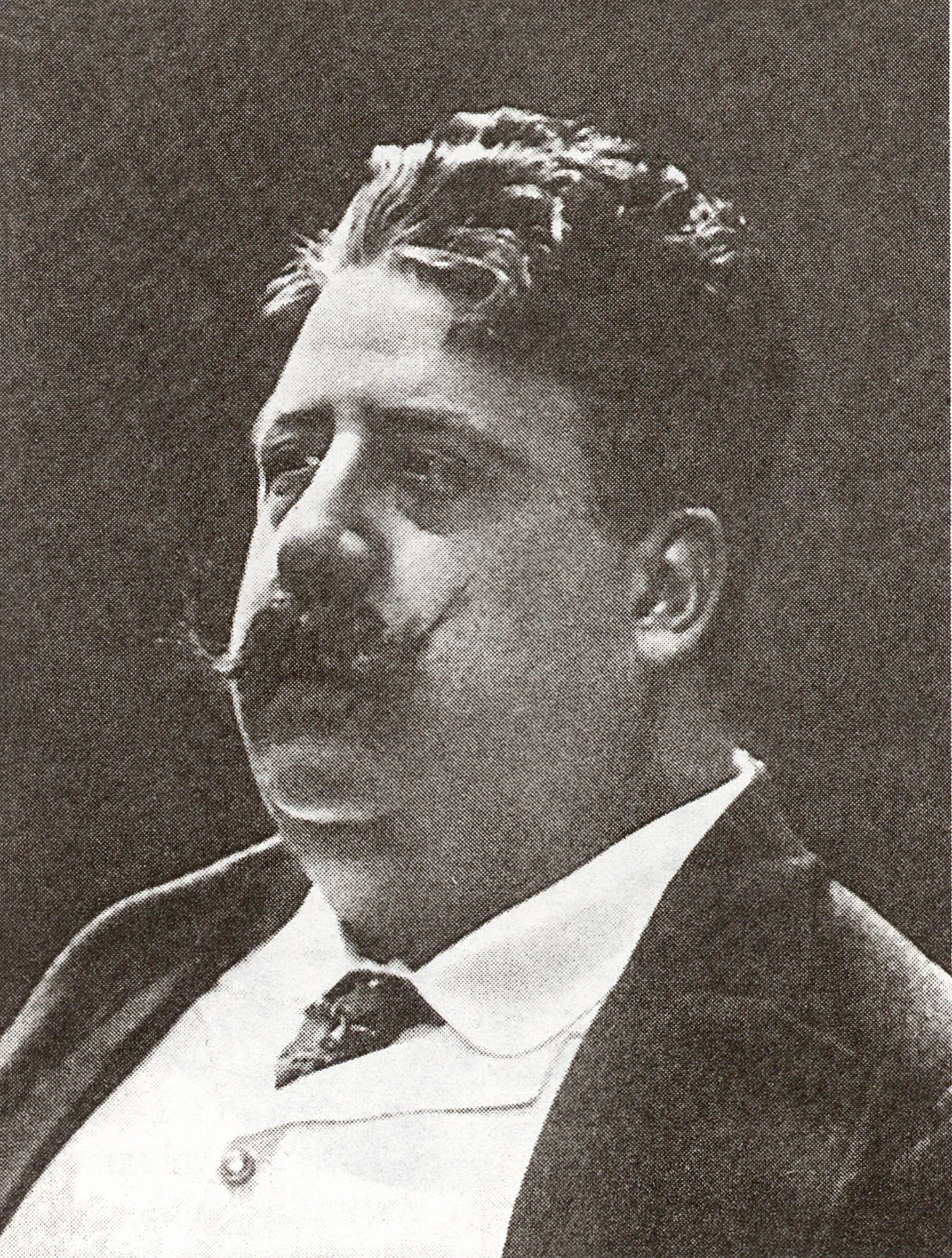
Poranek [partytura]

Leoncavallo Ruggero, *8 March 1857 Neapol, †9 August 1919 Montecatini, Italian composer, poet, and librettist. In 1876, he graduated from the conservatory in Naples and then began studying history at the University of Bologna, where, influenced by the lectures of the poet G. Carducci, his literary passion and interest in Italian Renaissance poetry also developed. At the age of 19, he wrote and published a libretto about the life of T. Chatterton. Leoncavallo first encountered the works of R. Wagner in Bologna, and in 1877 he met Wagner himself. At that time, he decided to write a trilogy called Crepusculum, modelled on The Ring of the Nibelung, but he only completed the first part: I Medici (the protagonists of the subsequent parts were to be Savonarola and Cesare Borgia). Earlier, however, Leoncavallo began composing the opera Chatterton to his own libretto, hoping to have the work staged. Completely unknown as a composer, he obtained a doctorate in literature in 1878. In the first years after his studies, he struggled with poverty and uncertainty about the future, working as an accompanist and vocal coach in various touring companies, as well as a café pianist, press correspondent and translator. In 1882, he was appointed court musician to Tawfiq Mahmoud, brother of the heir to the throne, in Egypt, but soon had to leave Egypt in haste, in disguise, as a result of the war. Leoncavallo’s collaboration and friendship with the singer (baritone) V. Maurel was decisive for his future. Thanks to Maurel’s patronage, the famous publisher G. Ricordi purchased the opera I Medici from Leoncavallo but rejected it and did not renew his commission for the next parts of Crepusculum. Instead, he commissioned him to write the libretto for Manon Lescaut for G. Puccini, who, however, showed no interest in Leoncavallo’s project. Embittered by his failures and lack of luck, Leoncavallo made another attempt in 1891 and within a few months wrote the libretto and music for the opera I Pagliacci (Clowns). The score, this time handed over to E. Sonzogno, Ricordi’s rival, was quickly staged. The premiere took place on 21 May 1892, conducted by A. Toscanini at the Teatro dal Verme in Milan. The event was a resounding success, bringing Leoncavallo fame and securing him a place in music history alongside Mascagni.
Thanks to his growing reputation, Leoncavallo was able to stage his early works in the following years: I Medici (1893) and Chatterton (1896), which, despite public acclaim, did not receive favourable reviews and quickly disappeared from the stage. Much misunderstanding and trouble arose around his next opera, La bohème. Initially, Leoncavallo suggested to Puccini that a libretto based on H. Murger’s Scènes de la vie de Bohème would be excellent material for a romantic opera, but Puccini once again rejected the proposal from the author of Pagliacci. Soon, however, he began composing La bohème without informing Leoncavallo, who at the same time undertook to write the music for his own libretto. This led to a dispute between the two composers over the rights to the libretto of La bohème. Leoncavallo’s work was staged 15 months after Puccini’s La bohème and in the year of its premiere (1897) it was performed on many Italian stages, as well as in Hamburg, Riga, and Budapest. Later, however, Leoncavallo’s La bohème remained in the shadow of Puccini’s work and only in recent years has it regained popularity.
Leoncavallo’s opera Zazà was considered his best work after Pagliacci. Its premiere at the Teatro Lirico in Milan in 1900 and its staging at the Opéra de Paris in 1902 were met with enthusiastic reception. Soon afterwards, the composer received a commission from the German Emperor Wilhelm II for his next opera, with the proviso that it should be a work glorifying the Hohenzollern dynasty. This resulted in Roland von Berlin, based on the 1840 novel by W. Alexis. The initial Berlin production reached 37 performances, yet despite this officially promoted success, it did not arouse the interest of other theatres.
In 1906 Leoncavallo undertook a long concert tour of Canada and the United States, during which his work took a turn toward operetta, leading to the composition of La jeunesse de Figaro. He also abandoned writing his own librettos and composed the opera Maià (1910) to a text by A. Nessi. In the years that followed, Leoncavallo became well known in Great Britain where his Pagliacci, conducted by the composer himself, was widely acclaimed. The premiere of I Zingari (1912), based on A. Pushkin, also took place in London. The musical comedy Are you There, based on a text by the popular writer E. Wallace and staged a year later, proved to be a misunderstanding, the most striking testimony to the decline of the composer’s artistic ambitions. Towards the end of his life, Leoncavallo attempted twice more to create a more ambitious work. However, he failed to complete an opera based on a libretto based on G. Belvederi’s sensational drama Tormenta, while Edipo Re, a grand opéra, was staged without much success in Chicago and then in New York after the composer’s death. Leoncavallo also went down in history as one of the first composers interested in gramophone recordings. Pagliacci is the first opera in Italy to be recorded in its entirety on disc (Gramophone & Typewriter).
Leoncavallo was an important figure both as a composer and as a librettist, ranking alongside A. Boito. Leoncavallo’s literary culture, supported by his philological education, made it easier for him to make the right choice of material or theme for an opera libretto. The history of opera owes Leoncavallo the idea of adapting Murger’s Vie de Bohème into a libretto, without which Puccini’s La bohème would probably never have been written. The Crepusculum trilogy is also highly regarded for its typically Italian national characteristics. Leoncavallo’s most outstanding work – and the only one of his works to have become a permanent part of the world repertoire – is Pagliacci. This opera was written for a competition announced by the Milanese publisher E. Sonzogno. However, the jury did not admit it to the competition due to the size of the work, which did not comply with the rules (two acts instead of one). Critics were initially reluctant to accept Pagliacci, pointing out its triviality (A. Boito) and decadent taste (A. Catalani), but the accusations concerned the plot rather than the music. Soon, they gave way to enthusiastic opinions, in line with the audience’s reactions; Leoncavallo’s opera began to be placed on a par with or even above P. Mascagni’s widely acclaimed Cavalleria rusticana. Even E. Hanslick, who was reluctant towards verismo opera, considered Act 2 of Pagliacci to be a masterpiece on a par with Mozart. Pagliacci earned this high praise thanks to its concise structure based on the principle of continuous and consistent intensification of dramatic tension, which stems from the balancing act between theatrical convention and the brutal truth of life. The same dramatic situation (marital infidelity, a scene of jealousy and the murder of the unfaithful wife) is shown almost simultaneously in the commedia dell’arte convention, and thus in the mood of a frivolous and even somewhat vulgar joke, and, behind the scenes, in the convention of a naturalistic bloody tragedy. By depicting the tragic fate of an artist-comedian, similar to an event that Leoncavallo witnessed in Calabria as a seven-year-old boy, the composer opted to show uncompromising, even drastic truth in art, to show a flesh-and-blood human being, without a mask or conventional gestures. In doing so, he joined the group of Italian verists, whose work is usually regarded as an expression of Wagnerian mythological excess. The clash of the two conventions was also reflected in the music. Commedia was set to music in the form of a suite (minuet, gavotte, sarabande) and a vocal serenade, reminiscent of Baroque music, e.g. by F. Couperin, while the quasi-realistic plot was assigned an eclectic, yet perfectly balanced mixture of number opera (division into clearly distinguishable wholes, e.g. Nedda’s Ballatella) and through-composed opera (leitmotifs, development of motifs in the orchestral part, arioso-type solo parts, e.g. Vesti la giubba, minimising simultaneous singing in duets, a quasi-realistic choir part representing a crowd of villagers). An important component of the musical language of this opera is also its flowing melodics, albeit with a considerable amount of chromaticism and frequent harmonic modulations, as well as a characteristic rhythmic structure. It is more reminiscent of the melody of Bizet’s Carmen than Italian bel canto.
Verismo combined with criticism of bourgeois morality and the idea of women’s emancipation also defines the theme and character of the opera Zazà. As the focal point of the work, the title role requires the performer to have both great vocal and acting skills, as well as excellent presence and convincing expression. In portraying the Parisian entertainment world, Leoncavallo introduced a variety of dances and chansonettes, giving the work an operetta-inflected character. Breaking stylistic conventions as a means of expression was also used in the first two acts of La bohème. Leoncavallo used persiflage, stage and musical parody, archaic forms (gavotte, minuet), again forms typical of operetta (chansonnette, waltz), as well as light parlando in the style of opera buffa. Starting with Act 3, as the characters delve deeper into their emotional world, Leoncavallo’s La bohème becomes closer in its musical and dramatic concept to Wagner’s dramas. This apparent stylistic inconsistency is justified by the content of the plot, which first reveals and then exposes the naive and trivial romanticism of Parisian bohemia. Leoncavallo’s historical operas are much less convincing in their choice of artistic means. Both I Medici and Roland von Berlin suffer from an excess of pathos and monumentalism.
From the early years of the 20th century, probably as a result of his lack of success, there was a marked decline in Leoncavallo’s artistic ambitions. Opera was replaced by trivial operettas designed to win easy applause. Leoncavallo’s songs (mostly unreleased to this day) were also once popular, especially the romance Mattinata and Album Stecchetti with lyrics by O. Guerrini.
Literature: O. Roux Memorie giovanili autobiografiche di Leoncavallo, Florence n.d.; E. Hanslick Der Bajazzo von Leoncavallo, in: Die moderne Oper vols. 7 and 8, Vienna 1896, 1899; C. Trevor Ruggero Leoncavallo, “The Monthly Musical Record” XLIX, 1919; G. Fauré Leoncavallo, in: Opinions musicales, Paris 1930; M. Rinaldi Musica e verismo, Rome 1932; G. Adami G. Ricordi e suoi musicisti, Milan 1933; R. de Rensis Per Umberto Giordano e Ruggero Leoncavallo, Siena 1949; E. Greenfield The Other Bohème, “Opera Annual” 1958; H. Kreuzer Die Bohème. Beitrag zu ihrer Beschreibung, Stuttgart 1968; J.W. Klein The Other Bohème, “The Musical Times” CXI, 1970; E. Voss Verismo in der Oper, “Die Musikforschungˮ XXXI, 1978; J. R. Nicolaisen Italian Opera in Transition 1871–1893. Studies in musicology, Ann Arbor (Michigan) 1980; D. Rubboli ‘Ridi Pagliaccio’ Ruggero Leoncavallo, un musicista raccontato per la prima volta, Lukka 1985; J. Maehder Paris-Bilder. Zur Transformation von H. Murgers Roman in der “Bohème” – Oper Puccinis und Leoncavallos, “Jahrbuch für Opernforschung” 1986; P. Mascagni “Cavalleria rusticana.” R. Leoncavallo “Der Bajazzo.” Texten, Materialien, Kommentare, published by A. Csampi and D. Holland, Reinbeck 1987; M. Sansone The “verismo” of Ruggero Leoncavallo: a source study of “Pagliacci,” “Music and Letters,ˮ LXX/3, 1989; J. Maehder Immagini di Parigi. La trasformazione del romanzo “Scènes de la vie de Bohème” nelle opere di Puccini e Leoncavallo, “Nuova Rivista musicale Italiana,” XXIV, 1990; Ruggero Leoncavallo nel sue tempo, materials from the 1st international convention in 1991 in Locarno, ed. J. Maehder, Milan 1993; S. Scardovi L’opera dei bassifondi. Il melodramma ‘placebo’ nel verismo musicale italiano, Lukka 1994; Letteratura, musica e teatro al tempo di Ruggero Leoncavallo, materials from the Second International Convention in Locarno in 1993, eds. L. Guiot, J. Maehder, E. Baker, Milan 1995; Nazionalismo e cosmopolitismo nell’opera fra ‘800 e ‘900, materials from the 3rd international convention Ruggero Leoncavallo e suo tempo, in 1995 in Locarno, eds. L. Guiot, J. Maehder, Milan 1998; Leoncavallo, Montalto e il verismo, materiały z międzynarodowego konwenium w 1998 w Montalto Uffugo, ed. L. Romeo, Cosenza 1999; H.-J. Wagner Fremde Welten. Die Oper des italienischen Verismo, Stuttgard, Weimar 1999; Leoncavallo sconosciuto – mostra di lettre inedite, catalogue of the exhibition in Montalto Uffugo, ed. L. Longobucco, Cosenza 2000; M. Kelkel Naturalisme, vérisme et réalisme dans l’opéra: De 1890 à 1930, Paris 2002; E. De Luca Recuperi metrici quattrocenteschi ne “I medici” di Ruggero Leoncavallo, in: Interpres, rivista di studi quattrocenteschi, XXIII, 2004; Tendenze della musica teatrale italiana all’inizio del Novecento, materials from the 4th international convention, Ruggero Leoncavallo nel suo tempo in 1998 in Locarno, eds. L. Guiot, J. Maehder, Milan 2005; K. Dryden Ruggero Leoncavallo. Life and Works, Lanham (Maryland) 2007; A. Mallach The Autumn of Italian Opera: from Verismo to Modernism, 1890-1915, Boston 2007; M. Lubrani, G. Tavanti Ruggero Leoncavallo. I successi, i sogni, le delusioni, Florence 2007; Th. M. R. von Keler The Buffoon. The Substance of Leoncavallo’s Opera “I Pagliacci,” Whitefish (Montana) 2007, reprint 2010; S. Landi-Malavolti Ruggero Leoncavallo: vita, opere, aneddoti e curiosità, Florence 2008; G. Denizeau Les Véristes, Paris 2011; F. Buhler “Les Tziganesˮ di Leoncavallo, in: “Aleko, l’opera gitanaˮ di Rachmaninov. Analyse et nouvelle traduction du livret, Paris 2016; E. Manna Grandi Opere del Verismo, London 2019; E. Voss Űberlegungen zum Begriff des musikalischen Verismo, “Maske und Kothurnˮ 49 No. 1–2 (2019); A. Jacobshager Verismo und Drame lyrique. Zur naturalistischen Oper in der Jahrhubdertwende, “Maske und Kothurnˮ 49 No. 1–2 (2019); L. Longobucco “Il Rolando di Berlinoˮ di Leoncavallo: documenti per la sua storia, Bisignano (Cosenza) 2019; C. Dimatteo Le due Bohème di Puccini e Leoncavallo, Bisignano (Cosenza) 2020; L. Piacenti, S. Piacenti La cetra e la spada. Il teatro musicale italiano del Risorgimento da Rossini a Leoncavallo, Palermo 2023.
Compositions
Stage:
operas:
Chatterton, 4 acts, libretto R. Leoncavallo after A. de Vigny, 1876, unstaged, 3-act version, Rome, 10 March 1896, piano reduction Bologna 1896
I Pagliacci, prologue and 2 acts, libretto R. Leoncavallo, Milan, 21 May 1892, Milan, 1892
Crepusculum, part 1: I Medici, 4 acts, libretto R. Leoncavallo, Milan, 9 September 1893, piano reduction, Milan 1893
La bohème, 4 acts, libretto R. Leoncavallo after H. Murger: Scènes de la vie de Bohème, Venice, 6 May 1897, piano reduction Milan 1897, 3 act titled, Mimi Pinson, Palermo, 14 April 1913, piano reduction, Milan 1913
Zazà, 4 acts, libretto R. Leoncavallo after P. Berton and C. Simon, Milan, 10 November 1900, piano reduction, Milan 1900
Der Roland von Berlin, 4 acts, libretto R. Leoncavallo after W. Alexisa, German translation G. Droescher, Berlin 13 December 1904, piano reduction, Milan 1904
Maià, 3 acts, libretto A. Nessi after P. de Choudensa, Rome, 15 January 1910, piano reduction, Milan 1908
I Zingari, 2 acts, libretto E. Cavacchioli and G. Emanuel after A. Puszkin, London, 16 September 1912, piano reduction Milan 1912
Edipo Re, 1 act, completed by G. Pennacchio, libretto G. Forzano after Sofokles, Chicago, 13 December 1920, unpublished
operetta:
La jeunesse de Figaro, libretto after V. Sardou Les premières armes de Figaro, United States 1906, unpublished
Malbrouck, 3 acts, libretto A. Nessi, Rome, 19 January 1910, piano reduction, Milan 1910
La reginetta dette rose, 3 acts, libretto G. Forzano, Rome, 24 June 1912, piano reduction, Milan 1912
Are you There, 3 acts, libretto A. de Courville and E. Wallace, London, 1 November 1913
La candidata, 3 acts, libretto G. Forzano, Rome, 6 February 1915
Prestami tua moglie, 3 acts, libretto E. Corradi, Montecatini, 2 September 1916
Goffredo Mameli, 3 acts, libretto G. Belvederi, Genua 27 April 1916
A chi la giarrettiera, 3 acts, Rome, 16 October 1919
Il primo bacio, 1 act, libretto L. Bonelli, Montecatini, 29 April 1923
La maschera nuda, 3 acts, completed by S. Allegri, libretto L. Bonelli and F. Paolieri, Naples, 26 June 1925
***
La vita di una marionetta, ballet, ca. 1900, unstaged
Vocal-instrumental:
songs:
Album Stecchetti, 4 poesie delle “Postuma,” text by O. Guerrini, Milan 1880
Ruit hora, excerpt from Ode barbara by G. Carducci, Milan n.d.
Lost Love and At Peace, text by A. Roberts, London 1893
Rapsodia primaverile, New York 1893
A Summer Idyll, London 1895
Serenata, Milan 1898
Mattinata, text by R. Leoncavallo, London 1904
Ninna nanna, text by R. Leoncavallo, London 1904
***
Nuit de mai for choir and orchestra, ca. 1895
Requiem for choir and orchestra, for King Umberto I, 1900
Croce rossa, hymn for choir and orchestra, 1901
Ave Maria for tenor, harp, harmonium ad libitum, Brissago 1905
Lega nazionale, hymn for choir and orchestra, 1913
Inno franco-italiana, hymn for choir and orchestra, 1915 and published in other years
Instrumental:
Pantins vivants, danse de caractère for piano, 1898 (?)
La joyeuse, walc for piano, 1898 (?)
Valse mélancolique for piano, 1901
Cortège de Pulcinella, petite marche humoristique for piano, 1903
Airs des ballets espagnols for piano, 1904
Flirt-Walzer for piano, 1905
Papillon, scherzo for piano, 1906
Sarabande, danse ancienne for piano, 1906
Viva l’America, marsz for piano, 1906
Nights of Italy, intermezzo for piano, 1914 and published in other years
Séraphitus-Séraphita, symphonic poem after H. Balzaka, Milan 1894
Librettos:
Mario Wetter, music by A. Maceado, Lisbon, 17 February 1898
Redenzione, music by G. Pennacchio, Naples, 29 November 1920
translation of libretto La Basoche, music by A. Massager, Turin 5 March 1893