
Herz, Jacques

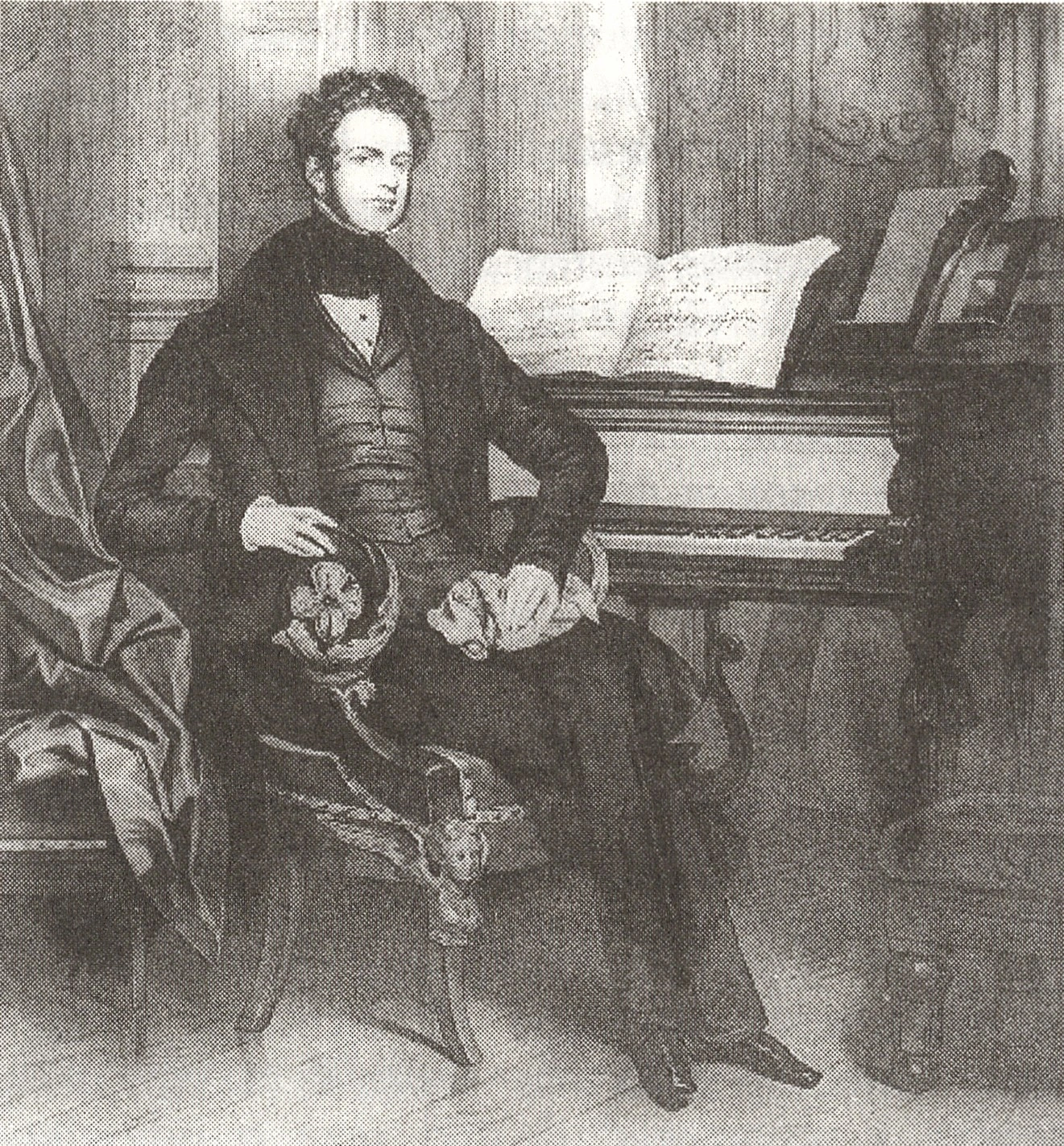
Herz Henri, *6 January 1803 Vienna, †5 January 1888 Paris, German pianist, composer and teacher active in Paris, brother of Jacques. He studied at the Paris Conservatoire from 1816 under L.B. Pradher (piano), V. Dourlen (theory) and A. Reicha (composition). He became one of the famous virtuosos and popular composers of piano music in the second quarter of the 19th century. Together with Liszt, Thalberg, Pixis, Czerny and Chopin, he wrote the Hexameron variations in 1837 for a charity concert. He undertook numerous concert tours, performing in Germany (in 1831 with the violinist C. P. Lafont), England (1834), the Netherlands and southern France (1838–39), and in the 1840s in Belgium, the Netherlands, Spain, as well as in Russia and Poland, and on the American continent (1845–51). He spent time in Chile, Mexico (where he composed the Mexican national anthem), and Cuba, and gave over 400 concerts in the United States. From 1842 to 1874, he was a professor at the Paris Conservatoire. He was also interested in piano construction and, from 1851, ran his own piano-making workshop (which, according to Piano-Atlas, had been in operation since 1825). Thanks to the introduction of numerous innovations (including the double escapement mechanism) his instruments gained a reputation equal to that of the Erard and Pleyel pianos. Berlioz held them in high regard. In the instrument competition at the Paris Industrial Exhibition (1844), they were awarded the highest national class; Herz was then awarded a gold medal, and at the 1855 exhibition he won first prize. Together with his brother Jacques, he founded the Ecole Spéciale de Piano in Paris (its pupils included M. Jaëll, L. Massart and W. Clauss-Szarvady). Henri Herz invented a device for guiding the hands whilst playing, known as the dactylion (modelled on J.B. Logier’s device). He was awarded the Legion of Honour.
Henri Herz is one of the leading exponents of the salon style known as brillant, which reached its zenith in the form of piano arrangements of opera arias, art songs and other works. In genres typical of this style, such as variations, fantasias, rondos and so-called characteristic pieces, written by Herz in series on commission from Parisian publishers, one encounters the tones of brillant, de bravour, gracieux, élégant, caractéristique, as well as chevaleresque and dramatique, though not in the sense of deepening the expression. Herz’s works are, however, distinguished by their textural inventiveness; his passages and instrumental figures, on the one hand a manifestation of salon grace, and on the other giving the impression of a full sound, require a considerable degree of technical skill. His most popular works include his Variations on the theme of Notre Dame du Mont Carmel, Op. 43, Non più mesta, Op. 60, from Rossini’s Cinderella, as well as Opp. 10, 48, 36 and 62. In his piano concertos, the virtuosic techniques, the instrumentation and the sentimental mood in the slow movements are noteworthy, but the thematic development is poor. Herz’s didactic works – études, étude-preludes and scale exercises – played a significant role. In his Méthode complète de piano, Herz regarded the piano as an instrument capable of replacing an orchestra, the musical accompaniment for a dramatic work, and more. Although his playing was based on finger technique (he recommended the dactylion for exercises), he believed, for example, that when playing octaves, a pianist should not only use finger strength and the wrist (light, lively octaves), but also employ the arm to some extent (strong, expressive octaves). He attached great importance to articulation (various types of staccato, legato, phrasing), the execution of ornamentation and pedal use, and also offered many comments on improvisation in concert and preluding. Herz’s works were sharply criticised in Germany, notably by Mendelssohn, Schumann and Liszt.
Literature: Dactylion – instrument wynaleziony przez Henriego Herza, “Rozmaitości Lwowskie” 1836 No. 5; Fortepiany Henryka Herza, “Pismo dodatkowe do Gazety Porannej”, Warsaw 1839 No. 75; H. Berlioz Notice sur les nouveaux pianos de la Maison Henri Herz facteur du Roi, Paris 1844 (print at the Bibliothèque Nationale); A.F. Marmontel Les pianistes celebres, Paris 1878; D. Garvelmann, foreword to the edition: Henri Herz. Variations on “Non più mesta” op. 60, New York 1970.
Compositions and writings
Compositions:
Instrumental:
Piano Concerto in A major Op. 34
Piano Concerto in C major Op. 74
Piano Concerto in D minor Op. 87
Piano Concerto in E major Op. 131
Piano Concerto in F minor Op. 180
Piano Concerto in A major Op. 192 (with choir)
Piano Concerto in B minor Op. 207
Piano Concerto in A-flat major Op. 218
Piano Trio Op. 54
Grande sonate di bravura Op. 200 for piano
around 70 variations for piano, including:
Grandes Variations, Op. 6, on themes from J. Weigl’s La famille suisse, also with orchestral accompaniment
Variations brillantes, Op. 10, on the aria Ma Fanchette est charmante
Variations de bravoure, Op. 20, on the romance from E. Méhul’s Joseph, also with orchestral accompaniment
Variations brillantes, Op. 23, on themes from G. Meyerbeer’s Il crociato in Egitto, also with orchestral accompaniment
Grandes Variations, Op. 36, on the Chorus of the Greeks from G. Rossini’s Le siège de Corinthe
Grandes Variations brillantes, Op. 41, on the aria Le petit tambour
Variations, quasi fantasia, Op. 43, on the aria Notre Dame du Mont Carmel
Variations brillantes avec introduction, Op. 48, on Violetta’s aria from an opera by M. Carafa
Variations, Op. 57, on themes from G. Rossini’s William Tell, also with orchestral accompaniment
Variations, Op. 60, on Non più mesta from G. Rossini’s La Cenerentola
Grandes Variations, Op. 62, on the Hunters’ Chorus from C. M. Weber’s Euryanthe
Récréations musicales, variations sur 24 thèmes, Op. 71 / Op. 105, on themes from V. Bellini’s La sonnambula
over 40 fantasias for piano, including:
Fantasia Op. 67 on the theme of G. Rossini’s Otello, also with orchestral accompaniment
Souvenir de Vienne, trois fantaisies Op. 75
Fantaisie et variations, Op. 90, on the cavatina from G. Bellini’s Norma, also with orchestral accompaniment
Fantasia, Op. 130, on themes from G. Donizetti’s Semiramide
Fantasia, Op. 163, on themes from G. Donizetti’s La fille du régiment, also with orchestral accompaniment
Fantasia, Op. 186, on themes from W. A. Mozart’s Don Giovanni
Fantasia, Op. 208, on themes from G. Meyerbeer’s Les Huguenots for two pianos
rondos, including Opp. 11, 14 and 27, also with orchestral accompaniment, Op. 37 on the theme of G. Rossini’s Moses, also with orchestral accompaniment, Op. 40 also with orchestral accompaniment, Op. 189 on the theme of G. Verdi’s Ernani
divertimenti and caprices, including Op. 15, also with orchestral accompaniment
dances for piano — polonaises Opp. 25 and 30, waltzes, contradances, polkas, marches, salon pieces, nocturnes
teaching aids, including:
Exercices et gammes na fortepian, 3rd ed. 1869
Exercices et préludes dans tous les tons Op. 21, [1842]
Études de conservatoire Opp. 119, 151, 152, 153 and Les difficultés du piano, résumées en dix études spéciales Op. 216, Paris 1870
Études d’agilité Op. 179
1000 exercices pour l’emploi du dactylion
method books:
Petite méthode élémentaire de piano, composée pour les jeunes élèves [1854]
Méthode complète de piano, Paris n. d.
Writings:
Mes voyages en Amérique, Paris 1866, English translation My Travels in America, Madison (Wisconsin) 1963