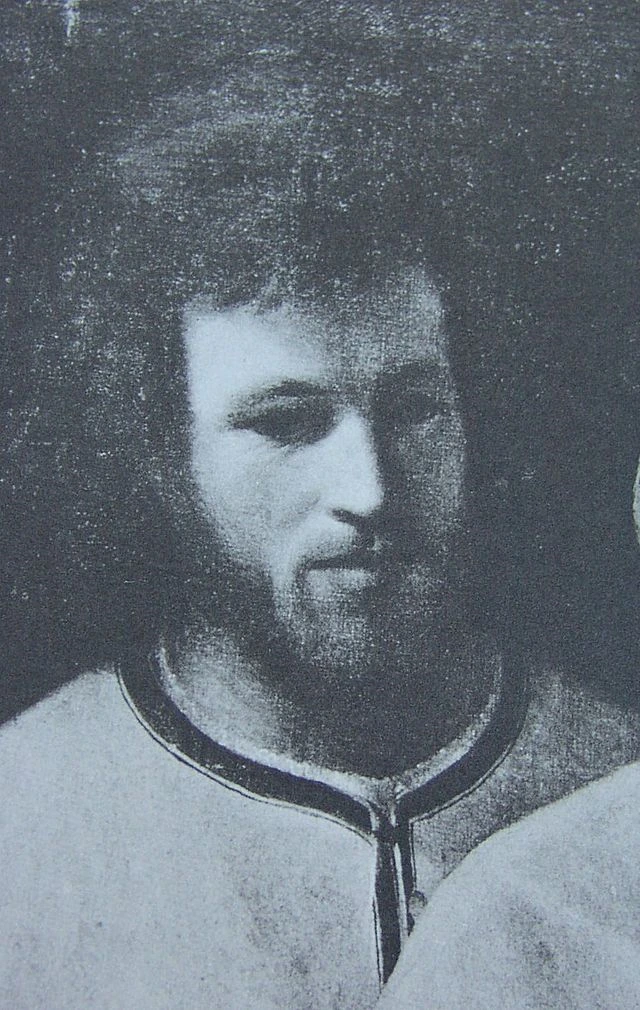
Verdelot, Verdelotto, Deslouges, Philippe, *ca. 1480 Les Loges (near Verdelot, depart. Seine-et-Marne), †after 1536, French composer, known only for his work in Italy. His stay in Venice is documented around 1511, where, according to G. Vasari (who erroneously calls him Kapellmeister at St. Mark’s Basilica), he was – along with a certain Ubretto – portrayed by Sebastiano del Piombo, a painter and lutenist; the identification of this work, which Verdelot was supposed to have taken with him to Florence, is still disputed. Around 1520, he was probably in Rome. A letter from the papal chaplain N. de Pictis from May 1521 – in which Verdelot is recommended to Cardinal Giulio de’ Medici (later Pope Clement VII) – indicates that the composer arrived in Florence shortly before that date. From 1522 to 1525, he served as maestro di cappella in the cathedral’s baptistery of S. Giovanni, and from 1523 to 1527 also in the cathedral itself; in 1523 to 1524, he likely also spent several months at the court of Clement VII in Rome. In Florence, he likely maintained contacts with the Accademia Oricellaria and N. Macchiavelli, who was a member. Verdelot composed, among other things, music for five texts by Macchiavelli, performed as interludes in two of the latter’s comedies. Verdelot’s fate after 1527, when the Florentine music ensembles were disbanded due to the epidemic, is not known in detail. The allusive texts of some of his motets seem to suggest that he was associated with the supporters of the Florentine Republic, who expelled the Medici from the city in May 1527. It is possible that he had some involvement in the preparation of the elegant volumes (the so-called Newberry-Oscott Partbooks, manuscript in Chicago, alto copy in Oxford), containing at least 33 of his motets and madrigals (and 12 anonymously preserved works), supposedly sent by the Florentines to Henry VIII. The last known mention of the composer as a living person appears in a letter from 1536, in which B. Boccarino requests greetings for “Verdelotto” from D. Attanagi, who was staying in Rome (published in the 1st volume of De le lettere facete…, Venice 1561). He had certainly been dead for some time by 1552, as evidenced by a work by O. Landi published at that time.
The work of Verdelot, considered alongside C. Festa as the “father of the madrigal” (A. Einstein), enjoyed extraordinary popularity. This is evidenced by, among others: multiple reprints of anthologies with his compositions (Verdelot’s name on the title page was often intended to promote the collection), adaptations (e.g. German ones by W. Schmeltzl, F. Platter) and intavolations (e.g. for lute and solo voice by A. Willaert in Intavolatura de li madrigali di Verdelot da cantare et sonare nel lauto, published in Venice in 1536, 2nd edition in 1540, numerous works for solo lute, including the anonymous Donna leggiadra e bella in the so-called Krakow lute tablature, two madrigals in the tablature of V. Bakfark, Lyon in 1553, and for keyboard instruments, e.g. three madrigals in the Tablature of John of Lublin), or the use of his works as models by other composers (e.g. Orlando di Lasso, Palestrina, J. Gallus, C. de Morales and the Gdańsk composer J. Wanning).
Verdelot is credited with authoring approximately 150 madrigals. These are most often arrangements of ballate (23), single stanzas of canzoni (22) or free variations of these two forms (15 and 20), madrigals (30), and sonnets or their fragments (13). A unique feature of 16th-century madrigal compositions is the musicalization of two prose texts (O singular dolcezza and the humorous dialogue Chi bussa?, prefiguring the madrigal comedy).
Musically, Verdelot’s madrigals bear traces of French chanson influence (their texture and the melodious character of all the voices), though they sometimes also exhibit features of frottola, such as the use of the same musical arrangement in subsequent stanzas (the four-voice Quanto sia lieto) or rhyming lines (the four-voice Quella che sospirando). There are also frequent repetitions of initial phrases in the final section of the piece (the four-voice Con lagrime et sospir). Harmonically simple but melodically inventive, these works are usually maintained in a homorhythmic texture, varied by free imitations, more common in five- and six-voice compositions. Verdelot often contrasts different voice groups (often bicinia), sometimes for dramatic purposes (women’s utterances in the higher voices, men’s in the lower ones, e.g., Quanto sia lieto – 1+3 voices, Quant’ahi lasso – 2+3 voices, Chi bussa? – 2+4 voices). A syllabic treatment of the text predominates, with occasional short melismas in one of the voices at finer rhythmic values. The versification structure of the poetic texts is emphasised by distinct cadences and sometimes by pauses in all voices. Verdelot’s motets are most often settings of antiphons (14), responsories (13, usually in ABCB form), and psalms (6). These works exhibit stylistic variation in terms of text setting and phrase structure; motets with melismatic texts most likely predate the syllabic settings. Some compositions are based on a rhythmised and ornamented cantus firmus (in the 7-voice Beata es virgo on two different ones), usually appearing in the quintus voice (exceptionally in the bass or soprano), sometimes using an ostinato (the 6-voice Antoni pastor inclite), often conducted in canon (e.g. in Laetamini in Domino, in which the tenor and quintus quote the melody to the first verse of the psalm Ecce quam bonum, sung by followers of G. Savonarola and perhaps composed by him). In addition to syntactic imitation, Verdelot introduces homorhythmic, antiphonal, and free counterpoint sections in his motets. Both in Verdelot’s madrigals and motets, there are interesting and varied examples of sound painting and musical symbolism, e.g. the association of vocalization with the image of sails filled with wind in Quanto sia lieto il giorno, the association of text syllables with solmization (a semitone on the words “mi fan”) in I vostri acuti dardi, the “Marian” 7-voice in Beata es virgo, the colour on the words “cum carbonibus desolatoribus” in the 4-voice Ad Dominum tribularer, or the weaving, in the manner of soggetto cavato dalle vocali, of the composer’s name into the musical motif (re, re, sol – Verdelot) on the word “Philippe” in the 4-voice Tanto tempore vobiscum. Both of Verdelot’s masses are of the missa parodia type and use material from the beginning of the 1st and 2nd movements of J. Richafort’s 4-voice motet Philomena praevia.
Literature: O. Landi Sette libri di cathalogi a varie cose appartenenti…, manuscript from 1552, Venice, Archivio di Stato; G. Vasari Le vite de’ più eccellenti architetti, pittori et scultori italiani, Florence 2nd ed. 1568, Polish ed. Żywoty najsławniejszych malarzy, rzeźbiarzy i architektów, transl. K. Estreicher, vol. 5, Warsaw-Kraków 1986; A. Einstein Italian Madrigal, 3 volumes, Princeton 1949, reprint1970; A.-M. Bragard Verdelot en Italie, “Revue Belge de Musicologie” XI, 1957; A.-M. Bragard Etude bio-bibliographique sur Philippe Verdelot, musicien français de la Renaissance, Brussels 1964; N. Böker-Heil Die Motetten von Philippe Verdelot, Cologne 1967; H.C. Slim A Gift of Madrigals…, see Editions; H.C. Slim A Royal Treasure at Sutton Coldfield, “Early Music” VI, 1978; R. Sherr Verdelot in Florence, Coppini in Rome, and the Singer „La Fiore”, “Journal of the American Musicological Society” XXXVII, 1984; I. Fenlon and J. Haar The Italian Madrigal in the Early Sixteenth Century. Sources and Interpretation, Cambridge 1988; A. Gosman Stacked Canon and Renaissance Compositional Procedure, “Journal of Music Theory” XLI, 1997; P. Macey Bonfire Songs: Savonarola’s Musical Legacy, Oxford 1998; A. Leszczyńska J. Wanning, kapelmistrz kościoła Mariackiego w Gdańsku, “Muzyka” Warsaw 1999 no. 3; A.D. Amati-Camperi A Fresh Look at the Life of Verdelot, Maestro di Cappella at the Duomo di Firenze, in: Musica nei secoli per il Duomo di Firenze, vol. 3, ed. C. Gianturco and others, Florence 2001; P. Gargiulo Ancora su Verdelot-Savonarola: Il Madrigale ‘Con lacrim’ et sospir’’, “Rivista Italiana di Musicologia”, XXXVI, 2, 2001; B. Nelson A „Parody” on Josquin’s Inviolata in Barcelona 1967. An unknown Mass by Philippe Verdelot?, “Journal of the Royal Musical Association” CXXVII, 2002; S. La Via „Eros” and „Thanatos”. A Ficinian and Laurentian reading of Verdelot’s „Sí lieta e grata morte”, “Early Music History” XXI, 2002; B. Nelson A ‘Parody’ on Josquin’s Inviolata in Barcelona 1967: An Unknown Mass by Philippe Verdelot?, “Journal of the Royal Musical Association” CXXVII, 2002; P. Gargiulo, M. Mangani Sul protomadrigale di Philippe Verdelot: metodo analitico e primi risultati, “Rivista di analisi e teoria musicale” VIII, 1, 2002; S. McClary Modal Subjectivities: Self Fashioning in the Italian Madrigal, Orlando 2004; A.M. Cummings The Maecenas and the Madrigalist. Patrons, Patronage, and the Origins of the Italian Madrigal, Philadelphia 2004; S. La Via: Petrarca secondo Verdelot. Una rilettura di “Non pò far morte il dolce viso amaro”, in: Petrarca in musica, ed. A. Chegai and C. Luzzi, Lucca 2005; Ph. Canguilhem The Madrigal en Route to Florence (1540–1545), “Recercare” XXI,1/2, 2009; R.J. Wieczorek Patronat muzyczny w renesansowych Włoszech (1470–1527): Mediolan, Ferrara, Mantua, Florencja, Rzym, Poznań 2013; F. Saggio, Il Primo libro de’ madrigali a quattro voci (1533) di Philippe Verdelot nel contesto dell’ età della canzone (1520–1530). Edizione critica e studio storico-analitico, F. Saggio, Piza 2014; F. Saggio Prologomeni all’edizione critica del Secondo libro de’ madrigali a quattro voci di Philippe Verdelot (1534), in: Cara scientia mia, commemorative book of M. Caraci, ed. A. Romagnoli et al., Piza 2018; M.E. Ryan “Our enemies are gathered together”: The Politics of Motets During the Second Florentine Republic, 1527–1530, “Journal of Musicology” XXXVI, 3, 2019.
Editions:
Philippe Verdelot Opera omnia, A.-M. Bragard, «Corpus Mensurabilis Musicae» XXVIII, vol. 1: mass and Magnificat (also, preserved anonymously, a second mass and 9 hymns – probably not by Verdelot), 1966, vol. 2 and 3: motets from manuscripts, 1973, 1979
27 madrigals and 18 motets (including 6 works of uncertain authorship) H.C. Slim in: A Gift of Madrigals and Motets, vol. 1 (introduction and analysis) and vol. 2 (transcription), Chicago 1972
Il Primo libro de’ madrigali a quattro voci (1533)…, F. Saggio, Piza 2014
Madrigals for Four or Five Voices. Philippe Verdelot, J.A. Owens, «Sixteenth-Century Madrigal» XXVIII-XXX, New York–London 1989
Philippe Verdelot Madrigali a sei voci, A. Amati-Camperi, «Studi Musicali Toscani. Musiche» III, Piza 2004
12 motets in Treize livres de motets parus chez Pierre Attaingnant en 1534 et 1535, vol. 1–3, Paris 1934–38 (vol. 1 reprint 1973), vol. 4, A. Smijers, vol. 10–11, A.T. Merritt, Monaco 1960–64
3 motets from a print by A. Gardan 1549, M.S. Lewis in: The Buglhat Motet Anthologies (…) The Gardane Motet Anthologies…, «Sixteenth-Century Motet» XIV, New York–London 1995
Compositions
secular:
(the prints also contain compositions by other authors, including C. Festa, J. Arcadelt and A. Willaert, not always signed, and about 15 works whose attribution varies depending on the edition; the list includes a number of compositions, including anonymous ones, authorship of which can be attributed to Verdelot without any significant doubt)
Il Primo Libro de Madrigali, 27 pieces for 4 voices (alto and bass preserved), Venice 1533, revised 2nd ed. 1537; book 2, 16 pieces for 4 voices (bass preserved), Venice 1534, 2nd ed. 1536, 3rd ed. 1537; books 1 and 2 (without 4 pieces) and 9 other madrigals entitled Tutti li Madrigali del Primo, et Secondo Libro a quatro voci…, Venice 1540, revised 2nd ed. 1541, revised 3rd ed. 1544 entitled Verdelot a quatro voci (tenor and bass preserved) and further 8 such editions with the original title; book 3, 19 pieces, Venice 1537
Madrigali a cinque, libro primo, 21 pieces for 5 voices (alto and bass preserved), Venice ca. 1536; book 2 entitled De i Madrigali di Verdelot et de altri eccellentissimi autori a cinque voci, 14 pieces, Venice 1538
Le dotte et eccellente compositioni de i Madrigali a cinque voci, 12 pieces, including four never published before, Venice 1540, revised 2nd ed. 1541, 3rd ed. 1549, revised 4th ed. 1554 (?, not ca. 1538! as given by Répertoire International des Sources Musicales)
La piú divina, et più bella musica che se udisse giamai delli presenti Madrigali…, 19 pieces for 6 voices, Venice 1541, revised ed. entitled Verdelot a sei. Madrigali di Verdelot et de altri autori…, Venice 1546, minimised ed. entitled Madregali di Verdelot a sei…, Venice 1561
16 madrigals for 4 voices in collective prints, Venice 1530–44
8 madrigals for 4 voices, only manuscripts (Chicago, Florence)
2 chansons: one for 4 voices and one for 8 voices, in collective prints, Venice 1529–72
quintus voice for the chanson La guerre by C. Janequin, published in a collective print, Venice 1545
sacred:
Missa „Philomena” for 4 voices, published in a collective print of 1544
Mss for 4 voices, manuscript Coimbra
Magnificat sexti toni for 4 voices, manuscript Florence
lesson on lamentation for 5 voices, manuscript, Rome
17 motets for 4 voices (including one attributed to Josquin des Prés), three for 5 voices and two for 6 voices, one of uncertain authorship, published in collective prints from 1526–59
1 motet for 8 voices, uncertain authorship, published in a collective print from 1564
8 motets for 4 voices (only bass preserved), nine for 5 voices, seven for 6 voices, two for 7 voices, one for 8 voices and one for 9 voices, manuscript (i.a. Rome, Florence, Bologna and Chicago)