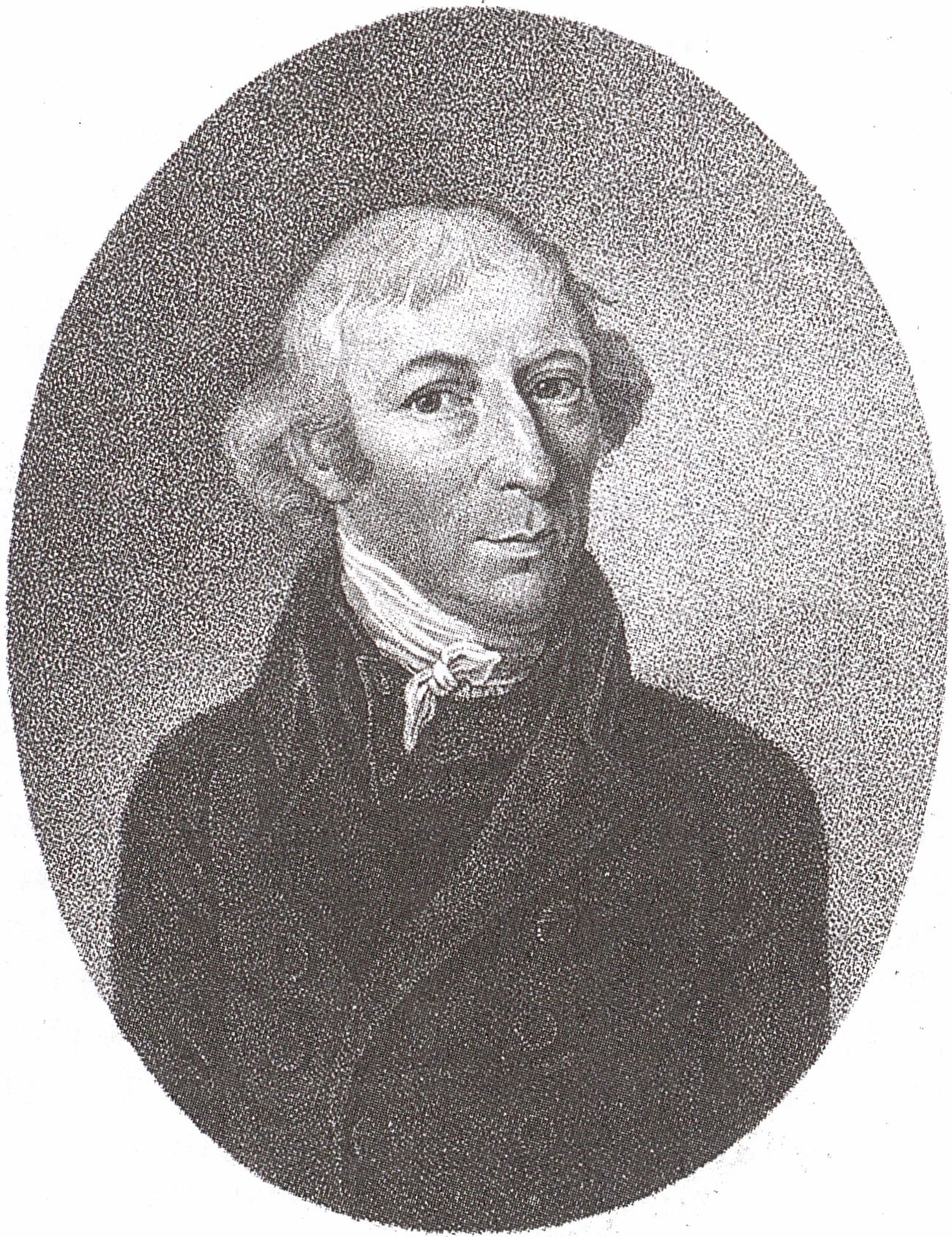
Sterkel Johann Franz Xaver, *3 December 1750 Würzburg, †12 October 1817 Würzburg, German pianist, organist and composer, priest. He learned to play the organ with A. Kette and Weismandel in Würzburg, where he began studying theology at the university in 1764. In 1768, he became an organist in Neumünster, and he was ordained a priest in 1774. After performing at the court in Würzburg, he played in 1777 in Mannheim (he was heard by W.A. Mozart) and in Mainz, where in 1778, he was appointed to the position of court chaplain and organist. He travelled with the violinist F. Lehritter (his half-brother) to Italy in 1779; he often performed as a pianist; he staged his opera Il Farnace in Naples in 1782 and was a guest of G.B. Martini in Bologna; in Germany, he visited A. Stein’s piano factory in Augsburg; he met Beethoven in Aschaffenburg in 1791, and they made music together. From 1793 until the band was disbanded in 1797, Sterkel was the Kapellmeister of the court in Mainz, spending the following years in Würzburg, where he composed many religious pieces. From around 1802, he was active in Regensburg at the court of Archbishop K.Th. von Dalberg, where he founded a choral school for which he wrote polyphonic songs. In 1810–14, he was the Kapellmeister at the court of the Prince in Aschaffenburg, during which he staged Mozart’s The Magic Flute and The Abduction from the Seraglio. In 1815, after a stay in Munich, he returned to Würzburg. Sterkel educated many German pianists and singers.
The performance of Sterkel’s Symphony No. 4 at the Concert Spirituel in Rouen in 1777 initiated a broader German-French musical exchange. Sterkel was one of the composers representing the style of the Mannheim school, especially in chamber music with the participation of the piano, and played a role in spreading this type of work in Germany. His works were published not only in Mainz and Frankfurt am Main but also in Paris, Vienna and London. The piano part in the sonatas with the participation of the violin or cello, as in the songs, is not complicated but texturally effective. Some works, e.g. the string quintet, piano quartet, concertos, and overtures, have stood the test of time. In the sonatas, which primarily suited the tastes of the ladies of the time, Sterkel expressed a preference for lyricism; parts of the sonatas show a loose structure, which brings them closer to the style later developed by F. Schubert. Sterkel’s playing was characterised as soft and feminine. Sterkel gained fame when his works were published in an anthology (published by J. Relfe, London 1786) together with works by J. Haydn, J. Schobert, J.K. Vaňhal, J. F. Edelmann and others, and when his name was included among famous composers in Musical Characteristics Op. 19, by M. Clementi (London 1787).
Literature: Johann Franz Xaver Sterkels Briefwechsel mit seinen Verlegern, ed. A. Beer and D. Schnell, «Beiträge zur Mittelrheinischen Musikgeschichte» XXXVI, Mainz 2002.
J.B. von Siebold, biographical sketch, “Neue fränkische Chronik” II, ed. B. Andres, Würzburg 1807; A. Scharnagl Johann Franz Xaver Sterkel, Würzburg 1943; A. Gottron Mainzer Musikgeschichte von 1500 bis 1800, Mainz 1959; R. Fuhrmann Mannheimer Klavier-Kammermusik, 2 volumes, Marburg 1963; K. Komlós The Viennese Keyboard Trio in the 1780s. Sociological Background and Contemporary Reception, “Music and Letters” LXVIII, 1987; J. Elart Circulation des quatre symphonies oeuvre VII de Johann Franz Xaver Sterkel de l’Allemagne à Rouen, in: Studien zu den deutsch-französischen Musikbeziehungen im 18. und 19. Jahrhundert, book of the Saarbrücken congress 1999, ed. H. Schneider, Hildesheim 2002.
Compositions
(some works, especially concerts, trio and sonatas, were published with various Op. numeration)
Instrumental:
for orchestra:
25 symphonies, including:
4 symphonies Op. 7, published in Paris 1782
4 symphonies Op. 11, published in Paris 1786
2 Sinfonies périodiques Op. 35, published in Paris; 1793
4 overtures, including 2 published in Leipzig, no year
6 piano concertos:
Piano Concerto in C major Op. 20, published in Mainz 1785
3 piano concertos Op. 26, published in Mainz 1788:
Piano Concerto in D major
Piano Concerto in F major
Piano Concerto in C major
Piano Concerto in B-flat major Op. 31, published in Mainz 1789
Piano Concerto in C major Op. 40, published in Offenbach 1792
chamber:
string quintet, published in Vienna 1794
piano quartet, published in Leipzig 1806
6 Duos Op. 8, for violin and viola, published in Paris ca. 1779
over 40 trios for piano/harpsichord,
published in collections containing 3 pieces each:
Op. 1 and Op. 2, published in Frankfurt am Main 1775
Op. 3, published in Frankfurt am Main ca. 1777
Op. 5, published in Frankfurt am Main 1776
Op. 6 and Op. 7, published in Frankfurt am Main ca. 1777
Op. 9, published in Mannheim 1783
Op. 12, published in Paris ca. 1782
Op. 17, published in Mainz 1784
Op. 30, published in Vienna 1789
Op. 32, published in Vienna 1790
published individually:
Op. 34, published in Offenbach 1792
Op. 45, published in Berlin 1805
Op. 46, published in Leipzig 1808
Op. 47, published in Leipzig 1809
Grand Trio Op. 48, published in Berlin ca. 1815
2 Grands trios Op. posth., published in Bonn ca. 1818
sonatas for piano/harpsichord and violin:
3 sonatas Op. 4, published in Frankfurt am Main ca. 1776
3 sonatas Op. 15 and 3 sonatas Op. 16, published in Mainz ca. 1784
3 sonatas Op. 18, published in Mainz ca. 1785
6 sonatas Op. 19, published in Mainz ca. 1785
1 sonata Op. 25, published in Mainz ca. 1786
1 sonata Op. 27, published in Offenbach 1787
6 sonatas Op. 33, published in Mainz 1793
1 sonata Op. 41, published in Offenbach 1804
1 sonata Op. 44, published in Vienna 1805
solo:
12 pieces Op. 10, for piano, published in Vienna ca. 1780
12 pieces Op. 22, for piano, published in Mainz 1784
6 pieces Op. 24, for piano, published in Mainz 1784
Ariettes variées for piano, published in Berlin 1797
3 sonatas Op. 34, for piano, published in Mainz 1798
Grande sonate Op. 36, for piano, published in Offenbach 1798
Fantaisie en rondo Op. 37, for piano, published in Offenbach ca. 1798
3 grandes sonates Op. 39, for piano, published in Offenbach no year
Fantasia in A minor for piano, published in Bonn 1817
Divertissement Op. 48, for piano, published in Leipzig no year
20 small pieces for piano, published in Bonn, Offenbach, Mainz no year
variations for piano
pieces for piano for 4 hands, including:
1 sonata Op. 21, published in Mainz ca. 1787
1 sonata Op. 23, published in Mainz ca. 1787
4 sonatas Op. 28, published in Mainz ca. 1787
Vocal-instrumental:
4 masses for voices solo, choir and orchestra, manuscript
arias, duets, polyphonic songs
collection of 125 solo songs in 16 volumes, published from ca. 1788, among others, in Mainz
Scenic:
Il Farnace, opera, staged in Naples 1782; overture in transcription for piano and violin, published in Frankfurt am Main ca. 1785
Editions:
Sonata in G major Op. 18 nr 2, ed. H. Riemann in: Mannheimer Kammermusik des 18. Jahrhunderts, «Denkmäler der Tonkunst in Bayern» XVI, Leipzig 1915
3 duets for viola, ed. H. von Bülow, Leipzig 1955
String quintet, ed. A. Gottron, Heidelberg 1961
6 duets Op. 8, for violin and viola, ed. W. Lebermann, Mainz 1969
Ausgewählte Stücke for piano, ed. W. Frickert, Zurich 1971
Piano Concerto in C major Op. 20, ed. A. Scharnagl, Mainz 1977
Les petites beautés Op. 24, for piano, ed. E. Kraus, Regensburg 1994