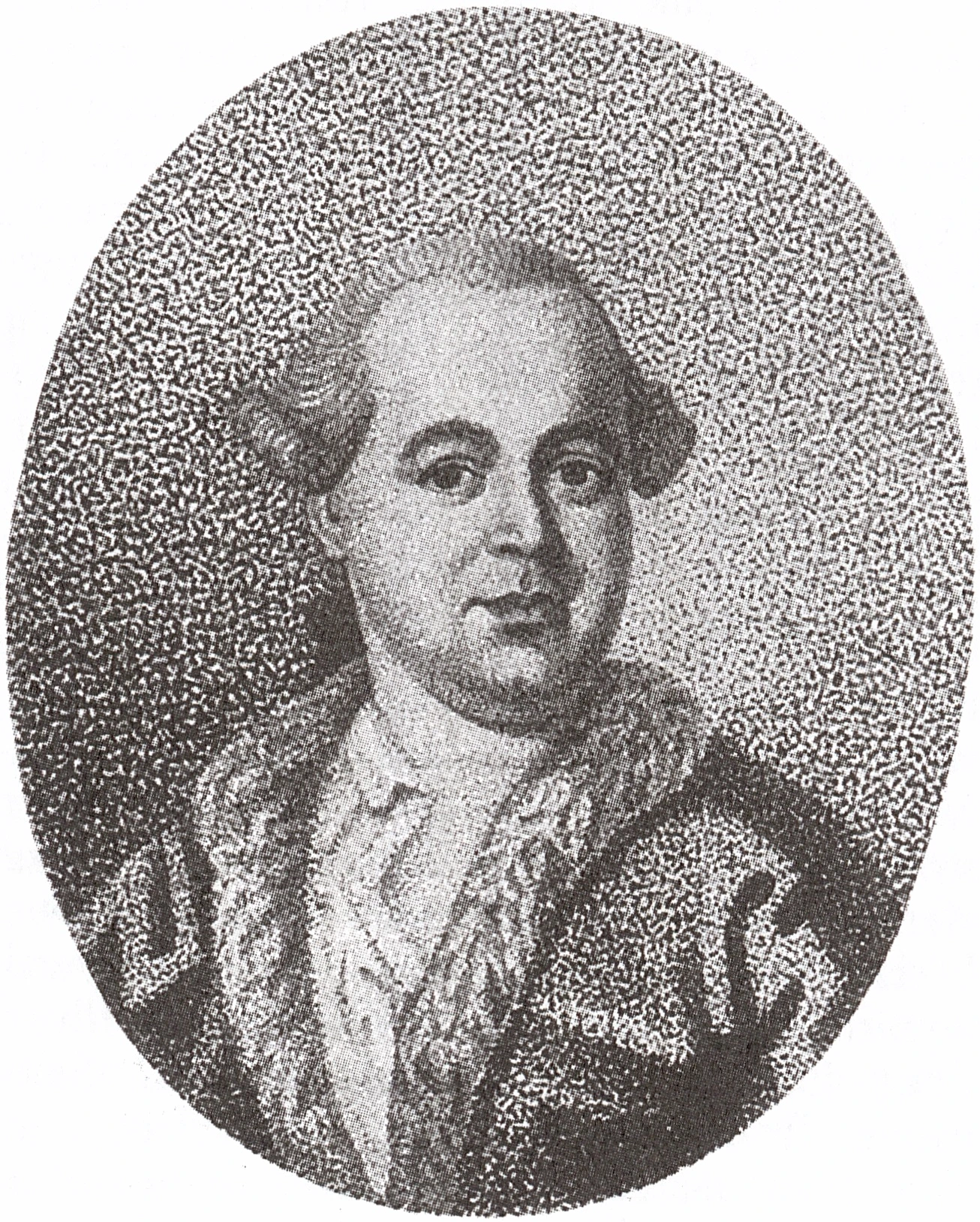
Starzer Joseph Johann Michael, baptised on 5 January 1728 Vienna, †22 April 1787 Vienna, Austrian composer and violinist. Son of Thomas Starzer, horn player at the court of J.J. von Hardegg and, from around 1752, in the orchestra of the Kärntnertortheater. He studied in Vienna, probably with G. Bonn and/or the violinist G. Trani. From 1752 (?) he was a composer and violinist (concertmaster) in the orchestra of the French theater (Burgtheater), and from 1755 also in the Kärntnertortheater. In 1759, in the roles of composer of ballets and ballet scenes in Italian operas and the concertmaster, he travelled with a group of dancers to Russia (the Viennese choreographer F. Hilverding had been there since 1758) and performed with great success at the Tsar’s court in Sankt Petersburg and Moscow. After returning to Vienna (probably at the end of 1767), he collaborated with J.G. Noverre, and from 1774 with G. Angiolini, staging ballets and performing works by G.F. Händel, J. Haydn, and his own compositions, among others. From 1771, he collaborated with F.L. Gassmann and G. van Swieten, among others, in establishing the Tonkünstler-Sozietät in Vienna and organizing numerous charity concerts, also performing his own compositions. He performed in the orchestra as a violinist until around 1779 and as a conductor until around 1783, after which he significantly reduced his active concert life for health reasons and collaborated only occasionally with, among others, the Gesellschaft der associierten Kavaliere orchestra, with which he performed among others Händel’s choral works.
As a composer and performer, Starzer made a significant contribution to the development of ballet music and contributed to laying the foundations for ballet reform, modelled on the opera reform of Ch.W. Gluck. This area of Starzer’s activity has not yet been thoroughly researched, and his rich ballet oeuvre has not been exhaustively analysed, identified, and selected, including from among many anonymous scores. It is assumed that he created several hundred ballets (preserved in manuscripts, with many anonymous). These include both relatively short works, performed as interludes in operas and theatre performances (e.g. ballets included in Gluck’s Il rè pastore, staged in 1756, Artaserse by G. Scarlatti, staged in 1763, Lucio Silla by W.A. Mozart, staged in 1772–73?), as well as more extensive ones, sometimes numbering over 20 numbers, containing multi-section, recomposed final parts. In addition to various types of dances, there were also sections whose structure contained analogies to the sonata form and instrumental recitatives. In his later ballets, there was a tendency to expand the ballet parts, increasingly modelled on operatic forms, with the participation of an enlarged wind section. His later ballets reveal his tendency to expand the ballet sections, increasingly modelled on operatic forms, with the participation of an enlarged wind section. In addition to the characteristics typical of popular Viennese music, Starzer used folk music and the distinctive features of the music of other nations, such as Spanish, English, Italian, Hungarian, Romani, Turkish, Janissary and Russian, in various ways. He referred to French vaudeville and German singspiel, used colourful instrumentation, and introduced allegorical, heroic and grotesque elements. He referred to French vaudeville and German singspiel, used colourful instrumentation, and introduced allegorical, heroic and grotesque elements. The dance arrangements for his ballets were developed by outstanding 18th-century choreographers: F. Hilverding, J.G. Noverre, G. Angiolini, G. Salomone, P. Sodi, C. Bernardi, A. Pitrot and others. The themes of the librettos were very diverse, covering mythological themes drawn from ancient, exotic and oriental subjects, as well as from everyday life at the time, e.g. descriptions of hunting, scenes in the city, in the countryside, in the forest, in the garden, in the tavern, in the weaving mill, at a party. There are also ballets describing the seasons, times of day and even colours. Starzer also composed occasional works (e.g. the ballet Die Landung der Spanier auf den amerikanischen Küsten, written for the wedding of Archduke Joseph in 1760). Imitation and musical illustration played a special role (e.g. the clatter of sabots, soldier scenes). Starzer’s ballets were very popular in Vienna, Sankt Petersburg and Moscow. Sometimes the performances were enriched with illuminations, lighting effects and other non-musical effects.
Starzer’s contribution to the development of choral music, and especially to the performance of choral and orchestral music, was also highly regarded by his contemporaries. Performing choral works, mainly by J.S. Bach and G.F. Händel, Starzer co-created a characteristic oratorio performance style, which was later referred to by J. Haydn. Haydn’s influence, particularly in terms of contrapuntal structures, is evident in Starzer’s chamber music, which, like his richly orchestrated works, has survived mainly in manuscripts.
Literature: J. von Stählin Nachrichten von der Musik in Russland, in: J.J. Haigold Belagen zum neuveränderten Russland, Riga-Leipzig 1769–70; L. Braun Die Balletkomposition von J. Starzer, “Studien zur Musikwissenschaft” XIII, 1926; R. Haas Die Wiener Bühnentanz von 1740 bis 1767, “Jahrbuch der Musikbibliothek Peters” XLIII, 1936; E.F. Schmid Gluck – Starzer – Mozart, “Zeitschrift für Musik” CIV, 1937; S.E Nadel “Les Horaces et les Curiaces”. Bemerkungen zu einem Ballet von J.-G. Noverre und J. Starzer, “Studien zur Musikwissenschaft” XXXII, 1981; H. Starzer Herkunft und Jugendzeit des Komponisten J. Starzer, “Studien zur Musikwissenschaft” XLVI, 1998; W. Rackwitz Über die Bearbeitung von Händels “Judas Maccabaeus” durch J. Starzer und über ihre Wirkungsgeschichte, “Göttinger Händel-Beiträge” IX, ed. H.J. Marx, Göttingen 2002; D. Lomtev Deutsches Musiktheater in Russland, Lage-Hörste 2003; B.A. Brown Les sources musicales des ballets de Noverre dans les archives de la famille Schwarzenberg de Český Krumlov, “Musicorum” 10 (2011); H. Kazárová Od Starzera k Beethovenovi: Po stopách konceptu výmluvné hudby, “Živá hudba” 9 (2018).
Compositions:
Instrumental:
18 symphonies – 5 of uncertain authorship, one published in Leipzig between 1776 and 1777
Sinfonia in F major, ballet overture Psiché et l’Amour, 1752
overture for two orchestras for the play by J.B. Pelzel Hedwigis von Westenwang, performed in Vienna in 1780, published in Vienna 1799
concert for two orchestras, performed in 1779, lost
concert/sinfonia concertante for 2 clarinets, 2 horns, and bassoon, performed in 1780, lost
Violin Concerto in F major
7 minuets and a contredanse for 2 violins, 2 oboes/2 flutes, 2 horns, and a bass instrument, 1771
Chamber:
Divertimento in B-flat major for string trio
Divertimento in C major for string trio
Divertimento E-flat major for string trio
22 string quartets
Musica da cammera, 5 pieces for 2 flutes, 5 trumpets, and timpani, performed in St. Petersburg before 1767 (copied by L. Mozart)
Le matin et le soir, octet for wind instruments
Duetto and Cassatio for 2 horns, Vienna 1799
2 Parthien for wind instruments, Vienna 1804
Vocal-instrumental:
La passione di Gesù Cristo, oratorio, text by P. Metastasio, performed in Vienna in 1778
arrangement of the oratorio Judas Maccabaeus by G.F. Händle, performed in Vienna in 1779
Stage:
(staged mainly in Vienna, St. Petersburg, and Moscow)
over 250 ballets and ballet interludes for theatre and opera performances (including only about 40 with certain attribution)
Die Wildschützen, vaudeville, performed in 1777, uncertain authorship
Die drei Pächter, vaudeville, 1778 (?), uncertain authorship
Editions:
2 divertimenti, eds. K. Horwitz and K. Riedel, in: Wiener Instrumentalmusik vor und um 1750, «Denkmäler der Tonkunst in sterreich» XV/2, Vienna 1908, reprint Vienna 1959
Divertimento D major for string orchestra, ed. G. Lenzewski, Berlin 1928
Concerto F-Dur für Violine, ed. P Angerer, «Diletto Musicale» No. 82, Vienna 1964, 1988
Le triomphe du printemps, ed. D. Lomtev, Moscow 2001
Musica da cammera, ed. E.H. Tarr, Nagold 2003