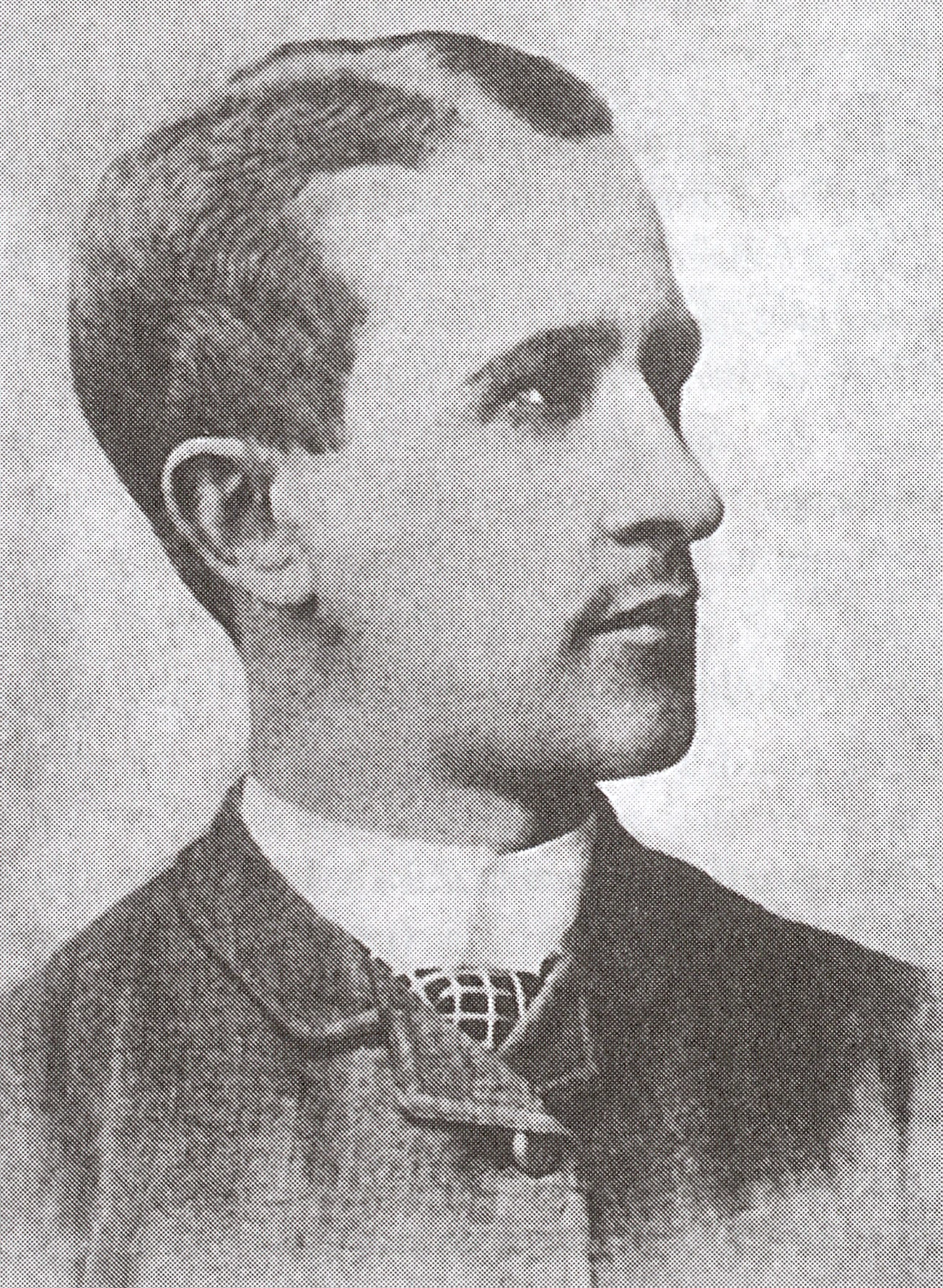
Pankiewicz Eugeniusz, *15 December 1857 Siedlce, †24 December 1898 Tworki (near Warsaw), Polish composer and pianist. One of Pankiewicz’s sisters, Maria, was a dramatic actress, and his youngest brother Józef was a painter. From his marriage to Maria Bothe, a singer, he had a son, Henryk Adam (born 1894), an engineer. Eugeniusz Pankiewicz began learning to play the piano in Lublin and continued in Warsaw at the Institute of Music with J. Wieniawski from 1875. Then, he studied in St. Petersburg with T. Leszetycki in 1877 (78?)–80, and later for a few months in Moscow. After returning to Warsaw, he began studying composition with W. Żeleński and Z. Noskowski at the Institute of Music, where he taught a piano class in 1883–85 and from 1888. At the same time, he was a piano teacher at the Mariinsky Institute. He performed at concerts in Warsaw, Łódź, and Lublin as a soloist and chamber musician. He gave concerts in Vienna, Berlin, and Leipzig. In 1891, he was in Dresden; from 1894, he was seriously ill and only in 1895 did he return to work for a short time. Pankiewicz’s solo songs became a significant achievement in the development of Polish songs and national styles between Chopin and Szymanowski. Pankiewicz reached for texts by contemporary Polish poets (Asnyk, Bałucki, Romanowski, Zaleski), as well as older ones (Karpiński and Kochanowski), composed to the poems of Heine and Lenau, and also exploited original folk texts. He chose lyric poetry (intimate confessions) and patriotic and social themes. He composed strophic songs (15 songs) and three-part songs, several of which can be considered recomposed; however, each stanza is developed in variations, faithfully reflecting the content and mood of the poetry. Most strophic and variation songs are based on original folk texts and melodies; the composer introduced only minor changes to the words, omitted some stanzas and made transpositions. Eight Songs Op. 14 is a compilation of songs from different regions of Poland based on Pieśni ludu polskiego by O. Kolberg; in the song Góral, Pankiewicz used the original “Sabałowa note.” The collection of 6 songs Op. 18 contains exclusively wedding songs from the Sandomierz region. In addition, Pankiewicz composed several songs stylised as folk (Grzędy rutą osnute, Ballada, Mazurek, and Krakowiak). He did not limit himself to superficial imitation of the folk style but exploited modal scales: Lydian (Dzionek na wsi), Phrygian and Aeolian (Uśniej, Dziecię Święte) and preserved authentic folk rhythms: mazurka, krakowiak (Ze snu) and polonaise (Dziedzina ojczysta). He captured the most important features of folk music and processed them in a highly individual way, referring to Chopin.
The adaptations of authentic folk songs influenced the tonality and harmony of Pankiewicz’s songs, which can be considered the most expressive and innovative elements of his style. He preferred major keys (nine songs are in minor keys, but three of them have major endings), and also used key changes within a piece (O zmroku niebios, Sonet “Jednego serca” and in the instrumental ritornello of the song Dzionek na wsi). He went beyond the framework of the major-minor system, often using modulations, multi-note structures, alterations and disalterations, unresolved dissonances (exclamations in Gdy ostatnia róża zwiędła), and parallel chords; he sometimes entrusted the centralising role not to the function of the tonic or other chords of the basic key but to a melodic motif or a pedal note. He emphasised colour values, achieving almost impressionistic effects in some songs (Poranek). In Kołysanka [Lullaby], under the influence of the text, which changes into a political and social reflection, the initial consonant harmony becomes saturated with modulation, chromaticism and foreign sounds. Pankiewicz’s songs are also distinguished by the developed texture of the piano part, which did not find its equivalent in Polish songs until the times of M. Karłowicz. In the accompaniment, Pankiewicz uses the variation technique and chromaticism (W tęsknocie), the piano part determines the mood of the song (O zmroku niebios); while sometimes maintaining a uniform character, it is enriched with sound illustration effects (e.g. the murmur of a mountain stream in Huczy woda or funeral bells in Kochaneczko, oczki moje). Pankiewicz’s choral a cappella works developed simply in terms of harmonics and texture, are underestimated, as are the accompaniment pieces, which are equal to the solo songs – stanza-variation and three-part, sometimes more extensively developed, such as Barcarolle Op. 17, collection of six songs Op. 18 and Ballade Op. 21.
Dance and salon pieces predominate in Pankiewicz’s piano works; however, Variations Op. 10 and later compositions expand technical, harmonic and colouristic means. During his lifetime, Pankiewicz was assessed negatively due to breaking harmonic and textural conventions; only in the 1950s, thanks to the publication of the composer’s vocal works and W. Poźniak’s monograph, Pankiewicz gained recognition, especially for songs and for his creative approach to musical folklore.
Literature: M. Malcz Eugeniusz Pankiewicz, “Tygodnik Ilustrowany” 1889 No. 3; W. Rzepko Śp. Eugeniusz Pankiewicz, “Echo Muzyczne, Teatralne i Artystyczne” 1899 No. 798; P. Maszyński Eugeniusz Pankiewicz, “Kwartalnik Muzyczny” 1912 No. 3; M. Skolimowski Eugeniusz Pankiewicz, “Głos Stolicy” 1917 No. 336; A. Chybiński Eugeniusz Pankiewicz. Pieśni (Polish and French text), “Kwartalnik Muzyczny” 1929 No. 4; J. Czapski Józef Pankiewicz, życie i dzieło, Warsaw 1936; W. Poźniak Eugeniusz Pankiewicz, “Antena” 1937 No. 46; W. Poźniak Eugeniusz Pankiewicz, Kraków 1958 (musical supplement, thematic catalogue of Pankiewicz’s works and a selection of notes and articles on Pankiewicz from the press from the end of the 19th century and first decades of the 20th century); J. Gabryś, J. Cybulska Z dziejów polskiej pieśni solowej, Kraków 1960; J. Falenciak Pieśni Eugeniusza Pankiewicza, in: Kultura muzyczna Warszawy drugiej połowy XIX wieku, ed. A. Spóz, Warsaw 1980; T. Przybylski Zapomniane kwartety smyczkowe kompozytorów polskich II połowy XIX wieku: Paderewskiego, P, Rutkowskiego, Żeleńskiego, in: Warsztat kompozytorski, wykonawstwo i koncepcje polityczne I.J. Paderewskiego, ed. W.M. Marchwica, A. Sitarz, Kraków 1991; B. Vogel Pankiewicz Eugeniusz, in: Polski Słownik Biograficzny, vol. 25, ed. E. Rostworowski, Wrocław–Warsaw–Kraków–Gdańsk 1980.
Compositions:
Instrumental:
Two Mazurkas Op. 1 for piano: in F major, in E-flat minor, 1874 (opus no. cancelled)
Five Mazurkas Op. 3 for piano: in C minor, in B-flat major, in E major, in G-sharp minor, in D minor, 1874 (opus cancelled)
Valse brillante in E-flat major Op. 5 for piano, 1874 (opus no. cancelled)
Deux valses for piano: in E major, in C major
2 pieces Op. 1 for piano: 1. Menuet in D major, Warsaw 1881, St. Petersburg 1891, 2. Humoresque in B-flat major, published in Warsaw 1881, St. Petersburg 1891
Theme with Variations in F minor for string quartet, 1882 (autograph missing)
Trois feuilles d’album Op. 2 for piano: in G minor, in G major, in F minor, Warsaw 1885 (1884?), published in Berlin 1890 as Drei Albumblatter Op. 2
2 Mazurkas Op. 3 for piano: in E major, in A minor, published in “Echo Muzyczne i Teatralne” 1883 no. 63 and 31, published in St. Petersburg 1891 as Deux mazourkas de concert
Salon Waltzes in C major for piano (without op.), published in “Echo Muzyczne, Teatralne i Artystyczne” 1886 no. 167
Waltz in E major by M. Moszkowski simplified by Pankiewicz for piano (without op.), published in “Echo Muzyczne, Teatralne i Artystyczne” 1887 no. 191
3 pieces Op. 4 for piano: 1. Chaconne in C major (autograph missing), 2. Menuet in F major, published in “Echo Muzyczne, Teatralne i Artystyczne” 1887 no. 201, 3. Gavotte in F-sharp major
Variations et fugue sur un thème original in A major Op. 7 (not finished)
3 pieces Op. 8 for piano: 1. Prelude on a theme from a Polish Christmas carol “Gdy się Chrystus rodzi” in F major, published in “Kłosy” 1888 no. 1175, 2. Valse scherzo in A major (not finished), 3. Humoresque in A major (autograph missing)
3 pieces Op. 9 for piano: 1. Krakowiak-Fantasia in E minor, published in “Echo Muzyczne, Teatralne i Artystyczne” 1888 no. 251, 2. Krakowiak in D-flat major (autograph missing), 3. A la cracovienne in F-sharp minor (autograph missing)
Variations sur un thème original in D major Op. 10 for piano, Warsaw 1931, Kraków 1953
2 pieces Op. 11 for piano: 1. Improvisation in B-flat major, published in “Echo Muzyczne, Teatralne i Artystyczne” 1887 no. 215, 2. Improvisation in B minor (not finished), published in a musical supplement to: W. Poźniak Eugeniusz Pankiewicz, Kraków 1958
3 pieces Op. 12 for piano: 1. Menuet in D-flat major, published in “Echo Muzyczne, Teatralne i Artystyczne” 1891 no. 385, 2. Burlesque in F-sharp major, published in St. Petersburg 1891, 3. Nocturne in C-sharp minor (autograph missing)
Allegro for piano (without op.)
Deux mélodies for piano: in A major, in D minor (without op.)
Fugue in C-sharp minor for piano (without op.)
Mazurka in A-flat major (without op., fragment preserved), published in a musical supplement to: W. Poźniak, Eugeniusz Pankiewicz, Kraków 1958
Pensée fugitive in B minor for piano (without op.)
Prélude for piano (without op.)
Romance in D minor for piano (without op.)
Valses (?) de concert in E-flat major for piano (without op.)
Vocal-instrumental:
Four Songs Op. 5 for voice and piano: 1. Huczy woda, words by A. Asnyk, 2. Tyś jak ten kwiatek and 3. O zmroku niebios, words by H. Heine, transl. A. Mieleszko-Maliszkiewicz, 4. Uśniej, Dziecię Święte, words by S. Grochowski, published in Warsaw 1887, 1914 and 1917 Gebethner&Wolff, also in: Pieśni zebrane book 1., ed. W. Poźniak, Kraków 1956, no. 4 also in: Polskie pieśni romantyczne, Kraków 1995
2 songs Op. 6 for voice and piano to words by A. Asnyk: 1. Sonet I „Jednego serca”, 2. Sonet II „Kiedym cię żegnał”, published in Warsaw 1887, 1914 and 1917 Gebethner&Wolff, also in: Pieśni zebrane book 1., ed. W. Poźniak, Kraków 1956
Eight Polish Folk Songs Op. 14 for voice and piano, 1891: 1. Kochaneczko, oczki moje, 2. Rutko moja, rutko, published in “Kłosy” 1888 no. 1197, 3. Na podolu biały kamień, 4. Jasio konie poił, published in “Echo Muzyczne, Teatralne i Artystyczne” 1887 no. 201, Warsaw 1904 and 1917 Gebethner&Wolff, 5. Gdzież to jedziesz, published in “Kłosy” 1887 no. 1158, “Nowości Muzyczne” 1911 no. 5, Warsaw 1914 Gebethner&Wolff, also in: Polskie pieśni romantyczne, Kraków 1955, 6. Graj pastuszku, graj, published in “Tygodnik Ilustrowany” 1887 no. 10, 7. A jak ci ja będę, published in “Nowości Muzyczne” 1912 no. 3, Warsaw 1914 and 1917 Gebethner&Wolff, also in: Polskie pieśni romantyczne, Kraków 1955, 8. Na gałęzi mi się ptaszki kołysały, published in “Echo Muzyczne, Teatralne i Artystyczne” 1888 no. 229, Warsaw 1904 and 1917 Gebethner&Wolff, whole published in: Pieśni zebrane, ed. W. Poźniak, Kraków 1956
Z miłosnych dziejów, cycle of 6 songs Op. 19 for voice and piano, words by M. Bałucki: 1. Pod oknem, 2. Poranek, 3. Westchnienie, 4. Na dobranoc, 5. Na przebłaganie, 6. W tęsknocie, whole published in Warsaw 1930 Gebethner&Wolff, also in: Pieśni zebrane book 1, see: editions: W. Poźniak, Kraków 1956
Gdy ostatnia róża zwiędła, song for voice and piano (without op.), words by A. Asnyk, published in Warsaw 1929 and in: Pieśni zebrane book 2, ed. W. Poźniak, Kraków 1957
Szczęśliwa młodość, song for voice and piano (without op.), words by A. Asnyk, published in Warsaw 1929 and in: Pieśni zebrane book 2, ed. W. Poźniak, Kraków 1957
Zwiędły listek, song for voice and piano (without op.), words by A. Asnyk, published in Warsaw 1929 and in: Pieśni zebrane book 2, ed. W. Poźniak, Kraków 1957
Góral, words by M. Bałucki, song for voice and piano (without op.), in: Pieśni zebrane book 2, ed. W. Poźniak, Kraków 1957
Über die Berge (Słoneczko zaszło), song for voice and piano (without op.), words by H. Heine, transl. A. Mieleszko-Maliszkiewicz, in: Pieśni zebrane book 2, ed. W. Poźniak, Kraków 1957
Dzwonek, song for voice and piano (without op.) words by M. Unicka, in: Pieśni zebrane book 2, ed. W. Poźniak, Kraków 1957
Matka do swego dziecięcia, song for voice and piano (without op.), words by F. Karpiński, in: Pieśni zebrane book 2, ed. W. Poźniak, Kraków 1957
Serenada, song for voice and piano (without op.), words by J. Kościelski, in: Pieśni zebrane book 2, ed. W. Poźniak, Kraków 1957
Dziedzina ojczysta, song for voice and piano (without op.), words by T. Lenartowicz, published in Warsaw 1929 and in: Pieśni zebrane book 2, ed. W. Poźniak, Kraków 1957
Dzionek na wsi, song for voice and piano (without op.), words by T. Lenartowicz, 1885, in: Pieśni zebrane book 2, W. Poźniak, Kraków 1957
Schilflied (Pieśń sitowia), song for voice and piano (without op.), words by N. Lenau, transl. W. Poźniak, in: Pieśni zebrane book 2, W. Poźniak, Kraków 1957
Usteczka, song for voice and piano (without op.), words by B. Londyński, in: Pieśni zebrane book 2, W. Poźniak, Kraków 1957
Lullaby “Luli, synku…”, song for voice and piano (without op.), words by F. Odrowąż (pseud. of F. Milżecki), published in Vienna ca. 1880, “Meloman” 1899 no. 6, Warsaw 1917 Gebethner&Wolff, also in: Pieśni zebrane book 2, W. Poźniak, Kraków 1957
Pieśń przy kołysce, song for voice and piano (without op.), words by the composer, in: Pieśni zebrane book 2, W. Poźniak, Kraków 1957
Lullaby “Śpij, dziecino ukochana”, song for voice and piano (without op.), words by F. Rejnsztejn, Warsaw 1929; to words by M. Romanowski: Dumka, Jutro, Kwiatek, Warsaw 1929, also in: Pieśni zebrane book 2, W. Poźniak, Kraków 1957
Mazurka, song for voice and piano (without op.), Warsaw 1929, also in: Pieśni zebrane book 2, W. Poźniak, Kraków 1957
On i ona, song for voice and piano (without op.), published in Warsaw 1929, also in: Wybór pieśni kompozytorów polskich, book 1, Kraków 1952
Dwie, song for voice and piano (without op.), words by W. Wolski, published in: Pieśni zebrane book 2, W. Poźniak, Kraków 1957
Ze snu, song for voice and piano (without op.), words by B. Zaleski, published in: Pieśni zebrane book 2, W. Poźniak, Kraków 1957
Więc patrz, song for voice and piano (not finished), words by S. Petőfi, anonymous transl., published in a music supplement to: W. Poźniak Eugeniusz Pankiewicz, Kraków 1958
Fiołek, song for voice and piano (not finished), words by S. Rossowski, published in a music supplement to: W. Poźniak Eugeniusz Pankiewicz, Kraków 1958
Dzikie sny, song for voice and piano (not finished), words by M. Romanowski, published in a music supplement to: W. Poźniak Eugeniusz Pankiewicz, Kraków 1958
Każdą myślą, song for voice and piano (not finished), words by M. Romanowski, published in a music supplement to: W. Poźniak Eugeniusz Pankiewicz, Kraków 1958
2 songs Op. 15 for 4-voice unaccompanied male choir: 1. Hej! do pracy, words by Władysław z Zacisza, published in Warsaw 1890 Gebethner&Wolff, 2. Krakowiak, words by E. Wasilewski, published in a music supplement to: W. Poźniak Eugeniusz Pankiewicz, Kraków 1958
Za moich młodych lat, for 4-voice unaccompanied male choir, words by A. Asnyk, published in Warsaw 1890 Gebethner&Wolff
Do zdrowia, for 4-voice unaccompanied male choir, words by J. Kochanowski, published in a music supplement to: W. Poźniak Eugeniusz Pankiewicz, Kraków 1958
Piosnka żołnierska for 4-voice unaccompanied male choir, words by M. Romanowski, published in Warsaw 1913 Gebethner&Wolff
5 songs Op. 16, for 2-voice female choir and piano: 1. Oj, Janie, Janie, 2. Dumka, words by B. Zaleski, published in a music supplement to: W. Poźniak Eugeniusz Pankiewicz, Kraków 1958, 3. Grzędy rutą osnute, words by J. Kościelski, Warsaw 1898 and 1917 Gebethner&Wolff, 4. Wieją wiatry and 5. Noc wiosenna, words by J. Kuczyński, W. Poźniak, Eugeniusz Pankiewicz, Kraków 1958
Barkarola Op. 17 for tenor or soprano solo, male choir and piano, words by A. Asnyk, Kraków 1955
Six Polish Folk Wedding Songs Op. 18, suite for 2 female voices or female choir and piano for 4 hands, Warsaw 1917 Gebethner&Wolff, Kraków 1951
Ballad Op. 21 for soprano and alto solo, mixed choir and piano, words by Or-Ot (pseud. of A. Oppman)
Editions:
Pieśni zebrane, 2 books, ed. W. Poźniak, Kraków 1956, 1957
music supplement to: W. Poźniak Eugeniusz Pankiewicz, Kraków 1958 (11 pieces)
some solo songs published in:
Wybór pieśni kompozytorów polskich, book 1, Kraków 1952
Polskie pieśni romantyczne, Kraków 1955