
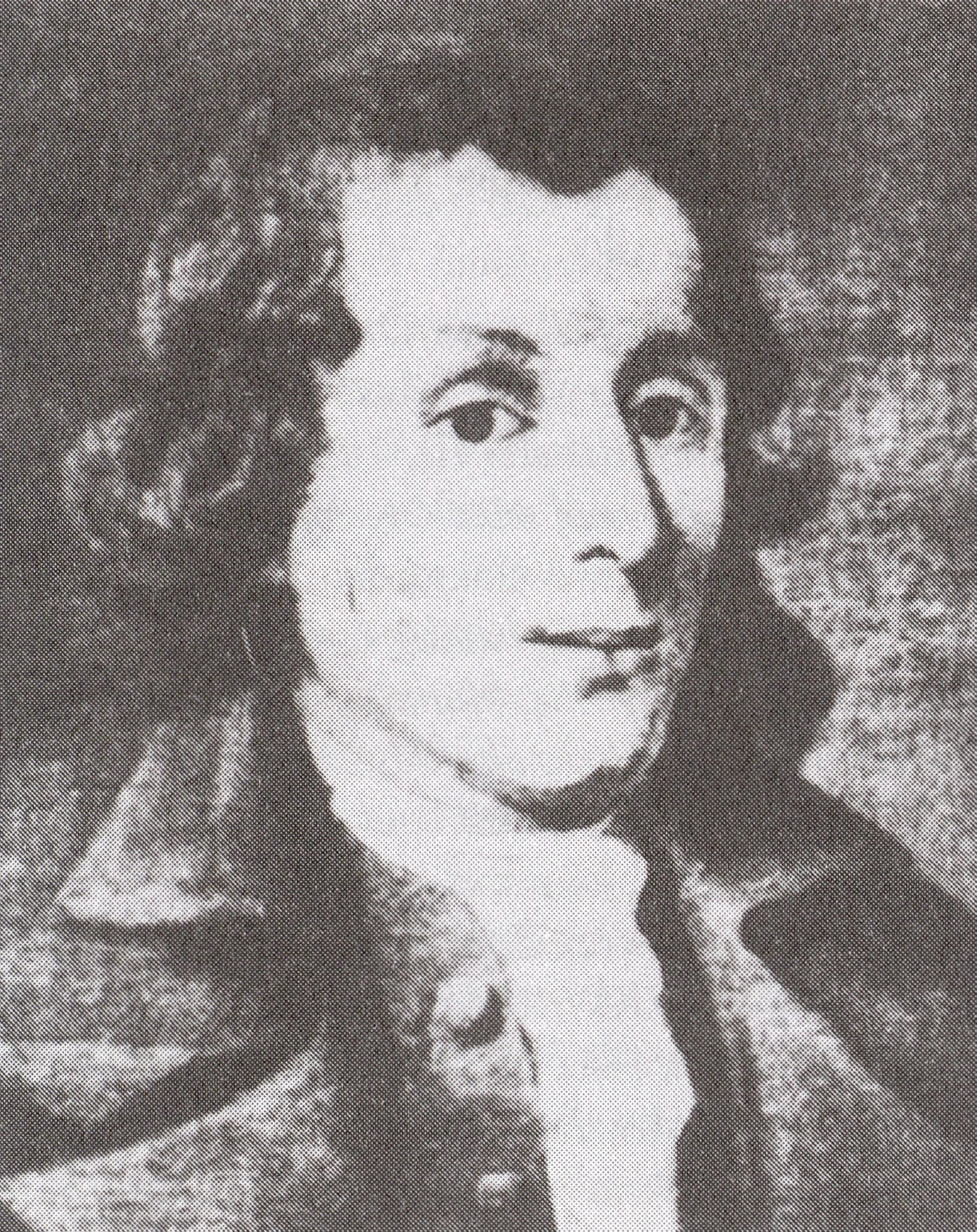
LE NOZZE DE FIGARO.

Neefe Christian Gottlob, *5 February 1748 in Chemnitz, †26 January 1798 in Dessau, German composer, conductor, organist, pedagogue, and music writer. He studied music in Chemnitz with organist Wilhelmi and Ch.G. Tag, cantor from Hohenstein. He had been composing since at least the age of 12. He studied law in Leipzig from 1769 to 1771 and music with J.A. Hiller. He gave private music lessons and from 1776 to 1779 he directed Abel Seyler’s traveling theatre troupe. In the years 1779–80 he was associated with G. F. W. Grossmann’s theatrical company in Bonn, and from 1780 with the court there, where he took on the duties of stage director, composer, conductor, and, from 1782, instrumentalist (harpsichord, organ, and other instruments used in basso-continuo performance). During the years 1779–81 (possibly 1784) he taught the young L. van Beethoven for a time, though the impact of his instruction on the composer’s later development remains contested. He maintained contact with Beethoven for a long time, until around 1792. With time, his position at court and his financial condition worsened, and the temporary shutdown of the Bonn theatre (1784–89) obliged him to depend largely on income from private lessons. In 1794, owing to the war of Austria and Prussia against France, Neefe lost his previous employment; toward the end of 1796 he secured a post as music director of a theatrical company in Dessau, where he soon became ill and died.
Neefe’s musical compositions reflect the Classical style, whereas his writings and endeavors promoted Enlightenment thought. As a teacher, he remained under the considerable influence of Hiller. His operas, singspiele, and operettas, such as the highly regarded Adelheit von Veltheim and the monodrama Sophonisbe, were very successful at the time, but are now completely forgotten. His songs and piano works are of great musical value. Elaborate serenades with varied formal structures (strophic, variation-based) and dramatic effects, cantata-like ballads or odes, and other vocal works laid the foundations for early Romantic song forms, and some already clearly anticipated the work of Schubert. His piano works, which today constitute the most frequently performed and published part of his oeuvre, can be divided into early works of a typically classical character, similar to early Haydn, and later works, revealing romantic features, with greater emotional intensity and more elaborate harmony.
Literature: O. Müller Neefe und seine Beziehungen zu Beethoven, “Chemnitzer Mitteilungen” VII, 1891; I. Leux Neue Neeferiana, Neues “Beethoven-Jahrbuch” I, 1924; O.E. Deutsch Zur Familiengeschichte der Neefe, I. Leux Christian Gottlob Neefe und Andreas Romberg and W. Engelhardt Die Kieler Handschrift der Autobiographie Christian Gottlob Neefes, “Zeitschrift für Musikwissenschaft” VII, 1924–25 (it includes a condensed version of his autobiography along with a thematic catalogue of his instrumental compositions); I. Leux Christian Gottlob Neefe 1748–98. Biographie und Instrumentalkompositionen, Leipzig 1925; P. Nettl Forgotten Musicians, New York 1951, repr. 1970; W. Engelhardt Bittschrift der Witwe Susanne Maria Neefe an den Erzherzog Maximilian, “Mitteilungen der Arbeitsgemeinschaft für rheinische Musikgeschichte” IV, 1956; K.H. Oehl Die Don Giovanni Übersetzung von Christian Gottlob Neefe, “Mozart-Jahrbuch” III 1962, published in 1963; H. Drux Eigenheiten in der Klavierkomposition Christian Gottlob Neefes, in: Studien zur Musikgeschichte des Rheinlandes, vol. 3, celebratory publication for H. Hüschen, ed. W. Eckart-Bäcker, «Beiträge zur Rheinischen Musikgeschichte» LXII, Cologne 1965; W. Hess Christian Gottlob Neefe, ein Lehrer Beethovens, “Schweizerische Blasmusik” LVI, 1967; A. Becker Christian Gottlob Neefe und die Bonner Illuminaten, Bonn 1969; K. von Fischer Arietta Variata, in: Studies in Eighteenth-Century Music, celebratory publication for K. Geiringer, eds. H.C.R. Landon and R.E. Chapman, New York 1970; W. Kaden Was wissen wir über Beethovens Lehrer Christian Gottlob Neefe, «Beiträge zur Heimatgeschichte von Karl Marx Stadt» XIX, Karl Marx Stadt 1972; W. Kaden Beethovens Lehrer Christian Gottlob Neefe, in: II Schumann Tage, eds. G. Müller and W. Geissler, Zwickau 1978, published also in: Bericht über den Internationalen Beethoven-Kongress 20 bis 23 III 1977 in Berlin, eds. H. Goldschmidt, K.-H. Köhler, K. Niemann, Leipzig 1978; L.E. Peake The Antecedents of Beethoven’s Liederkreis, “Music and Letters” VXIII, 1982; M. Spányi Christian Gottlob Neefe and his Klaviersonaten, “Clavivhord International” 6/2, 2002; H. Loos Das Monodram Sophonisbe von Christian Gottlob Neefe, “Glasbeno-pedagoški zbornik Akademije za Glasbo v Ljubljani” V, 2005; I. Woodfield Christian Gottlob Neefe and the Bonn National Theatre, with new light on the Beethoven family, “Music and Letters” 93/3, 2012; A. Kuhl Ein Topos des Heroischen? Die Darstellung der standhaften Frauenfigur in Christian Gottlob Neefes Adelheit von Veltheim und Wolfgang Amadé Mozarts Die Entführung aus dem Serail, “Mozart-Jahrbuch” 2013; I. Woodfield Christian Gottlob Neefe and the early reception of Le nozze di Figaro and Don Giovanni, “Newsletter of the Mozart Society of America” 20/1, 2016; H. Loos Christian Gottlob Neefe (1748–1798) und seine Bedeutung für Ludwig van Beethoven, in: Beethoven: Die Bonner Jahre, Cologne 2020; J. van der Zanden Beethoven and Neefe – A Reappraisal, “Music and Letters” 102/1, 2021.
Compositions:
Stage:
operas, operettas, singspiele:
Der Dorfbalbier, staged in Leipzig 1771
Die Apotheke, staged in Berlin 1771, piano reduction published in Leipzig 1772
Amors Guckkasten, staged in Leipzig 1772, piano reduction published in Leipzig 1772
Der Einspruch, staged in Leipzig 1772, revised version titled Die Einsprüche, staged in Berlin 1773, piano reduction published in Leipzig 1773
Zemire und Azor, staged in Leipzig 1776
Heinrich und Lyda, staged in Berlin 1776, piano reduction published in Naumburg 1777
Sophonisbe, staged in Leipzig 1776, piano reduction published in Leipzig 1782
Die Zigeuner, staged in Frankfurt am Main 1777
Adelheit von Veltheim, staged in Frankfurt am Main 1780
Der neue Gutsherr, not staged, piano reduction for act I and II published in Leipzig 1783–84
Vocal:
choral works and solo songs, including Masonic songs, in: Freimaurerlieder zum Gebrauch der gerechten und vollkommenen Loge…, Leipzig 1774
Lieder mit Klaviermelodien, Głogów 1776
Oden, text by F.G. Klopstock, Flensburg and Leipzig 1776, 2nd ed. 1779, 3rd ed. Neuwied 1785 (3rd edition includes Das grosse Hallelujah for mixed choir and orchestra)
Serenaten beym Klavier zu singen, Leipzig 1777
Vademecum für Liebhaber des Gesangs und Klaviers, Leipzig 1780
Lieder für seine Freunde und Freundinnen, Leipzig 1784
Bilder und Träume, Leipzig 1798
Instrumental:
among others: polonaises and orchestral partitas, including the Partita in E-flat major, 1774
Concerto pour le Clavecin, Mannheim 1782
Zwölf Klavier-Sonaten, Leipzig 1773
Sechs neue Klaviersonaten nebst Veränderungen (…) und über ein bekanntes Arioso for piano, Leipzig
1774
Sechs Klavier-Sonaten, dedicated to J.F. Agricola, Leipzig 1774
Sechs Claviersonaten mit der willkürlichen Begleitung einer Violin, Głogów 1776
Fantasia per il clavicembalo, Bonn 1797
Veränderungen für das Clavier über das Thema aus Mozarts „Zauberflöte”, Bonn 1793
Veränderungen für das Clavier über Das Frühstück (…) aus dem Rothen Kaeppgen, Bonn n.d.
piano reductions:
operas, mostly those of Mozart
Texts
Beiträge zur Geschichte meines Lebens, 1775–6
Lebenslauf von ihm selbst beschrieben. Nebst beigefügtem Karackter, 1782, continuation 1789, supplemented in 1789 by Neefe’s wife, S.M. Zink, revised edition by F. Rochlitz, “Allgemeine Musikalische Zeitung” I, 1798/99
Dilletanterien, collection of poems and sketches, n.p. 1785
articles in journals, translations of opera librettos
Editions
Amors Guckkatsen, piano reduction edited by G. von Westermann, Munich 1922
Beiträge zur Geschichte meines Lebens, in: L. Schiedermair Eine unbekannte Leipziger Erlebnisschrift Neefes, “Jahrbuch der Musik-bibliothek Peters” XL, 1934
piano sonata, in: Thirteen Keyboard Sonatas of the 18th and 19th Centuries, ed. W.S. Newman, Chapel Hill 1947
Partita in E-flat major for orchestra, ed. L. Schiedermair, «Denkmäler Rheinischer Musik» I, Düsseldorf 1951
Veränderungen für Clavier über das Thema aus Mozarts „Zauberflöte”, in: Die Variation, ed. K. von Fischer, «Das Musikwerk» XI, Cologne 1956
Herman und Thosnelda z Oden, ode, in: Das deutsche Sololied und die Ballade, ed. H.J. Moser, «Das Musikwerk» XIV, Cologne 1957
Lebenslauf von ihm selbst beschrieben, in: I. Leux Christian Gottlob Neefe 1748–98 (see literature), new edition W. Engelhardt, «Beiträge zur Rheinischen Musikgeschichte» XXI, Cologne 1957; version by F. Rochlitz in “Allgemeine Musikalische Zeitung” I, in: Lebensläufe deutscher Musiker von ihnen selbst erzählt, ed. A. Einstein, vol. 2: Christian Gottlob Neefe, Leipzig 1915, English edition in: P. Netti Forgotten Musicians (see literature)
Zwölf Klavier-Sonaten (1773), ed. W. Thoene, «Denkmäler Rheinischer Musik» X–XI, Düsseldorf 1961–64
Das grosse Hallelujah, ed. W. Engelhardt, «Denkmäler Rheinischer Musik» XII, Düsseldorf 1965
Fantasia per il Clavicembalo, in: P. Schleuning Die Fantasie II, «Das Musikwerk» XLIII, Cologne 1971
XII Klavier-Sonaten, ed. P. Duc, Courlay 2004
Fantasia per il clavicembalo, c. 1798, Courlay 2007
Romance in C major, ed. H.-G. Heumann, Mainz 2008
Harpsichord Concerto, eds. I. Forst, G. Massenkeil, Cologne 2009