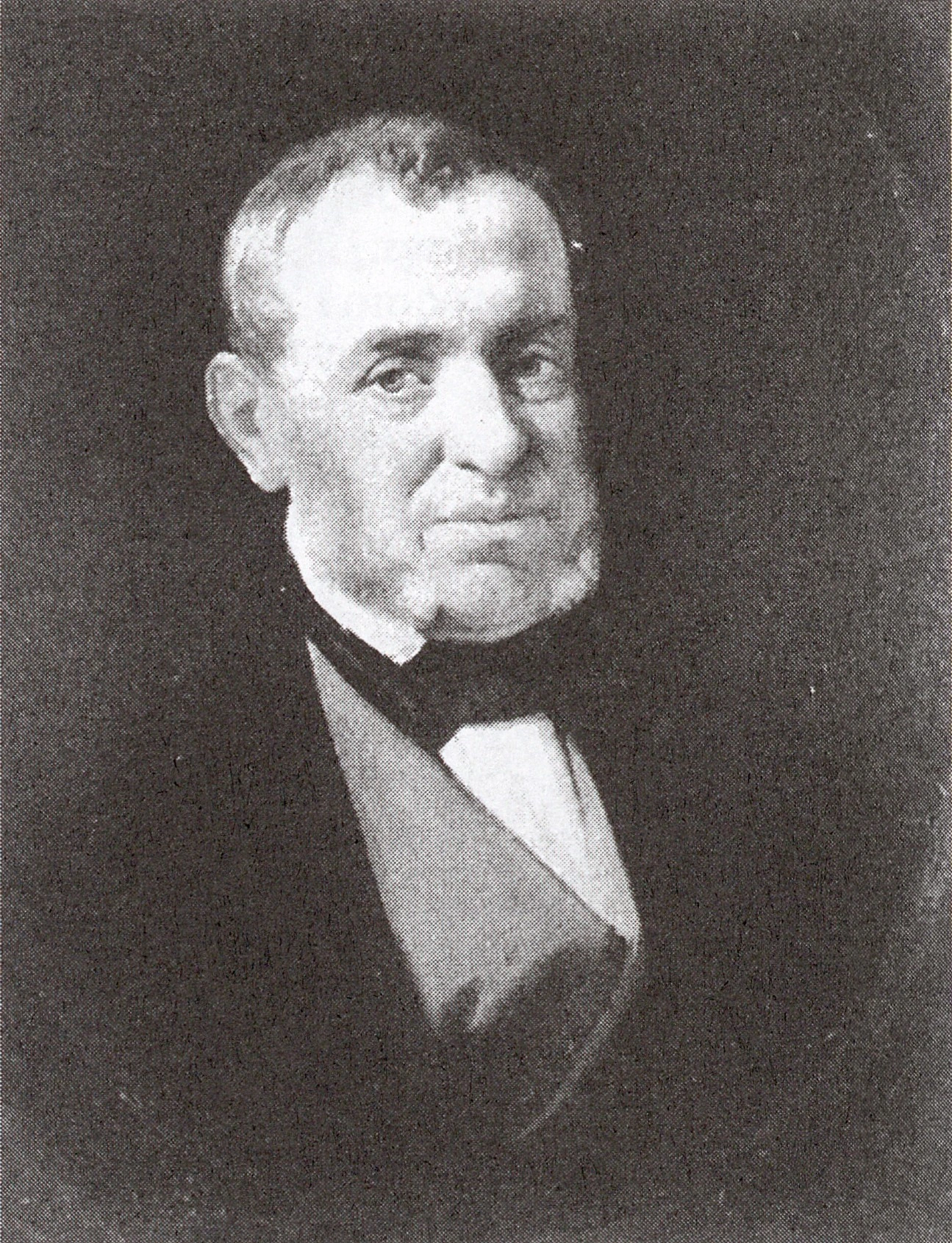
Mercadante Giuseppe Saverio Raffaele, baptised on 17 September 1795 Altamura (Province of Bari), †17 December 1870 Naples, Italian composer, and teacher. As an illegitimate child, Mercadante concealed the circumstances of his birth throughout his life, changing his place of birth to Naples, his year of birth to 1797, and in some documents to 1798, and his baptismal name to Francesco. In 1808, he was admitted to the conservatory in Naples, where he studied composition under N. Zingarelli from 1816 to 1820, who entrusted him with conducting the university orchestra in 1817. His school compositions were predominantly instrumental music: duets, trios, quartets, flute concertos, as well as symphonies, which received favourable reviews (including from G. Rossini). His cantata in honour of the former Spanish king, Charles IV, performed in Naples in 1818, was also well received. Mercadante’s debut in the field of stage music consisted of three ballets, the last of which, Il flauto incantato, performed in 1818 at the Teatro di San Carlo in Naples, was particularly successful. The success of this performance resulted in a commission (Rossini was the director of the San Carlo theatre at the time) for Mercadante’s first opera, L’apoteosi d’Ercole, whose premiere in 1819 was enthusiastically received. From that moment on, Mercadante’s career as an opera composer took off rapidly, and his name became known throughout Italy. Over the next few years, he wrote three to four operas a year, fulfilling commissions from the most famous Italian theatres: the Teatro Argentina and Teatro Valle in Rome, La Scala in Milan, Teatro la Fenice in Venice, Teatro Regio in Turin, Teatro di San Carlo in Naples and others. He gained European fame with his opera Elisa e Claudio, staged in 1821 in Milan, and then in London, Barcelona, and Paris. The Vienna premiere at the Kärntnertortheater in 1824 was conducted by the composer himself. However, the next three works commissioned by the Vienna Opera were rather coldly received, which prompted Mercadante to return to Italy, where he achieved another remarkable success in 1826 with the premiere of his opera Garitea, regina di Spagna in Venice. Mercadante’s collaboration with the Italian Opera in Madrid (1826–27 and 1829–31) was limited to a single work, I due Figaro, which was banned by the censors for political reasons shortly after its premiere, while his stay in Lisbon (1827–28) resulted in the staging of three or four of his works, of which Gabriella di Vergy later enjoyed considerable success in Italy. In 1829–31, he returned to Spain, first to Cádiz, then to Madrid, where he unsuccessfully attempted to re-establish his previously broken collaboration. In 1831, he returned to Italy; after several years of absence, he had to rebuild his position, which had been significantly weakened by the early successes of Bellini and Donizetti. In 1833, he took over from P. Generali as maestro di cappella at the cathedral in Novara. During his seven years in this position, he composed several religious works (including the oratorio Le sette [ultime] parole di Nostro Signore). In 1835, Mercadante stayed in Paris, invited to collaborate by Rossini, then director of the Théâtre Italien. The shortcomings of the libretto, based on Schiller’s The Robbers, meant that despite an excellent cast (including Giulia Grisi and G. Rubini), the opera I Briganti was not a success. His stay in Paris, his contacts with many artists, and his acquaintance with the latest operatic compositions (Meyerbeer’s Les Huguenots) had a considerable influence on Mercadante’s further work, as evidenced by his most famous opera, Il Giuramento, commissioned by La Scala. He continued the opera reform he had begun in this work in his subsequent works: Le due illustri rivali, Elena da Feltre, Il Bravo and La Vestale, which secured him the position of the most outstanding opera composer in Italy around 1840. For several months in 1839, Mercadante held the position of director of the Liceo musicale in Bologna, which he resigned from when he was offered the position of director of the conservatory in Naples after the Zingarelli’s death. He remained in this position from October 1840 until the end of his life. At the end of his successful 1840s, Mercadante’s creative condition began to gradually decline, which can be attributed both to the enormity of his duties and to Verdi’s growing fame. Fearing defeat in his rivalry with Verdi, Mercadante even took steps to suppress the publicity enjoyed by Verdi’s works and to block preparations for the staging of Il trovatore in Naples. However, Verdi did not hold a grudge against him in later years. When designing the Requiem in 1868 as a joint composition dedicated to the memory of Rossini, Verdi first invited Mercadante to collaborate, even though he had been completely blind for six years. In the last years of his life, Mercadante wrote down his compositions by dictating them to his students. These were mostly orchestral works written in honour of deceased composers such as Rossini, Bellini, Donizetti, and G. Pacini, or autobiographical in nature (sinfonia Il lamento del bardo).
Mercadante’s prolific operatic output (60 works composed over almost 40 years) constitutes – regardless of the achievements of Bellini and Donizetti – a bridge between Rossini’s work (his last opera, William Tell, 1829) and Verdi’s operas (his first significant success, Nabucco, 1842). For quite a long time, Mercadante’s style did not go beyond the generally accepted Italian opera models: brilliant opera buffa (also referred to as “melodramma giocoso,” e.g. Il geloso ravveduto) and opera seria, which adhered to the bel canto aesthetic and was preferred by Mercadante. In accordance with the nomenclature of the time, he used the Italian term “melodramma” for both types, while some opera seria were referred to as “dramma per musica.” He also practised a genre intermediate between “serio” and “giocoso,” which is referred to as “melodramma semiserio” (e.g. Elisa e Claudio). Initially, Mercadante collaborated with librettists who imitated the models created in the 18th century by A. Zeno and P. Metastasio. Over time, however, romantic elements began to permeate his work, both in terms of the content of the librettos and the range of musical means of expression. Classical and mythological themes were replaced by historical subjects and adaptations of works by Shakespeare, Cervantes, Dante, Byron, and Schiller, most often by F. Romani, and from 1838 onwards by S. Cammarano, director of the Teatro di San Carlo in Naples. The inspiration drawn from these texts, encouraging an emphasis on the sentimental and the dramatic, led Mercadante gradually to abandon excessive ornamentation and coloratura in favour of a vocal style of lyrical, and at times even elevated, impassioned, expression (“slancio di melodia”). Similarly to Donizetti, Mercadante distinguished himself from other contemporary Italian composers through his appreciation of harmony, bold modulations, and inventiveness in instrumentation. These tendencies intensified after Mercadante’s return from Paris, when he consciously began to implement the idea of reforming routine Italian opera (starting with Il Giuramento). This manifested itself in the differentiation of musical forms depending on the suggestions arising from the dramatic action, the merging of individual musical numbers into larger wholes corresponding in size to the scene, using common motivic material, the reduction of the difference between recitative and cantilena, the polyphonisation of the texture in ensemble scenes, and, above all, avoiding operatic stereotypes such as cabalettas, vocal displays, aria da capo and trivial melodics. Mercadante attempted to balance the musical and dramatic elements in opera to an extent long unseen in Italy; this approach later served as a point of departure for Verdi, whose career began during Mercadante’s years of greatest success. However, after the opera Il reggente (1843), there was a marked decline in the work of Mercadante, then director of the conservatory in Naples, a return to convention and pandering to the tastes of a less discerning audience; Verdi’s growing fame overshadowed Mercadante’s works. The creator of Rigoletto and Falstaff surpassed Mercadante not so much in the reliability of his compositional technique as in the spontaneity of his inventiveness, the sincerity of his musical expression and his talent. In the 1940s, there was a heated debate about Mercadante’s contribution to the history of Italian music between his admirer B. Notarnicola (who saw numerous borrowings from Mercadante’s works in Verdi’s operas) and later supporters (A. Pomè, F. Walker) of F. Florim’s view, who accused Mercadante of a lack of natural expression. More balanced assessments of Mercadante’s work, also in comparison with the achievements of Bellini and Donizetti, did not appear in literature until the 1970s.
Literature: W. Neumann Saverio Mercadante, Kassel 1855; R. Colucci Biografia di Saverio Mercadante, Venice 1867; F. Florimo Saverio Mercadante, in: Cenno storico sulla scuola musicale di Napoli, 2 vols., Naples 1869–71, 2nd edition corrected and expanded, titled La scuola musicale di Napoli e i suoi conservatorii, 4 vols., 1880–84, reprint 1969; O. Serena I musicisti altamurani …in occasione del centenario di Saverio Mercadante, Altamura 1895; G. Bustico Saverio Mercadante a Novara, “Rivista Musicale Italiana” XXVIII, 1921; A. Pomé Saggio critico sull’opera musicale di Saverio Mercadante, Turyn 1925; G. de Napoli La triade melodrammatica altamurana. G. Tritto, V. Lavigna, S. Mercadante, Mediolan 1931; G. Solimene La patria e i genitori di Mercadante, Naples 1940; Saverio Mercadante, note e documenti, Bari 1945; B. Notarnicola Saverio Mercadante, Biografía critica, Rome 1945, 2nd revised and expanded edition, titled Saverio Mercadante nella gloria e nella luce, 1949; F. Walker Mercadante and Verdi, “Music and Letters” XXXIII, 1952 and XXXIV, 1953; B. Notarnicola Verdi non ha vinto Mercadante, Rome 1955; G. Carli Bailóla Mercadante e “Il bravo,” in: Il melodramma italiano dell’ottocento. Studi e ricerche per Massimo Mila, ed. G. Pestelli, Turin 1977; S. Palermo Saverio Mercadante. Biografia, epistolario, Fasano 1985; M. Summa Bravo Mercadante. Le ragioni di un genio, Fasano 1985; 2nd edition Brindisi 2014; K.M. Bryan Mercadante’s Experiment in Form. The Cabalettas of Elena da Feltre, “Donizetti Society Journal” 1988; T. R. Toscano Il teatro Mercadante. La storia, il restauro, Naples 1989; T.G. Kaufman S. Mercadante, Verdi and His Major Contemporaries, New York 1990; S. Perna “La Vestale” di Saverio Mercadante. Approdo romantico di un mito neoclassico, Brindisi 1990; G. Petrucci, M. Giacinto Saggi su Saverio Mercadante, Cassano Murge (Bari) 1992; M. Wittmann, S. Spencer Meyerbeer and Mercadante? The Reception of Meyerbeer in Italy, “Cambridge Opera Journalˮ V/2 (1993); K. M. Bryan An experiment in form: the reform operas of Saverio Mercadante (1795–1870), Bloomington (Indiana) 1994; G. Petrucci, Saverio Mercadante l’ultimo dei cinque re, Rome 1995; T. G. Kaufman Catalogue of the Operas of Mercadante – Chronology of Performances with Casts, “Bollettino dell Associazione Civica Saverio Mercadante” no. 1, Altamura 1996; D. Brandenburg La vita musicale napoletana ai tempi di Giacomo Tritto e Saverio Mercadante vista dai viaggiatori stranieri, “Bollettino dell Associazione Civica Saverio Mercadante” no. 2; Altamura 1997; M. Wittmann Meyerbeer und Mercadante? Überlegungen zur italienischen Meyerbeer-Rezeption, in: Meyerbeer und das europäische Musiktheater, ed. S. Döhring, A. Jacobshagen, Laaber 1998; C. Risi Auf dem Weg zu einem italienischen Musikdrama: Konzeption, Inszenierung und Rezeption des melodramma vor 1850 bei Saverio Mercadante und Giovanni Pacini, “Mainzer Studien zur Musikwissenschaft” no. 42 (2004); Ernesto Pulignano “Il giuramento” di Rossi e Mercadante, Turin 2007; G. Cassanelli Mercadante e la sua riforma: Elena da Feltre, Bari 2012; N. E. Krüger Gaetano Donizetti, Saverio Mercadante, and the evolution and development of the Verdi baritone, Ann Arbor (Michigen) 2012; F. Placanica Mercadante in Paris (1835–1836): The Critical Viev, ”Revue belge de MusicologieˮLXVI (2012); M. Wittmann Die Wiederentdeckung Saverio Mercadantes auf der Opernbühne. Anmerkungen zur Uraufführung von ‘Francesca da Rimini,’ in: ‹‹Musiktheater im Fokus››, eds. S. Döhring, S. Rauch, Würzburg 2014; S. Palermo, D. Denora Saverio Mercadante. Biografia, Fasano 2014; A. Presas Creación y vida de Saverio Mercadante en España. Don Chischiotte alle nozze di Gamaccio (Cádiz, 1830), Madrid 2018; M.A. Smart Waiting for Verdi: Opera and Political Opinion in Nineteenth-Century Italy, 1815–1848, Oakland (California) 2018; M. Wittmann, Saverio Mercadante – Systematisches Verzeichis seiner Werke, Linz 2020; Mercadante 1870–2020, materials from the international conference in Naples 2020, eds. A. Caroccia, P. Maione, Naples 2020; ‘Insolite forme’: Mercadante e il melodramma italiano dell’Ottocento, ed. L. Mattei, materials from the 2020 conference in Altamura, Bari 2021; W.N. Rothstein The musical language of Italian opera, 1813–1859, New York 2023.
Compositions
Stage:
operas:
L’apoteosi d’Ercole, dramma per musica, 2 acts, libretto G. Schmidt, premiered in Naples, 19 August 1819
Violenza e costanza ossia I falsi monetari, dramma giocoso, 2 acts, libretto A.L. Tottola, premiered in Naples, 19 January 1820
Anacreonte in Samo, dramma per musica, 2 acts, libretto G. Schmidt after Anacréon chez Polycrate J.H Guya, premiered in Naples, 1 August 1820
Il geloso ravveduto, melodramma buffo, 2 acts, libretto B. Signorini, premiered in Rome, October 1820
Scipione in Cartagine, melodramma serio, 2 acts, libretto J. Ferretti, premiered in Rome, 26 December 1820
Maria Stuarda regina di Scozia (Maria Stuart), dramma serio, 2 acts, libretto G. Rossi, premiered in Bologna, 29 May 1821
Elisa e Claudio ossia L’amore protetto dall’amicizia, melodramma semiserio, 2 acts, libretto L. Romanelli after F. Casari: Roselli, premiered in Milan, 30 October 1821
Andronico, melodramma tragico, 2 acts, libretto Dalmiro Tindario, in fact G. Kreglianovich, premiered in Venice, 26 December 1821
Il posto abbandonato ossia Adele ed Emerico, melodramma semiserio, 2 acts, libretto F. Romani, premiered in Milan, 21 September 1822
Amleto, melodramma tragico, 3 acts, libretto F. Romani after W. Shakespeare, premiered in Milan, 26 December 1822
Alfonso ed Elisa, melodramma serio, 3 acts, libretto after Filippo V. Alfieri, premiered in Mantua 26 December 1822, titled Aminta e Argira (to the 2nd version of the libretto), libretto F. Romani, premiered in Reggio Emilia 1823
Didone abbandonata, dramma per musica, 2 acts, libretto P. Metastasio, premiered in Turin, 18 January 1823
Gli Sciti, dramma per musica, 2 acts, libretto A.L. Tottola, premiered in Naples, 18 March 1823
Costanzo e Almeriska, dramma per musica, 2 acts, libretto A.L. Tottola, premiered in Naples, 22 November 1823
Gli amici di Siracusa, melodramma eroico, 3 acts, libretto J. Ferretti, premiered in Rome, 7 February 1824
Doralice, dramma semiserio, 2 acts, libretto J. Ferretti, premiered in Vienna, 18 September 1824
Le nozze di Telemaco e Antiope, with other composers, azione lirica, 3 acts, libretto, C. Bassi, premiered in Vienna, 5 November 1824
Il podestà di Burgos ossia II signore del villaggio, melodramma semiserio, 2 acts, libretto C. Bassi, premiered in Vienna, 20 November 1824
Nitocri, melodramma serio, 2 acts, libretto Conte Piosasco after A. Zeno, premiered in Turin, 26 December 1824
Ipermestra, dramma tragico, 2 acts, libretto L. Ricciuti after P. Metastasio, premiered in Naples, Carnival 1824–25
Erode ossia Marianna, dramma tragico, 2 acts, libretto L. Ricciuti, premiered in Venice, 27 December 1825
Caritea, regina di Spagna (Donna Caritea) ossia La morte di Don Alfonso re di Portogallo, melodramma serio, 2 acts, libretto P. Pola, premiered in Venice, 21 February 1826
Ezio, dramma per musica, 3 acts, libretto P. Metastasio, premiered in Turin, 2 February 1827
Il montanaro, melodramma comico, 2 acts, libretto F. Romani, premiered in Milan, 16 April 1827
La testa di bronzo ossia La capanna solitaria, melodramma eroico comico, 2 acts, libretto F. Romani, premiered in Lisbon, 3 December 1827
Adriano in Siria, dramma serio, 2 acts, libretto A. Profumo after P. Metastasio, premiered in Lisbon, 24 February 1828
Gabriella di Vergy, melodramma serio, 2 acts, libretto A. Profumo, excerpt after A.L. Tottola, premiered in Lisbon, 8 August 1828, 2nd revised version, libretto E. Bidera, premiered in Genua, spring 1832
La Rappresaglia, melodramma buffa, 2 acts, libretto F. Romani, premiered in Cádiz, 20 November 1829 (?)
Don Chisciotte alle nozze di Gamaccio, melodramma buffa, 2 acts, libretto after M. de Cervantes, premiered in Cádiz, Carnival 1829–30 (?)
Francesca da Rimini, melodramma, 3 acts, libretto F. Romani, premiered in Madrid, Carnival 1830–31 (?)
Zaira, melodramma tragico, 2 acts, libretto F. Romani after Wolter, premiered in Naples, 31 August 1831
I Normanni a Parigi, tragedia lirica, 4 acts, libretto F. Romani, premiered in Turin, 7 February 1832
Ismalia ossia Amore e morte, melodramma serio fantastico, 3 acts, libretto F. Romani, premiered in Milan, 27 October 1832
Il conte di Essex, melodramma, 3 acts, libretto F. Romani, premiered in Milan, 10 March 1833
Emma di Antiochia, tragedia lirica, 3 acts, libretto F. Romani, premiered in Venice, 8 March 1834
Uggero il Danese, melodramma, 2 acts, libretto F. Romani, premiered in Bergamo, 11 August 1834
La gioventù di Enrico V, melodramma, 4 acts, libretto F. Romani, excerpt from Shakespeare, premiered in Milan, 25 November 1834
I due Figaro, melodramma buffo, 2 acts, libretto F. Romani after Martelly, premiered in Madrid, 26 January 1835 (?)
Francesca Donato ossia Corinto distrutta, melodramma semiserio, 3 acts, libretto F. Romani after G. Byron, premiered in Turin, 14 February 1835, 2nd revised edition, libretto S. Cammarano, premiered in Naples, January 1845
I Briganti, melodramma, 3 acts, libretto J. Crescini after F. Schiller: Die Räuber, premiered in Paris, 22 March 1836
Il Giuramento, melodramma, 3 acts, libretto G. Rossi after V. Hugo: Angelo, premiered in Milan, 11 March 1837; entitled Amore e dovere, premiered in Rome, 1839
Le due illustri rivali, melodramma, 3 acts, libretto G. Rossi, premiered in Venice, 10 March 1838
Elena da Feltre, dramma tragico, 3 acts, libretto S. Cammarano, premiered in Naples, 26 December 1838
Il Bravo (La veneziana), melodramma, 3 acts, libretto G. Rossi, M. Marcello, premiered in Milan, 9 March 1839
La Vestale, tragedia lirica, 3 acts, libretto S. Cammarano, premiered in Naples, 10 March 1840; titled Emilia, premiered in Rome, autumn 1842; titled San Camillo, azione sacra, premiered in Rome, 1851
La solitaria dette Asturie ossia La Spagna ricuperata, melodrama, 5 acts, libretto F. Romani, premiered in Venice, 12 March 1840
Il Proscritto, melodrama, 3 acts, libretto S. Cammarano after F. Soulié, Naples, 4 January 1842
Il Reggente, dramma lirico, 3 acts, libretto S. Cammarano after E. Scribe: Gustave III, premiered in Turin, 2 February 1843; 2nd revised edition with additions, premiered in Trieste, 11 November 1843
Leonora, melodramma semiserio, 4 acts, libretto, M. D’Arienzo, premiered in Naples, 5 December 1844
Il vascello de Gama, melodramma romantico, 3 acts with a prologue, libretto S. Cammarano, premiered in Naples, 6 March 1845
Gli Orazi e i Curiazi, tragedia lirica, 3 acts, libretto S. Cammarano, premiered in Naples, 10 November 1846
La schiava saracena ovvero Il campo di Gerosolima (początkowo Il campo de’crociati), melodramma tragico, 4 acts, libretto F. M. Piave, premiered in Milan, 26 December 1848
Medea, tragedia lirica, 3 acts, libretto S. Cammarano after F. Romani, premiered in Naples, 1 March 1851
Statira, tragedia, 3 acts, libretto D. Bolognese after Voltaire: Olympie, premiered in Naples, 8 January 1853
Violetta, melodramma, 4 acts, libretto M. D’Arienzo, premiered in Naples, 10 January 1853
Pelagio, tragedia lirica, 4 acts, libretto M. D’Arienzo, premiered in Naples, 12 February 1857
Virginia, tragedia lirica, 3 acts, libretto S. Cammarano after V. Alfieri, premiered in Naples, 7 April 1866
ballets:
Il servo balordo o La disperazione di Gilotto, choreography S. Taglioni, premiered in Naples, 1 February 1818
Il califfo generoso, choreography A. Vestris, premiered in Naples, spring 1818
Il flauto incantato o Le convulsioni musicali, choreography S. Taglioni, premiered in Naples, 19 November 1818; 2nd revised edition, premiered in Milan, 12 January 1828
I portoghesi nelle Indie o La conquista di Malacca, with W. Gallenbergiem, choreography S. Taglioni, premiered in Naples, 30 May 1819
Vocal-instrumental:
sacred:
approx. 17 masses, approx. 13 motets, 3 Dixit Dominus, 2 Laudate pueri, 2 Nisi Dominus, Lauda Jerusalem, 8 Magnificat, 4 Regina coeli, Litany, Responsori pel Mercoldi Santo [Holy Week Responsory] and other works, all composed in Novara 1833–40
Le sette [ultime] parole di Nostro Signore, oratory, Milan, 1840 (?)
3 masses (published in Milan) — 1840 (?), 1861 (?) and n.d.
De profundis, Milan, ca. 1844
Christus e Miserere, Milan 1856
Salve Maria for soprano and piano, Milan ca. 1864
Tantum ergo, piano extract, Milan n.d.
cantatas and occasional hymns (with orchestral accompaniment):
Canatata for Charles IV, King of Spain (also titled L’unione delle belle arti), performed in Naples 1818
Coro dedicato all’illustrato pubblico di Cadice for solo voices and choir, performed ca.1829
In morte di M. Malibran, excerpt titled L’inaugurazione for 3 solo voices and choir, performed in Milan 1837, piano score edition, Milan 1837
Cantata in honour of F. Romani, performed in Novara 1838
Inno a Pio IX for 5 solo voices, performed in Naples, 1850
Un sospiro sulla tomba di Monsignor Scotti for 5 solo voices, performed in Naples, 1850
Inno funebre in memoria di Monsignor Somma for 4 solo voices, performed in Naples, 1851
La danza augurale (cantata on the occasion of Francis II’s accession to the throne), performed in Naples, 1859
Inno a Vittorio Emanuele re d’Italia for 4 solo voices, performed in Naples, 1860, Milan n.d.
Inno guerriero dedicato a Garibaldi for unisono voices, performed in Naples, 1861, Milan n.d.
Inno all’armonia for 5 solo voices, performed in Naples, 1864
Inno a Rossini for 4 solo voices, performed in Pesaro 1864, Milan 1865 (?)
Inno all’Accademia di Santa Cecilia for 4 solo voices and chorus, performed in Rome, ca. 1868
for voice and piano:
Sorge invan per me l’aurora, Milan 1824 (?)
Il crociato in Egitto, aria for an opera G. Meyerbeera, Milan 1830 (?)
Sento brillarmi in seno, excerpt for opera V. Pucitta I due prigionieri, Milan 1833
Soirées italiennes (Serate italiane), Paris ca. 1836, Milan n.d.
4 canzoni napoletani, Milan 1849, 1878 (in the collection by V. de Meglio: Eco di Napoli)
other songs, romances, and ariettas, some published in Milan, Florence, Naples, London
Instrumental:
orchestral:
solo concertos composed between 1817 and 1820, including Concerto for horn in D minor, Clarinet Concerto in B flat major, 6 flute concerts, performed in Naples, ca. 1819
sinfonie, including Sinfonia sopra i motivi dello Stabat Mater di Rossini, piano reduction, Milan 1843(?); La rimembranza 1849; Omaggio a Bellini, fantasy on themes by Bellini, piano reduction, Milan 1861; Il lamento del bardo 1862, piano reduction, Milan ca. 1865; Sinfonia dedicata a Rossini 1864; Sinfonia fantastica, Milan 1865; La malinconia (mazurka di concerto), piano reduction, Milan 1865; Omaggio a Pacini, piano reduction, Milan n.d.; Omaggio a Rossini, fantasy on themes by Rossini, piano reduction, Milan n.d.
divertimenti, marches, occasional pieces, arrangements of opera excerpts for solo instruments and orchestra.
chamber:
3 serenate for 3 flutes, Milan 1823
Divertissement for piano and cello, Vienna ca. 1820
Elegia in D minor for cello and piano, Milan 1865
concert études for various instruments, duets, polkas, and other salon pieces for piano
Works:
Esercizi di canto, 3 vol., Vienna ca. 1828
24 melodie preparatorie al canto drammatico, 2 vol., Milan 1864 (?)