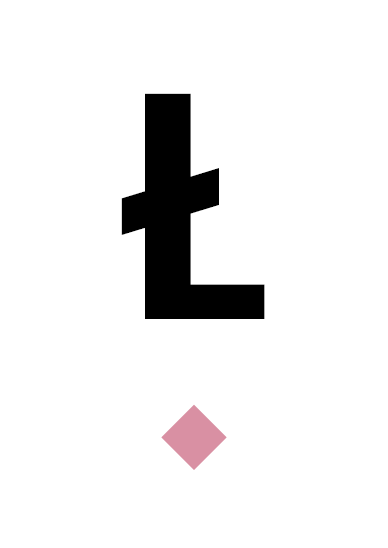
Leontowych Mykola Dmytrowych, *13 (1) December 1877 Selevynzi (a hamlet of Monastyrok, Bratslav county), †23 January 1921 Markivka (near Haisyn), Ukrainian choirmaster, music activist, teacher, folklore collector and composer. In 1899, he graduated from the seminary in Kamyanets-Podilskyi. He was mainly self-taught in music, but also attended choir conducting courses in 1903–04 at the court chapel choir in St Petersburg, which he completed with an exam in Orthodox church choir conducting. From 1909 to 1914, he studied privately with B. Yavorski in Kyiv (composition). He taught singing and other general subjects in the village of Chukiv (where he formed a choir and a small symphony orchestra), then singing in Vinnytsia, Tyvriv and Tulchyn in Podolia (1904–14), where he also organised folk choirs and continuously collected Ukrainian folk songs (later collected in two song collections from Podolia). From 1918, he worked in Kyiv; until 1920, he lectured at the M. Lysenko Music and Drama Institute and at the so-called People’s Conservatory. He was one of the organisers of the first Ukrainian state symphony orchestra and choir. During the civil war, Leontovych was murdered.
The main focus of Leontovych’s work lies in his choral arrangements of Ukrainian folk songs from Podolia. Leontovych treated folk songs as a source of inspiration for the broader development of his dramatic content through the use of appropriate means (polyphonic, harmonic, structural, etc.). Many of his works cannot be called mere arrangements of folk songs, but rather compositions inspired by folk melodies, e.g., Shchedryk (known as “The Carol of the Bells”), Dudaryk (The Little Piper) Hra v zaichyka (The Bunny Game), Kozaka nesut (They’re carrying a Cossack), Iz-za hory snizhok letyt (Light Snow is Falling from Behind the Mountain). It is worth emphasising Leontovych’s desire to penetrate the “inner” qualities of Ukrainian folk songs with their natural multi-voiced polyphony and to combine them organically with the means of classical polyphony. Harmonic diversity, freedom in the use of contrapuntal means, flowing from natural folk polyphony, and the instrumental treatment of voices are characteristic features of the composer’s style, although the techniques he uses are, at first glance, extremely simple.
Literature: V. Diachenko, Mykola Leontovych. Malunky z zhyttia, ed. P. Kozytskyi, Kyiv 1941, 4th ed. 1985; M. Hordiychuk, Mykola Leontovych. Narys pro zhyttia i tvorchist, Kyiv 1956; M. Hordiychuk, Mykola Leontovych, Kyiv 1960, 2nd ed. 1972, Russian ed. 1977; S. Orfeiev, Mykola Leontovych i ukrainska narodna pisnia, Kyiv 1981; B. Lukaniuk, Aktyvne folklorne seredovyshche yak faktor kompozytorskoho styliu (na prykladakh tvorchosti M. Leontovycha) and Pro tvorchyi metod M. Leontovycha, “Ukrainske Muzykoznavstvo” XXII (1987) and XXIV (1989).
Compositions:
Vocal and vocal-instrumental:
Lodlom and Litni tony for a capella choir, words by V. Sosiura, ca. 1919
Lehenda for a capella choir, words by M. Vorony, ca. 1920
Moia pisnia, words by K. Bilylovskyi, ca. 1920
Zore moia vechirniaia, for a capella choir, words by T. Shevchenko, 1921
Liturhiia 1921; for choir and piano
around 200 arrangements of Ukrainian folk songs, songs of other nations, and revolutionary songs
Stage:
opera:
Na rusalchyn Velykden, in one act, libretto by composer and B. Hrinchenko, N. Tanashevych, D. Bobyr, 1921, staged 1977 Kyiv, in an arrangement by M. Skoryk, titled Rusalchyni luhy
Editions:
Mykola Leontovych. Muzychni tvory, 8 parts, ed. P. Kozytskyi, Kyiv 1924–31
Mykola Leontovych. Muzychni tvory, ed. Y. Yarmas, Kyiv 1930
Mykola Leontovych. Zbirka statei ta materialiv, ed. W. Dovzhenko, Kyiv 1947
Mykola Leontovych. Khorovi tvory, ed. M. Verekivskyi, Kyiv 1961
Mykola Leontovych. Spohady. Lysty. Materialy, ed. V. Ivanov, Kyiv 1982
Praktychnyi kurs navchannia spivu u serednikh shkolakh Ukrainy (z pedahohichnoi spadshchyny kompozytora), ed. L. Ivanov, Kyiv 1989
Writings:
Narodni pisni, Kyiv 1921
Ukrainski narodni pisni, Leipzig 1923
Yak ia orhanizuvav orkestr u selianskii shkoli, “Muzyka” 1925 No. 1 (Kyiv)