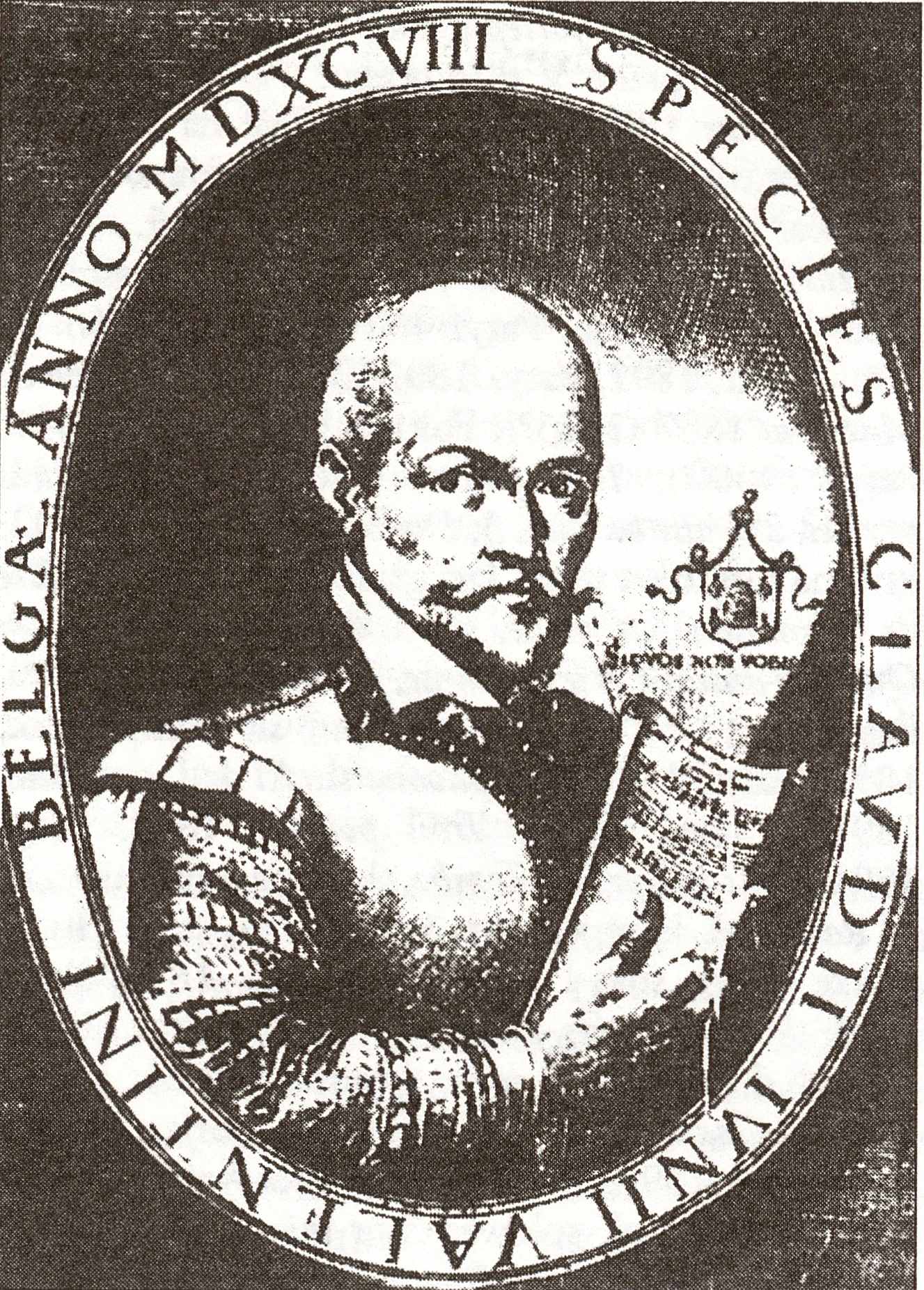
Le Jeune, Lejeune, Claude, *ca. 1530 Valenciennes, buried 26 September 1600 Paris, French composer. The earliest evidence of Le Jeune’s musical activity is name in four chansons attributed to him by P. Phalèse in 1552. From around 1560, Le Jeune enjoyed the favour of aristocratic Huguenots, including the future King Henry IV. In 1564, the composer settled in Paris. He belonged to the Académie de Poésie et de Musique. In 1581, he participated in the musical setting of celebrations at the royal court; around the same time, he also worked as ‘maistre des enfans de musicque’ at the court of François, the king’s brother. In 1589, he left Paris. In documents from 1596 and 1600, he is referred to as the court composer of Henry IV. Although the majority of the prints devoted exclusively to Le Jeune’s music were issued only after his death, some of them had been conceived as a cycle by the composer himself.
Le Jeune’s most innovative works belong to the art of musique mesurée. The idea of subordinating musical rhythm to the metre of poetry, which was intended to be a reference to antiquity, developed in the circle led by J.A. de Baïf and T. de Courville, with Le Jeune being the earliest (the first chansonettes mesurées were published in 1583) and most outstanding implementer of this idea. In approximately 150 airs mesurés, 24 psalms (French translation and 3 Latin paraphrases by Baïf) and prayers, all voices always sing each syllable simultaneously, and there are essentially only two rhythmic values: longer and shorter, the former sometimes developing into a faster melisma. Since the musical rhythm mirrors the poetic foot, it results in phrases of one or two lines that are metrically irregular. In the first two pieces from the collection Le printemps, Le Jeune contrasts settings of the same text in vers mesuré and vers rimé. Airs are composed of verses, especially chants, in which the music may be the same or different (sometimes, with a variable number of voices, only the highest melody is repeated), and a refrain, especially a rechant, reprise or refrain, usually repeated without change, and sometimes with an increase in the number of voices. The most elaborate and varied is the illustrative air, La Guerre, created as music for a court ceremony. Elements of soundpainting can also be observed in other works by Le Jeune to French, Italian and Latin texts. Traditional chansons, written to secular (almost 70) and sacred (about 40) texts, are generally in the Parisian chanson style. In some of them, Le Jeune uses the technique of parody, adding a fifth voice to the chansons by other composers. Such an approach can be observed especially in his works for 4–6 voices to Italian texts (43); in 30 cases, earlier versions for 3 voices these pieces were found, originally created by Italian composers. In four chansons, another aspect of Le Jeune’s fascination with Antiquity, typical for Académie members, is particularly evident, since it makes conspicuous use of chromaticism, with the melodic lines often following the ancient Greek chromatic tetrachord (two minor seconds and a minor third), which results in numerous oblique sonorities. Another manifestation of Le Jeune’s interest in music theory is the creation of cycles (Dodecacorde, Octonaire) illustrating the system of 12 modes; the 1564 collection is arranged not according to the numbering of the psalms, but according to modes, and this setting also appears in the collections from 1585, 1594 and 1608.
Le Jeune exceptionally uses more complex polyphonic structures, such as crab cannon (Susanne un jour), five two-voice canons proceeding simultaneously (in the dialogue Quae celebrat thermas), or cantus firmus in canon (Veni Sancte Spiritus), while free imitations and cantus firmus play a significant role, especially in Latin liturgical works and in the psalms from 1564 and 1598. The psalms from 1601, which achieved the greatest popularity, have a simpler texture. In all psalms, except for “en vers mesurés,” Le Jeune based his work on the texts and melodies of the official Huguenot Psalter; these are multi-part works in which the composer arranges individual verses of the translation. A characteristic feature is the varying number of voices used not only within multi-section psalms, but also in airs, chansons, and Latin liturgical works; in many cases, the number of voices increases gradually in successive sections. Le Jeune also used the polychoral technique in various types of compositions.
Literature: O. Douen Clément Marot et le psautier huguenot, 2 vols., Paris 1878–1879 (vol. 2 contains 2 psalms for 4 voices and several for 3 voices by Le Jeune); M. Cauchie La mort de Claude Le Jeune, “Revue de Musicologie” XI, 1927; D.P. Walker The Influence of musique mesurée à l’antique, particularly on the airs de cour of the Early Seventeenth Century, “Musica Disciplina” II, 1948; F. Lesure and D.P Walker Claude Le Jeune and Musique Mesurée, “Musica Disciplina” III, 1949; D.P Walker Some Aspects and Problems of musique mesurée à l’antique: the Rhythm and Notation of musique mesurée, “Musica Disciplina” IV, 1950; K. Levy The Chansons of Claude Le Jeune, dissertation, Princeton University, 1955; N. Labelle Les différents styles de la musique religieuse en France, Henryville 1981; P. Bonniffet Un ballet démasqué: l’union de la musique au verbe dans “Le printans” de Jean-Antoine de Baïf et Claude Le Jeune, Paris 1988; I. His Les Mélanges de Claude Le Jeune, dissertation, Université de Tours, 1990 (contains transcriptions of the entire collection); Claude Le Jeune et son temps en France et dans les Etats de Savoie (1530–1600), ed. M.T. Bouquet-Boyer and P. Bonniffet, Bonn 1991; I. His Les modèles italiens de Claude Le Jeune, “Revue de Musicologie” LXXVII, 1991; I. His Claude Le Jeune et le rythme prosodique: la mutation des années 1570, “Revue de Musicologie” LXXIX, 1993; P. Bonniffet Le cantus firmus dans le Dodecacorde de Claude Le Jeune, in: Itinéraires du cantus firmus, ed. E. Weber, Paris 1994; R. Freedman Claude Le Jeune, Adrian Willaert, and the Art of Musical Translation, “Early Music History” XIII, 1994; I. His Italianism and Claude Le Jeune, “Early Music History” XIII, 1994; I. His La Renaissance à défaut d’Antiquité: Oliver Messiaen analyste du Printemps de Claude Le Jeune, in: La Musique de Tous Les Passetemps Le Plus Beau: Hommage à Jean-Michel Vaccaro, ed. F. Lesure, H. Vanhulst and G. Chaix, Paris 1998; I. His Evolution du souci prosodique en musique dans la mise en musique du français de la seconde moitié du XVIe siècle: le cas de Claude Le Jeune, in: A haute voix. Diction et prononciation entre 1550 et 1640, red. O. Rosenthal, Paris 1998; I. His Sous lesquels ont esté mises des paroles morales: un cas de contrafactum de psaumes entre 1598 et 1618, “Revue de Musicologie” LXXXV, 1999; P. Macey Italian Connections for Lupus Hellinck and Claude Le Jeune, “Yearbook of the Alamire Foundation” III, 1999; I. His Claude Le Jeune (v. 1530–1600): un compositeur entre Renaissance et Baroque, Arles 2000; P. Bonniffet Le cantus firmus et le chant commun dans la musique de Claude le Jeune: Place et déplacements du sujet du chant, in: Itinéraires du cantus firmus IV, red. E. Weber, Paris 2001; I. His Claude Le Jeune et la publication de ses airs mesurés, in: Poetry and Music in the French Renaissance, ed. L.J. Brooks and G. Jondorf, Cambridge 2001; R. Freedman Le Jeune’s Dodecacorde as a Site for Spiritual Meanings, “Revue de Musicologie” LXXXIX, 2003; I. His Claude Le Jeune, le bilingue, “Revue de Musicology” LXXXIX, 2003; J. Vignes Jean-Antoine de Baif et Claude Le Jeune: Histoire et enjeux d’une collaboration, “Revue de Musicologie” LXXXIX, 2003; M.R. Duncumb Cantus Firmus in Psalms of the Sixteenth Century and the Music of Claude le Jeune, dissertation, University of Cambridge, 2004; P. Bonniffet Structures sonores de l’humanisme en France: De Maurice Sceve, Delie, object de plus haulte vertu (Lyon, 1544) à Claude Le Jeune, Second livre des meslanges (Paris, 1612), Paris 2005; I. His Das Dodecacorde von Claude Le Jeune (1598) als kompositorische Rezeption und Verbreitung des Dodekachordon von Glarean?, “Trossinger Jahrbuch für Renaissancemusik” V, 2005; Hommage à Claude Le Jeune, ed. O. Trachier, Marandeuil 2005; I. His La paraphrase française du Te Deum mise en musique par Claude Le Jeune (1606): “ingrat labeur” d’Agrippa d’Aubigné?, “Albineana” XVII, 2005; I. His and J. Vignes Les paraphrases de psaumes de Baïf, La Noue et d’Aubigné mises en musique par Claude Le Jeune (1606): regards croisés du musicologue et du littéraire, in: Les paraphrases bibliques aux XVIe et XVIIe siècles, ed. V. Ferrer and A. Mantero, Genewa 2006; I. His Un répertoire religieux à l’Académie de poésie et de musique: les psaumes mesurés de Claude Le Jeune, in: Les académies dans l’Europe humaniste: idéaux et pratiques, ed. M. Deramaix et al., Paris 2008; J. Herdman Zarlinian modality in Claude Le Jeune’s Dodecacorde, “Musicological Explorations” X, 2009; J. Vignes La récriture protestante du Psautier de Baïf: les Pseaumes en vers mezurez d’Odet de La Noue sur une musique de Claude Le Jeune, “Studia Litteraria Universitatis Iagellonicae Cracoviensis” VII, 2012; P. Bonniffet La musique entre le Verbe et le silence: Claude Le Jeune—Les Dix pseaumes de David (1564), “Pontificio Istituto di Musica Sacra: Studi e ricerche” III, 2013; I. His L’insegnamento dei 12 modi secondo Zarlino attraverso due raccolte musicali di Claude Le Jeune, “Musicalia” X, 2013; J.H.L. Potgieter Claude Le Jeune and Theodore de Bèze: A first encounter in the Dix Pseaumes… en forme de Motets of 1564, “Koers” LXXIX, 2014.
Compositions:
Dix pseaumes (…) en forme de motets (for 4 voices) avec un dialogue (for 7 voices), Paris 1564, 2nd edition 1580 (without dialogue)
Livre de mélanges, 26 chansons for 4–6 and 8 voices, 36 villanelle for 4–6 voices, 6 motets for 4–6 voices and one for 10 voices, pub. Antwerp 1585, pub. Paris 1586, 1587, 1607
Airs mis en musique, 33 pieces for 4–5 voices, Paris 1594
Dodecacorde, 12 psalms for 2–7 voices, pub. La Rochelle 1598, pub. Paris 1608 and 1618 (published with other texts)
Les 150 pseaumes (and the Ten Commandments and Canticle of Simeon) for 4 and 5 voices, Paris 1601 (several further editions until 1665 in various locations)
Premier livre contenant 50 pseaumes… for 3 voices, pub. Paris 1602, book 2, 50 pieces, pub. Paris 1608, book 3, 44 pieces, pub. 1610
Le printemps, 33 airs and 6 chansons for 2–8 voices, Paris 1603
Pseaumes en vers mesurez, 18 pieces for 4 voices, 4 psalms for 5 voices, including one of each for: 6 voices, 6–7 voices, 8 voices and 4–10 voices, and Te Deum for 6 voices, Paris 1606
Octonaires de la vanité et inconstance du monde, 12 sacred chansons for 3 voices and 24 for 4 voices, Paris 1606, 2nd edition 1641
Missa ad placitum for 4–7 voices, Paris 1607
Airs…, 68 pieces for 3–6 voices, pub. Paris 1608, book 2, 59 pieces for 3–6 voices, pub. Paris 1608
Second livre des meslanges, 31 chansons for 4–8 voices, 5 airs, 7 villanelle for 4 voices, 2 psalms, 3 motets, Magnificat and 3 instrumental fantasies, Paris 1612
several dozen secular and sacred works in collective publications from 1552–1602, published in Paris, Antwerp, Leiden and Leuven. Given the current state of research, it is difficult to determine the total number of Le Jeune’s works, since a large number of them appear repeatedly in various collections of his own compositions and in anthologies containing works by other composers.
Editions:
Dodecacorde, pub. A.H. Heider, 3 vols, «Recent Researches in the Music of the Renaissance» LXXIV–LXXVI, Madison 1989
Le printemps, «Les Maîtres Musiciens de la Renaissance française», ed. H. Expert, XII–XIV, Paris 1900–01
Pseaumes en Vers Mesurés, «Les Maîtres Musiciens de la Renaissance française», ed. H. Expert, XX–XXII, Paris 1905–06
Octonaires…, «Les Monuments de la Musique française au temps de la Renaissance», ed. H. Expert, VIII, Paris 1924, 1928 and titled Reflections on the Vanity and Inconstancy of the World pub. A. Seay, New York 1967–69
Missa…, pub. M. Sanvoisin, «Le Pupitre» II, Paris 1967
Airs of 1608 (both books, including reprints of 20 works from 1594 and 28 works from 1603) pub. D.P. Walker, 4 vols., Rome 1951–59
13 chansons from 1585 in «Les Maîtres Musiciens de la Renaissance française», ed. H. Expert, XVI, Paris 1903
5 chansons and 3 fantasias from 1612 pub. H. Expert, Paris ca. 1935