
2 sonatiny op. 163 nr 1 i 2 na fortepian na 4 ręce [partytura]

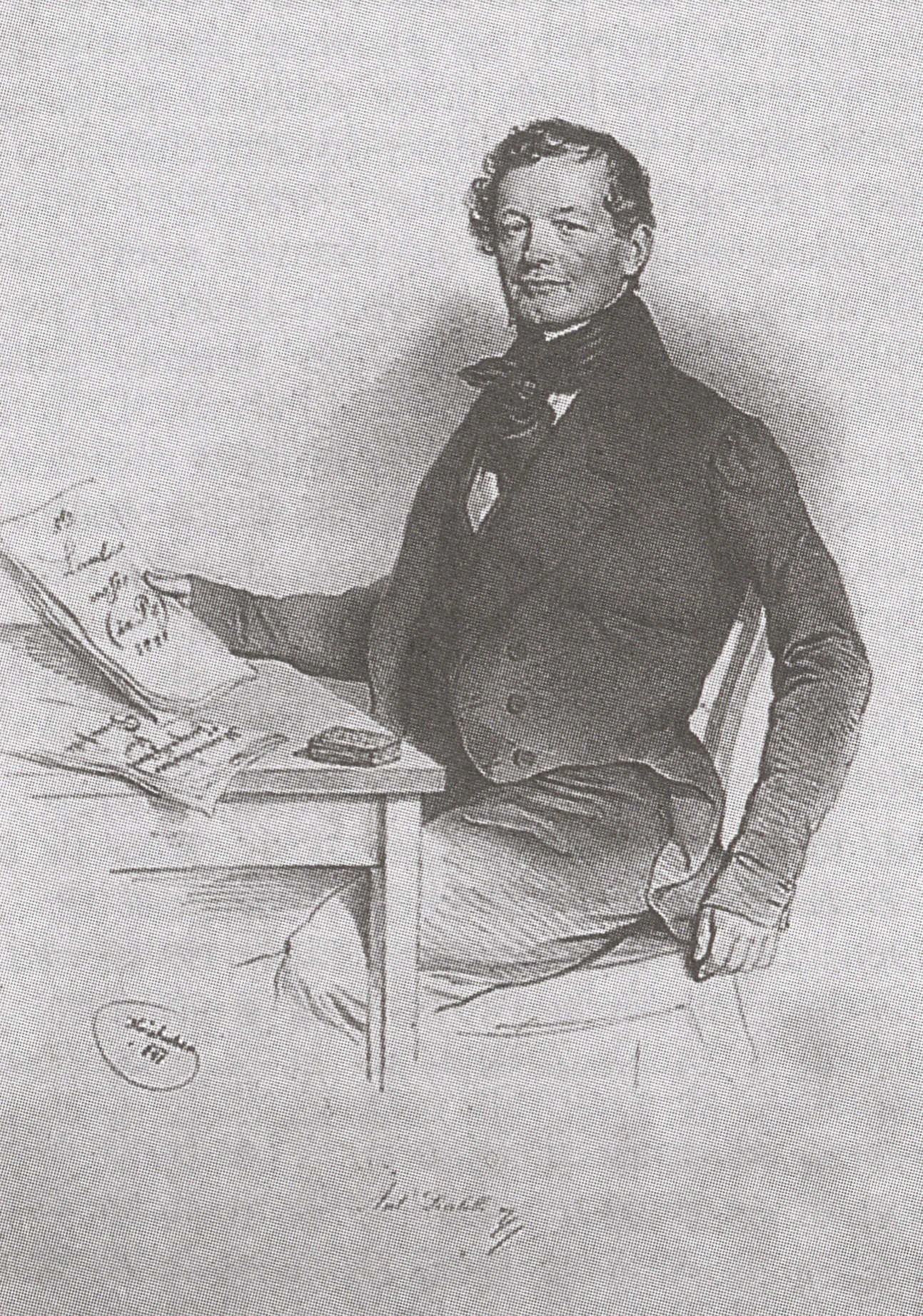
Diabelli Anton, *5 September 1781 Mattsee near Salzburg, †8 April 1858 Vienna, Austrian publisher, composer, and teacher. He initially studied singing, piano, organ, and violin with his father, a cathedral musician and sacristan. At the age of 7 he sang in the choir of the Benedictine monastery in Michaelbeuern, and two years later in the chapel of Salzburg Cathedral, where M. Haydn instructed him in composition. In 1796 Diabelli became a student at the Latin school in Munich, and in 1800 he joined the Cistercian order in Raitenhaslach. There he composed a large number of works, which he presented to M. Haydn. After the secularization of Bavarian monasteries in 1803, Diabelli, through his protector M. Haydn, approached J. Haydn in Vienna and found employment as a teacher of piano and guitar. He then began working in publishing, first as a proofreader for the firm Steiner, and in 1818 he founded, together with P. Cappi, the music publishing house Cappi & Diabelli; after Cappi withdrew, Diabelli entered into a partnership with A. Spina in 1824, under the name A. Diabelli & Cie. From that time until Diabelli retired in 1852 and the firm was taken over by C.A. Spina, the publishing house enjoyed a period of prosperity, issuing over 7,500 titles.
Most of Diabelli’s extensive output, mostly aimed at satisfying contemporary tastes and needs, has been forgotten except for some piano works for 2 and especially 4 hands, which remain in the pedagogical repertoire today. Diabelli’s music, due to its accessibility, became widespread in the 19th century in chamber music and church performances, where his masses were frequently performed. Diabelli played a greater role as a publisher. Initially, he published mainly popular piano and guitar music, often in anthologies; in later years he established contacts with Beethoven, publishing Beethoven’s 33 Variations on a Waltz by Anton Diabelli, Op. 120, in 1823 and 1824. This work resulted from Diabelli commissioning variations on his waltz from many composers, including F. Schubert, F. Liszt, J.N. Hummel, V.J. Tomášek, J.H.V. Voříšek, and I. Moscheles, all of which he subsequently published in the collection Vaterländischer Künstlerverein. At Diabelli’s request, Beethoven began work on a string quintet in 1826; Diabelli acquired the sketch of the first movement from Beethoven’s estate and published it as Beethoven’s “last musical thought,” arranged for 2 and 4 hands. In 1821 Diabelli began publishing Schubert’s song notebooks (e.g., Erlkönig, Gretchen am Spinnrade), but due to disputes with P. Cappi, conflicts arose with the composer; publishing contacts resumed only in 1827. Diabelli also acquired part of Schubert’s musical estate and in 1851 issued the first major thematic catalogue of his works.
Literature: H. Rietsch Diabellis „Vaterländischer Künstlerverein” in «Berichte der Lese- und Redehalle des deutschen Studenten» VII, Prague 1906, repr. in Beethoven-Jahrbuch I, 1908; O.E. Deutsch Music Publishers Numbers, “The Journal of Documentation” I–II, 1945/46, 1946/47, copy London 1946; L. Kantner Leben und Kirchenkompositionen von Anton Diabelli, Vienna 1958 (contains a thematic catalogue of Diabelli’s sacred works); J. Müller Blattau Diabelli-Variationen im „Vaterländischer Künstlerverein” (1824), celebratory publication for A. Orel, Vienna 1960.
Compositions:
numerous piano works Op. 50, 53, 85, 117, 151, 154 and for 4 hands – sonatas and sonatinas Op. 24, 32, 33, 37, 38, 54, 58, 60, 73, 149, 150, 163
works for flute, violin, guitar
numerous dances for orchestra and other instrumental ensembles
songs, vocal quartets, cantatas, masses, graduals, offertories
operettas, Singspiele, including Adam in der Klemme, Die Kurgaste am Sauerbrunnen