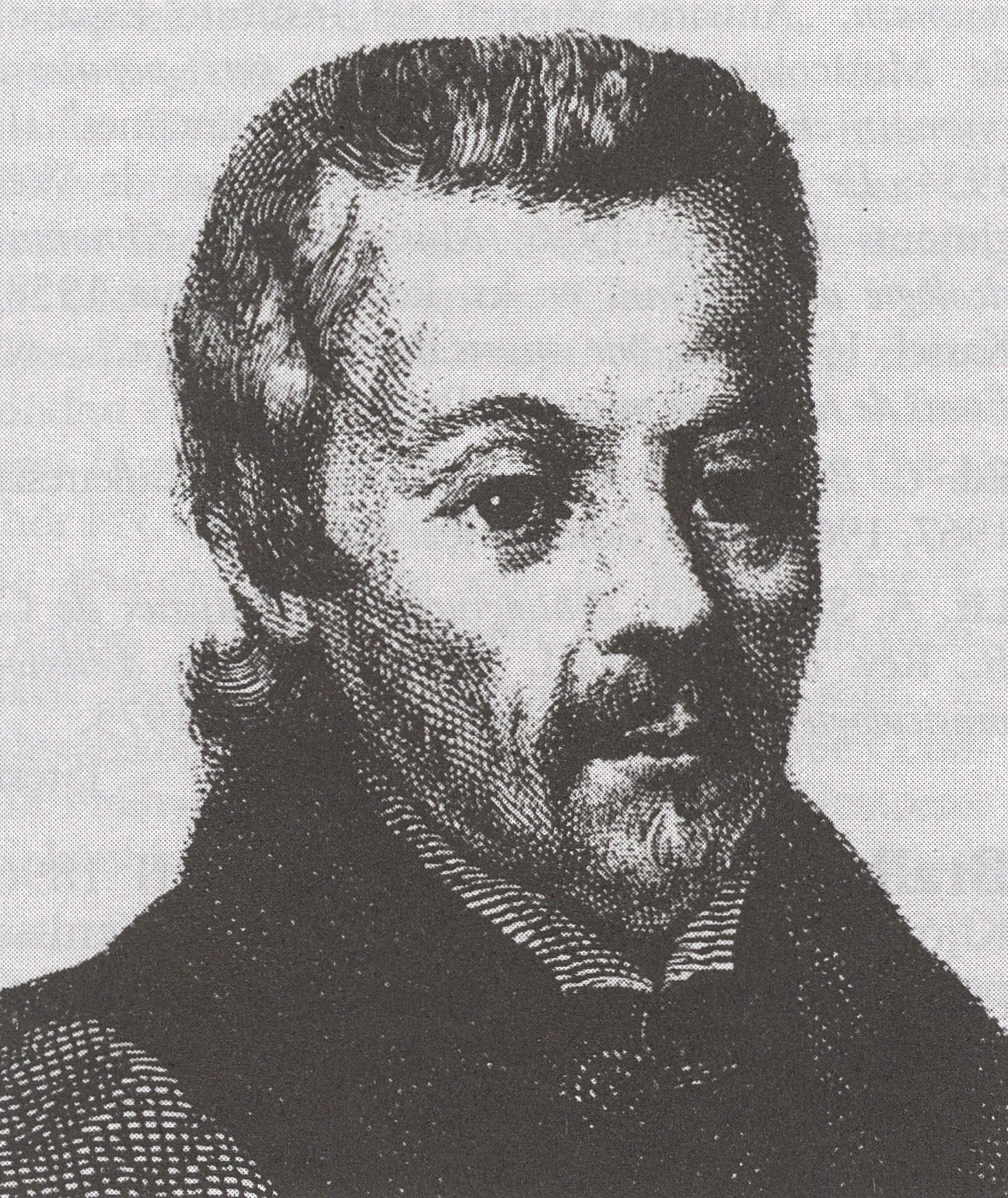
Brant (not Brandt, Brand) Jan, *1554 (not 1551) Poznań, †27 May 1602 (not 31 December 1601) Lviv, Polish composer and theologian. In 1571, he joined the Jesuit order in Braniewo; from there, he was transferred to Vilnius (1571–1575), then to Poznań (1575–1578), where he was ordained a priest. He went to Rome to continue his theological studies. Around 1584, he returned to Poland; until 1586, he stayed in Krakow, in 1586–1592 in Poznań, 1593–1597 in Vilnius, where he obtained a doctorate in theology; in 1597–1598, he was again in Poznań, in 1598 in Pułtusk, from 1599 to 1601 in Rome, and from 1601 to 1602 in Lviv as the superior of the local Jesuit house. He was active in the order mainly as a lecturer and college rector, as well as a preacher. He was only marginally involved in musical composition.
Brant was the first composer to introduce basso continuo into Polish music. His musical technique is characterized by great technical proficiency (invertible counterpoint), a penchant for sophisticated solutions (notational effects), and great attention to sound (the use of almost exclusively full chords), while at the same time placing less emphasis on melody.
Literature: Z.M. Szweykowski Jan Brant (1554–1602) i jego nowo odkryta twórczość muzyczna, “Muzyka” 1973 no. 2; Z.M. Szweykowski Present State of Research of Polish Musical Sources in Swedish Libraries, in: Polish-Swedish Cultural Relations during the Vasa Dynasty, ed. T. Maciejewski, Warsaw 1996.
Compositions:
Pieśni różne pospolite o różnych pobożnych potrzebach, pub. 1601 (lost)
9 works for 3-6 voices for the individual stanzas of the hymn Iesu dulcis memoria
Caelestes merces for 4 voices
Inoitatorium in festo Nativitatis (incomplete) for 5 voices and basso continuo
manuscripts preserved in the University Library in Uppsala
Editions:
Ed. 2 works ed. Z.M. Szweykowski in MAP — Renesans, iss. 1, ed. P Poźniak, Krakow 1993