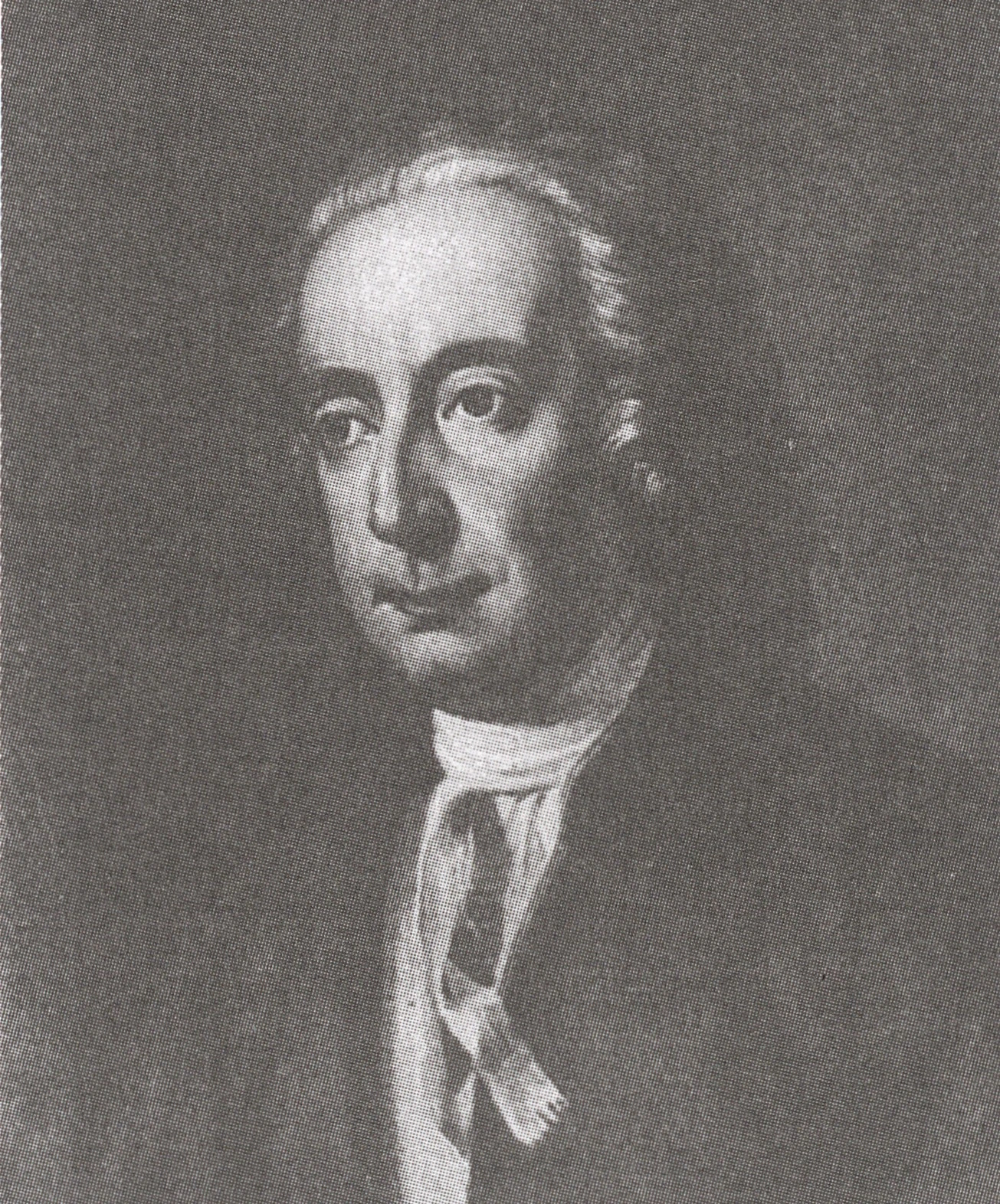
Caldara Antonio, *ca. 1670 Venice, †28 December 1736 Vienna, Italian composer, likely a student of G. Legrenzi. As a boy, he sang in the choir at St. Mark’s Basilica in Venice; later, he became proficient in playing the viola, cello, and harpsichord. From 1699 to 1707, he served as maestro di cappella da chiesa e dal teatro at the court of Prince Ferdinand Carl Gonzaga in Mantua. He may have accompanied the prince on a trip to Paris. In 1708, Caldara was active in Rome, and then left for Barcelona. There, during the wedding celebrations of Charles III (later Emperor Charles VI), his componimento da camera per musica Il più bel nome was performed. From 1709 to 1716, Caldara served as maestro di cappella at the court of Prince Ruspoli in Rome. During this time, he composed works not only on commission from the prince but also for other patrons: Cardinals P. Ottoboni and F. Colonna, and Emperor Joseph I. In 1711–12, Caldara stayed in Vienna; in 1716 he settled there permanently, serving until his death as vice-Kapellmeister at the imperial court (J.J. Fux was the Kapellmeister). He composed numerous occasional works for the imperial court and other Austrian musical centers, such as Salzburg and Linz.
Caldara was one of the most prolific composers of his era. His oeuvre is estimated at approximately 3,400 works. This rich legacy has not yet been fully cataloged and classified. However, Caldara was one of the most outstanding representatives of the late Italian Baroque, and indirectly contributed to the foundations of Viennese Classicism. Alongside J.J. Fux, C.A. Badia, F. Conti, and G. Porsile, he was one of the creators of the musical culture’s golden age at the imperial court in Vienna, where most of his dramatic compositions were created. In his works, Caldara combined stylistic elements of various Italian schools (Venetian, Neapolitan, Roman, and Bolognese), blending them after 1716 with the traditions of Austrian music. Despite such diverse influences, Caldara, thanks to his talent, avoided eclecticism, and his individual style is characterized by a skillful and creative combination of technically sophisticated counterpoint with expressive, emotional melody. Like other composers of the era, Caldara wrote prolifically and quickly, fulfilling numerous commissions from patrons. Hence, his works often bear the mark of routine mass production; they are characterized by a certain formulaic quality, and at times they are even underdeveloped. However, even such pieces reveal the master’s touch in their technical details.
Vocal compositions hold particular significance in Caldara’s oeuvre, among which the small forms stand out for their artistic craftsmanship. Numerous motets, canons, and chamber cantatas are distinguished by a beautiful melodic line and a deep expressive connection between text and music; one of Caldara’s motets was included in G. Paolucci’s publication Arte pratica di contrapunto (Venice, 1765) as a model example of the genre. His masterpieces include the Stabat Mater, which was popular in its time, and among the finest compositions of that era are the Crucifixus a 16 and the Te Deum, both written in the Venetian polychoral style. Caldara’s madrigals were composed as an expression of a short-lived fashion drawing on the style of L. Marenzio and G.P. Palestrina.
Scholars of Caldara’s work also highly regard his oratorios written between 1690 and 1716, that is, before he left his homeland. These works are distinguished by carefully crafted accompanied recitatives, a diversity of texture and form, a high degree of dramatic tension, and expressive power. Such characteristics fade in the oratorios written for the imperial court (often to texts by A. Zeno and P. Metastasio). A weakening of the dramatic structure, a simplification of the texture, and a preference for secco recitatives and formally schematic arias (da capo and dal segno) characterize not only the oratorios composed during his Viennese period, but also most of Caldara’s stage works, which were usually written in haste to enhance various court ceremonies. Caldara’s operatic output has not yet been thoroughly studied, but it is believed that the leading work of this genre is Dafne (dramma pastorale per musica) written for the Salzburg stage; the hunting aria Dafne with concertante horns (beginning of Act III) ranks among the most outstanding compositional achievements of the era. Caldara’s stage works, in accordance with the conventions of the time, bear various designations: componimento drammatico, festa teatrale, festa da camera, pastorale, and others.
Caldara’s instrumental works are of lesser significance, though he was also one of the most important representatives of the sonata da chiesa following A. Corelli. The sonatas and sinfonie, in which Caldara draws on the Neapolitan overture, influenced the development of the foundations of the classical sonata form.
Literature: L. v. Köchel Die kajserliche Hofmusikkapelle in Wien von 1543–1867, Vienna 1869; A. Gmeyner Di Opern Caldaras. Ein Beitrag zur Geschichte der italienischen Oper in Vien. diss. Vienna 1927; E.I. Luin Sulla vita e sulle opere di Antonio Caldara, in: La scuola veneziana, Siena 1941; A. Liess Wiener Barockmusik, Vienna 1946; F. Hadamowsky Barocktheater am Wiener Kaiserhof, Vienna 1955; U. Kirkendale The War of the Spanish Succession Reflected in the Works of Antonio Caldara, “Acta Musicologica” XXXVI, 1964; U. Kirkendale Antonio Caldara. Sein Leben und seine venezianisch-römischen Oratorien, Graz 1966; R. Freeman The Travels of „Partenope”, in: «Studies in Music History», celebratory publication for O. Strunk, Princeton 1968; E. Roche Caldara and the Mass, “The Musical Times” CXI, 1970; M. Rinaldi Contributo alla futura biografia di Antonio Caldara, “Nuova Rivista Musicale Italiana” IV, 1970; C. Gallico „Santa Francesca Romana” di Caldara, P. Isotta Antonio Caldara. Problemi e prospettive and V. Kirkendale Antonio Caldara. La vita, “Chigiana” XXVI–XXVII, 1971; B.L. Greenwood Antonio Caldara. A Checklist of His Manuscripts in Europe, Great Britain, and the United States of America, «Studies in Music History» VII, 1973.
Compositions:
Instrumental:
Solo sonatas, trio sonatas and sonatas a 4, including:
12 Suonate a tre, due violini con violoncello, e parte per l’organo… Op. 1, pub. Venice 1693, 2nd ed. 1700, also pub. Amsterdam n.d.
12 Suonate da camera a due violini con il basso continuo… Op. 2, pub. Venice 1699, 2nd ed. 1701
organ sonatas
sinfonias
4 collections of works for keyboard instruments
Vocal-instrumental:
43 oratorios, including:
Il trionfo della continenza, text by B. Sandrinelli, staged in Venice 1697
Maddalena ai piedi di Cristo, text by L. Forni, staged in Venice (?) before 1700
Il ricco epolone, text by B. Sandrinelli, staged in Venice after 1700
La castilà al cimento, text by P. Ottoboni (?), staged in Rome (?) 1705
Oratorio per Santa Francesca Romana, staged in Rome 1710
Oratorio di San Stefano primo rè dell’Ungheria, staged in Rome 1713
Santa Flavia Domitilla, staged in Rome 1713
Santa Ferma, 1713, staged in Rome 1715, in a revised version staged in Vienna 1717
Oratorio per Santissima Annunziata, 1713, staged in Rome 1715
Abisai, staged in Rome 1715
Jefte, staged in Rome 1715
La conversione di Clodoveo rè di Francia, text by C.S. Capece, staged in Rome 1715
La ribellione d’Assalone, staged in Rome 1715
Cristo condannato, text by P. Pariati, staged in Vienna 1717
Giuseppe…, text by A. Zeno, staged in Vienna 1722
Gioaz, text by A. Zeno, staged in Vienna 1726
Il Batista, text by A. Zeno, staged in Vienna 1727
Gionata, text by A. Zeno, staged in Vienna 1728
Naboth, text by A. Zeno, staged in Vienna 1729
La Passione di Gesù Cristo, text by P. Metastasio staged in Vienna 1730
David umiliato, text by A. Zeno, staged in Vienna 1731
Sant’Elena al Calvario, text by P. Metastasio staged in Vienna 1731
La morte d’Abel figura di quella del nostro Redentore, text by P. Metastasio staged in Vienna 1732
Sedecia, text by A. Zeno, staged in Vienna 1732
Gerusalemme convertita, text by A. Zeno, staged in Vienna 1733
San Pietro in Cesarea, text by A. Zeno, staged in Vienna 1734
Gesù presentato nel tempio, text by A. Zeno, staged in Vienna 1735
***
approximately 300 solo cantatas and numerous 2-voice cantatas, including:
12 Cantate da camera a voce sola… Op. 3, Venice 1699
numerous masses and mass movements, including:
Missa artificiosissimae compositionis, in contrapuncto canonico sub duplici canone inverso contrario et cancrizante
Requiem
Chorus musarum divino Apollini accinentium, sive sex missae selectissimae a quatuor vocibus, canto, alto, tenore, basso, 2. violinis & organo concertantibus, 2. clarinis, tympano, violoncello pro libitu, pub. Bamberg 1748
numerous motets, including:
12 Motetti a due e tre voci… Op. 4, pub. Bologna 1715
motet in a collection of G. Paolucci Arte practica di contrappunto, pub. Venice 1765
numerous vespers, antiphons, psalms, hymns, offertories, graduals, complines, Salve Regina, approximately 500 canons, cantilenae dramaticae, and dialoghetti
Stage:
90 stage works to Italian texts, including:
La partenope, libretto S. Stampiglia, staged probably in Mantua 1701, revised with G. Bonivent, staged in Ferrara 1709
Il più bel nome, componimento da camera, libretto P. Pariati, staged in Barcelona 1708
L’Atenaide, with A. Fior and F. Gasparin, libretto A. Zeno, staged in Barcelona 1709
Il nome più glorioso, componimento da camera, libretto P. Pariati, staged in Barcelona 1709
Astrobolo e Lisette, intermezzo, staged in Rome 1711
Mercurio, Adone, Venere, serenata, staged in Milan 1711
La dulcinea a cuoco, intermezzo, staged in Naples 1715
Il giubilo della salza, staged in Salzburg 1716
Il Costantino, with A. Lotti and J.J. Fux, libretto A. Zeno and P. Pariati, staged in Vienna 1716
Ifigenia in Aulide, libretto A. Zeno, staged in Vienna 1718
Dafne, libretto G. Biavi, staged in Salzburg 1719
Il Germanico Marte with intermezzo Grespilla e Fanfarone, staged in Salzburg 1721
La contesa d’numi, libretto G. Prescimonio, staged in Znojmo 1723
La Concordia de’pianeti, libretto P. Pariati, wyst. Znojmo 1723
Il Venceslao, libretto A. Zeno, staged in Vienna 1725
Nigella e Tirsi, libretto G.C. Pasquini, staged in Vienna 1726
Ghirlanda di fiori, staged in Vienna 1726
Imeneo, libretto A. Zeno, staged in Vienna 1727
Mitridate, libretto A. Zeno, staged in Vienna 1728
Ciro riconosciuto, libretto P. Metastasio, staged in Vienna 1728
Il natale di Minerva, serenata, staged in Vienna 1729
Dialogo tra la vera disciplina ed il genio, libretto G.C. Pasquini, staged in Vienna 1730
Il Demetrio, libretto P. Metastasio, staged in Vienna 1731
L’asilo d’amore, libretto P. Metastasio, staged in Linz 1732
Adriano in Siria, libretto P. Metastasio, staged in Vienna 1732
Domofoonte, libretto P. Metastasio, staged in Vienna 1733
L’olimpiade, libretto P. Metastasio, staged in Vienna 1733
Le lodi d’Augusto, libretto G.C. Pasquini, staged in Vienna 1734
La clemenza di Tito, libretto P. Metastasio, staged in Vienna 1734
Le Cinesi, libretto P. Metastasio, staged in Vienna 1735
Le grande vendicate, libretto P. Metastasio, staged in Vienna 1735
Achille in Sciro, libretto P. Metastasio, staged in Vienna 1736
Il Temistocle, libretto P. Metastasio, staged in Vienna 1736
Editions:
aria Comeraggio di sol, Polish ed. titled Słońca promiennego blask, trans. P. Maszyński, Warsaw 1886, 21954 and Promień słońca, trans. J. Ficowski, arranged by S. and J. Hoffman, Krakow 1958
8 motets (1714), Stabat Mater, Missa dolorosa, Te Deum (1724), Crucifixus, ed. E. Mandyczewski, «Denkmäler der Tonkunst in Österreich» XIII/1, 1906
11 secular cantata, 3 madrigals for 4 and 5 voices, 35 canons, ed. K. Geiringer (after E. Mandyczewski), «Denkmäler der Tonkunst in Österreich» XXXIX, 1932
1 madrigal (La speranza), 12 canons, ed. K. Geiringer, «Das Chorwerk» XXV, 1935, 21955
Dafne, ed. C. Schneider and R. John, «Denkmäler der Tonkunst in Österreich» XCI, 1955
cantata Laudate pueri Dominum, ed. R. Ewerhart in: «Polyphonia Sacra» no number, Cologne 1959
Missa in G major, ed. W. Fürlinger, «Geistliche Chormusik» X, Stuttgart 1961
cantata Haec est Regina Virginum, ed. R. Ewerhart in: «Die Kantate» XI, Cologne 1969
Magnificat, ed. Ch. Wolff, Kassel 1969
Dies irae, ed. I. Homolya, Budapest 1978