

Today we have something truly special for folk art lovers! On International Art Day, explore examples of traditional cut-outs that have decorated the interior of rural cottages since the 19th century, especially in the Kurpie and Łowicz regions.

Paper cut-outs have probably been used to decorate rural homes since the 19th century. The Łowicz region is the only place in Poland where this tradition is still practiced today! There are many types of cut-outs. Kodry are multicoloured designs made from long, rectangular sheets of white paper. They were used to decorate ceiling beams, as well as the walls above a bench or a doorway.
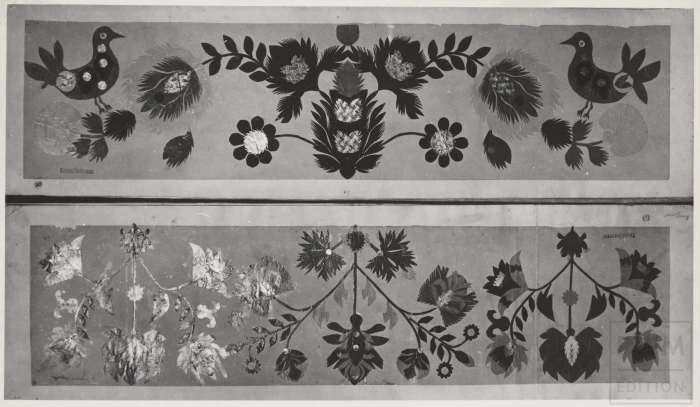
Kodry from Łowicz
Gwiazdy are circular cut-outs placed on ceiling beams between the kodry. They began to appear in Łowicz homes at the beginning of the 20th century.
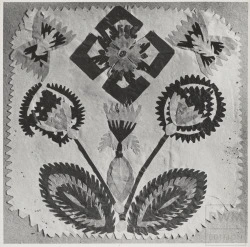
Gwiazda (a star) from Łowicz
Cut-outs were also present in the traditions of other regions of Poland, including Kurpie, the Lublin region, and the Opole region. In the Opoczno area, cut-outs were mainly placed on walls rather than above door frames or on ceiling beams, as in other parts of the country. They were usually arranged symmetrically on both sides of a picture hanging on the wall. A characteristic feature of cut-outs from the Lublin region is their serrated, lace-like pattern and arrow-shaped design.
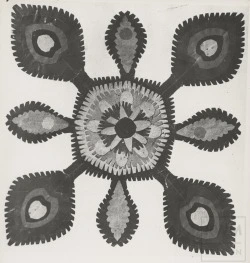
A cut-out from Opoczno
Different motifs appeared in Kurpie works, where a popular form was the leluja, featuring an elaborate tree design. In 2020, the Kurpie paper-cutting tradition from Puszcza Zielona was inscribed on the National List of Intangible Cultural Heritage by the Minister of Culture and National Heritage.
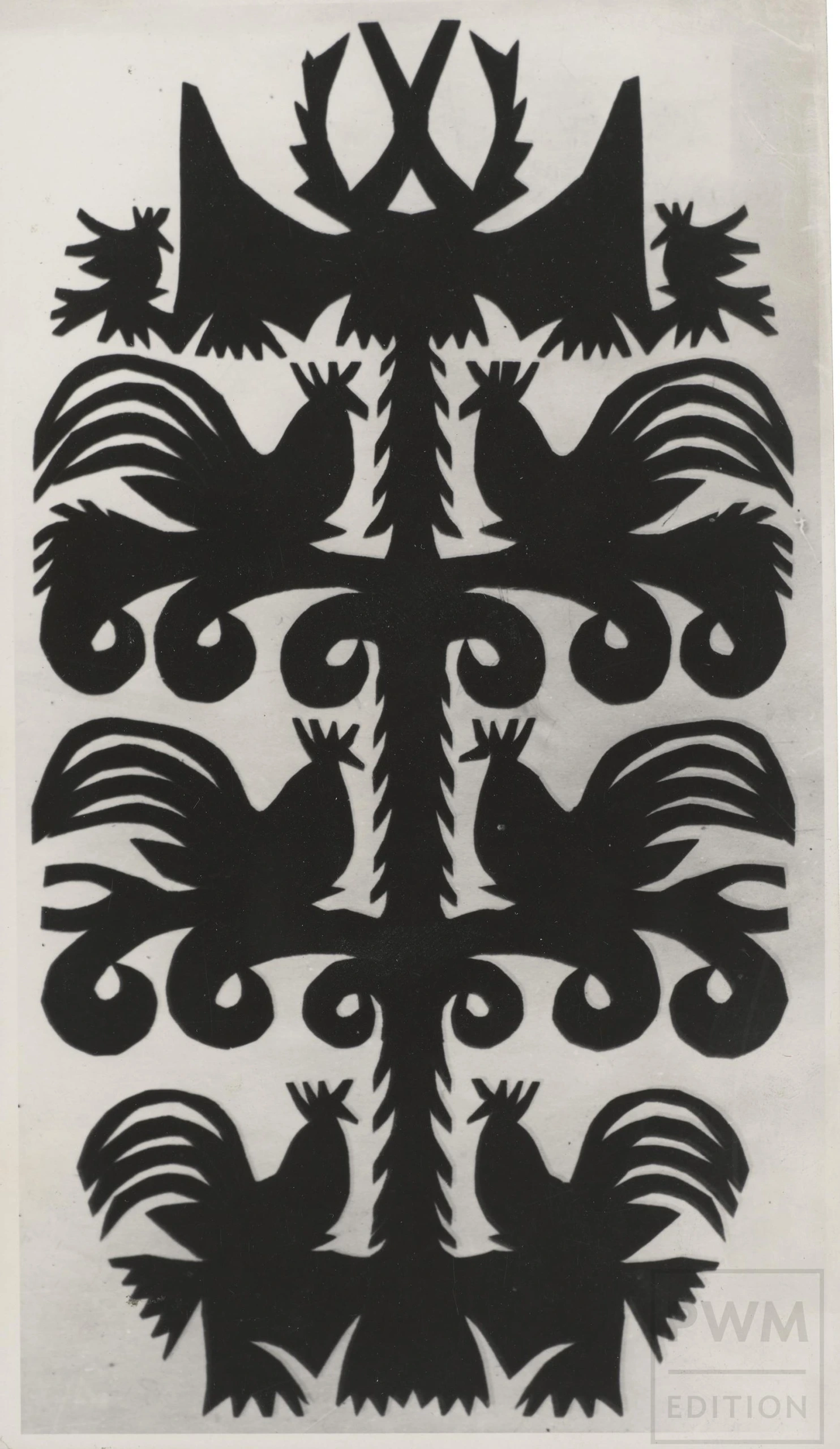
A tree design from Kurpie
This is only a small part of the ethnographic collection in our Ikonoteka. Take a look at the pictures depicting folk sculptures, figurines and ceramic vessels, stove tiles, costumes, and much more.
back to list