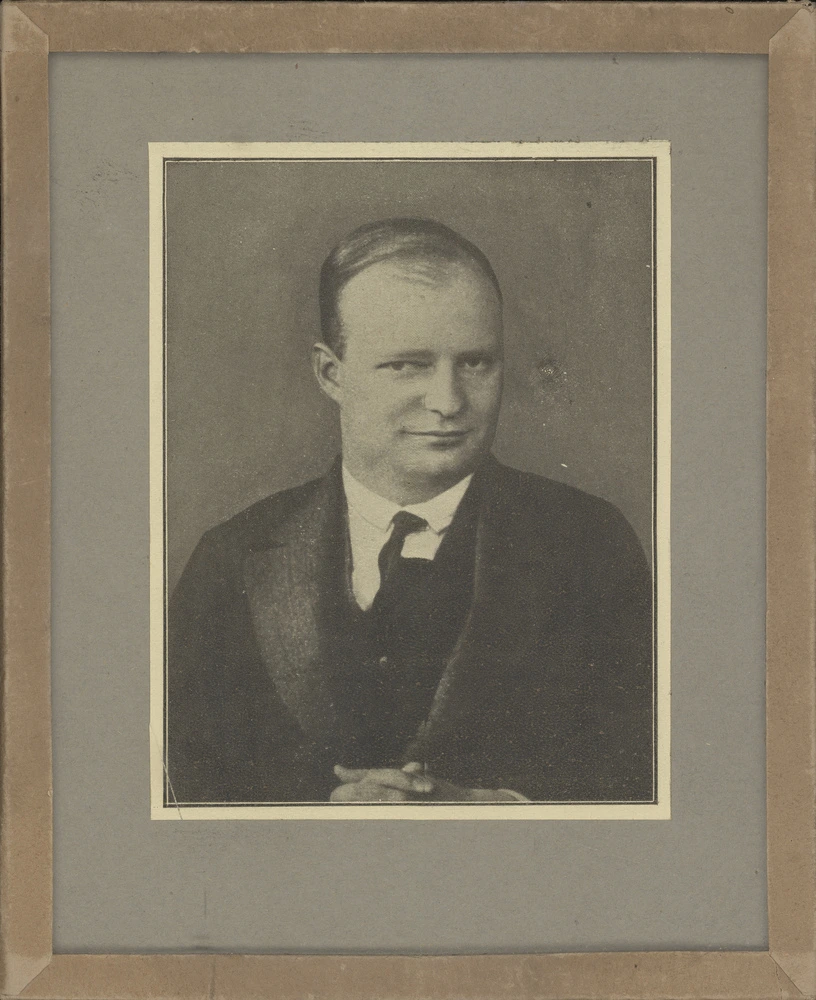
Hindemith Paul, *16 November 1895 Hanau, †28 December 1963 Frankfurt (am Main), German composer, theoretician, conductor and teacher. Hindemith was an exceptionally versatile artist, active not only in composition but also in performance, theory, and pedagogy. His prolific output encompasses a wide variety of musical genres: operas, ballets, oratorios, cantatas, symphonies, concertos, chamber works, solo works, and songs. In his chamber ensembles, he incorporated all instruments, even rarely used ones (e.g., the heckelphone) or those no longer in use (the viola d’amore), and he also wrote music for mechanical instruments, such as the trautonium. Gifted with extraordinary creative inventiveness, he composed some works in a very short time. He was both a talented violist and violinist, playing in orchestral and chamber ensembles and appearing as a concert soloist (viola, violin, viola d’amore). In his early years, he contributed greatly to the organisation of musical life in Germany, particularly in the performance of contemporary music. Together with L. Amar, he founded a string quartet with which he toured numerous European countries; later he played in a string trio. From 1921, he participated in the chamber music festivals in Donaueschingen (later transferred to Baden-Baden and Berlin), initially as a composer and performer, and soon also as a member of the organising committee. Hindemith contributed greatly to making this festival a platform for new chamber music, featuring performances of works by E. Křenek, Milhaud, B. Bartók, Stravinsky, A. Schönberg, A. Berg, A. Webern, A. Hába, and K. Weill. At Hindemith’s initiative, the programmes of individual festivals were devoted to selected themes, for example, choral songs (1925), music for military band and music for mechanical instruments (1926), chamber opera (1927), chamber cantata (1928), and works for amateur musicians (1929). Hindemith was a pioneer of the amateur music movement and a proponent of education through active music-making. As a composition and theory teacher, first in Berlin, then at American universities, and finally in Zurich, he attempted to codify modern principles of composition; the result was theoretical works, most notably the three-volume Unterweisung im Tonsatz. In his teaching, Hindemith emphasised a comprehensive musical education, requiring students to combine compositional creativity with practical skills in playing various instruments and singing, as well as knowledge of theoretical principles. In Berlin, his students included S. Borris, F. Reizenstein, and E. Pepping; at Yale University and in New Haven, among others, L. Foss, N. del Joio, U. Kaye, M. Levine, and F. Lewin. In later years, Hindemith performed as a conductor not only of his own works but also the great classical symphonic repertoire and early music (including choral works by J. S. Bach, G. Dufay, Gesualdo da Venosa, G. Handel, Orlando di Lasso, C. Monteverdi, G. Gabrieli, G. Palestrina, and Perotinus). He also explored musical aesthetics, the social role of music, and contemporary musical life. These were the topics of his lectures at universities and summer music courses. Hindemith’s versatility is further evidenced by the fact that he wrote libretti for his operas (Mathis der Maler, Harmonie der Welt) and translated poetic texts from English and French for his own compositions. He treated comic and idyllic drawings for family and friends as a hobby, although he sometimes illustrated his own works in this way (e.g., the drawing included in the Suite 1922). He represented the type of medieval musician-theoretician, a scholar consciously applying the rules of knowledge and at the same time a homo ludens, treating music as an everyday activity, craft, pleasure, and relaxation.
Chronicle of life and work:
1895
16 November – Paul Hindemith was born in Hanau near Frankfurt am Main, the son of painter Robert Rudolf Hindemith and Maria Sophie (née Warnecke)
1904
first lessons of violin with E. Reinhardt in Mülheim am Main
1905
violin lessons with A. Hegner in Frankfurt
1907
private violin lessons with A. Rebner, a concertmaster at the Frankfurt Opera
1908
autumn – beginning of studies with A. Rebner (violin) at the Hoch Conservatory in Frankfurt
1912
beginning of studies with A. Mendelssohn (composition, counterpoint), from 1913 with B. Sekles at the Hoch Conservatory 1913
summer – taking over the position of concertmaster in the orchestral ensemble in Bürgenstock (Switzerland)
member (2nd violin) of the Rebner Quartet
1915
performance of the String Concerto op. 2 at the Hoch Conservatory; Hindemith was awarded the prize of the F. Mendelssohn Foundation
June – completion of violin studies
from 24 June – member of the opera orchestra in Frankfurt
1 September – taking over the position of concertmaster of the Frankfurt Opera Orchestra
autumn – beginning studies with F. Bassermann (conducting) at the Hoch Conservatory
25 September – death of his father on the front in Flanders
1917
13 August – drafted into military service; Hindemith plays in a military band and occasionally in a quartet
winter – completion of studies at the Hoch Conservatory
publication of Drei Stücke op. 8 for cello and piano by B&H
1918
5 December – release from military service
1919
Hindemith continued to work in the Frankfurt Opera Orchestra (until 1923); played viola in the Rebner Quartet (until 1921)
2 June – Hindemith’s first public concert as a composer in Frankfurt; programme: Quartet Op. 10, Violin Sonata Op. 11 No. 1, Sonata Op. 11 No. 4 for viola and piano, Piano Quintet Op. 7
beginning of cooperation with the Schott publishing house in Mainz
1921
May – foundation of the Amar-Hindemith quartet: L. Amar (1st violin), W. Caspar (2nd violin), Paul Hindemith (viola), R. Hindemith (cello, from 1922 M. Frank)
4 June – in Stuttgart at the Landestheater premiere of 1-act operas by Hindemith: Mörder, Hoffnung der Frauen and Dan Nusch-Nuschi
1 August – performance of the Quartet Op. 16 at the first festival of new chamber music in Donaueschingen
1922
26 March – premiere of the opera Sancta Susanna in Frankfurt
31 July – in Donaueschingen, performances of the song cycle Die junge Magd and Kammermusik No. 1 Op. 24a
in Frankfurt, Hindemith, together with R. Merten, founded the Gemeinschaft für Musik (Music Association) to promote contemporary and early music
October–November – concerts of the Amar-Hindemith Quartet in Copenhagen, Vienna, Brno, and Prague
1923
June – Hindemith joins the organising committee of the Donaueschingen festivals
1924
15 May – marriage to Gertrude Rottenberg (*2 August 1900, †16 March 1967), daughter of Ludwig Rottenberg, conductor of the Frankfurt Opera
concerts of the Amar-Hindemith Quartet in Germany, Austria, Switzerland, Denmark, France, the Netherlands, Yugoslavia
1925
25 July – performance of the Concerto for Orchestra Op. 38 in Duisburg
1926
24 July – performance of the Konzertmusik Op. 41 in Donaueschingen
25 July – premiere of Das triadische Ballett for mechanical organ with music by Hindemith, artistic direction and choreography by O. Schlemmer in Donaueschingen
9 November – premiere of Cardillac in Dresden
1927
1 May – Hindemith begins teaching at the Staatliche Hochschule für Musik in Berlin and at the Volksmusikschule in the working-class district of Neu Kölln; collaborates with H. Mersmann and F. Jöde on creating music for amateurs (Sing- und Spielmusik).
15 July – the sketch Hin und zurück premieres at the Baden-Baden Festival of New Chamber Music
1 October – Hindemith moves to Berlin permanently
6–20 December – performances in Leningrad with the Amara-Hindemith Quartet
1928
29 March – in Cologne at the Sammelbände der Internationalen Musikgesellschaft festival, performance of Kammermusik No. 6, the solo part of viola d’amore was performed by Hindemith, conductor L. Rottenberg
April – performances in Italy with early music repertoire (Hindemith – viola d’amore, M. Frank – viola da gamba, A. Ehlers – harpsichord)
May – performances with the Amara-Hindemith quartet in Paris
from 19 December – performances with the Amar Hindemith quartet in Riga and Leningrad
1929
from 16 January – performances with the Amara-Hindemith Quartet in Leningrad, Moscow, and other cities
performances with the Amara-Hindemith Quartet in Rome, Vienna, London, Brussels, and other cities
Hindemith studies early music, studies old musical treatises, and learns Latin
April – leaving the Amara Quartet (the quartet operated until 1933)
8 June – premiere of the opera Neues vom Tage in Berlin
July – formation of a string trio with J. Wolfsthal (first violin, from 1931 S. Goldberg), Paul Hindemith (viola), B. Feuermann (cello); the trio operated until 1934
28 July – premiere of Lehrstück with a text by B. Brecht in Baden-Baden, ending in scandal
1930
21 June – the premiere of Wir bauen eine Stadt performed by school students under the direction of A. Kurt at the chamber music festival in Berlin
1931
21 November – the performance of oratorio Das Unaufhörliche in Berlin
1932
spring – in Cairo, participation in the congress devoted to Arabic music studies; participants included J. Wolf, E. Wellesz, W. Heintz, A. Hába, and B. Bartók.
14 April – performance of the Philharmonisches Konzert in Berlin
20 June – performance of Plöner-Musiktag at the youth festival in Plön (Schleswig-Holstein)
2 December – concert in Warsaw, programme: A. Vivaldi’s Concerto for viola d’amore and orchestra; P. Hindemith’s Konzertmusik Op. 48 for viola and orchestra (in both works, Hindemith performed the solo part); P. Hindemith’s Overture Neues vom Tage; conducted by G. Fitelberg
1933
May– in Vienna, participation in the celebrations of the 100th anniversary of Brahms’s birth, performing works by Brahms with A. Schnabel, P. Casals, and B. Hubermann
November – the Nazi Reichsmusikkammer is established in Berlin
Jewish professors leave the Hochschule für Musik in Berlin, including E. Feuermann, F. Jöde, and C. Sachs. Hindemith’s colleagues, H. Mersmann, F. Schreker, O. Klemperer, F. Busch, L. Amar, B. Lauer-Kottler, and L. Kestenberg
1934
January – a trip to Brussels and London; recording albums for Columbia with Feuermann and Goldberg
February – Hindemith appointed to the Reichsmusikkammer
12 March – performance of the Symphony “Mathis der Maler” in Berlin
June – ban on performing Hindemith’s works on German radio
beginnings of the campaign against Hindemith in the Nazi German press
25 November – W. Furtwängler’s article “Der Fall Hindemith” in the “Deutsche Allgemeine Zeitung” in defence of the composer; the authorities refuse permission for the performance of the opera Mathis der Maler at the Berlin Opera House
4 December – Furtwängler resigns from his management positions at the Berlin State Opera, Berlin Philharmonic, and Reichsmusikkammer
December 6 – Goebbels attacks Hindemith in a speech at the Sportpalast in Berlin
Hindemith takes a vacation from the Hochschule für Musik, a trip to Lenzkirch in the Black Forest
1935
January – F. Herzog’s aggressive article Der Fall Hindemith-Furtwängler in “Die Musik”
3 April –16 May – stay in Istanbul and Ankara at the invitation of the government tourist board; Hindemith participates in work on the reorganization of the music education and training system in Turkey
14 November – performance of Schwanendreher in Amsterdam
1936
22 January – Performance of Trauermusik, written on the death of King George V
March–May – second stay in Turkey
1937
29 January–20 February – third stay in Turkey
March – Hindemith resigns from his position at the Hochschule für Musik in Berlin
25 March – first trip to the United States
April – concerts in New York, Washington, Boston, Chicago, Buffalo
May–September – a trip to Italy (Florence, Assisi, Cremona, Positano); a meeting with L. Miasine, plans for a ballet
September–25 November – fourth stay in Turkey
1938
February – April – stay in the United States, concerts in Boston, Detroit, Chicago, New Haven, Buffalo
28 May – premiere of the opera Mathis der Maler in Zurich
Hindemith’s scores and his book Unterweisung in Tonsatz were presented at the Entartete Musik exhibition in Düsseldorf
21 July – premiere of the ballet Nobilissima visione in London at the Drury Lane Theatre, choreography and leading role by L. Miasine, Ballet Russe de Monte Carlo, conducted by Paul Hindemith
August – the Hindemiths move to Switzerland; they settle in Bluche, now Sierre (canton of Valais)
1939
January–April – stay in the United States, concerts in New York, Cleveland, San Francisco, Los Angeles, Denver, Philadelphia, concerts in Italy, France, the Netherlands, Belgium, Switzerland
1940
6 February – departure to the United States
19 February–11 June – lectures at the University of Buffalo, Wells-College in Aurora, Cornell University in Ithaca, and Yale University in New Haven
July–August – composition lectures and concerts at the Bershire Music Center in Tanglewood, Massachusetts
28 September – appointment to a professorship at Yale University in New Haven (until 1953)
1941
July–August – lectures at the Bershire Music Center in Tanglewood
1943
26 April – first concert of the Yale University Collegium Musicum under the direction of Paul Hindemith, with 17th-century music on the programme
Hindemith’s letters, manuscripts, and documents burned during the bombing of Berlin and Frankfurt
1944
20 January – New York performance of Symphonic Metamorphoses on themes by Weber
30 October – Washington premiere of the ballet Herodias (choreography and leading role – M. Graham)
November – New Haven premiere of Monteverdi’s Orfeo, edited by Hindemith, performed by Yale University students and faculty under Hindemith’s direction
1945
4 June – Hindemith receives an honorary doctorate from Pennsylvania University in Philadelphia
23–24 October – New York concerts on the occasion of Hindemith’s 50th birthday, performed by Juilliard School of Music students, featuring I. Stern and B. Simmonds, conducted by P. Meunin and Paul Hindemith
13 December – Stuttgart premiere of the opera Mathis der Maler, conducted by B. Wetzelsberger
1946
11 January – Hindemith receives American citizenship; he rejects numerous invitations to Germany and offers to become director of the Hochschule für Musik in Berlin and Frankfurt and to conduct the Berliner Philharmoniker orchestra
14 May – in New York, a performance of the Requiem “When Lilacs Last in the Door Yard Bloom’d” to a text by W. Whitman dedicated to the memory of F. D. Roosevelt and the American victims of the war
June–August – a stay in Mexico
20 November – New York premiere of the ballet Four Temperaments (choreography by J. Balanchine).
1947
March – lectures at the Cleveland Institute of Music
April – first visit to Europe after the war, concerts in Italy, the Netherlands, and Belgium
29 May – a short stay in Frankfurt and Butzbach
June – concerts in London and Vienna
23 August – during the Internationale Musikfestwochen in Lucerne, a concert conducted by Hindemith, programme: Symphony “Mathis der Maler”; J. S. Bach Orchestral Suite in C major; W. A. Mozart Piano Concerto in D minor, K. 466 (soloist – D. Lipatti)
26–29 August – lecture and exercises in Salzburg at the Mozarteum Academy summer courses
1948
June – awarded an honorary doctorate from Columbia University in New York and the University of Frankfurt
6 August – departure for Europe
August–September – concerts in Italy, Switzerland
13–23 October – he teaches a composition course at the Akademie Mozarteum in Salzburg
25–30 October – concerts and lectures in Vienna
3 November – performance of the second version of Das Marienleben in Hanover (A. Kupper – soprano, C. Seemann – piano)
November–December – concerts in Italy
1949
January–February – concerts and lectures in Amsterdam, Hilversum, Zurich, Frankfurt, Munich, Nuremberg, Darmstadt, Wiesbaden, Berlin
30 March – return to New Haven, lectures at Yale University during the summer semester
July–August – a trip around the United States, lectures and concerts, among others in Colorado and New Mexico
October–November – in Cambridge, Massachusetts, lectures and concerts at Harvard University in the Ch. E. Norton Chair of Poetics, later published as the book A Composer’s World
1950
2 February – lecture in Boston at the Academy of Arts and Sciences
16–17 March – lectures and concerts at Harvard University in Cambridge, Massachusetts
20–21 May – concerts in Berlin; Hindemith receives an honorary doctorate from the Freie-Universität in Berlin
11, 12, 16 June – concerts in Berlin
19–30 June – courses at the Akademie Mozarteum in Salzburg
July – concerts in Zurich
12 September – celebrations in Hamburg marking the 200th anniversary of J. S. Bach’s death. Hindemith delivers a speech entitled “Johann Sebastian Bach – a verpflichtendes Erbe” and leads a performance of Bach’s Magnificat
1951
February–March – a tour of the United States with lectures and concerts, receiving the Bach Prize in Hamburg
August – departure to Europe
since autumn – lectures at the University of Zurich (Department of Music History and Theory). He received the title of associate professor.
1952
25 January – performance of the “Harmonie der Welt” Symphony in Basel.
February–March – concerts and lectures in Gothenburg, Stockholm, Oslo, Hamburg, and other cities
May/June – concerts in Vienna, Linz, and Zurich
20 June – premiere of the second version of the opera Cardillac in Zurich
21 August – lecture at the Akademie Mozarteum courses in Bonn in Salzburg, receiving the Pour le Mérite order
September – return to New Haven, continuation of lectures
1953
14 May – concerts at the Collegium Musicum of Yale University in New Haven and New York
1 June – resignation from lecturing at Yale University
June – return to Europe
9 July – performance of Cantique de l’espérance in Brussels under Hindemith’s direction at an international UNESCO conference
August – purchase of the villa “La chance” in Blonay on Lake Geneva
11 August – concerts in Bayreuth, Perugia, and Vienna
1954
January–April – concerts in Berlin, Hilversum, Cologne, Zurich, Bonn, and Cologne
7 April – premiere of the second version of the opera Neues vom Tage at the Teatro San Carlo in Naples under Hindemith’s direction
3 June – performance of Monteverdi’s Orfeo in Vienna edited and conducted by Hindemith
23 June – receipt of an honorary doctorate from the University of Oxford
July–November – concert tour of South America
November/December – concerts in Lisbon and Madrid
1955
January – concerts in Amsterdam, Hilversum, Rome, and Turin
February–March – concerts in Cologne and Bochum
18 June – Hindemith delivers a speech in Bonn dedicated to the memory of W. Furtwängler
1 July – Hindemith’s composition concert in Munich
August – concerts in Edinburgh, Helsinki, Stockholm, and Baden-Baden
9 October – receipt of the Sibelius Prize in Helsinki
November – worldwide celebration of the 60th anniversary of Hindemith’s birth
1956
January–March – concerts in the Federal Republic of Germany and Switzerland
9–25 June – concerts in Japan with the Wiener Philharmoniker
25 August – performance of the cantata Ite angeli veloces conducted by Hindemith at the Internationale Musikfestwochen in Lucerne
1957
Hindemith resigns from his teaching position at the University of Zurich and retires
January–June – concerts in Berlin, Basel, Lugano, Rome, Vienna, Wiesbaden, Prague (Prague Spring festival)
11 August – premiere of the opera Harmonie der Welt in Munich at the Prinzregententheater under Hindemith’s direction
October/November – concerts in Hamburg and Berlin
3–21 December – three lectures at the University of Zurich: on G. da Venosa’s madrigals, Schoenberg’s string quartet, and his own work
December – concerts in England (Manchester, Sheffield, Leeds)
1958
June – concerts in Detmold, Bern, Constance
24 November – performance of the Octet and Suite of French Dances during the Berliner Festwochen conducted by Hindemith
18 October – performance of 12 madrigals in Vienna, conducted by Hindemith
1959
January–February – concerts in the United States (Pittsburgh, New York, Washington)
30 January – Pittsburgh: performance of the Pittsburgh Symphony, written for the city’s bicentennial, conducted by Hindemith
spring – summer – concerts in the Federal Republic of Germany, Austria, Italy, Switzerland, and the Scandinavian countries
8 September – Bonn: concert under Hindemith to mark the opening of the Beethoven-Halle
1960
February–March – concerts in the United States (New York, New Haven, Chicago, Washington)
30 June – Basel: performance of the march Über den alten Schweizerton, written to commemorate the university’s 500th anniversary, conducted by P. Sacher.
October – concerts in Berlin
17–18 November – Vienna: concerts to mark the 65th anniversary of Hindemith’s birth
1961
January–April – concerts in the Federal Republic of Germany, London, and in Italy
25–29 July – concerts in the United States
July – premiere of the opera Neues vom Tage in English at the Santa Fé Opera in New Mexico
29 October – Hindemith conducts concerts in Eisenstadt during the celebration of the 150th anniversary of the birth of F. Liszt
17 December – premiere of the opera The Long Christmas Dinner (in German titled Das lange Weihnachtsmahl) in Mannheim, including the ballets Herodiad and Nobilissima visione conducted by Hindemith
1962
January–February – concerts in Kassel, Berlin, Hanover, Frankfurt
March–April – concerts in Florence, Milan, Venice
31 March – in Rome, performances of The Long Christmas Dinner, Herodias, and Nobilissima visione
April – in London, performance of the Requiem “When Lilacs Last in the Door-Yard Bloom’d” conducted by Hindemith
23 June – in Mainz, during the city’s bicentennial celebrations, performance of Mainzer Umzug conducted by Hindemith
30 September, 1 October – in Berlin, on the occasion of the 70th anniversary of D. Milhaud’s birth, performances of three one-act operas by Hindemith and The Long Christmas Dinner conducted by the composer
October–November – in Vienna, concerts conducted by Hindemith, including works by Dallapiccola, Honegger’s Amphion, Handel’s Israel in Egypt. Concerts in Linz and Frankfurt
1963
13 March – New York performance of the opera The Long Christmas Dinner
18–21 April – New York performance of Bruckner’s Requiem and Psalm 150, conducted by Hindemith
25 April – New York anniversary concert of the New Yorker Philharmonic at Lincoln Center, performance of Hindemith’s Organ Concerto, conducted by the composer, soloist A. Heiller
28 June – in Bonn, Hindemith’s speech to the recipients of the Pour le Mérite, published as Sterhende Gewässer
9–11 November – performance of the Organ Concerto in Vienna, conducted by Hindemith
12, 13 November – Performance of the Missa a cappella in the Piaristenkirche, conducted by Hindemith, the composer’s last public appearance
15 November – departure from Zurich to Blonay, heart disease
28 December – Hindemith’s death in a clinic in Frankfurt
1964
4 January – funeral ceremony in La Chièsa, Saint-Légier commune near Blonay
1968
establishment of the Paul Hindemith Foundation (Hindemith-Stiftung), headquartered in Blonay, Hindemith’s last residence
1971
publication of the first issue of the “Hindemith Jahrbuch”
1974
opening of the Paul Hindemith Institute in Frankfurt
1975
commencement of the source edition of Hindemith’s complete works (Schott Publishing House, Mainz)
Creative path
The years 1918–33. Several trends can be distinguished in Hindemith’s early work, testifying to the multifaceted nature of his artistic explorations: 1. the expressionist trend associated with opera; 2. the neoclassical trend, which split into an anti-romantic, aggressively contestatory line, revealing inspiration from jazz and popular music, and a second line based on the synthesis of traditional compositional forms and techniques with modern compositional thinking; 3. the so-called Gebrauchsmusik trend, which involved the development of a repertoire for the amateur movement. These trends in Hindemith’s early work do not follow one another sequentially; they sometimes overlap and intersect; some continue in Hindemith’s later work, while others fade away.
Expressionist traits appear primarily in the texts of Hindemith’s first one-act operas: Mörder, Hoffnung der Frauen (Murderer, the Hope of Women), with a libretto by O. Kokoschka, and Sancta Susanna, with a libretto by A. Stramm. The musical language of these operas stems from the Wagnerian heritage and bears no resemblance to the musical expressionism of the Viennese School. However, like Berg’s dramas, Hindemith’s operas are characterised by an autonomous musical structure. Mörder, Hoffnung der Frauen is structured around a four-movement symphony, each movement possessing a distinct emotional character, adapted to the dramatic content and concept. Several principles of form can be found in Sancta Susanna: the sequencing of dramatic and musical episodes, creating a symmetrical arrangement based on mirror symmetry; the principle of variation (a series of variations starting at bar 158); and the symphonic processing of a single motif, which determines the musical coherence. The musical devices, from individual motifs to the principles of form, correspond to the verbal text, becoming carriers of symbolic meaning. The two one-act operas, along with the grotesque comedy Nusch-Nuschi, form a triptych reminiscent of the French puppet theatre Grand Guignol (combining works of varying nature in a single performance), as well as Puccini’s Triptych. Expressionist elements also appear in the three-act opera Cardillac, based on E. T. A. Hoffmann’s La Mademoiselle de Scudéry. The librettist, F. Lion, gave Hoffmann’s text a poetic form, while simultaneously transforming the story in an expressionist spirit. Cardillac is a traditional number opera, governed by the principle of purely musical shaping of individual scenes. Hindemith sought to counter Wagnerian influences by returning to the traditions of Mozart and Italian opera. In 1952, Hindemith developed a second version of Cardillac. He then revised Lion’s libretto, seeking to neutralise the dissonance between the artist’s pathological attitude and the society that condemned him. The musical concept of Cardillac remains similar in both versions. Of the 18 numbers in the first version, 14 were incorporated into the second, which was expanded to 22 numbers. Each of these forms a distinct musical entity, sometimes employing forms and technical devices borrowed from Baroque music, such as the aria with concertante instruments (nos. 7, 9), the canon (no. 6), the fugato (no. 9), the basso ostinato (nos. 13, 16), and the passacaglia (no. 20). In Cardillac, therefore, expressionist elements in the drama’s content (in the first version) intertwine with neoclassical formal assumptions. Expressionist traits are also found in the pantomime Demon and in some of Hindemith’s songs to words by poets representing this movement (G. Trakl, E. Lasker-Schüler).
Hindemith’s first instrumental works, written while he was still a student, stem from the chamber music of Brahms and Reger. Individual touches, expressed in strongly chromatic melodic lines freed from the binding force of chords, appear already in the sonatas of Op. 11 and in the String Quartet No. 2. In the early 1920s, especially after performances of Kammermusik No. 1 and the “1922” Suite, Hindemith was considered a representative of the extreme avant-garde. Reviews attacked the “barbaric” rhythms, aggressive sonorities, and vulgar melodic ideas in his works. Like the composers of the Group of Six in France, Hindemith sought to change aesthetic norms in music in his early works. The provocative gestures of his work were directed against the Wagnerian line, against Romantic emotionality and pathos, and against the cult of beauty that characterised turn-of-the-century modernism. The attempt to create a new, anti-romantic style, corresponding to the new times and new aesthetic needs, relied on emphasising musical structure and the vitality of motoric rhythms; it meant abandoning extra-musical literary and philosophical content; the rule was to utilise elements of “low” art – rhythms from new dances, jazz, popular, even banal melodies drawn straight from the cabaret or the café (e.g. the foxtrot in the finale of Kammermusik No. 1). The following movements appear in the “1922” Suite: March, Shimmy, Nocturne, Boston, Ragtime. The final movement is accompanied by the instruction: “Ignore what you learned in piano lessons. Don’t hesitate for long over whether you should strike the D-flat with your fourth or fifth finger. Play the piece livelily, but always very rhythmically, like a machine. Treat the piano as an interesting kind of percussion and act accordingly.” In Kammermusik No. 1, the instrumentation includes flute, clarinet, bassoon, trumpet, accordion, piano, string quintet, and percussion, with additional sound sources such as tin cans filled with sand and a siren. Hindemith recommends in the score that the orchestra be invisible to the audience.
Hindemith’s comedic operas are similar in style to his early instrumental music. In Nusch-Nuschi, the composer parodies the stereotypical exoticism of turn-of-the-century opera and the sublime style of Wagner’s dramas. In the sketch Hin und zurück, which mocks banal film scripts, the action moves backwards from the middle of the piece, returning to its starting point. The composer draws inspiration from early opera buffa, comic opera, commedia dell’arte, and boulevard comedy. In Neues vom Tage, a grotesque portrayal of modern life, dominated by advertising, show business, sensationalism, and fashion, is presented. This opera, like Křenek’s Jonny spielt auf, represents a new kind of comic musical theatre, in which music takes centre stage. We find cabaret-style scenes, parodies of traditional operatic numbers (e.g. a hateful duet instead of a love duet, a spectacular aria with the text of a running hot water advertisement, a chorus of typists chanting the text of official letters, etc.), rhythms of new dances, and elements of jazz. The scene in Act 2, in which Hermann surprises Laura in the bath, became grounds for accusations of immorality against the composer during the Nazi attacks on Hindemith. In the second version of the opera (1953–54), Hindemith tried to deepen the action with educational elements, emphasising the soullessness of the mechanisms
In 1922, he composed a cycle of songs to words by R. M. Rilke, Das Marienleben (The Life of the Virgin), exemplifying Hindemith’s new style. In these songs, the composer employed early contrapuntal techniques combined with a new tonal-harmonic language. The novelty lay in the use of the passacaglia, the theme and variations, fugato, and canon alongside the typical two- and three-part song forms. The connection to the past, however, is expressed not only in the masterful use of polyphony and formal rigour, but above all in expressive terms, in an emotional atmosphere devoid of pathos and sentimentality, a contemplative, mystical reverie, and an ascetic purity reminiscent of Baroque or even medieval religious music. In terms of content and mood, Rilke’s poems and Hindemith’s music constitute a modern equivalent of Albrecht Dürer’s series of woodcuts, The Life of the Virgin. The creative line initiated in Das Marienleben continued in Hindemith’s later works inspired by religious themes.
Kammermusik No. 1 and Das Marienleben are examples of Hindemith’s early work, representing two opposing stylistic lines, but most of his chamber works and concertos contain features of both. The individuality of Hindemith’s style is manifested in a predominance of linear thinking, a predilection for strict polyphony and concertato technique, an emphasis on rhythm, and the sharp sonorities characteristic of the new harmonic language. Some works are in the spirit of eighteenth-century sonatas or suites; others are closer to nineteenth-century chamber music. Hindemith, however, avoids the large-scale sonata form, sonata allegro form, and developmental technique, often introducing a passacaglia (Sonata for Solo Viola, Quartet No. 4), a fugue or fugato, and a theme with variations. The Kammermusik series is particularly characteristic of Hindemith’s style. With the exception of No. 1, these works represent the solo chamber concerto genre. Hindemith draws on the solo concerto of the early classical period, the concerto grosso, and J. S. Bach’s Brandenburg Concertos. Baroque patterns are broken by accents of grotesque parody and by contrasts of style and genre. The very nature of Kammermusik’s ensembles reflects a new trend of the period: they are intended for an ensemble of soloists. The instrumentation is unconventional and varied, departing from both typical symphonic and chamber ensembles. For example, Kammermusik No. 5 is scored for solo viola and an ensemble of flute, oboe, two clarinets, bass clarinet, two bassoons, contrabassoon, horn, two trumpets, two trombones, bass tuba, four cellos, and four double basses. Within the tutti ensembles, smaller groups (concertini) and concertante instruments (besides the principal solo instrument) are distinguished. The timbre is the result of constantly changing ensemble compositions and varied textures. Hindemith, however, avoids mixing timbres or special sonic effects achieved through articulation. Each voice is independent, each instrument treated virtuously. The pieces in the Kammermusik series do not follow any fixed formal pattern. Within the cycle, the movements are contrasted; there are polyphonically shaped movements, motoric toccata-type movements, lyrical slow movements, and occasionally marches (e.g. in Kammermusik No. 5). In the slow movements, the melody comes to the fore, most often realised by strings and woodwinds (e.g. Nachtstück in Kammermusik No. 4).
Hindemith’s orchestral style developed in opposition to the Romantic orchestra. Examples include the Concerto for Orchestra, Op. 38 (1925) and the Philharmonic Concerto (1932). A typical symphonic orchestra is divided into smaller concertante ensembles; for example, in the first movement of the Concerto for Orchestra, the oboe, bassoon, and violin constitute a concertino, contrasted with the strings, flute, and brass. In the second movement, the strings and woodwinds, or a single string group, are contrasted with the ensemble’s powerful tutti. The third movement is written exclusively for woodwinds. The fourth movement, based on a basso ostinato, features abrupt dynamic peaks in the tutti. The pursuit of emotional objectivity is manifested in interpretative cues, which are used very sparingly: “ohne Patos und stets lebendig,” “immer sehr wild,” “nicht schleppen ohne jedes Patos.” In the Philharmonic Concerto, which takes the form of a theme with variations, the instrumentation itself becomes the foundation for the variations. Individual variations feature different ensemble compositions, with textures and melodic lines adapted to the instruments. The three pieces entitled Konzertmusik (Op. 48, 49, 50) deepen the neoclassical idiom from an emotional perspective, featuring a greater intensity of lyrical melodic expression and a greater variety of musical colours.
In the second half of the 1920s, Hindemith, along with H. Mersmann and F. Jöd, became involved with the amateur youth movement (Jugendbewegung). It was then that the idea of Gebrauchsmusik was born, aimed at bridging the divide between contemporary composers and non-professional audiences, following the example of the Bauhaus’s Gebrauchskunst. Hindemith sought to stimulate listeners’ engagement through their participation in the performance of a work. He also composed works intended not so much for home music-making as for ensemble performance by amateurs. These include the works from Op. 43 (Nos. 1 and 2), Schulwerk Op. 44, Sing- und Spielmusik Op. 45 for various vocal and instrumental ensembles, the children’s cantata Wir bauen eine Stadt, and Plöner Musiktag – a series of works conceived as repertoire for all-day music-making at the Plön Youth Festival. Hindemith’s music for mechanical instruments (including the music for the 1926 Triadic Ballet), music for radio, and film music dates from this period. Hindemith collaborated for a period with Brecht on a composition titled Lehrstück, representing a new form with didactic purposes and experimental theatrical concepts. The work was scored for two singing voices (tenor and baritone), a reciter, three clowns, a chorus (with audience participation), a ballet group, an orchestra of any size (instruments in high, middle, and low registers), and a backstage orchestra. However, Hindemith and Brecht differed in their views on the role of music in the work. Hindemith envisioned Lehrstück as a musical-theatrical whole, and the didactic task was to engage the audience in the performance – to this end, the text of some passages was projected on a screen, and the choir sang the melody, which the audience then followed. According to Brecht, the work’s didactic nature focused on ideological content, while the music was intended to interrupt the action and be limited to ballads and songs, as in his collaborations with Weill. Hindemith did not collaborate with Brecht later. The very idea of collective amateur music-making based on contemporary repertoire failed; the educational goals and assumptions of this movement proved to be merely utopian, especially since youth ensembles and choirs soon became tools of Nazi propaganda. But the very idea of engaging the audience in the performance of a work remained close to Hindemith’s heart. He returned to it in the 1950s in the cantata Ite angeli veloces.
The years 1934–63. The distinction between the two periods in Hindemith’s work does not imply a decisive stylistic breakthrough or a fundamental shift in his creative approach. The year 1934 marks, above all, a change in the composer’s situation in his home country after the Nazi coup. Although Hindemith was not interested in politics and had no sympathy for either right-wing or left-wing parties, open attacks from National Socialist groups and the official boycott of his music led him to withdraw from public activity and emigrate in 1938. On the other hand, the 1930s were a period of crystallisation and stabilisation of Hindemith’s individual style, which also suggests a caesura in his creative evolution. However, this should be understood as a continuation and deepening of the neoclassical line of the previous period rather than a new trend in creative exploration. The functional theme from the previous period finds its extension in chamber works for various instruments, written with the intention of providing contemporary repertoire for performers, and in exercises intended for didactic purposes. Later, after World War II, Hindemith attempted to create, following the example of medieval philosophers, an all-encompassing system that would unite worldview foundations, normative theory, compositional practice, and musical ethos. Hindemith’s first major work from the 1930s was the opera Mathis der Maler, which depicts the story of the painter known as Mathis Grünewald against the backdrop of historical events from the Peasants’ War and the struggles between Catholic and Protestant factions. Almost all the characters in the opera were based on actual historical figures. The scenery, imitating Mathis Grünewald’s paintings from the famous Isenheim altarpiece, serves as an allegory for the events unfolding in the opera. Scenes from the altarpiece appear in the painter’s visions in the sixth tableau (The Temptation of St Anthony, The Meeting of St Paul and St Anthony), with himself appearing as St Anthony, and Cardinal Albrecht as St Paul. The realistic thread is thus intertwined with the allegorical and symbolic in the opera. The composer’s own internal conflicts can be discerned in the doubts and struggles of the opera’s protagonist. A similar parallel exists between the times depicted and the situation in contemporary Germany in the 1930s (for example, the scene of the burning of Protestant scriptures in the second tableau is a clear allusion). But the work’s central ideas are timeless and cannot be confined to a specific era or place. Against the backdrop of a complex, broadly developed historical plot, questions arise about the artist’s role in the life of the nation and in history, about his attitude in extreme situations, about his obligations to society, and, finally, about the meaning and mission of art. Mathis’s defeat and the futility of his sacrifices force him to withdraw from the world and social activity. His mission – as enjoined by the Cardinal (St Paul) – is to create. Mathis der Maler consists of seven tableaux and separate musical numbers. Although this opera lacks fixed formal patterns, as in Cardillac, each scene is a self-contained whole based on a distinct musical idea. Musical means are diverse and contrasted depending on the expressive needs of the characters, social environments, and forces of good and evil. For example, in Mathis’s vision scene (The Temptation of St Anthony), chromatic and atonal language conveys terror, fear, diabolical insinuation, and evil, while diatonic language and plainchant symbolise divine harmony, light, and wisdom. Stylised fragments based on quotations from folk songs (e.g. Es sungen drei Engel at the beginning of the opera and in the sixth scene), Protestant chant (Lobt Gott, ihr frommen Christen in the third scene), and Gregorian chant (the sequence Lauda Sion Salvatorem in the finale) also serve expressive characterisation.
The completed Symphony Mathis der Maler (1934), based on operatic material, is distinguished by its intricate musical construction, combining the principles of a classical symphonic cycle with the monumentality of the dramatic process and the Romantic idea of programme structure. Three movements of the symphony are titled after paintings from the Isenheim altarpiece: Concert of Angels, The Entombment, and The Temptation of St Anthony. The introduction to Movement 1 features the melody Es sungen drei Engel – the symphony’s leitmotif – in the keys of D flat, F, and A. Movement 1 is in sonata-allegro form, in which the exposition themes create extended, expressively, rhythmically, and texturally contrasted planes. The development features a fugue built on the exposition themes; at the climax, the themes are layered simultaneously, and, against this backdrop, the melody from the introduction, Es sungen drei Engel, enters. The material in the second movement, drawn from the opera’s seventh scene, encompasses two expressive planes: a moody, lyrical one with pastoral tones, and a solemn, mournful one. The finale is distinguished by intricate development, with the themes undergoing expressive transformations towards the end. The fugato transitions into a passacaglia, against which the melody of the sequence Lauda Sion Salvatorem from the opera’s finale develops.
Hindemith again takes up religious themes in the ballet Nobilissima visione. Scenes from the life of St Francis of Assisi are symbolically charged with religious and profoundly humanistic meaning. The final passacaglia, based on a six-bar theme, parallels St Francis’s Canticle of the Sun. It develops in two phases, with a double dynamic gradation achieved by increasing counterpoint and greater density and power of the sound.
In the late 1930s and 1940s, after moving to the United States, Hindemith wrote a number of sonatas for solo instruments and piano (including sonatas for wind instruments, rarely used in chamber music), instrumental concertos (including the Violin Concerto, Clarinet Concerto, Cello Concerto, and Theme with Variations “The Four Temperaments” for piano and orchestra), the Symphony in E-flat, Symphonic Metamorphosis on Themes of Weber, the Merry Symphony (Symphonia serena), the Sinfonietta, String Quartets Nos. 5 and 6, the ballet Herodias after Mallarmé, the Requiem, organ sonatas, and numerous solo and choral songs. During this time, Hindemith developed his own harmonic-tonal language, codified in his theoretical work Unterweisung im Tonsatz, and based on a new type of tonal centralisation, independent of major–minor modes and earlier functional categories. Diatonic orders appear within the full twelve-tone scale that forms the basis of the system. Triads constitute only a portion of the chord repertoire constructed from various intervals, not just thirds. The work most closely adhering to the principles formulated in Hindemith’s theory is the Ludus tonalis cycle for piano, subtitled “tonal, contrapuntal, and pianistic exercises.” The cycle, beginning with the Prelude, comprises 12 fugues, separated by 11 interludes, and the final Postlude is a mirror image of the introductory Prelude. The key order of the fugues corresponds to the so-called Hindemith series. This series indicates the degree of separation of subsequent keys from the fundamental key: C–G–F–A–E–E♭–A♭–D–B♭–D♭–B–F♯. The interludes are intended to connect the keys of the successive fugues. However, the keys only define the basic centre, the main point of gravity; they are not synonymous with major and minor keys. Ludus tonalis exemplifies the composer’s skill in using polyphonic means. The cycle includes double (no. 4) and triple (no. 1) fugues, crab canons (nos. 3 and 9), inversions (no. 10), and a canon (no. 11). The interludes have a free structure, most often homophonic.
In line with his own theoretical assumptions, Hindemith developed a second version of the song cycle Das Marienleben between 1936 and 1948. He modified the vocal line, making it more fluid, lyrical, and melodious. He also simplified the texture of the piano part, partially removing the complicating counterpoints and chords. In the preface to the 1948 edition, he explained the essence of these changes. At the same time, he provided an analysis of the cycle, organising the songs into four groups (1–4, 5–9, 10–12, 13–15), defined by the content of the poems and the distribution of epic, lyrical, and dramatic elements. He identified the cycle’s dynamic climaxes (The Wedding at Cana, no. 9) and expressive climaxes (Pietà, no. 11), presented in a special diagram. The verbal-musical relationships within the cycle, as described by Hindemith, emphasise hidden parallels in content that occur between certain poems, for example between no. 1 (The Birth of Mary) and no. 7 (The Birth of Christ), or between no. 3 (The Annunciation) and no. 6 (The Annunciation to the Shepherds). These songs are linked by common motifs. The final song (Vom Tode Mariä III), in turn, contains quotations from previous songs, recalling specific phases and events in Mary’s life. Motif connections also occur between songs 7, 11, and 13 (The Birth of Christ, Pietà, and Vom Tode Mariä III). Further semantic connections are made through tonal symbolism: E is the main key of the cycle, symbolising the figure of Christ, B – the key of Mary, indicating at the same time the earthly origin of Christ, A – defines the divine part of Christ’s essence, C – symbolises eternity and infinity, E♭ (Es) – purity, also identified with death, F and German B (tritones in relation to German H and E) are connected with negative moments (doubt, despair).
The five-act opera Die Harmonie der Welt (1956–57) provides a comprehensive illustration of the connections between Hindemith’s compositional thinking and his worldview. The libretto, developed by the composer himself, is based on scenes from the life of Johannes Kepler, with the astronomer serving as a pretext for religious and philosophical reflections that reveal the connections between his cosmological theory, history, and society. The opera’s music, alongside its dramatic function dependent on the course of the action, symbolises the idea of a universal harmony that regulates not only the movement of celestial bodies but also earthly phenomena – the human soul and the nature of musical material. This idea is served by key symbols, intervals expressing specific numerical proportions, rhythms, and musical forms. The opera’s main key is E, and the distance from this centre (in sequence consistent with Hindemith’s series) symbolises a departure from natural order. The key of B, therefore, as the furthest, and its related key of F, represent the forces of evil, darkness, and chaos. Similarly, emphasising individual intervals, such as the fifth (which expresses) the basis of harmony, has a comparable symbolic meaning. Universal order is revealed to Kepler at the moment of death – the final passacaglia becomes a symbol of the transcendent order of the universe. The previously written Symphony Harmonie der Welt, a reworking of fragments from the opera, conveys the same idea of universal order. The symphony’s movements, in reference to Boethian concepts, are named Musica instrumentalis, Musica humana, and Musica mundana.
In the 1950s, Hindemith’s compositional pace noticeably slowed. He composed, among others, the three-movement cantata Ite, angeli veloces, the Pittsburgh Symphony, the Concerto for organ and orchestra, the occasional cantata Mainzer Zug, motets for voice and piano, madrigals for choir, and a Mass for a cappella mixed choir. In his final opera, The Long Christmas Dinner, Hindemith once again returns to existential themes: the meaning of life and death, transience, and cyclical rebirth.
Compositional style
Hindemith is, above all, an heir and continuator of the great tradition of European music in its sacred and profane veins. He draws on the archetypes of Gregorian chant and Protestant chant, revives the spiritual, mystical atmosphere of early religious music, draws on the tradition of Renaissance polyphony and the art of J. S. Bach, and embraces the Baroque concertante style and German symphony of the 18th and 19th centuries. He adopts models of masterful musical construction but emphasises the metaphysical and humanistic values of music. In Hindemith’s work, this reference to the past does not imply an academic reconstruction of styles. His compositional idiom was shaped by modern tonal-harmonic thinking, new assumptions of linearism, and a new sonic sensitivity. Therefore, the term “neoclassicism” refers to a contemporary perspective on the legacy of the past, understood as “classicism.” It is, therefore, merely a general term for a movement, indicating a strong bond with tradition. In turn, the terms “neo-baroque” or “neo-baroqueism” often used in relation to Hindemith’s work may only indicate the composer’s predilection for renewing typical genres and stylistic devices of the Baroque era, but do not exhaust all the threads of the tradition present in Hindemith’s music.
While in his early creative period Hindemith’s turn to tradition was most often associated with an avoidance of Romantic affectation and a striving for cool objectivity, often with touches of the grotesque, in his later years Hindemith’s compositional thinking became associated with Romantic expansiveness, with transcending the autonomy of absolute music, with symbol and idea. Hindemith’s creative evolution marks a transition from anti-Romantic, aggressive rebellion, seeking support in contemporary functionalism, to universal neoclassicism. The selection of genres and formal patterns in Hindemith’s instrumental music is dominated by models typical of the Baroque and Classical periods: suite, variations, passacaglia, concerto (concerto grosso, solo concerto, concerto for orchestra), sonata, symphony, rondo, fugue, and canon. Despite traditional names, textbook models do not apply to Hindemith’s music. The names indicate only the primacy of autonomous thinking, defining the type of musical dramaturgy, the general type of musical shaping, and the anchoring in a specific genre tradition. The selection of genres and the internal shaping of works point to two principles found in the European tradition: the principle of static, closed form, based on sequencing and repetition (suite, variation), and the principle of open form based on the expansion and transformation of musical thought (sonata allegro, fugue). The treatment of individual forms in Hindemith’s work deviates from classical models. In sonata allegro, themes are self-contained wholes and often repeat unchanged in the exposition, development, and recapitulation, without being broken down into motifs; the thematic layers (usually three) in the exposition appear in sequential order, most often omitting connectors or functional formations associated with the theme. The dynamic development stems not so much from thematic work as from the use of polyphonic means, including orchestration and changes in texture. The developments often feature fugato (Symphonia serena, Movement 1; Symphony in B flat) or fugue (the double fugue in the first movement of the Harmonie der Welt Symphony), and ostinato forms are employed. The recapitulation is sometimes shortened. Meanwhile, the intertwining of the sonata allegro form with the concertato principle leads to the sequencing of themes and their variational development, with the contrast of solo and tutti sections, while in the exposition and recapitulation the themes appear in different orders. The basic shaping methods employed by Hindemith – polyphony, concertato technique, and variation technique – intertwine in his symphonic and concerto cycles. The Four Temperaments, for example, combines the concertato and variation principles. Variations also appear in Movements 1 and 3 of the Organ Concerto and in the Der Schwanendreher Concerto for viola (Movement 1). A fugue and passacaglia appear in the finale of the Harmonie der Welt Symphony; the Symphony in B flat for wind orchestra ends with a fugue, and the Symphony in E flat ends with a passacaglia. In Hindemith’s cycles, the theme from the first movement often returns in the finale, for example in the Symphony in B flat or the Symphony in E flat. In Hindemith’s symphonic and chamber music, it seems that what is important is not so much the patterns of individual movements, corresponding to traditional models, but a certain characteristic type of movement and the associated expression and principles of shaping, e.g. motoric-toccata movement, the polyphonic-imitative principle, the principle of free linearism combined with lyrical melody, marching or dance rhythm.
Hindemith frequently uses paraphrases and variations of foreign themes or quotations. For example, in Trauermusik, a quotation appears from the chorale Für deinen Thron tret ich hiermit; the Der Schwanendreher Concerto for viola is based entirely on the melodic patterns of German songs from the 15th and 16th centuries, identified in the movement titles: 1. Zwischen Berg und tiefem, 2. Nun laube, Lindlein, laube and Der Gute Gach auf dem Zaune (fugato), 3. Seid ihr nicht der Schwanendreher. In Symphonia serena, the second movement features a paraphrase of Beethoven’s march; in the Pittsburgh Symphony, melodies from Pennsylvania folk songs appear; and in the opera Harmonie der Welt, the composer incorporated J. G. Schein’s songs into Kepler’s poems.
Theoretical system
Hindemith’s theoretical system was primarily presented in the three-volume work Unterweisung im Tonsatz. The starting point of Hindemith’s system is the overtone series. From its first six tones, Hindemith derives Series 1, a hierarchical arrangement of notes in descending order of consonance to the fundamental tone: C–G–D–F–C–A–E–E♭–B–F♯–B♭–A♭. He derives subsequent notes from the newly obtained notes of Series 1, conventionally treated as the fundamental tones of the overtone series. Hindemith’s Series 2 is derived from combination tones, ranking intervals by consonance.
According to Hindemith, combination tones represent a disturbance or obscuration of the interval. Series 2 is therefore arranged according to the degree of increasing dissonance, determined by the density and sharpness of resultant tones within each interval pair (interval + its inversion): octave, fifth, fourth, major third, minor sixth, minor third, major sixth, major second, minor seventh, minor second, major seventh, tritone. In each interval, one note is designated as fundamental – the one more strongly reinforced by combination tones, especially first-order ones. For example, in the C–G fifth, it is C; in its G–C fourth inversion, it is G. The tritone lacks a fundamental tone; the component resolving into the next interval’s fundamental proves more significant. Each interval possesses distinct melodic and harmonic properties. Harmonic power increases as one note (especially the lower) gains reinforcement from combination tones; melodic power operates inversely. Thus, the major third and its inversion yield the strongest harmonic effect, while the major sixth and its inversion produce the strongest melodic effect. The tritone remains ambivalent, exerting no specific harmonic or melodic influence. Harmonics and melodics function as opposing yet interdependent forces. Melodic motion activates harmonic structures, while harmonic connections both fragment and unify melodic sequences.
Hindemith’s system extends traditional concepts of harmony in these key ways: a) he retains the hierarchy and role of the central note but rejects chord structure based on thirds, recognising that chords can be built from any intervals; b) he rejects chord inversion, since new sonorities’ inversions differ from the parent chord; c) he rejects alteration, as the basic scale comprises all 12 notes, with diatonic scales merely selections therefrom; d) he rejects functional chord ambiguity as orthographic rather than sonic, prioritising the actual sounding interval over notation. In Hindemith’s system, chords constitute independent units with specific harmonic value, their fundamental being the strongest interval’s fundamental note.
Hindemith’s classification of chords is based on the presence or absence of specific intervals, namely the tritone, minor second, major seventh, major second, minor seventh, and their combinations. Chords have a specific harmonic value, dependent on the intervals within them. For example, chords without a tritone are harmonically more stable, and therefore more valuable, than chords with a tritone. Therefore, while in traditional harmony, chordal material gained value only in relation to a fixed tonal centre, in Hindemith’s system, chord values are constant, independent of the centre. Three types of energy are present in chord combinations: a) rhythmic – depending on the rhythmic values and accented or unaccented parts of the bar; b) melodic – dependent on the two-voice overarching counterpoint that forms the basic framework of the piece; c) harmonic – depending on the value and degree of tension of the chords. The combination of chords with varying degrees of harmonic tension creates a “harmonic profile” (harmonisches Gefälle) in the graphic representation. Harmonic transitions can be smooth and gentle, or abrupt and sharp; for example, combinations of chords within a single group, but with different indices, are gentle, while combinations of chords from different groups are more abrupt.
Hindemith considers not only chord values and their combinations, but also distinguishes so-called superior melodic and harmonic relationships, namely: 1. two-voice counterpoint composed of the highest and lowest voices (excluding constant notes), constituting the basic structural framework of a piece, based primarily on progressions of seconds; 2. the progression of degrees (Stufengang), or the progression of the basic notes of the more important chords, creating harmonic relationships of a higher order. A progression of degrees can be formed from all the notes of the first series. The phenomenon of two-voice superior counterpoint and the progression of degrees reveals affinities between Hindemith’s thinking and the theory of H. Schenker. There are, of course, fundamental differences between the two theories.
Hindemith retains the concept of tonal centre and key, but without distinguishing between major and minor modes; he also describes the phenomenon of modulation. However, because all notes and chords can belong to a given centre, the boundaries of a key are difficult to discern. Its influence depends on cadences, on the repetition of central notes and the notes closest to them hierarchically, and on overarching harmonic relationships. In specific cases, Hindemith attempts to identify methods for determining the harmonic centre based on the position of chords in the table and the combinations of chords from different groups. The greatest congruence between Hindemith’s compositional practice and his theoretical system can be seen in works from the second half of the 1930s (sonatas for various instruments with piano accompaniment) and from the 1940s (Ludus tonalis). Hindemith used this system in teaching composition during his stay in the United States. The popularity and usefulness of Hindemith’s method is best demonstrated by the number of translations of Unterweisung im Tonsatz into foreign languages: English, Italian, Romanian, and Chinese. Hindemith’s system can also be useful in musical analysis. It involves isolating the overarching two-voice counterpoint (melodic reduction), determining the progression of degrees, marking chords according to a table, defining the harmonic profile, and determining tonal centres. Hindemith demonstrates analyses of fragments of works from various periods: the sequence Dies irae, the ballad Il m’est avis by G. de Machaut, J. S. Bach’s Invention in F minor, the prelude to Wagner’s Tristan und Isolde, Stravinsky’s Piano Sonata, Schoenberg’s Klavierstück op. 33a, and the introduction to his own opera Mathis der Maler (cf. 2nd ed.).
Hindemith presented Schoenberg’s aesthetic views and his own aesthetic views primarily in the book A Composer’s World, containing a series of lectures delivered in 1949/50 at Harvard University. He also touched on aesthetics in other lectures, in speeches, and in the foreword to the publication Das Marienleben (1948). Hindemith’s thoughts on the subject of music, the value of works, the act of creation and reception, and the role of music in the contemporary world are expressed from the perspective of an artist-composer and do not form a coherent system representing a specific philosophical orientation. Hindemith himself emphasises his dilettantism in these matters. His views are not entirely original either. He draws on Pythagorean concepts, the views of medieval theorists, primarily St Augustine and Boethius, and he cites J. Kepler, seeking confirmation in the theoretical-aesthetic tradition of the concept that music is knowledge and its principles are a reflection of the universal laws of the universe. There are also many points of convergence between Hindemith’s views and Hanslick’s formalism. However, he leaves some issues unresolved. At the heart of Hindemith’s concept is the belief in the enduring, objective values of music, unchanging and independent of time, the manner of performance, the actual sound of the work, and its sensual perception. According to Hindemith, music is situated between exact science and religion. On the one hand, the nature of music allows for speculation similar to that in exact disciplines; on the other, the spiritual realm of music influences the human psyche, stimulating sublime feelings. For Hindemith, achieving this state of complete understanding between composer, performer, and audience is, however, merely an ideal assumption, one we can only approach. Quoting the words of St Augustine’s “musica est scientia bene modulandi,” he interprets them in the sense that music is knowledge about proper construction and shaping, and the rules of this knowledge are subject to specific universal laws. Today, this knowledge concerns knowledge of musical material, its properties and the methods of shaping it, as well as knowledge of the emotional connections between specific musical embodiments and the listener’s emotional response. Hindemith always considers music in relation to the listener; however, he is referring to an educated (ideal) listener, capable of understanding the musical whole.
Hindemith drew the idea of the ethical impact of music from medieval philosophers. He contrasts the views of St Augustine and Boethius. According to the former, Hindemith argues, music, like religious faith, induces a state of readiness for moral transformation, arousing spiritual activity that transforms into moral strength. In Boethius’s view, music itself contains an active force (ethos) that influences the passive soul. Hindemith sees the ideal attitude in the unification of both views. Boethius’s views would be satisfied only by music of high values, but if the ethical force flowing from it stimulates us to lofty and noble feelings, the Augustinian ideal will be fulfilled.
According to Hindemith, the perception of musical form involves the creation in the listener’s mind of a “parallel structure,” that is, a resonant whole that is a mirror image of a given musical whole with its temporal proportions, harmonic-tonal relations, and melodic progressions. This would be a type of intellectual perception, essential, but not the only one. Hindemith also addresses the issue of music’s emotional impact and its relationship to the real world. Music is not an imitation of the real world, nor does it create equivalents of linguistic communication. Like Hanslick before him, Hindemith argues that music does not convey concepts or express the actual feelings of the composer, performer, or listener. However, it can evoke certain emotional states in the listener, which, however, are not real feelings, but a reflection or memory of previously known feelings and experiences. While we do not find here the formulation that music reflects a dynamic form of feeling, that is where Hindemith’s arguments seem to lead. Music thus affects both the emotional and intellectual spheres of the human psyche. There are works that, to a greater or lesser extent, affect only one of these.
The creative act – according to Hindemith – is a matter of inspiration and knowledge simultaneously. Hindemith distinguishes three phases in the creative process: 1. the musical idea, that is, a spontaneous, often rudimentary concept; 2. the musical vision, which is the revelation of the entire musical work in a single moment of creative inspiration; 3. the actual realisation of the work, sometimes very long, in which all the creator’s knowledge is engaged: knowledge of the material, consideration of the time-space conditions and the performance apparatus, knowledge of the instruments, knowledge of the laws of rhythm, melody, harmony, tonality, genre, texture, the listener’s capabilities, and more. At the same time, the composer should be aware of the ethical purpose of music and know how sound impressions, by stimulating the intellectual and emotional spheres, entail ethical action.
Recognising the diversity of historical styles, Hindemith rejects the idea of progress in music understood as the continuous achievement of ever higher levels of development and increasing complexity of technical and stylistic means. Rather, he tends to see historical development as a spiral, demonstrating the eternal renewal of tradition at successive levels. At every moment in history, the same laws upon which music has always been based must remain in force. From this perspective, he negatively assesses some contemporary compositional techniques, such as the dodecaphonic technique. What is striking in this case is not so much the lack of acceptance of this creative method as the lack of tolerance. One may assume that since Hindemith’s theoretical and aesthetic views are based on the assumption of centralisation and hierarchy, manifested in the musical material itself as a reflection of a higher order, only music that respects these laws can serve ethical purposes; the rest becomes entertainment, sonic combinatorics. His emphasising the ethical purpose of music leads Hindemith to consider the function of music in society and its educational role. The idea of active, non-professional music practice, developed in the 1920s, remained close to his heart until the end of his life, although in A Composer’s World, Hindemith himself questions the validity and appropriateness of the term Gebrauchsmusik. Amateur choirs and instrumental ensembles were meant to be models of social life. Assuming the need for the intensive dissemination of music, Hindemith simultaneously separated truly great creative work at the highest professional level, the work of a few outstanding individuals and inherently elitist, from composing for practical purposes. In this field of creativity, there can be no question of “mass production,” as this only leads to a loss of artistic quality and to the transformation of individual creativity into industrial production. Hindemith, however, opposes professional musical specialisation. In his view, a composer should be familiar with performance practice, conduct, play multiple instruments, be a music theoretician, and be able to teach and impart this knowledge. He is therefore wary of virtuoso performers, who are overexposed in the contemporary world and whose interpretations often distort the composer’s true intentions. The contemporary artist, seen through Hindemith’s eyes, is entangled in numerous dependencies – on performers, impresarios, publishers, critics, private and public patrons. The widespread cultural crisis is causing a decline in audience taste, resulting in mass commercialised musical production, with works treated as market goods or as propaganda in the service of various ideologies. True artists must therefore counter mass standards with true values, without abandoning their belief in the lofty goals of art, its ethical power, and its mission.
Reception
Attitudes toward Hindemith’s work were undergoing fundamental changes even during his lifetime. Initially, Hindemith was considered a revolutionary; performances of his works often resulted in scandal, and critics saw his operas and early instrumental works (e.g. Kammermusik No. 1) primarily as ostentatious gestures of protest and provocation. Later, Hindemith’s work from the early 1920s was also treated as avant-garde, although in hindsight the revolutionary nature of this period seems to have been overstated. The slogans of objectivising musical expression and negating the lofty Romantic style undoubtedly constituted an expression of protest against the tastes of the bourgeoisie, but they were short-lived, as they were not accompanied by significant transformations in compositional technique. In the following years, however, when Hindemith’s style crystallised in the spirit of a moderately innovative neoclassicism, the Nazis attacked the composer for the radicalism of his music and its moral depravity, declaring that he was “at best half Aryan” and thus “nicht tragbar” for the “new Germany.” After the war, Hindemith enjoyed a brief period of peak fame, but over time, recognition for the man ceased to be matched by enthusiasm for his music. His works from the 1950s no longer resonated, and a performance of his opera Die Harmonie der Welt in Munich in 1957 ended in failure. His creative ideals were viewed by the younger generation of composers as conservative and uninspiring. Adorno, who had already criticised Hindemith before the war for his “retrograde compositional tendencies,” ultimately solidified the view of Hindemith’s conformism and academicism, seeing his work primarily as a line of opposition to the Viennese School. The paradigm established by Adorno influenced later attitudes toward Hindemith. Rognoni (in his Vienna School study) takes up this critical tone, emphasising the “reactionary” foundations of Hindemith’s so-called “functional” Gebrauchsmusik, which could not become, as in the case of Brecht or Weill, a “tool of social propaganda.” In 1980, at a symposium in Wuppertal, Tilo Medek argued that Hindemith’s work served as a “negative model” for young composers in the German Democratic Republic, and that some of his works could provide a model for socialist realism in music. In recent years, there has been a noticeable shift away from Adorno’s perspective on Hindemith’s work. Without prejudice or resentment, he can be described as a typical representative of neoclassicism in the first half of the 20th century and the creator of a system dominated by the pursuit of congruence between theoretical and aesthetic thinking and compositional practice. And perhaps it was this system, based on the unshakable foundations of universal laws, that solidified Hindemith’s style. The typical dilemma between fidelity to established principles and the natural search for new paths and technical solutions was resolved by Hindemith in favour of the former.
Literature
“Hindemith Jarmusch/Annales Hindemith” I, 1971; special issues of: “Musikrevy” XXVI, 1971, no. 1, XL, 1985, no. 3; “Revue musicale de Suisse Romande” XXVI, 1973, no. 2; “Musik und Bildung” VI, 1974, no. 6.
Catalogues, bibliographies, documents:
K. Stone Paul Hindemith. Catalogue of Published Works and Recordings, London 1954, supplement 1958, 1962; P. Hindemith Werkverzeichnis, Mainz 1960, 3rd version: 1969; H. Rösner Paul Hindemith. Katalog seiner Werke, Diskographie, Bibliographie. Einführung in des Schaffen, Frankfurt am Main 1970
E. Westphal Paul Hindemith. Eine Bibliographie des In- und Auslandes seit 1922 über ihn und sein Werk, Cologne 1957; H. Rösner Zur Hindemith Bibliographie und Hindemith-Literatur, “Hindemith Jahrbuch” I, 1971; E. Kraus Bibliographie Paul Hindemith, “Musik und Bildung” III 1971, IV 1974; O. Zickenheimer Zur Hindemith-Bibliographie 1971–1973, “Hindemith Jahrbuch” III 1974, VII 1978.
P. Hindemith Zeugnis in Bildern, introduction by H. Strobel, Mainz 1955, 2nd version: 1961; O. Büthe Paul Hindemith. Emigration und Rückkehr nach Europe. Gedenkausstellung, Frankfurt am Main 1965; K. Neumann Paul Hindemith als Dirigent und Solist im Rundfunk, “Deutsches Rundfunkarchiv” XII, Frankfurt am Main 1965; Paul Hindemith. Die letzten Jahre. Ein Zeugnis in Bildern, ed. M. Hürlimann, G. Hindemith, Mainz 1965; Paul Hindemith. Statii i materialy, ed. I. Prudnikova, Moscow 1979; G. Schubert Paul Hindemith in Selbstzeugnissen und Bilddokumenten, Reinbek 1981; A. Briner, D. Rexroth, G. Schubert Paul Hindemith. Leben und Werk in Bild und Text, Zurich 1988
Letters
Jugendbriefe von Paul Hindemith aus den Jahren 1916–1919, Hindemith Jb II 1972; R. Hasse Paul Hindemiths harmonikale Quellen, Vienna 1973 (correspondence of Hindemith with H. Kayser); Gottfried Benn. Briefe. Briefwechsel mit Paul Hindemith, ed. A. C. Fehn, Wiesbaden 1978; Paul Hindemiths erste Reise in die USA im Jahre 1937. Seine Briefe an Gertrud Hindemith, “Hindemith Jahrbuch” VII 1978; P. Sulzer Zehn Komponisten um Werner Reinhart, Winterthur 1979–83; Paul Hindemith. Briefe, ed. D. Rexroth, Frankfurt 1982; Briefe an V. Andreae, ed. A. Briner, Zurich 1986
Monographies
V.M. Belyayev Paul Hindemith Oczerk, Leningrad 1927; H. Strobel Paul Hindemith, Mainz 1928, 3rd version: 1948; R. L. Schilling Paul Hindemiths „Cardillac”. Beiträge zu einem Vergleich der beiden Opernfassungen, Würzburg 1962; F. Wöhlke „Mathis der Maler” von Paul Hindemith, Berlin 1965; A. Rubeli Paul Hindemith und Zürich, Zurich 1969; I. Kemp Hindemith, London 1970; A. Briner Paul Hindemith, Zurich 1971; T. Lewaya, O. Leontyeva Paul Hindemith, Moscow 1974; E. Zwink Paul Hindemiths „Unterweisung im Tonsatz” als Konsequenz der Entwicklung seiner Kompositionstechnik, Göppingen 1974; A. U. Rubeli Paul Hindemiths a cappella-Werke, Mainz 1975; G. Skelton Paul Hindemith. The Man behind the Music, London 1975; G. Metz Melodische Polyphonie in der Zwölftonordnung. Studien zum Kontrapunkt Paul Hindemiths, Baden-Baden 1976; G. Sannemüller Der „Plöner Musiktag” vom Paul Hindemith, Neumünster 1976; Erprobungen und Erfahrungen – zu Paul Hindemiths Schaffen in den zwanzigerjahren, ed. D. Rexroth, Mainz 1978; C. M. Altar Meine Begegnung mit Paul Hindemith, Ankara 1984; L. Noss A History of the Yale School of Music, New Haven 1984; E. Preussner Paul Hindemith. Ein Lebensbild, Innsbruck 1984; F. G. Rössler Paul Hindemith. Messe (1963), Munich 1985; F. Streller Paul Hindemith für Sie portraitiert, Leipzig 1985; A. Laubenthal Paul Hindemiths Einakter-Triptychon, Tutzing 1986; D. Neumeyer The Music of Paul Hindemith, New Haven 1986.
Articles
A. Weismann Paul Hindemith, “Die Musik” 1924; S. Günther Sancta Susanna op. 21, “Melos” IV 1924; P. Bekker Hindemith, “Musikblätter des Anbruch” VII 1925; Th. W. Adorno Kammermusik von Paul Hindemith, “Die Musik” 1926; I. Glebov (B. Asafyev) Elementy stilia Hindemitha and M. Druskin Fortepiannoe tvorchestvo Hindemith, “Nowaja muzyka” II, vol. 2, 1927; P. Kleemann Das Kompositionsprinzip Paul Hindemiths und sein Verhältnis zur Atonalität, in: commemorative book of H. Abert, Halle 1928; A. Fraser Paul Hindemith, “Music and Letters“ X 1929; P. Epstein Paul Hindemiths Theatermusik, “Die Musik“ 1930/31; A. G. Browne Paul Hindemith and the Neo-classic Music, “Music and Letters“ XIII 1932; A. Brasch Musik zum Isenheimer Altar. Paul Hindemiths Symphonie “Mathis der Maler”, “Zeitschrift für Musik“ CI 1934; W. Furtwängler Der Fall Hindemith, “Deutsche Allgemeine Zeitung” 25 November 1934; F. Herzog Der Fall Hindemith-Furtwängler, “Die Musik” XXVII 1934/35; R. Palester Próba syntezy, “Muzyka Polska” 1938, book 9 and 10; K. H. David Paul Hindemith “Mathis der Maler,” “Schweizerische Musikzeitung und Sängerblatt” 1938; G. Haenni Paul Hindemith en Valais et „La chanson valaisenne,” “Schweizerische Musikzeitung und Sängerblatt” 1942; F. B. Muser The Recent Works of Paul Hindemith, “The Musical Quarterly” XXX 1944; H. Pfrogner Paul Hindemith, “Österreichische Musikzeitschrift” I 1946; L. Saguer “Ludus tonalis” de Paul Hindemith, “Contrepoints” IV 1946; R. Leibowitz Paul Hindemith ou la légende de grandeur dans la musique, “L’arche” III 1946; W. Gurlitt Paul Hindemith, “Universitas” I 1946; K. Trötzmüller Musikalisches und Unmusikalisches. Eine Berichtigung über Paul Hindemith, “Österreichische Musikzeitschrift” II 1947; E. Laaf Der Theoretiker Paul Hindemith and Hindemiths Symphonia sacra, “Melos” XV 1948; H. W. Henze Das neue “Marienleben,” “Melos” XVI 1949; A. von Reck Konstruktive Dichte in Hindemiths “Mathis-Sinfonie” and W. Kolneder Hindemiths Streichquartett in Es, “Schweizerische Musikzeitung und Sängerblatt” XC 1950; W. Kuhlmann Assoziative Harmonik bei Hindemith, “Melos” XVIII 1951; G. Nestler Betonungsrhythmik und musikalische Form im Anschluss an die Melodielehre Paul Hindemiths, “Melos” XVIII 1951; K. Holzmann A. Mendelssohn als Lehrer Paul Hindemiths, “Musik im Unterricht” XLIII 1952; W. Hymanson Hindemith’s Variations. A Comparison of Early and Recent Works, “The Music Review” XIII 1952; N. Cazden Hindemith and Nature, “The Music Review” XV 1954, also: “Journal of the American Musicological Society” VII 1954; K. Holl Zu Hindemiths “Mathis der Maler,” “Das Musikleben” VII 1954; H. L. Schilling Hindemiths Passacagliathemen in den beiden Marienleben, “Archiv für Musikwissenschaft“ XI 1954, also “Melos” XXIII 1956; R. Stephan Hindemith’s Marienleben (1922–48). An Assessment of its two Versions, “The Music Review” XV 1954; L. Amar Freundschaft mit Paul Hindemith, “Melos” XXII, 1955; S. Borris Hindemiths harmonische Analysen, in: commemorative book of M. Schneider, Leipzig 1955; E. Doflein Die sechs Streichquartette von Paul Hindemith, “Schweizerische Musikzeitung und Sängerblatt” XCV 1955; L. Schrade Hindemith in der neuen Welt, “Melos” XXIII 1955; M. Stephani Hindemiths Kantaten-Trilogie, “Das Musikleben” VIII 1955; K. H. Wörner Hindemith, Kepler und die Zahl, “Melos” XXII 1955; K. H. Wörner Hindemiths Claudel-Kantate, “Neue Zeitschrift für Musik” CXVI 1955; Th. W. Adorno Kritik des Musikanten, in: Dissonanzen, Göttingen 1956; P. Evans Hindemith’s Keyboard Music, “The Musical Times” XCVII 1956; E. Werba Paul Hindemiths “Weihnachtsmotetten,” “Österreichische Musikzeitschrift” XI 1956; H. Schilling Melodischer Sequenzbau im Werke Paul Hindemiths, „Schweizerische Musikzeitung und Sängerblatt“ XCVI 1956; W. Gerstenberg Hindemiths Oper “Die Harmonie der Welt”. Historische und musikalische Perspektiven, “Programm zur Uraufführung Monachium 11 August 1957”; W. Austin Hindemith’s Frau Musica. The Version of 1928 and 1943 compared, in: Essays on Music in Honour of A. Th. Davison, Cambridge (Massachusetts) 1957; F. Lion Cardillac I und II, “Akzente” IV 1957; L. Magnani Poetica di Hindemith, in: Le frontière della musica, Milan 1957; C. Mason Hindemiths Kammermusik, “Melos” XXIV 1957; G. Pannain “Die Harmonie der Welt” a l’ultimo Hindemith, “La rassegna musicale“ XXVII 1957; B. Pociej “Das Marienleben” Hindemitha, “Muzyka” 1957, no. 1; E. Rebling Paul Hindemiths Lebensbekenntnis. Gedanken zu seiner Oper “Harmonie der Welt,” “Musik und Gesellschaft” 1957; S. Jarociński Paul Hindemith, in: Orfeusz na rozdrożu, Warsaw 1958; B. Schäffer Nowa polifonia – Ludus tonalis, in: Nowa muzyka, Kraków 1958; H. H. Stuckenschmidt Paul Hindemith, in: Schöpfer der neuen Musik, Frankfurt am Main 1958, Munich 2nd version: 1962; K. H. Wörner Hindemiths neues Oktett, “Melos” XXV 1958; A. Briner Eine Bekenntnisoper Paul Hindemiths. Zu seiner Oper “Die Harmonie der Welt,” “Schweizerische Musikzeitung und Sängerblatt” 1959; A. Briner, Hindemiths “Pittsburgh-Symphony,” “Melos” XXVI 1959; H. Tischler Hindemith’s Ludus tonalis and Bach’s Welltempered Clavier. A Comparison, “The Music Review” XX 1959; V. Landau Paul Hindemith. A Case Study in Theory and Practice, “The Music Review” XXI 1960; C. Mason Some Aspects of Hindemith’s Chamber Music, “Music and Letters“ XLI 1960; K. H. Ruppel Hindemiths neuer “Cardillac” und “Die Harmonie der Welt,” in: Musik in unserer Zeit, Munich 1960; S. Borris Paul Hindemith, in: Stilporträts der neuen Musik, Berlin 1961; A. Briner A New Comment on Tonality by Paul Hindemith, “Journal of Music Theory” V 1961; W. Brennecke Die Metamorphosen von R. Strauss und Paul Hindemith, in: commemorative book of H. Albrecht, Kassel 1962; Iu. Kholopov, Problema osnovnogo tona akkorda v teoreticheskoi kontseptsii Hindemitha and O. Leontyeva Karl Orff i Paul Hindemith, “Muzyka i sowriemiennost,” book 1, Moscow 1962; W. Schuh Paul Hindemith – Th. Wilder: “Das lange Weihnachtsmahl,” “Schweizerische Musikzeitung und Sängerblatt” CII 1962; H. L. Schilling Hindemiths Orgelsonaten, “Musik und Kirche” XXXIII 1963; W. Gerstenberg Paul Hindemith, “Universitas” XIX 1964; H. Boatwright Paul Hindemith as a Theacher, “The Musical Quarterly” L 1964; G. Albersheim Geist und Materie in der Musik, “Schweizerische Musikzeitung und Sängerblatt” XCIV 1964; R. Klein Von Hindemith zu H. Bemerkungen zu den beiden Fassungen des “Marienleben,” “Österreichische Musikzeitschrift” XIX 1964; J. Häusler Der Klassiker Paul Hindemith, “Melos” 1964; B. Pociej Paul Hindemith (1895 1963), “Ruch Muzyczny” VIII 1964, no. 5; H. Redlich Paul Hindemith. A Reassessment, “The Music Review” XXV 1964; K. H. Ruppel Von der Provokation zum Bekenntnis. Uber Paul Hindemiths Opern, “Opernwelt” 1964; H. Strobel Meister seiner Epoche, “Melos” 1964; R. Bobbitt Hindemith’s Twelve-Tone Scale, “The Music Review” XXVI 1965; C. Gottwald Hindemiths Messe, “Melos” XXXII 1965; G. Kleinen Zu Hindemiths Tonleiterversuch, “Die Musikforschung” XVIII 1965; E. Laaff Der Pädagoge Paul Hindemith, “Musik im Unterricht” 1965; K. H. Ruppel Paul Hindemith. Leben und Wirken oder Bild und Denkmal, “Melos” XXXII 1965; W. Thomson Hindemith’s Contribution to Music Theory, “Journal of Music Theory” IX 1965; A. Briner Hindemith und der Fortschritt des Jahrhunderts, “Melos” XXXIII 1966; Iu. Kholopov, O trekh zarubezhnykh sistemakh garmonii, “Muzyka i sovremennost,” book 4, Moscow 1966; K. von Fischer Paul Hindemith. Musica humana and H. Straumann Die Berufung Paul Hindemiths an die Universität Zürich, “Schweizerische Musikzeitung und Sängerblatt” CVI 1966; M. Etinger, Garmoniya v polifonicheskikh tsiklakh Khindemita i Shostakovicha, “Teoreticheskie problemy muzyki XX veka” I, Moscow 1967; W. E. von Lewinski Hindemiths mittlere Schaffensperiode, in: Musik wieder gefragt, Hamburg 1967; L. Schrade Altes im Neuen Werk, in: De scientia musicae studia atque orationes, Berno 1967; V. Zaderatsky, Polifoniia kak printsip razvitiia v sonatnoi forme Shostakovicha i Khindemita, “Voprosy muzykal’noi formy” I, Moscow 1967; Th. W. Adorno Ad vocem Hindemith. Eine Dokumentation, in: Impromptus, Frankfurt am Main 1968; O. Deri Paul Hindemith, in: Exploring Twentieth-Century Music, New York 1968; W. Pütz Das Streichquartett bei Hindemith, in: Studien zum Streichquartett schaffen bei Hindemith, Bartók, Schönberg und Webern, Regensburg 1968; H. Tischler Remarks on Hindemith’s Contrapuntal Technique, in: commemorative book of W. Api, Bloomington 1968; A. Briner Paul Hindemith und Winterthur, in: Generalprogramm des Musikkollegiums Winterthur 1968–69, also “Melos” XXXVI 1969; W. Salmen “Alte Töne” und Volksmusik in Kompositionen Paul Hindemiths, Yearbook of the International Folk Music Council, 1969; A. Rubeli Die Überwindung der Spätromantik in den vor 1939 entstandenen Werken Paul Hindemith, in: Colloquium L. Janáček et musica europaea Brno 1968, Brno 1970; S. Borris Hindemiths posthum fertiggestelltes Lehrsystem, “Musik und Bildung” II 1970; I. Kemp Hindemith’s “Cardillac,” “The Musical Times” CXI 1970; J. Sachs Some Aspects of Musical Politics in Pre-Nazi Germany, “Perspectives of New Music” 1970; L. Berger, Kontrapunkticheskii printsip kompozitsii v tvorchestve Khindemita i ego fortepiannyi tsikl ‘Ludus tonalis’, in: “Teoreticheskie problemy muzykal’nykh form i zhanrov,” Moscow 1971; W. Bat, Polifonicheskie formy v simfonicheskom tvorchestve Paula Khindemita, “Voprosy muzykal’noi formy” II, Moscow 1972; E. Padmore Hindemith und Grünewald, “The Music Review“ XXXIII 1972; A. Briner Die erste Textfassung von Paul Hindemiths Oper “Die Harmonie der Welt,” in: Festschrift für einen Verleger: Ludwig Strecker, Mainz 1973; D. Brennecke Paul Hindemith – ein Antipode A. Schönbergs, «Arbeitshefte der Akademie der Künste» Berlin 1973, special issue Schönberg; K. Meyer Paul Hindemith. W 10. rocznicę śmierci, “Ruch Muzyczny“ XVII 1973, no. 23; H. P. Hesse Paul Hindemith und die Natur der Tonverwandschaften, in: Convivium Musicum, commemorative book of W. Boetticher, Berlin 1974; J. P. Thilmann Zu Hindemiths Motetten, “Musica” XXVIII 1974; T. Levaya, Polifoniia v krupnykh formakh Khindemita, in: Polifoniia, Moscow 1975; N. Shakhnazarova, Problemy muzykal’noi estetiki v teoreticheskikh trudakh Stravinskogo, Shoenberga i Khindemita Moscow 1975; D. Neumeyer Letter-Name Mottoes in Hindemith’s “Gute Nacht,” “In Theory Only” II, Ann Arbor 1976; J. H. Lederer Zu Hindemiths Idee einer Rhythmen- und Formenlehre, “Die Musikforschung“ XXIX 1976; G. Schubert Über die Gesamtausgabe der musikalischen Werke Paul Hindemiths, “Die Musikforschung“ XXX 1977; G. Schubert Zu einigen Spätwerken Hindemiths, “Melos”/“Neue Zeitschrift für Musik” III 1977; J. C. Kidd Aspects of Mensurations in Hindemith’s Clarinet Sonata, “The Music Review” XXXVIII 1977; F. Neumann Ludus tonalis. Fuga nona in B, “Zeitschrift für Musiktheorie” VIII 1977; G. Sannemüller Hindemith als Musikpädagoge, “Zeitschrift für Musikpädagogik” VIII 1977; A. Briner Die Entstehungsgeschichte der “Nobilissima vision,” “Schweizerische Musikzeitung und Sängerblatt“ CXVIII 1978; J. Dorfman Thematic Organization in the String Quartets of Paul Hindemith, «Orbis Musicae. Studies in Musicology Tel-Aviv University» VI 1978; A. Greither Das Unaufhörliche. G. Benn und Paul Hindemith and Strenge Form und kantable Schönheit. Neue Aufnahme der Hindemith Oper “Mathis der Maler,” “Deutsches Ärzteblatt – Ärztliche Mitteilungen” LXXVI 1979; R. Haase Von Keplers Weltharmonik zu Hindemiths “Harmonie der Welt,” “Österreichische Musikzeitschrift“ XXXV 1980; J. Dorfman Tonal Concepts in the Instrumental Chamber Works of Paul Hindemith, «Israel Studies in Musicology» II 1980; D. Rexroth Einige Voraussetzungen der „Gebrauchsmusik” bei Hindemith, “Musica” XXXIV 1980; J. P. Fricke Hindemiths theoretische Grundlegung der Kompositionstechnik in seiner “Unterweisung im Tonsatz,” in: Ars musica, musica scientiae, commemorative book of H. Hüschen, Cologne 1980; G. Schubert Kontext und Bedeutung der “Konzertmusiken” Hindemiths, “Hamburger Jahrbuch für Musikwissenschaft” IV 1980; D. Brennecke “…ein Ideal edler und möglichst vollkommener Musik…” Paul Hindemiths Verhältins zur Tradition, “Jahrbuch der Musikbibliothek Peters” 1980; R. Stephan Zum Verständnis von Hindemiths Analysen, in: commemorative book of S. Borris, Wilhelmshaven 1982; A. Rubeli J. Keplers Harmonik in Paul Hindemiths Oper “Die Harmonie der Welt,” in: Kepler Symposion zu J. Keplers 350. Todestag, Linz 1980, Linz 1982; A. Maul Die Idee einer „mechanischen” Musik, “Neue Zeitschrift für Musik” CXLV 1984; Hindemiths heikle Jahre. Eine Dokumentation, “Neue Zeitschrift für Musik” CXLV 1984; S. Hinton Musik nach Mass. Zum Begriff der Gebrauchsmusik bei Paul Hindemith, “Musica” XXXIX 1985; G. Metz Das Webern-Zitat in Hindemiths “Pittsburgh Symphony,” “Archiv für Musikwissenschaft” XLII 1985; G. Metz Paul Hindemiths Spätwerk, “Universitas” XLI 1986.
Compositions
SW – Paul Hindemith. Sämtliche Werke, ed. K. v. Fischer and L. Finscher, Mainz 1975
Sch – B. Schott’s Söhne, Mainz; Schott & Co, London
Instrumental:
for orchestra:
Lustige Sinfonietta for small orchestra op. 4, 1916, premiere Berlin 14 September 1980, conductor G. Albrecht, ed. SW II/1 1987
Rag Time (wohltemperiert) for large orchestra, 1921, premiere Berlin 21 March 1987, conductor G. Albrecht, ed. SW II/1 1987
Concerto for orchestra op. 38, 1925, premiere Duisburg 25 July 1925, conductor P. Scheinpflug, ed. Sch 1925; SW II/1 1987
Konzertmusik for wind orchestra op. 41, 1926, premiere Donaueschingen 24 July 1926, conductor H. Scherchen, ed. Sch 1926
Konzertmusik for string orchestra and brass instruments, so-called “Boston Symphony” written for the 50th anniversary of the Boston Symphony Orchestra op. 50, 1930, premiere Boston 3 April 1931, conductor S. Kusewicki, ed. Sch 1931; SW II/1 1987
Philharmonisches Konzert, 1932, premiere Berlin 14 April 1932, conductor W. Furtwängler, ed. Sch 1932
Symphonie “Mathis der Maler”, 1933–34, premiere Berlin 12 March 1934, conductor W. Furtwängler, score and piano reduction: Sch 1934
Symphonische Tänze (there is a Der Kinderkreuzzug ballet script written for Symphonische Tänze in 1939, not performed), 1937, premiere London 5 December 1937, conductor Paul Hindemith, ed. Sch 1938; SW II/3 1980
Symphony in E-flat, 1940, premiere Minneapolis 21 November 1941, conductor D. Mitropoulos, ed. Sch 1940
Overture Cupid and Psyche (Farnesina), 1943, premiere Filadelfia 28 October 1943, conductor E. Ormandy, ed. Sch 1944
Symphonic Metamorphosis on Themes by C. M. Weber, 1943, premiere New York 20 January 1944, conductor A. Rodziński, ed. Sch 1945
Symphony Serena, 1946, premiere Dallas 1 February 1947, conductor A. Dorati, ed. Sch 1947
Sinfonietta in E, 1949–50, premiere Louisville 1 May 1950, conductor Paul Hindemith, ed. Sch 1950
Symphony in B for wind orchestra, 1951, premiere Washington 5 April 1951, conductor Paul Hindemith, ed. Sch 1951
Symphonie „Die Harmonie der Welt”, 1951, premiere Basel 25 January 1952, conductor P. Sacher, ed. Sch 1952
Pittsburgh Symphony, 1958, premiere Pittsburgh 30 January 1959, conductor Paul Hindemith, ed. Sch 1959; SW II/7
Marsch über den alten Schweizerton, 1960, premiere Basel 30 June 1960, conductor P. Sacher, facsimile score: Sch 1960; SW II/7 1984
Das Nusch-Nuschi, dance suite based on an opera, 1921, premiere Mainz 3 April 1928, conductor H. Rosband, ed. Sch 1921
Der Dämon, concert suite based on a ballet (cf. ballets), 1923, ed. Sch 1924
Ouvertüre mit Konzertschluss zur Oper Neues vom Tage, 1930, ed. Sch l930
Nobilissima visione, concert suite based on a ballet (cf. ballets), 1938, premiere Venice 13 September 1938, conductor Paul Hindemith, ed. Sch 1940
for a solo instrument and orchestra:
Cello Concerto in E-flat major op. 3, 1915–16, premiere Frankfurt 28 June 1916, cello M. Frank, conductor Paul Hindemith, ed. SW III/5 1977
Klaviermusik for left hand and orchestra op. 29, 1923
Konzertmusik for solo violin and chamber orchestra op. 48, 1930, premiere Hamburg 28 March 1930, viola P. Hindemith, conductor W. Furtwängler, ed. Sch 1930
Konzertmusik for piano, brass instruments and 2 harps op. 49, 1930, premiere Chicago 12 October 1930, piano E. Lübbecke-Job, conductor H. Kortschak, ed. Sch 1930
Der Schwanendreher for solo viola and small orchestra, 1935, premiere Amsterdam 14 November 1935, viola Paul Hindemith, conductor W. Mengelberg, ed. Sch 1936
Trauermusik for solo viola (or cello, or violin) and string orchestra, 1936, premiere London 22 January 1936, viola Paul Hindemith, conductor A. Boult, ed. Sch 1936
Violin Concerto, 1939, premiere Amsterdam 14 March 1940, violin F. Helmann, conductor W. Mengelberg, ed. Sch 1939
Thema mit vier Variationen “Die vier Temperamente” for piano and string orchestra (cf. ballets), 1940, premiere Boston 3 September 1940, piano L. Foss, conductor R. Burgin, ed. Sch 1948
Cello Concerto, 1940, premiere Boston 7 February 1941, cello G. Piatigorski, conductor S. Kusewicki, ed. Sch 1940; SW III/6 1977
Piano Concerto, 1945, premiere Cleveland 27 February 1947, piano J. M. Sanroma, conductor G. Szell, piano reduction: Sch 1948, score: Sch no year
Clarinet Concerto, 1947, premiere Philadelphia 11 December 1950, clarinet B. Goodman, conductor E. Ormandy, piano reduction: Sch 1950, score: Sch no year; SW III/7 1983
Concerto for horn, 1949, premiere Baden-Baden 8 June 1950, horn D. Brain, conductor Paul Hindemith, ed. Sch 1950; SW III/7 1983
Concerto for woodwind instruments, harp and orchestra, 1949, premiere New York 15 May 1949, conductor Th. Johnson, ed. Sch 1950; SW III/8 1977
Concerto for trumpet, bassoon and string orchestra, 1949/52, premiere New Haven 4 November 1949, conductor K. Wilson, ed. Sch 1954; SW III/8 1977
Organ Concerto, 1962–63, premiere New York 25 April 1963, organ A. Heiller, conductor Paul Hindemith, ed. Sch 1964
for concertante instruments and chamber orchestra or instrumental ensemble:
Kammermusik No. 1 (mit Finale 1921) for 12 solo instruments op. 24a, 1922, premiere Donaueschingen 31 July 1922, conductor H. Scherchen, ed. Sch 1922
Kammermusik No. 2 for piano and 12 solo instruments op. 36/1, 1924, premiere Frankfurt 31 October 1924, piano E. Lübbecke-Job, conductor C. Krauss, ed. Sch 1925
Kammermusik No. 3 for cello and 10 solo instruments op. 36/2, 1925, premiere Bochum 30 April 1925, cello R. Hindemith, conductor Paul Hindemith, ed. Sch 1925
Kammermusik No. 4 for violin and chamber orchestra op. 36/3, 1925, premiere Dessau 25 September 1925, violin L. Amar, conductor F. v. Hoesslin, ed. Sch 1925
Kammermusik No. 5 for viola and chamber orchestra op. 36/4, 1927, premiere Berlin 3 November 1927, viola Paul Hindemith, conductor O. Klemperer, ed. Sch 1927
Kammermusik No. 6 for viola d’amore and chamber orchestra op. 46/1, 1927, premiere Cologne 29 March 1928, viola d’amore Paul Hindemith, conductor L. Rottenberg
Kammermusik No. 7 for organ and chamber orchestra op. 46/2, 1927, premiere Frankfurt 8 January 1928, organ R. Merten, ed. Sch 1928
chamber:
Octet for clarinet, bassoon, horn, violin, 2 violas, cello and double bass, 1957–58, premiere Berlin 24 September 1958, chamber ensemble Berliner Philharmoniker, 2nd viola P. Hindemith, ed. Sch 1958
Septet for flute, oboe, clarinet, bass clarinet, bassoon, horn and trumpet, 1948, premiere Milan 30 December 1948, orchestra ensemble Teatro Nuovo, ed. Sch 1949
Piano Quintet (lost) op. 7, 1917, premiere Frankfurt 6 March 1918, piano E. Lübbecke-Job, Rebner Quartet
Kleine Kammermusik for wind quintet (flute, oboe, clarinet, bassoon and horn) op. 24/2, 1922 Cologne 12 July 1922, Bläservereinigung from Frankfurt, ed. Sch 1949
Clarinet Quintet op. 30, 1923, premiere Salzburg 7 August 1923, P. Dreisbach, Amar-Hindemith Quartet, ed. Sch 1955
Drei Stücke for clarinet, trumpet, violin, double bass and piano, 1925, ed. Sch 1934
String Quartet in C major op. 2, 1915, premiere Frankfurt 8 May 1915
String Quartet in F minor op. 10, 1918, premiere Frankfurt 2 June 1919, Rebner Quartet, ed. Sch 1921
String Quartet in C major op. 16, 1920, premiere Donaueschingen 1 August 1921, Amar-Hindemith Quartet, ed. Sch 1922
String Quartet op. 22, 1921, premiere Donaueschingen 4 November 1922, Amar-Hindemith Quartet, ed. Sch 1923
String Quartet op. 32, 1923, premiere Leipzig 19 February 1923, Amar-Hindemith Quartet, ed. Sch 1924
Quartet for clarinet, violin, cello and piano, 1938, premiere New York 23 April 1939, piano J. M. Sanroma, instrumentalists Boston Symphony Orchestra, ed. Sch 1939
String Quartet in E-flat, 1943, premiere Washington 7 November 1943, Budapest String Quartet, ed. Sch 1944
String Quartet in E-flat, 1945, premiere Washington 21 March 1946, Budapest String Quartet, ed. Sch 1949
Sonata for 4 horns, 1952, premiere Vienna June 1953, horn players from Wiener Symphoniker, ed. Sch 1953
Andante und Scherzo for piano, clarinet and horn (lost) op. 1, 1914, premiere Frankfurt 12 June 1914
String Trio No. 1 op. 34, 1924, premiere Salzburg 6 August 1924, L. Amar, P. Hindemith, M. Frank, ed. Sch 1924
Trio for piano, viola and heckelphone or tenor saxophone op. 47, 1928, premiere Wiesbaden 15 March 1928, piano E. Lübbecke-Job, viola Paul Hindemith, ed. Sch 1920
String Trio No. 2, 1933, premiere Antwerp 17 March 1933, S. Goldberg, P. Hindemith, E. Feuerman, ed. Sch 1934
Sonata for piano and violin (lost), 1912/13
Drei Stücke for cello and piano op. 8, 1917, premiere Frankfurt 12 March 1917, cello M. Frank, piano W. Renner, ed. B&H 1917; SW V/6 1976
Sonata in E-flat for piano and violin op. 11/1, 1918, premiere Frankfurt 2 June 1919, violin A. Rebner, piano E. Lübbecke-Job, ed. Sch 1921; SW V/6 1976
Sonata in D for piano and violin op. 11/2, 1918, premiere Frankfurt 10 April 1920, violin M. Strub, piano E. Zuckayer, ed. Sch 1920; SW V/6 1976
Sonata for cello and piano (two versions, the 1st lost) op. 11/3, 1919, 1921, premiere 1st version: Frankfurt 27 October 1919, cello M. Frank, piano E. Lübbecke-Job; 2nd version: Munich 5 January 1922, cello R. Hindemith, piano K. Dorfmüller, 2nd version: Sch 1922; SW V/6 1976
Sonata in F for viola and piano op. 11/4, 1919, premiere Frankfurt 2 June 1919, viola Paul Hindemith, piano E. Lübbecke-Job, ed. Sch 1922; SW V/6 1976
Kleine Sonate for viola d’amore and piano op. 25/2, 1922, premiere Heidelberg June 1922, viola d’amore Paul Hindemith, piano E. Lübbecke-Job, ed. Sch 1929; SW V/6 1976
Sonata for viola and piano op. 25/4, 1922, premiere Elberfeld-Barmen 10 January 1923, viola Paul Hindemith, piano E. Lübbecke-Job, ed. SW V/6 1976
Kanonische Sonatine for 2 flutes op. 31/3, 1923, ed. Sch 1924
Konzertstück for 2 alto saxophones, 1933
Duett (Satz) for viola and cello, 1934, premiere London 23 January 1934, viola P. Hindemith, cello E. Feuermann, ed. Sch 1957
Sonata in E for violin and piano, 1935, premiere Geneva 18 February 1936, violin S. Frenkel, piano N. Orloff, ed. Sch 1935
Sonata for flute and piano, 1936, premiere Washington 10 April 1937, flute G. Barrere, piano J. M. Sanroma, ed. Sch 1937
Sonata for oboe and piano, 1938, premiere London 20 July 1938, oboe L. Goossens, piano H. Cohen, ed. Sch 1938
Sonata for bassoon and piano, 1938, premiere Zurich 6 September 1938, bassoon G. Steidl, piano W. Frey, ed. Sch 1939
Sonata for viola and piano, 1939, premiere Cambridge (Massachusetts) 19 April 1939, viola Paul Hindemith, piano J. M. Sanroma, ed. Sch 1940
Sonata for violin and piano, 1939, ed. Sch 1940
Sonata for clarinet and piano, 1939, ed. Sch 1940
Sonata for horn and piano, 1939, ed. Sch 1940
Sonata for trumpet and piano, 1939, ed. Sch 1940
Variationen über ein altenglisches Kinderlied „A Frog he went a-courting” for cello and piano, 1941, ed. Sch 1951
Sonata for English horn and piano, 1941, premiere Richmond (Massachusetts) 27 March 1941, English horn L. Speyer, piano J. M. Sanroma, ed. Sch 1942
Sonata for trombone and piano, 1941, ed. Sch 1942
Echo for flute and piano, 1942, ed. Sch 1945
Sonata for alto horn or horn and alto saxophone and piano, 1943, ed. Sch 1956
Sonata for cello and piano, 1948, ed. Sch 1948
Sonata for double bass and piano, 1949, premiere Vienna 26 April 1950, O. and G. Rühm, ed. Sch 1950
Sonata for bass tuba and piano, 1955, ed. Sch 1957
for a solo instrument:
Sonata in G minor for violin op. 11/6, 1917, premiere Limburg and Tübingen 1917, H. Lange
Sonata for viola op. 11/5, 1919, premiere Friedberg 14 November 1920, Paul Hindemith, ed. Sch 1923
Sonata for viola op. 25/1, 1922, premiere Cologne 18 March 1922, Paul Hindemith, ed. Sch 1923
Sonata for cello op. 25/3, 1922–23, premiere Freiburg 1923, M. Frank, ed. Sch 1923
Sonata for violin op. 31/1, 1924, premiere Freiburg 21 May 1924, L. Amar, ed. Sch 1924
Sonata for violin op. 31/2, 1924, premiere Cologne January 1927, ed. Sch 1924
Sonata for viola op. 31/4, 1923, premiere Donaueschingen 18 May 1924, Paul Hindemith
Acht Stücke for flute, 1927, ed. Sch 1958
Sonata for viola, 1937, premiere Chicago 21 April 1938, R. Hindemith
Organ Sonata No. 1, 1937, premiere London 18 January 1938, R. Downes, ed. Sch 1937
Organ Sonata No. 2, 1937, premiere London 18 January 1938, R. Downes, ed. Sch 1937
Sonata for harp, 1939, ed. Sch 1940
Organ Sonata No. 3 “nach alten Volksliedern”, 1940, premiere Tanglewood 31 July 1940, E. P. Biggs, ed. Sch 1940
for piano:
Thema mit Variationen in E-flat major for 4 hands (lost), 1912/13, premiere Frankfurt 5 June 1913
Sieben Walzer for 4 hands op. 6, 1916, premiere Frankfurt 18 December 1916
March in F minor for 4 hands, 1916
In einer Nacht, 14 pieces op. 15, 1919, premiere Stuttgart 28 February 1920, E. Lübbecke-Job
Sonata (lost) op. 17, 1920
Tanzstücke op. 19, 1922, premiere Dresden 22 September 1924, P. Aron
Suite “1922” op. 26, 1922, premiere October 1922, C. Friedberg, ed. Sch 1922
Klaviermusik op. 37: part 1: Übung in drei Stücken, 1925, premiere Dresden 5 October 1925, P. Aron, ed. Sch 1925; part 2: Reihe kleiner Stücke, 1927, premiere Dresden April 1927, P. Aron, ed. Sch 1927
Sonata No. 1 in A “Der Main”, 1936, ed. Sch 1936; SW V/10 1981
Sonata No. 2 in G, 1936, ed. Sch 1936; SW V/10 1981
Sonata No. 3 in B-flat, 1936, premiere Washington 10 April 1937, J. M. Sanroma, ed. Sch 1936; SW V/10 1981
Sonata for 4 hands, 1938, premiere Zurich 6 November 1938, W. Frey, Paul Hindemith, ed. Sch 1939; SW V/10 1981
Ludus tonalis. Studies in Counterpoint, Tonal Organization and Piano Playing, 1942 premiere Chicago 15 February 1943, W. Mc Gregor, ed. Sch 1943; SW V/10 1981
Sonata for 2 pianos, for 4 hands, 1942, premiere New York 20 November 1942, C. Dougherty, V. Ruzicka, ed. Sch 1942; SW V/10 1981
for mechanical and electronic instruments:
Toccata for mechanical piano op. 40/1, 1926, premiere Donaueschingen 25 July 1926
Das triadische Ballet for mechanical organ, fragments (4 rolls) op. 40/2, 1926, premiere Donaueschingen 25 July 1926, choreography O. Schlemmer
music for the film Felix der Kater im Zirkus for mechanical organ (lost) op. 44/1, 1927, premiere Baden-Baden 16 July 1927
Suite for mechanical organ, arrangement of part 1 from Das triadische Ballet, op. 44/2, 1927, premiere Baden-Baden 16 July 1927
music for the film Vormittagsspuk for mechanical piano, 1928, premiere Baden-Baden 14 July 1928, dir. H. Richter
Grammophonplatten-eigene Stücke, 1930, premiere Berlin 18 June 1930
7 Stücke für 3 Trautonien, 1930, premiere Berlin 20 June 1930
Konzertstück for trautonium and string orchestra, 1930, premiere Munich 7 June 1931, trautonium O. Sala, conductor Paul Hindemith
Langsames Stück und Rondo for trautonium (reconstruction O. Sali), 1935
Vocal:
for mixed unaccompanied choir:
Lieder nach alten Texten op. 33: 1. Vom Hausregiment for 2 sopranos, alto, tenor, baritone, bass, words by M. Luter; 2. Frauenklage for 2 sopranos, alto, tenor, bass, words by Burggraf zu Regensburg; 3. Art lässt nicht von Art for soprano, alto, tenor, bass, words by Spervogel; 4. Der Liebe Schrein for 2 sopranos, alto, tenor, bass, words by H. v. Morungen; 5. Heimliches Glück for 2 sopranos, alto, tenor, baritone, bass, words by Reinmar; 6. Landknechtstrinklied for 2 sopranos, alto, tenor, baritone, bass, words by an anonym; 7. Der Guguck; 1923, premiere nos 1, 2, 5–7: Donaueschingen 27 July 1925, conductor H. Holle, ed. Sch 1925
Wahre Liebe for 2 sopranos, alto, tenor, bass, words by H. v. Veldecke, 1936, ed. Sch 1943
Five Songs on Old Texts for 2 sopranos, alto, tenor, bass [version with an English text Wahre Liebe to words by H. v. Veldecke (no. 1) and song from op. 33: Frauenklange (no. 2), Vom Hausregiment (no. 3), Landknechtstrinklied (no. 4), Art lässt nicht von Art (no. 5)]: 1. True Love, 2. Lady’s Lament, 3. Of Household Rule, 4. Trooper’s Drinking Song, 5. The Devil a Monk would be; English transl. A. Mendel, W. Strunk the younger, 1937–38, ed. Sch 1943
Six chansons for soprano, alto, tenor, bass: 1. La biche, 2. Un cygne, 3. Puisque tout passe, 4. Printemps, 5. En hiver, 6. Verger; words by R. M. Rilke, 1939, premiere Amsterdam autumn 1939, ed. Sch 1943
Zwölf Madrigale for soprano, alto, tenor, bass: 1. Mitwelt, 2. Eines Narren, eines Künstlers Leben, 3. Tauche deine Furcht in schwarzen Wein, 4. Trink aus, 5. An eine Tote, 6. Frühling, 7. An einen Schmetterling, 8. Judaskuss, 9. Magisches Rezept, 10. Es bleibt wohl, was gesagt wird, 11. Kraftfand zu Form, 12. Du Zweifel an dem Sinn der Welt; words by J. Weinheber, 1958, premiere Vienna 18 October 1958, Wiener Kammerchor, conductor Paul Hindemith, ed. Sch 1958
Mass, 1963, premiere Vienna 12 November 1963, Wiener Kammerchor, conductor Paul Hindemith, ed. Sch 1963
for male unaccompanied choir:
Eine lichte Mitternacht for 2 tenors, 2 basses, words by W. Whitman, German transl. J. Schlaf, 1929, ed. Sch 1957
Über das Frühjahr for 2 tenors, 2 basses, words by B. Brecht, 1929, ed. Sch 1957
Du musst dir alles geben for 2 tenors, 2 basses, words by G. Benn, 1930, premiere Vienna May 1931, ed. Sch 1958
Fürst Kraft for 2 tenors, 2 basses, words by G. Benn, 1930, premiere Vienna May 1931, ed. Sch 1958
Vision des Mannes for 2 tenors, 2 basses, words by G. Benn, 1930, ed. Sch 1958
Der Tod, words by F. Hölderlin, 1931, ed. Sch 1960
Drei Chöre for 2 tenors, 2 basses: 1. Das verfluchte Geld, old-German words; 2. Nun da der Tag des Tages müde ward, words by F. Nietzsche; 3. Die Stiefmutter, old-German words by; 1939, premiere Scheweningen 13 August 1939, ed. Sch 1950
Erster Schnee for 2 tenors, 2 basses, words by G. Keller, 1939, ed. Sch 1950
Variationen über ein altes Tanzlied „Das jung und auch das alte”, anonymous words
The Demon of the Gibbet (Das Galgenritt) for tenor, 2 basses, words by F. J. O’Brien, German transl. Paul Hindemith, 1949, ed. Sch 1950
for female and children unaccompanied choir:
Spruch eines Fahrenden for 3-voice female or children choir, anonymous words, 14th c., 1928, ed. Sch ca. 1950
Chorlieder for 3-voice boys’ choir: 1. Bastellied, 2. Lied des Musterknaben, 3. Angst vorm Schwimmunterricht, 4. Schundromane lesen; words by K. Schnog, 1930, ed. Sch 1958
Vocal-instrumental:
for voice and piano:
Sieben Lieder, words by Ch. F. Hebbel et al., 1908/09, ed. SW VI/1 1983
Nähe des Geliebten, words by J. W. Goethe, 1914, ed. SW VI/1 1983
Lustige Lieder in Aargauer Mundart op. 5, words by S. Hämmerti-Marti, A. Frey, J. Reinhart, 1914–16, ed. SW VI/1 1983
Zwei Lieder for alto, words by E. Laske-Schüler, G. Gezelle, 1917, ed. SW VI/1 1983
Drei Hymnen for baritone op. 14, words by W. Whitman, German transl. J. Schlaf, 1919, premiere Frankfurt 26 February 1920, baritone H. Lindberg, ed. SW VI/1 1983
Acht Lieder for soprano op. 18: 1. Die trunkene Tänzerin, words by C. Bock; 2. Wie Sankt Franciscus schweb ’ich in der Luft, words by Ch. Morgenstern; 3. Traum, words by E. Laske-Schüler; 4. Auf der Treppe sitzen meine Öhrchen, words by Ch. Morgenstern; 5. Vor dir schein ‘ich aufgewacht, words by Ch. Morgenstern; 6. Du machst mich traurighör’, words by E. Laske-Schüler; 7. Durch die abendlichen Gärten, words by H. Schilling; 8. Trompeten, words by G. Trakl; 1920, premiere Berlin 25 January 1922, soprano N. Pisling-Boas, piano F. Petyrek, ed. Sch l922; SW VI/1 1983
Das Kind for soprano, words by F. v. Hagedorn, 1922, ed. SW VI/1 1983
Das Marienleben for soprano op. 27, 1st version (see also 6 Lieder aus Das Marienleben for soprano and orchestra), words by R. M. Rilke, 1922–23, premiere Donaueschingen 4 17 July 1923, soprano B. Laner-Kottlar, piano E. Lübbecke-Job, ed. Sch 1924; SW VI/1 1983
Vier Lieder for soprano (no. 1, 3 and 4 lost), words by M. Claudius, 1933
Vier Lieder for soprano (no. 1, 2 and 4 lost), words by F. Rückert, 1933
Vier Lieder, words by P. Novalis, 1933
Drei Lieder (lost), words by W. Busch, 1933
Sechs Lieder for tenor: 1. An die Parzen, 2. Sonnenuntergang, 3. Ehemals und jetzt, 4. Des Morgens, 5. Fragment, 6. Abendphantasie; words by F. Hölderlin, 1933–35, premiere no. 1–4: Washington 10 April 1937, tenor F. Jager, piano J. M. Sanromá; whole: Frankfurt 4 November 1964, tenor E. Haefliger, piano H. Petermandl, ed. Sch 1965
Vier Lieder, words by A. Silesius, 1935
Zwei Lieder, words by C. Brentano, 1936
Das Köhlerweib, words by G. Keller, 1936
Der Einsiedler, words by A. da Kruz, 1939
Lieder: 1. Unter Fernden, 2. Die Sonne sinkt; words by F. Nietzsche, 1939
Lieder, ca. 20 songs, words by J. Eichendorff, C. Brentano, G. Keller, C.F. Meyer, M. Dauthendey, A. v. Platen, R. M. Rilke, F. Thompson, J. de Lafontaine, Phaedrus et al., 1942
Sainte, words by S. Mallarme, 1944
Le renenent, words by Ch. Baudelaire, 1944
Das Marienleben, 2nd version: 1. Geburt Mariä, 2. Die Darstellung Mariä im Tempel, 3. Mariä Verkündigung, 4. Mariä Heimsuchung, 5. Argwohn Josephs, 6. Verkündigung über den Hirten, 7. Geburt Christi, 8. Rast auf der Flucht nach Ägypten, 9. Vor der Hochzeit zu Kanna, 10. Vor der Passion, 11. Pietè, 12. Stillung Mariä mit dem Auferstandenen, 13. Vom Tode Mariä I, 14. Vom Tode Mariä II, 15. Vom Tode Mariä III; words by R. M. Rilke, 1936–48, premiere Hanover 3 November 1948, soprano K. Kupper, piano C. Seemann, ed. Sch 1948
Zwei Balladen: 1. La belle dame sans merci, words by J. Keats, 1942, ed. Sch 1945; 2. Bal des Pendus, words by J. A. Rimbaud, 1944, ed. Sch 1980
Vierzehn Motetten for soprano or tenor, words from the Gospel of John, of Luke and of Matthew: 1. Exiit edictum, 1940, 1960, premiere Venice 13 April 1961, ed. Sch 1960; 2. Cum natus esset, 1941, premiere Vienna 2 May 1951, ed. Sch 1952; 3. In principio er at verbum, 1941; 4. Ascendente Jesu in naviculam, 1943, premiere Berlin 2 October 1960, ed. Sch 1959; 5. Pastores loquebantur, 1944, premiere Vienna 2 May 1951, ed. Sch 1952; 6. Nuptiae factae sunt, 1944, premiere Vienna 2 June 1951, ed. Sch 1952; 7. Angelus Domini apparuit, 1958, premiere Berlin 2 October 1960, ed. Sch 1959; 8. Defuncto Herode, 1958, ed. Sch 1959; 9. Dicebat Jesus scribis et pharisaeis, 1959, premiere Berlin 2 October 1960, ed. Sch l959; 10. Dixit Jesus Tetro, 1959, premiere Venice 13 April 1961, ed. Sch 1959; 11. Erat Joseph el Maria, 1959, premiere Venice 13 April 1961, ed. Sch 1959; 12.Vidit Joannes Jesum, 1959, premiere Venice 13 April 1961, ed. Sch 1960; 13. Cum factus esset Jesus, 1959, premiere Berlin 2 October 1960, ed. Sch 1960; 14. Cum descendisset Jesus, 1943, premiere Berlin 2 October 1960, ed. Sch 1959
Nine English Songs for soprano or mezzo-soprano: 1. Echo, words by Th. Moore, 1942, ed. Sch 1944; 2. Envoy, words by F. Thompson, 1942, ed. Sch 1945; 3. The Moon, words by P. B. Shelley, 1942, ed. Sch 1944; 4. On a Fly Drinking out of his Cup, words by W. Oldys, 1942, ed. Sch 1944; 5. On Hearing “The Last Rose of Summer,” words by Ch. Wolfe, 1942, ed. Sch 1945; 6. The Wild Flower’s Song, words by W. Blake, 1942, ed. Sch 1945; 7. The Whistlin’ Thief, words by S. Lover, 1942, ed. Sch 1945; 8. Sing on there in the Swamp, words by W. Whitman, 1943, ed. Sch 1945; 9. To Music, to Becalm his Fever, words by R. Herrick, 1944, ed. Sch 1946
Two Songs for soprano or tenor: 1. Image, 2. Beauty touch me; words by O. Cox, 1955, ed. Sch 1955
for voice and orchestra or instrumental ensemble:
Drei Gesänge for soprano and orchestra op. 9, words by E. W. Lotz, E. Laske-Schüler, 1917, premiere Frankfurt 6 November 1974, soprano B. Roberts, conductor H. Michael, ed. Sch 1978; SW VI/5 1983
Melancholie, 4 songs for mezzo-soprano and String Quartet op. 13, words by Ch. Morgenstern, 1919, premiere Frankfurt 27 October 1979, alto M. Spiegel, Rebner Quartet
Des Todes Tod, 3 songs for female voice, 2 violas and 2 cellos op. 23a: 1. Gesicht von Tod und Elend, 2. Gottes Tod, 3. Des Todes Tod; words by E. Reinacher, 1922, premiere Berlin 7 March 1922, soprano N. Pisling-Boas, ed. Sch 1953
Die junge Magd. Sechs Gedichte for alto, flute, clarinet and string quartet op. 23/2: 1. Oft am Brunnen, 2. Stille schafft sie in der Kammer, 3. Mächtens überm kahlen Anger, 4. In der Schmiede dröhnt der Hammer, 5. Schmächtig hingestreckt im Bette, 6. Abends schweben blutige Linnen; words by G. Trakl, 1922, premiere Donaueschingen 31 June 1922, alto T. Debüser, ed. Sch 1922
Die Serenaden. Kleine Kantate nach romantischen Texten for soprano, oboe, viola and cello op. 35: 1. Barcarolle, for soprano, oboe and cello, words by A. Licht; 2. An Phyllis, toccata for solo cello; 3. Corrente, for soprano and cello, words by J. L. W. Gleim; 4. Nur Mut for soprano, oboe and viola, words by L. Tieck; 5. Duett for viola and cello; 6. Der Abend for soprano and oboe, words by J. Eichendorff; 7. Der Wurm am Meer for soprano, oboe, viola and cello, words by J. W. Meinhold; 8. Trio for oboe, viola and cello 9. Gute Nacht for soprano and viola, words by S. A. Mahlmann; 1924, premiere Wintherthur 15 April 1925, soprano G. Hindemith, ed. Sch 1925
6 Lieder aus Das Marienleben for soprano and orchestra (instrumentation 6 songs from the cycle Das Marienleben op. 27 for voice and piano): 1. Geburt Mariä, 2. Argwohn Josephs, 3. Geburt Christi, 4. Rast auf der Flucht nach Ägypten, 5. Von der Passion, 6. Vom Tode Mariä III; words by R. M. Rilke, 1938, 1959, premiere of no. 1–4: Scheweningen 13 August 1939, soprano H. Sala, conductor Paul Hindemith, no. 5–6: Copenhagen 21 September 1959, soprano B. Söndberg, conductor Paul Hindemith, ed. of no. 1–4: Sch 1939; no. 5–6: Sch 1959; SW VI/5 1983
for choir and instruments:
Apparebit repentina dies for mixed choir and 10 brass instruments; anonymous Latin words (ca. 700), 1947, premiere Cambridge (Massachusetts) May 1947, conductor R. Shaw, score: Sch 1948
for solo voice, choir and orchestra:
Das Unaufhörliche, oratorio for soprano, tenor, baritone, bass, mixed choir, boys’ choir and orchestra, words by G. Benn, 1931, premiere Berlin 21 November 1931, conductor O. Klemperer, ed. Sch 1931
When Lilacs Last in the Door-Yard Bloom’d. Requiem “For those we love” for mezzo-soprano, baritone, mixed choir and orchestra, words by W. Whitman, German transl. Paul Hindemith, 1946, premiere New York 14 May 1946, conductor R. Shaw, ed. Sch 1948; SW VII/2 1986
Cantata “Ite angeli veloces,” words by P. Claudel, German transl. Paul Hindemith: 1. Chant de triomphe du roi David for alto, tenor, mixed choir, orchestra, wind orchestra and audience, words from Psalm 17, 1955, premiere Wuppertal 4 June 1955, conductor Paul Hindemith, piano reduction with voice: Sch 1955; 2. Custos quid de nocte for tenor, mixed choir and orchestra, 1955, premiere Wuppertal ? June 1955, conductor Paul Hindemith, piano reduction with voice: Sch 1955; 3. Cantique de l’espérance for mezzo-soprano, mixed choir, orchestra, wind orchestra and audience, 1953, premiere Brussels 9 July 1953, conductor Paul Hindemith, piano reduction with voice: Sch 1953
Mainzer Umzug for soprano, tenor, baritone, mixed choir and orchestra, words by C. Zuckmayer, Paul Hindemith, 1962, premiere Mainz 23 June 1962, conductor Paul Hindemith, score facsimile: Sch 1962
Scenic:
Mörder, Hoffnung der Frauen, 1-act opera op. 12, libretto O. Kokoschka, 1919, premiere Stuttgart 4 June 1921, conductor F. Busch, ed. Sch 1921; SW I/1 1979
Das Nusch-Nuschi. Ein Spiel für burmanische Marionetten op. 20, words by F. Blei, 1920, premiere Stuttgart 4 June 1921, conductor F. Busch, ed. Sch 1921
Sancta Susanna, 1-act opera op. 21, libretto A. Stramm, 1921, premiere Frankfurt 26 March 1922, conductor L. Rottenberg, score: Sch 1921; SW I/3 1975
Cardillac, 3-act opera, 1st version op. 39, libretto F. Lion after E. T. A. Hoffmann’s Das Fräulein von Scudéry, 1925–26, premiere Dresden 9 November 1926, conductor F. Busch, ed. Sch 1926; SW I/4 (1–3) 1979, 1980
Hin und zurück, 1-act sketch op. 45a, libretto M. Schiffer, 1927, premiere Baden-Baden 15 July 1927, conductor E. Mehlich, ed. Sch 1927; SW I/6 1982
Lehrstück, libretto B. Brecht, 1929, premiere Baden-Baden 28 July 1929, conductor A. Dressel, ed. Sch 1929; SW I/6 1982
Der Lindberghflug, with K. Weill, radio play, libretto B. Brecht, 1929, premiere Baden-Baden 27 July 1929, conductor H. Scherchen, director B. Brecht, ed. SW I/6 1982
Neues vom Tage, 3-act comedy opera, 1st version, libretto M. Schiffer, 1928–29, premiere Berlin 8 June 1929, conductor O. Klemperer, ed. Sch 1930
Mathis der Maler, opera in 7 scenes, libretto Paul Hindemith, 1934–35, 1938, premiere Zurich 28 May 1938, conductor R. Denzler, score: Sch 1937
Cardillac, 4-act opera, 2nd version, libretto Paul Hindemith after L. Lion, 1952, 1961, premiere Zurich 20 June 1952, conductor V. Reinshagen, ed. Sch 1952
Neues vom Tage 2nd version in 2 acts, libretto Paul Hindemith after M. Schiffer, 1953–54, 1961, premiere Naples 7 April 1954, conductor Paul Hindemith, ed. Sch 1954
Die Harmonie der Welt, 5-act opera, libretto Paul Hindemith, 1956–57, premiere Munich 11 August 1957, conductor Paul Hindemith, ed. Sch 1957
The Long Christmas Dinner/Das lange Weihnachtsmahl, 1-act opera, libretto Th. Wilder, German transl. Paul Hindemith, 1960–61, premiere Mannheim 17 December 1961, conductor Paul Hindemith, score facsimile: Sch 1961; SW I/11 1986
ballets:
Der Dämon. Tanzpantomime in 2 scenes op. 28, libretto M. Krell, 1922, premiere Darmstadt 1 December 1923, conductor J. Rosenstock, ed. Sch 1924
Nobilissima visione. Tanzlegende in 6 scenes, libretto L. Massine, P. Hindemith, 1938, premiere London 21 July 1938, conductor Paul Hindemith, piano reduction: Sch 1938, score: Sch ca. 1940
Thema mit vier Variationen “Die vier Temperamente” for piano and string orchestra (see works for solo instruments and orchestra), 1940, premiere New York 20 November 1946, choreography G. Balanchine, piano reduction: Sch 1947
Herodiade. Récitation orchestrale, libretto after S. Mallarmé, 1944, premiere Washington 30 October 1944, choreography M. Graham, piano reduction: Sch 1955
Works for amateurs and teachers:
Tuttifäntchen, fairy tales in 3 scenes, libretto H. Michel, F. Becker, 1922, staged in Darmstadt 1922, ed. Sch 1922
Tuttifäntchen, suite for a small orchestra, ed. Sch 1969
Übungen for solo violin, 1926, ed. Sch 1958
4 Lieder für Singkreise op. 43 no. 2, for 3-voice mixed choir, words by A. v. Platen, R. M. Rilke, M. Claudius, 1926–27, ed. Sch 1927
Spielmusik op. 43 no. 1, for 2 flutes, 2 oboes and string orchestra, 1927, ed. Sch 1927
Neuen Stücke for clarinet and double bass, 1927
2 Lieder für Singstimmen, words by J. Ch. F. Hölderlin, G. Keller, 1927
Schulwerk für Instrumental-Zusammenspiel op. 44, 1927, no. 1: 9 Stücke for 2 violins and ad libitum ensemble, no. 2: 8 Kanons for 2 violins and violin and viola, ad libitum ensemble, no. 3: 8 Stücke for 2 violins, viola and cello, ad libitum ensemble, no. 4: 5 Stücke for string orchestra, the whole Sch 1927
Lügendlied for mixed choir accompanied by string and brass instruments ad libitum, 1928
Sing- und Spielmusiken für Liebhaber und Musikfreunde op. 45, 1928–29, no. 1: Frau Musica for female voice, male voice, mixed choir, string orchestra and wind instruments ad libitum, words by M. Luter, revised ed. 1943, Sch 1928, no. 2: 8 Kanons for 2 voices and instruments ad libitum, words by M. Luter, R. Goering, Ch. Morgenstern, F. Werfel, J. Kneip, H. Claudius, ed. Sch 1928, no. 3: Ein Jäger aus Kurpfalz, der reitet durch den grünen Wald. Spielmusik for string and wind instruments, ed. Sch 1928, no. 4: Leichte Fünftonstücke for piano, ed. Sch 1930, no. 5: Martinslied for solo voice or 1-voice choir and 3 string or wind instruments ad libitum, words by J. Olorinus, ed. Sch 1959
Triosatz for 3 guitars, 1930, ed. Sch 1960
Wir bauen eine Stadt. Spiel für Kinder, words by R. Seitz, 1930, ed. Sch 1930
Sabinchen, radio play, text R. Seitz, 1930
2 Duette for 2 violins, 1931
Geigenschulwerk, 44 pieces for 1 and 2 violins, 1931
Plöner Musiktag, 1932: 1. Morgenmusik for 2 trumpets or flügelhorn and 2 trombones, horns, tube ad libitum, ed. Sch 1932, 2. Tafelmusik for flute, trumpet or clarinet and strings, ed. Sch 1932, 3. Cantata for solo voice, reciter, children’s choir, string orchestra, wind instruments, percussion ad libitum, words by M. Agricola, ed. Sch 1960, 4: Abendkonzert – Einleitungsstück for orchestra, ed. Sch 1932, Solo for flute and string instruments, ed. Sch 1932, 2 Duette for violin and clarinet, ed. Sch 1960, Variationen for clarinet and string instruments, ed. Sch 1960, Trio for 3 recorders, ed. Sch 1952, Quodlibet for orchestra, ed. Sch 1960
Plöner Musiktag, suite for a small orchestra, arranged by W. Draths, 1932: 1. Morgenmusik, 2. Kanon, 3. Abendkonzert, 4. Finale und Marsch, ed. Sch 1969
Duett for bassoon and double bass, ca. 1935
5 Volkslied-Melodien for clarinet and string quintet, 1936
Drei leichte Stücke for cello and piano, 1938, ed. Sch 1938
9 Little Songs for an American School Songbook, 1938
Old Irish Air for mixed choir and piano or string orchestra with harp, folk words, German transl. Paul Hindemith, 1940, ed. Sch 1958
A Song of Music for 3-voice female choir and piano or string orchestra, words by G. Tyler, German transl. Paul Hindemith, 1940, ed. Sch 1941
Stücke for bassoon and cello, ca. 1941
6 ganz leichte Stücke for bassoon and cello, ca. 1942
Etüden for solo violin, 1942
Gay for 2 cellos, ca. 1942
Ludus minor for cello and clarinet, 1944
what is more, around 30 canons, fugues and other instrumental and choral pieces for teaching composition
motets, film music
Arrangements:
C. Monteverdi’s Orfeo, 1943, staged in New Haven 1944
Suite französischer Tänze after C. Gervaise and E. du Tertre (Livres de danceries, ed. P. Attaingnant) – for 2 flutes, oboes, English horn, bassoon, trumpet, lute, 2 violins, 3 violas, 2 cellos, 1958, ed. Sch 1958
basso continuo for sonatas, including by H. Biber, J. S. Bach, G. F. Händel, A. Ariosti, A. Vivaldi.
Writings:
Vorschläge für den Aufbau des türkischen Musiklebens, 1935/36, Izmir 1983
Unterweisung im Tonsatz, part 1: Theoretischer Teil, Mainz 1937, 2nd version: 1940, new ed. 1970, part 2: Übungsbuch für den zweistimmigen Satz, Mainz 1939, new ed. 1976, part 3: Übungsbuch für den dreistimmigen Satz, Mainz 1970, new ed. 1975, English ed. part 1: New York 1942, part 2: New York 1941, Italian ed. Milan 1955, Romanian ed. Bucharest 1967
A Concentrated Course in Traditional Harmony, part 1: New York 1943, new ed. London 1968, part 2: Exercises for Advanced Students, New York 1948, German ed. part 1: Aufgaben für Harmonieschüler, Mainz 1949, new ed. 1972, part 2: Harmonieübungen für Fortgeschrittene, Mainz 1949, new ed. 1972
Elementary Training for Musicians, New York 1946, new ed. London 1968, German ed. Übungsbuch für elementare Musiktheorie, Mainz 1975
J.S. Bach. Ein verpflichtendes Erbe, Mainz 1950, Wiesbaden 1953, English ed. New Haven 1952, Russian ed. in „Sovetskaya Muzyka” 1973 no. 11
A Composeras World Horizons and Limitations, Cambridge (Massachusetts) 1952, German ed. Komponist in seiner Welt, Weiten und Grenzen, Zurich 1959
Wie soll der ideale Chorsatz der Gegenwart oder besser der nächsten Zukunft beschaffen sein 1927, in: A. Briner, Paul Hindemith (see literature), also “Hamburger Jahrbuch zur Musikwissenschaft” IV, Zur Musik des 20. Jahrhunderts, Hamburg 1980
Zur mechanischen Musik, in: Programmheft “Deutsche Kammermusik,” Baden-Baden 1927
Über Musikkritik, “Melos” VIII, 1929, Polish ed. “Muzyka” 1929 no. 6
Forderungen an den Laien, “Musik und Gesellschaft” I 1930
Über die Viola d’amore 1937, Hindemith Jahrbuch IV 1974
Methods of Music Theory, “The Musical Quarterly” XXX 1944
Hören und Verstehen ungewohnter Musik 1955, Hindemith Jahrbuch III 1973
Gedenkworte für W. Furtwängler, “Neue Zeitschrift für Musik” CXVI 1955
Sterbende Gewässer, in: Reden und Gedenkworte. Orden Pour le Mérite für Wissenschaft und Künste, VI, Heidelberg 1963/64