
[Twórcy Młodej Polski]

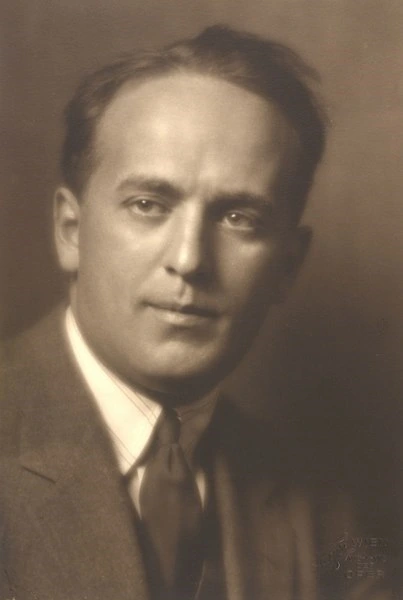
Gliński Mateusz, Matteo, *6 April 1892 Warsaw, †2 January 1976 Welland (Canada), Polish musicologist, music critic, conductor, composer, and teacher. From 1909 to 1913 he studied at the Music Institute in Warsaw under S. Barcewicz (violin), R. Statkowski and M. Surzyński (theory), while simultaneously pursuing law studies at the University of Warsaw. He continued his musical education in Leipzig with A. Nikisch (conducting), M. Reger (composition), and H. Riemann and A. Schering (musicology). After the outbreak of World War I, he studied at the St. Petersburg Conservatory (1914–15) with A. Glazunov (composition), V. Kalafati (theory), and N. Tcherepnin (conducting). He made his conducting debut in 1915 in Warsaw (at the Dolina Szwajcarska garden) with the Warsaw Philharmonic Orchestra, and in 1916 in St. Petersburg with the Preobrazhensky Regiment Orchestra, performing an unknown work by Liszt Der blinde Sänger [The Blind Singer] to a text by A. Tolstoy, in his own arrangement and orchestration. In the 1916/17 season he organized a series of historical concerts in St. Petersburg, presenting works from Monteverdi to Scriabin. He also wrote articles and reviews for the journals “Russkaya Muzykalnaya Gazeta” and “Muzykalny Sovremennik.” In 1918 he returned to Warsaw, where he initially worked as a conductor and music critic. In 1924 he founded the monthly “Muzyka” and served as its editor-in-chief until 1938. Between 1924 and 1935 he participated in the governing board of the Polish section of the International Society for Contemporary Music, was the founder and president of the Association of Music Writers and Critics, and was active in the Society of Friends of Symphonic Music and the Society of Friends of the Chopin House. After the outbreak of World War II, he left for Rome in March 1940. From that year he served as a music consultant to Vatican Radio and as a music correspondent for “L’Osservatore Romano,” where he maintained a regular column Commenti musicali. Between 1940 and 1956 he conducted in many Italian cities, including Rome, Naples, and Trieste, as well as at the Venice Biennale and the Maggio Musicale Fiorentino festival. In 1946 he founded the journal “Musica,” conceptually linked to the prewar “Muzyka,” as well as the concert society Un’Ora di Musica with an instrumental chamber ensemble. From 1946 to 1948 he directed the choir Cantori delle Basiliche Vaticane. In 1949 he became head of the International Frederick Chopin Institute in Rome (Istituto Internazionale Federico Chopin), which he had organized. In 1956 he moved to the United States, where he initially lectured at universities in Ann Arbor, Wayne, Detroit, and Chicago. In 1957 he founded the International Chopin Foundation in Detroit and became its general director. In 1959 he organized the music department at Assumption University of Windsor (Canada), where he served as professor until his retirement in 1965. He then settled in Welland, where he founded a chamber orchestra later transformed into the Niagara Symphony Orchestra. In 1961 he received a distinction from the University of Windsor; in 1976 he was posthumously awarded a medal of merit by the Frederic Chopin Society in Toronto.
Gliński’s activity was exceptionally wide-ranging. His knowledge of music history and great erudition were combined with literary talent and a polemical passion that led him to address difficult and sensitive issues. He united musicological interests with practical musicianship, being at once a composer and conductor, critic and teacher, as well as a gifted and energetic organizer. In the interwar period he rendered great service in organizing the musical life of Warsaw. The monthly “Muzyka,” which he founded, was one of the leading Polish music journals of the time, covering all areas of musical culture in Poland and abroad, distinguished by high editorial standards, educational value, and objectivity in presenting current musical issues. Gliński maintained a regular column Impresje muzyczne in the journal, authored numerous articles and reviews, initiated and edited collective monographs and special issues, and organized four composition competitions. In later years, after emigrating, his scholarly, artistic, and organizational work significantly contributed to the promotion of Polish music and creative thought abroad. In Italy he studied the works of A. Pacelli and G. F. Anerio; the latter’s dialogue Il figliuol prodigo (from Teatro armonico spirituale collection), performed under Gliński’s direction in Rome in 1954, served to support the thesis that Anerio was the creator of the first oratorio. Much of Gliński’s scholarly and popularizing work was devoted to the life and oeuvre of Chopin. In his investigations into Chopin’s psyche and inner life, he opposed uncritical reverence, striving instead to present an unvarnished psychological portrait of the composer (Chopin the Unknown), which provoked considerable controversy. Throughout the disputes surrounding Chopin’s letters to Delfina Potocka, Gliński was a strong advocate of their authenticity (including presentations at the First International Musicological Congress devoted to Chopin in Warsaw in 1960 and at the Eighth Congress of the International Musicological Society in New York in 1961). By publishing Chopin’s Letters to Delfina [Potocka], he considered the matter of their authenticity settled. He made significant contributions to the popularization of Chopin’s work through lectures, concerts, radio broadcasts, numerous publications, and by founding international Chopin institutes in Rome and Detroit.
As a conductor, Gliński performed in Poland, Russia, Hungary, Austria (including Vienna in 1927 at the ISCM festival), Germany, Italy, France, Ireland, Canada, and the United States. Polish music (Chopin, Szymanowski, Szałowski) and Russian music (Scriabin) held an important place in his repertoire. He also organized cycles of historical concerts and conducted performances of Italian oratorios. Gliński’s compositions, performed before the war in Poland and later in Italy and Canada, remain little known; notable among them is his engagement with themes of earlier masters (Purcelliana, Couperiniana, Tre cantate after Rossi).
Literature: M. Gliński Pamiętnik (fragment), “Ruch Muzyczny” 1974 nos. 23, 25, 1975 nos. 1, 3, 5, 7, 9, 11, 13, 1984 no. 16; “Ruch Muzyczny” 1977 no. 1 (includes: H. Szepietowska Mateusz Gliński 1892–1976 and memorial articles by J. Curtis, Jarosław Iwaszkiewicz, Zygmunt Mycielski, Piotr Perkowski, W. Sandelewski); Z. Glińska Testament Mateusza Glińskiego, London 1982.
Writings:
Aleksander Skriabin, Warsaw 1933
Asprilio Pacelli, insigne maestro di cappella della Corte Reale di Polonia (1570–1623), Vatican 1941
Skrjabin. Saggio di una sintesi, Milan 1941 (copy from “Rivista Musicale Italiana” 1941
Paderewski. Saggio di una sintesi, Florence 1941 (copy from “La Rassegna Musicale Italiana” 1941 no. 7/8)
Spiritualità dell’Ottocento musicale. Saggio di una sintesi, Rome 1941 (copy from “Studium” 1941 no. 12)
La prima stagione lirica italiana all’estero (1628), Siena 1943
Wagner e la coscienza critica contemporanea, Rome 1943 (copy from “Studium” 1943 no. 11/12)
Lorenzo Perosi, Milan 1953
Chopin the Unknown, Windsor 1963
***
Tajemnica Chopina, a play in three acts, Detroit 1963, 2nd ed. Warsaw 1975
***
articles in the periodicals: „Russkaja Muzykalnaja Gazieta” St. Petersburg 1914–15, “Muzykalnyj Sowriemiennik” St. Petersburg 1915–18, “Muzyka” Warsaw 1924–38, “Musical Courier” New York 1924–38, “The Chesterian” London 1924–38, “La Revue Musicale” Paris 1924–38, “La Rassegna Musicale” Turin, Rome 1924–56, “Tempo” Prague 1924–38, “Osservatore Romano” Rome 1940–56, “Musica” Rome 1946–56, “Ruch Muzyczny” Krakow 1948–49, 1958–59, Warsaw 1961–75 et al.
***
editions:
Listy Chopina do Delfiny [Potockiej], New York 1972
editorial work:
monthly “Muzyka” 1924–38
collective monographs of “Muzyka”:
Muzyka współczesna 1926
Muzyka polska 1927
Romantyzm w muzyce 1928
Instrumenty muzyczne 1929
Nowa muzyka 1930
Taniec 2 vols., 1929, 1930
Szopen 1932
Opera 1934
Józef Piłsudski i jego legiony w muzyce i pieśni 1935
Karol Szymanowski 1937 no. 4/5 (special issue)
Compositions:
Instrumental:
Wagram, symphonic poem, 1932
Purcelliana, Renaissance Suite for orchestra, 1934
Tre cantate d’amore after Rossi for orchestra, 1940
Couperiniana, suite for orchestra, 1950
piano and violin works
Vocal and vocal-instrumental:
Pieśni kurpiowskie for choir, 1938
Modlitwa wychodźstwa polskiego for choir, text by A. Hlond, 1941, Vatican 1944
songs for voice and piano
Stage:
Orlątko (L’Aiglon), opera, libretto after Rostand, 1918–27 (lost)
Arrangements
F. Liszt Der blinde Sänger, symphonic poem with recitation to a text by A. Tolstoy, 1916
Te decet hymnus for mixed choir (arrangement of Chopin’s Funeral March), Vatican 1943
G.F. Anerio Il figliuol prodigo, transcription and arrangement, 1947
Hymn to Poland. Choral Arrangement of Chopin Melody for mixed choir, text by M. Gliński, Minneapolis 1957