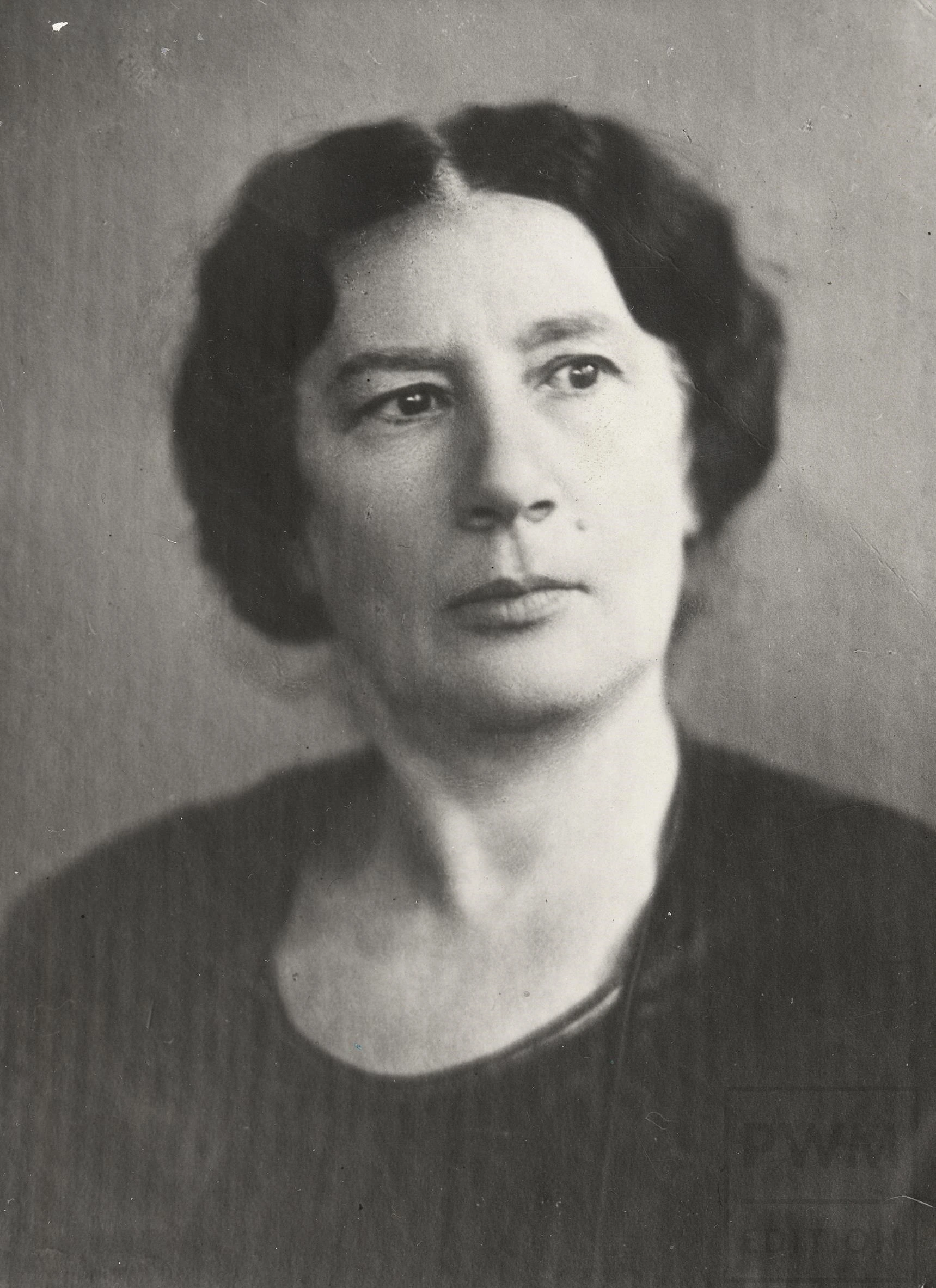
Weisberg Julia Lazarevna, *6 January 1880 (25 December 1879) Orenburg, †1 March 1942 Leningrad (now St Petersburg), Russian composer and music critic. In 1902–05, she studied composition with N. Rimsky-Korsakov and orchestration with A. Glazunov at the St. Petersburg Conservatory. She was expelled from the university for her participation in revolutionary events. She continued her studies in Berlin with M. Reger. In 1915–17, together with her husband A. Rimsky-Korsakov, she participated in the publishing and editing of a magazine devoted to contemporary music — “Muzykalnyj sovremennik.” From 1921 to 1923, she taught choral singing at a music school in Petrograd (now St. Petersburg), and her works for children gained wide recognition. As a music critic, she wrote articles and reviews, among others, for the newspaper “Russkaya molva,” and also translated musicological works by R. Rolland into Russian.
Literature: M. Gniesin Myśli i wospominanija o N.A. Rimskom-Korsakowie, Moscow 1956.
Instrumental:
for orchestra:
Symphony Op. 4, 1908–10
Skazoczka Op. 13, 1928
Fantazija Op. 5, 1929
Dramaticzeskoje skierco Op. 6, 1929
Bałłada Op. 12, 1930
Vocal and vocal-instrumental:
4 kitajskich piesni Op. 7, for voice and piano, 1912
Łunnaja skazka Op. 8, for voice, flute, string quartet and harp, words by P. Dehmel, 1921
Niegritianskaja kolybielnaja Op. 33, for voice and small orchestra, words by T. Czurilin, 1935
songs for children
arrangements of Moldavian folk songs
choral works
Dwienadcat’ Op. 21, for choir and orchestra, words by A. Błok, 1928
Scenic:
Rusałoczka Op. 18, children’s opera, libretto by the composer and S. Parnok after H.Ch. Andersen, 1923
Gusi — lebiedi Op. 19, children’s opera, libretto S. Marszak and the composer, 1937, staged in Moscow 1937
Giulnara Op. 32, comic opera, libretto S. Parnok and the composer after One Thousand and One Nights, 1935
Miortwaja cariewna, radio opera after A. Pushkin, 1937