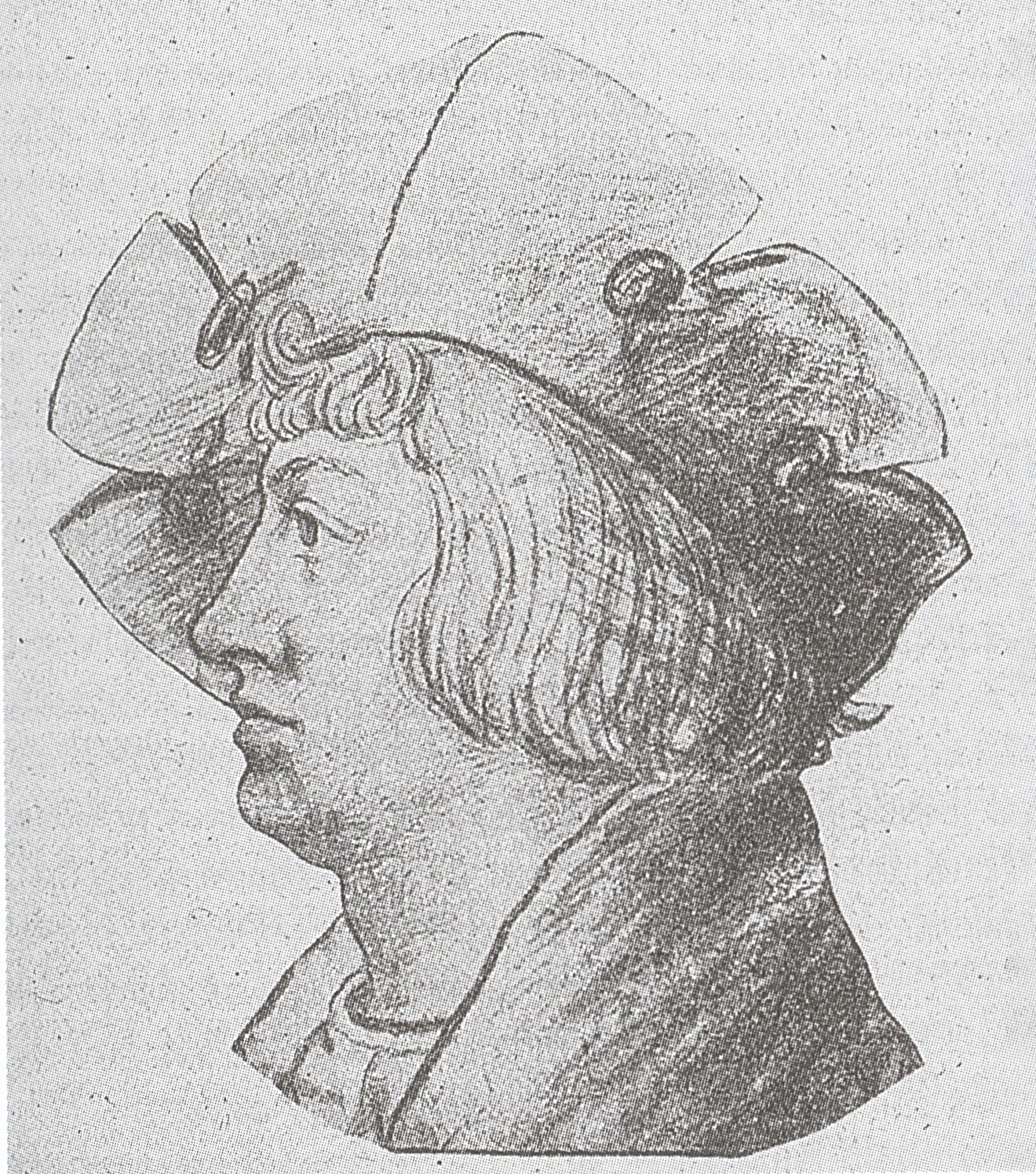
Senfl, Senfli, Sennfl, Senfil, Ludwig, *ca. 1486 (?) Basel (?), Zurich (?), † between 2 December 1542 and 10 August 1543 Munich (?), German-Swiss composer active mainly in Austria and Bavaria. He is believed to have been the son of Bernhart Sanfly, a musician from Freiburg im Breisgau, who obtained Zurich citizenship in 1488. Senfl mentions that in 1496 he became a choirboy in the ensemble of Emperor Maximilian I Habsburg. He likely encountered H. Isaac here as early as 1497, later becoming his pupil, copyist, and long-term collaborator. He probably studied at the University of Vienna between 1500 and 1504. In 1504 he returned to the Imperial Chapel, which, among other duties, accompanied Maximilian during his stay at the parliamentary session in Constance (April–August 1507). Senfl, together with Isaac, remained there for another year or two; during that time Isaac was composing, while Senfl copied the first part of a monumental cycle of propers commissioned by the cathedral chapter. In 1508, Senfl is referred to as a “clericus”; he may have received minor orders. Until 1512, he probably stayed with Isaak in Italy. In the meantime he maintained contact with the imperial court, though he does not appear on the payroll lists of the singers; however, in 1513 he probably returned to Vienna, where, after Isaac’s death (1517), he became – by his own account – his successor as court composer. In 1512, E. Oeglin included Senfl’s song in the oldest collection of lieder, and in 1515, his 2 frottole appeared in a collection printed in Siena. After 1513, Senfl participated in meetings of Viennese humanists, discussing, among other things, the problem of setting ancient metrical poetry to music. He composed works of this kind and, as this issue aroused great interest in various German-speaking countries, he gained considerable renown.
After Maximilian’s death and the dissolution of his court (1520), Senfl spent several years unsuccessfully seeking a position similar to his former one at the court of Emperor Charles V. Initially, he stayed in Augsburg (where he prepared the first German anthology of Flemish and French motets for publication, Liber selectarum cantionum… 1520, in which he also included 6 of his own 4-voice compositions and one 6-voice composition), later he traveled, among others, to Worms and Linz in 1521, and to Munich in 1522, where he settled for the rest of his life, taking up the position of composer at the court of the Duke William IV of Bavaria. Here he organized one of the best German ensembles (bringing in many musicians from the former ensemble of Maximilian I) and ensured the high quality of its repertoire; however, he did not hold the post of a Kapellmeister. He also continued to devote a great deal of work to preparing H. Isaac’s collection of propers for publication. He improved existing works and supplemented the cycles with new pieces; however, one version of Choralis constantinus was not published until about 10 years after his death. Senfl worked at Catholic courts and did not become a Protestant; nevertheless, he sympathized with Luther, (sending him at his request works composed especially for him). Surviving correspondence from 1526–40 attests to his active contacts with the prominent Lutheran and music lover Duke Albrecht of Prussia, whose court in Königsberg he frequently supplied with music. Senfl was probably one of those who sought reconciliation between religions, as evidenced by the motet composed especially for a parliamentary session convened for this purpose in 1530, Ecce quam bonum… (“Behold how good and pleasant it is for brethren to dwell together in unity”). The last document relating to Senfl’s life is a receipt for a tax payment on a house in Munich, dated 2 December 1542; the next tax payment, on 10 August 1543, was made by the composer’s widow.
Senfl was recognized by his contemporaries as the most outstanding composer in the German-speaking countries, and this opinion was upheld by musicology of the 19th and the 20th century. He is considered the composer who ensured that German music fully adopted the style and compositional techniques of Josquin des Prés. However, this was a conservative style in his day; it is characteristic that the composer was not employed at the court of Charles V, who chose, among others, N. Gombert, who was not much younger and was creating truly modern music at the same time. In this conservative style, Senfl, thanks to his talent and knowledge, wrote outstanding works. Most of his sacred works are based on chant cantus firmi, usually placed in the tenor, sometimes in the soprano, and rarely in the bass. The cantus firmus either stands out in the overall structure with larger values, or is rhythmicized and/or ornamented, in which case its line resembles that of the other voices, which are very independent, generally with a large amount of imitation, although sometimes combined in parallel sixths or tenths; in the 4-voice mass L’homme armé, he introduces two cantus firmi simultaneously: a chant (in soprano) and a song (in tenor). Senfl was fond of introducing canons, whether in relation to the cantus firmus or not; in six 3-6-voice versions of Laudate Dominum, he combined a 3-voice canon with the technique of triple counterpoint. He often used constructions that were almost canonic, and within imitative passages, he preferred a freer kind of imitation. In two masses, he used the technique of parody. Following Josquin’s model, he quite often inserted clearly marked cadences in his works, contrasting the sections they separate either by scoring (full ensemble versus 2 voices, or a dialogue of voice pairs) or by texture (imitative versus homorhythmic). He also treated homorhythm as a means of emphasizing important words (noema), and he was no stranger to other means of expressing and illustrating the text.
Senfl’s concern for emphasizing the content and form of the text, evident in Latin sacred music, also characterizes his lieder, for which he often wrote the poems himself. In terms of number and quality, they constitute the most important corpus of German tenor songs. W. Seidel distinguishes among them arrangements of 70 folk melodies and 159 court melodies (die Hofweisen), of which only about 40 were previously known, and about 120 were created by Senfl himself. In his arrangements, the composer employed all the major Netherlandish techniques: various uses of the cantus firmus (including the migrans type), canons, division of the structure into groups of voices, the combination of different pre-existing melodies (two cantus firmi, quodlibet), free imitation on both a small and large scale, and the juxtaposition of different types of mensuration – while on the other hand also using simple chordal dance structures in triple meter. The latter two techniques are found only in arrangements of folk songs; here, too, the numerical proportions between groups of different textures are more or less equal, while in courtly songs, the 4-voice texture with cantus firmus in the tenor (over 110 pieces) clearly dominates, and deviations involving an increase in the number of voices or placing the cantus firmus in a different voice are exceptions. By combining the techniques developed in Latin prose with a melody influenced by German poetry, Senfl created and established new stylistic qualities.
Literature: H.J. Moser Instrumentalismen bei Ludwig Senfl, in: Musikwissenschaftliche Beiträge: Festschrift für Johannes Wolf zu seinem 60. Geburtstage, eds. W. Lott at al., Berlin 1929 (it includes three lieder with instrumental parts); A. Koczirz Die Auflösung der Hofmusikkapelle nach dem Tode Kaiser Maximilians I, “Zeitschrift für Musikwissenschaft” XIII, 1930–31; H. Schweiger Archivalische Notizen zur Hofkantorei Maximilians I., “Zeitschrift für Musikwissenschaft” XIV, 1931/32; O. zur Nedden Zur Geschichte der Musik am Hofe Kaiser Maximilians I, “Zeitschrift für Musikwissenschaft” XV, 1932/33; A.-E. Cherbuliez Zur Kontroverse über die Herkunft von Ludwig Senfl, “Acta Musicologica” V, 1933; E. Löhrer Die Messen von Ludwig Senfl. Stilkritischer Beitrag zur Geschichte des polyphonen Messordinariums um 1500, Zurich 1938; H. Birtner Sieben Messen von Ludwig Senfl, “Archiv für Musikforschung” VII, 1942; W. Gerstenberg Motetten- und Liedstil bei Ludwig Senfl, proceedings of the Basel Congress 1949, Kassel 1951; G. Reichert Die Preces primariae-Register Maximilians I. und seine Hofkapelle um 1508, “Archiv für Musikwissenschaft” XI, 1954; E.J. Dreyer Ludwig Senfls melodische Arbeit und ihre Tradition, thesis, Universität Leipzig, 1958; W. Gerstenberg Senfliana, in: Festschrift Helmuth Osthoff, eds. L. Hoffmann-Erbrecht and H. Hucke, Tutzing 1961 (includes the four-voice canon Manet alta mente.); M. Bente Neue Wege der Quellenkritik und die Biographie Ludwig Senfls, Wiesbaden 1968; W. Seidel Die Lieder Ludwig Senfls, “Neue Heidelberger Studien zur Musikwissenschaft” II, Bern 1969; A. Dunning Die Staatsmotette 1480–1555, Utrecht 1970; W. Gerstenberg Das Alleluja in Senfls Propriumkompositionen, in: Studies in Renaisance and Baroque Music in Honor of Arthur Mendel, ed. R.L. Marshall, Kassel 1974; E. Darbellay La musiqv à la cour de Maximilien I (1450–1519), “Schweizerische Musikzeitung und Sängerblatt” CXVIII, 1978; A.M. Cummings Bemerkungen zu Isaac Motette “Ave ancilla trinitatis” und Senfls Lied “Wolauf, wohlauf”, “Die Musikforschung” XXXIV, 1981; H. Hell Senfls Hand in den Chorbüchern der Bayerischen Staatsbibliothek, “Augsburger Jahrbuch für Musikwissenschaf” IV, 1987; L. Hoffman-Erbrecht Stufen der Rezeption des niederländischen Stils in der deutschen Musik der Dürerzeit, in: Florilegium musicologicum. Hellmut Federhofer zum 75. Geburtstag, ed. Ch.-H. Mahling, Tutzing 1988; R.M. Hoffmann A Theory of Musical Tension in Renaissance Music. A Study of Early Sixteenth-Intury German Polyphony, thesis, University of Ketucky, 1994; A. Lindner Non moriar sed vivam. Luther, Senfl und die Reformation des Hochstifts Naumburg-Zeitz, “Jahrbuch für Liturgik und Hymnlogie” XXXVI, 1997. A. Heinzel Orlando di Lasso und die Münchner Salve Regina-Tradition, “Musik in Bayern” LV, 1998; R. Birkendorf Anmerkungen zur mitteldeutschen Senfl-‘Rezeption’ in der ersten Hälfte des 16. Jahrhunderts, in: Traditionen in der mitteldeutschen Musik des 16. Jahrhunderts, eds. J. Heidrich and U. Konrad, Göttingen 1999; O. Kongsted Ludwig Senfl’s “Luther-motetter”. En forskningsberetning, “Fund og Forskning” XXXIX, 2000; R. Wagner Oettinger Ludwig Senfl and the Judas Trope: Composition and Religious Toleration at the Bavarian Court, “Early Music History” XX, 2001; F. Körndle Der ‘tägliche Dienst’ der Münchner Hofkapelle im 16. Jahrhundert, “Trossinger Jahrbuch für Renaissancemusik” I, 2001; R. Birkendorf Die Musikmanuskripte Lucas Wagenrieders. Arbeiten eines Kopisten in der Umgebung Ludwig Senfls, in: Musikalische Quellen – Quellen zur Musikgeschichte. Festschrift Martin Staehelin zum 65. Geburtstag, ed. U. Konrad, Göttingen 2002; D. Haberl “CANON. Notate verba, et signate mysteria” – Ludwig Senfls Rätselkanon “Salve sancta parens”, Augsburg 1520. Tradition – Auflösung – Deutung, “Neues Musikwissenschaftliches Jahrbuch” XII, 2004; B. Lodes and M. Miller Hic jacet Ludevicus Fenfflius. Neues zur Biographie von Ludwig Senfl, “Die Musikforschung” LVIII, 2005; B. Lodes Ludwig Senfl and the Munich Choirbooks – The Emperor’s or the Duke’s?, in: Die Münchner Hofkapelle des 16. Jahrhunderts im europäischen Kontext, eds. T. Göllner and B. Schmid, Munich 2006; A.K. Gilbert Heinrich Isaac, Ludwig Senfl, and a Fugal Hexachord, in: Canons and Canonic Techniques, 14th–16th Centuries: Theory, Practice, and Reception History, eds. K. Schiltz and B.J. Blackburn, Leuven 2007; M. Stanyon Pervasive Imitation in Senfl’s “Ave Maria … Virgo Serena”: Borrowing from Josquin in Sixteenth-Century Augsburg, in: Identity and Locality in Early European Music, 1028–1740, eds. J. Stoessel, Farnham 2009; S. Gasch Hic jacet … Isaci discipulus – Heinrich Isaac als Lehrer Ludwig Senfls, in: Heinrich Isaac, ed. U. Tadday, Munich 2010; A. Lindmayr-Brandl Magic Music in a Magic Square. Politics and Occultism in Ludwig Senfl’s Riddle Canon “Salve sancta parens”, “Tijdschrift van de Koninklijke Vereniging voor Nederlandse Muziekgeschiedenis” LX, 2010; A. Lindmayr-Brandl Ein Rätselkanon für den Salzburger Erzbischof Matthäus Lang: Ludwig Senfls “Salve sancta parens”, in: Klang-Quellen: Festschrift für Ernst Hintermaier zum 65. Geburtstag, eds. L.E. Laubhold and G. Walterskirchen, Munich 2010; N. Schwindt Der Text zu einem bisher textlosen Lied Ludwig Senfls, “Die Musikforschung” LXIII, 2010; S. Gasch Beyond Munich: Senfl’s Propers in Prints and Manuscripts, in: Heinrich Isaac and Polyphony for the Propers of the Mass in the Late Middle Ages and the Renaissance, eds. D.J. Burn and S. Gasch, Turnhout 2011; A. Gilbert Ludwig Senfl’s Sancte pater divumque and his Musical Patrimony, in: The Motet around 1500. On the relationship of imitation and text treatment, ed. T. Schmidt-Beste, Turnhout 2012; M. de Schepper Ein Musikbuch für Martin Luther. Das Brüsseler Exemplar von Ludwig Senfls “Magnificat octo tonorum”, “Monte Artium” IV, 2012; Senfl-Studien 1, eds. S. Gasch, B. Lodes, and S. Tröster, Tutzing, 2012; I. M. Groote Ludwig Senfl. Zwischen Memoria, Markt und Musenkult, in: Hundertachtundneunzigstes Neujahrsblatt der Allgemeinen Musikgesellschaft Zürich auf das Jahr 2014, Winterthur 2013; Senfl-Studien 2, eds. S. Gasch and S. Tröster, Tutzing 2013; S. Tröster Kontrafaktur und Medienwechsel: Ludwig Senfl, Hans Ott und Georg Forster, “Die Tonkunst” VIII, 2014; S. Tröster Stilregister der mehrstimmigen Liedkomposition in der ersten Hälfte des 16. Jahrhunderts und die Liedsätze Ludwig Senfls, thesis, Universität Wien, 2015; Senfl-Studien 3, eds. S. Gasch, B. Lodes and S. Tröster, Vienna 2018; N. Schwindt Maximilians Lieder, Kassel 2018; S. Tröster Senfls Liedsätze – Klassifikation und Detailstudien eines modellhaften Repertoires, Vienna 2019; B. Lodes Die Rezeption von Ludwig Senfls “Nisi Dominus”-Kompositionen im Kontext der Psalmauslegungen Martin Luthers, in: Musik und Reformation – Politisierung, Medialisierung, Missionierung, eds. C. Wiesenfeldt and S. Menzel, Paderborn 2020; S. Tröster Zwischen Vereinnahmung und Gestaltungswille – Ludwig Senfl und der Musikhunger der Reformation, “Troja. Jahrbuch für Renaissancemusik” XVI, 2021.
Compositions:
sacred with Latin text:
Magnificat octo tonorum, 8 works, even-numbered verses, for 2–5 voices, Nuremberg, 1537
5 masses for 4 voices, 1 for 5 voices and 1 for 4 voices, doubtful authorship, mostly in manuscript choir books in the Bayerische Staatsbibliothek, Munich Mus. Ms. 37, 5, and 3969 (one also appears in a printed collection from 1541)
134 propria in cycles and individual pieces for 4 voices: 32 introits, 2 graduals, 34 Alleluia versicles, tract, 21 sequences, 42 communions, 1 sequence for 5 voices and 1 for 6 voices, mostly in manuscript choir books in the Bayerische Staatsbibliothek, Munich Mus. Ms. 35-38 (En Opus Musicum…, autograph, 1531) and Mus. Ms. 25, 26, 33, 39
60 Vesper pieces
for 4 voices: an invitatory, 18 antiphons, 3 settings of psalmody, 4 Benedicamus, 13 additional versicles, 4 responsories, a hymn
for 5 voices: an antiphon, Benedicamus, 14 hymns; MS., Bayerische Staatsbibliothek, Munich, Mus. Ms. 52
102 other motets for 4–5 voices, 10 for 6 voices, 2 for 8 voices, 1 for 3 voices and 2 bicinia (some polyphonic) in collections: Liber selectarum cantionum…, Augsburg 1520 (7 works), Novum et insigne opus musicum…, Nuremberg 1537 (14 works), MS. in Zwickau (25 works), Ragensburg (16 works) and various manuscripts in Munich (18 works) as well as in other manuscripts and in German printed collections from 1538–1575
Crux fidelis…, canon for 4 voices, printed in the form of a cross; n.p, n.d.
O crux ave…, canon for 4 voices, printed in the form of a cross; n.p, n.d.
secular with Latin text:
Varia carminum genera, quibus tum Horatius, tum alij (…) usi sunt…, 30 works for 4 voices, Nuremberg 1534
10 works for 4 voices in Harmoniae poeticae P. Hofheimeri et L. Senflii…, Nuremberg 1539
***
220 lieder (secular and sacred) for 4–5 voices, 8 for 6 voices and 1 for 7 voices preserved in collections, the most important of which are the first editions by J. Ott: Der erst Theil. Hundert und ainundzweinzig newe Lieder…, (82 works) and Hundert und fünfftzehen guter newer Liedlein…, (44 works), Nuremberg, 1534 and 1540, as well as MS.: Basel, Universitätsbibliothek, F X 1–4 (26 works), Vienna, Nationalbibliothek, 18810 (15 works), Munich, Universitätsbibliothek, 328–331 (14 works), and Bayerische Staatsbibliothek, Mus. Ms. 3155 (10 works)
several other lieder preserved in 9 other German printed collections, 1535–56, and in MS. in Augsburg and Regensburg
20 lieder of doubtful authorship, printed collections and manuscripts
2 frottole for 4 voices, preserved in a 1515 collection
1 chanson for 4 voices in MS.
3 songs for 5 voices (non-metrical), on secular Latin texts, in MS.
2 canons for 4 and 3 voices, on secular Latin texts, in prints from 1537 and 1547
instrumental:
Carmen in la and 3 works with textual incipits of lieder, in Trium vocum carmina…, Nuremberg, 1538
3 Carmina and Lamentado for 4 voices in MS. Vienna
Preambulum for organ in MS.
in addition, there are known arrangements of Senfl’s songs by other composers: 63 in lute tablatures, 15 for organ, and 10 for a cello ensemble
Editions:
L. Senfls Werke, ed. Th. Kroyer, part 1 (Magnificatand 12 motets), includes a biographical preface, «Denkmäler der Tonkunst in Bayern» III/2, Leipzig 1903
Sämtliche Werke, 11 vols., vols. 1–4 Basel, repr. Wolfenbüttel-Zurich 1962, vols. 5–11 Wolfenbüttel-Zurich, vol. 1: Sieben Messen, eds. E. Löhrer and O. Ursprung, 1937 (also «Das Erbe Deutscher Musik» V), vols. 2 and 4–6: Deutsche Lieder in 4 parts, eds. A. Geering and W. Altwegg, part 1: Lieder aus handschriftlichen Quellen, 1937 (also «Das Erbe Deutscher Musik» X), part 2: Lieder aus J. Otts Liederbuch von 1534, 1940 (also «Das Erbe Deutscher Musik» XV), part 3: Lieder aus den gedruckten Liederbücher… [1535–44], 1949, part 4: lieder (songs from prints of 1544–1556, of doubtful authorship) and frottole, chansons, Latin songs from manuscripts, metrically set, 1961, vols. 3 and 8–11: Motetten in 5 parts, ed. W. Gerstenberg, part 1: Gelegenheitsmotetten und Psalmvertonungen, 1939 (also «Das Erbe Deutscher Musik» XIII), parts 2–4: Kompositionen des Proprium Missae, I–III, 1964, 1971, 1972, part 5: Liturgische und allgemein-geistliche Motetten, I, 13 works, MS. Munich, 1974, vol. 7: Instrumental-Carmina and Lieder in Bearbeitungen… (instrumental works and arrangements of lieder by other composers), eds. A. Geering and W. Altwegg, 1960
not published in Sämtliche Werke: transcriptions of Vespers and other motets in: J.C. Griesheimer The Antiphon, Responsory, and Psalm Motets of L. Senfl, 3 vols., thesis, Indiana University, 1990
other major editions:
65 lieder in: J. Ott Hundert und fünfzehn guter neuer Liedlein, 1544, eds. R. Eitner et al., 4 vols., «Publikationen Älterer Praktischer und Theoretischer Musikwerke der Gesellschaft für Musikforschung» I–IV, Leipzig 1876
11 sacred lieder in: Newe deudsche geistliche Gesenge (…) G. Rh au 1544, J. Wolf, «Denkmäler Deutscher Tonkunst» XXXIV, Leipzig 1908, revised by H.J. Moser, Wiesbaden-Vienna 1958
L. Senfl, Zwei Marien-Motetten, ed. W. Gerstenberg, «Das Chorwerk» LXII, Wolfenbüttel 1957
7 lieder in: 65 Deutsche Lieder (…) nach dem Liederbuch von P. Schöffer und M. Apiarus, ed. H.J. Moser, Wiesbaden 1967
14 motets in: Munich, Bayerische Staatsbibliothek, Mus. Ms. 10., ed. H.M. Brown, «Renaissance Music in Facsímile» XIV, New York 1986
44 lieder in: Guter, seltzsamer und kunstreicher teutscher Gesang (…) Nürnberg 1544, eds. R. Flotzinger and W. Schmeltzl, «Denkmäler der Tonkunst in Österreich» CXLVII–CXLVIII, Graz 1990