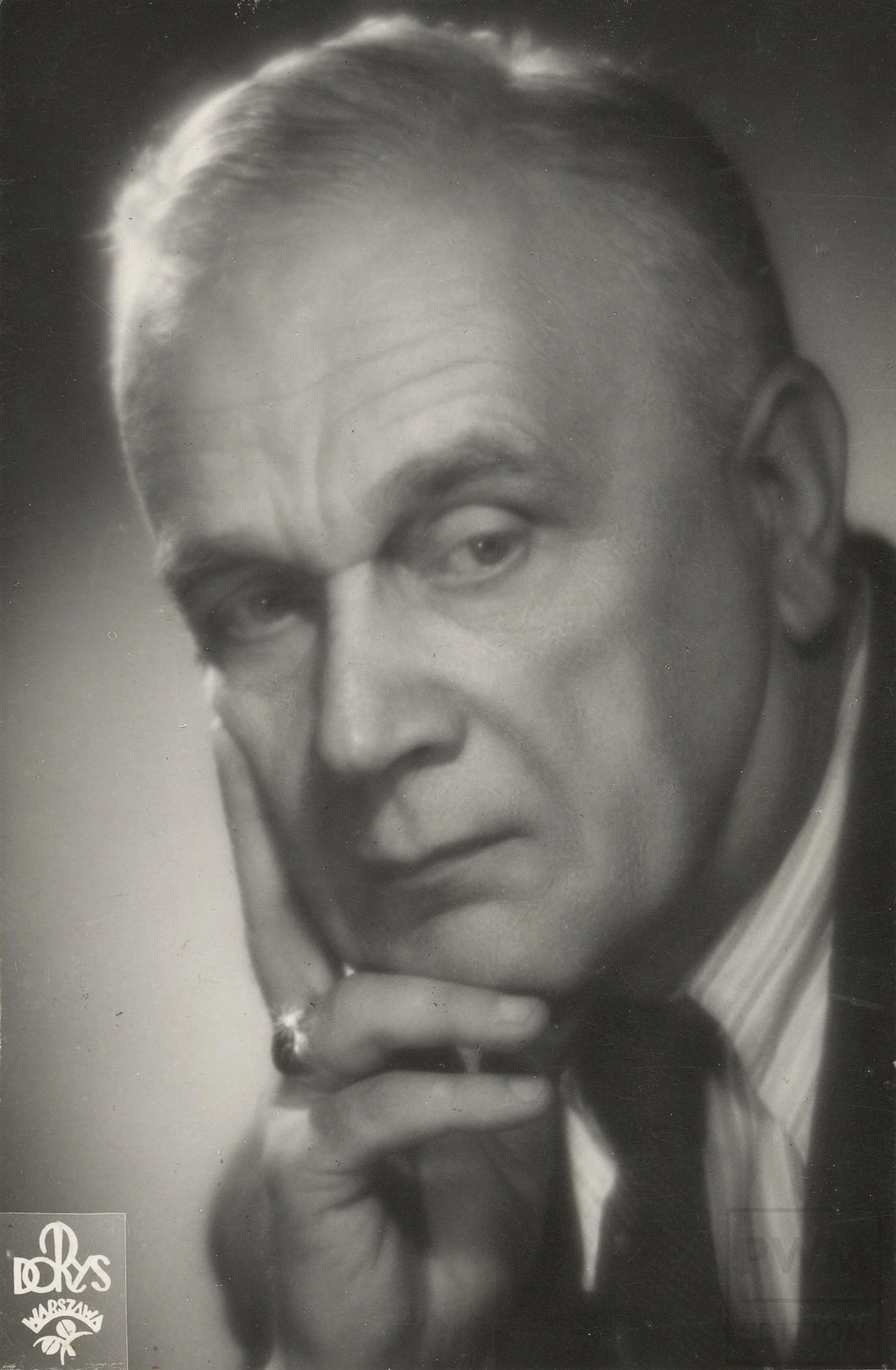
Rytel Piotr, pseud. Witold Szeliga, W. S., F. C., PR, Rl, *16 May (according to the tombstone at Powązki, not: 20 September, as stated in other sources) 1884 Vilnius, †2 January 1970 Warsaw, Polish composer, teacher and music critic. In 1903–08, he studied at the Warsaw Institute of Music, obtaining diplomas in piano in the class of A. Michałowski and composition in the class of Z. Noskowski. In 1910, he took up work at the private music school of Zofia Iwanowska-Płoszko in Warsaw as a piano and music theory teacher. From 1911 to the outbreak of World War II, he was a teacher (from 1 December 1932 professor) of the lower course in piano, harmony and musical forms at the Institute of Music (renamed the State Conservatory in 1919); in s 1925–26 and 1931–39 he taught a composition class at the university. In 1930, he published a textbook on harmony. In 1908, he began his composition and journalistic activity, which lasted until 1963. He published numerous articles, music columns and reviews in the press, including: before 1939 in “Nowości Muzyczne,” “Scena i Sztuka,” “Młoda Muzyka,” Poznań „Kultura,” “Gazeta Warszawska” (1920–35), “Warszawski Dziennik Narodowy” (1935–39); after 1945 in “Tygodnik Warszawski,” “Słowo Powszechne,” “Gazeta Ludowa” (1946–49), “Kurier Polski,” “Ruch Muzyczny,” “Muzyka” and “Teatr.” He survived the occupation in Warsaw, teaching at the music school run by Margerita Trombini-Kazuro. After the Warsaw Uprising on 5 October 1944, together with the remaining civilians, he was evicted from Warsaw, to which he returned in March 1945. From 1 May 1945 until his retirement (1952), he taught music theory and led a composition class at the Warsaw Conservatory (from 1946 PWSM), where he held the position of vice-rector in the academic year 1946/47; he was also the manager of the Music and Opera Stage (1945–48) and director of the State Institute of Music (1946–47); he cooperated with the State Organization of Artistic Events “Artos” (1951–54), the Central Board of Musical Institutions of the Ministry of Culture and Art (1955–56) and the Polish Radio (as an author of broadcasts and a reviewer of music programmes). He returned to education as a rector (December 1956–61) and full professor (February 1958) at the PWSM in Sopot (now the Academy of Music in Gdańsk). Rytel was active in social activities, e.g he was co-organizer and member of the board of the Association of Contemporary Polish Composers in the years 1925–33, vice-president of the Union of Music and Theatre Reporters in 1925–35, president of WTM in 1948–52 (he initiated the establishment of Social Music Centers), and vice-president of IFC (from 1950 TiFC) in 1947–55; member of ZKP, SPAM and ZAIKS. He was awarded, among others, the Knight’s Cross of the Order of Polonia Restituta (1937); in 1911, he received a distinction at the composition competition on the occasion of the 10th anniversary of the Warsaw Philharmonic for the symphonic poem Dante’s Dream, and he received the award of the city of Gdańsk in 1960.
Most of Rytel’s compositions remained in manuscripts or copies and are located in the PWM Music Collections Department and, since 1983, in the National Polish Library.
Rytel was one of those artists who, although he did not set new directions and compositional techniques, made a valuable contribution to musical culture based on solid knowledge and excellent mastery of the craft. He was a seasoned expert in the orchestra and the specifics of the human voice. Rytel’s compositions grew out of late-romantic aesthetics. The main features of his work were his preference for vocal-instrumental genres and programme music, the use of chromatic sound material, expressive melodics and an extensive instrumental cast. As a critic, Rytel represented a conservative attitude, opposing all new trends in Polish and foreign music, while, at the same time, exposing the high value of classics (mainly German and Russian). He combined anti-Semitic views with his anti-modernist attitude. He conducted a long-term polemic with representatives of Polish musical modernism, including K. Szymanowski and G. Fitelberg. After the war, he focused on assessing musical performances.
Literature: Piotr Rytel o swojej twórczości, “Muzyka” 1951 No. 3–4; M. Idzikowski W 80 rocznicę urodzin Piotra Rytla, “Ruch Muzyczny” 1968 No. 23; R. Jasiński Na przełomie epok. Muzyka w Warszawie 1910–1927, Warsaw 1979; B. Długońska Piotr Rytel (1884–1970) — w setną rocznicę urodzin, «Zeszyty Naukowe Akademii Muzycznej w Gdańsku» No. 23, ed. J. Krassowski, Gdańsk 1984»; R. Jasiński Koniec epoki. Muzyka w Warszawie 1927–1939, Warsaw 1986; B. Długońska Piotr Rytel. Kompozytor, «Zeszyty Naukowe Akademii Muzycznej w Gdańsku» No. 29–30, ed. J. Krassowski, Gdańsk 1991; M. Dziadek Od Szkoły Dramatycznej do Uniwersytetu, Dzieje wyższej uczelni muzycznej w Warszawie 1810–2010, vol. 1: 1810–1944, vol. 2 1945– 2010, Warsaw 2011, 2016.
Compositions
Instrumental:
for orchestra:
Piano Concerto Op. 2, 1907
Grażyna, symphonic poem Op. 1, 1908, performed in Warsaw 11 March 1911
Symphony No. 1 Op. 4, 1909
Poème liryque, symphonic poem Op. 5, 1910, manuscript missing
Korsarz, symphonic poem Op. 6, 1911, performed in Warsaw 8 January 1913
Sen Dantego [Dante’s Dream], symphonic poem Op. 7, 1911, performed in Warsaw 12 December 1913 (not missing, as other sources say)
Święty gaj, symphonic poem Op. 8, 1913, performed in Warsaw 1914
Legenda o św. Jerzym, symphonic poem Op. 9, 1918, performed in Warsaw 5 March 1920, published in Warsaw no year, Gebethner i Wolff
Wstęp do dramatu, symphonic poem, 1931, performed in Warsaw 1932
Violin Concerto Op. 20, 1950
Żelazowa Wola, symphonic poem Op. 31, 1952
Symphony Concertante for flute, clarinet, horn, harp and orchestra, 1960
chamber, including:
Romans Op. 26, for clarinet and piano, 1951, published in Kraków 1952 PWM, 3rd ed. 1974;
Wariacje na temat Schumanna Op. 36 for clarinet and piano, 1957, published in Kraków 1967 PWM
for instruments solo, including:
6 Etudes Op. 21 for piano, 1950, published in Warsaw 1951 Czytelnik
7 Preludes for accordion, 1950, in: Utwory pedagogiczne na akordeon, book 3, ed. S. Galas, Warsaw 1953 Czytelnik
Vocal-instrumental:
cantatas, including:
Hymn Op. 3 for soprano, tenor, mixed choir and orchestra, words by A. Mickiewicz, 1908
Symphony No. 2 for tenor, choir and orchestra, in the 4th movement, there are words from Oda do młodości by A. Mickiewicz, 1950, performed in Warsaw 28 April 1950
Symphony No. 3 for tenor and orchestra, in the 3rd movement, there are words from the poem Testament mój by J. Słowacki, 1950
Grób Agamemnona for baritone, choir and orchestra, words by J. Słowacki, 1959, performed in Kraków 20 March 1959, piano reduction Kraków 1959 PWM
Scenic:
Ijola, opera in 4 acts, libretto by the composer after J. Żuławski, 1927, staged Warsaw 14 December 1927
Faun i Psyche, adaptation of Święty gaj, ballet in 1 act, libretto by the composer, 1931, staged in Warsaw 13 May 1931
Krzyżowcy, opera in 3 acts, libretto by the composer after T. Tass, 1941
Andrzej z Chełmna, opera in 4 acts with an epilogue, libretto by the composer, 1944, reconstructed version 1949, staged Warsaw 12 March 1962
Śląski pierścień, ballet in 3 acts (6 scenes), libretto H. Tomaszewski and W. Pomorski, 1956
Arrangements:
arrangement for piano for 4 hands of Step by Z. Noskowski, Warsaw 1953 Czytelnik
Works:
Encyklopedia form muzycznych, script, Warsaw 1923
Harmonia, Warsaw 1930