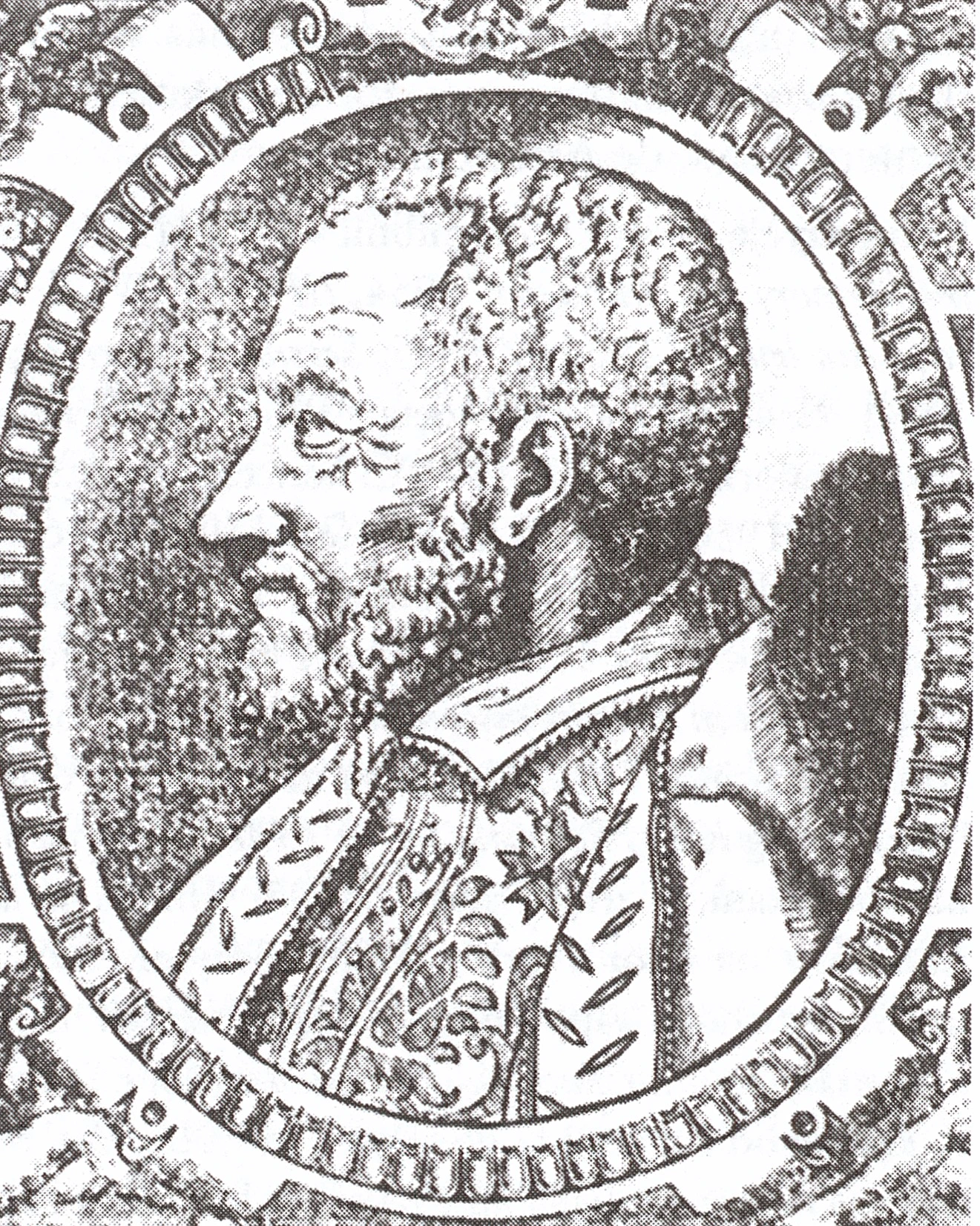
Ortiz, Diego *ca. 1510 Toledo, †ca. 1570 Naples(?), Spanish music theorist and composer. According to fragmentary information from 1553, 1558 and 1565, he served as maestro di capilla at the courts of three successive Spanish viceroys in Naples. Nothing is known about his relationship to Miguel Ortiz, whose two compositions survive in vihuela intabulation in an anthology from 1547.
Ortiz’s treatise is an important source of knowledge about 16th-century performance practice in ensemble playing. It consists of two parts. The first contains an extensive set of ornamental figures to be used to embellish the melody when playing in an ensemble of various violas da gamba (called “violones” by the author). In this section, Ortiz provides 206 figures for the diminution of cadential formulas played by the treble instrument and 63 by the bass, followed by (without clef designation) 36 figures for the clausula tenorizans and 188 figures for intervals from a second to a fifth, both ascending and descending, with distinctions based on the duration of the first note. The second part is devoted to playing on a single viol accompanied by a keyboard instrument (referred to as a “cimbalo”). Ortiz distinguishes three types of such music-making: performing fantasias (a genre the author describes only in general terms, noting that “each performer does it in his own way”; viol playing based on chordal bass patterns; and performance derived from arrangements of vocal polyphonic works. This part contains 27 compositions entitled “recercadas”. Four pieces, written for solo bass viol, are intended “for practice purposes”. In the next six, the viol performs alongside a slow-moving bass melody in equal note values based on the Il re di Spagna pattern, which is to be played harmonically on a keyboard instrument. The following eight pieces form two cycles of four-part variations: in these, the keyboard instrument plays J. Arcadelt’s madrigal O felici occhi miei and P. Sandrin’s chanson Douce mémoire, while the viol (either bass or treble) ornaments one of the outer voices or adds a decorative fifth voice to the original four-part texture. Finally, Ortiz returns to the second of the types he had previously distinguished and includes nine sets of three- to seven-part variations based on bass-harmonic schemes. Among these are variants of the passamezzo antico and moderno, folia, romanesca, and ruggiero. Ortiz’s ornamentation in the recercadas is most often realised in semiminims and fusas, more rarely in semifusas; he also leaves many notes unornamented. As a result, a deliberate sense of formal design prevails in these works over mere virtuosity.
The 1565 collection contains settings of parts of vespers, compline, and other canonical hours, all based on chant and organised by genre: 36 hymns (settings of one to four stanzas), 9 psalms, 8 magnificats in successive modes, 4 settings of two other canticles, and 11 Marian antiphons. The latter are written for 5–7 voices, while the remaining works – mostly for 4 voices –also include sections for 2, 3, as well as 5 and 6 voices. Almost all the compositions are intended for alternatim performance; therefore, in the canticles and psalms, Ortiz set either the odd-numbered verses (more often) or the even-numbered ones.
Literature: R.J. Borrowdale The “Musices Liber Primus” of Diego Ortiz, Spanish Musician, thesis, University of Southern California, 1952; P.G. Strassler Hymns for the Church Year, Magnificats, and Other Sacred Choral Works of Diego Ortiz, thesis, University of North Carolina, 1966; E. Ferrari-Barrassi A proposito di alcuni bassi ostinati del periodo rinascimentale e barocco, in: Memorie e contributi alla musica dal Medioevo all’età moderna offerti a F. Ghisi nel settantesimo compleanno, ed. G. Vecchi, Bolonia 1971; H.M. Brown Embellishing Sixteenth-Century Music, London 1976; V. Gutmann Improvisation und instrumentale Komposition. Zu drei Bearbeitungen der Chanson “Doulce memoire”, in: Alte Musik. Praxis und Reflexion, ed. P. Reidemeister and V. Gutmann, “Basler Jahrbuch fiir historische Musikpraxis”, special edition, Winterthur 1983; R. Erig Gedanken zum Element des Improvisierens in Musik der Renaissance, “Basler Jahrbuch für historische Musikpraxis” X, 1986; J. Savall Contribución al estudio de la obra instrumental de Diego Ortiz, “Musica Antiqua” nos. 2 and 3, 1986; J. González López Diego Ortiz en su época: recercadas, tientos, fantasías, “Nassarre” VI, 1990; R. Stevenson Spanish Polyphonists in the Age of the Armada, “Inter-American Music Review” XII, 1992; M. Bristiger Traktat ornamentacji Diego Ortiza z 1553 roku, in: Myśl muzyczna. Studia wybrane, ed. M. Sieradz, Warsaw 2001; J. Martín Valle Giorno felice: El madrigal inédito de Diego Ortiz en el Primo libro de madrigali de Francesco Antonio Baseo, “Nassarre” XXVII, 2011.
Compositions:
Musices liber primus, hymnos, Magnificas, Salves, motecta, psalmos, aliaque diversa cantica complectens, Venice 1565
4 motets for 5–6 voices preserved in a manuscript are probably the work of another composer of the same name
Work:
published simultaneously in a Castilian version titled Trattado de glosas sobre clausulas y otros géneros de puntos en la música de violones… and in an Italian version titled Glose sopra le cadenze et altre sorte de punti in la musica del violone…, Rome 1553
Editions:
Trattado…, Castilian text with German translation and transcription of all examples from part 1 and the pieces from part 2, ed. M. Schneider, Berlin 1913; revised 3rd edition, Kassel 1967; English translation by P. Farrell, “Journal of the Viola da Gamba Society of America” IV, 1967
transcriptions of all the pieces from the 1565 collection, ed. R. J. Borrowdale (see Literature)