
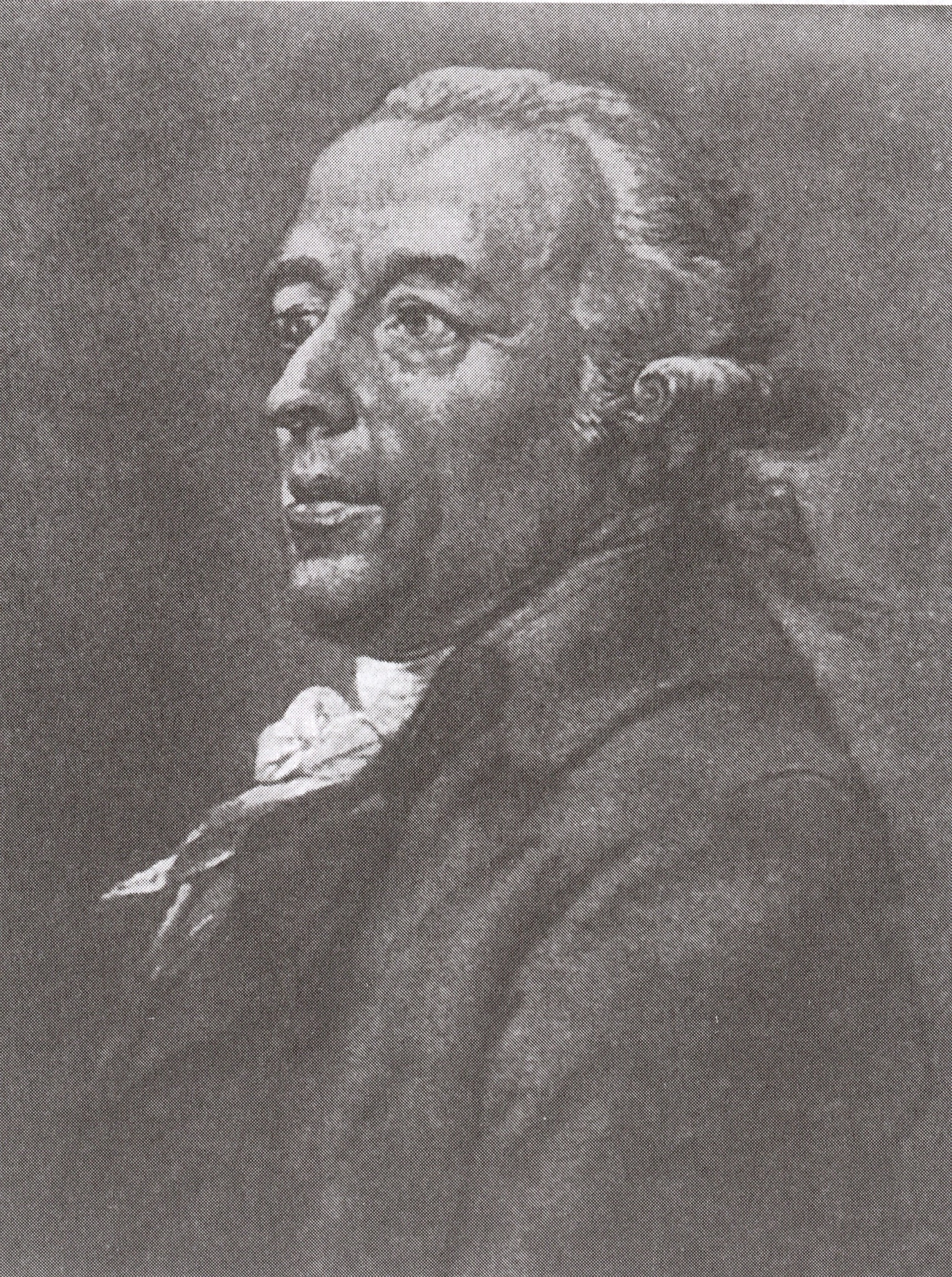
Naumann, Emil (EN)

Naumann Johann Gottlieb, *17 April 1741 in Blasewitz, †23 October 1801 in Dresden; German composer and conductor. He came from a lower social class; he sang in a church choir and studied music with a cantor and organist in Blasewitz and Loschwitz; after 1754 he continued his education in Dresden. From 1757, together with the Swedish violinist A. Wesström, he stayed in Hamburg, then from 1758 in Italy (Venice, Rome, Florence, Padua, Bologna), where he took music lessons with G. Tartini, G.B. Martini, and J.A. Hasse; he met many musicians, composers, and other artists, including P. Metastasio, with whom he worked on librettos for operas and oratorios. In 1762, he made his debut in Venice as an opera composer. In 1764, as a protégé of J.A. Hasse and G. Ferrandini, he obtained a position at the princely court in Dresden, initially as second composer of church music, from 1765 as composer of chamber music, and from 1776 as Kapellmeister. For a quarter of a century, he oversaw and shaped the city’s musical life. He took leave from the court and stayed in Italy, where he was involved in staging operas and composing, twice – once from 1765 to 1768 and then from 1772 to 1774. In 1776, he made his first trip to Stockholm, where he worked from 1777 to 1780 on the organization and reform of the royal court orchestra and opera, without interrupting his compositional activities. Between 1780 and 1782, he worked alternately in Dresden and Stockholm, in 1784 in Ludwigslust, between 1785 and 1786 as a conductor and composer in Copenhagen, in 1786 (and several times later) he made guest appearances in Berlin, and then settled permanently in Dresden. In 1792, he married the daughter of a Danish admiral, Catarina von Grodtschilling.
Naumann was one of the leading figures in European musical life at the end of the 18th century, embodying the ideals of Sturm und Drang and early Romanticism in his work. He played a key role in the organization of opera in Germany, Italy, Sweden, and Denmark, presenting and conducting numerous productions of both his own and other composers’ stage works. As an opera composer, he was considered the last representative of the Neapolitan school; his earlier operas showed clear influences from J.A. Hasse, C.M. Graun, B. Galuppi, N. Piccini, and G. Paisiello (e.g. La clemenza di Tito, Solimano), while his later works are stylistically similar to the achievements of Ch.W. Gluck and French opera (e.g. in the melodies of Orpheus and Eurydice, Medea and Protesilaos). In Naumann’s later stage works, elements of Sentimentalism and even traces of Romanticism appeared, notably in the opera Cora, which enjoyed great popularity and is now considered a precursor to C.M. von Weber’s Der Freischütz. For this reason, Naumann is sometimes regarded as a founder of the German national opera.
Naumann’s choral works, especially his cantatas, were even compared to Haydn’s compositions; they enjoyed considerable popularity and were frequently performed until the end of the 19th century (e.g., Vater unser). His songs, stylistically belonging to the Berlin school, were mainly composed in a through-composed style and drew on melodic phrases characteristic of the Baroque as well as harmonies approaching the Romantic style. Naumann’s instrumental music, initially in the style of G. Tartini, gradually evolved towards Classicism.
Literature: H.E Mannstein Vollständiges Verzeichniss aller Kompositionen der Kurfürstliche sächsischen Kapellmeisters Naumann, Dresden 1841; E. von den Recke Über Naumann den guten Menschen und grossen Künstler, “Der Neue Teutsche Merkur” I, 1803; A.G. Meissner Bruchstücke zur Biographie J.G. Naumanns, Prague 1803–04, Vienna 2nd ed. 1814; F. Rochlitz J.G. Naumann und sein Vater Unser, in: Für Freunde der Tonkunst, vol. 3, Leipzig 1830, revised by A. Dörffel 3rd ed. 1868; M.J. Nestler Der Kursächsiche Kapellmeister Naumann aus Blasewitz, Dresden 1901; P. Rachel Zum hundertjährigen Todestage der kurfürstlich sächsischen Kapellmeister J.G. Naumann, “Dresdener Anzeiger” I, 1901; R. Engländer J.G. Naumann als Opernkomponist, Leipzig 1922, repr. Wiesbaden and Farnborough 1970; R. Engländer J.G. Naumanns Instrumentalmusik, “Svensk Tidskrift för Musikforskning” XXVII, 1945; R. Engländer Die Dresdener Instrumentalmusik in der Zeit der Wiener Klassik, «Acta Universitatis Upsaliensis» V, 1956 (includes Duet f or lute and harmonica); R. Engländer Zu J.G. Naumanns Duo für Laute und Glasharmonika, “Die Musikforschung” XI, 1958; R. Engländer Die Gustavianische Oper, “Archiv für Musikwissenschaft” XVI, 1959; P. Petrobelli La scuola di Tartini in Germania e la sua influenza, “Analecta Musicologica” V, 1968; Die italienische Oper in Dresden von J.A. Hasse bis F. Morlacchi, eds. G. Stephan and H. John, Dresden 1988 (includes, among others, H. Åstrand J.G. Naumann und die gustavianische Oper in Schweden, E. Kremtz Im Sturz der Zeiten ein Unzeitgemässer?, U. Siegmund-Schultze Zur Entstehungsund Rezeptionsgeschichte der Oper Protesilao von J. G. Naumann und J.F. Reichardt), E. Kremtz G. Naumann und seine Beziehungen zu Berlin, in: Studien zur Berliner Musikgeschichte, ed. T. Ebert-Obermeier, Berlin 1989; A. Żórawska-Witkowska J.G. Naumann nella corrispondenza con Padre Martini, “Quadrivium” no. series I, 1990; Gustavian Opera, eds. I. Mattsson et al., Stockholm 1991 (includes, among others, H. Åstrand „Gustaf Wasa” as Music Drama, B. Schyberg Gustaf Wasa as Theatre Propaganda, A. Johnson The Hero and the People); H. Åstrand, H.-G. Ottenberg, G. Schönfelder Beiträge zur Biographie J.G. Naumanns. Zur Tonsetzung von Gustav Wasa, Stockholm 1991; J.G. Naumann (1741–1801), anlässlich der 250. Wiederkehr seines Geburtstages, ed. R. Zimmermann, Dresden 1991; H. Åstrand, G. Schönfelder J.G. Naumann in Dresden und in Stockholm, Stockholm 1991; O. Landmann Die Entwicklung der Dresdener Hofkapelle zum „klassischen” Orchester, “Basler Jahrbuch für historische Musikpraxis” XVII, 1993; R. Engländer Miscellaneous Comments on Kraus’s Songs and Gustavian Political Music, in: Gustav III and the Swedish Stage, celebratory publication for H. Åstrand, ed. B.H. van Boer, Lewiston (New York) 1993; H.-G. Ottenberg J. G. Naumann (1741–1801), in: Telemanniana et alia musicologica, celebratory publication for G. Fleischhauer, eds. D. Gutknecht et al., Oschersleben 1995; L. Ongley J.G. Naumann Kirchenmusik im Übergang von der Ära J.Ä. Hasses zum 19. Jahrhundert, «Musik in Dresden» III, Laaber 1998; O. Landmann H.-G. Ottenberg (ed.), Johann Gottlieb Naumann und die europäische Musikkultur des ausgehenden 18. Jahrhunderts, «Dresdner Beiträge zur Musikforschung» vol. 2, Hildesheim 2006; G. Poppe Opern zu Hochzeiten am kursächsischen Hof nach dem Siebenjährigen Krieg, in: Italian Opera in Central Europe 1614–1780, vol. 3: Opera Subjects and European Relationships, Berlin 2007; K. Bemmann Die katholische Kirchenmusik Johann Gottlieb Naumanns (1741–1801). Ein Beitrag zur Überlieferungs- und Rezeptionsgeschichte, «Schriftenreihe Studien zur Musikwissenschaft» vol. 13, Hamburg 2008; R. Petrick Johann Gottlieb Naumann: Der Dresdner Amadeus, Niederjahna 2017.
Editions:
opere serie:
L’Achille in Sciro, libretto P. Metastasio staged in Palermo 1767
Alessandro nelle Indie, libretto P. Metastasio, 1768 (not finished)
La clemenza di Tito, libretto P. Metastasio, staged in Dresden 1769
Solimano, libretto G.A. Migliavacca, staged in Venice 1773
Armida, libretto G. Bertati, staged in Padua 1773
Ipermestra, staged in Venice 1774
Osiride, libretto C. Mazzolà, staged in Dresden 1781
Elisa, libretto C. Mazzolà, staged in Dresden 1781
Cora och Alonzo, tragédie lyrique, libretto G.G. Adlerbeth after Les Incas by J.-F. Marmontel, staged in Stockholm 1782, published in Leipzig 1780
Gustaf Wasa, tragédie lyrique, libretto J.H. Kellgren according to the idea of King Gustavus III, staged in Stockholm 1786
Orpheus og Eurydike, libretto Ch.D. Biehl after R. de Calzabigi, staged in Copenhagen 1786
Medea in Colchide, opéra-ballet, libretto A. Filistri, staged in Berlin 1788
Protesilao, opéra-ballet with choir, libretto G. Sertor, 2nd version staged in Berlin 1793
opere buffe:
Il tesoro insidiato, intermezzo, staged in Venice 1762
Li creduti spiriti, libretto J. von Kurz, Italian translation by G. Bertati, staged in Venice 1764
Il villano geloso, libretto G. Bertati, staged in Dresden 1770
La villanella incostante, libretto G. Bertati after P. Metastasio, staged in Venice 1773, titled Le nozze disturbate, staged in Dresden 1774
L’ipocondriaco, libretto G. Bertati, staged in Dresden 1776
Tutto per amore, libretto C. Mazzolà, staged in Dresden 1785
La dama soldato, libretto C. Mazzolà, staged in Dresden 1791
Aci e Galatea ossia I ciclopi amanti, libretto G. Foppa, staged in Dresden 1801
feste teatrali:
La reggia d’Imeneo, libretto G.A. Migliavacca, staged in Dresden 1787
L’isola disabitata, azione per musica, libretto P. Metastasio, staged in Venice 1773
Amphion, opéra-ballet, libretto G.G. Adlerbeth after A.L. Thomas, staged in Stockholm 1778
Amore giustificato, libretto C. Mazzolà, staged in Dresden 1792
Vocal-instrumental:
oratorios to sacred texts in Italian, French, and German:
La passione di Gesù Cristo, text by by P. Metastasio, performed in Padua 1767
Isacco, figura del Redentore, text by by P. Metastasio, performed in Dresden 1772
Santa Elena al calvario, text by P. Metastasio, performed in Dresden 1775
Giuseppe riconosciuto, text by P. Metastasio, performed in Dresden 1777
Il ritorno del figliolo prodigo, text by G.A. Migliavacca, performed in Dresden 1785
La morte d’Abel, text by P. Metastasio, performed in Dresden 1790
Davide in Terebinto, figura del Salvatore, text by C. Mazzolà, performed in Dresden 1794
I pellegrini al sepolcro, text by P. Metastasio, performed in Dresden 1798
Betulia liberata, text by P. Metastasio, performed in Dresden 1805
Joseph reconnu de ses frères, text by P. Metastasio, performed in Paris (?)
choral cantatas:
Zeit und Ewigkeit, sacred cantata for the court in Schwerin, text by H.J. Tode, 1783, revised 1797
Unsere Brüder, sacred cantata for the court in Schwerin, text by H.J. Tode, 1785
Gottes Wege, sacred cantata for the court in Schwerin, text by H.J. Tode 1795
Um Erden wandeln Monde (z Vater Unser), text after F.G. Klopstock, Leipzig 1798
solo cantatas:
Cantatina an die Tonkunst, Vienna 1801
Versuch über… Ode an den Mai, text by C.A. Clodius, performed in Berlin 1779, Vienna 1801 (?)
La Didone abbandonata, text by M.A. Walpurgis
Fileno a Nice che parte
Del idolo mio trafitto
sacred:
8 mass cycles, among others, Missa solenne in A-flat major, Vienna 1804
numerous parts of ordinarium missae
9 vespers cycles and separate psalms
3 Te Deum
2 Marian litanies
Stabat Mater (fragment)
Magnificat
Singet dem Herrn, Leipzig 1786
Lobe den Herrn for choir and orchestra, Vienna n.d.
Ich danke dem Herrn for choir and orchestra, Vienna 1804
antiphons:
Alma Redemptoris Mater
Ave Regina coelorum
4 Regina coeli
11 Salve Regina
Pange lingua
Miserere (2 arrangements)
2 verses for the Lenten season
songs:
Freymaurerlieder … zum Besten der neuen Armenschule, Leipzig 1775
40 Freymaurerlieder, Berlin 1782, 2nd ed. 1784
Sammlung von Liedern beym Clavier zu singen, Pförten 1784
12 von Elisens geistlichen Liedern beym Clavier zu singen, text by E. von der Recke, Dresden 1787
6 neue Lieder for 1 voice and piano or harp, Berlin n.d.
24 neue Lieder verschiedenen Inhalts, text by E. von der Recke, Dresden 1799
***
Ecco quel fiero istante, canzonetta for soprano, 2 violins, and harpsichord, text by P. Metastasio, Leipzig 1778
Six airs avec l’accompagnement du pianoforte, text by F. Hartig, Dresden n.d.
Six ariettes avec l’accompagnement du piano forte ou d’un violon, text by F. Hartig, Dresden n.d.
VI Ariettes avec l’accompagnement de la harpe ou du pianoforte, Dresden n.d.
Six Italian Arietts with an Accompanyment for a Harp or Piano Forte, London n.d.
12 canons for 3 voices and basso continuo, Oranienburg n.d.
Rundgesang, Braunschweig n.d.
arias, rondos, duets, trios, canons, and other songs, published individually or in manuscript
Instrumental:
12 sinfonia-overtures, including Simphonies … des opéras Cora et Elisa Op. 3, Berlin 1782 (?)
Sinfonia in B-flat major, Venice n.d.
Six ouvertures italiennes…, Paris n.d.
Concerto in B-flat major for harpsichord or piano and orchestra, Darmstadt 1793
Six Quatuors pour le Clavecin ou Piano Forte avec l’Accompagnement d’une Flûte, Violon et Basse Op. 1, Berlin 1786
Trois quatuors…, Amsterdam n.d.
Sonatine for harpsichord, oboe with bassoon, or flute with bass
Divertimento for 2 violins and viola
trios for 2 violins and viola
Six sonates…, Paris n.d.
6 Sonates per il Cembalo accompagnate dal Violino Op. 2, 1778, Berlin n.d.
Ouverture for harpsichord and violin, Dresden 1786
Airs françois for piano and guitar, Hamburg 1792
6 duos faciles for violin, Leipzig n.d.
Duet for oboe and bassoon
Duet for lute and glass harmonica (arrangement of the tenor aria Wie ein Hirt sein Volck zu weiden from the opera Cora)
Concerto a 2 cembali
piano and violin sonatas
12 sonatas for glass harmonica, published in 2 vols., Dresden 1786, 1792
Editions (selection)
sonatas for glass harmonica, nos. 2, 5 and 6 from vol. 1, ed. H. Eppstein, Stockholm 1950
6 duos faciles for violin, ed. P. Bormann, «Hortus Musicas» XC, Kassel 1951
Divertimento for 2 violins and viola, ed. P. Bormann, Hamburg n.d.
Duet for oboe and bassoon, ed. P. Bormann, Hamburg n.d.
Quartet No. 5 from Six Quatuors, ed. P. Bormann, Hamburg n.d.
trio for 2 violins and viola no. 5, ed. P. Borman, Hamburg n.d., no. 4 ed. E. Sauter, Grafelfing 1993
sinfonia from Armida, ed. H.-G. Ottenberg, «The Symphony 1720–1840» series C, X, New York 1984
La passione di Gesù Cristo, ed. H.E. Smither, «The Italian Oratorio 1650–1800» XXVII, New York 1986
Gustav Wasa, ed. A. Johnson, «Monumenta Musicae Svecicae» XII, 1991
Trio in B-flat major, ed. E. Sauter, «Unbekannte Werke der Klassik und Romantik» vol. 87, Munich-Gräfelfing 1992
Trio in G minor (Dass. No. 4), ed. E. Sauter, «Unbekannte Werke der Klassik und Romantik» vol. 194, Munich-Gräfelfing 1993
Magnificat, ed. E. Hofmann, Ditzingen 2001
Missa in D minor (1794), ed. K. Bemmann, Stuttgart 2001
Miserere E-flat major, ed. W. Eckhardt, «Musik aus der Dresdner Hofkirche» vol. 2, Beeskow 2003