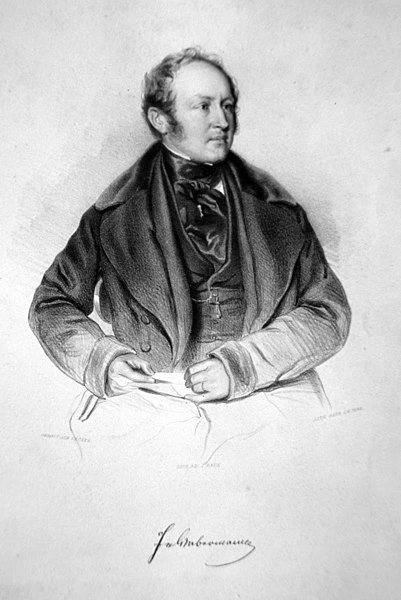
Habermann František Václav, Franz, Franciscus, Johann, Wenzel, *20 September 1706 Kynžvart (near Cheb), †8 April 1783 Cheb, Czech composer and choirmaster. He was educated at the Jesuit school in Klatovy. He then studied composition in Prague, probably with F.J. Dollhopf. He deepened his musical knowledge through travels to Italy, France, and Spain. In 1731 he received the post of Kapellmeister at the court of Louis Henri de Condé in Paris, and subsequently held the same position at the ducal court in Florence. After 1740 he returned to Prague, where he assumed the position of choirmaster at monastic churches. He was also a highly regarded teacher; among his pupils were F.X. Dušek, J. Mysliveček, and C. Vogel. In the years 1773–83 he served as cantor in Cheb; after his death the post was taken over by his son Franz Johann (*ca. 1750, †after 1799). Other members of the Habermann family, his brothers – Antonín (1704–1787) and Karel (1712–1766) – were also musicians.
Habermann was a highly esteemed composer of oratorios in his own time; his now lost opera, performed in 1743 during the coronation festivities of Maria Theresa in Prague, also enjoyed considerable success. Among his sacred compositions, the cycle of six masses Philomela pia brought Habermann the greatest renown. G.F. Handel took a particular interest in the cycle, making copies of the works and incorporating fragments of them into his own compositions, (oratorios Hercules and Jephtha, the Organ Concerto Op. 7 No. 3, and the Suite XVII for keyboard). The aforementioned cycle of masses is composed in the late-Baroque Venetian concertato style. Habermann’s other works evolve in the direction of the Classical style. Together with B. Černohorský and J. D. Zelenka, Habermann belonged to the precursors of Czech Classicism.
Literature: M. Seiffert F.J. Habermann, “Kirchenmusikalisches Jahrbuch” XVIII, 1903; S. Taylor The Indebtedness of Händel to Works by Other Composers, Cambridge 1906, repr. 1971.
Compositions:
Instrumental:
symphonies (lost)
Concerto in D major for 2 horns, manuscript in Prague
Concerto in E-flat major for horn and oboe (or viola) manuscript in Prague
sonatas (lost)
Vocal-instrumental:
Coeli gentes, motet for SATB, 2 violins, 2 trumpets and organ
6 litanies (lost)
6 masses Philomela pia Op. 1, for SATB, 2 violins, 2 trumpets and organ, Graslitz (now Kraslice) 1747
12 masses, 1746 (lost)
psalms, responsories, arias, manuscript in Prague and Brno
Haec mutatio dextrae excelsi (…) id est Conversio peccaioris, oratorio, performed in Prague 1749, libretto survives
Christi servatoris (…) de morte trumphantis archetypus, oratorio, performed in Prague 1753, libretto survives
Deodatus à Gozzone, oratorium, performed in Prague 1754, libretto survives
Coelestis Samaitanus Jesus Christus, oratorio, performed in Prague 1763, libretto survives
S. Agostino, oratorio, performed in Prague 1764, libretto survives
comic opera of unknown title, performed in Prague in 1743 (lost)
Artium dementinarum (…) solemnia, school drama, performed in Prague 1754
Editions:
Coeli gentes, «Das Erbe Deutscher Musik» IV series 2, 1943