
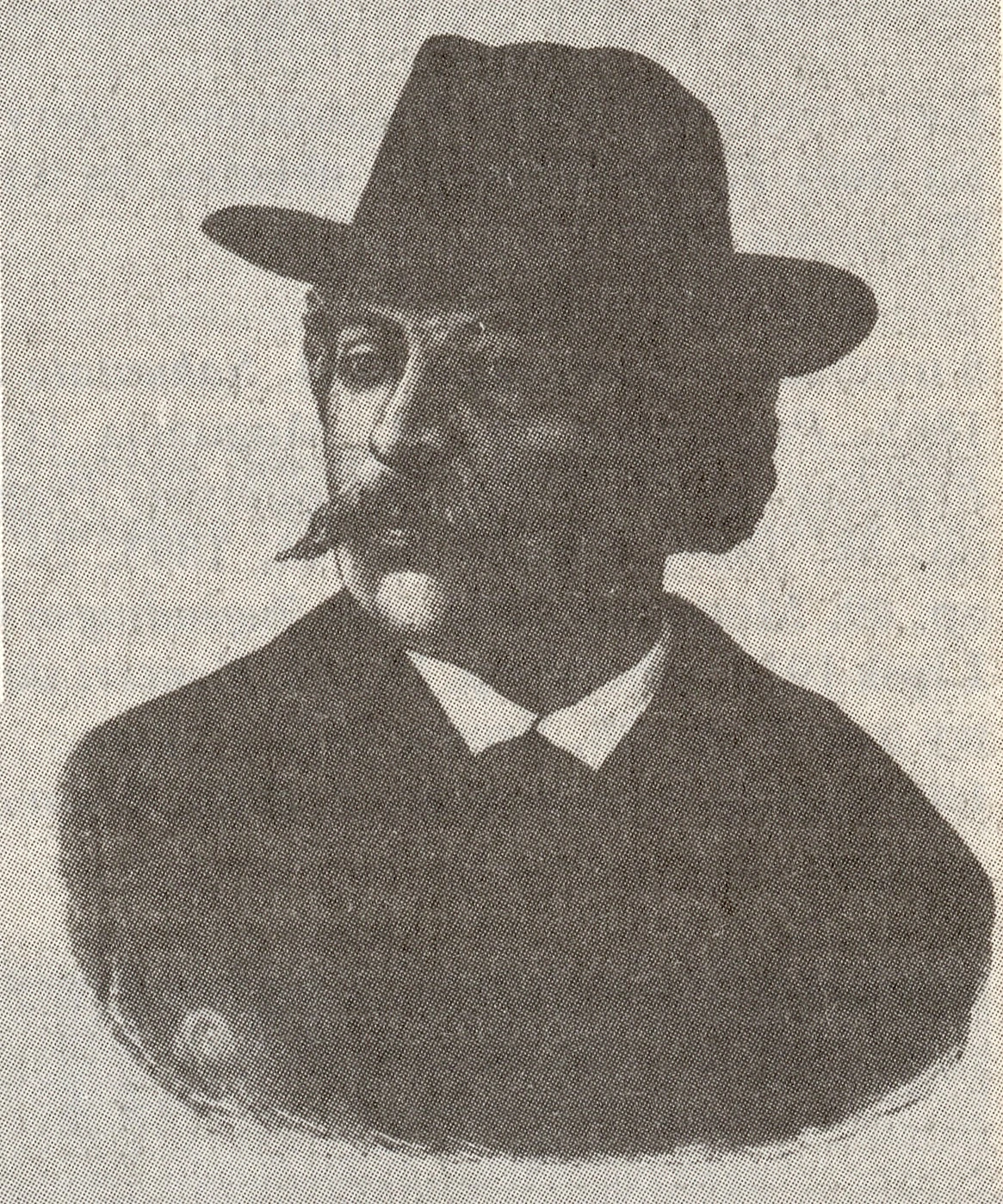
Goldmark, Rubin

Goldmark Károly, Karl, Carl, *18 May 1830 Keszthely (near Lake Balaton), †2 January 1915 Vienna, Hungarian composer active in Vienna. He came from a poor Jewish family which, from 1834, was settled in Deutschkreutz near Sopron (Ger. Odenburg); he was one of more than twenty siblings. In 1841 he began studying the violin with a village musician, and in 1842 made his first attempts at composition. That same year Goldmark was sent to the music school in Sopron, and in 1844 to Vienna; however, owing to financial difficulties, in 1846 he was forced to interrupt his violin studies. Soon afterwards he entered the conservatory, where he studied with J. Böhm (violin) and G. Preyer (theory). After the conservatory was closed as a consequence of the events of 1848, he returned to Deutschkreutz and became a violinist in the theatre orchestras of Sopron and Buda (Ger. Ofen), and from 1851 also in Viennese theatres. Having independently acquired pianistic skills, he gave piano lessons in Vienna and composed; however, the failure of the composer’s first concert (1858) prompted him to leave for Budapest. There, supporting himself through piano teaching, he worked on compositions as an autodidact. In 1860 he returned to Vienna and began active work as a composer, as conductor of the choral society “Eintracht,” and as a music critic; in 1862 he received a scholarship from the municipal authorities. Personal contact with Wagner (1860) inspired in Goldmark an admiration bordering on a cult of his personality and works; in 1872, together with J. Herbeck, J. Hellmesberger, and others, he founded the Wagner Verein in Vienna. The success of the overture Sakuntala and his successful operatic debut (The Queen of Sheba, 1875), thanks to which he received a substantial scholarship from the Hungarian government, brought him fame. Thereafter he devoted himself entirely to composition, occasionally giving lessons in composition (among others to Sibelius). Goldmark undertook artistic journeys to Switzerland (1871, 1873), and in 1880–81 stayed in Italy, where The Queen of Sheba was frequently performed. In 1896 he was made a Knight of the Order of Leopold, in 1910 received an honorary doctorate from the University of Budapest, and in 1914 became an honorary member of the Accademia di Santa Cecilia in Rome.
Goldmark’s career exemplifies an impressive strength of will and faith in his artistic vocation; his creative development, however, does not display a comparable consistency. The complicated course of his education compelled Goldmark to acquire compositional technique independently. Yet he failed to attain individuality either in creative aesthetics or in musical language. Goldmark’s excessive receptivity, despite his considerable talent, led him to eclecticism, evident, however, only across the entirety of his oeuvre rather than within individual works, which generally display internal coherence within the adopted stylistic convention. In his celebrated opera Die Königin von Saba Goldmark employed both the fashionable orientalizing subject matter and a conventional yet advanced musical language marked by strong chromaticism; similarities are often noted with Samson et Dalila by Saint-Saëns and Lakmé by Delibes. His remaining operas likewise lack a clearly defined stylistic identity. Das Heimchen am Herd recalls the comic operas of Lortzing and even Dittersdorf, whereas Ein Wintermärchen exhibits features of post-Wagnerian musical language. Goldmark nevertheless remained above all a lyricist. His instrumental works, initially composed within the orbit of Mendelssohn and Schumann, later also of Wagner and Liszt (the overture Penthesilea), evolved toward Impressionism in the final years of his life (Georginen, Piano Quintet Op. 54), demonstrating that his at times excessive ease in assimilating diverse musical currents preserved the composer, even past the age of eighty, from conservatism. Goldmark’s significance lies chiefly in his consolidation of the achievements of other composers. He created works attractive both on the stage and in the concert hall, formally accomplished, and distinguished by brilliant, attention-grabbing melodic invention. Despite attacks from critics (Herbeck and Hanslick), Goldmark enjoyed high esteem, including in Hungary, where he was regarded as the first Hungarian composer before Dohnányi and Bartók to possess such broad technical mastery and artistic horizons.
Literature: K. Goldmark Erinnerungen aus meinem Leben, Vienna 1922, 2nd ed. 1929; O. Keller C. Goldmark, Leipzig n.d.; E. Kálmán K. Goldmark, Budapest 1930; J. Klempá K. Goldmark, Budapest 1930; L. Koch K. Goldmark, Budapest 1930; M. Káldor, P. Várnai Goldmark K. élete és müvészete (‘K. Goldmark Life and Ouvre’), Budapest 1956; R. von Perger K. Golmark, “Die Musik” VII, 1907–08; W. Altmann Goldmarks Kammermusik, “Die Musik” XIV, 1914–15; H. Truscott C. Goldmark, “The Monthly Musical Record” XC, 1960.
Instrumental:
Orchestral:
Symphony in C major, 1860
Symphony in E-flat major Op. 35, 1887
Ländliche Hochzeit Op. 26, symphonic poem, Mainz 1877
Zrinyi, symphonic poem, Budapest 1903, 2nd version Budapest 1907
overture from 1854
Sakuntala Op. 13, overture, 1865
Penthesilea Op. 31, overture, Mainz 1879
Im Frühling Op. 36, overture, 1888
Der gefesselte Prometheus Op. 38, overture, 1889
Sappho Op. 44, overture, 1893
In Italien Op. 49, overture, Mainz 1904
Aus Jugendtagen Op. 53, overture, Leipzig 1913
scherzos, Opp. 19 and 45
Violin Concerto in A minor Op. 28, Bremen 1877
chamber
String Quintet in A minor Op. 9, 1862
String Quintet in B-flat major Op. 30, Bremen 1879
Piano Quintet Op. 54, Leipzig 1916
String Quartet in D major Op. 8, 1860
Piano Trio in B-flat major Op. 6, 1859
Piano Trio in E minor Op. 33, Bremen 1880
works for violin and piano, including Sonata in D major Op. 25, 1874
Sonata in F major Op. 39 for cello and piano, 1892
for piano:
cycles of miniatures, including Sturm und Drang. 9 charakteristische Stücke Op. 5, 1859
Georginen Op. 52, Vienna 1913
Ungarische Tänze Op. 22, for 4 hands, Mainz 1876
Vocal and vocal-instrumental:
numerous songs for a cappella choir
more than 40 solo songs, including 6 cycles, among them 7 Lieder aus dem „Wilder Jäger” Op. 32, words by J. Wolff, Mainz 1879
Psalm for solo voice, male choir, and orchestra, ca. 1854
Psalm CXIII Op. 40, for choir and orchestra, 1895
Frühlingshymne Op. 23, for alto solo, choir, and orchestra, words by L. Geyer, 1874
Stage works:
Die Königin von Saba, opera, libretto by S. Mosenthal, 1875, premiered in Vienna
Merlin, opera, libretto by S. Lipiner, 1886, 2nd version 1904, premiered in Vienna
Das Heimchen am Herd, opera, libretto by A. M. Willner after Ch. Dickens, 1896, premiered in Vienna
Die Kriegsgefangene (Briseïs), opera, libretto by A. Formey, 1889, premiered in Vienna
Götz von Berlichingen, opera, libretto by A. M. Willner after J. W. von Goethe, premiered in Budapest 1902, 2nd version 1910
Ein Wintermärchen, opera, libretto by A. M. Willner after Shakespeare, 1908, premiered in Vienna